I wonder is it taught in China history text books

1966: Massive purges
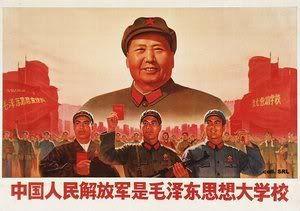
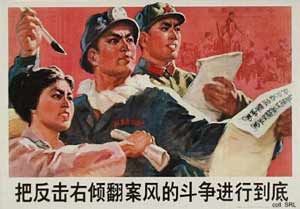
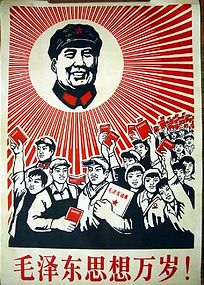
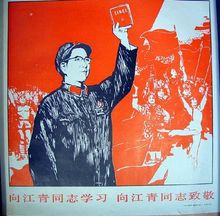
The Red GuardsOn August 8, 1966, the Central Committee of CCP passed a bill, "Decisions on the Great Proletarian Cultural Revolution". This bill stated that the official position of China's government was now supportive of the purging of intellectuals and imperialists. Most of these purges were to be the work of Mao's Red Guards. "Now our goal is to smash those capitalist roaders in power, to criticize the reactionary bourgeois "authorities" in science, to criticize the ideology of bourgeoisie and all other exploiter classes, to transform education, to transform the literature and art, to transform all areas of the superstructure mismatching economic base of socialism, to promote strengthening and development of the socialist system", said the bill.
On August 16, millions of Red Guards from all over the country gathered in Beijing for a peek at the Chairman. On top of the Tiananmen Square gate, Mao and Lin Biao made frequent appearances to approximately 11 million Red Guards, receiving cheers each time. Mao praised their actions in the recent purges.
For three years, until 1969, the Red Guards expanded their areas of authority and accelerated their purges. The Red Guards began by passing out leaflets, spreading Communist propaganda, and posting the names of supposed "counterrevolutionaries" on bulletin boards. They assembled in large groups and wrote propagandistic plays. The Red Guards held public executions of supposed "counterrevolutionaries", looted their homes, tortured and at times killed their relatives.
By 1966 the Red Guards had become the foremost authority of China. People that were labeled as the "Bourgeoisie" were tortured brutally without trial. Laws were broken freely; the police were no longer an effective force. Soon, the Red Guards went even further. They set fire to temples, mosques, churches, and other religious institutions. The country fell into a state of mass chaos. By the end of 1966, the Red Guards had also started a massive campaign to destroy ancient art, artifacts, and antiques; vandalize ancient buildings, and burn ancient scrolls and books.
During this period monks, nuns and missionaries were widely criticised and purged. Some were later sent to labor camps, tortured, or killed. The Red Guards also criticised, looted, and tortured their own teachers. Seeing this situation unfold, many intellectuals were driven to mental breakdown or suicide. Many prominent politicians and former leaders were also purged and labeled as "counterrevolutionaries"; Liu Shaoqi was sent to a detention camp, a virtual prison, where he later died in 1969 of starvation. Deng Xiaoping, who was himself purged three times, was sent to work in an engine factory until he was brought back years later by Zhou Enlai.
The work of the Red Guards was praised by Mao Zedong. On August 22, 1966, Mao issued a public notice, which stopped "all police intervention in Red Guard tactics and actions." Those in the police force who dared to defy this notice were labeled as "counterrevolutionaries".
On September 5, 1966, yet another notice was issued, encouraging all Red Guards to come to Beijing over a stretch of time. All fees, including accommodations and transportation, were to be paid by the government. On October 10, 1966, Mao's ally, General Lin Biao, publicly criticised Liu and Deng as "capitalist roaders" and "threats". Later, Peng Dehuai was brought to Beijing to be publicly displayed and ridiculed; he was then purged.


 [/img]