Why LKY chose ex-communist as President?
-
Former
President of Singapore C.V Devan Nair --------was a communist !!!In 1950 I joined the Anti-British League, an underground auxiliary of the Malayan Communist Party. I spent, in two separate spells, a total of five years in British prisons......
We were in touch, through easily bribable camp warders, with the communist underground in Singapore. ...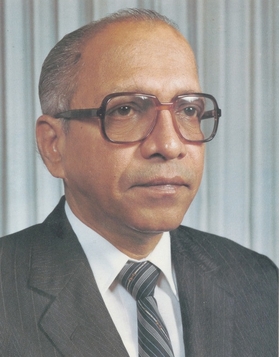
The third President of Singapore, Mr Nair was in office from 1981 to 1985.
2.Why LKY picked C.V Devan Nair as President?In 1981,the world was
under the threat of Cold War and communist ideology.
I dunt know if Western Countries then Devan was an ex--communist.
If so .what were their responses?
Not bad to be kids of former communists!!
3.There were former communists worked in NTUC etc .The father of newly
elected MP
MP Grace Fu,
was communuist
and worked for LKY as Press Secretary or Private Secretary.
Grace Fu is also a potential minister.
4.The son of Devan has done well in Sg.
Mr C V Devan Nair's eldest son, Mr Janadas Devan, a US-based Straits Times journalist.,was a former editor-in-chief of SPH's English and Malay newspapers division.u can always read his articles in ST. -
you really shouldnt cross post...anyway check out tharman...i believe he has some roots there too
-
if im not wrong late ong teng cheong is anti pap
-
The word of emphasis should be "WAS" - as confirmed in PM LHL's Letter of Condolence to Mrs Devan Nair:-Originally posted by lionnoisy:Former
President of Singapore C.V Devan Nair[b] --------was a communist !!!
The third President of Singapore, Mr Nair was in office from 1981 to 1985.
In 1981, was the world under the threat of Cold War and communist ideology ?
During the critical period of communist and communal strife in the 1960s, Mr Nair stood firm. He stayed with the PAP when the pro-communists broke away to form the Barisan Sosialis.Of the former detainees who had promised to renounce communism, he was the only one who kept his word.
In the Malaysian elections in 1964, he contested Bangsar constituency (in Kuala Lumpur), and became the only PAP candidate to win a seat in the federal Parliament. After SingaÂpore became independent in 1965, he stayed on in Malaysia to found the Democratic Action Party of Malaysia, and became its first Secretary-General. [/quote]
What were you trying to insinuate with this aimless post ?
2.Why LKY picked C.V Devan Nair as President?In 1981,the world was
under the threat of Cold War and communist ideology.
I dunt know if Western Countries then Devan was an ex--communist.
If so .what were their responses?
Did you get your time lines correct for 1981 ?
Communist China was in a state of uncertainty with the passing of Mao, succeeded by Hua Guo Feng until 1981, followed by Deng Hsiao Peng's protege Hu Yaobang and was replaced by another Deng's protege, Zhao Zi Yang in 1987.
China's famed Tiananmen incident in 1989 had begun during the April Fifth Movement during the 1970s, which culminated in the commemoration of the death of Zhou En Lai in 1976.
Communist regimes in Europe were facing internal uprising since 1968 in Czechoslovakia; Poland in 1971, 1976 and 1981; and Communism in Yugoslavia began to decline in 1981 when its economy grind to a slow pace; as the East European Communist Countries began to liberalise and free themselves, these events through the 1980s made an impact on East Germany, ending with the Fall of the Berlin Wall on 9 November 1989.
Russia under Brezhnev had their plates full in Afghanistan in 1981.
What is the TRUTH that got Devan Nair to become the third President of Singapore ?
Are you sure you are capable of handling reality ?
Mr Nair got to know his "captain" when the two were fighting to free Singapore from British colonial rule in the 1950s. A teacher whose father emigrated from India, Mr Nair taught Shakespeare while he was a member of the Anti-British League, an irony he still savours. When the British threw him in jail as a subversive, holding him for a total of five years, Mr Lee was his lawyer.
The two remained close after Singapore won its freedom from Britain. Together, they fought off an attempted communist takeover, weathered Singapore's ejection from the neighbouring federation of Malaysia and transformed their country from a run-down sea port to an economic dynamo bristling with skyscrapers. "I supported him because he was an eloquent champion of the dreams I had for Singapore," Mr Nair says.
But as Singapore grew prosperous and stable and the communist threat faded, Mr Nair began to have doubts about his captain's iron-fisted methods.Perhaps sensing his ally's doubts, Mr Lee asked Mr Nair to leave his power base as head of the trade union congress and move into the presidential palace. As Mr Nair puts it, "He kicked me upstairs."
Being president, he says now, was "the silliest job in the world. All you had to do was cut ribbons." His frustration grew.
[quote]
Not bad to be kids of former communists!!
3.There were former communists worked in NTUC etc .The father of newly
elected MP
MP Grace Fu,
was communuist
and worked for LKY as Press Secretary or Private Secretary.
Grace Fu is also a potential minister. Get your facts straight, or at least comb through your url information carefully before posting - unless you wish to have a taste of litigation for libelling. -
continuation:
Perhaps a more accurate referral would have been the comments made by Mr Janadas Devan on "the Singapore Way".
4.The son of Devan has done well in Sg.
Mr C V Devan Nair's eldest son, Mr Janadas Devan, a US-based Straits Times journalist.,was a former editor-in-chief of SPH's English and Malay newspapers division.u can always read his articles in ST.
You should have been more generous to a MAN, who after all was your President - if you are a Singaporean; and the appropriate requiem should have been this piece prepared by ChannelnewsAsia :-
Have you wondered why LKY seems to be mixing with dubious characters, and dumping them after he found no further use for them ?
SINGAPORE : Former Singapore President CV Devan Nair has died in Canada. He was 82.
He was the reluctant Singapore President who resigned and then chose to live out his remaining years abroad.
But more than this, Mr Devan Nair was a teacher, a communist, unionist and ruling party stalwart -- all in a lifetime that was staunchly dedicated to nation-building in Singapore's early history.
The third President of Singapore, Mr Nair was in office from 1981 to 1985.
Born in August 1923, Mr Devan Nair, the son of a rubber plantation clerk in Malaysia, identified with the working class early on in life.
His first political conviction was Communism, one that was sealed when the trainee teacher met PV Sharma, an influential figure in the teachers' union.
Under Mr Sharma's influence, Mr Devan Nair joined the Anti-British League, a cover for the Malayan Communist Party, and in 1951 was detained on St John's Island.
Said Patrick Jaswan, Mr Devan Nair's friend, "His university is actually the prison. There was not a single book left that he didn't browse through."
Out of prison, he continued with left-wing union activism.
He was an effective mobiliser and, with Chinese-educated activists like the late Lim Chin Siong, had a considerable following.
In 1954, Lee Kuan Yew asked Mr Devan Nair to join him so the unions could provide the mass base for a new party.
It was a marriage of convenience, but an uneasy one for Mr Devan Nair.
Referring to those days, he said, "There was a great turmoil going on inside me because I was caught in an emotional fix. On the one hand, my head was increasingly with Lee Kuan Yew and company. But on the other hand, my heart emotionally, I was tied up with these people. And it became an intolerable contradiction."
When the Hock Lee bus riots took place, the British government cracked down on the unions and Mr Devan Nair and his comrades, were arrested.
Mr Lee persuaded Mr Devan Nair to get all the detainees to commit to a non-communist Malaya, before securing their release.
Although he was closer to the People's Action Party after it came into power in 1959, this did not mean Mr Devan Nair was willing to fight his communist friends.
So, he went back to teaching, but was soon drawn back out into the political fray by Mr Lee.
Said Janadas Devan, Mr Devan Nair's son, "He would say to my father, 'Here we are Rajaratnam and I, Toh Chin Chye, fighting with our backs to the wall and there you are marking exercise books.'"
Mr Devan Nair's work with the PAP included a stint as the only elected PAP MP in Malaysia after the merger.
Loyal to those who voted for him, Mr Devan Nair stayed put after the Separation, and formed the Democratic Action Party.
But he soon found his position untenable.
Mr Lee, Singapore's Prime Minister from 1959 to 1990, said on 23 October 1981, "It was not a lack of courage that made him leave Kuala Lumpur. The Cabinet decided that Singapore-Malaysia relations would always be bedevilled if Devan Nair remained as a DAP leader. I persuaded him to come back. I told him that the trade union movement in Singapore had to be rebuilt on different assumptions and different attitudes."
And that was Mr Devan Nair's most significant work -- forming the National Trades Union Congress.
The late author and journalist, Dennis Bloodworth, summed up Mr Devan Nair's experience as President: "As President with largely constitutional functions, he was to put it frankly, bored. He didn't like the job, he was not really cut out to meet the presidents, kings, queens and others from these countries that visited Singapore. That was not the Nair thing at all."
Mr Bloodworth added, "He started off life as a dogmatic, argumentative sort of chap, 'pugnacious' when Lee Kuan Yew first saw him; and he was hardly suited for what rather was in those days, the milk and water role of being president."
Mr Devan Nair, who migrated to Canada with his wife, was philosophical about his place in Singapore's history.
He once said his only regret in life was to allow himself to be persuaded to occupy a highly ceremonial office so contradicted by his temperament.
But he blamed no one.
And after he had said his piece for what it was worth, Mr Devan Nair added that he expected "to fade away, like all old warriors, into the past."
Some verdicts, he said, "are best left to history." - CNA /ct/de
Was it the animal instinct of survival that was developed in the harshest of conditions ?
During World War 2, LKY did work as an interpreter with the Japanese.
Is it any surprise that the hardy S.R. Nathan was LKY's trusted guardian of the Singapore Internal Security Department ?
What was the credentials for S.R. Nathan to head the Singapore ISD - except for the little known secret that he was working as an agent for the Kempetai - the Japanese Secret Police responsible for the mass murders of civilians in Singapore ?
This relationship will last for as long as the Presidential functions can be performed by S.R.Nathan, who will probably warm the seats for as long as his personal health permit. -
1.LKY believes some ,if not most,of principals of Communists/Socialists.
He respects those struggles for the people,not for their own sake.
He understands how they feel,think,etc.Those ex- communist,
committed to help people ,can be truthed to run the new
nation in different posts.
2.Who would be prepared go to prison for helping people to
improve their lifes?Communists!!Thet are so committed to their
what they believe.
3.As we find out decades later,
some of their principals are not practical and lead to hells!!
Too many lifes and pains have been paid to learn this lessons.
4.Have u read LKY praised a person like this:I liked and respected him for his simple lifestyle and his selflessness. He did not seek financial gain or political glory. He was totally committed to the advancement of his cause.
Above is an excerpt of the obituary note on Mr Lim Chin Siong by Mr Lee Kuan Yew. (The Straits Times, Feb 9, 1996)
He and many of his comrades, graduates from the Chinese middle schools, taught my colleagues and me the meaning of dedication to a cause.
They were prepared to sacrifice everything for their cause, and many did. Some lost their lives in the jungles, many were banished to China.
Because of the standards of dedication they set, we, the English-educated PAP leaders, had to set high standards of personal integrity and spartan lifestyles to withstand their political attacks. They were ruthless and thorough. We became as determined as they were in pursuing our political objectives.
-
LKY has long collaborated with comunists as long as he could personally gain politically from it. That is well known history.
-
Originally posted by lionnoisy:
If LKY truly believe in what YOU think he believes in - as you have elaborated above, would he have locked up Chia Thye Poh for 32 years ?
1.LKY believes some ,if not most,of principals of Communists/Socialists.
He respects those struggles for the people,not for their own sake.
He understands how they feel,think,etc.Those ex- communist,
committed to help people ,can be truthed to run the new
nation in different posts.
In all his 32 years of incarceration, Chia Thye Poh had challenged LKY to produce the evidence and an open trial in which such evidence can be produced - but Chia Thye Poh was locked up based on the simple accusation of ONE MAN - LKY.
Does this not pose a danger to any Singaporean - that an ordinary Singaporean committed to his political point of views can be incarcerated for half his life based on a disagreement from another Singaporean ?
IF Chia Thye Poh is a Communist - as accused by LKY, although no evidence has been produced - Chia has wasted 32 years of his life simply for the fact that he WILL NOT SIGN ANY FALSE CONFESSION - DEMANDED from him by the ISD - that he is a Communist.
2.Who would be prepared go to prison for helping people to
improve their lifes?Communists!!Thet are so committed to their
what they believe.
Can we believe in such an accusation especially when there is so much reluctance to charge Chia Thye Poh in court for evidence to be produced.
LKY had personnally feared and strongly believe that a "LIE " - told often enough - espcially by some reputable person - can become the "TRUTH" ?
Is this accusation a LIE or a TRUTH - as made out by LKY ?
YES - Singapore has also copied those parts of the Communist practices that have also caused many 'LIVES and pain ' to those who have dared to challenge the AUTOCRATIC SYSTEM of a typical ONE PARTY Communist Style POLICE STATE.
3.As we find out decades later,
some of their principals are not practical and lead to hells!!
Too many lifes and pains have been paid to learn this lessons.
What is the use of praising a person who has passed on from this LIFE ?
4.Have u read LKY praised a person like this:
What has LKY to lose by praising a dead person ?
PM LHL had praised JBJ as a true patriotic Singaporean, who had despite all the pain and difficulties suffered, he continued to stay in Singapore to challenge the ONE PARTY STATE.
Will LKY wait until JBJ has passed on before also praising JBJ ?
Lim Chin Siong was incarcerated with Chia Thye Poh at the same time during Operations Cold Storage, but Lim Chin Siong took the smart way out and migrated to UK instead of wasting his life in the care of the ISD - as had happened to Chia Thye Poh. -
Hoho,Lou Lee got so many "unglory" past history.I am sure he will get alot of critics after his death.
-
LKY also sided with communists in the early days of his career
