Free Education and Medical Care : Fact or Myth?
-
Some forumers here have been talking about the free education and medical care in Australia without highlighting the income tax they are paying.
Hence I have taken the initiative to look into Australia's government income tax revenue, and their expense budget for the health and education ministry and below are some of the finding. (Note : AUD-S$ : 1.25)
Australia
Population : 20m
Income Tax Revenue : S$158.6 billion / yr (including superannuation and fringe benefit tax)
Total Tax / Capita : S$ 7,928 / yr
Singapore
Population : 4.5m
Income Tax Revenue : S$13.5 billion
Income Tax / Capita : S$3,000 / yr
Difference
S$4,928 per year per capita.
Assuming 44 years of working life (21-65 retirement age) total : S$216,832 per capital
Here are a list of key benefits Australians gain: -
Australia Annual School Education Budget : S$11.6 billion per year or S$580, per capita
Australia Annual Health Care Budget : S$850m per year or S$42.5 per capita
Australia Annual Unemployment Budget : S$633.7m per year or S$31.70 per capita
Free health care and education? Is it a myth or facts?
Source : http://www.dest.gov.au/portfolio_department/dest_information/publications_resources/resources/budget_information/2006/at_a_glance.htm#School_Education
http://www.health.gov.au/internet/budget/publishing.nsf/Content/budget2006-glance.htm
http://www.budget.gov.au/2006-07/myefo/html/03_part_3-04.htm -
Capital:
1. the city or town that is the official seat of government in a country, state, etc.: Tokyo is the capital of Japan.
2. a city regarded as being of special eminence in some field of activity: New York is the dance capital of the world.
3. capital letter.
4. the wealth, whether in money or property, owned or employed in business by an individual, firm, corporation, etc.
5. an accumulated stock of such wealth.
6. any form of wealth employed or capable of being employed in the production of more wealth.
7. Accounting. a. assets remaining after deduction of liabilities; the net worth of a business.
b. the ownership interest in a business.
8. any source of profit, advantage, power, etc.; asset: His indefatigable drive is his greatest capital.
9. capitalists as a group or class (distinguished from labor): High taxation has reduced the spending power of capital.
–adjective 10. pertaining to financial capital: capital stock.
11. principal; highly important: This guide offers suggestions of capital interest to travelers.
12. chief, esp. as being the official seat of government of a country, state, etc.: the capital city of France.
13. excellent or first-rate: a capital hotel; a capital fellow.
14. capital letter.
15. involving the loss of life: capital punishment.
16. punishable by death: a capital crime; a capital offender.
17. fatal; extremely serious: a capital error.
Hehehe
Which capital are you referring to? -
thanks, I have correct it already.
-
Do you have any idea what is superannuation?
It's Australia's equivalent of CPF contributions. -
To make an equitable comparison, you should add Singapore's superannuation, which is the CPF to the Income Tax revenue.Originally posted by Gazelle:Some forumers here have been talking about the free education and medical care in Australia without highlighting the income tax they are paying.
Hence I have taken the initiative to look into Australia's government income tax revenue, and their expense budget for the health and education ministry and below are some of the finding. (Note : AUD-S$ : 1.25)
Australia
Population : 20m
Income Tax Revenue : S$158.6 billion / yr (including superannuation and fringe benefit tax)
Total Tax / Capita : S$ 7,928 / yr
Singapore
Population : 4.5m
Income Tax Revenue : S$13.5 billion
Income Tax / Capita : S$3,000 / yr
Difference
S$4,928 per year per capita.
Assuming 44 years of working life (21-65 retirement age) total : S$216,832 per capital
Here are a list of key benefits Australians gain: -
Australia Annual School Education Budget : S$11.6 billion per year or S$580, per capita
Australia Annual Health Care Budget : S$850m per year or S$42.5 per capita
Australia Annual Unemployment Budget : S$633.7m per year or S$31.70 per capita
Free health care and education? Is it a myth or facts?
Source : http://www.dest.gov.au/portfolio_department/dest_information/publications_resources/resources/budget_information/2006/at_a_glance.htm#School_Education
http://www.health.gov.au/internet/budget/publishing.nsf/Content/budget2006-glance.htm
http://www.budget.gov.au/2006-07/myefo/html/03_part_3-04.htm
Singapore's CPF (Superannuation) = S$16.5 billion
(S$13.5 bn + S$16.5 bn) / 4.5m = $6,666.67 Yikes!!! Sign of the beast!!!
Moreover the expenditure is on the public, it is not on the salaries of 10-20 Ministers each getting $2 million to $4 million.
Like you said, free healthcare and education. I think it's a steal as compared to Singapore.
Misleading the general public with misinformation again???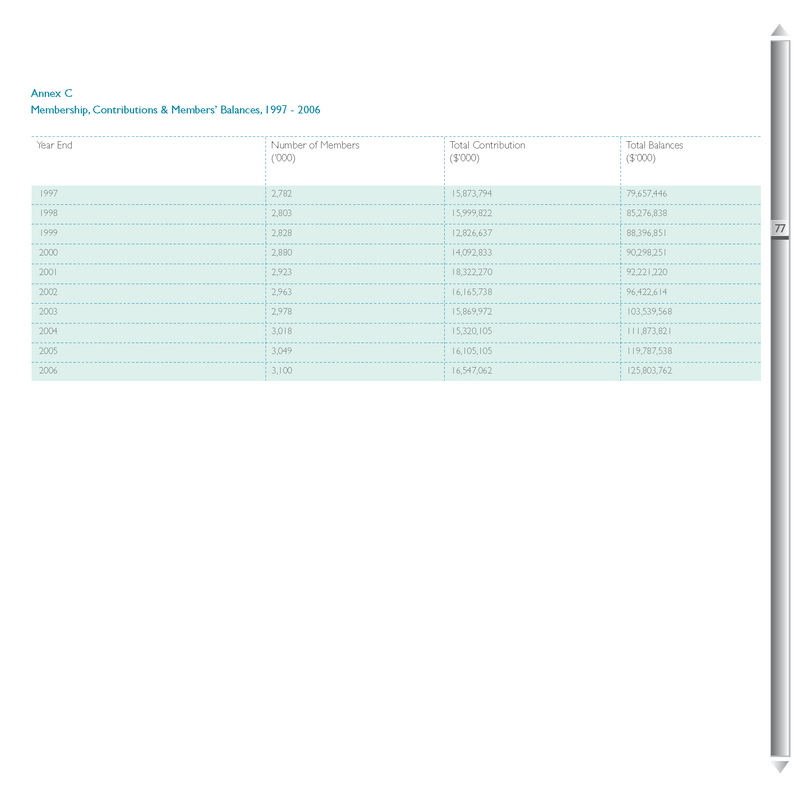
-
there is no such thing as free
australia, the government take from u in term of tax but at least give u education n medical care paid by yr taxes.
singapore, the government take from u in term of tax n give u some leftover i.e. GST payout but they can pay themselves enough so as to be incorruptable
b4 election, they promise the sky to u, after the election, suck every drop of blood from u!!
the cost of going to a public hospital can sometimes be higher than the cost of a private hospital, so where is the subsidy for medical care -
Originally posted by maurizio13:
The superannuation in this context is the tax revenue the government gain from taxing the superannuation fund drawn by the people, not the fund that goes into Superannuation fund.
Do you have any idea what is [b]superannuation?
It's Australia's equivalent of CPF contributions.[/b] -
Are you talking about yourself?Originally posted by maurizio13:Misleading the general public with misinformation again??? -
What Does It Look Like?Originally posted by Gazelle:The superannuation in this context is the tax revenue the government gain from taxing the superannuation fund drawn by the people, not the fund that goes into Superannuation fund.
AustraliaÂ’s social security retirement income system consists of a means-tested benefit, known as the age pension, and mandatory occupational savings schemes or pensions, known as the superannuation guarantee. Unlike most other high-income countries, Australia has never had an earnings-related social insurance pension system.
The Age Pension
The age pension, financed by general revenues, pays a flat amount to anyone who qualifies. Income and assets (excluding the home) are taken into consideration in determining eligibility. The eligibility age is 65 for men and is rising gradually from 60 to 65 for women. Previous workforce participation is not required. Many older persons spend down their assets to qualify.
The Superannuation Guarantee
Although Australia has long had a system of employer-provided occupational pensions, those pensions covered less than half the workforce as of the early 1980s. Beneficiaries tended to be higher earners, male, and/or public-sector workers.
Reform in 1986 led to expanded private pension coverage. Nevertheless, a number of problems remained, most particularly non-compliance by small employers. To correct these, the government in 1992 mandated employer-provided pensions—the superannuation guarantee—which since 2002 has required employers to contribute an amount equal to 9 percent of workers’ earnings to superannuation individual accounts. Employees are not required to contribute but can make voluntary contributions for themselves and their spouses. To help low-income workers save, the government will match every A$1 of personal superannuation contribution with a co-contribution of A$1.50, up to a maximum government co-contribution of A$1,500 per annum for workers with income of less than A$28,000 a year.1 The superannuation plan may be a defined benefit or defined contribution plan—most are defined contribution.
The superannuation guarantee covers most full- and part-time wage and salary workers aged 18 to 70 with earnings of A$450 or more in a calendar month. More than 90 percent of wage and salary workers were covered by the superannuation guarantee in 2002.2
Australian workers typically have not been able to choose an investment fund; however, as of July 1, 2005, most employees who participate in superannuation will have the option of selecting the fund to which their employersÂ’ compulsory contributions are made.
The superannuation guarantee is payable at age 55 to beneficiaries who are totally retired. This age will rise gradually to 60 between 2015 and 2025. Benefits may be taken in the form of an annuity or lump sum. SurvivorsÂ’ benefits are not mandated. Lump-sum benefits are fully inheritable, and the law provides that assets may be divided by agreement or court order upon divorce.
How Does It Pay?
The age pension is the major source of income for AustraliaÂ’s retirees. It is received by about three-fourths of retirees. As of March 2002, two-thirds of age pensioners received the maximum rate of pension and the rest received a partial rate.3 The age pension is adjusted twice a year to account for changes in the cost of living.
The superannuation guarantee was introduced in part to reduce government expenditures for old-age pensions. It operates somewhat like a clawback, whereby the benefits from one program are offset by the benefits of another. As workersÂ’ superannuation guarantee accounts grew, workers would have greater assets and thus no longer qualify for some of or even any of the age pension. The guarantee may not, however, have as great an impact as might have been hoped for. Despite tax incentives to encourage annuities, most workers have opted for the lump sum. The lump-sum provision may serve as an incentive for workers to retire early and withdraw their accumulated funds, spend them, and subsequently qualify for the age pension. Observers have underscored the conflict between the superannuation system, which is designed to encourage saving for retirement, and the means-tested age pension, which discourages it.4
WomenÂ’s discontinuous work histories and generally lower wages than menÂ’s mean that on average women will accumulate less in their superannuation accounts than men will. Rising labor force participation rates, however, should improve those balances. Even so, only under the most favorable assumptions is it likely that the superannuation guarantee will provide adequate retirement income to either men or women.5 The Australian Taxation Office stresses that the superannuation guarantee is a supplement to, not a replacement for, the age pension.6
Lessons for the United States?
Both the United States and Australia have retirement income systems that provide benefits to the aged, although AustraliaÂ’s means-tested age pension is very different from the earnings-related Social Security benefit in the United States. In the United States, low-income individuals may be eligible for means-tested Supplemental Security Income (SSI) benefits, although this program benefits a small fraction of the aged. Asset testing of Social Security benefits has surfaced on occasion in proposals to restore long-term solvency to the system, although that idea has generated little support.
Both countries are concerned about the rising costs of an aged population and ensuring that older persons have adequate retirement income. Australia has responded by mandating private pensions.
Mandated employer-provided occupational pensions have been proposed as a means of fostering retirement income security in the United States, especially among workers in small businesses. The Bush Administration has also proposed Social Security reform that would involve private accounts where benefits would replace some of the income from the traditional payroll-financed benefit. Australia may serve as a test case for mandated, largely defined contribution occupational pensions and their impact on employment, public pension expenditures, economic growth, the substitution of private for public retirement income benefits, and the ultimate well-being of the aged. -
Taxing the superannuation funds? You mean Singapore government tax your CPF account? Or, do you mean when you take out funds from your CPF, the government tax you on it?Originally posted by Gazelle:The superannuation in this context is the tax revenue the government gain from taxing the superannuation fund drawn by the people, not the fund that goes into Superannuation fund.
CPF funds or any superannuation funds withdrawn are not subject to taxes, because it is not income, it is savings.
Support your arguments with verifiable facts, not with your own statements, as it does not provide any level of credible support.
Superannuation according to the Australian Taxation Office
Singapore's system of CPF is different from other countries, where it is considered a tax, it is often called Payroll Tax. -
M13, please read carefully before commenting, in the buget statement which I have provide, it clearly that that that is REVENUE from Superannuation taxation. You understand the meaning of Revenue and Taxation?Originally posted by maurizio13:Taxing the superannuation funds? You mean Singapore government tax your CPF account? Or, do you mean when you take out funds from your CPF, the government tax you on it?
CPF funds or any superannuation funds withdrawn are not subject to taxes, because it is not income, it is savings.
Support your arguments with verifiable facts, not with your own statements, as it does not provide any level of credible support.
Superannuation according to the Australian Taxation Office
Singapore's system of CPF is different from other countries, where it is considered a tax, it is often called Payroll Tax.
http://www.budget.gov.au/2006-07/myefo/html/03_part_3-03.htm
http://www.seniors.gov.au/internet/seniors/publishing.nsf/Content/Taxation+of+superannuation+benefits -
There are 2 portions to the Superannuation, one portion is the fund and the other is a tax portion, both are contributed to the Australian Tax Office. It's not fair for me to comment on it, because I do not know their system.Originally posted by Gazelle: -
Obviously you have difficulty reading, there are 2 portions to the superannuation, one portion being the superannuation taxation, the other portion being the superannuation tax.Originally posted by Gazelle:M13, please read carefully before commenting, in the buget statement which I have provide, it clearly that that that is REVENUE from Superannuation taxation. You understand the meaning of Revenue and Taxation?
http://www.budget.gov.au/2006-07/myefo/html/03_part_3-03.htm
http://www.seniors.gov.au/internet/seniors/publishing.nsf/Content/Taxation+of+superannuation+benefits
It's not me that is having problems understanding, it's you. Why don't we ask the forumers who has problems understanding? Your link already shows 2 portions of the superannuation. I already recognised my error, you still persist in being stupid. -
You included superannuation (tax and contribution) into the calculation, therefore it's only fair you include Singapore's CPF contribution to the calculation too.Originally posted by Gazelle:M13, please read carefully before commenting, in the buget statement which I have provide, it clearly that that that is REVENUE from Superannuation taxation. You understand the meaning of Revenue and Taxation?
http://www.budget.gov.au/2006-07/myefo/html/03_part_3-03.htm
http://www.seniors.gov.au/internet/seniors/publishing.nsf/Content/Taxation+of+superannuation+benefits
Are you trying to exclude some figures to your calculation, so that you can achieve a more "favourable" figure to facilitate your argument. Are you manipulating the figures to trick the public?
Your analysis does not provide any justification, because the system is totally different and if given the choice I would still choose Australia over Singapore. -
Originally posted by maurizio13:
Per capita is a Latin phrase meaning for each head.
[b]Capital:
1. the city or town that is the official seat of government in a country, state, etc.: Tokyo is the capital of Japan.
2. a city regarded as being of special eminence in some field of activity: New York is the dance capital of the world.
3. capital letter.
4. the wealth, whether in money or property, owned or employed in business by an individual, firm, corporation, etc.
5. an accumulated stock of such wealth.
6. any form of wealth employed or capable of being employed in the production of more wealth.
7. Accounting. a. assets remaining after deduction of liabilities; the net worth of a business.
b. the ownership interest in a business.
8. any source of profit, advantage, power, etc.; asset: His indefatigable drive is his greatest capital.
9. capitalists as a group or class (distinguished from labor): High taxation has reduced the spending power of capital.
–adjective 10. pertaining to financial capital: capital stock.
11. principal; highly important: This guide offers suggestions of capital interest to travelers.
12. chief, esp. as being the official seat of government of a country, state, etc.: the capital city of France.
13. excellent or first-rate: a capital hotel; a capital fellow.
14. capital letter.
15. involving the loss of life: capital punishment.
16. punishable by death: a capital crime; a capital offender.
17. fatal; extremely serious: a capital error.
Hehehe
Which capital are you referring to?[/b] -
Originally posted by Darkness_hacker99:
Tell it to the genius TS. He used "capital" in his initial post.
[b]Per capita is a Latin phrase meaning for each head.[/b] -
That's a honest mistake I guess.Originally posted by maurizio13:Tell it to the genius TS. He used "capital" in his initial post. 
-
Abstract:
Notwithstanding its detractors, Social Security constitutes the great legislative landmark of twentieth-century America. It has evolved over the years, with inclusion of its newer titles 18 and 19 (Medicare and Medicaid respectively), and could certainly benefit from further appropriate adjustments in accordance with changing times. Since 1983 there has been some prefunding, which resulted in trust fund reserves rising from essentially zero to more than $1.6 trillion by 2004. It was accomplished by a slight increase in the payroll tax and a gradual increase in the retirement age. Continuing economic productivity also contributes to solvency.
http://www.ilcusa.org/_lib/pdf/finance2.pdf
In some countries, social security (CPF in our case) is funded through payroll tax. -
As per your request, I have excluded the super fund which you claim shouldnt be included. And still, it doesnt change anything in terms of the tax vs benefit. There is still a surplus of S$3810 per capital after deducting the 3 benefits which I listed.Originally posted by maurizio13:You included superannuation (tax and contribution) into the calculation, therefore it's only fair you include Singapore's CPF contribution to the calculation too.
Are you trying to exclude some figures to your calculation, so that you can achieve a more "favourable" figure to facilitate your argument. Are you manipulating the figures to trick the public?
Your analysis does not provide any justification, because the system is totally different and if given the choice I would still choose Australia over Singapore.
Australia
Population : 20m
Income Tax Revenue : S$149.3 billion / yr (including superannuation tax and fringe benefit tax)
Total Tax / Capita : S$ 7,465 / yr
Singapore
Population : 4.5m
Income Tax Revenue : S$13.5 billion
Income Tax / Capita : S$3,000 / yr
a) On average, Australians are paying S$4,465 more tax per year as compared to Singaporeans (assuming an average working life of 44 years, they will be paying about S$196,460 more tax than Singaporeans)
Here are a list of key benefits Australians gain: -
b) Annual School Education Budget : S$11.6 billion per year or S$580, per capita
c) Annual Health Care Budget : S$850m per year or S$42.5 per capita
d) Annual Unemployment Budget : S$633.7m per year or S$31.70 per
capita
Total (b + c + d ) : S$654.20 per capita
Free health care and education? Is it a myth or facts? -
Originally posted by Gazelle:As per your request, I have excluded the super fund which you claim shouldnt be included. And still, it doesnt change anything in terms of the tax vs benefit. There is still a surplus of S$3810 per capital after deducting the 3 benefits which I listed.
Australia
Population : 20m
Income Tax Revenue : S$149.3 billion / yr (including superannuation tax and fringe benefit tax)
Total Tax / Capita : S$ 7,465 / yr
Singapore
Population : 4.5m
Income Tax Revenue : S$13.5 billion
Income Tax / Capita : S$3,000 / yr
I believe you must have missed out the source of information for the above two countries. Kindly quote the sources. (It would be helpful if you can point out how exactly you have derived at the figures.)
a) On average, Australians are paying S$4,465 more tax per year as compared to Singaporeans (assuming an average working life of 44 years, they will be paying about S$196,460 more tax than Singaporeans)
Here are a list of key benefits Australians gain: -
b) Annual School Education Budget : S$11.6 billion per year or S$580, per capita
c) Annual Health Care Budget : S$850m per year or S$42.5 per capita
d) Annual Unemployment Budget : S$633.7m per year or S$31.70 per
capita
Total (b + c + d ) : S$654.20 per capita
I do not mean to nitpick but I have noticed two fundamental errors in the way b), c) and d) were presented.
1) Are you sure they are annual budgets? Or only for that particular fiscal year? It should be the latter. A budget varies from year to year.
2) Since you present the tax per capita of Australia and Singapore, woud not it be beneficial for foumites to compare the tax/benefits ratio of Singapore and Australia to see which country is better?
Showing a bit part portion of Australia's social, health and education benefits only paints a minute part of the picture.
If Singapore's one is better, then it will shut many forumites up as you would like to.
Free health care and education? Is it a myth or facts?
Who said such things are free? Quote the source and let the relevant people defend themselves. -
The whole notion of this drivel reminds me of a stark picture I had pointed out to another delusional imbecile here. The only difference being the case I'd scrutinised is the UK's rather than Australia's - and that is obviously a system I'm far more familiar with(having lived and worked in the UK) than the imbecile who tried outfoxing me by googling nonsensical trash.Originally posted by Gazelle:As per your request, I have excluded the super fund which you claim shouldnt be included. And still, it doesnt change anything in terms of the tax vs benefit. There is still a surplus of S$3810 per capital after deducting the 3 benefits which I listed.
Australia
Population : 20m
Income Tax Revenue : S$149.3 billion / yr (including superannuation tax and fringe benefit tax)
Total Tax / Capita : S$ 7,465 / yr
Singapore
Population : 4.5m
Income Tax Revenue : S$13.5 billion
Income Tax / Capita : S$3,000 / yr
a) On average, Australians are paying S$4,465 more tax per year as compared to Singaporeans (assuming an average working life of 44 years, they will be paying about S$196,460 more tax than Singaporeans)
Here are a list of key benefits Australians gain: -
b) Annual School Education Budget : S$11.6 billion per year or S$580, per capita
c) Annual Health Care Budget : S$850m per year or S$42.5 per capita
d) Annual Unemployment Budget : S$633.7m per year or S$31.70 per
capita
Total (b + c + d ) : S$654.20 per capita
Free health care and education? Is it a myth or facts?
What exactly is "free" healthcare? As a matter of fact, Australia's public healthcare (very much like the British NHS) is essentially free "at the point of delivery". Regardless of the amount of National Insurance you pay (or you're exempted from it if you earn below a stipulated amount), you're still entitled to free medical care each time you walk into a public healthcare facility. In essence, you could theoretically very well chalk up medical bills worth a million times more than your contribution in the form of your National Insurance. That's quite unlike the commercial entity you have here whereby you pay-as-you-use.
That, in essence, is an avenue for the government to provide a basic social safety net for its citizens through revenues generated to fund the system (through various forms of taxation). Having said that, the taxes collected in UK fund more than just a public healthcare system. More importantly, the biggest beneficiaries of such social welfare schemes are the low and middle-income groups, whose contributions to taxes aren't the greatest.
I'd struggle to be convinced anyone with a sane mind would actually entertain the notion a penniless, unemployed man (which is the primary group that such social welfare schemes are meant to cater to) needing medical care would actually find a fascist, commercially-run "public healthcare" a more viable solution to his needs than the free public healthcare offered by the British NHS. -
Originally posted by walesa:
Your "free" means unlimited usage and not a single cent paid for eg: a trip to the hospital.
The whole notion of this drivel reminds me of a stark picture I had pointed out to another delusional imbecile here. The only difference being the case I'd scrutinised is the UK's rather than Australia's - and that is obviously a system I'm far more familiar with(having lived, worked and utilised the system) than the imbecile who tried outfoxing me by googling nonsensical trash.
What exactly is "free" healthcare? As a matter of fact, Australia's public healthcare (very much like the British NHS) is essentially free "at the point of delivery". Regardless of the amount of National Insurance you pay (or you're exempted from it if you earn below a stipulated amount), you're still entitled to [b]free medical care each time you walk into a public healthcare facility. In essence, you could theoretically very well chalk up medical bills worth a million times more than your contribution in the form of your National Insurance. That's quite unlike the commercial entity you have here whereby you pay-as-you-use.
That, in essence, is an avenue for the government to provide a basic social safety net for its citizens through revenues generated to fund the system (through various forms of taxation). Having said that, the taxes collected in UK fund more than just a public healthcare system. More importantly, the biggest beneficiaries of such social welfare schemes are the low and middle-income groups, whose contributions to taxes aren't the greatest.
I'd struggle to be convinced anyone with a sane mind would actually entertain the notion a penniless, unemployed man (which is the primary group that such social welfare schemes are meant to cater to) needing medical care would actually find a fascist, commercially-run "public healthcare" a more viable solution to his needs than the free public healthcare offered by the British NHS.
[/b]
Gazelle's "free" means nothing is free, taxes are paid for it.
So who's at fault here? -
The point here surrounds the contentious definition of a "free public healthcare". The truth of the matter is, in the UK and Australia, you could walk into any public healthcare facility without a penny on you and you'd still enjoy the free (from cost) medical facilities.Originally posted by Rock^Star:Your "free" means unlimited usage and not a single cent paid for eg: a trip to the hospital.
Gazelle's "free" means nothing is free, taxes are paid for it.
So who's at fault here?
Mind, while you could make a case that such facilities are funded by taxes, it's worth noting taxes fund more than just a public healthcare. More importantly, in the UK and Australia, you're entitled to the same medical coverage even if you do not pay any tax - can you say the same about this regime?
-
Rock_Star,
a) There is no point showing you the links to the source of information because you donÂ’t look like someone that will take times to read. You know why I said that? Its because the links are already provided and you donÂ’t need to be a finance minister to know where to look Singapore income tax collection.
b) You are asking about Tax/Benefit ratio, can you tell us what is the purpose and how we should compute this ratio and if you are prepare to comment on the ratio?
The purpose of this thread is to clear the myth that the so-called free health care and education benefit in australia is not free afterall and infact you will usually end up paying more than you use unless you are a beach bumer -
Isn't this clear now!!!Originally posted by Gazelle:As per your request, I have excluded the super fund which you claim shouldnt be included. And still, it doesnt change anything in terms of the tax vs benefit. There is still a surplus of S$3810 per capital after deducting the 3 benefits which I listed.
Australia
Population : 20m
Income Tax Revenue : S$149.3 billion / yr (including superannuation tax and fringe benefit tax)
Total Tax / Capita : S$ 7,465 / yr
Singapore
Population : 4.5m
Income Tax Revenue : S$13.5 billion
Income Tax / Capita : S$3,000 / yr
a) On average, Australians are paying S$4,465 more tax per year as compared to Singaporeans (assuming an average working life of 44 years, they will be paying about S$196,460 more tax than Singaporeans)
Here are a list of key benefits Australians gain: -
b) Annual School Education Budget : S$11.6 billion per year or S$580, per capita
c) Annual Health Care Budget : S$850m per year or S$42.5 per capita
d) Annual Unemployment Budget : S$633.7m per year or S$31.70 per
capita
Total (b + c + d ) : S$654.20 per capita
Free health care and education? Is it a myth or facts?
First you included superannuation, when it is shown that it doesn't suit your purpose, you exclude it from your calculation to present a contrasting picture.
Goes to show what your ulterior motives are, mislead the public with misinformation, then coax them to the government's side.