Alright, so what's with the 'elites' bashing?
-
Originally posted by Where Is God:If you read my previous posts, you would have understood that Singapore is truly a meritocratic society, so there is nothing that stands between you and wealth.

Is Singapore is truly a meritocratic society?
Are you sure that there is nothing that stands between you and wealth. -
this thread is bullcrap.
-
ummm.....actually elite behave lik tat cos they r taught by their parents, frens n even teacher/principal to act lik tat. sum skool like ri haf alot of bo liaos speach tell student "u r best...mi elite...n top 0.5% in sg...etc". even poor dumbie student oso get big head. how?

-
Just to ask, does the term 'elite' refer to all rich people with good grades? Or just the mean arrogant few?
And to those elite bashing people, given the chance would you want to be rich and have good grades as well? -
Originally posted by SumOne:
sur sae yes one lor... who duwan bang head go die.
[b]Just to ask, does the term 'elite' refer to all rich people with good grades? Or just the mean arrogant few?
And to those elite bashing people, given the chance would you want to be rich and have good grades as well?[/b]
-
How abt the other question?Originally posted by Stoat:sur sae yes one lor... who duwan bang head go die. -
But remember that Singapore is an import-heavy country. We import much more than we export. So while it will make our export unattractive, the loss will be much lesser compared to our gain.Originally posted by snow leopard:wouldn't a stronger currency make our goods and services unattractive and therefore depress our output? wouldn't that negate the beneficial effects of cheaper buys?
Again, I am not an economist. -
Is everyone who leads a good life an elite ?Originally posted by Where Is God:Everyone who lives a good life is a Wee Shu Min now, is it?
I have no idea what is wrong with you people. Is it jealousy that drives you people to bash 'elites'? Or is it because of herd mentality, whereby you guys are just trying to fit in with the rest?
You know it is getting really ridiculous that every single action/behavior that is frowned upon can be attributed to one being an 'elite'.
That fact is, just because them 'elites' are born with a silver spoon up their mouth doesn't make them any much different from you people.
Yes, there are arrogant rich people, but there also are arrogant poor people. There are ill-mannered rich kids, and so are there ill-mannered poor kids.
You elite-bashing people think that it's fun to put down the elites, but remember what happened with the Tax Laws, the very promise of bringing down the rich ended up a curse for the middle and lower class. The rich were never affected as they were safe under the protection of corporations.
So think twice before you shoot your mouth off, sheep.
Has anyone who lead a good life been a ''Wee Shu Min'' ?
Who are the ''Elites'' that are being bashed by the ''elite-bashing people'' ?
Surely, the ''average'' Elites born with a silver spoon'' are not being bashed ?
Surely not the scions from the true blue Singapore Family of Elites - who are ''born with silver spoons in their mouth'' and with illustrious family names such as - the Chans, Kwee's, or Kwek's, or Shaw's, or the Teo's - and of course the Lee family of philantrophist Lee Kong Chian who enlarged his silver spoon by being involved in rubber, banking (OCBC), and owned the Cathay Organisation - (and is totally unrelated to the politically reknown Lee - who was not born with a silver spoon when his father had the job of a Sales Person in Shell Corporation so as to bring up a large family. {read James Minchin : ''No Man is an Island''}.
Why have you not differentiated those ''historical home grown Economic Elites'' born with silver spoons, from those ''Political Elites'' who entered the ''Economic Elite Class'' through self-awards ?
Are the past and present lot of MIW not aggrandizing themselves with the label ''Elite'' when Singapore's success is as much from the larger contribution of the million over Singaporeans than from those handful of MIW in the Government ?
Can we conclude safely from the contents of your posted thoughts, that you are not less mature than Wee Shu Ming ?
Yet Wee Shu Ming's arrogance was dimissed to be a result of her teenage petulance from her own ignorance, due largely to the cloistered pristine ivory tower environment preferred by her parents.
How should we conclude your person - whom we see as one supposedly to be not less qualified than Wee Shu Ming ? -
Whether it brings in more foreign investment is debatable, because low coporate tax rates does not necessarily bring in investments and high corporate tax rates does not necessarily reduce investments (e.g. China which has a coporate tax rate of 33%. Do you see investments faltering?)Originally posted by Where Is God:Well, it's a move away from heavy corporate taxation. I am not an economist, but this move may bring in more foreign investment which would drive up our exchange rates and make our imported goods cheaper. In other words, this could very well negate the effects of the extra 2% in terms of imported goods.
However, all these are just theory. We'll know soon enough how this change will affect our economy. Of course, I'll be royally pissed off if this move means that the government will receive more fundings.
As for driving up our exchange rates, our MAS adopts a managed float (which means it's traded within a specified trading band controlled by MAS) with regards to our exchange rate.
The 2% increase in GST will reduce the spending power of Singaporeans, which has a negative impact on the local economy in terms of multiplier effect. Instead of having $100 to spend, most will have $98 left to spend after the increase in GST.
The effects of the extra 2% increase is so clear even the blind can see it. After the 2% increase in GST, almost everything increased in Singapore, even government controlled enterprises have a hand in increasing the price of their goods and services. So....what "negate the effects of the extra 2% in terms of imported goods" are you talking about?
This paper analyzes the short-run effects of a consumption tax increase (VAT or national sale tax) on aggregate demand. Because it increases the prices paid by consumers relative to the prices received by suppliers, a consumption tax affects the supply of real money balances, in addition to reducing expenditures. Hence, when a consumption tax replaces an income tax so as to maintain a balanced government budget, the net effect can plausibly be contractionary. -
Originally posted by maurizio13:Whether it brings in more foreign investment is debatable, because low coporate tax rates does not necessarily bring in investments and high corporate tax rates does not necessarily reduce investments (e.g. China which has a coporate tax rate of 33%. Do you see investments faltering?)
Before any company make a multi million investment, corporate tax and tax holiday are one of the key deciding factors. Companies are attracted to China because of its big domestic market, and despite that the government is also offering foreign investors with generous tax holiday. To compare China with Singapore, it is like comparing LKY to M13. (btw, you are an accountant, I am not sure why you are discounting the fact that corporate tax is important to a company's bottom line?
As for driving up our exchange rates, our MAS adopts a managed float (which means it's traded within a specified trading band controlled by MAS) with regards to our exchange rate.
The 2% increase in GST will reduce the spending power of Singaporeans, which has a negative impact on the local economy in terms of multiplier effect. Instead of having $100 to spend, most will have $98 left to spend after the increase in GST.
A stronger S$ does help us cushion the impact of inflation and boost our domestic economy and buying power. An increase in GST with a strong economy and booming tourism industry will not have a negative impact on our local economy.
The effects of the extra 2% increase is so clear even the blind can see it. After the 2% increase in GST, almost everything increased in Singapore, even government controlled enterprises have a hand in increasing the price of their goods and services. So....what "negate the effects of the extra 2% in terms of imported goods" are you talking about?
This paper analyzes the short-run effects of a consumption tax increase (VAT or national sale tax) on aggregate demand. Because it increases the prices paid by consumers relative to the prices received by suppliers, a consumption tax affects the supply of real money balances, in addition to reducing expenditures. Hence, when a consumption tax replaces an income tax so as to maintain a balanced government budget, the net effect can plausibly be contractionary.
fortunately Singapore GST/VAT and income tax is still a lot lower than those countries the whiners are worshiping. -
Originally posted by maurizio13:Whether it brings in more foreign investment is debatable, because low coporate tax rates does not necessarily bring in investments and high corporate tax rates does not necessarily reduce investments (e.g. China which has a coporate tax rate of 33%. Do you see investments faltering?)
You have a problem understanding the meaning of "low coporate tax rates does not necessarily bring in investments and high corporate tax rates does not necessarily reduce investments". Other factors determine the foreign direct investments (FDI) pouring into the country, size of market, penetration of new markets, consumer spending power (which is limited in Singapore by the recent increases in GST).Originally posted by Gazelle:Before any company make a multi million investment, corporate tax and tax holiday are one of the key deciding factors. Companies are attracted to China because of its big domestic market, and despite that the government is also offering foreign investors with generous tax holiday. To compare China with Singapore, it is like comparing LKY to M13. (btw, you are an accountant, I am not sure why you are discounting the fact that corporate tax is important to a company's bottom line?
You don't need to single out tax holidays for comparison, because Singapore has it's own tax incentives under income tax acts and economic expansion incentives act (EEIA). We are comparing standard corporate investments, there is no need to complicate matters about all the other incentives China or Singapore has. China has a headline corporate tax rate of 33% and Singapore has a headline corporate tax rate of 20%, but investments keep pouring into China as compared to Singapore. Proves one point, tax rates are NOT the main deciding factor in investment decisions.
The headline corporate tax rate for China 2007 is 33%. What tax holidays are you talking about? Maybe you can provide some explanation? A naive person actually thinks that tax is the "key deciding factor"? I wonder if you know what is a double taxation agreement (DTA) and a witholding tax?
Double taxation agreement allows for the income earned in another country to be taxed in the receiving country (Singapore), if taxes were paid in China at say 5%, then tax credit will be given for the 5% paid and the income is subject to tax at the prevailing corporate tax rate (say Singapore 20%). Most countries depending on it's basis of taxation would gain the difference in taxation rates.
Claiming Double Taxation Relief
The company must satisfy all of the following conditions in order to qualify for a claim for a DTR:
a. The company is resident in Singapore for the relevant basis year;
b. Tax has been paid or is payable on the same income in the foreign country in accordance with the provisions of the DTA; and
c. The income must be remitted or deemed to be remitted into Singapore and is subject to tax in Singapore.
The claim of DTR is also dependent on the nature of income:
For trade income
If the company has a PE overseas and the income is derived through the PE, DTR would be granted when the income is taxed in Singapore.
Dividend Withholding Tax:
You can take profits out of China in the form of dividends. However, any declared dividends for foreign enterprises are subject to a 10% withholding tax. You r profits are better spent re-investing in your enterprise inside CHina which is exactly what the government wants you to do.
Singapore's witholding tax rate is 10-15% depending on the source of income.Originally posted by maurizio13:As for driving up our exchange rates, our MAS adopts a managed float (which means it's traded within a specified trading band controlled by MAS) with regards to our exchange rate.
The 2% increase in GST will reduce the spending power of Singaporeans, which has a negative impact on the local economy in terms of multiplier effect. Instead of having $100 to spend, most will have $98 left to spend after the increase in GST.
Cushion the impact of inflation??? I have seen almost everything rising in Singapore. How did the cushioning effect happen? Please elaborate. Booming tourism industry? With the increase in 2% GST, price sensitive tourist might consider consuming less and choosing other places of destination (as compared to when they didn't increase the GST).Originally posted by Gazelle:A stronger S$ does help us cushion the impact of inflation and boost our domestic economy and buying power. An increase in GST with a strong economy and booming tourism industry will not have a negative impact on our local economy.
You don't understand what is a managed float? It's not determined by market forces, if I decide to peg Singapore dollars at S$1.20 to US$1.00, I can just do so through monetary policies to limit or increase money supply.
The monograph highlights the key aspects of MAS' monetary policy operations, viz. foreign exchange and money market operations, and the various factors and considerations underlying them.
Managed floating or dirty float exchange rate regime.Originally posted by maurizio13:The effects of the extra 2% increase is so clear even the blind can see it. After the 2% increase in GST, almost everything increased in Singapore, even government controlled enterprises have a hand in increasing the price of their goods and services. So....what "negate the effects of the extra 2% in terms of imported goods" are you talking about?
This paper analyzes the short-run effects of a consumption tax increase (VAT or national sale tax) on aggregate demand. Because it increases the prices paid by consumers relative to the prices received by suppliers, a consumption tax affects the supply of real money balances, in addition to reducing expenditures. Hence, when a consumption tax replaces an income tax so as to maintain a balanced government budget, the net effect can plausibly be contractionary.
You mean Switzerland like the VAT rates in Switzerland:Originally posted by Gazelle:fortunately Singapore GST/VAT and income tax is still a lot lower than those countries the whiners are worshiping.
VAT rates
The VAT rates in Switzerland are:
7.6% standard rate
2.4% reduced rate (e.g. food, medicine, newspapers, books and feed)
3.6% lodging services
Where basic necessities are tax at a reduced rate and they provide better social welfare services.
Or
Hong Kong where there is no GST/VAT.
Or
Australia
Where GST is 10%, but medical services are FREE, housing is cheaper, electricity and cars are cheaper.
Singapore government has taken more profits, duties and taxes from GST, cars, COE, HDB, gambling (4D, TOTO, Horses Racing, Football, etc), but provided no help to the common folks of Singapore. Only time when money is given out is during general elections, but after elections all the money is returned to the government with interest.
Sad to see that Singapore will sink that much further when left with only the brains of Gazelles (panty sniffer), Mat Toro (one liner explains a theory), lionnoisy (failed PSLE English) and oxford mushroom (self proclaimed doctor who knows nothing about PQRSTU) , when all the top brain have migrated to better countries. -
M13
1) Nobody is claiming that corporate tax is the SINGLE most important factor to attract FDI.
2) Please dont quote China as an example if you dont even have any knowledge about their corporate tax structure for foreign investor.
3) Cushioning inflation is not equal to preventing inflation. Whatever goods we import from overseas mostly in US$/RM/Euro and do you have reasons to believe that a strong S$ against and against other currency will not help cushion inflation?
4) Before you start pointing your finger and the so call MIW, would suggest that you look into the global commodity and metal prices and then tell us why you think that the reason for inflation in Singapore has got nothing to do with that.
5) Please cut that BS about free medical care and social welfare because nothing is free in this world. -
1) Then? Nobody said it's the SINGLE most important factor, so please don't put words in my mouth. Please read my post carefully again, you have problems understanding my post. You did post "Before any company make a multi million investment, corporate tax and tax holiday are one of the key deciding factors.".Originally posted by Gazelle:M13
1) Nobody is claiming that corporate tax is the SINGLE most important factor to attract FDI.
2) Please dont quote China as an example if you dont given have any knowledge about their corporate tax incentive for foreign investor.
3) Cushioning inflation is not equal to preventing inflation. Whatever goods we import from overseas mostly in US$/RM/Euro and do you have reasons to believe that a strong S$ against and against other currency will not help cushion inflation?
4) Before you start pointing your finger and the so call MIW, would suggest that you look into the global commodity and metal prices and then tell us why you think that the reason for inflation in Singapore has got nothing to do with that.
5) Please cut that BS about free medical care and social welfare because nothing is free in this world.
2) I think I know alot more about Singapore tax incentives and China tax incentives then you will ever know. Please prove to me that you know more about Singapore and China tax regimes, instead of using one line to discredit me. Prove to me that you understand what are double taxation agreements (DTA) and witholding taxes.
3) The fact of the matter is, before GST was raised to 7%, prices was stable, but after the increase in GST, prices of everything increase across the board. You are suggesting that the so called strong Singapore dollar has cushion inflation. But has it cushion any inflation at all? The strong Singapore dollar is not a result of the 2% increase, it's the result of our reserves, which the government extracted from Singaporeans through overpriced HDB, electricity, COEs, monopolised gambling, Cars (hefty import tax), GST, etc.
4) Commodity prices were already high before the GST increase. The increases in hawker food, transport, housing, etc occured just before the GST increase.
5) The thing is the Australian government tax heavier but returns the money back to the people of Australia through other social services. The Swiss government tax equivalent tax on it's citizen and provides better social services. The Hong Kong government doesn't impose any GST. But how come Singapore taxes and overcharges for so many essential services but fail to provide her citizens with social welfare? Where does all the money go? -
you can claim that you know alot, but sad things is that, you dont seem to understand what you know.Originally posted by maurizio13:1) Then? Nobody said it's the SINGLE most important factor, so please don't put words in my mouth. Please read my post carefully again, you have problems understanding my post. You did post "Before any company make a multi million investment, corporate tax and tax holiday are one of the key deciding factors.".
2) I think I know alot more about Singapore tax incentives and China tax incentives then you will ever know. Please prove to me that you know more about Singapore and China tax regimes, instead of using one line to discredit me. Prove to me that you understand what are double taxation agreements (DTA) and witholding taxes.
3) The fact of the matter is, before GST was raised to 7%, prices was stable, but after the increase in GST, prices of everything increase across the board. You are suggesting that the so called strong Singapore dollar has cushion inflation. But has it cushion any inflation at all? The strong Singapore dollar is not a result of the 2% increase, it's the result of our reserves, which the government extracted from Singaporeans through overpriced HDB, electricity, COEs, monopolised gambling, Cars (hefty import tax), GST, etc.
4) Commodity prices were already high before the GST increase. The increases in hawker food, transport, housing, etc occured just before the GST increase.
5) The thing is the Australian government tax heavier but returns the money back to the people of Australia through other social services. The Swiss government tax equivalent tax on it's citizen and provides better social services. The Hong Kong government doesn't impose any GST. But how come Singapore taxes and overcharges for so many essential services but fail to provide her citizens with social welfare? Where does all the money go? -
Prove it la. Only know how to issue one liners to change topic. Bleh...Originally posted by Gazelle:you can claim that you know alot, but sad things is that, you dont seem to understand what you know. -
Maybe you can prove to me about what I know or not know, by rebutting my post and instead of regressing to one liners.Originally posted by Gazelle:you can claim that you know alot, but sad things is that, you dont seem to understand what you know.
This hardly proves that you know anything and understand anything at all. You said I didn't understand anything, but you can't seem to rebut the points put forward by me.
*******************************
I HOPE ALL FORUMERS CAN SEE THAT THIS IS WHAT
NORMALLY HAPPENS WHEN THE MIW AGENTS CAN'T
REBUT MY POINTS.
THEY REGRESS TO USING ONE LINERS LIKE, YOU DON'T
KNOW THIS, YOU DON'T KNOW THAT.
******************************* -
Originally posted by Gazelle:
Reserves comes from overpriced essential services and things....
3) The fact of the matter is, before GST was raised to 7%, prices was stable, but after the increase in GST, prices of everything increase across the board. You are suggesting that the so called strong Singapore dollar has cushion inflation. But has it cushion any inflation at all? The strong Singapore dollar is not a result of the 2% increase, it's the result of our reserves, which the government extracted from Singaporeans through overpriced HDB, electricity, COEs, monopolised gambling, Cars (hefty import tax), GST, etc.
fortunately Singapore GST/VAT and income tax is still a lot lower than those countries the whiners are worshiping.
5) Please cut that BS about free medical care and social welfare because nothing is free in this world.
[/b]
Are you also saying GST increase (2%) goes into the reserves as well (and yes it has multiplier effects) ? So the transparency is still there, no need to account for the 2% how much is returned to Singaporean, or how much goes to the poor. All 2% goes to the reserves, and book-keeping becomes simpler and less costly....(?) -
Originally posted by bigmouthjoe:Prove it la. Only know how to issue one liners to change topic. Bleh...
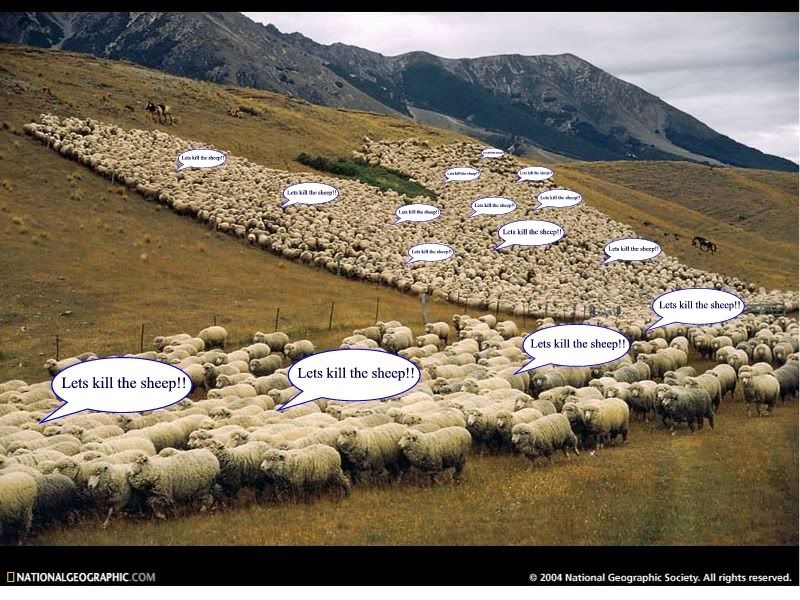
-
Maurizio 13 versus Gazelle.
Maurizio won hands down as Gazelle resort to running away. Maybe it's his animal instincts. -
"The fact of the matter is, before GST was raised to 7%, prices was stable"Originally posted by lotiman:you can claim that you know alot, but sad things is that, you dont seem to understand what you know.
I am enlightened. Pls elaborate...
BS
"after the increase in GST, prices of everything increase across the board"
BS
"You are suggesting that the so called strong Singapore dollar has cushion inflation. But has it cushion any inflation at all?"
Only idiots will doubt this.
The strong Singapore dollar is not a result of the 2% increase, it's the result of our reserves, which the government extracted from Singaporeans through overpriced HDB, electricity, COEs, monopolised gambling, Cars (hefty import tax), GST, etc.
M13 is questioning his own stupidity by claiming that GST will cause a stronger S$ and the main reason for the strong S$ is because of our reserve and not because of a global weakening US$, which causes US$ "peg" currencies to devalue agains S$ -
Originally posted by maurizio13:
The 'ONE-Liners' can only come about from the handicapped infantile mind suffering from spasmodic attacks.
Maybe you can prove to me about what I know or not know, by rebutting my post and instead of regressing to one liners.
This hardly proves that you know anything and understand anything at all. You said I didn't understand anything, but you can't seem to rebut the points put forward by me.
*******************************
I HOPE ALL FORUMERS CAN SEE THAT THIS IS WHAT
NORMALLY HAPPENS WHEN THE MIW AGENTS CAN'T
REBUT MY POINTS.
THEY REGRESS TO USING ONE LINERS LIKE, YOU DON'T
KNOW THIS, YOU DON'T KNOW THAT.
*******************************
These mental spastics condition is a result of suffering from 'Spasmodic Torticollis (ST)' that affects their movements that frustrate them enough to affect their mental condition.
''Nobody knows for sure. It is idiopathic in origin (unknown). Although genetic studies are ongoing, heredity, at this time, occurs in no more than 5-10% of those surveyed. An accident, or a trauma of some kind, can trigger its onset. In approximately 50% of the ST population, there is a family history of hand or head tremors.''
''Some medical people believe STÂ’rs are born with a predisposition to the torticollis/dystonia gene and somewhere along lifeÂ’s path, it is triggered by the aforementioned causes. ST affects movement only and is not life threatening. As a result of this chronic problem ST can affect personality.''
Note that ''an accident or trauma of some kind, can trigger its onset''.
Now we have him reverting to his infantile photos to express his infantile thinking that is typical of a spastic frustrated with the inability to express himself through his handicapped mind. -
Originally posted by Atobe:The 'ONE-Liners' can only come about from the handicapped infantile mind suffering from spasmodic attacks.
These mental spastics condition is a result of suffering from 'Spasmodic Torticollis (ST)' that affects their movements that frustrate them enough to affect their mental condition.
''Nobody knows for sure. It is idiopathic in origin (unknown). Although genetic studies are ongoing, heredity, at this time, occurs in no more than 5-10% of those surveyed. An accident, or a trauma of some kind, can trigger its onset. In approximately 50% of the ST population, there is a family history of hand or head tremors.''
''Some medical people believe STÂ’rs are born with a predisposition to the torticollis/dystonia gene and somewhere along lifeÂ’s path, it is triggered by the aforementioned causes. ST affects movement only and is not life threatening. As a result of this chronic problem ST can affect personality.''
Note that ''an accident or trauma of some kind, can trigger its onset''.
Now we have him reverting to his infantile photos to express his infantile thinking that is typical of a spastic frustrated with the inability to express himself through his handicapped mind. -
Do you fully agreed with what M13 said?Originally posted by Atobe:The 'ONE-Liners' can only come about from the handicapped infantile mind suffering from spasmodic attacks.
These mental spastics condition is a result of suffering from 'Spasmodic Torticollis (ST)' that affects their movements that frustrate them enough to affect their mental condition.
''Nobody knows for sure. It is idiopathic in origin (unknown). Although genetic studies are ongoing, heredity, at this time, occurs in no more than 5-10% of those surveyed. An accident, or a trauma of some kind, can trigger its onset. In approximately 50% of the ST population, there is a family history of hand or head tremors.''
''Some medical people believe STÂ’rs are born with a predisposition to the torticollis/dystonia gene and somewhere along lifeÂ’s path, it is triggered by the aforementioned causes. ST affects movement only and is not life threatening. As a result of this chronic problem ST can affect personality.''
Note that ''an accident or trauma of some kind, can trigger its onset''.
Now we have him reverting to his infantile photos to express his infantile thinking that is typical of a spastic frustrated with the inability to express himself through his handicapped mind.
YES or NO, (Please dont give me long grandmother story) -
NOTICE:
Does Gazelle have Natgeo's permission to use their image? -
Copyright infringement????Originally posted by HyperFocal:NOTICE:
Does Gazelle have Natgeo's permission to use their image?