HDB's mistake but she's made to pay - 4 years later
-
It's very tiring explaining just about everything to you.Originally posted by lagrangian1125:In return for giving up her business, Mdm Lee was given $18,000 by the Housing and Development Board (HDB) under its Hawker Centres Upgrading Programme.
(The Hawker Centres Upgrading Programme (HUP) was launched in Feb 2001 at an estimated cost of $420m to upgrade markets/hawker centres over a period of 10 years. - NEA)
So can anyone tell me does this means a 2nd contract was sign???
Anyone have more specific details on this case?
Because if there is no 2nd contract sign, then my argument stills hold.
It only state Mdm Lee was given 18k by HDB....was it by mistake? or there exist a 2nd contract stating that HDB will pay 18K to her???
A contract does not necessarily have to be signed, a contract is already implied if there is an intention to create legal relations. You take the MRT or bus, you pay for the ride and the transport brings you to your destination.
A contract is a legally binding exchange of promises or agreement between parties that the law will enforce. Contract law is based on the Latin phrase pacta sunt servanda (pacts must be kept).[1] Breach of contract is recognised by the law and remedies can be provided. Almost everyone makes contracts every day. Sometimes written contracts are required, e.g., when buying a house.[2] However, the vast majority of contracts can be and are made orally, like buying a law text book, or a coffee at a shop. Contract law can be classified, as is habitual in civil law systems, as part of a general law of obligations (along with tort, unjust enrichment or restitution).
Think what you want to think, it's your own right. I am just too tired to explain everything to you. -
Originally posted by maurizio13:
It's just as tiring trying to explain bare facts to you.
It's very tiring explaining just about everything to you.
A contract does not necessarily have to be signed, a contract is already implied if there is an intention to create legal relations. You take the MRT or bus, you pay for the ride and the transport brings you to your destination.
A contract is a legally binding exchange of promises or agreement between parties that the law will enforce. Contract law is based on the Latin phrase pacta sunt servanda (pacts must be kept).[1] Breach of contract is recognised by the law and remedies can be provided. [b]Almost everyone makes contracts every day. Sometimes written contracts are required, e.g., when buying a house.[2] However, the vast majority of contracts can be and are made orally, like buying a law text book, or a coffee at a shop. Contract law can be classified, as is habitual in civil law systems, as part of a general law of obligations (along with tort, unjust enrichment or restitution).
Think what you want to think, it's your own right. I am just too tired to explain everything to you.[/b]
the written contract had an exemption clause.
Written contracts trump verbal ones for very OBVIOUS reasons.
The old lady was of sound mind when she signed it. She had the counsel of her daughter, whom I assume could read english and thus intepret the contract.
Even if neither knew english, it is just gross negligence on their part not to get someone to read the contract before they sign it.
I'll say this one more time. The only person who benefits from lying here is the old lady and her daughter. If you want to convince me HDB is lying, I urge you to work in a big organisation. They don't like about this kind of thing, there's no need to.
Now when you want to take a verbal contract stated by the only party in the whole transaction who has the incentive to lie, I feel myself starting to tire of you.
Now, if I am to assume you are familiar with the law, I pose the following challenge to you : Find me the law/precedent where a verbal contract held up against a written one, and I'll stand down here. Bear in mind that the testimony has to be given by a party in the transaction.
It can't be done. You can't have a contract saying A gets 20 dollars from B, then reverse it when B SAYS THEY HAD A VERBAL CONTRACT WHERE A GETS NOTHING.
If this could be done, we might as well throw the whole concept of contracts out the window. -
Originally posted by deathbait:
Replies in Darkred
It's just as tiring trying to explain bare facts to you.
the written contract had an exemption clause.
I have no doubt that the first contract had an exemption clause, you do not have to specifically state the obvious. But doubts has to be raised about the validity of such a contract under the Unfair Contract Terms Act, which states,
Varieties of exemption clause.
13. —(1) To the extent that this Part prevents the exclusion or restriction of any liability it also prevents —
(a) making the liability or its enforcement subject to restrictive or onerous conditions;
(b) excluding or restricting any right or remedy in respect of the liability, or subjecting a person to any prejudice in consequence of his pursuing any such right or remedy;
(c) excluding or restricting rules of evidence or procedure,
and (to that extent) sections 2 and 5 to 7 also prevent excluding or restricting liability by reference to terms and notices which exclude or restrict the relevant obligation or duty.
(2) But an agreement in writing to submit present or future differences to arbitration is not to be treated under this Part as excluding or restricting any liability.
Why is it unfair? It's because compensation is provided for in Landlord and Tenant Act UK. So by specifically putting in an exemption clause just to avoid liability does not work.
The Landlord and Tenant Act 1954, Part 2 (Notices) Regulations 2004 UK
Compensation
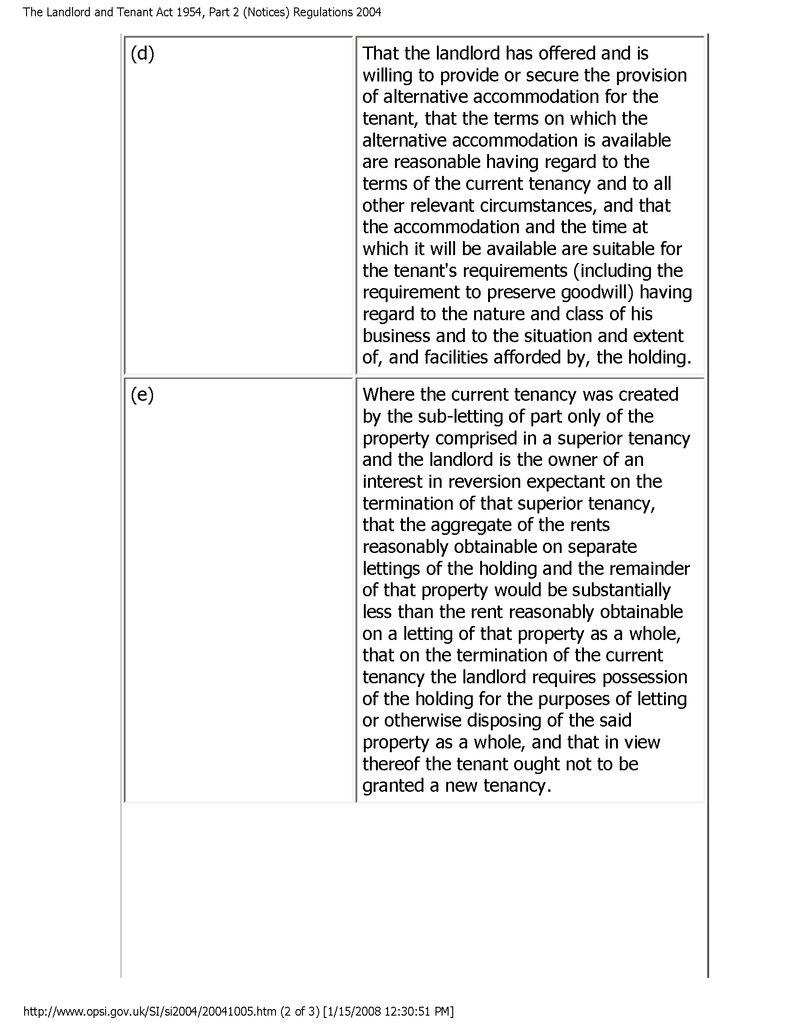
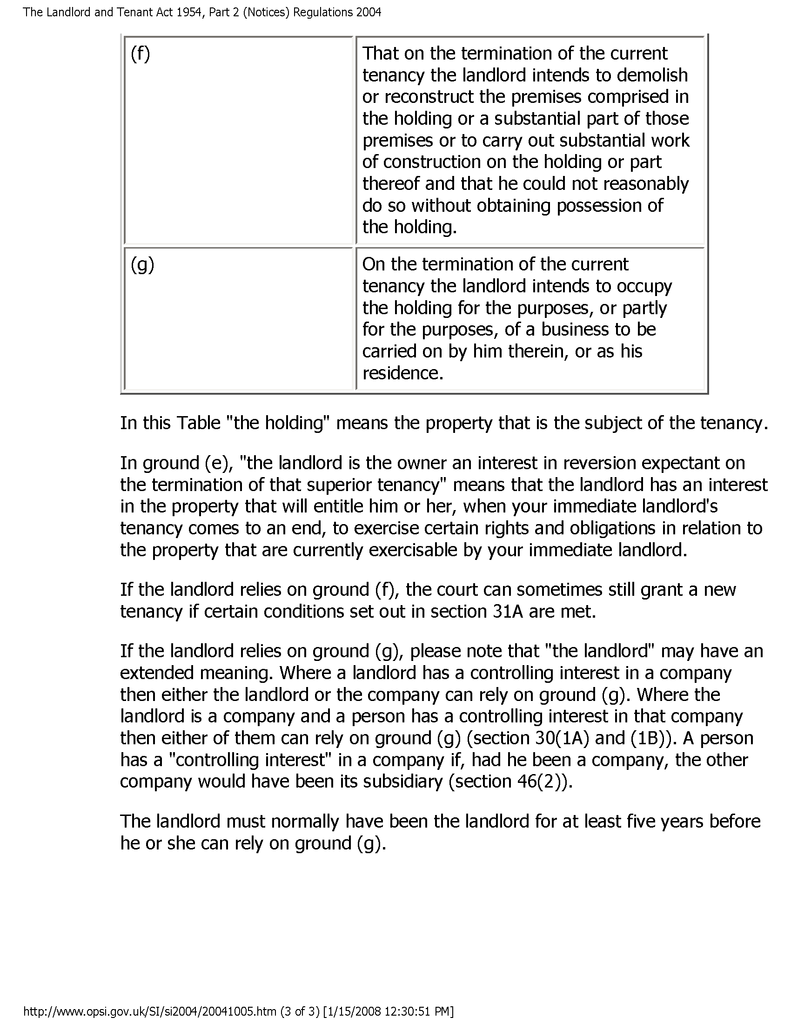
If you cannot get a new tenancy solely because one or more of grounds (e), (f) and (g) in section 30(1) applies, you may be entitled to compensation under section 37. If your landlord has opposed your application on any of the other grounds as well as (e), (f) or (g) you can only get compensation if the court's refusal to grant a new tenancy is based solely on one or more of grounds (e), (f) and (g). In other words, you cannot get compensation under section 37 if the court has refused your tenancy on other grounds, even if one or more of grounds (e), (f) and (g) also applies.
If your landlord is an authority possessing compulsory purchase powers (such as a local authority) you may be entitled to a disturbance payment under Part 3 of the Land Compensation Act 1973.
If you have a right under the 1967 Act to buy the freehold or an extended lease but the landlord is able to obtain pos-session of the premises, compensation is payable under section 17(2) or section 18(4) of the 1967 Act. Your solicitor or surveyor will be able to advise you about this.
The subsections mentioned (e), (f) and (g):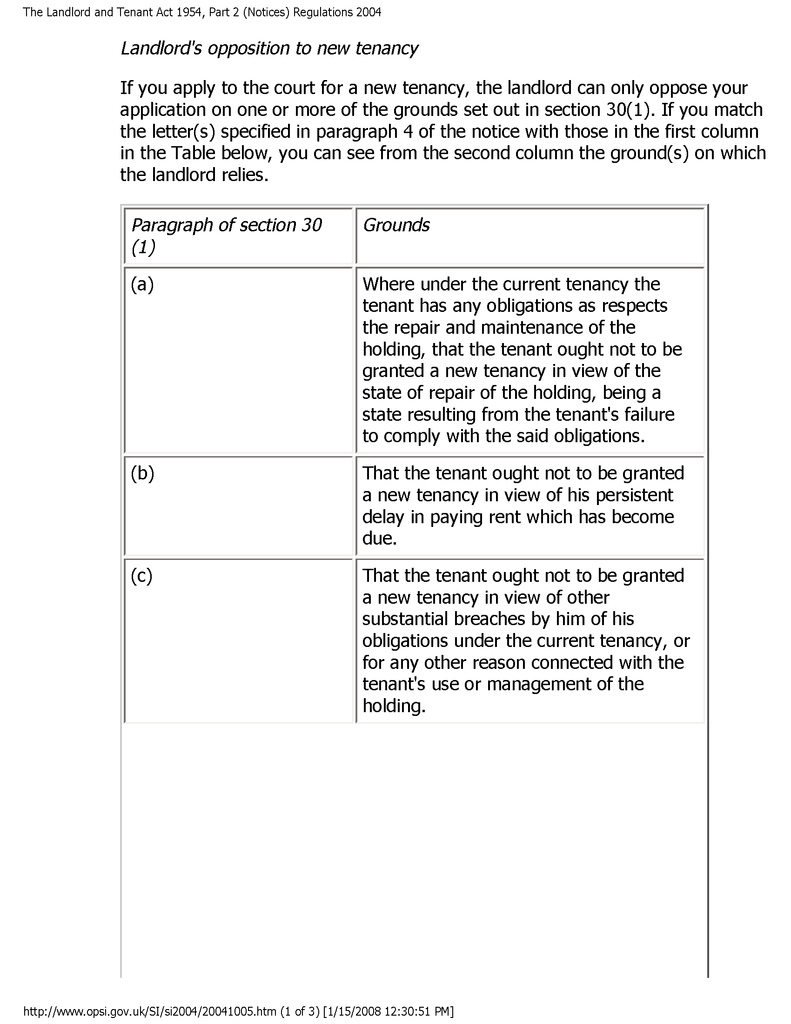
Singapore does not have a Landlord and Tenant Act, so this is the best we could use as a reference.
Written contracts trump verbal ones for very OBVIOUS reasons.
I have no doubt that written contracts override parol ones, but in this situation of the payment of $18,000 for the old lady to give up her stall, there might or might not be any written contract. But the obvious facts from this contract is, the old lady received payment of $18,000 for giving up the right of tenancy for her stall. Contracts does not necessarily have to written up in copious terms and conditions. Whenever we take the MRT or taxi to work everyday, we are parties to a contract. Consideration of payment from you to the MRT or taxi driver and the consideration of ferrying to your destination. As opposed to your layman's view of what is a contract.
A contract is a legally binding exchange of promises or agreement between parties that the law will enforce. Contract law is based on the Latin phrase pacta sunt servanda (pacts must be kept).[1] Breach of contract is recognised by the law and remedies can be provided. Almost everyone makes contracts every day. Sometimes written contracts are required, e.g., when buying a house.[2] However, the vast majority of contracts can be and are made orally, like buying a law text book, or a coffee at a shop. Contract law can be classified, as is habitual in civil law systems, as part of a general law of obligations (along with tort, unjust enrichment or restitution).
Since there may or may not be any written agreement for the 2nd contract, we only have to base our judgement on the facts. There was an offer of $18,000 from HDB to the old lady for her to give up her tenancy in the stall. An exchange of considerations. Be it oral or written, it's still a contract.
The old lady was of sound mind when she signed it. She had the counsel of her daughter, whom I assume could read english and thus intepret the contract.
Even if neither knew english, it is just gross negligence on their part not to get someone to read the contract before they sign it.
Then there is the issue of undue influence which states,
one party takes advantage of the other party's position of weakness, e.g., based on age, illness, mental state, intoxication, etc., thus preventing the latter from exercising free will in the transaction; or one party breaches a fiduciary relationship with the other party.
Business contracts between an attorney and his client are presumptively invalid but can be overcome if the attorney demonstrates that:
1) the transaction was fair and equitable;
2) the attorney informed the client of the nature and consequences of the transaction;
3) the attorney fully disclosed his own interest in the matter; and
4) the attorney encouraged the client to obtain independent advice or rendered the client the type of advice that a disinterested attorney would have given a client.
You mean you sign contract with highly intoxicated person also enforceable? Undue influence also specifies intoxication in addition to aged, illness and mental state.
I might have missed it, but where does it say the daughter was present during the signing of the first contract? Were you there at the signing of the first contract or did the article say that the daughter was present? Are you assuming this just because it suits your purpose instead of basing your arguments on facts of the case? Assumptions is the mother of all fuxxups. You mean when you sign contract with Singtel, Starhub, M1, Singapore Power, JTC, etc, the old folks and others actually take time to read through all the terms and conditions before signing? I have purchased quite a few handphones, in all my purchases I have never seen anyone reading all the terms and conditions.
Same with my father in the past, he is only educated in Chinese, so if he goes to some government body and they give him document to sign on the spot, he will sign it not knowing the contents.
I'll say this one more time. The only person who benefits from lying here is the old lady and her daughter. If you want to convince me HDB is lying, I urge you to work in a big organisation. They don't like about this kind of thing, there's no need to.
Now when you want to take a verbal contract stated by the only party in the whole transaction who has the incentive to lie, I feel myself starting to tire of you.
You mean HDB don't profit from the $18,000? Your logic in the argument is amusing. Nevertheless a one sided logic favouring the government. -
Originally posted by deathbait:
Replies in Darkred
Now, if I am to assume you are familiar with the law, I pose the following challenge to you : Find me the law/precedent where a verbal contract held up against a written one, and I'll stand down here. Bear in mind that the testimony has to be given by a party in the transaction.
Like I replied above, written contracts are easier to substantiate in court as opposed to a parol contract. But if you made a contract in oral and I have a recording and witness to it, it has the same standing in court as a written contract.
Don't be daft to ask me to prove that a oral contract has higher standing than a written one, because if both contracts conflict, there is misrepresentation and the contract is void ab initio. Both oral and written contracts have the same standing in the legal system.
<<<In December 1993, while the policy was in effect, appellant Shunda Smith, Catherine Smith's daughter, allegedly was injured on Interstate 81 in Augusta County while in a motor vehicle that was struck by another vehicle operated by an uninsured motorist. As a result of the accident, the daughter made a demand upon Colonial for uninsured motorist coverage under the policy issued to her mother.
In October 1996, the insurer filed the present motion for declaratory judgment naming the Smiths as defendants. The insurer alleged that, following investigation of the accident, it learned Catherine Smith had made material misrepresentations when applying for the policy. The insurer asked for a judgment declaring that the policy was void ab initio and that coverage was not owed to Shunda Smith.
Following an April 1998 evidentiary hearing, the trial court, sitting without a jury, ruled the insurer had proved by clear and convincing evidence that Catherine Smith had made material misrepresentations when applying for the policy. Thus, the court entered the declaratory judgment the insurer sought. The Smiths appeal.
We shall summarize the evidence in the light most favorable to the insurer, which prevailed below, according to settled principles of appellate review. On March 8, 1993, Catherine Smith met with an agent of the insurer and sought motor vehicle liability coverage on the 1979 pick-up truck. At trial, over the Smiths' objection, the agent testified about the series of questions asked of Catherine Smith posed to enable the insurer to determine its "exposure" and whether to issue a policy of insurance.
continue following page. -
Originally posted by deathbait:
Replies in Darkred
Among the subjects covered in the questions were the ownership of the vehicle and whether there were others in Smith's household who were licensed motor vehicle operators. Responding to the agent's questions, Smith said the vehicle was titled in her name and that there were no other licensed drivers in her household. This information was "input" into the agent's computer, transmitted to the insurer's underwriting department, and reflected in an application form printed by the computer that was signed by Smith. Based on the information Smith furnished the agent, the policy was issued effective March 8.
The insurer later learned, however, that when Smith applied for the insurance she was not the actual owner of the vehicle, but that it was owned by an unlicensed driver who did not live with her. If the insurer had learned this fact at any time after issuance of the policy, it would have cancelled the policy. The insurer also learned later that Shunda Smith, a licensed driver, was living with her mother at the time she applied for the policy. If the insurer had known this fact at the time, the premium charged would have increased by about 50%.
Upon consideration of the evidence, the trial court found the insurer had met the requirements of Code § 38.2-309, which provides that statements in an application for an insurance policy shall bar recovery under the policy if it is "clearly proved" that such statements were "material to the risk when assumed" and were "untrue."
On appeal, the Smiths concede that the trial court had "sufficient evidence to support its decision." The Smiths argue, however, the insurer attempted to prove that the application form signed by Catherine Smith was "incomplete" because, they note, the form did not contain all the questions asked of her or her answers. Nonetheless, they point out, it contained above her signature the language "on the basis of statements contained herein." "Basically," the Smiths say, "Colonial contends that Smith made oral misrepresentations to its agent and that misrepresentation is indicated by the lack of certain information on the application." This "missing information," according to the Smiths, "if ever requested, may have been contained in the agent's computer program but never printed on the application or insurance contract Colonial entered into with Smith."
The Smiths also rely on a "merger" theory in which they contend all misleading statements "Smith made prior to her signing the application were merged" into the contract of insurance. According to the Smiths: "Colonial relies on alleged statements made to the insurance agent and not on information found on the application in order to add to and alter the contents of the insurance contract of the parties." The Smiths contend, building on their "merger" theory, that "[t]he trial court's admission of parol evidence to add to or reform the terms of the contract was legal error."
We do not agree with any of the Smiths' contentions. Their argument demonstrates a misconception of insurance law and practice generally and the application process for motor vehicle liability insurance in particular.
In the first place, there is no requirement that an application for liability insurance be solely in writing; it may be oral, it may be written, or, as in this case, partly oral and partly written. See Franklin Fire Ins. Co. v. Bolling, 173 Va. 228, 233, 3 S.E.2d 182, 184 (1939); North River Ins. Co. v. Lewis, 137 Va. 322, 324-27, 119 S.E. 43, 44-45 (1923).
In the second place, an application for insurance is merely an offer to enter into a contract. Hayes v. Durham Life Ins. Co., 198 Va. 670, 672-73, 96 S.E.2d 109, 111 (1957). The insurance policy is the contract between the parties. Hence, this application for motor vehicle liability insurance did not "merge" into the policy contract that ultimately was issued by the insurer based upon representations in the application.
In the third place, the parol evidence rule applies to written contracts. Amos v. Coffey, 228 Va. 88, 91-92, 320 S.E.2d 335, 337 (1984). Therefore, the rule has no relevance to an application for liability insurance because, as we have said, the application is a mere offer.
Although the written portion of the application in this case is not a model of clarity and does not contain the actual questions posed by the agent, it is nevertheless the embodiment of the discussion between the applicant and the agent. Thus, the written form, as well as the oral testimony explaining the completion of the form, were properly considered by the trial court as evidence that material misrepresentations had been made.
Accordingly, we hold the trial court did not err and we will affirm the judgment below.>>>>
Source: http://www.courts.state.va.us/opinions/opnscvwp/1982070.doc
It can't be done. You can't have a contract saying A gets 20 dollars from B, then reverse it when B SAYS THEY HAD A VERBAL CONTRACT WHERE A GETS NOTHING.
If this could be done, we might as well throw the whole concept of contracts out the window.
Don't you understand already? It's 2 contracts not 1 contract. The offer of $18,000 in exchange for the tenancy of the stall is a new contract. It's a new offer and acceptance. There was a new exchange of consideration ($18,000 and tenancy rights to the stall).
If you have the righteousness, mental aptitude and fervor to accept facts and logic, then perhaps there is hope for you. Else you are entitled your own opinion, I shan't waste any more time with you.
Good day.
No more replies from me.
Thanks. -
so correct me if i'm wrong maurizio13:
Your entire argument in this is that you think a piece of contract you HAVE NO SEEN may be void?
What, we can start tearing up contracts without reading them now?
The onus is on you to prove the contract null and void. And frankly, if you know bureaucracies as well as I do, that is going to be pretty hard.
Also, I'm going to call on your "non-layman" credentials here. While informal contracts are everywhere, a written one always trumps an informal one. I don't care how many types of contracts are available. A written one was also signed. That's enough for me.
You seem to be under the assumption that there wasn't even a written contract. If that were the case, where did HDB pull out that no compensation clause? Was it oral? Where did the lady sign? In the air?
You are right that I was presumptuous to assume the daughter was there at the actual signing. But I really have to inquire here...if your stand is that there is no written contract, what the hell are you talking about?
Also, it matters not how often you don't read contracts before signing them. The fact remains that you SHOULD read them.
"You mean HDB don't profit from the $18,000? Your logic in the argument is amusing. Nevertheless a one sided logic favouring the government. "
Sure, they profit from the 18k. But as many, many people have pointed out, it is but a drop in their treasury. The PR backlash alone is worth more than that. They are risking more than 18k to gain back 18k and you know it. The lady and family on the other hand risk virtually nothing. Even if they lose this, ppl such as yourself would give them value by sympathising.
Since you were kind enough to reply with a semi serious long post, I shall continue my long rant in the next one -
You don't get to argue from thousands of directions, throwing enough dirt and seeing what sticks.
You have had these positions in the last 3 posts
1) there was no written contract
2) when written contract was signed, the old lady was incapable(as in totally unable) of understanding it.
3) there were witnesses to validate the old lady's claim that an oral agreement was struck(quite improbable, as the people who talked to her are unlikely to hold such authority)
Not only do these contradict each other, they are marginal arguments at best.
First of all, there IS a written contract. Don't even know how you're going to argue from this angle
Also, the old lady has already agreed to return the money. The family already admits the money was wrongly taken. This argument is purely philosophical. However, if you're going to assume the role of a law expert, please get your facts right before charging in.
Oh, and by the way. That was a cheap shot at getting the last word. -
Originally posted by lagrangian1125:And as usual, avoiding my qns like a snake....such a slimy person

Since maurizio13 can understand my question and answer them logically, and u at the same time dont even understand what contract I am talking about, u are truly the one that is confused.
U simply dont understand and yet u act high and mighty.
I repeat, It is maurizio13 who gave me satisfactory answer. U on the other hand loop around like a eddy current. Inefficient and wasting ppl time.
u at the same time dont even understand what contract I am talking about, u are truly the one that is confused.Originally posted by lagrangian1125:Yes, that is what I am tryng to say all along. Esp point 2 and 3. How can the old lady knowing that she will be paid 18 K sign a contract stating no compensation made?
The only possibility is the 1st and most obvious clause must have"18k will be paid"
But this will contradict the 2nd clause on "no compensation made", making the contract useless for the HDB to use against the old lady.
Now, the HDB is using this contract as a basis against the old lady. Hence, the contract must be logically sound and this must mean "18K will be paid" clause must not have exist .
This means the old lady should know no money was to be given at all.
Another possibility could be as what M13 said, there is a 2nd contract on compensation.
However ,till now, I dont see EXPLICITLY in any relevant articles that there is a 2nd contract.
However ,till now, I dont see EXPLICITLY in any relevant articles that there is a 2nd contract.
... and that is why I said you wash toilets.
I kept saying that by the fact there was consideration and the deal was signed sealed and the $18K delivered showed that there was a contract and you kept asking where is the 2nd contract.
..and your fellow idiot deathbait changed his position (17 January 2008 · 05:44 AM No deal is being reneged here) about the 2nd contract and now says that a written contract trumps an informal one (a written one always trumps an informal one...18 January 2008 · 02:57 AM) which shows he is another washroom cleaner... and behaving like the witness in TT Durai's trial.
.... $18,000 was paid and the right to another stall was given up and he says it is 'an informal one'
...the last contract trumps the earlier contract like the later WILL trumps the earlier WILL and those that want to nullify the latest WILL have to try to nullify it by saying it is a forgery and so on, meaning that there is no later WILL.
This case, she suffered by having to give up having a stall (entitled to her because of the renovation/relocation).
In this case, the giving up of the right to another stall and the payment of the $18K showed that the terms of the contract was honored. The immoral despots then come around and say that they made a mistake and 4 years later want their money back.
Well she suffered and gave up her right to another stall and they claimed they made a 'mistake'. Only toilets cleaners are too stupid to see that. -
Originally posted by AndrewPKYap:
nice will analogy, except your forgot something.
u at the same time dont even understand what contract I am talking about, u are truly the one that is confused.
However ,till now, I dont see EXPLICITLY in any relevant articles that there is a 2nd contract.
... and that is why I said you wash toilets.
I kept saying that by the fact there was consideration and the deal was signed sealed and the $18K delivered showed that there was a contract and you kept asking where is the 2nd contract.
..and your fellow idiot [b]deathbait changed his position (17 January 2008 · 05:44 AM No deal is being reneged here) about the 2nd contract and now says that a written contract trumps an informal one (a written one always trumps an informal one...18 January 2008 · 02:57 AM) which shows he is another washroom cleaner... and behaving like the witness in TT Durai's trial.
.... $18,000 was paid and the right to another stall was given up and he says it is 'an informal one'
...the last contract trumps the earlier contract like the later WILL trumps the earlier WILL and those that want to nullify the latest WILL have to try to nullify it by saying it is a forgery and so on, meaning that there is no later WILL.
This case, she suffered by having to give up having a stall (entitled to her because of the renovation/relocation).
In this case, the giving up of the right to another stall and the payment of the $18K showed that the terms of the contract was honored. The immoral despots then come around and say that they made a mistake and 4 years later want their money back.
Well she suffered and gave up her right to another stall and they claimed they made a 'mistake'. Only toilets cleaners are too stupid to see that.[/b]
The later will, like in this situation, is highly suspect when the only person who witnessed it stands to gain from it. -
You are just a big fool and talking to you is a waste of time.Originally posted by deathbait:nice will analogy, except your forgot something.
The later will, like in this situation, is highly suspect when the only person who witnessed it stands to gain from it.
A big delusional cowardly insane idiot that issues empty threats.
Was there consideration? Yes, $18,000.
Was there execution of the contract? Yes the money was delivered and the right to a stall (due to the relocation or upgrading) given up.
What 'the only person who witnessed it stands to gain from it'?
Every time you open your mouth you make a fool of yourself. -
yes, i'm supposed to take an argument coming from a man who has to pull off topic references to support his point every other sentence seriously.Originally posted by AndrewPKYap:You are just a big fool and talking to you is a waste of time.
A big delusional cowardly insane idiot that issues empty threats.
Was there consideration? Yes, $18,000.
Was there execution of the contract? Yes the money was delivered and the right to a stall (due to the relocation or upgrading) given up.
What 'the only person who witnessed it stands to gain from it'?
Every time you open your mouth you make a fool of yourself.
You know, the problem with you Andrew is that you never respect the rules of debate. You start blabbing insults the moment you feel your position shaking. It's also known as being a sore loser.