Sydney is very pricey & no public house,a SG just found out
-
In fact you all dont know, Oz govt has tons of money. But they are keeping it for future use.
-
Originally posted by SPLIT SECOND:
In fact you all dont know, Oz govt has tons of money. But they are keeping it for future use.
The budgetary balance of Oz only occured from 2005/06 ,after 30 years in deficits!

http://www.budget.gov.au/2007-08/overview/html/overview_40.htm
How much do Oz gavaman has in fiscal reserve which come from
budgetary balance?
Pl dunt mix up with foreign reserve which is banks and depositors'
money,not net assets of federal gavaman 's money.
Take note the 'strong ' oz currency is wholely supported by
high deposit interest rate.What if the deposit rate drop?
http://news.smh.com.au/business/rba-says-fiscal-position-among-the-best-20080515-2epi.html
Since Australia had shifted from a run of mostly budget deficits until the mid-1990s, to surpluses.
DUNT JUST THINK what should be the facts.Do the research before u post
SPLIT SECOND,according to past postings,stayed in Oz.
This is unfortunate that s/he just think what should be the facts,
without click the computer to find the truths.
Many people just like him/her.I am not suprised.
http://www.sgforums.com/forums/10/topics/326699?page=2
-----btw sg children are childish and mindless compared to aussie kids.
You will at least not find that many kids in oz who talk about flying out of the window like batman or spiderman....
----when i went to Adelaide Uni, for the first time i had interest to study cos i know that what i learn in Aus uni can apply in workplace. But in Sg, when i doind Dip many years ago, i studied just for the sake of studying.I like discuss with people stayed in Oz or still stay there.
They think they know Oz well.
Do they know one of the treasures of Oz is dying?
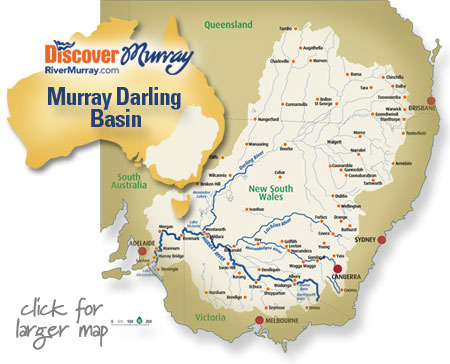
http://www.mda.asn.au/index.cfm?objectid=531DFDAF-DD37-1219-FD2A8B707850E02B
-
Originally posted by O o O:
You call it a propaganda but yet you have failed to touch on the most expensive part of living, which is related to housing.
Australians household saving rate, like UK and USA, are currently at record low while debt/income ratio are at record high. What this means is that most household are heavily in debt due to mortgage.
Hence when you combine that with a 9.25% pa mortgage rate, you will see that whatever extra an Australian earn as compared to Singaporeans, actually goes back to the banks to pay off interest.

Debt-to-income

Saving ratio

Household gearing (ratio of debt-to-assets) by income
True that .... Australians are culturally different to us. SG chinese believe in saving and working hard then enjoying life during their twilight years. Aussies don't have that in their culture. They believe in spending what they earn and enjoying life and because they pay high taxes the general sentiment is that the govt has to take care of them when they are old and retired. Hence Centrelink and all those welfare. -
Originally posted by Genie99a:
True that .... Australians are culturally different to us. SG chinese believe in saving and working hard then enjoying life during their twilight years. Aussies don't have that in their culture. They believe in spending what they earn and enjoying life and because they pay high taxes the general sentiment is that the govt has to take care of them when they are old and retired. Hence Centrelink and all those welfare.
Oh and to add to that..... if the govt fails to provide those welfare they feel "cheated" and vote the govt out . Hence why some peeps feel that Aussies are lazy. They on the other hand feel that since they pay taxes when they are working the govt has a duty of care to provide for them when they are old.
 -
Originally posted by lionnoisy:
The budgetary balance of Oz only occured from 2005/06 ,after 30 years in deficits!
http://www.budget.gov.au/2007-08/overview/html/overview_40.htm
How much do Oz gavaman has in fiscal reserve which come from
budgetary balance?
Pl dunt mix up with foreign reserve which is banks and depositors'
money,not net assets of federal gavaman 's money.
Take note the 'strong ' oz currency is wholely supported by
high deposit interest rate.What if the deposit rate drop?
http://news.smh.com.au/business/rba-says-fiscal-position-among-the-best-20080515-2epi.html
DUNT JUST THINK what should be the facts.Do the research before u post
Another interesting post and lion is stating a fact and I agree with it.
However bro there are reasons why its like that. Read my post above about the welfare system in Australia and you'll understand why it has deficits. The federal govt is working on a tightrope you see. It has to reduce deficits BUT if he cuts into welfare then the people get angry and vote them out lol.
But its still a lucky country cause of natural resources ... an eg. is uranium which I think is sold to China. And the mining Industry in Australia..... talking about that did you know that working as a miner in Australia netts you $100k AUD a year? I myself was shocked lol and you don't need a 3-5 year degree for that too. But i guess its dangerous work.
-
above:A$1 vs USD only.
http://sg.finance.yahoo.com/currency/convert?from=AUD&to=USD&amt=1&t=2y
Oz possess few traits of Asian economic crisis---
-----high current account deficit vs GDP
-----banks borrows Foreign currency at lower interest rate
then lends at higher interest rates
----huge external debt
----fiscal balance not substinal(pl read my graph shown above)
----inflation in 17 years high
http://www.imf.org/external/np/exr/ib/2000/062300.htm
1.sudden currecy drop
BUT A$ drops 9% at trade --weighted to various currencies in less than 1 month!!
2.The current account deficit rate is higher than few countries
in Asian financial crisis.
Oz current account looks not so rosy,at US$56.2 b vs GDP US 760 b at PPP.
about 7.4% of GDP.
https://www.cia.gov/library/publications/the-world-factbook/geos/as.html
3.High external debts---mostly private debts
read CIA above then u know.
It is 108 % and 90 % of GDP at PPP and GDP at official exchange rate respectively.
This is on par and worse than with few hard hit countries before the crisis:
Thailand ---90%
Korea ---32%
Indonesia ---55%
It looks not nice combined with sudden drop in FX rate.
Of course,i cant say the crisis is coming,for i dunt have the crystal ball.
But can u deny there are some things looks familiar.
U also can say,hey Oz get rich underground resources.Yes.
U are right.
Now i think the key is if house price will drop further.
If it is,then most likely problems will come,like USA and other countries
sub prime.I told u OZ still grant 100 % loan.Banks will have to write off
and may face difficult to pay interst and principal to external creditors,
and then EXCHANGE rate!!
U better pray followings will not happen
----house price drop further
----drop further in FX rate(it is a resultant effect rather than a cause)
----lower deposit interest rate which will drag down FX rate
-----mega currency sabotage operation like in the crisis(u will be naive
if u think profits--seekers only target at non--English speaking countries)
-----if u find any huge short selling of Oz dollars,pl share here.
read this for house report
http://www.ljhooker.com.au/cmsdata/files/internet/cms_489faf9929708.pdf
-
Originally posted by Genie99a:
Another interesting post and lion is stating a fact and I agree with it.
However bro there are reasons why its like that. Read my post above about the welfare system in Australia and you'll understand why it has deficits. The federal govt is working on a tightrope you see. It has to reduce deficits BUT if he cuts into welfare then the people get angry and vote them out lol.
But its still a lucky country cause of natural resources ... an eg. is uranium which I think is sold to China. And the mining Industry in Australia..... talking about that did you know that working as a miner in Australia netts you $100k AUD a year? I myself was shocked lol and you don't need a 3-5 year degree for that too. But i guess its dangerous work.

Economic reality:
1) Despite the high debt level of Australia, their currency is still higher than Singapore. If Australia is like what you made it out to be, wouldn't the exchange rate tend to Indonesia or Malaysia?
2) Australian's workers make more per hour compared to Singaporeans. They have higher spending power compared to Singaporeans.
3) As a result of a miner's job scope, they exposed themselves to risk of death / disability everyday. Therefore they are paid for the risk they take, the higher the level of risk, the higher paid they are. There is nothing to be shocked about, the shock is a result of your level of understanding.
-
lionnoisy,
1) With all the reserves Singapore has and the deficits that Australia has. Why is the inflation rate in Australia 4.5% (Jun 2008), while Singapore is 7.5% (Jun 2008)?
-
There seemed to b exodus of talented local to Australia.
-
Originally posted by maurizio13:
Economic reality:
1) Despite the high debt level of Australia, their currency is still higher than Singapore. If Australia is like what you made it out to be, wouldn't the exchange rate tend to Indonesia or Malaysia?
2) Australian's workers make more per hour compared to Singaporeans. They have higher spending power compared to Singaporeans.
3) As a result of a miner's job scope, they exposed themselves to risk of death / disability everyday. Therefore they are paid for the risk they take, the higher the level of risk, the higher paid they are. There is nothing to be shocked about, the shock is a result of your level of understanding.
1.I just say Oz possessing some traits before the crisis.I am not saying what should be the CURRENT FX rate.I just say''hey fren.Do u know these info.''Thats all.
No offence.
2.OZ higher wage but come with higher price.
3.Why do u talk about miners?What u say seem refer the high deposit interest
rate u will get if u park your $$$ in A$.Low deposit interst rate mean lower
risk.Do u know why they pay u so high deposite interest rate?
-
Originally posted by maurizio13:
lionnoisy,
1) With all the reserves Singapore has and the deficits that Australia has. Why is the inflation rate in Australia 4.5% (Jun 2008), while Singapore is 7.5% (Jun 2008)?
There is no corelation between reserve,I think u mean fiscal reserve,
and inflation.But if u talk about gavaman use fiscal reserve to subsidy fuel,
foods etc,then it is related.
But SG never give subsidy to fuel and foods,except housing.
-
Originally posted by will4:
There seemed to b exodus of talented local to Australia.
yes.i think i post the data in this forum.But there are many local and overseas
born Oz citizens and PR left every year.
New arrivals in Oz helps to support the little--falling property market.
read this
http://www.ljhooker.com.au/cmsdata/files/internet/cms_489faf9929708.pdf
Sit tight---some shocking news
I dunt know it is tip of iceberg or isolated case.
U are the one to interpret.U may not like to hear,
Like Chinese say,Good advice taste sour.
One of the property mortgage fund extend freeze on redemption
to one year and the worse is default rate is good 53%!!
During the 6 months ended 30 June 2008 the Fund was scheduled to receive loan repayments of approximately $725 million, however the actual loan repayments received by the Fund were $343 million.
This has necessitated the difficult decision by the Board to extend the deferral of redemptions for up to a further 180 days, bringing the total deferral period up to 360 days.
http://www.citypac.com.au/citypac/documents/email/20080728_Letter_to_investors_CPFMF.pdf
http://www.theaustralian.news.com.au/story/0,,24185085-643,00.html?from=public_rss
City Pacific plans to raise up to $1bn
http://www.theaustralian.news.com.au/story/0,,24086208-25658,00.html?from=public_rss
Dangerous times for unlisted property trusts
-
it takes guts and daring to do emigration, something which the saf lacks. it is better stay in SG to play soldiers while still staying in parent's house.
-
Originally posted by fishbuff1:
it takes guts and daring to do emigration, something which the saf lacks.
it is better stay in SG to play soldiers while still staying in parent’s house.
SG get high inflation.So more people migrate will ease it.
Will i get one dollar if one more leave behind to suffer?
I just want them do proper home work before landing in Oz.
Dunt get a hot potato once they land----quickly buy a house
not even know the reality.
see .one more Centro property group in trouble--
already old news stretching from 2007;
cant pay interest on loan
http://www.centro.com.au/NR/rdonlyres/7DBB997F-DA9C-42BD-9FC9-E856CBD5B543/0/LettertoInvestors30June2008.pdf
26.06.2008
Centro advised that it had elected to not make the coupon payment
due 30 June 2008 on its Exchangeable Notes. This option was
elected to conserve liquidity and against the background of Centro’s
declaration of a nil distribution for the six months to 30 June 2008.
As a result of choosing this option, Centro is prohibited from making
any distribution to ordinary stapled securityholders until such time as
the missed payment has been made. -
Originally posted by lionnoisy:
There is no corelation between reserve,I think u mean fiscal reserve,
and inflation.But if u talk about gavaman use fiscal reserve to subsidy fuel,
foods etc,then it is related.
But SG never give subsidy to fuel and foods,except housing.
You mean exchange rates, reserves and inflation are not linked?1) MAS controls the exchange rate between the various currencies.
2) If MAS appreciates the SGD against the USD, it will make our imports cheaper, thereby reducing inflation.
Ermmmm.....
Singapore never give any subsidies for housing, they only give a discount. e.g. If the cost of production is $50k, they selling at $200k, they give you 10% discount. But ultimately they still pocket $130k.
This is alot like the discount some smaller departmental stores give to customers, they mark up the price, then give you a discount, tell you, you managed to save alot from the discount.
-
The City Pac i mentioned above most likely arring a mortgage size
of A$15.8 b!!
http://moneytools.news.com.au/banking/calculate/flash/amortising.asp
assuming all aloan average at 7.79% and 25 years term
-
Originally posted by maurizio13:
You mean exchange rates, reserves and inflation are not linked?1) MAS controls the exchange rate between the various currencies.
2) If MAS appreciates the SGD against the USD, it will make our imports cheaper, thereby reducing inflation.
Ermmmm.....Singapore never give any subsidies for housing, they only give a discount. e.g. If the cost of production is $50k, they selling at $200k, they give you 10% discount. But ultimately they still pocket $130k.
This is alot like the discount some smaller departmental stores give to customers, they mark up the price, then give you a discount, tell you, you managed to save alot from the discount.
If MAS can control the rate,u and i no need to work lah.
Just peg at S$1 to US$1,000 !!My Dear.MAS 's ability is limited.
It can fine tune and cant change the main trend.
If foreign investor find no prospect in SG,SG can fall like stone.
All $$$ in Temasek and GIC,est US$300b, cannot change the manin course.
Have u think the side effect of appreciation??
Export become expensive ,tourists find not attractive etc...
2.HDB said cost is 300,000 a unit in Punngol and Sengkang but
sold at some $240,000.Ok.i think u guys will not listen.
3.The term Asian Economic Crisis was coined after the crisis.
We dunt know if we are in any crisis.
-
Originally posted by lionnoisy:Originally posted by maurizio13:
If MAS can control the rate,u and i no need to work lah.
Just peg at S$1 to US$1,000 !!My Dear.MAS 's ability is limited.
It can fine tune and cant change the main trend.
If foreign investor find no prospect in SG,SG can fall like stone.
All $$$ in Temasek and GIC,est US$300b, cannot change the manin course.
Have u think the side effect of appreciation??
Export become expensive ,tourists find not attractive etc...
2.HDB said cost is 300,000 a unit in Punngol and Sengkang but
sold at some $240,000.Ok.i think u guys will not listen.
3.The term Asian Economic Crisis was coined after the crisis.
We dunt know if we are in any crisis.
What you proposed SGD1 = USD1,000 is exchange rate idiocy.
We are controlling inflation, not promoting capital flight.
Second, the MAS operates a managed float regime for the Singapore dollar. The trade-weighted exchange rate is allowed to fluctuate within an undisclosed policy band, rather than kept to a fixed value. The band provides flexibility for the system to accommodate short-term fluctuations in the foreign exchange markets as well as some buffer in the estimation of the country's equilibrium exchange rate, which cannot be known precisely. MAS' intervention operations generally 'lean against the wind'. If the exchange rate moves outside the band, MAS will usually step in, either buying or selling foreign exchange so as to steer the exchange rate back within the band.
http://www.mas.gov.sg/resource/publications/monographs/exchangePolicy.pdf
-
Originally posted by lionnoisy:
1.I just say Oz possessing some traits before the crisis.I am not saying what should be the CURRENT FX rate.I just say''hey fren.Do u know these info.''Thats all.
No offence.
2.OZ higher wage but come with higher price.
3.Why do u talk about miners?What u say seem refer the high deposit interest
rate u will get if u park your $$$ in A$.Low deposit interst rate mean lower
risk.Do u know why they pay u so high deposite interest rate?
1) Let's face it, if Australia has a crisis, so does Singapore. Singapore's Foreign Direct Investments in Australia end 2003 was AUD 22.1 billion. If Singapore saw investment opportunities in Australia, why don't you. Have you change your stance by supporting CSJ and oppose P4P?http://www.firb.gov.au/content/singapore/statistics.asp?NavID=65
Maybe you should start telling the P4P government how bad Australia really is before you try convincing us.
2) What higher price? Citizens having a more relaxed lifestyle? Or are you the typical SM who needs to be whipped once in a while?
3) I talked about miners because someone was referring to their high wage rate (if you had taken the time to read and comprehend, you will also noticed that the reply wasn't directed at you).
4 Aug 1998:
AUD 1 = SGD 1.0443
Australia Interest Rate = 4.7%
1 Aug 2008:
AUD 1 = SGD 1.279327
Money in Australian denominated currency
Assume a Singaporean converted SGD 100,000 to AUD, he would get AUD 95,758.
Leaves this amount for 10 years, assume that interest rates remain at 4.7% (I am sure interest rates would have gone up).
After 10 years, he gets AUD 151,578, converts to SGD 193,920 (AUD 1 = SGD 1.279327)
**This site has the housing loan rate, I do not know the savings rate for Australia, but will assume a bid-ask spread of 2%, therefore 4.7% (6.7%-2.0%) for Aug 1997.
http://www.loansense.com.au/historical-rates.html
Money in Singapore currency
Say this Singaporean keeps his money in a Singapore bank, assume that this Singapore bank pays him 2.5% (CPF interest rate, which is normally higher than savings interest rate).
At the end of 10 years, this person would have only SGD 128,008 in his Singapore bank account.
So......What kind of RISK are you talking about? The RISK that the Australian investment will make more money than the Singapore one?
-
Originally posted by Genie99a:
Another interesting post and lion is stating a fact and I agree with it.
However bro there are reasons why its like that. Read my post above about the welfare system in Australia and you'll understand why it has deficits. The federal govt is working on a tightrope you see. It has to reduce deficits BUT if he cuts into welfare then the people get angry and vote them out lol.
But its still a lucky country cause of natural resources ... an eg. is uranium which I think is sold to China. And the mining Industry in Australia..... talking about that did you know that working as a miner in Australia netts you $100k AUD a year? I myself was shocked lol and you don't need a 3-5 year degree for that too. But i guess its dangerous work.
One of the very few posts here that look at facts and know what is fact and call it fact.
Australia is a big continent and Singapore is a small island. Australia has plenty of minerals and they only need to dig and sell. Can't really compare the economy of Australia with that of Singapore.
The continent can still accommodate probable another 50 million people there so those who don't feel comfortable in Singapore should just move there.
Singapore as a small island can only accommodate and feed that many of people, let those who want to stay, stay.
-
Yes.Oz is blessed with rich natural resources.
Similiar to Asian Econ Crisis
RESEARCH PAPER 99/14
11 FEBRUARY 1999
The Asian Economic
Crisisreport by
Eshan Karunatilleka
ECONOMIC POLICY AND STATISTICS SECTION
(UK)HOUSE OF COMMONS LIBRARYread if Oz fit the bills
Factors Behind the Asian Crisis 13
A. Underlying Causes of the Asian Crisis 13
1. Unsustainable Current Account Deficits 13
2. Over-Dependence on Short-Term Foreign Funds 15
3. Poor Regulation of the Economy 18
4. Over-Inflated Asset Prices 19
5. Macroeconomic Policy: Fixed Exchange Rates 20I find it similiar to US sub prime.----gavaman bail out banks
US gavaman bailed out billions of mortgagebacked securities.
If would be naive if u think all these kind of mortgagebacked securities
just sold in USA!!.
Oz Reserve Bank just do the same,but just the beginning.
http://business.smh.com.au/business/shortterm-fix-reserve-in-320m-mortgage-deal-20080420-27e6.html
Short-term fix: Reserve in $320m mortgage deal
- Stuart Washington
- April 21, 2008
THE total freeze in the securitised home loan market and the consequent dangers to ordinary Australian home loan borrowers have been recognised in an unusual Reserve Bank action to buy mortgagebacked securities.
On Friday the Reserve Bank bought $320 million in mortgage-backed securities, providing much-needed liquidity to a bank or non-bank lender that had packaged a series of home loans for on-selling.
But in the current market, afflicted by the credit crisis, no mortgage-backed securities have been sold this year after investor confidence in these products dropped dramatically - packaged home loans worth $45 billion were sold in the first half of last year and in the second half the figure was just $6 billion.
The packaging of home loans into securitised vehicles until now has provided a valuable additional source of home loan financing to bank and non-bank lenders alike.
It moves the loan from an institution's balance sheet, giving it extra liquidity for other loans or allowing it to meet its regulatory capital requirements. The result for home loan borrowers is that more loans have been available, meaning more competition and cheaper home loans.
Non-bank lenders have been leaving the market rapidly, with Macquarie Group among those to cut back or exit altogether, because of the difficulty of gaining the necessary financing for mortgages at a favourable rate.
The Reserve Bank action is seen as an acknowledgement of the difficulties banks are facing in their ability to on-sell mortgage-backed securities.
But the terms of the Reserve Bank purchases are less than a year and the money has been provided only on the basis that the securities are repurchased by the original institution.
"The positive thing is … it solves the short-term liquidity issue which is obviously very pressing," says Greg Medcraft, the chief executive of the industry lobby group, Australian Securitisation Forum.
"What it doesn't do is solve the long-term liquidity issue."
Only last September and October, the Reserve Bank included mortgage-backed securities among the securities it would buy from banks and accredited non-bank lenders. Friday's purchase was one of the few sizeable transactions to date.
Mr Medcraft said this facility was not well known among most lenders. Previously, he said, most banks and other lenders had not attempted to use it.
This was partly because of the stigma of being seen to need Reserve Bank help to restore liquidity, a move that could be portrayed negatively and frighten investors.
-
i find it strange that Oz Reserve Bank's Foreign Reserve drops very fast
http://www.rba.gov.au/Statistics/Bulletin/index.html
read A4
-
OMG!It look like Oz is just the same as USA in sub prime
or,i call it is over lending.At least A$251 billion of
security back loan sold!!
pl read my above posting for news in April 2008
But in the current market, afflicted by the credit crisis, no mortgage-backed securities have been sold this year after investor confidence in these products dropped dramatically - packaged home loans worth $45 billion were sold in the first half of last year(2007) and in the second half the figure was just $6 billion.
As at end 2006,Oz get A$200 billion in The Australian securitisaton market.
http://securitisation.com.au/asf.html
ie about 200 % of GDP!!

''Australian Securitisation
The Australian securitisaton market has enjoyed rapid growth over the last 10 -12 years. The size of the market, based on the values of securities outstanding by Australian securitisation vehicles, has increased from $10 billion in March 1995 to over $200 billion by the end of 2006.(lion note:ie there is at least 251 billion at end of 2007)
Part of the growth of the Australian securitisation market has been driven by the growth of specialist mortgage originators.
The types of assets that have been securitised to date in Australia include:
- Residential mortgage loans
- Vehicle and equipment loans and leases
- Credit and charge card receivables
- Trade receivables
- Collateralised loan obligations
- Net interest margin (income streams)
- Commercial mortgage loans and lease''
-
En bloc sales cause collective trouble
THE residential property boom in Singapore has been characterised by a peculiarly Singaporean phenomenon known as en bloc or collective sales.
Last year, 109 such deals were done, totalling $S13.3 billion ($10.5 billion).
An en bloc or collective sale occurs when owners in an apartment block agree to sell the entire block for redevelopment.
In its wake, Singapore's en bloc fever has produced instant multi-millionaires, but has also spawned legal challenges and untold bitterness among minority owners forced to sell.
A High Court hearing due next week will be closely watched - and could unravel the many pending en bloc sales.
At least 10,000 apartments will be demolished for new developments, leading to even more expensive apartments, over the next two years or longer.
Renters, particularly expatriates, are the pawns in the high-stakes game as their favourite suburbs, districts 9, 10 and 11, are where most of the en bloc sales are taking place.
They face rising rents and uncertainty of tenure.
An Australian who works with an investment bank in Singapore, said: "We knew in May that we would have to move out of our flat because it has been sold in a collective sale.
"We have another year to go before the end of our lease. Then to add insult to injury, our landlord doubled our rent for the remaining months of our lease."
Stories like this are common among expatriates, most of whom rent. It is not unusual for rentals to rise 150 per cent.
Placed in an equally unpalatable predicament are owners who have been forced to accept the collective sale of their building, only to find that the market has streaked ahead.
The settlement for their apartment will not be sufficient to buy into a comparable new flat in their own suburb, and they often have to downgrade to smaller accommodation.
Collective sales take up to a year to settle. In the meantime, property prices continue to rise, creating a widening gap between the apartment sale price and the cost of a new one.
Singapore's strata title laws allow an en bloc sale if 80 per cent of the owners agree to it.
The remaining 20 per cent must accept the deal.
CB Richard Ellis investment sales executive director Jeremy Lake said opposition by minority owners increased sharply in the second half of last year. The main reason was the substantial increase in land values since deals were concluded in the first half of 2007.
Objectors take complaints to the Strata Titles Board, which had 68 objections for 60 collective sales applications in 2006.
Last year, complaints to the board increased dramatically.
In the past six months, the board had rejected "two or three" sales on technical grounds or for "lack of good faith", Mr Lake said.
Owners have started to challenge the board's decisions.
Next week minority owners in the controversial Horizon Tower en bloc sale expect Singapore's High Court to begin hearing their appeal against a decision in December by the board to approve the en bloc sale.
These unhappy owners say the board erred in law by approving the sale and ordering minority owners to be bound by a sale and purchase agreement signed by the majority owners.
They also say the then sales committee failed to do its duty to obtain the best price.
Most of the owners agreed to sell the apartment block for $500million to a consortium led by Hotel Properties Ltd, which includes US investment bank Morgan Stanley.
The buyers have threatened to sue the owners for $1 billion if they default on the sale.
Credo Real Estate achieved the highest price for an en bloc sale, of $S1.33 billion or an average of $S2.1 million for each the 618 owners in an apartment block in Farrer Road.
Credo executive director Tan Hong Boon said owners got a higher price for selling collectively to a developer.
The block was sold to a CapitaLand consortium that included US-based Wachovia Bank, which plans to build 1500 units on the site.
Mr Tan said the break-even price for the new units was at least $S1.8 million. To make a reasonable profit the price would have to be between $2.2 and $2.8 million each.
The en bloc phenomenon began in the 1994 property boom.
In 1993, the Government published a master plan for development in Singapore, which outlined zoning and plot ratios for suburbs, Mr Tan said.
"Property consultants saw the potential for redevelopment with higher density in areas where land was underused."
The en bloc momentum would slow only if there is an economic down turn, Mr Lake said. The first en bloc cycle ended in 1997 with the Asian financial crisis.
Collective sales picked up again in 1999 but petered out in 2001 when the dotcom bust put a dampener on residential sales.
The current cycle began in 2006, setting records for en bloc sales, turning owners of once-humble apartments into multimillionaires. Since the second half of last year, with the unfolding of the US sub-prime crisis, price rises had eased and it would take longer to get transactions off the ground, Mr Lake said.
-
Housing Woes in Singapore
Over the last six months since the proposal, we’ve managed to obtain most of the wedding services we need like venue, wedding boutique, photographers and even secured the help of a well respected (and our favourite!) surgical professor to solemnize our matrimonial vows. Everything has been pleasantly smooth sailing but one stand-out problem remains unsettled and that is the most basic issue of housing.
Property in $ingapore as we all know is broadly divided to cheaper public Housing Development Board (HDB) flat apartments and expensive private properties in the form of condominums and landed housing. In the typical scenerio, private property is financially beyond reach of a young couple starting out (sans generous parents & blank chequebooks), so the singular choice is only public housing. Now while our award-winning public housing policy has managed to allow most $ingaporeans to at least own their own roof, it is a flawed system that is an omnipotent ulcer in every young salaried $ingaporean couple.
There are two methods of obtaining a HDB flat - either a new flat from the HDB or 2nd hand resale from a previous owner. Paradoxically an old resale flat is more expensive than a new flat due to the standing policy to match resale market prices to private sector sales. On top of that, older flats are usually found in established mature towns and resulting high demand, thus causing the prices to shoot up to unrealistic values. Though there is a policy to subsidize new couples buying expensive resale flats, the subsidy comes with many stipulations and is usually insufficient to offset the high prices demanded from the previous owner.
The more favourable path is to buy a new flat that is not only brand new but also cost efficient. The catch is that purchasing a new flat requires you to toss your name in a hat to ballot with the rest of the country and the odds of success is usually 1 in 5 (we’ve personnally tried more than 5 attempts over the past 1 year and the trend is recurrent disappointment). New flats also take about 3-5 years to build which means unless you start looking for a flat once you start dating, chances are you’ll be standing right in my homeless shoes now. There is another option of privately-build public flats which take an accelerated 2 years to finish building but again, they seem priced for profit of the construction companies rather than policy of cheap housing for the citizens.
What this all means is that our options are: 1. Take up a high loan to buy a ready resale flat. 2. Take up a high loan to buy a private-contract flat 3. Keep waiting for a new cheap flat and bunk in with your parents in the meantime, inviting ridicule and over-crowding tensions of the family. 4. Keep waiting for a new flat and pay exorbitant rentals in another place temporarily 5. Don’t get married at all. Okay the last point is pretty irreverent.
We are currently still exploring our options between a point 1 to point 4. Even though there is still more than year before our actual wedding, this problem is like a invisible mini-bomb constantly ticking at the back of our minds. Some days, just some days, you wish you had richer parents.