ERP galore at KPE is for motorist safety!
-
On the surface .. ERP is "solving" our problem but deep down.. It's not. It's a win win situation for goverment still.. Nothing new from them
-
Originally posted by jojobeach:
As a driver myself...
The congestion usually is a result of some bottleneck further up the road... if they can resolve the bottleneck problem .. they will prevent the backup of traffic into the tunnel...
So.. how does ERP help again ????
Our ministers have a weird way of resolving problems.
you should say our government never miss the opportunity to make money ... even without good reason ....
-
Originally posted by ORIGAMIST:
you should say our government never miss the opportunity to make money ... even without good reason ....
what's new? they running it like a business or organisation instead of running it like a country. somewhere lost money, come back here take back from the people.
-
Not all 6 new ERP gantries need to be switched on in November
SINGAPORE : Not all of the six new Electronic Road Pricing (ERP) gantries need to be switched on in November. Transport Minister Raymond Lim offered this little nugget of hope to motorists at a talk to the Press Club on Friday.
ERP was an obvious hot topic at the talk, especially as it comes after rates went up at about half of all gantries in the central business and shopping areas, while five new gantries along the Singapore River were added in July.
Explaining the rationale, the minister said such road pricing was a measure of last resort.
He said: "We recognise that such system-wide changes will have a significant impact on people's lives. So let's roll it out in phases, and as we roll it out in phases, we hope we might end up doing much less than we have to."
He added that since the July changes, speeds have picked up on many of these roads.
Thus, not all six new gantries that the Land Transport Authority had previously announced would be switched on in November, may have to become operational.
These are the ones along Serangoon Road, Commonwealth Avenue, Jalan Bukit Merah, Alexandra Road, AYE-westbound near Alexandra Road and PIE-westbound near Eunos.
There was also a nugget of good news for public transport commuters - bus passengers may get higher transfer rebates. Details are expected to be announced next week.
This means the majority of bus passengers who make one or more transfers stand to benefit.
During question time, Mr Lim was asked if fares for children could be waived, in light of Singapore's family-friendly thrust.
The answer was that it boiled down to a question of government intervention and cross-subsidies - a path it is not likely to take.
Click here to read the full text of Transport Minister Raymond Lim's speech.
- CNA/ms
-
Transport Minister Raymond Lim offered this little nugget of hope to motorists at a talk to the Press Club on Friday.
-
Raymond Lim is hopeless lah.
-
Originally posted by freedom4ever:
Raymond Lim is hopeless lah.
He may be hopeless, but he is making tons of money .... -
Originally posted by ORIGAMIST:
He may be hopeless, but he is making tons of money ....
exactly, and to make tons of money, he has to be ruthless and humanless. -
Originally posted by angel7030:
exactly, and to make tons of money, he has to be ruthless and humanless.
Angel.. what are you waiting for ?Go and seduce him lah.. then use his gov connection to get your citizenship approve asap.
-
Uncler Raymond wat u wants us citizen to do
buy car leave them at ur carpark. And make
baby for u minister so u can say this is the
right direction .
-
LOL!. I hope Govt make a new documentary 'ERP - The Bloodsucking Gantry'
-
ERP being Every Road PAy, so what can we expect ???
-
erection of ERP gantry spotted on slip road from TPE(PIE) > KPE(ECP).
now is only the grey columns.
is it one among the 16 along KPE or new one? -
ERP - The Perfect Democratic Socialist system for car ownership
The failure of the govt in implementing the ERP system lies with its lack of constant persuasive communication with the general population on its virtues.
Background info
Back in the 90s, facing an affluent middle class, MM Lee had to use COE to curb traffic gridlock due to the rise of car ownership, where even a receptionist drives to work.
It affected economic productivity as workers, managers, CEOs, students were late for work and appointments on our limited roads.
With a premium capped on buying cars using COEs, it became only the rich could afford cars, when COE rosed to $90,000 a certificate ($750 upfront per month). A japanese make Toyota Corrolla cost $150,000 to buy.
MM Lee is neither right or wrong to force such measures when that issue of car ownership was placed on the pedestal of economic survival for our society. He was only a product of his authoritative times.
Present
PM Lee is also a product of his/our times. A time of more educated, affluent and socially aware equal citizens who aspired towards car ownership.
ERP is a fair system which he approved, of taxing road usuage than for car ownership. You pay for what you use. What you don't need to use, you don't need to pay.
Thus anyone who earns $2,000 a month can afford a new or cheaper 2nd hand car, with the lowered COE price of $9,000, with a monthly loan of $700+ for a $61,000 Toyota Corrolla.
If you drive to work, it becomes necessary to pay the toll charges, but then you would probably be able to write off such charges as you would be making more economic profit with that shortened time driving than taking public transport.
ERP charges are also tax deductibles for companies, which can be offset when paying company tax.
At least, there is no longer a hefty upfront of $90,000 COE charges to pay per car, making cars affordable to all.
At nights and weekends, if all 1.9 million working citizen population were to buy a car each, there will be heavy traffic and perhaps even gridlock, but then, there will be no lateness for work or appointments as majority of offices and vital economic activities would had been wounded down.
For that comfort and small time in jams affecting not the economy, only our time, it is worth it than to be jam packed in public transport sniffing up armpits, or listening to some ah beng's garbage played out loud on that cheesy tiny speaker handphone .
Suggestions
1. Support PM Lee on the ERP system and plead for better improved public transportation for non-car owners using ERP taxes.
2. Capped COEs below $10,000
3. Educated and enlightened car owners to plan their routes more efficiently, even on weekends
4. Govt to revamp and improve their grassroots leadership systems to disseminate public policies more efficiently and effectively.
The Golden Age of Singapore under PM Lee, a groomed successor by our visonary founding fathers, is within our hands. The choice is yours, to live in this golden age working together as one or be an over educated cynic outcaste and never know or believe a golden age is possible
-
I copied this from a fren's blog
------------------------------------------------------------------------------------------------------------------------
I am going to propose a new replacement for ERP(road congestion Control) although I am pretty sure that this will just be a mental exercise.
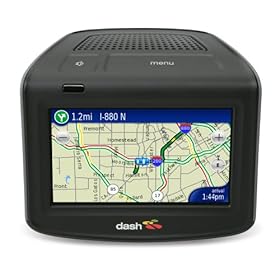
First, lets explain what Dash.net is:
Dash.net is a car-GPS navigation manufacturer. What differentiates their product is the 2 way connectivity of their GPS set. This means that data(i.e. your current speed) is collected and filed on the server. Other drivers who are planning a trip/on a trip that might be using the route you are on has access to the speed and their GPS set can determine if route A(Your Route) or B(another alternative route) might be faster.“Flow data vs. Incident data
Freeway breakdowns and auto accidents are nice to know about, but what really matters is the speed of traffic around them. Most GPS devices that show traffic rely primarily on ‘incident data,’ which only tells you where and when an incident happened, not how it’s affecting traffic now. Dash uses traffic flow data to help make Dash arrival times the most accurate on the road.”(translation: your GPS will tell you to take the routes that are the least congested and the fastest)
Secondly lets examine ERP’s aims and its method of reliving road congestion:
“Electronic Road Pricing (ERP) is an electronic system of road pricing based on a pay-as-you-use principle. It is designed to be a fair system as motorists are charged when they use the road during peak hours.
After the review, the ERP rates would then be adjusted where necessary to minimise congestion on the roads. ERP has been effective in maintaining an optimal speed range of 45 to 65 km/h for expressways and 20 to 30 km/h for arterial roads.”
How ERP works is by shifting demand on roads in 2 ways. Time of travel and route of travel.
How Dash.net can also solve
1) Time of travel
This is actually pretty difficult to solve. Most trips do not have flexibility of time. If you have to get to work or meet a client at 10am, the ERP cost isn’t going to deter you from going down.I chanced upon a blog and the following suggestions would effectively spread road demand over time.
I) Stagger Work hours
II)Work from Home
III) Spread out the CBD to other areasI am pretty sure that it is unlikely any form of technology can solve the social behavior of having to go to a place at the same time. However the 3 suggestions above can lend a helping hand to spread demand around.
2) Route of travel
By implementing Dash.net into all SG vehicles, we can effectively divert the route of travel to roads with less demand. Drivers do not have to worry about where and how to drive, instead they just have to follow the GPS directions. Plus, there will be less traffic jams, people get home faster which also means less cars on the roads.How much will this cost???
Well given that ERP has cost the government USD125 Million, this equates to USD255 per car (489,000 cars in 2007). Right now a Dash.net set cost $299 USD on amazon.com. If the SG government was the order in bulk, I am sure we can get the sets for less than $150USD each. This will make it cost comparative to the current ERP System.
Another Conclusion
Perhaps it is too late to change from the ERP system now. However the lesson that we should learn here is that any project with heavy technological components(I.e. the ERP) should not have its cost amortized over a long period of time. In the period of time, it is likely that a cheaper solution will emerge and make you look stupid for adopting the new technology
-
Originally posted by eagle:
I copied this from a fren's blog
------------------------------------------------------------------------------------------------------------------------
I am going to propose a new replacement for ERP(road congestion Control) although I am pretty sure that this will just be a mental exercise.
First, lets explain what Dash.net is:
Dash.net is a car-GPS navigation manufacturer. What differentiates their product is the 2 way connectivity of their GPS set. This means that data(i.e. your current speed) is collected and filed on the server. Other drivers who are planning a trip/on a trip that might be using the route you are on has access to the speed and their GPS set can determine if route A(Your Route) or B(another alternative route) might be faster.“Flow data vs. Incident data
Freeway breakdowns and auto accidents are nice to know about, but what really matters is the speed of traffic around them. Most GPS devices that show traffic rely primarily on ‘incident data,’ which only tells you where and when an incident happened, not how it’s affecting traffic now. Dash uses traffic flow data to help make Dash arrival times the most accurate on the road.”(translation: your GPS will tell you to take the routes that are the least congested and the fastest)
Secondly lets examine ERP’s aims and its method of reliving road congestion:
“Electronic Road Pricing (ERP) is an electronic system of road pricing based on a pay-as-you-use principle. It is designed to be a fair system as motorists are charged when they use the road during peak hours.
After the review, the ERP rates would then be adjusted where necessary to minimise congestion on the roads. ERP has been effective in maintaining an optimal speed range of 45 to 65 km/h for expressways and 20 to 30 km/h for arterial roads.”
How ERP works is by shifting demand on roads in 2 ways. Time of travel and route of travel.
How Dash.net can also solve
1) Time of travel
This is actually pretty difficult to solve. Most trips do not have flexibility of time. If you have to get to work or meet a client at 10am, the ERP cost isn’t going to deter you from going down.I chanced upon a blog and the following suggestions would effectively spread road demand over time.
I) Stagger Work hours
II)Work from Home
III) Spread out the CBD to other areasI am pretty sure that it is unlikely any form of technology can solve the social behavior of having to go to a place at the same time. However the 3 suggestions above can lend a helping hand to spread demand around.
2) Route of travel
By implementing Dash.net into all SG vehicles, we can effectively divert the route of travel to roads with less demand. Drivers do not have to worry about where and how to drive, instead they just have to follow the GPS directions. Plus, there will be less traffic jams, people get home faster which also means less cars on the roads.How much will this cost???
Well given that ERP has cost the government USD125 Million, this equates to USD255 per car (489,000 cars in 2007). Right now a Dash.net set cost $299 USD on amazon.com. If the SG government was the order in bulk, I am sure we can get the sets for less than $150USD each. This will make it cost comparative to the current ERP System.
Another Conclusion
Perhaps it is too late to change from the ERP system now. However the lesson that we should learn here is that any project with heavy technological components(I.e. the ERP) should not have its cost amortized over a long period of time. In the period of time, it is likely that a cheaper solution will emerge and make you look stupid for adopting the new technology
What is fiscal and monetary policy ah ?Which one our gahmen likes to use ah ?