Aussie dollar--jumping kangaroo or paper kangaroo?
-
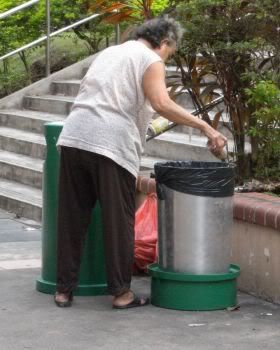
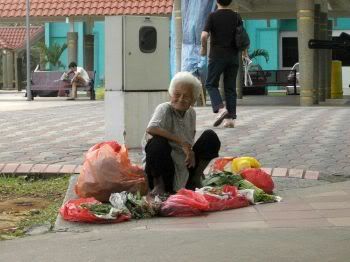

-
Hi lionnoisy, a lot of bad news from SG!
This 170 billion is not good news, it's bad news,
I am surprised you try to say it's good news
see long term and use common sense sons,
dun see trees see forrest
Where is this $170 billions come from?
The people's hard-earned money!!!
In first-world country is it acceptable to use people's money for risky gurantee SG bank deposit?
Bad news from SG:
Basic things like food price rise!
Is this acceptable?
‘Ricing’ (Rising) cost
The topic of ‘Rice’ hogged the headlines of local news this week following its soaring price all over Asia, including Singapore.
Reasons for the increase in price boils down to these three main factors:
1) Higher fuel costs, with crude soaring above US $100 a barrel and threatening to stay that way, have been a major factor in the crisis, making fertilizer more expensive and increasing transport costs.
2) In Southeast Asia, disease, pests and an unparalleled 45-day cold snap that extended from China to Vietnam in January and February have also hurt harvests. Flooding in the Philippines and Vietnam has added to the growing crisis.
3) Medium-grade rice exported from Thailand, the world’s biggest rice exporter, reached $760 a metric ton, up from $360 a ton at the end of last year.
Singaporeans, including me are feeling the pinch when we witness our forking of extra few hard-earned dollars for the same kilogram of rice.
Some hawkers in Singapore may also be capitalising on this surge of rice price to increase the price of their rice dishes by a few cents. I patron regularly a food stall which sell reasonably-priced ‘chap chai ben’ but now for the same few dishes and the same amount of rice, the hawker charges me an additional 20 cents!
I asked the hawker why the price increases, he replied me that it was ‘a natural thing’ to do and he had ‘no choice’ but to increase his price following the surge in price of rice.
Well, he certainly has other alternatives, not all the hawkers in Singapore are increasing the prices of their rice dishes to defray the rising cost of rice. This hawker is certainly killing his business and disappointing his ‘loyal customer’ by his price-increase feat. I would think twice before buying food from him again in future.
How apt is the man’s lament ‘This rising, that rising’ in the recent ad by the retailer Courts.
Meanwhile, governments of rice importing countries, such as the Philippines and Indonesia, are expressing concern that rising prices could spark unrest.During the past three years, the four top host countries - Australia, Canada, US and New Zealand - reported an upsurge of Singaporean permanent residents.
Australia
2001 - 1,786
2002 - 2,064 (up 15.5%)
2003 - 2,656 (up 28.6%)
Canada
2001 - 666
2003 - 991 (up 49%)
USA
2000 - 671
2002 - 1,036 (up 54.4%)
New Zealand
2001 - 437
2002 - 278 (down 30%)
2003 - 369 (up 32.7%)
Most are the "desirable" graduates that large, under-populated countries like Australia and Canada prefer.The majority worries about the long-term prospects of living in a city, however developed, whose small size restricts opportunities and ambitions with a hectic pace of life.
Some are concerned about job security and their children's future. Other push factors are strong government control and a relative lack of personal liberties.
Population shift is not unique to Singapore, but outward migration poses a special problem because of national service (NS).
It depends on its "people's" army to defend itself. In any war, these reservists who have served 2½ years' training, become frontline soldiers.
Foreigners don't undergo NS and, it is feared, lack the commitment and training to defend Singapore.
For most, a complete uprooting is not the objective. They want a foreign PR but without abandoning their citizenship. Few are ready to burn bridges.
Some 60% select Australia because of its nearness to home. It serves as job insurance. It is unclear how many who are given these PRs actually migrate.
The government has moved to try to draw benefits from a bad situation. It has formed "Singapore clubs" in many receiving cities to tap these people to help develop the business ties.
The desire to leave appears to be growing. One migration consultant told the Straits Times that he was receiving at least 20 enquiries a day, twice the number in 2001. They included Singaporeans who held high-paying jobs.
"We get people in their 30s, holding good jobs but terribly worried about restructuring and retrenchment," said the manager.
Others are 40-plus professionals who find it hard to get meaningful jobs.
A former lawyer who moved to Sydney to do his masters in public health said he wanted to get out of the rat race. "In Singapore, you have to work so hard to save up a retirement sum. By the time you manage to save that amount, will you be in any shape to enjoy it?"
The government finds itself caught in a bind. The more Singaporeans leave, the more foreigners it has to bring in to close the gap, which in turn contributes to the exodus.
The newspapers and Internet are reflecting some of the resentment and worry about foreign workers.
A few are lashing out in blind fury at foreign PRs, ranging from medal-winning sportsmen to students.
One frequent complaint is the giving of perks to foreign PRs at the expense of locals, including exemption from national service, scholarship and housing subsidy.
Some Singaporeans want the government to distinguish between naturalised citizens (with full rights) and PRs, who should have no more than residential rights until they become citizens.
The authorities reject this. They want more, not less, foreign talent because it fills skills that Singapore's new high-tech investors need.Last week, Singapore's economy shed a strong ray of light in a long dark tunnel. The first quarter GDP grew by a strong 7.3%, three times the previous rate, catching even the government by surprise. It augurs well for next year or two.
What will happen from now? It is hoped it will resemble what happened to Taiwan and Hong Kong in the 1990s, when large numbers who had fled to the West out of worries about China, flocked back when their economies took off.
Emigration
An ironic phenomenon
Authoritarian rule may have quickened Singapore's economic growth as we're told, but it also contributes to a flight of local talent. By Seah Chiang Nee.
Sep 6, 2008A BAFFLING aspect of affluent Singapore, with all its economic finery, is the large – and growing – exodus of its citizens over the past 10 years.
While the hot economy has attracted more than a million foreigners to its shores, its own citizens have been leaving in record numbers to settle down abroad.
Their exit seemed to have taken on a new life in recent years, ironically when the economic growth and the job market were at their best.
In fact, one survey has placed Singapore’s outflow at 26.11 migrants per 1,000 citizens – the second highest in the world. Only Timor Leste (51.07) fares worse.
The explanation is, of course, globalisation, the new borderless economy, which is offering more job options for skilled Singaporeans who want a better life in bigger countries.
But the reason doesn’t end there.
Other comparable city-populations have similarly been affected, but Singapore seems to have been hit hardest of all.
The explanation must involve a higher non-economic priority strong enough to propel Singaporeans away from a stable, comfortable living towards the uncertainties of a new life elsewhere.
Yet this is what is happening, as new statistics have shown.
More educated Singaporeans – many taking their children with them – are leaving or are planning to leave their country, which is itself a traditional haven for outsiders fleeing from trouble.
A recent indication of the scope of the dilemma was the rising number of Singaporeans who asked for a document needed to apply for permanent residency overseas.
It has exceeded 1,000 a month to reach 12,707 last year from 4,996 in 1998, or a rise of 170% over 10 years, said Home Affairs Minister Wong Kan Seng.
These people, over the age of 16, could be leaving for good, but they also included students and businessmen, who may eventually return.
In 10 years, they totalled 97,990 Singaporeans (a far greater number if children were included).
The government says about 140,000 Singaporeans are studying, working or in business in foreign countries, which by itself is not a bad thing, given Singapore’s global ambitions. The trouble is many of them may not return.
All the current statistics point to an upward emigration among Singaporeans who apply for PR or citizenship abroad. Some of the PRs, it is feared, may keep their citizenship but have no intention of returning home.
“After coming back, I find that other countries have much more to offer than Singapore, which is very boring,” one youth remarked.
The number of Singaporeans who gave up their citizenship, Wong said, averaged 1,000 a year in the last three years.
Other negative trends that reflect the tenuous link between many citizens and their country are:
* Two-thirds of Singaporeans (aged 21-34) said in a survey that they had considered retiring in another country with a slower pace of life and lower cost of living.
* Among youths (15-29 years of age), 53% are considering emigration. Despite having gone through national education, 37% say they are not patriotic. (Indian youths are the most ready to emigrate – at 67%, compared with 60% of Malays and 49% of Chinese).
* Six out of 10 undergraduates said they wanted to go abroad to live or work, mostly to enjoy a higher quality of life with less stress.
* An ACNielsen poll showed 21% of Singaporeans, mainly professionals, were considering emigration, half opting for Australia and New Zealand.
For this small state with a short history, the steady exit is not just a ‘numbers’ problem which can be – and is being – resolved by substituting Singaporeans with foreigners.
It has a serious security dimension, since the island is defended by its own reservist soldiers after a two-year mandatory national service (NS).
Fewer true-blue Singaporeans means fewer soldiers because permanent residents are not required to serve NS (only their 18-year-old sons are).
A bigger impediment to nation-building is the looser physical bond between today’s generation of Singaporeans and their country. Nearly half of them do not think they need to reside here to be emotionally rooted to the country.
It is estimated that half the Singaporeans who annually apply for foreign PRs – 6,000 to 7,000 – eventually settle down overseas.
The brain drain is serious.
Even if 0.5% of its brightest minds were to leave, it would hit Singapore hard, said Senior Minister Goh Chok Tong.
“These are bright young people, children of very well-educated Singaporeans. They study overseas now, and the very good ones are right away green harvested by companies,” Goh said.
So why is Asia’s second wealthiest state losing its youths at a higher rate than its poorer neighbours?
“Many Singaporeans leave because of the stifling atmosphere of the country and the political and intellectual lock-step enforced by the government,” said one analyst.
“It would reverse if the government would begin to democratise, and to allow its people to develop their talents – in Singapore, not abroad.”
Importing large numbers of migrants from China and India, most of whom treat it as a study or transit point, is not a solution.
Minister Mentor Lee Kuan Yew once admitted: “They come in here, they get an English education ? and they're off to America.”
However, he seems resigned to it. Recently he told his political party youth members: “As a government, and personally for me and my colleagues, my responsibility is to look after those who cannot migrate.”
With one-third of the population now making up of foreigners, that task is becoming harder to achieve.
Puzzle of migrating Singaporeans
It has been a new spring that left me with mixed feelings about what it really means to be a native-born Singaporean. I realised that two of my cousins' families have migrated without saying a word or leaving any contacts. One has gone to the United States and the other to Australia after living in Hong Kong for two years.
Why are so many middle-aged university-educated professional Singaporeans leaving? Is it the National Service, our education system or the changes in our society that are pushing them away? Has the influx of foreign "talents" from India and China made them feel that being citizens count for very little nowadays or is it the pull of greener pastures where life is less pressurised and less stressful?
That my cousins left quietly the soil where they were born and educated without any fanfare or leaving any form of contacts can only mean one thing - they are cutting all ties with their motherland for good. Are our policies inadvertently driving our own talents away while taking in foreigners as new citizens? This vicious cycle cannot be good for Singapore.
2. Brain drain in our backyard (3 Feb 2006)
While visiting relatives in the United States and Canada, I had the opportunity to chat with some elderly Asians, including Singaporeans. Most migrated when they were in their 20s and 30s, and they never looked back. Why should they when they are well taken of in terms of healthcare and welfare?
I know of some young people who choose to remain there after their studies. Most secure good jobs and do not encounter any discrimination at work. They have no intention of returning to Singapore, and it is not because they do not miss home or want to cut ties with their motherland. One reason is they find it difficult to adapt to our environment when they have a lot of breathing space where they are now. Also, they do not wish to compete with much sought-after foreign talent in Singapore. We must not be over-zealous in our pursuit of foreign talent that we lose sight of our own people. Persuading one local talent not to leave Singapore is far better than encouraging two or three foreign talents to come here.
3. Gloomy job prospects for middle-aged professionals (4 Feb 2006)
I refer to the letter, "Puzzle of migrating S'poreans' (Feb 2). I'm 38 and am migrating to Australia in three months' time. Despite being a degree-holder armed with 10 years of working experience, having upgraded my skills a year ago and lowered my pay expectations, I still have not found a job for almost two years. I have tried switching careers but have not met an employer willing to give me a chance to even start from the bottom.
My brother and his family emigrated to New Zealand six years ago and have no intention of coming back. He disliked the work stress, government policies and the education system here.
In short, gloomy job prospects for the middle-aged and professionals, work stress and an inflexible education system are driving us out of Singapore.
4. Can you blame them for leaving? (6 Feb 2006)
A hopeful graduate, fresh from his victory in the educational system, may be in for a rude shock when he discovers that the job market - with its plentiful supply of foreign talent - is not prepared to pay him enough for a decent lifestyle. When setting up a family, most couples will learn that the house they buy will probably cost them a lifelong mortgage. The middle-aged professionals, when they are retrenched, will have to decide whether to "upgrade" themselves - taking up menial jobs despite their immense experience in white-collared posts - or to throw their savings into entrepreneurship, for which the chances of success are slim.
Unemployment fell to a low of 2.5 per cent last quarter. However, wages have yet to recover to the level they were at in the previous cycle. In other words, jobs were created but at lower value added as a whole. The private sector has been asked not to discriminate based on age when hiring, yet public organisations continue to recruit based on age limits.
The biggest issue may be the refusal to acknowledge that the problems exist - let alone working on solving them. Given such an environment, is it any wonder that some Singaporeans choose to migrate? As I hear someone saying in a coffeeshop say: "Stayers are people who do not have the means to quit!"
If Singaporeans feel that they are not given priority over foreign talent because they are more expensive, would it not be natural for them to seek greener pastures elsewhere? Many qualified Singaporeans have given up good jobs here and moved to countries such as Australia, Canada and the United States in their families because they think these countries can offer a better quality of life. In the 1940s and '50s, our forebears left their homes and came here to seek a better life. Likewise, Singaporeans may choose to emigrate to escape the ratrace and tough competition for jobs.
5. A 'leaver' says stayers are tied down (7 Feb 2006)
I refer to the letter, "Gloomy job prospects for the middle-aged professionals" (Feb 4-5). I am 32 and am considering emigrating to Australia for good. Although I am not quite a middle-aged professional, I am getting there very soon. I agree with previous writers on their views about the prospect of living in Singapore getting gloomier.
Some say that Singapore will eventually develop into a more creative society. For now however, there are many middle-aged professionals who are jobless at the same time. Others speak of Singapore's grand policies and "vision" to be a creative society. Having the experience of both as a professional and an educator, I have first-hand experience that such grand visions do not translate into real practice.
It is sad to admit that the only "stayers" are the ones who are tied down by their families and dependents, and not passion. The "leavers", like myself, are the ones who will be separated from their family and loved ones, in search for the truly creative society and place.
- My comments : well, what do you think I'm doing staying here in Singapore? (and continuing to blog on such "gloom and doom" topics all this while). I'm now 33 and on my way to falling into similar circumstances as the other 30+ folks above. My friends and colleagues are mostly in a similar age range and we share some of the same concerns. What irony. Software R&D engineers - we're supposed to be doing pretty well - at least, in theory. But, at least for myself, the reality is just that I'm biding my time. Most likely, I can't (won't? shouldn't?!) stay here forever. The only questions remaining now are money and timing. I'm working on the money part, and my blog entries chronicle the timing part somewhat.
And, in response to Akikonomu's recent comment, of course I don't buy the happy talk of achieving some "European standard of living". With all due respect, I surely hope our dear SM wasn't referring to the declining British standard of living, driven by UK's peak oil situation in the North Sea.
In the next 25 years, global peak oil would have long arrived and gone by. Game over, one way or another.
-
A Singaporean speaks:
Why I Would Like to Leave, by Kitana
Before I went to Canada for a year, I had to go for a medical check-up. During that check-up, the doctor told me that I would love Canada. And he had said that most of the people he knew that went to Canada, either never came back; or when they did, they’d returned to Canada shortly after. Few ever stayed in Singapore.
At the time, I wondered why. I don’t anymore.
The government asks us why we leave. They calls us quitters and deserters, for leaving our country, our homeland, for some other place that we perceive to be greener pastures. Why leave Singapore, where we rank tops for good governance (save for voice and accountability, where we scored a low of 38.2% this year), where we are so clean and safe and secure, and where we are so efficient?
The fact of the matter is, that there are people who will give up all of the above, for more freedom.
I was happy in Canada. Sure, it was expensive, and taxes were a killer. With a 14% combination of GST and PST on all consumer items, and income taxes hitting a high of 40%; it was definitely difficult to make ends meet for someone who did not work there. And of course, on days where the buses went on strike, I’d be stuck in campus and not be able to go to town. Also, we did have a bit of a furor when Parliament was dissolved late last year, only to have the Conservatives voted in after 13 years under the Liberals. Oh and before I forget, yes it was definitely more inefficient. Expect to wait when you queue up to pay for something; the cashier will inevitably engage everyone before you as to how their day was (and their kids, and their parents, and what they think of the weather; etc). Expect to wait for the buses because the bus driver might have stopped somewhere to grab a cup of Starbucks while doing his rounds (yes, with passengers in the bus). Oh, and how can I forget the drug problem: you can get drugs anywhere off the street if you know where to look; marijuana is about as commonplace as cigarettes and alcohol.
But for all the possible gripes that I might have about that place, the benefits far outweighed all the detriments (if you even saw them as that) combined. Firstly, we were really free. I’m not just talking about freedom with regard to political freedom to vote, to protest, to strike, to demonstrate, or to have a point of view; but also real freedom of the mind and the body. You can think differently, dress differently, live differently. Society is inclusive.
The city that I lived in had a whole mix of races and nationalities. I’ve met everyone from locals to the Koreans, Japs and Chinese, Iranians, Iraqis, Philippinos, Latin Americans, French, Africans, Indians etc etc etc. It’s as much a cultural mix, if not more so, than Singapore. And the best part is: everyone more or less gets along. There is no need for the implementation of “Racial Harmony Day” or racial quotas for HDB flats. Everyone just does – because prejudice just does not exist there.
And it wasn’t just about race and religion; you could be a conservative or a liberal, be it cerebral or waist-down. It didn’t matter. Such criteria was just not a measure of your worth. You could be thin or fat. It didn’t matter too. People weren’t as image-conscious. You could walk down the streets dressed in goth punk outfits with multiple piercings in your face and people would still talk to you normally, and not avoid you. And in Village area, men held hands with men; they kissed on buses, and no one even batted an eye lid.
In Singapore, can you comprehend this inclusiveness? The majority of Singaporeans are notably close-minded and inflexible. Even if a straight couple were to kiss on the bus, there would be chitters regarding the offensiveness of public displays of affection. When the gay community wishes to throw a party, they get turned down because the overly-conservative majority decides that this is a justification for the prevention of AIDS. Singapore is one of the few countries, if not the only, where drug trafficking attracts a mandatory death penalty, such that the courts do not even have the discretion to pardon the poor 18 year old Nigerian who became a drug mule without him realizing the folly of his error.
If you decide to stage a demonstration, you require a permit that will always be turned down on the vague notions of security; if you support a party other than the one in power, you risk getting asked for your particulars and photographed. If you hold a view other than the one in the local papers (which is so effectively-controlled, all for the sake of “the national interest”), you are forced to keep that view to yourself. If you attempt to post that view up on a platform, such as a blog, you might be sent a warning letter especially with a threat of defamation. If you decide to print out that view and distribute it on a phamplet, you may get investigated under s 151 of the Penal Code. Oh, and you can’t do podcasts with political content, unless you are the party in power.
In Singapore, besides the overwhelming humidity, there is a notorious lack of personal space. There are too many people in Singapore. It’s so difficult to find a place which isn’t swarming with people. The roads are full of cars, the buses are packed to full capacity at various times of the day; Raffles Place strikes me as a factory churning out goods as people chope seats with tissue packets on busy lunch hours. And everyone is always in a rush. There is always this inane need to do something, be somewhere, get caught up in this inexplicable rat race, and just work and work and work until you succeed… and then realize that you don’t even know what the fuck ‘success’ really means.
The stress is crazy; the pressure unfightable. It starts from the time we enter primary school; the education system does prepare us for the real world in that sense – we get exposed to pressure cooker type stress and a level of competition that makes having a life outside of academia almost impossible, unlike in other countries whose universities also produce Nobel laureates. Our parents push us, our schools push us; society pushes us… And our goal is this:
Money. Money and the economy.
In Singapore, this is the definition of the good life. Some people may subscribe to religion as what defines a good life, particularly in reaction to the imposition of money as the new god; but for the most part, Singaporeans are a consumeristic and materialistic lot. So many girlfriends see the Mango and Zara sales as the defining point of their lives; or believe that sipping lychee martinis at Zouk Wine Bar is the epitome of class. Everyone wants to get more money, buy more items, be more powerful; be it career success or material possession, this is all that most Singaporeans dream of and spend their entire lives clamouring towards.
And this works great for Singapore, because all of Singapore’s objectives are geared towards only 1 thing and one thing alone: money. Or in the case of this country, the economy. Everything we do, we do it for the sake of our economy. We have no minimum wage; we have no protection against the ills that globalization necessarily brings us. We have no protection for the rising income equality (all we have is an article in the newspapers telling us to disbelieve the Gini-coefficient), we have no solutions for our elderly except to either dump them in Johor or Batam, or to encourage our young to bring more babies into this pressure cooker life.
Someone told me that this was not a bad thing. Because we have different races and religions, the economy is the one thing that can unite us. I told him that he was a mere subject of years of successful indoctrination. He talked like just another average Singaporean.
“Money unites us.”
In a country where I would like to live, it is not money, but dreams that unite. Dreams that transcend the material; dreams of ideals of maybe caring for a family; caring for the environment within which we live; dreams of bettering oneself, or dreams or learning for the sake of learning; dreams to be whatever I want to be; that unite people.
In Singapore, it is difficult to dream. Difficult to dream of anything beyond the material. I don’t wish for a future where I am stuck in my dead end job wondering what the fuck I want in my life. I don’t want a future where I die to myself, murder my idealism and my dreams of being different, simply because ‘different’ is a bad word in Singapore.
And because Singapore is not a place where such dreams flourish, Singapore is just not a place where I envision myself realizing these dreams.
-
Singapore braces itself for worst dengue epidemic
Salma Khalik
Tue, Apr 08, 2008
The Straits TimesSINGAPORE is spending $200,000 a day in an effort to stave off what might be its worst dengue fever epidemic.
Unless the trend of infections is halted, the number of sick people could hit record levels in three years' time.
The bulk of the money is going into seeking out and destroying mosquito breeding sites, and mounting a targeted war against mosquitoes in areas where two or more people fall ill.
The bad news: The mosquito seems to be winning so far.
The number of infections from January to last Saturday is already 60 per cent higher than in the same period last year.
The severe, flu-like illness is also manifesting in a more deadly form called dengue haemorrhagic fever, for which no vaccine or cure is available. Victims are treated only for the symptoms - high fever, body aches and nausea.
Twenty people died from it last year.
Dr Ng Lee Ching, who heads the Environmental Health Institute (EHI) of the National Environment Agency (NEA), said: 'If nothing is done to stop the spread, the number of cases will increase very significantly.'
The experts are also concerned because the Aedes aegypti mosquito, which spreads the disease, seems to be spreading to areas of Singapore where it previously was not found.
From 2004 to last year, for example, it became predominant in Bukit Batok, an area where it had not previously been a significant problem.
More than 5,000 homeowners were fined last year for breeding mosquitoes. The fine has been doubled to $200 from last Tuesday.
Construction sites found breeding mosquitoes are fined $2,000 the first time and last year, 44 were made to stop work and get cleaned up. This year, three have been ordered to stop work for anti-mosquito action.
Still, the number of infections has kept rising. Said Dr Ng: 'We cannot understand why the numbers are climbing.'
Dengue outbreaks happen in cycles which peak every six to seven years. During the last peak in 2005, 14,209 people were infected and 25 died.
That year's total was almost three times the previous peak of 5,258 in 1998.
The dengue numbers have been rising even during the low years. The last low point, in 2006, saw more than 3,000 falling sick - more than three times the number infected in previous low years.
Last year, which marked the start of the current upswing, more than 8,800 people were taken ill - the third highest number ever.
Dr Ng put last year's large number down to a change in the dominant virus - from Den 1 to Den 2 - that was circulating. People had lower immunity against Den 2 than Den 1.
Last year, when three people in Tampines fell ill with the rare Den 3 strain of dengue fever, the EHI leapt into action to prevent the strain from spreading.
As part of the war on dengue this year, new and faster test kits will be made available at doctors' clinics.
Speedier discovery of infected patients will let the anti-dengue teams descend on the affected areas to stop the spread.
-


Beyond managing homelessness
Wednesday, 17 September 2008, 9:12 am | 487 views
Ravi Philemon
 “Meet Singapore’s Nomad Families”, a recent Sunday Times article welcomes the average Singaporean. Homelessness is a major issue in all large cities. The numbers of homeless people worldwide have grown steadily in recent years. A recent estimate states that there are 100 million people worldwide who are homeless. Although the homeless are often “hidden” in a society like Singapore, Singapore is by no means exempted from this worldwide dilemma.
To be sure, a homeless person obviously needs a home. But such a simple observation overlooks the reason why the homeless have no home. Simply demanding more housing for the homeless is like saying that a person with a fever can be cured with a cold bath to bring down the temperature and ignoring the infection causing the fever.
People who are homeless are so for various reasons. Some have made poor choices in life, some are involved with alcohol or drugs, yet others are part of the system of generational poverty in which inadequate life skills are handed down from one generation to the next, resulting in an entire culture of people who do not know how to take advantage of the educational, cultural or employment advantages available to them. Some of the homeless are also those who may have had some education, a job and a place to live, but without a “safety net” of family or friends to help them through a difficult time, found themselves evicted from their homes after they lost their job or had a financial crisis. But whatever the circumstances, homelessness is but the symptom of root problems.
In addressing the problem of homelessness, the focus has to shift from emergency shelters to prevention. Emergency shelters should only be temporary and transitional solutions, to provide a safe housing environment in the interim. The different agencies who want to focus their resources on preventive efforts should:
1. Involve local governments; because the homeless usually qualify for various kinds of public assistance. Voluntary Welfare Organizations need to be involved in coordinating services and referring clients to various programs.
2. Encourage retraining and upgrading; because the workers in the low-income bracket are the most vulnerable to be homeless. As such, they should upgrade and/or retrain, so that they can develop marketable skills to take on and succeed in new, higher value-added, and emerging jobs in the knowledge based economy.
3. Enhance families’ capacity to help them; policies and programs should aim to support and supplement family functioning. Wherever possible, policies and programs should encourage and reinforce marital, parental, and even extended family commitment and stability.
4. Create awareness; about services available for the “at-risk” group among mainstream service providers like schools, utilities suppliers, banks, religious institutions, etc.
5. Launch Public Education campaigns; through public service advertising to modify public attitudes and to promote responsible home ownership, to encourage homeowners and homebuyers to seek housing counseling.
6. Consider forming an inter-agency coordinating body; to coordinate between all the relevant players who are involved in prevention of homelessness (e.g. shelters, Voluntary Welfare Organizations, schools, religious institutions, government, etc). This inter-agency will do a “gap-analysis” to determine the character of the homeless and potentially homeless in the community, the services most in need and how best to provide these services in a coordinated manner.
The problem of homelessness is very complex and simple solutions are often not available in trying to address this dilemma. It is precisely because simple solutions are not available that different agencies with various expertises in service must work together. Long-term plans must be developed not to manage, but to end homelessness.
Singapore’s growing homeless problem

IT was three in the morning on a very cool Saturday. Most Singaporeans were fast asleep. So was a group of more than a dozen able-bodied men — some even snoring — on flattened cardboard boxes laid in neat rows. But unlike most of the Singaporeans who were asleep in the comfort of their homes, the group of men slept in the open — with the sky as their roof — in a secluded spot near the World Trade Centre Ferry Terminal. Most of them have been spending their nights there for the past year. They have named the place Heartbreak Hotel. Over at Toa Payoh housing estate, a thirtysomething married couple was cuddling each other under a bridge to keep themselves warm, amid the nearby tall and impressive apartment blocks. The spot under the bridge has been their home for the last one month. Like the group of men at the Heartbreak Hotel, they had rejection written all over their faces. Their meals are at coffee shops or food centres, while they answer nature's calls at public toilets. The group of men and the couple are part of the growing number of homeless in Singapore — once an unusual sight in the wealthy island of four million people. No official figures are available, but the numbers are certainly growing.
Most are among the country's more than 100,000 residents who are currently unemployed, although one in the first group works as a cleaner at the Singapore General Hospital. But his monthly salary of S$600 (M$1340) is enough only for food and transport. Another member of the group owns a threeroom flat. But without a job for close to two years and without much savings, it was impossible for him to maintain the flat. He, instead, rents the flat out, and survives on the rental income of about S$700 a month.
Given the absence of unemployment benefits and a lack of welfare aid, and nothing in their wallets, a growing number of Singaporeans are being forced to give up their homes and seek alternative accommodation. Also hit are those in the income bracket of S$400 a month. Their numbers, according to government data, stand at 180,650 workers or about nine per cent of the workforce. While many of the luckier ones have been able to move in with their relatives or to cheaper accommodation, there are a number that have been forced to seek shelter in the open — in parks, under bridges and vacant areas. The couple under the bridge, for instance, once had a three-room flat in the Toa Payoh Housing Estate. But since the husband lost his storekeeper job nearly three years ago, the couple had to endure life first without electricity and water, and subsequently their home. Most of the money that they received from the sale of their flats went back to their Central Provident Fund account, while the rest was used to pay for the utility bills. Like the couple, most Singaporeans have debts and are compelled to pay utility charges and mortgages on their homes each month.
Given that most of the unemployed and those in the low-income bracket lack education and marketable skills, and are being frozen out of the worst job market in 17 years in a country with one of the most educated workforces in Asia, many other may soon share the fate of the couple and the residents of Heartbreak Hotel. The main reason: the country's lack of a social safety net, despite the immense wealth generated during the last three decades of prosperity. The Government does not believe in a welfare state and firmly discourages dependence on the Government. Only a few thousand people are considered poor enough to get a paltry benefit of between S$300 and S$400 per month — barely enough to live on, and that too after a tedious and long process. Instead, the Government insists that those who lack education and marketable skills retrain and upgrade their skills through its subsidised retraining programmes. Still, the presence of these homeless is posing a new problem for the Government, which is currently engrossed in seeking a solution to the country's worst economic problems in history caused by the exodus of manufacturers and multinationals to China and other low-cost regions such as Malaysia and India. A solution is needed.
-
the 2 of you are trying to fight it out huh? it didn't looked like any of the stuff posted was meant for the rest of us.
-
if may meaningless to u.But many are interested to know more
about oz.
@@@@@@@@@@@
The quality of leadership sure determine the oz dollars trend.
Let me share with u this story.I will name him NATO Rudd.
He is called Kevin 747 for his frequent foreign visits,
about 20% of time since he sworn into Office!!
He has declared Wars on many things.Did he present any plans
,executions and updates on the Wars?
" the 2007 'Rudd's war on whalers',
2007-declared war on drugs,
January 2008-declared war on inflation
the February 2008 'War cabinet to fight disadvantage',
February 2008 'War on downloads',
March 2008 'War on pokies',
May 'War against doping in sport' and
October 'War on bankers' salary deals'.
yesterday's declared war on unemployment,
@@@@@@@@@@@@
"Prime Minister, how goes the war on everything?"
It was a good point.
Words are like bullets, said Bill Hayden once, referring to the art of foreign diplomacy. And the same applies to domestic politics.
General Rudd waging war on everything
Rudd jets out for G20 talks ANNABEL CRABB | Kevin Rudd caused a few grimaces on Tuesday
by using Remembrance Day to declare "a war on unemployment."
ANNABEL CRABB | Kevin Rudd caused a few grimaces on Tuesday
by using Remembrance Day to declare "a war on unemployment."
Melbourne Herald Sun - 2008年10月23日
KEVIN Rudd will fly overseas again next month for talks on the world economic crisis. Mr Rudd -- dubbed Kevin 747 for his frequent travel -- will meet G20 ...
Kevin 747 slammed for setting sights overseas again LIVENEWS.com.aummm
-
Commonwealth Bank of australia id one of the big 4.
Its book has not been fully open!!
Michael West CBA's indecent exposure
40% of next year funds has been met.Good news!!
Whether it's Allco, ABC Learning, Centro, Commander - name your "Bad Boy'' - Commonwealth Bank is there, merrily lending hundreds of millions.
It has the biggest exposure to corporate collapses in the hemisphere although, until now, its sheer size and the perceived lower exposure to derivatives have priced the bank at a premium to its peers on the stock market.
That premium is now being wiped out.
On Goldman Sachs' forecast earnings numbers for 2009, CBA trades at a 38% premium to National Australia Bank.
Among key points from this morning's first-quarter trading update, bad debt charges will be up next year but no estimate has been given yet - which is a bad look. There's a briefing this afternoon that may shed some light.
...
-
another corp fails
-
The Oz gavaman funding guarantee saga continue.
HK and SG,touch wood,attract no media attentions on similiar
plans.Why ah?
BANKS: Ratings blow to funding guarantee
ACTING Treasurer Lindsay Tanner has conceded the Government will be forced to introduce legislation to deliver on a promise to guarantee banks' wholesale funding, raising fresh questions over the worth of the scheme.
The Government is using its executive power, rather than legislation, to enter into contracts with banks, building societies and credit unions to guarantee all deposits for the next three years.
But Liberal leader Malcolm Turnbull revealed today that ratings agency Standard and Poors won't provide a AAA rating to the government guarantee unless it is unconditional, irrecoverable and timely.
The admission that legislation will be required to honour the guarantee raises questions about whether it could secure Parliament's approval in a timely fashion and whether the rating agency would accept the government's guarantee.
The row follows changes to the Government's bank deposit guarantee following warnings it was distorting the market.
The wholesale funding guarantee offers security for banks borrowing from overseas to fund loans in Australia. Access to credit has remained tight as a result of the global credit crisis, placing extra pressure on banks' ability to pass on cuts in the Reserve Bank's official interest rate in full.FYI.I dunt know where is the $$ of Oz gavaamn when their GROSS reserve is
about 40 b.Dunt ask me the net reserve>
,,,,
-
Beyond managing homelessness
Wednesday, 17 September 2008, 9:12 am | 487 views
Ravi Philemon
“Meet Singapore’s Nomad Families”, a recent Sunday Times article welcomes the average Singaporean. Homelessness is a major issue in all large cities. The numbers of homeless people worldwide have grown steadily in recent years. A recent estimate states that there are 100 million people worldwide who are homeless. Although the homeless are often “hidden” in a society like Singapore, Singapore is by no means exempted from this worldwide dilemma.To be sure, a homeless person obviously needs a home. But such a simple observation overlooks the reason why the homeless have no home. Simply demanding more housing for the homeless is like saying that a person with a fever can be cured with a cold bath to bring down the temperature and ignoring the infection causing the fever.
People who are homeless are so for various reasons. Some have made poor choices in life, some are involved with alcohol or drugs, yet others are part of the system of generational poverty in which inadequate life skills are handed down from one generation to the next, resulting in an entire culture of people who do not know how to take advantage of the educational, cultural or employment advantages available to them. Some of the homeless are also those who may have had some education, a job and a place to live, but without a “safety net” of family or friends to help them through a difficult time, found themselves evicted from their homes after they lost their job or had a financial crisis. But whatever the circumstances, homelessness is but the symptom of root problems.
In addressing the problem of homelessness, the focus has to shift from emergency shelters to prevention. Emergency shelters should only be temporary and transitional solutions, to provide a safe housing environment in the interim. The different agencies who want to focus their resources on preventive efforts should:
1. Involve local governments; because the homeless usually qualify for various kinds of public assistance. Voluntary Welfare Organizations need to be involved in coordinating services and referring clients to various programs.
2. Encourage retraining and upgrading; because the workers in the low-income bracket are the most vulnerable to be homeless. As such, they should upgrade and/or retrain, so that they can develop marketable skills to take on and succeed in new, higher value-added, and emerging jobs in the knowledge based economy.
3. Enhance families’ capacity to help them; policies and programs should aim to support and supplement family functioning. Wherever possible, policies and programs should encourage and reinforce marital, parental, and even extended family commitment and stability.
4. Create awareness; about services available for the “at-risk” group among mainstream service providers like schools, utilities suppliers, banks, religious institutions, etc.
5. Launch Public Education campaigns; through public service advertising to modify public attitudes and to promote responsible home ownership, to encourage homeowners and homebuyers to seek housing counseling.
6. Consider forming an inter-agency coordinating body; to coordinate between all the relevant players who are involved in prevention of homelessness (e.g. shelters, Voluntary Welfare Organizations, schools, religious institutions, government, etc). This inter-agency will do a “gap-analysis” to determine the character of the homeless and potentially homeless in the community, the services most in need and how best to provide these services in a coordinated manner.
The problem of homelessness is very complex and simple solutions are often not available in trying to address this dilemma. It is precisely because simple solutions are not available that different agencies with various expertises in service must work together. Long-term plans must be developed not to manage, but to end homelessness.
Singapore’s growing homeless problem
IT was three in the morning on a very cool Saturday. Most Singaporeans were fast asleep. So was a group of more than a dozen able-bodied men — some even snoring — on flattened cardboard boxes laid in neat rows. But unlike most of the Singaporeans who were asleep in the comfort of their homes, the group of men slept in the open — with the sky as their roof — in a secluded spot near the World Trade Centre Ferry Terminal. Most of them have been spending their nights there for the past year. They have named the place Heartbreak Hotel. Over at Toa Payoh housing estate, a thirtysomething married couple was cuddling each other under a bridge to keep themselves warm, amid the nearby tall and impressive apartment blocks. The spot under the bridge has been their home for the last one month. Like the group of men at the Heartbreak Hotel, they had rejection written all over their faces. Their meals are at coffee shops or food centres, while they answer nature's calls at public toilets. The group of men and the couple are part of the growing number of homeless in Singapore — once an unusual sight in the wealthy island of four million people. No official figures are available, but the numbers are certainly growing.
Most are among the country's more than 100,000 residents who are currently unemployed, although one in the first group works as a cleaner at the Singapore General Hospital. But his monthly salary of S$600 (M$1340) is enough only for food and transport. Another member of the group owns a threeroom flat. But without a job for close to two years and without much savings, it was impossible for him to maintain the flat. He, instead, rents the flat out, and survives on the rental income of about S$700 a month.
Given the absence of unemployment benefits and a lack of welfare aid, and nothing in their wallets, a growing number of Singaporeans are being forced to give up their homes and seek alternative accommodation. Also hit are those in the income bracket of S$400 a month. Their numbers, according to government data, stand at 180,650 workers or about nine per cent of the workforce. While many of the luckier ones have been able to move in with their relatives or to cheaper accommodation, there are a number that have been forced to seek shelter in the open — in parks, under bridges and vacant areas. The couple under the bridge, for instance, once had a three-room flat in the Toa Payoh Housing Estate. But since the husband lost his storekeeper job nearly three years ago, the couple had to endure life first without electricity and water, and subsequently their home. Most of the money that they received from the sale of their flats went back to their Central Provident Fund account, while the rest was used to pay for the utility bills. Like the couple, most Singaporeans have debts and are compelled to pay utility charges and mortgages on their homes each month.
Given that most of the unemployed and those in the low-income bracket lack education and marketable skills, and are being frozen out of the worst job market in 17 years in a country with one of the most educated workforces in Asia, many other may soon share the fate of the couple and the residents of Heartbreak Hotel. The main reason: the country's lack of a social safety net, despite the immense wealth generated during the last three decades of prosperity. The Government does not believe in a welfare state and firmly discourages dependence on the Government. Only a few thousand people are considered poor enough to get a paltry benefit of between S$300 and S$400 per month — barely enough to live on, and that too after a tedious and long process. Instead, the Government insists that those who lack education and marketable skills retrain and upgrade their skills through its subsidised retraining programmes. Still, the presence of these homeless is posing a new problem for the Government, which is currently engrossed in seeking a solution to the country's worst economic problems in history caused by the exodus of manufacturers and multinationals to China and other low-cost regions such as Malaysia and India. A solution is needed.
-
Hi lionnoisy, a lot of bad news from SG!
This 170 billion is not good news, it's bad news,
I am surprised you try to say it's good news
see long term and use common sense sons,
dun see trees see forrest
Where is this $170 billions come from?
The people's hard-earned money!!!
In first-world country is it acceptable to use people's money for risky gurantee SG bank deposit?
Bad news from SG:
Basic things like food price rise!
Is this acceptable?
‘Ricing’ (Rising) cost
The topic of ‘Rice’ hogged the headlines of local news this week following its soaring price all over Asia, including Singapore.
Reasons for the increase in price boils down to these three main factors:
1) Higher fuel costs, with crude soaring above US $100 a barrel and threatening to stay that way, have been a major factor in the crisis, making fertilizer more expensive and increasing transport costs.
2) In Southeast Asia, disease, pests and an unparalleled 45-day cold snap that extended from China to Vietnam in January and February have also hurt harvests. Flooding in the Philippines and Vietnam has added to the growing crisis.
3) Medium-grade rice exported from Thailand, the world’s biggest rice exporter, reached $760 a metric ton, up from $360 a ton at the end of last year.
Singaporeans, including me are feeling the pinch when we witness our forking of extra few hard-earned dollars for the same kilogram of rice.
Some hawkers in Singapore may also be capitalising on this surge of rice price to increase the price of their rice dishes by a few cents. I patron regularly a food stall which sell reasonably-priced ‘chap chai ben’ but now for the same few dishes and the same amount of rice, the hawker charges me an additional 20 cents!
I asked the hawker why the price increases, he replied me that it was ‘a natural thing’ to do and he had ‘no choice’ but to increase his price following the surge in price of rice.
Well, he certainly has other alternatives, not all the hawkers in Singapore are increasing the prices of their rice dishes to defray the rising cost of rice. This hawker is certainly killing his business and disappointing his ‘loyal customer’ by his price-increase feat. I would think twice before buying food from him again in future.
How apt is the man’s lament ‘This rising, that rising’ in the recent ad by the retailer Courts.
Meanwhile, governments of rice importing countries, such as the Philippines and Indonesia, are expressing concern that rising prices could spark unrest.During the past three years, the four top host countries - Australia, Canada, US and New Zealand - reported an upsurge of Singaporean permanent residents.
Australia
2001 - 1,786
2002 - 2,064 (up 15.5%)
2003 - 2,656 (up 28.6%)
Canada
2001 - 666
2003 - 991 (up 49%)
USA
2000 - 671
2002 - 1,036 (up 54.4%)
New Zealand
2001 - 437
2002 - 278 (down 30%)
2003 - 369 (up 32.7%)
Most are the "desirable" graduates that large, under-populated countries like Australia and Canada prefer.The majority worries about the long-term prospects of living in a city, however developed, whose small size restricts opportunities and ambitions with a hectic pace of life.
Some are concerned about job security and their children's future. Other push factors are strong government control and a relative lack of personal liberties.
Population shift is not unique to Singapore, but outward migration poses a special problem because of national service (NS).
It depends on its "people's" army to defend itself. In any war, these reservists who have served 2½ years' training, become frontline soldiers.
Foreigners don't undergo NS and, it is feared, lack the commitment and training to defend Singapore.
For most, a complete uprooting is not the objective. They want a foreign PR but without abandoning their citizenship. Few are ready to burn bridges.
Some 60% select Australia because of its nearness to home. It serves as job insurance. It is unclear how many who are given these PRs actually migrate.
The government has moved to try to draw benefits from a bad situation. It has formed "Singapore clubs" in many receiving cities to tap these people to help develop the business ties.
The desire to leave appears to be growing. One migration consultant told the Straits Times that he was receiving at least 20 enquiries a day, twice the number in 2001. They included Singaporeans who held high-paying jobs.
"We get people in their 30s, holding good jobs but terribly worried about restructuring and retrenchment," said the manager.
Others are 40-plus professionals who find it hard to get meaningful jobs.
A former lawyer who moved to Sydney to do his masters in public health said he wanted to get out of the rat race. "In Singapore, you have to work so hard to save up a retirement sum. By the time you manage to save that amount, will you be in any shape to enjoy it?"
The government finds itself caught in a bind. The more Singaporeans leave, the more foreigners it has to bring in to close the gap, which in turn contributes to the exodus.
The newspapers and Internet are reflecting some of the resentment and worry about foreign workers.
A few are lashing out in blind fury at foreign PRs, ranging from medal-winning sportsmen to students.
One frequent complaint is the giving of perks to foreign PRs at the expense of locals, including exemption from national service, scholarship and housing subsidy.
Some Singaporeans want the government to distinguish between naturalised citizens (with full rights) and PRs, who should have no more than residential rights until they become citizens.
The authorities reject this. They want more, not less, foreign talent because it fills skills that Singapore's new high-tech investors need.Last week, Singapore's economy shed a strong ray of light in a long dark tunnel. The first quarter GDP grew by a strong 7.3%, three times the previous rate, catching even the government by surprise. It augurs well for next year or two.
What will happen from now? It is hoped it will resemble what happened to Taiwan and Hong Kong in the 1990s, when large numbers who had fled to the West out of worries about China, flocked back when their economies took off.
Emigration
An ironic phenomenon
Authoritarian rule may have quickened Singapore's economic growth as we're told, but it also contributes to a flight of local talent. By Seah Chiang Nee.
Sep 6, 2008A BAFFLING aspect of affluent Singapore, with all its economic finery, is the large – and growing – exodus of its citizens over the past 10 years.
While the hot economy has attracted more than a million foreigners to its shores, its own citizens have been leaving in record numbers to settle down abroad.
Their exit seemed to have taken on a new life in recent years, ironically when the economic growth and the job market were at their best.
In fact, one survey has placed Singapore’s outflow at 26.11 migrants per 1,000 citizens – the second highest in the world. Only Timor Leste (51.07) fares worse.
The explanation is, of course, globalisation, the new borderless economy, which is offering more job options for skilled Singaporeans who want a better life in bigger countries.
But the reason doesn’t end there.
Other comparable city-populations have similarly been affected, but Singapore seems to have been hit hardest of all.
The explanation must involve a higher non-economic priority strong enough to propel Singaporeans away from a stable, comfortable living towards the uncertainties of a new life elsewhere.
Yet this is what is happening, as new statistics have shown.
More educated Singaporeans – many taking their children with them – are leaving or are planning to leave their country, which is itself a traditional haven for outsiders fleeing from trouble.
A recent indication of the scope of the dilemma was the rising number of Singaporeans who asked for a document needed to apply for permanent residency overseas.
It has exceeded 1,000 a month to reach 12,707 last year from 4,996 in 1998, or a rise of 170% over 10 years, said Home Affairs Minister Wong Kan Seng.
These people, over the age of 16, could be leaving for good, but they also included students and businessmen, who may eventually return.
In 10 years, they totalled 97,990 Singaporeans (a far greater number if children were included).
The government says about 140,000 Singaporeans are studying, working or in business in foreign countries, which by itself is not a bad thing, given Singapore’s global ambitions. The trouble is many of them may not return.
All the current statistics point to an upward emigration among Singaporeans who apply for PR or citizenship abroad. Some of the PRs, it is feared, may keep their citizenship but have no intention of returning home.
“After coming back, I find that other countries have much more to offer than Singapore, which is very boring,” one youth remarked.
The number of Singaporeans who gave up their citizenship, Wong said, averaged 1,000 a year in the last three years.
Other negative trends that reflect the tenuous link between many citizens and their country are:
* Two-thirds of Singaporeans (aged 21-34) said in a survey that they had considered retiring in another country with a slower pace of life and lower cost of living.
* Among youths (15-29 years of age), 53% are considering emigration. Despite having gone through national education, 37% say they are not patriotic. (Indian youths are the most ready to emigrate – at 67%, compared with 60% of Malays and 49% of Chinese).
* Six out of 10 undergraduates said they wanted to go abroad to live or work, mostly to enjoy a higher quality of life with less stress.
* An ACNielsen poll showed 21% of Singaporeans, mainly professionals, were considering emigration, half opting for Australia and New Zealand.
For this small state with a short history, the steady exit is not just a ‘numbers’ problem which can be – and is being – resolved by substituting Singaporeans with foreigners.
It has a serious security dimension, since the island is defended by its own reservist soldiers after a two-year mandatory national service (NS).
Fewer true-blue Singaporeans means fewer soldiers because permanent residents are not required to serve NS (only their 18-year-old sons are).
A bigger impediment to nation-building is the looser physical bond between today’s generation of Singaporeans and their country. Nearly half of them do not think they need to reside here to be emotionally rooted to the country.
It is estimated that half the Singaporeans who annually apply for foreign PRs – 6,000 to 7,000 – eventually settle down overseas.
The brain drain is serious.
Even if 0.5% of its brightest minds were to leave, it would hit Singapore hard, said Senior Minister Goh Chok Tong.
“These are bright young people, children of very well-educated Singaporeans. They study overseas now, and the very good ones are right away green harvested by companies,” Goh said.
So why is Asia’s second wealthiest state losing its youths at a higher rate than its poorer neighbours?
“Many Singaporeans leave because of the stifling atmosphere of the country and the political and intellectual lock-step enforced by the government,” said one analyst.
“It would reverse if the government would begin to democratise, and to allow its people to develop their talents – in Singapore, not abroad.”
Importing large numbers of migrants from China and India, most of whom treat it as a study or transit point, is not a solution.
Minister Mentor Lee Kuan Yew once admitted: “They come in here, they get an English education ? and they're off to America.”
However, he seems resigned to it. Recently he told his political party youth members: “As a government, and personally for me and my colleagues, my responsibility is to look after those who cannot migrate.”
With one-third of the population now making up of foreigners, that task is becoming harder to achieve.
Puzzle of migrating Singaporeans
It has been a new spring that left me with mixed feelings about what it really means to be a native-born Singaporean. I realised that two of my cousins' families have migrated without saying a word or leaving any contacts. One has gone to the United States and the other to Australia after living in Hong Kong for two years.
Why are so many middle-aged university-educated professional Singaporeans leaving? Is it the National Service, our education system or the changes in our society that are pushing them away? Has the influx of foreign "talents" from India and China made them feel that being citizens count for very little nowadays or is it the pull of greener pastures where life is less pressurised and less stressful?
That my cousins left quietly the soil where they were born and educated without any fanfare or leaving any form of contacts can only mean one thing - they are cutting all ties with their motherland for good. Are our policies inadvertently driving our own talents away while taking in foreigners as new citizens? This vicious cycle cannot be good for Singapore.
2. Brain drain in our backyard (3 Feb 2006)
While visiting relatives in the United States and Canada, I had the opportunity to chat with some elderly Asians, including Singaporeans. Most migrated when they were in their 20s and 30s, and they never looked back. Why should they when they are well taken of in terms of healthcare and welfare?
I know of some young people who choose to remain there after their studies. Most secure good jobs and do not encounter any discrimination at work. They have no intention of returning to Singapore, and it is not because they do not miss home or want to cut ties with their motherland. One reason is they find it difficult to adapt to our environment when they have a lot of breathing space where they are now. Also, they do not wish to compete with much sought-after foreign talent in Singapore. We must not be over-zealous in our pursuit of foreign talent that we lose sight of our own people. Persuading one local talent not to leave Singapore is far better than encouraging two or three foreign talents to come here.
3. Gloomy job prospects for middle-aged professionals (4 Feb 2006)
I refer to the letter, "Puzzle of migrating S'poreans' (Feb 2). I'm 38 and am migrating to Australia in three months' time. Despite being a degree-holder armed with 10 years of working experience, having upgraded my skills a year ago and lowered my pay expectations, I still have not found a job for almost two years. I have tried switching careers but have not met an employer willing to give me a chance to even start from the bottom.
My brother and his family emigrated to New Zealand six years ago and have no intention of coming back. He disliked the work stress, government policies and the education system here.
In short, gloomy job prospects for the middle-aged and professionals, work stress and an inflexible education system are driving us out of Singapore.
4. Can you blame them for leaving? (6 Feb 2006)
A hopeful graduate, fresh from his victory in the educational system, may be in for a rude shock when he discovers that the job market - with its plentiful supply of foreign talent - is not prepared to pay him enough for a decent lifestyle. When setting up a family, most couples will learn that the house they buy will probably cost them a lifelong mortgage. The middle-aged professionals, when they are retrenched, will have to decide whether to "upgrade" themselves - taking up menial jobs despite their immense experience in white-collared posts - or to throw their savings into entrepreneurship, for which the chances of success are slim.
Unemployment fell to a low of 2.5 per cent last quarter. However, wages have yet to recover to the level they were at in the previous cycle. In other words, jobs were created but at lower value added as a whole. The private sector has been asked not to discriminate based on age when hiring, yet public organisations continue to recruit based on age limits.
The biggest issue may be the refusal to acknowledge that the problems exist - let alone working on solving them. Given such an environment, is it any wonder that some Singaporeans choose to migrate? As I hear someone saying in a coffeeshop say: "Stayers are people who do not have the means to quit!"
If Singaporeans feel that they are not given priority over foreign talent because they are more expensive, would it not be natural for them to seek greener pastures elsewhere? Many qualified Singaporeans have given up good jobs here and moved to countries such as Australia, Canada and the United States in their families because they think these countries can offer a better quality of life. In the 1940s and '50s, our forebears left their homes and came here to seek a better life. Likewise, Singaporeans may choose to emigrate to escape the ratrace and tough competition for jobs.
5. A 'leaver' says stayers are tied down (7 Feb 2006)
I refer to the letter, "Gloomy job prospects for the middle-aged professionals" (Feb 4-5). I am 32 and am considering emigrating to Australia for good. Although I am not quite a middle-aged professional, I am getting there very soon. I agree with previous writers on their views about the prospect of living in Singapore getting gloomier.
Some say that Singapore will eventually develop into a more creative society. For now however, there are many middle-aged professionals who are jobless at the same time. Others speak of Singapore's grand policies and "vision" to be a creative society. Having the experience of both as a professional and an educator, I have first-hand experience that such grand visions do not translate into real practice.
It is sad to admit that the only "stayers" are the ones who are tied down by their families and dependents, and not passion. The "leavers", like myself, are the ones who will be separated from their family and loved ones, in search for the truly creative society and place.
- My comments : well, what do you think I'm doing staying here in Singapore? (and continuing to blog on such "gloom and doom" topics all this while). I'm now 33 and on my way to falling into similar circumstances as the other 30+ folks above. My friends and colleagues are mostly in a similar age range and we share some of the same concerns. What irony. Software R&D engineers - we're supposed to be doing pretty well - at least, in theory. But, at least for myself, the reality is just that I'm biding my time. Most likely, I can't (won't? shouldn't?!) stay here forever. The only questions remaining now are money and timing. I'm working on the money part, and my blog entries chronicle the timing part somewhat.
And, in response to Akikonomu's recent comment, of course I don't buy the happy talk of achieving some "European standard of living". With all due respect, I surely hope our dear SM wasn't referring to the declining British standard of living, driven by UK's peak oil situation in the North Sea.
In the next 25 years, global peak oil would have long arrived and gone by. Game over, one way or another.
-
A Singaporean speaks:
Why I Would Like to Leave, by Kitana
Before I went to Canada for a year, I had to go for a medical check-up. During that check-up, the doctor told me that I would love Canada. And he had said that most of the people he knew that went to Canada, either never came back; or when they did, they’d returned to Canada shortly after. Few ever stayed in Singapore.
At the time, I wondered why. I don’t anymore.
The government asks us why we leave. They calls us quitters and deserters, for leaving our country, our homeland, for some other place that we perceive to be greener pastures. Why leave Singapore, where we rank tops for good governance (save for voice and accountability, where we scored a low of 38.2% this year), where we are so clean and safe and secure, and where we are so efficient?
The fact of the matter is, that there are people who will give up all of the above, for more freedom.
I was happy in Canada. Sure, it was expensive, and taxes were a killer. With a 14% combination of GST and PST on all consumer items, and income taxes hitting a high of 40%; it was definitely difficult to make ends meet for someone who did not work there. And of course, on days where the buses went on strike, I’d be stuck in campus and not be able to go to town. Also, we did have a bit of a furor when Parliament was dissolved late last year, only to have the Conservatives voted in after 13 years under the Liberals. Oh and before I forget, yes it was definitely more inefficient. Expect to wait when you queue up to pay for something; the cashier will inevitably engage everyone before you as to how their day was (and their kids, and their parents, and what they think of the weather; etc). Expect to wait for the buses because the bus driver might have stopped somewhere to grab a cup of Starbucks while doing his rounds (yes, with passengers in the bus). Oh, and how can I forget the drug problem: you can get drugs anywhere off the street if you know where to look; marijuana is about as commonplace as cigarettes and alcohol.
But for all the possible gripes that I might have about that place, the benefits far outweighed all the detriments (if you even saw them as that) combined. Firstly, we were really free. I’m not just talking about freedom with regard to political freedom to vote, to protest, to strike, to demonstrate, or to have a point of view; but also real freedom of the mind and the body. You can think differently, dress differently, live differently. Society is inclusive.
The city that I lived in had a whole mix of races and nationalities. I’ve met everyone from locals to the Koreans, Japs and Chinese, Iranians, Iraqis, Philippinos, Latin Americans, French, Africans, Indians etc etc etc. It’s as much a cultural mix, if not more so, than Singapore. And the best part is: everyone more or less gets along. There is no need for the implementation of “Racial Harmony Day” or racial quotas for HDB flats. Everyone just does – because prejudice just does not exist there.
And it wasn’t just about race and religion; you could be a conservative or a liberal, be it cerebral or waist-down. It didn’t matter. Such criteria was just not a measure of your worth. You could be thin or fat. It didn’t matter too. People weren’t as image-conscious. You could walk down the streets dressed in goth punk outfits with multiple piercings in your face and people would still talk to you normally, and not avoid you. And in Village area, men held hands with men; they kissed on buses, and no one even batted an eye lid.
In Singapore, can you comprehend this inclusiveness? The majority of Singaporeans are notably close-minded and inflexible. Even if a straight couple were to kiss on the bus, there would be chitters regarding the offensiveness of public displays of affection. When the gay community wishes to throw a party, they get turned down because the overly-conservative majority decides that this is a justification for the prevention of AIDS. Singapore is one of the few countries, if not the only, where drug trafficking attracts a mandatory death penalty, such that the courts do not even have the discretion to pardon the poor 18 year old Nigerian who became a drug mule without him realizing the folly of his error.
If you decide to stage a demonstration, you require a permit that will always be turned down on the vague notions of security; if you support a party other than the one in power, you risk getting asked for your particulars and photographed. If you hold a view other than the one in the local papers (which is so effectively-controlled, all for the sake of “the national interest”), you are forced to keep that view to yourself. If you attempt to post that view up on a platform, such as a blog, you might be sent a warning letter especially with a threat of defamation. If you decide to print out that view and distribute it on a phamplet, you may get investigated under s 151 of the Penal Code. Oh, and you can’t do podcasts with political content, unless you are the party in power.
In Singapore, besides the overwhelming humidity, there is a notorious lack of personal space. There are too many people in Singapore. It’s so difficult to find a place which isn’t swarming with people. The roads are full of cars, the buses are packed to full capacity at various times of the day; Raffles Place strikes me as a factory churning out goods as people chope seats with tissue packets on busy lunch hours. And everyone is always in a rush. There is always this inane need to do something, be somewhere, get caught up in this inexplicable rat race, and just work and work and work until you succeed… and then realize that you don’t even know what the fuck ‘success’ really means.
The stress is crazy; the pressure unfightable. It starts from the time we enter primary school; the education system does prepare us for the real world in that sense – we get exposed to pressure cooker type stress and a level of competition that makes having a life outside of academia almost impossible, unlike in other countries whose universities also produce Nobel laureates. Our parents push us, our schools push us; society pushes us… And our goal is this:
Money. Money and the economy.
In Singapore, this is the definition of the good life. Some people may subscribe to religion as what defines a good life, particularly in reaction to the imposition of money as the new god; but for the most part, Singaporeans are a consumeristic and materialistic lot. So many girlfriends see the Mango and Zara sales as the defining point of their lives; or believe that sipping lychee martinis at Zouk Wine Bar is the epitome of class. Everyone wants to get more money, buy more items, be more powerful; be it career success or material possession, this is all that most Singaporeans dream of and spend their entire lives clamouring towards.
And this works great for Singapore, because all of Singapore’s objectives are geared towards only 1 thing and one thing alone: money. Or in the case of this country, the economy. Everything we do, we do it for the sake of our economy. We have no minimum wage; we have no protection against the ills that globalization necessarily brings us. We have no protection for the rising income equality (all we have is an article in the newspapers telling us to disbelieve the Gini-coefficient), we have no solutions for our elderly except to either dump them in Johor or Batam, or to encourage our young to bring more babies into this pressure cooker life.
Someone told me that this was not a bad thing. Because we have different races and religions, the economy is the one thing that can unite us. I told him that he was a mere subject of years of successful indoctrination. He talked like just another average Singaporean.
“Money unites us.”
In a country where I would like to live, it is not money, but dreams that unite. Dreams that transcend the material; dreams of ideals of maybe caring for a family; caring for the environment within which we live; dreams of bettering oneself, or dreams or learning for the sake of learning; dreams to be whatever I want to be; that unite people.
In Singapore, it is difficult to dream. Difficult to dream of anything beyond the material. I don’t wish for a future where I am stuck in my dead end job wondering what the fuck I want in my life. I don’t want a future where I die to myself, murder my idealism and my dreams of being different, simply because ‘different’ is a bad word in Singapore.
And because Singapore is not a place where such dreams flourish, Singapore is just not a place where I envision myself realizing these dreams.
-
Singapore: Rising Costs, Dipping Wages
By amrcCreated 09/13/2007 - 16:59By James Gomez
Singapore, the only Southeast Asian country to avert a recession during the Asian Crisis, became the only Southeast Asian country to fall into a recession, or to quote the Trade & Industry Ministry on 18 May 2001, a “technical recession”. The city-state enjoyed a prolonged period of economic growth between 1986 and 1997 averaging 8.6 percent per annum. However, after the Asian financial crisis, Singapore’s GDP is more volatile -

According to quarterly reports by the government, unemployment has been steadily increasing in the run up to the recession. By June 2001, unemployment had reached 3.4 percent, breaching the internationally accepted unemployment level of three percent. The official unemployment rate worsened to 4.7 percent in December 2001, the highest in 15 years, as companies retrenched workers. The rate exceeds the 4.4 percent recorded in December 1998 during the Asian financial crisis. The Manpower Research and Statistics Department published a report, Labour Market 2001, in March 2002 in which the overall unemployment rate was projected to reach about 5.5 - six percent by the second half of 2002. The record rate of six percent was in March 1986 resulting from a recession.1
Meanwhile, the cost of living in Singapore has not been reduced by much even in the economic downturn. During the second half of 2001, the Consumer Price Index (CPI) rose 0.5 percent for households in the lowest 20 percent income group but fell by 0.3 percent for the top 20 percent income group. For households in the middle 60 percent income group, the CPI remained stable in this period. Households in the lowest 20 percent and middle 60 percent income groups registered lower inflation rates of 1.3 percent and 0.4 percent respectively in 2001, the rises being due to dearer cooked food and higher electricity tariffs. The CPI for households in the top 20 percent income group dipped by 0.2 percent in 2001, due largely to lower car prices.2 In a study done by the Relocation Journal & Real Estate News in August 2000, Singapore was the fifth most expensive city to live in after New York, Seoul, Tokyo, and London.
It is with this backdrop that one should understand the wage situation and the impact on workers. Except for unionised companies in Singapore, there is no legal minimum wage. Therefore there is really no jurisdiction over how much an employer should pay an employee or offer a job-seeker.
Between an employer and employee, there exists a contract of service and the terms and conditions cannot run contrary to the Employment Act, which stipulates the minimum standards for an employee, e.g. overtime, annual leave, and maternity benefit, but nothing governs the actual salary that should be paid to an employee, apart from compensation calculations in the Third Schedule of the Employment Act and that employees who earn more than S$1,600 (US$869)3 are not entitled to overtime etc.
In unionised corporations, the minimum wage is spelt out in a collective agreement (CA) between company and union, legally endorsed and renewed once every two to three years. It also provides for an annual increment, being negotiable on an annual basis after National Wages Council (NWC) recommendations. But if the company can prove that it is not doing too well, any agreed increment can be smaller or even waived for the year, and the CA can be re-negotiated before it expires. There is also an Industrial Arbitration Court if employers refuse to up salaries in the CA to a reasonable level.
However, wage negotiations between employer and union rest on the employer’s right to a final say, and typically in Singapore, success rests much on the usual day to day ‘good relations’ between employers and unions, that help foster the possibility of securing better benefits for workers. Direct confrontation between employer and employees, using the courts, is generally frowned upon.
The Ministry of Manpower in December 2001 backed a call from the NWC for severe restraint or cuts in wages. Citing worsening economic conditions and uncertainty in 2002, the government urged companies to freeze or cut wages in the city-state’s worst recession yet. A survey quoted in the Straits Times revealed that 18 percent of Singapore-based companies had already frozen pay levels in 2001 and 28 percent planned to do so in 2002. During the financial crisis in 1998, the NWC asked workers to accept wage cuts of between five and eight percent.
At the height of the 1998 financial crisis, the government announced a blanket policy of cutting the employers’ share of monthly Central Provident Fund (CPF) payments to employees from 20 percent to 10 percent. This policy was aimed as a cost saving package to revive the economy but it placed the burden on ordinary wage earners and not on the state’s coffers. This 10 percent cut was applied to all companies regardless of profitability and financial situation. It penalised workers even in companies that were breaking profit records. Overnight, many workers had trouble keeping up their mortgage payments that were serviced through the CPF. Instead they had to dig into their salaries to make up the difference. There was a public outcry and some quick fix measures were assembled to assist those who were unable to continue paying mortgages.
It was then that the NWC recommended the monthly variable component (MVC), to allow companies to adjust monthly wage bills quickly to remain competitive and minimise job losses. This move exempted the government from involvement and becoming the target of bad publicity and collective unhappiness of the workers whose wages are cut. Over the years the number of companies that use the MVC has increased and wages in general have become more flexible. For instance the variable component of total wages was 15-16 percent in 2000 compared to 11 percent in 1997. The Ministry of Manpower is now seeking to speed up the implementation of the MVC even further and to promote performance-based pay structures to replace seniority-based systems. In addition, other components of the employment benefits system, including implementing medical co-payment and changing retrenchment compensation so that companies have greater flexibility in managing wage costs.
The central issue in introducing and operating the MVC is how to define a justifiable cut in each industry, especially in large MNCs where profit transfer between countries could be easily carried out. Since financial situations and management capabilities vary from company to company, it is unclear whether the Ministry of Manpower and the National Trades Union Congress (NTUC) are sufficiently informed about the technical details of industries to function as a watchdog against unjust wage-cuts or to set out intelligent guidelines for a MVC cut.
Major concerns are, how much to allow companies/government to cut the MVC? How to calculate and define a cut? Does a well managed economy require frequent MVC wage-cut to rank and file workers to keep employment levels? Can a company convert part of a worker’s present salary into MVC?
As cited earlier, Singapore is the fifth most expensive city to live in. Of all components of cost, workers’ wages are not the highest contributing cost factor. Workers’ wage levels have actually fallen behind other Asian countries such as Japan, South Korea, and Hong Kong. If factors other than workers’ wages are the biggest contributors to high costs, it is not logical to pursue wage cuts as a priority. More should be done to lower government charges and duties.
There is a concern that adjusting the workers’ wage structure for the sake of keeping business costs low may be abused, leaving workers more vulnerable. For instance, it is not usual for government wage surveys to show that since the Asian crisis wage growth has reached pre-crisis levels. However a comparison of pay increases of rank-and-file employees shows that throughout the 1990s average annual wage growth declined from eight to ten percent in the early half to between five and seven percent in the latter. This is largely due to attempts to keep business costs down, and wage cuts are one way of doing this.
Employers are suspected of using the economic crisis as an excuse to restrain wage increases, creating an employer’s market. For instance, the starting salary of university graduates in the latter half of 2001 fell to pre-1997 secondary school-leaver levels. Without a minimum wage, employers, even when making profits, can offer graduates salaries below what used to be the graduate benchmark of $1,600.
Wage issues remain problematic as they are not regulated by law. The NTUC is said to play a pragmatic role, but a tame one in the perception of some. Part of the problem is that the NTUC is aligned with the ruling People’s Action Party (PAP) and therefore its independence is questionable. Changes arising from economic restructuring, which included job cuts and new forms of employment relationships, are unsettling workers and testing worker-employer relations. But the PAP wants to deepen the tripartite partnership between its administration, the employers, and the NTUC, to preserve ‘harmonious’ industrial relations.
The push for more MVC is in the name of minimising retrenchment in a volatile economy. The increasing attack on wages is explained in part as a result of a drop in workers’ productivity. So workers are presented as receiving less wages because they are less productive and not because the PAP administration has introduced a policy that penalises workers first.
The MVC is a political solution to a political problem. It is of no help in saving jobs at all. It is unclear whether MNCs will stay in Singapore simply because they can cut wage costs by five to ten percent when wages constitute less than ten percent of total costs to most MNCs. Such cuts are increasingly painful for workers when the CPI does not fall in the same period. If workers’ wages are cut by more than ten percent without corresponding reductions in other living costs, more people will find it difficult to make ends meet.
A thorough review of all other aspects of the Employment Act is thus urgently required to meet the fast changing job environment. It is worrisome that historically the government has a tendency to chant policies that favour large MNCs and government linked companies (GLC) and ignores the needs of small- and medium-sized enterprises (SME). Tremendous efforts have to be made to regain the balance where SMEs can co-exist with MNCs and GLCs for a more balanced and sustainable economy.
Because Singapore is small, housing space, land use, transportation, water, and electric supply, must become more efficient. But they are increasingly costly and without subsidies. Additionally, health care, education, food, and recreation are also becoming expensive. There is increasing public pressure to review policies to include further concessions on state subsidies and relief.
With increasing anxiety to make ends meet, more workers are treated for depression as Singapore slips into its deepest recession. The Institute of Mental Health reports that the number of patients has almost doubled since April 2001. Psychiatrists confirm that more people are now treated for depression. Men, especially 30 to 49 year-olds, feel the most heat in the current economic meltdown.
The government has long rejected the notion of a welfare state, preferring short-term incentives to those in need to avoid relying on welfare. In Singapore, families shoulder part of the responsibility and more than 260 private welfare organisations take up the rest, some aided by public money. However the challenge is for the government to provide a safety net for people when the global economy is volatile, impacting the local one, and family and community support is gradually being eroded.
In the run up to the general election in November 2001, the government announced budget measures that included tax relief and rebates for conservation charges and utilities. To boost PAP chances in the elections it introduced New Singapore Shares which is essentially a staggered cash handout. However, such rebates and handouts are not efficient ways to redistribute accumulated state wealth and are not targeted to reduce basic household needs or to create jobs. Most see them as short-term stop gap measures motivated by electoral politics.
There has been some decentralised and delegated social service through the government administered Community Development Councils (CDC) aimed at identifying and helping the poor. Short-term loan schemes have also been introduced. The budget for CDCs grew from S$19 million in 1997 to S$153 million in 2001, largely due to social assistance schemes. But eligibility for government assistance is stringent so as not to encourage a dependence mentality. The Ministry of Community Development and Sports, together with other agencies link short-term financial assistance closely with job counselling, job seeking, training, and placement.
However, short-term assistance is generally judged as not guaranteeing that the unemployed can become economically stable. Job placement services have on many occasions not been successful. A Jobs Task Force has been set up to give training, job assistance, and counselling to those affected by economic restructuring. There have also been promises of jobs in new ‘growth areas’. But what ‘growth areas’ are, how many they will employ, and when, is not clear. Areas such as wafer fabrication and biotechnology that were celebrated as the way forward are high-tech and need specialists so their contribution to job creation is questionable. The promise that more Singaporean companies operating world-wide will facilitate Singaporeans to work overseas is also speculative. Most Singaporean companies overseas are GLCs and it is unclear how good they are at creating new jobs at home.
In this context, there is a need to review the CPF scheme, to ensure that in addition to providing members with adequate savings for housing, medical, and retirement, that there is a scheme where some form of social security is available for sudden job loss and a means to tide over times when jobs are scarce. In the absence of new jobs for older and retrenched workers, rules need relaxing to allow the growth of a ‘regulated informal sector’. Singaporean workers need to be able to operate from home to keep costs down and at the same time to be gainfully employed to make a contribution to the economy and society.
James Gomez is chairman of the Think Centre Asia, based in Bangkok
Notes
1 Statistical source: Department of Statistics, Singapore
2 Ibid.
3 US$1.00 = S$1.84 .Source: ALU Issue No. 42, January - March 2002
The Poor and Social Reality in Singapore
<!--/adcode-->Does it mean that because we are educated that we think that people are merely lazy? Or do we think we have done our job just because we have policies* available to help the people? It is one thing to have policies, it is another to have enough people to implement them effectively. It is one thing to be educated, it is another to think that every Singaporeans have the same opportunity as you to be educated.
As James Scott argues, I paraphase, Let’s not conflate state’s policies with the actual social reality and implementation on the ground. Wise words indeed.
Help for the poor: So close, yet so far
By Vivi Zainol, For The Straits Times
WHY do needy Singaporeans continue to fall through the cracks despite the Government’s array of public aid schemes?
To tackle this question, 18 of my students at Ngee Ann Polytechnic interviewed more than 30 low-income households for a vacation module. They found the biggest barriers to be education and language.
Many are illiterate. With little knowledge or understanding of schemes to help them, it’s not surprising that some say they know the Government is helping them, but they feel it is not doing enough.
Some would rather get an extra job than ask for help. Others struggle to make themselves understood and say they do not have the time, money or energy to make return trips to their MP or Community Development Councils (CDCs) to ask for more help.
For those who did bother, a common complaint heard by students was that the CDC officers are rude.
Several years ago, as a Straits Times community reporter, I had heard the same comment when I asked a woman with three children, and whose husband was in jail for a drug offence, why she did not ask for help. Describing how her experience with CDCs turned her off, she said a CDC officer had sarcastically asked her: ‘Didn’t your husband leave you any money?’
‘If he had, why would I be asking for help?’ said the troubled woman, who had contemplated suicide.
One group of Ngee Ann students decided to observe CDC officers in action after receiving the feedback. At one CDC, officers were unfailingly polite - it was the low-income group which was being demanding and uncooperative. However, all the CDC officers were Chinese - help-seekers speaking Malay and Indian had to struggle to make themselves understood.
At another CDC, student Nurlina Fatima Shafrin, 18, recalled how a CDC officer was heard commenting loudly to another officer nearby on how ‘irritating’ the people who had come to ask for help were, even when the latter, who were filling up forms, could hear them.
What is interesting to note is that interviews by students uncovered a perception among low-income earners that the higher-educated tend to look down on them and are arrogant. Formally attired CDC officers also unintentionally give the impression that they are less approachable.
Not all CDC officers are trained social workers - there are not enough social workers to go around in Singapore.
Also, some members of the low-income group can be downright prickly, believing they have a right to receive handouts from the state.
But surely everybody deserves good customer service regardless of income group? The poor have their pride too.
Could CDCs perhaps train their staff to understand the sensitivities and psyche of the lower-income group? Steps could also be taken to ensure that staff on duty speak different languages and dialects. Members from the low-income group could even be employed to help.
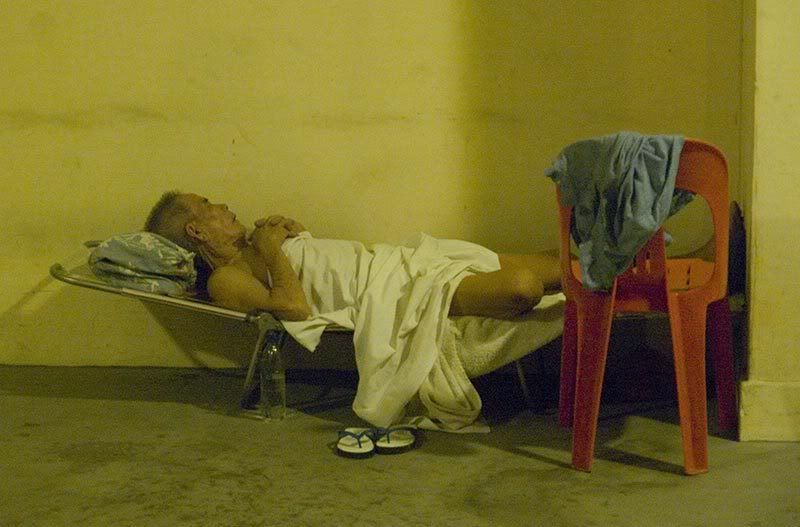
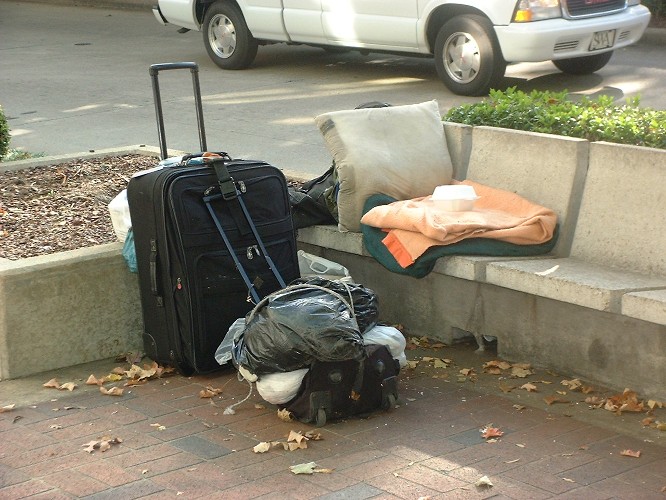
It’s good news indeed to hear that the Government has raised public assistance spending from $96 million to $140 million, and ComCare funding from $43 million to $67 million. With that much money allocated to the needy, it makes sense to ensure these funds reach the ones who need immediate assistance.
Take Mr Ramasamy Ratran, a 52-year-old Indian man, who was a pitiful sight when my students and I chanced upon him. He was lying on the dusty floor in his rented two-room flat, having been discharged from hospital just two weeks earlier.
Fortunately, a former female neighbour and a male friend had taken it upon themselves to look after Mr Ramasamy, who is epileptic and living on his own. Medical social workers had settled his hospital bills, but he was getting no financial help while he was recuperating and unable to work.
‘Can you please help him? He needs help. When I first came two weeks ago, there was no electricity. His flat was in total darkness,’ pleaded the former neighbour, who had helped to top up his prepaid utilities smart key to get the electricity back on.
Mr Ramasamy was not the only one my students and I found in need of assistance. When barber Yahya Pinghani, 39, was hospitalised for a kidney problem, he could not work and had no daily income for weeks. His children skipped school that week because there was no money for the bus fare.
Mr Pinghani’s wife Murni, 41, complained how, after three weeks, her single friend who had applied for help with her at a CDC had already received assistance while she and her family were still waiting. She revealed that her family owed a whopping $4,000 in utilities bills.
CDCs do give $200 once-off emergency assistance, after which the needy wait six to eight weeks for CDCs to respond. So what do they do when help is a long time coming? Many see their MPs, getting a $50 cheque for their trouble, or resort to collecting food from voluntary welfare organisations. How many know that they can get immediate assistance from your Citizens Consultative Committee? I did not either, for that matter, till I asked around.
Perhaps it is time that bulletin boards in HDB flats were put to better use. They could advertise where the poor can get help and give details of the schemes. Many low-income earners are illiterate, but the ones who are not will surely help to spread the word around.
It could also be made mandatory for medical social workers in hospitals to inform social workers or CDCs when a person who is from the low-income group is discharged so they will give him temporary financial assistance during his recovery period.
Last year, the Ministry of Community Development, Youth and Sports (MCYS) set up a community care network for the elderly in Ang Mo Kio. Under this scheme, grassroots leaders are trained by family service centres to identify needy households.
Perhaps if this outreach scheme is formally extended to include all needy Singaporeans, not just the elderly, it could be used to ensure no one falls through the cracks and to explain the help schemes available to the needy.
MCYS minister Vivian Balakrishnan recently called on Singaporeans to be eyes and ears on the ground, saying ‘we need the whole of society’ and not ‘an army of bureaucratic civil servants’, when he outlined $140 million worth of initiatives for the low-income group.
The findings of the 18 Ngee Ann polytechnic students who ventured out of their classroom may not be conclusive, but simple observations like theirs should not be belittled. Like any jigsaw puzzle enthusiast will tell you, even one small piece makes a difference.
The writer is a lecturer at the School of Interdisciplinary Studies at Ngee Ann Polytechnic.
-
Singapore's Poor

No poverty in S'pore? Think again.
Singapore's poor emerge as delicate political issue
Asian Wall Street Journal
January 30, 2007
SINGAPORE
By YAROSLAV TROFIMOV
DURING rush hour in Singapore's ultramodern subway system, wrinkled old ladies squat on the underpass floor with handfuls of small tissue packets that they sell at one Singapore dollar, or 65 US cents, apiece.
These are the poor of Singapore, left behind by the boom that has transformed this tropical island of 4.5 million people into a regional business, finance and technology hub. Poverty here isn't nearly as desperate as in its Asian neighbors, or even many Western societies. But it has become an increasingly sensitive political issue, prompting new tax and social policies that the government is expected to unveil in the annual budget presentation Feb 15.
According to official statistics, at least 40% of Singapore's households saw their real incomes decrease from 2000-2005 -- while the overall economy posted some of the world's highest growth rates, surging by 7.7% last year.
"The question is, who is all this growth for?" says Manu Bhaskaran, an adjunct fellow at Singapore's Institute of Policy Studies and a partner at the Centennial Group, an advisory firm. "Shouldn't the government be aiming for lower growth, but better distribution? "
The government's strategy so far is to pursue a balancing act of generating more revenue for helping the poor without scaring off the global investors who have long been attracted by the city-state's low-tax regime. "The dual objective is to ensure that the Singaporean economy continues to remain competitive, and to strengthen the inclusiveness of Singaporean society," says Lim Swee Say, secretary-general of the National Trades Union Congress and a government minister.
Most of Singapore's poor are in their 50s or older, and many are onetime manufacturing workers who lost their jobs to cheaper competitors in China, Vietnam or India. Many lack education and English-language skills that are needed to prosper in expanding sectors such as services and finance.
It is only in recent months that senior officials began to speak out on the problem of structural poverty, recognizing the potential perils for a multiracial, multireligious society such as Singapore's. "It is essential for us to tilt the balance in favor of lower-income Singaporeans, because globalization is going to strain our social compact," Prime Minister Lee Hsien Loong said in a speech last fall.
Singapore's People's Action Party, founded by Mr Lee's father Lee Kuan Yew -- who is still a senior government member with the title of Minister Mentor -- has controlled the island since independence in 1965, winning nearly every seat in parliamentary elections. The country's mixed population of Chinese, Malays and Indians has accepted decades of the PAP's often authoritarian rule in exchange for phenomenal economic growth that has transformed this former British trading outpost into one of the world's most prosperous states.
While providing subsidized housing and health care, Singapore's government has long resisted calls for European-style unemployment benefits for the poor, describing welfare as a "dirty word" and rejecting the idea of a minimum wage. Instead, the government has come up with the concept of "workfare" -- a large-scale program to top off the incomes of those Singaporeans who accept low-paid work. Details of the program will likely be given in the budget presentation.
"We can't stop the income gap from widening because the wages are determined by the global competition for knowledge workers, and by the excessive supply of unskilled workers," says Mr. Lim, the minister and union leader. "But what we're trying to do is to make sure that the widening income gap doesn't necessarily translate into a widening social gap."
Most developed economies fund such social programs by redistributing wealth through progressive taxation: the top-bracket federal income tax rate is 35% in the US, and at least 40% in most of Western Europe. But Singapore is ideologically opposed to this model: the island-state has been steadily slashing its top income-tax rate, from 55% at independence in 1965 to 28% in 2000, to 20% today. Making up for the shortfall in revenue, Singapore established a general sales tax, currently at 5%.
It is the sales tax that the government is planning to tap again to pay for the "workfare" initiative. According to Mr Lee, with the new budget the sales tax is likely to rise to 7% -- a measure that, economists calculate, will generate some S$1.5 billion of extra government revenue.
The plan is far from popular. In the two months since Mr Lee in November first mentioned a likely sales-tax rise, the proposal elicited unusually vocal criticism from Singapore's corporate world and opposition leaders alike. The influential Singapore Chinese Chamber of Commerce and Industry complained the sales-tax increase is "likely to have an immediate and detrimental effect on local spending," undermining Singapore's long-term competitiveness.
Sylvia Lim, leader of the Singapore Workers' Party and an opposition Parliament member, also pointed out that the poor -- the ostensible beneficiaries of the proposal -- would be hurt the most. "We need to strengthen our safety nets through some redistributive policies," she asserted, adding that consumption taxes, such as the sales tax, "are generally regressive and likely to compound the underclass problem."
While the government usually ignores the minuscule opposition in this tightly regulated country, the business community's pleas found a receptive audience. Aware that corporate taxes are even lower in rival business centers such as Hong Kong and Ireland, Singapore signaled it would sweeten the pill for businesses: To compensate for the higher sales tax, the corporate tax rate, currently 20%, would be shaved by at least one percentage point.
"This is a tough and competitive world," Minister Mentor Lee told Singaporean journalists as he explained the planned corporate-tax cut. "People don't come here because they like Singapore -- they come because the returns are better."What happened to Singapore, the land of plenty?
Friday, 19 January 2007, 12:28 am | 367 views
This article is taken from Asiaweek (For Richer Or Poorer), to allow our readers to revisit the issues of welfare, the aged, foreign workers, and wages in Singapore.
It is quite troubling to note that this article was first published in Nov, 2000. The problems faced by those who are struggling are largely the same today - 6 years on.
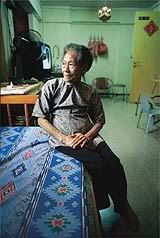 The article is by Roger Mitton
Lee Chong Peng is the symbol of Singapore’s broken dream. She lives alone in a one-room flat on about $3 a day. “I watch television and take short walks,” she says. “My legs ache now, so I cannot go so far.” But without fail, every Wednesday afternoon, Lee takes the lift down eight floors to the ground level of her public housing block.
There she joins dozens of other poor folk from her district in Chinatown to sit, waiting, on concrete benches. Lee, 84, chats with friends, while others remain sullen, lacking even the warmth of comradeship. At 5 p.m. they all form into a line and shuffle forward to receive a plastic bag containing six eggs, 1.5 kg of rice, a can of baked beans, a can of sweet corn, one packet of hot chocolate, one packet of coffee, some cereal and a single toilet roll. Without this weekly donation from a charitable group, Lee and her neighbors find it tough to survive.
What happened to Singapore, the land of plenty?
In its rush to forge a manufacturing, then a high-tech economy, the city-state rarely bothered to look back at those who were lagging. Senior Minister Lee Kuan Yew developed a system based on hard work and government support for industry. Singaporeans were expected to earn their rewards. The results were astounding: a middle class emerged to build Asia’s second-richest country.
But with the advent of globalization and an influx of cheap foreign workers, Singapore’s economy is becoming increasingly ruthless. According to its own statistics, the nation’s rich are getting richer and the poor are falling further behind. To most Singaporeans, the mere existence of poor folk in need of care packages comes as a shock. And this realization has prompted an uncharacteristic bout of soul-searching. The rich-poor disparity strikes right at the heart of Singapore’s development model — and challenges the city’s smug self- image. Many younger Singaporeans raised in middle-class comfort are beginning to think that Lee’s ideal is outdated; they argue that the government has a responsibility to care more for the downtrodden.
Lowest 10% of society had an average monthly income of only $75.81
The issue burst into Singapore’s consciousness in May, when the media reported a Department of Statistics disclosure that the lowest 10% of society had an average monthly income of only $75.81. Officials said the figure (which included unemployed and retired people) had been misused to present a distorted view. Trade and Industry Minister George Yeo presented a raft of numbers in parliament to show that Singapore’s poor really were not so poor after all. “The standard of living among the lower income has gone up,” said Yeo. Nearly all had televisions and telephones, on average they had about $11,500 in the state retirement fund (CPF), and all but a quarter lived in 3-room or larger flats. “In other words, many in the bottom 10% have significant wealth in the form of CPF savings and their homes,” added Yeo. “They are not an underclass.”
The hot potato might have cooled there, except that in a classic piece of mistiming the government then announced substantive pay hikes for the civil service. On average, salaries jumped 13%. Prime Minister Goh Chok Tong’s wage soared to a cool $1.1 million — almost $3,000 a day. Goh says the new wage bill will cost each Singaporean about $6 a year — the equivalent of five plates of char kway teow, a popular noodle dish. But opposition legislator Chiam See Tong noted: “I think U.S. President Bill Clinton receives only about S$600,000 [about $343,000] a year. Surely that should also be enough for a minister in Singapore?”
Goh claims qualified Singaporeans are not interested in such a “poor” salary. “Several high-fliers pleaded young family or lack of interest for not coming into politics,” he says. “They never say it is because they can earn more outside, but I can tell clearly that pay is a consideration.” The ill-timed raise further exacerbated the festering subject of income divergence. Admits legislator Charles Chong: “The ratio between the top and bottom has been increasing.”
“They won’t starve or go homeless or be refused medical care”
As a result of prosperity and shifting values, attitudes toward the poor are slowly beginning to change. Singapore already is doing something to reduce the adverse effects of the income gap. For starters, the city’s poor don’t have it too badly. Says Chong, from the ruling People’s Action Party: “We look after our disadvantaged people. They won’t starve or go homeless or be refused medical care.” Adds National University of Singapore academic Mukul Asher: “By spreading the consumption of basic amenities like housing, schooling, healthcare and transport in a more equal way than other societies, the government mitigates some of the effects of large and growing income inequalities.”
But helping the poor directly would go against the grain of the ruling party’s old guard. Notes veteran oppositionist J. B. Jeyaretnam: “It is Lee Kuan Yew’s dogma that nothing is free in this world. There is no free lunch, no handouts, no subsidies.” Jeyaretnam has called on the government to lessen the inequalities by providing free medical treatment, free education and old-age pensions to those in need. Younger members of the ruling party are beginning to realize that poverty is a growing problem — one that the government will have to address to stay in power. “It’s true, there is a kind of paranoia among older leaders about Singapore degenerating into a welfare state,” says legislator Chong. “But nowadays, the younger leaders are saying that if we want to be considered as a humane, civilized society we have to help these poor people more.”
How did Singapore leave its poor behind?
In part, cheap foreign labor shoved unskilled Singaporeans aside. To achieve high growth rates, the government has increasingly allowed larger numbers of foreign workers to make up the labor shortfall caused to some extent by low birthrates. Explains academic Asher: “Singapore does not believe in redistribution of wealth. Instead, it always wants high rates of growth to reduce poverty levels.”
Electrical fitter Bazlur Rahman, a Bangladeshi working in Singapore, puts up with his small salary — something few Singaporeans would be willing to do. He earns $11 a day and saves more than $170 a month, which he sends home. Bazlur lives with 3,200 other foreign workers in a cramped, tight-security compound at Kaki Bukit. Says Asher: “Singapore has been able to use these foreign workers and their low wages and conditions to maintain its competitiveness and high growth rates.”
Reduce wages or be priced out of the market
To compete with Bazlur and thousands like him, Singapore workers must reduce their wage demands or be priced out of the market. Yet to keep top-end managers and professionals at home, the government and its private sector must make matching offers. Says Asher: “All round you have got a larger wage inequality; wealth is more concentrated.”
Admits Prime Minister Goh: “Yes, the income gap in Singapore is widening because of globalization and the knowledge revolution, which have enhanced the value of talent dramatically and pressed down the wages of the unskilled.” Can the government do anything? It has already ruled out the idea of holding down wages at the top or artificially raising wages at the bottom.
It is already running capable retraining programs. Says Goh: “We must not envy those who have made it rich. Rather, we must provide the opportunities for more to be like them. It means operating on the basis of meritocracy — that you can get ahead in life if you work hard, regardless of your background.”
What else can be done? As a result of growing concern about the poor, the government has set up nine community development councils, which are jointly funded and operated by local officials and charities. Community leaders draw up policies and every dollar donated to the councils is matched three-to-one by the government. This initiative has moderated attitudes. “We don’t want the government to take over the voluntary welfare organizations, but we’ll enhance their work,” says Chong. “If in this way we are seen to be helping the less well-off, there will be fewer social problems.”
Money politics
But where there is money, there is politics. Opposition legislators such as Chiam claim that the ruling party uses this aid for political gain — in effect, to buy votes. “The chairman of a community development council will go around like Santa Claus giving money away to the poor and unemployed,” says Chiam. “It’s the politicians who go out to give this money and of course they’ve got to get their votes. That’s the way they dish out welfare: very selectively.” The council chairman in Chiam’s constituency, the ruling party’s Andy Gan, denies that aid is used to garner votes. “Our office is open to all residents and I do not ask for their votes before seeing to their needs,” Gan says.
The circumstances of Teng Ah Mui suggest that this community-based assistance is inadequate anyway. Teng, 54, lives alone and recently began receiving charity food packages each week in order to survive. She has held various unskilled jobs, but since falling and injuring her leg six months ago she now relies on public assistance. After paying her rent and utilities bills, she is left with about $80 a month. “It’s not enough, so I have to depend on food donations and help from friends,” she says. A decade ago, it might have been easier for Teng to rejoin the workforce. These days, there is too much competition for menial work and too few opportunities.
Public assistance of about $115 per month.The bottom line is that the government’s willingness to help the poor is still minimal. In Singapore, children are required by law to look after their elderly parents. But often they cannot do this, especially if they are low-income, single children. Admits Minister of State without Portfolio Matthias Yao: “Parents know what their children can afford. They don’t bring cases to court when they know that their children are too poor to look after them.” If neither friends nor family can help, and if the person is unable to get work, then — and only then — will the government step in with the barest subsistence-level help. Last year 2,238 people qualified for this public assistance (usually about $115 per month). The number has increased each year for the past three.
So what will happen when the number of aged people quadruples in the next 30 years? They already comprise the largest chunk of Singapore’s new poor (the other major components are retrenched workers, single mothers and the disabled). Even now, rich Singapore cannot look after its older folk without drawing on the services of charity groups. Says Asher bluntly: “The government will need to do more.” If it does not, income disparities could threaten the country’s cherished social harmony. They might even eat into the ruling party’s monolithic hold on power.
The government knows this is a serious matter — perhaps the most serious socio-economic threat Singapore has faced. Despite some bluster about meritocracy, retraining and limits on foreign workers, no one really knows a surefire way to solve the problem. Says Asher: “Policy-makers are still thinking in terms of economic output and growth; while the people are increasingly thinking more and more of their welfare.” But don’t count out the ruling party. It has been skillful at adapting to meet the needs of its citizens. Adds Asher: “One can expect that they will begin to change as this issue becomes more pressing. They will have to in order to maintain their legitimacy and their support.”
Just don’t call it welfare
For now, the subject remains virtually taboo. But soon Singapore will be forced to find a remedy for its new, more disparate, reality. Just don’t call it welfare.
-
People will ask you, so should we give them enough to have food in the hawker centre, food court or restaurant?
Haiz.
Everything is cold hard cash these days.
No more compassion.

-
Singapore's Poor
No poverty in S'pore? Think again.
Singapore's poor emerge as delicate political issue
Asian Wall Street Journal
January 30, 2007
SINGAPORE
By YAROSLAV TROFIMOV
DURING rush hour in Singapore's ultramodern subway system, wrinkled old ladies squat on the underpass floor with handfuls of small tissue packets that they sell at one Singapore dollar, or 65 US cents, apiece.
These are the poor of Singapore, left behind by the boom that has transformed this tropical island of 4.5 million people into a regional business, finance and technology hub. Poverty here isn't nearly as desperate as in its Asian neighbors, or even many Western societies. But it has become an increasingly sensitive political issue, prompting new tax and social policies that the government is expected to unveil in the annual budget presentation Feb 15.
According to official statistics, at least 40% of Singapore's households saw their real incomes decrease from 2000-2005 -- while the overall economy posted some of the world's highest growth rates, surging by 7.7% last year.
"The question is, who is all this growth for?" says Manu Bhaskaran, an adjunct fellow at Singapore's Institute of Policy Studies and a partner at the Centennial Group, an advisory firm. "Shouldn't the government be aiming for lower growth, but better distribution? "
The government's strategy so far is to pursue a balancing act of generating more revenue for helping the poor without scaring off the global investors who have long been attracted by the city-state's low-tax regime. "The dual objective is to ensure that the Singaporean economy continues to remain competitive, and to strengthen the inclusiveness of Singaporean society," says Lim Swee Say, secretary-general of the National Trades Union Congress and a government minister.
Most of Singapore's poor are in their 50s or older, and many are onetime manufacturing workers who lost their jobs to cheaper competitors in China, Vietnam or India. Many lack education and English-language skills that are needed to prosper in expanding sectors such as services and finance.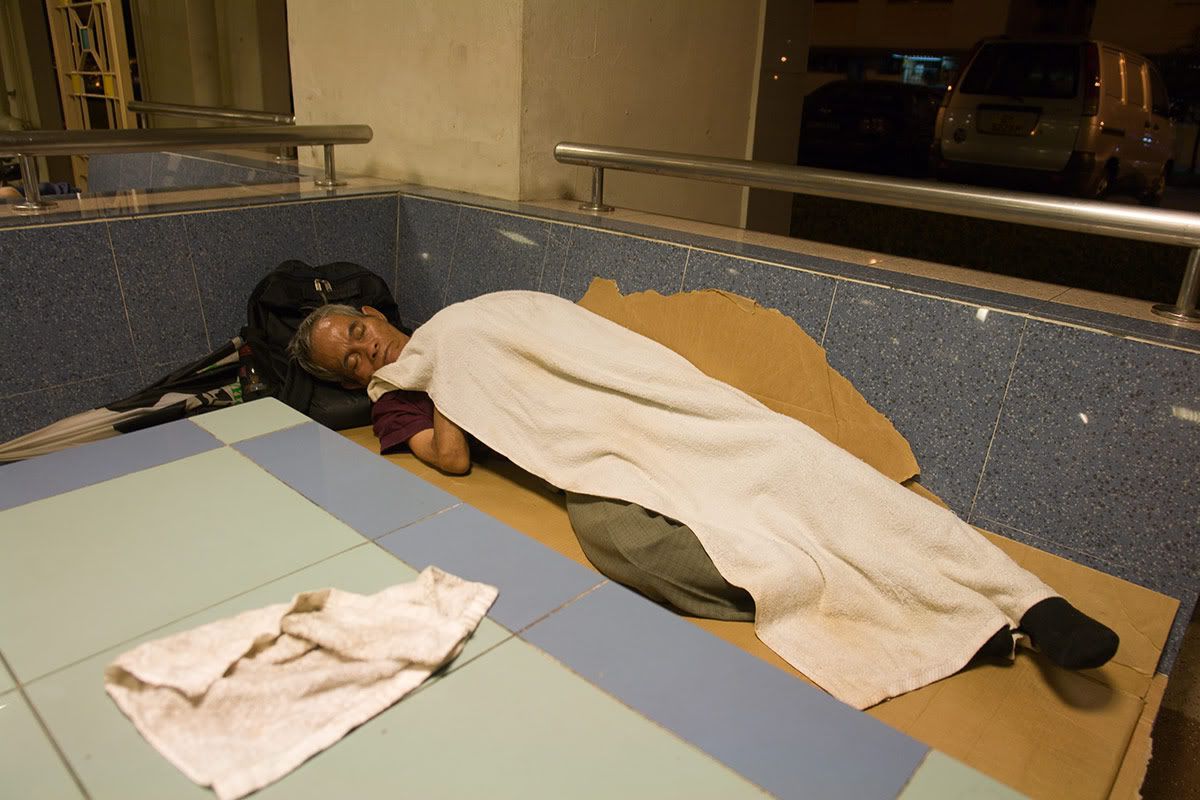
It is only in recent months that senior officials began to speak out on the problem of structural poverty, recognizing the potential perils for a multiracial, multireligious society such as Singapore's. "It is essential for us to tilt the balance in favor of lower-income Singaporeans, because globalization is going to strain our social compact," Prime Minister Lee Hsien Loong said in a speech last fall.
Singapore's People's Action Party, founded by Mr Lee's father Lee Kuan Yew -- who is still a senior government member with the title of Minister Mentor -- has controlled the island since independence in 1965, winning nearly every seat in parliamentary elections. The country's mixed population of Chinese, Malays and Indians has accepted decades of the PAP's often authoritarian rule in exchange for phenomenal economic growth that has transformed this former British trading outpost into one of the world's most prosperous states.
While providing subsidized housing and health care, Singapore's government has long resisted calls for European-style unemployment benefits for the poor, describing welfare as a "dirty word" and rejecting the idea of a minimum wage. Instead, the government has come up with the concept of "workfare" -- a large-scale program to top off the incomes of those Singaporeans who accept low-paid work. Details of the program will likely be given in the budget presentation.
"We can't stop the income gap from widening because the wages are determined by the global competition for knowledge workers, and by the excessive supply of unskilled workers," says Mr. Lim, the minister and union leader. "But what we're trying to do is to make sure that the widening income gap doesn't necessarily translate into a widening social gap."
Most developed economies fund such social programs by redistributing wealth through progressive taxation: the top-bracket federal income tax rate is 35% in the US, and at least 40% in most of Western Europe. But Singapore is ideologically opposed to this model: the island-state has been steadily slashing its top income-tax rate, from 55% at independence in 1965 to 28% in 2000, to 20% today. Making up for the shortfall in revenue, Singapore established a general sales tax, currently at 5%.
It is the sales tax that the government is planning to tap again to pay for the "workfare" initiative. According to Mr Lee, with the new budget the sales tax is likely to rise to 7% -- a measure that, economists calculate, will generate some S$1.5 billion of extra government revenue.
6,326 posts since Jan '03
The plan is far from popular. In the two months since Mr Lee in November first mentioned a likely sales-tax rise, the proposal elicited unusually vocal criticism from Singapore's corporate world and opposition leaders alike. The influential Singapore Chinese Chamber of Commerce and Industry complained the sales-tax increase is "likely to have an immediate and detrimental effect on local spending," undermining Singapore's long-term competitiveness.
Sylvia Lim, leader of the Singapore Workers' Party and an opposition Parliament member, also pointed out that the poor -- the ostensible beneficiaries of the proposal -- would be hurt the most. "We need to strengthen our safety nets through some redistributive policies," she asserted, adding that consumption taxes, such as the sales tax, "are generally regressive and likely to compound the underclass problem."
While the government usually ignores the minuscule opposition in this tightly regulated country, the business community's pleas found a receptive audience. Aware that corporate taxes are even lower in rival business centers such as Hong Kong and Ireland, Singapore signaled it would sweeten the pill for businesses: To compensate for the higher sales tax, the corporate tax rate, currently 20%, would be shaved by at least one percentage point.
"This is a tough and competitive world," Minister Mentor Lee told Singaporean journalists as he explained the planned corporate-tax cut. "People don't come here because they like Singapore -- they come because the returns are better." -
Originally posted by charlize:
People will ask you, so should we give them enough to have food in the hawker centre, food court or restaurant?
Haiz.
Everything is cold hard cash these days.
No more compassion.
Yah it's really sad man... too bad some people are more focused on trying to bash other countries then realize our own problems...
-
SG is a poor country becos we dunt have VIP plane.
All leaders just take SIA.Even u consider few of them occupy more than
one seats in First Class,the cost is much cheaper to buy and maintain
a VIP plane.Oz is using
Boeing Business Jet.


No wander he is called 747 Kevin.
Range 11,390km (Canberra direct to Honolulu, Hong Kong or Tokyo) Ceiling 41,000 feet Accommodation 30 passengers in VIP configuration ,,,
-
A minister mentioned that with the slowdown in the economic condition, the no of foreign professional might decrease soon.
-
A$440 million is a big sum---less than Temasek's investment on ABC
Learning.Temasek at least get a share in ABC.
But the Commonwealth Bank of Australia lent money to ABC
without asking for collateral!!I cant believe it!!
He also revealed that CBA had completely written off its entire $440 million unsecured exposure to ABC Learning Centres convertible notes.
CBA faces $2bn debt threat
Richard Gluyas COMMONWEALTH Bank's bad debt expense could double this year, blowing out from $930 million to well over $2 billion.
....
-
Hello lionnoisy, believe this:
Tamasek makes MASSIVE LOSS
SINGAPORE, Nov 4 — Last month's market upheaval swept away S$16.4 billion (RM40 billion) in market value from Temasek Holdings’ portfolio of major investments in Singapore-listed companies alone.
Calculations, based on the shrunken market capitalisation of 12 companies Temasek has a significant stake in, show that the value of its investments fell 25.7 per cent between Sept 30 and Oct 31. Compared to the beginning of the year, the drop is 45.7 per cent, or S$40 billion.
Singapore’s stock market capitalisation plunged S$123.5 billion in the month of October.
Temasek saw a huge chunk of market value destroyed — on paper — from its 55 per cent stake in SingTel, which translated into S$7.1 billion getting sliced off its portfolio's value in the month of October. The value of its SingTel stake fell S$13.7 billion from Dec 31, 2007.
Its 29 per cent core interest in DBS Group meant that the bank contributed the second largest cut in value to Temasek's Singapore portfolio — S$2.4 billion over the course of last month. DBS had borne the brunt of the sell-off among the three local banking stocks in October, losing 34 per cent of its market cap.
Temasek's 54 per cent share in Singapore Airlines' market cap dipped S$2 billion in the month of October, and S$4 billion this year so far. Its other transportation and logistics investments saw market value shrink too. Temasek's stake in SMRT Corporation meant a loss in market value of S$360 million, while the value of its interest in Neptune Orient Lines fell by S$563 million.
Market cap fell for the three infrastructure, industrial and engineering stocks with Temasek interest too.
Temasek's share of ST Engineering, Sembcorp Industries and Keppel Corporation's market value losses last month came to S$584 million, S$726 million and S$1.1 billion respectively.
Technology stocks Chartered Semiconductor Manufacturing and STATS ChipPAC meant value cuts for Temasek of S$232 million and S$776 million respectively in October too. Its comparatively smaller 15 per cent stake in Fraser and Neave still led to a loss in value of S$171 million last month.
CapitaLand was not hit as badly in October, so Temasek's 40 per cent interest in it led to a loss of S$237 million, though for the year so far, the property developer has taken S$3.8 billion off Temasek's portfolio.
Geographically, Singapore accounts for about a third of Temasek's net portfolio value.
It maintains a 12 per cent portfolio exposure to Asean countries, 22 per cent to North Asia, 23 per cent to the OECD economies, and a 7 per cent exposure to emerging South Asian economies such as India and Pakistan. -

 At first glance, it looked as if the shotgun marriage of Merrill Lynch & Co. with Bank of America Corp. had bailed out Temasek Holdings Pte. Ltd., who had poured nearly $6 billion into the investment bank this year, only to watch the value of its stake evaporate.
The Singapore government-controlled entity is Merrill's largest shareholder with a 7.5% stake. Temasek put $5 billion into Merrill at $48 a share between December and February, but a reset payment for losses on the original investment and additional $900 million poured in last month ended up averaging out the sovereign wealth fund's buy-in price to only $23.11 a share, based on Bloomberg calculations from exchange filings.
At Bank of America's orginal estimate of $29 a share, Temasek would have ended up making $1.5 billion on its investment. Unfortunately, the markets haven't been kind to the stocks of either BofA or Merrill. At the end of the day, Bank of America was down $7.19 or 21.3% to close $26.55, while Merrill Lynch only gained a penny at close, ending the day at $17.06 a share, leaving Temasek's investment still well into the loss column. - George White -
I cant understand how can a Singaporean Professor in Econ in a Oz Uni
said Oz is fine.read zaobao.
He also said he had bought mining giant shares
BHP Billiton at abt $25.
Big banks to wield job axe as crisis hits
ANZ could slash 3500 jobs as crisis grips


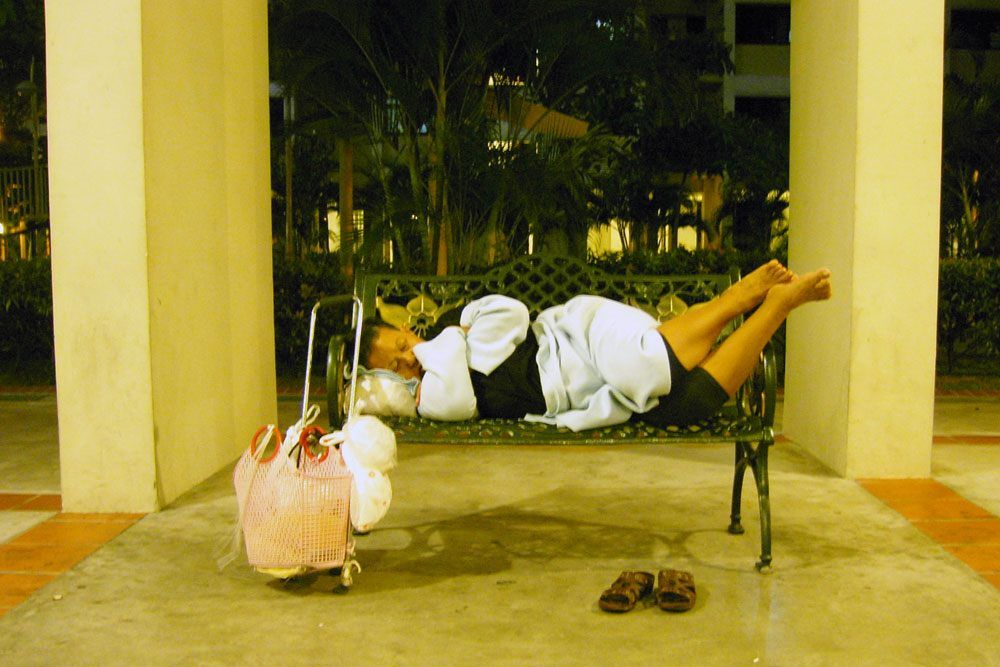
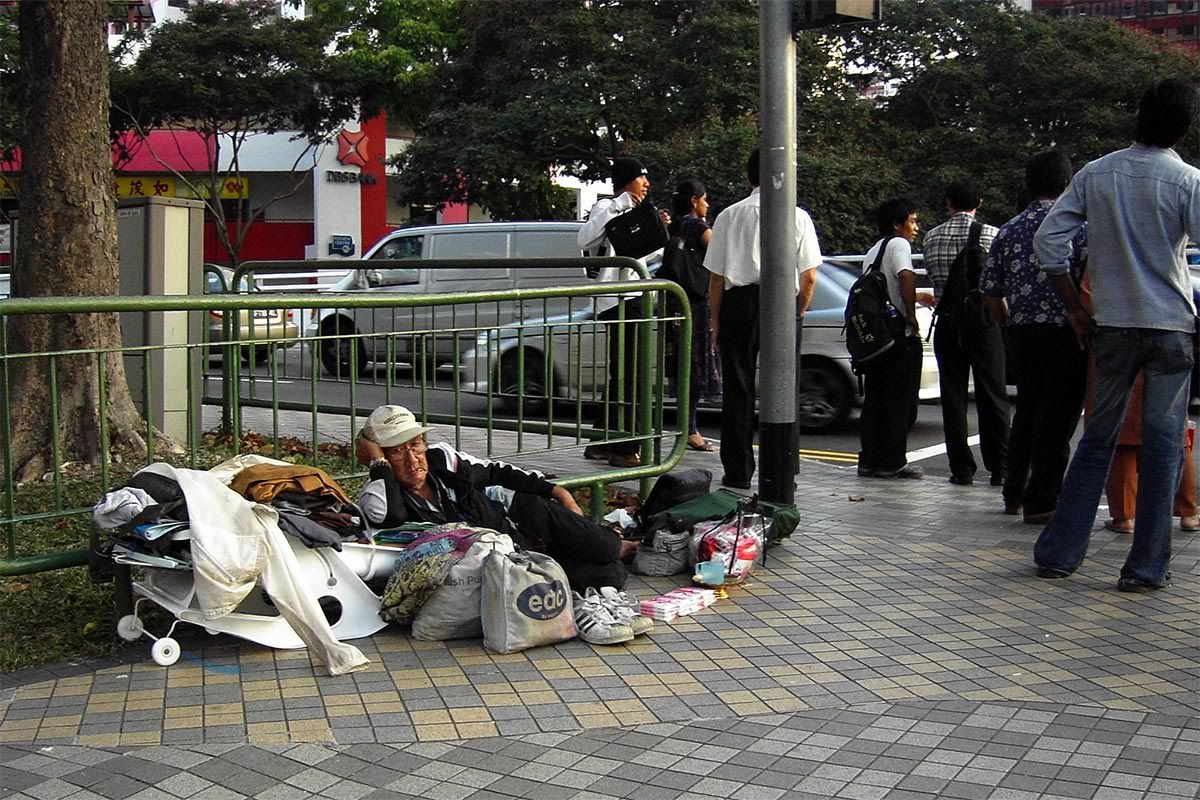


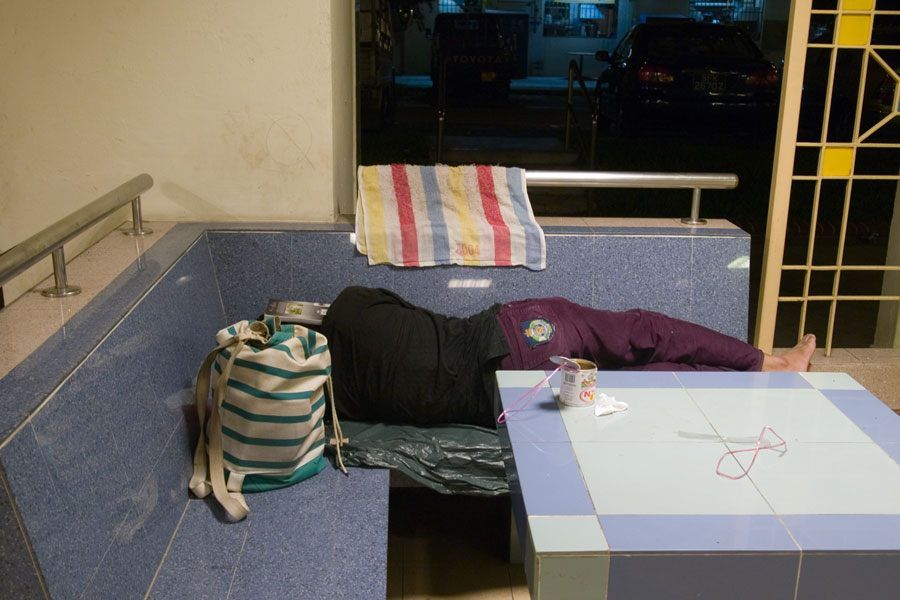
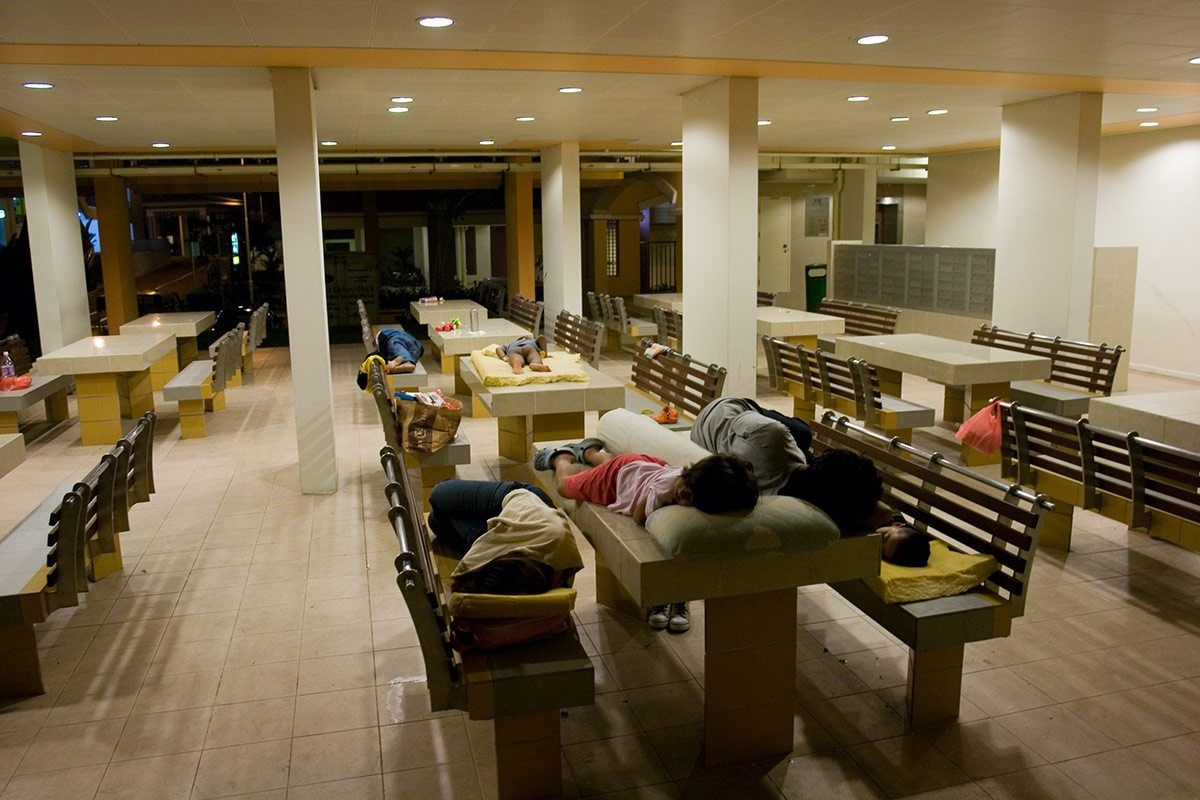
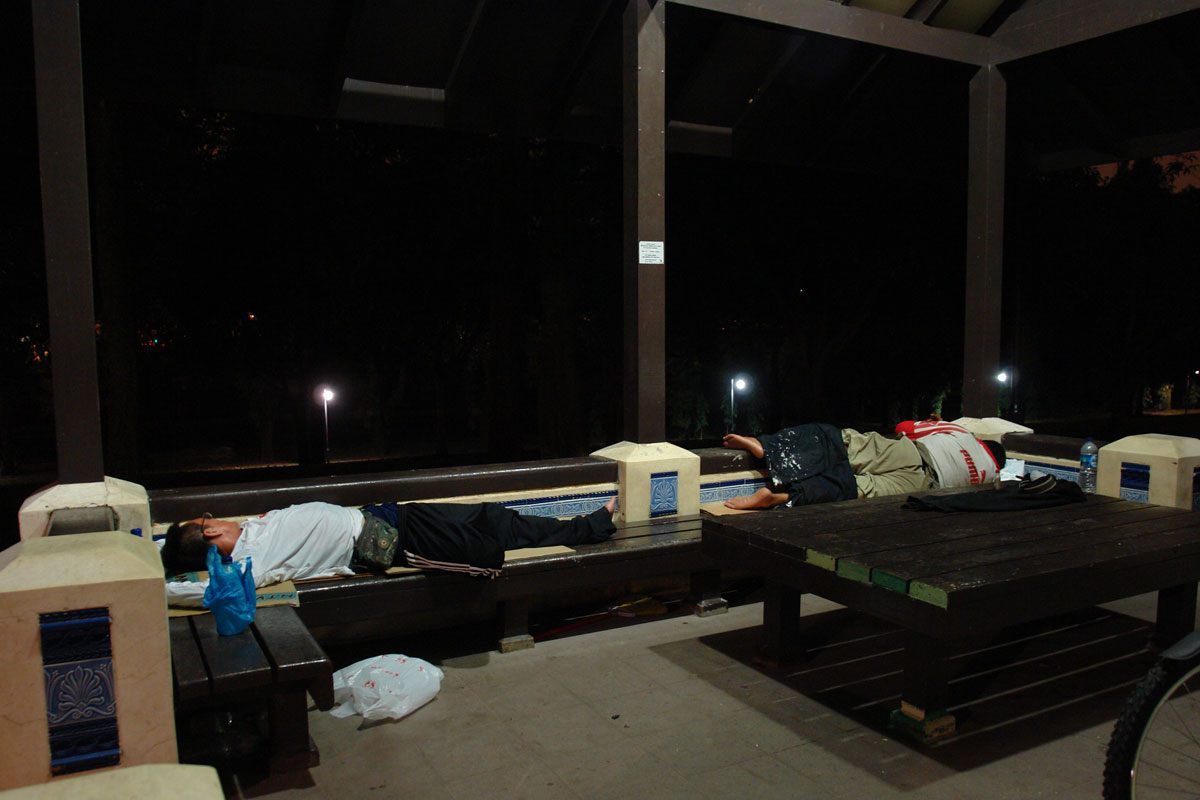

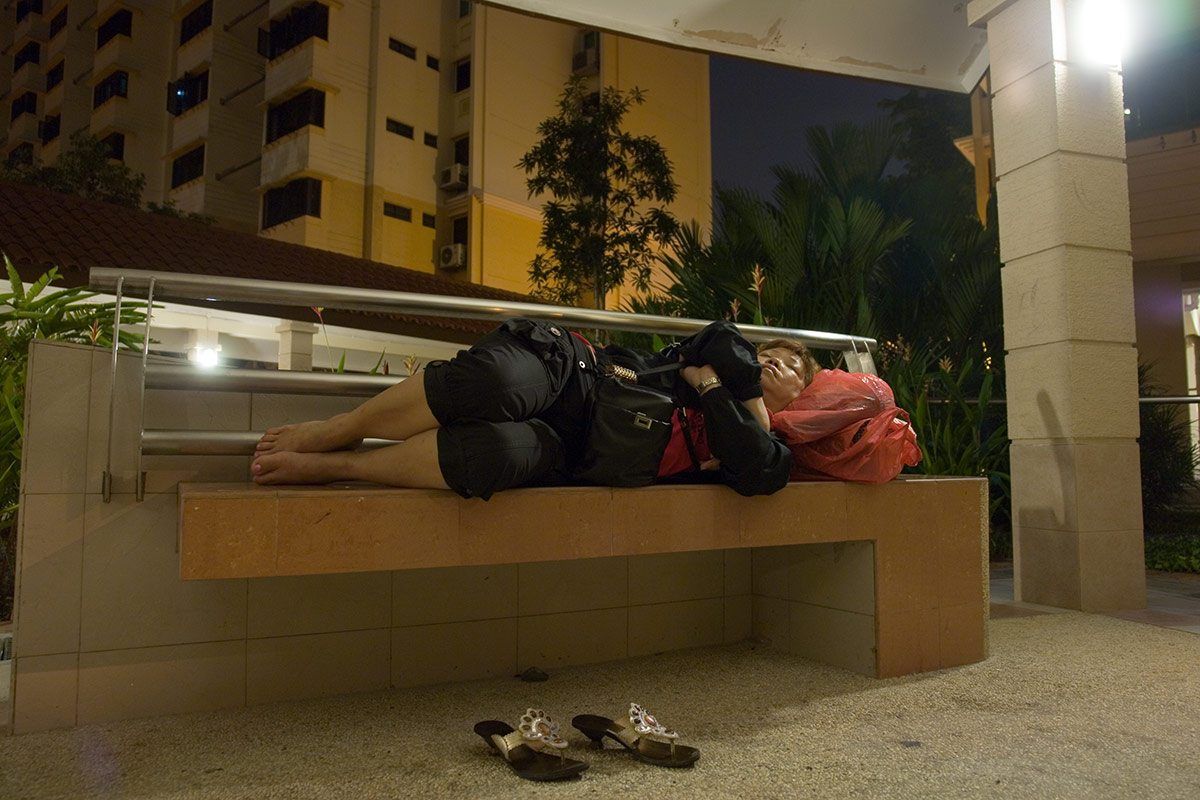


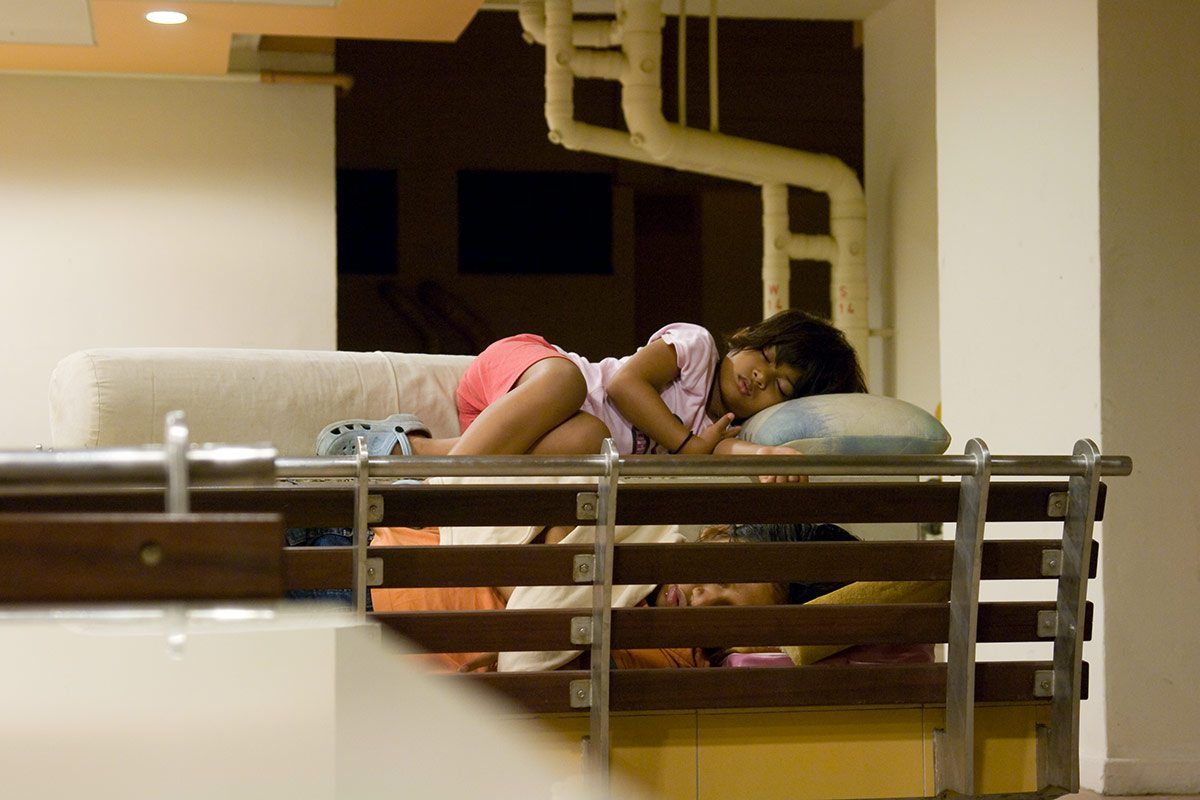


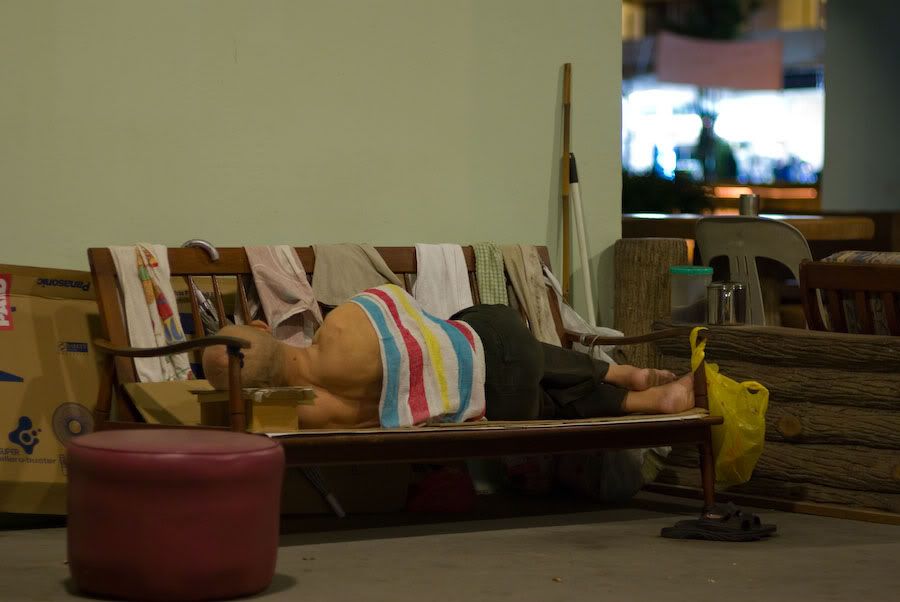
 Send Message
 Reply/Quote
 edit
edit