Aussie dollar--jumping kangaroo or paper kangaroo?
-
oh mate.
another funds stop redemption and oz gavaman to charge on
rich depositor,not banks, over 1 million for bank gurantee
http://business.smh.com.au/business/rudds-rushed-job-20081021-557x.html?page=fullpage#contentSwap1
http://www.theaustralian.news.com.au/story/0,25197,24530103-601,00.html
i dunt know the sudden drop of oz $$ against UDS.EUR and yen related to
this gurantee fee charging news.

this is live!!
RBA chairman in today speech said the insurace premium will not cheap.
if it is true,then we can expect lot of funds will leave Ausie soil!!
This guarantee is not free to the banks – they will pay for it on commercial terms, which in the current environment are unlikely to be cheap.
http://www.rba.gov.au/Speeches/2008/sp_gov_211008.html
The situation looks not so funnt.
mmm
-
if u are rich depositor in Oz,what do u expect the insurance premium.
ytd news:
One measure under consideration, according to the source, is the introduction of a government fee for deposit insurance for large lump sums; for example, amounts beyond $1 million.
Two pricing models are under consideration in relation to the fee for the sovereign guarantee of bank wholesale term debt.
The US model, determined by the Federal Deposit Insurance Corporation, is a flat charge of 75 basis points for all financial institutions, regardless of their credit ratings.
Britain, on the other hand, has adopted a risk-weighted approach, involving an initial flat fee of 50 basis points plus the median of the bank's credit default swap spread over the last six months.
While the final fee will be more than 100 basis points, riskier banks with lower credit ratings will pay more to effectively issue government-guaranteed debt. "There are strong grounds to adopt the risk-based model in Australia," a banking source said.
http://www.theaustralian.news.com.au/business/story/0,28124,24520338-643,00.html
mm
-
all currency value is affected to a great extend of trade balance.
USD will face the Judgement Day,like Oz $$.
http://www.tradingeconomics.com/Economics/Balance-Of-Trade.aspx?Symbol=AUD&File=10012008191614.htm
....
-
even Oz PM confirm premium may be charged:
Deposit premiums
Mr Rudd also revealed to Parliament that there were discussions last week and more are continuing as to whether deposits above $1 million should be subject to an insurance premium.
"The guarantee in terms of deposits remains absolute," he said.
"The question at issue is whether deposits above $1 million and beyond have an insurance premium attached to them consistent with the insurance premiums which are relevant to wholesale term deposits which apply to the term wholesale lending arrangements of the major commercial banks."
http://www.abc.net.au/news/stories/2008/10/21/2397403.htm
mmm
-
Singapore stagflation : May 2008 exports fell most in 17 months; inflation at 26-year highs
<!-- ADDTHIS BUTTON BEGIN --> <!-- ADDTHIS BUTTON END -->
This article belongs to the Singapore stagflation watch story arc.
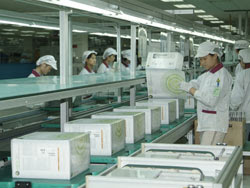
Singapore's exports fell the most in 17 months in May [2008] as the island's manufacturers shipped fewer electronics and other goods to the US and Europe. Non-oil domestic exports dropped 10.5% from a year earlier, the trade promotion agency said today [17 Jun 2008]. Manufacturers across Asia face easing demand amid slowing growth in the US, the region's largest overseas market. Pharmaceutical shipments dropped 48.5% in May from a year earlier, while electronics shipments slipped 8.5%, the 16th consecutive drop. Semiconductor shipments dropped 12.6%. Sales to the European Union fell 28% in May and US shipments dropped 22.3%.
- The Singapore economy continues to be confronted by stagflation as economic weakness persists and shows signs of actually worsening, while inflation continues to run at 26-year highs. As I have commented earlier, this is as classic as it gets regarding the definition of stagflation : stagnant or slowing economic growth in a time of rising inflation.
Sure, biotech manufacturing is subject to some "lumpiness" as equipment needs to be cleaned and re-setup for the next batch of medicines, but a 48.5% drop year-on-year? This is as good as "falling off the cliff", a sinking sensation that many in the peakoiler community are very, very familiar with. And electronics? 16 consecutive drops in 16 months. They could be trying for some kind of record here, together with semiconductors. A very ugly picture, especially given that inflation is still ongoing, and crude oil continues to set new record highs regularly.
This is the kind of situation that can lead to restlessness amongst the population, and in extreme cases descend into disorder and chaos and in fact it already has in some countries. You can be very sure that the government has got to be very concerned about it. Meanwhile, as an individual, in order to hedge against slowing economic growth, you might want to look into getting a job in a traditionally defensive sector, such as government, military, education, healthcare, and such. And as an investor, in order to hedge against inflation, what you can do is to buy into commodities, hold on to them, and sit tight. Gold and oil and uranium and food and other resources are going higher. Much, much higher. We ain't seen nothing yet.
Singapore CPI inflation rate for May 2008 continues at 26-year high of 7.5%

Singapore's consumer prices rose at a slower-than-expected pace last month [May 2008], reducing the need for further currency gains to rein in inflation. The consumer price index [CPI] jumped 7.5% from a year earlier, matching April's 26-year high record, the Department of Statistics said [23 Jun 2008]. The Monetary Authority of Singapore [MAS] had forecast a 5-6% inflation rate for 2008. The central bank has allowed its currency to strengthen against the US dollar, saying the exchange rate remains its most effective tool to fight inflation.
- The Singapore inflation rate is reportedly stabilizing and analysts are already predicting that it will come down in the second half of 2008. Singapore M3 money supply figures also appear to be stabilizing around the 12-13% level in the past half year, down from a high of 23.62% in 2007. But the money supply growth rate is only half the story - the other half is its relationship to the growth of available goods and services in the economy. For the inflation rate to be stable, economic growth has to at least keep up with money supply growth. With a looming global economic slowdown and imminent worldwide recession, the economic growth factor is the big wildcard.
Gold and crude oil prices may have paused from breaking new all-time record highs for the time being, but the inflationary storm is far from over as yet. We may only be passing through the eye of the hurricane here - just when people start to get lulled into complacency, the winds of inflation could well pick up with renewed force - perhaps even stronger than ever. We need to remain vigilant against inflation. This is no time to let down your guard yet.
Singapore economy stuck in mud : inflation rising, M3 falling, GDP crashing - the stagflation formula
This article belongs to the Singapore stagflation watch story arc.

mas.gov.sg -> mas.gov.sg (pdf) :
The latest Singapore money supply figures are out. For the month of Dec 2007, the Singapore M3 money supply growth has continued to slow, and it now stands at 14.14% year-on-year. However, real inflation shows no signs of abating because we are at the point where economic growth is falling (crashing) faster than M3 money supply growth is slowing. The Singapore economy is thus stuck in mud, and the stagflation formula goes as follows :
14.14% M3 growth - (-4.8% economic growth) = 18.94% real inflation rate.
For your reference, the money supply figures for the year of 2007 are as follows (click here for the spreadsheet if the inline frame is not shown) :
As you can see, in 2007 we have been roaring along with an average M3 money supply growth of 20.6% year-on-year. It was only in the last 3 months (Oct-Dec 2007) that the money supply growth has slowed down considerably.
However, if anything else, this is even worse than the time where it was reported on this blog when M3 growth hit a high of 23.62% back in Jun 2007. At the time, GDP growth was reported to be a still-healthy 8.6% so the M3-to-GDP differential was 23.62% - 8.6% = 15.02% then.
Hence, for myself and for those of you readers who subscribe to the classic Austrian-school definition of monetary inflation as money supply growth relative to economic growth, the fight to maintain our purchasing power has just gotten a lot harder, and this stagflationary environment just makes things even worse.
See also :
1. Singapore 2007Q4 GDP contracted 4.8%, 2008 economic growth forecast lowered
2. Singapore economy shrinks first time since 2003
3. Singapore CPI inflation hits new 25-year high of 4.4% in December
4. Singapore : Inflation rate could push past 6% in Q1 2008(2008-02-25 13:10:42 SGT) [Biz] Permalink Comments [1]
-
Rising inflation across Asia mauls Singapore Reits
Trusts may still get big lift from higher rents, higher hotel rates, say analystsSOARING inflation across Asia has sucked the life out of real estate investment trusts (Reits), whose high-yielding dividends have made them wildly popular among investors in recent years.
 Investors had wrongly penalised Reits with concerns over acquisition growth and credit-tightening conditions. They have ignored the ‘organic’ boost Reits may get from higher rents and hotel rates. - MORGAN STANLEY, in a report recommending property trusts to its clients — ST FILE PHOTO
Reits, in general, have fallen about 32.5 per cent in value from their peaks last year, but those with assets in inflation-prone economies, such as China, have fared even worse, according to financial portal Shareinvestor.com.
CapitaRetail China Trust, for instance, has fallen 52 per cent in four months, as inflation in China galloped to 7.1 per cent - its highest level in over a decade.
Reits are financial instruments investing in real estate like shopping malls, office buildings and hotels.
Investors can buy units, which are much like shares, offering attractive dividend yields of 6 per cent to 8 per cent derived from rents.
This is far higher than the 1.5 per cent interest on one-year fixed deposits at a bank.
Historically, a low interest rate environment has been good for Reits - if accompanied by low inflation.
Take CapitaMall Trust, the first Reit listed in Singapore. Its assets include the Tampines Mall and Junction 8 shopping centres.
It received an overwhelming response from investors when it listed six years ago, rising from just 96 cents in July 2002 to a record high of $4.32 in July last year. Inflation played its part by staying at a benign 1 per cent.
As the consumer price index, however, surged from 1.3 per cent in June to 4.4 per cent in December, CapitaMall slid 20 per cent over the period.
The inflation pressure is unlikely to abate in the near future.
Last week, the Government revised its estimates upwards to between 4.5 per cent and 5.5 per cent for the year, from an earlier forecast of 3.5 per cent to 4.5 per cent.
So, while fears of a United States recession are causing much grief among investors as they watch the value of their growth stocks evaporate, inflation is becoming a big threat to those with high dividend-yield plays like Reits.
One trader explained: ‘A Reit may offer 6 per cent in dividend yield. But if inflation is running at 4.5 per cent, the actual yield an investor is getting is only 1.5 per cent.’
To compensate for the lower return, an investor will demand a lower price for the Reit, which escalates the pressure on its share price.
Still, analysts have not stopped promoting Reits, despite their lacklustre performance, to clients.
Morgan Stanley made a case last month with a report arguing that investors had wrongly penalised Reits with concerns over acquisition growth and credit-tightening conditions.
Investors have ignored the ‘organic’ boost Reits may get from higher rents as leases expire and hotel rates are jacked up during peak periods.
Citigroup noted on Tuesday that while there may not be a clear growth strategy for Reits this year, some are trading at hefty discounts to their net asset values, despite offering single-digit or even double-digit dividend yields.
‘This makes Reits potential takeover targets, if they have loose shareholding structures,’ it added.
Its top picks include Ascendas Reit, Suntec Reit and Parkway Life Reit.
Source : Straits Times - 23 Feb 2008
-
SINGAPORE, Oct 10 - Singapore has slipped into recession and the Government has revised its 2008 growth forecast to around 3 per cent from a previous estimate of 4 to 5 per cent.
The economy shrank at an annualised, seasonally adjusted rate of 6.3 per cent in the third quarter, according to third quarter advance estimates released by the Ministry of Trade and Industry on Friday morning, pushing the export-dependent economy into its first recession since 2002.
The government also revised down its 2008 growth forecast to around 3 per cent from a previous estimate of 4 to 5 per cent.
Economists had expected the Republic to narrowly escape a recession in the third quarter by growing 1.1 per cent, lifted by a slight improvement in electronics output.
A recession is often defined as two consecutive quarters of economic contractions.
The deepening financial crisis, which sparked banking crises in the United States, Iceland, Britain, Germany and Ireland, is threatening to drag the world economy into recession.
The advance estimate, based largely on July and August data, gives an early indication of the economy's performance during the July-September period.
MTI said the Singapore economy is estimated to contract by 0.5 per cent in the third quarter, than a year ago.
On a seasonally adjusted, annualised quarter-on-quarter basis, real GDP declined by 6.3 per cent, following a 5.7 per cent decline in the previous quarter.
On the outlook for the year, MTI said since the revised GDP forecast in August, "external economic conditions have deteriorated more than expected and some sectors of the economy have weakened significantly on account of industry-specific or domestic factors.
"The worsening of the financial crisis in the US in recent weeks has deepened the credit crunch, making it more difficult for businesses to sustain economic activities. With unemployment on the rise and house prices continuing to fall, US consumer sentiment has weakened further and will affect demand for exports from Asia and the rest of the world."
It added that Singapore's export-oriented sectors, such as manufacturing, will be affected, noting that Europe is also facing severe strains in the banking sector, tighter credit conditions, and adjustments in housing prices.
Growth in major economies such as Germany, France, Italy and the UK has dipped sharply in the second quarter.
Growth forecasts for several Asian economies, such as China, India and South Korea, have been revised downwards since the start of the year.
The estimates showed that Singapore's manufacturing sector continued to be weighed down by the negative growth in biomedical sciences, as pharmaceutical companies are still producing a mix of pharmaceutical ingredients with values lower than compared to a year ago.
The precision engineering and chemicals clusters have also slowed, because of weaker external demand.
The construction sector grew by 7.8 per cent in the third quarter, compared to the 18.3 per cent growth in the first half of 2008. Despite a strong pipeline of construction projects, a shortage of contractors, a tight labour market for engineers and project managers, and longer waiting times for equipment, have delayed the realisation of these projects.
MTI said the financial services sector is likely to see slower growth in the coming months as the ongoing global financial crisis has heightened uncertainties for sentiment-sensitive segments such as stocks trading and fund management activities.
"Taking into account the slowdown in the global economy and key domestic sectors, MTI has revised the 2008 GDP growth forecast to around 3 per cent. The inflation forecast of 6 - 7 per cent for 2008 remains unchanged," it said. - The Straits Times
Singapore First Asian Economy to fall into Recession

Singapore becomes the first Asian victim of recession
AFP, SINGAPORE
Saturday, Oct 11, 2008, Page 1Singapore has become the first Asian economy to fall into recession, analysts said yesterday, after the government revised downward its full-year growth estimate and eased monetary policy for the first time in years.
The Ministry of Trade and Industry lowered the city-state’s full-year growth forecast to around 3 percent, citing a slowdown in the global economy and key domestic sectors.
The move came as the ministry released preliminary data showing that real GDP declined by 6.3 percent in the third quarter after contracting 5.7 percent in the previous quarter, the ministry said.
While it did not describe the economy as being in recession, a technical recession is generally defined as two consecutive quarters of contraction in economic output.
“Singapore will be the first Asia economy to fall into a technical recession,” DBS Group Research said in an assessment of the data.
In a move to confront the downturn, the Monetary Authority of Singapore (MAS) — its de facto central bank — said it was easing monetary policy for the first time in more than four years.
“The Singapore economy has weakened over the course of 2008, alongside an escalation in the turmoil in financial markets and a more severe deceleration in global economic activity,” MAS said.
These developments meant new uncertainties for the Singapore economy, while slower Asian growth would restrain activity in a range of service industries such as transportation and tourism, it said.
“The risks to external demand conditions continue to be on the downside and a more severe global downturn cannot be discounted,” the bank said.
Singapore is Southeast Asia’s wealthiest economy in terms of GDP per capita, but is heavily dependent on trade. This makes it sensitive to hiccups in developed economies, particularly key export markets the US and Europe.
Economists polled by Dow Jones Newswires had forecast a 0.3 percent quarter-on-quarter rise in GDP, the value of goods and services produced in the economy.
Compared with the third quarter of last year, the ministry said Singapore’s economy contracted by 0.5 percent in real terms, against the 0.8 percent expansion foreseen in the Dow Jones poll.Singapore in recession


 Written by Webmaster Friday, 10 October 2008SINGAPORE'S economy has slid into its first technical recession since 2002, as a slump in exports pushed quarterly growth into negative territory for the second quarter in a row.The economy shrank by a worse-than-expected 0.5 per cent in the third quarter compared to the same period last year, according to estimates from the Ministry of Trade and Industry (MTI) released on Friday morning.
MTI has also revised its full-year growth forecast for the second time this year, lowering it to 'around 3 per cent' from 4 to 5 per cent previously. This would make it the weakest pace in seven years.
Recognising growth concerns, the Monetary Authority of Singapore also changed its policy stance to zero appreciation of the Singapore dollar, reversing the gradual appreciation policy it has adopted since 2003.
On a quarterly basis, third-quarter GDP contracted 6.3 per cent from the second quarter, on top of a 5.7 per cent decline in the previous three months. A technical recession is generally defined as two consecutive quarters of decline.
Manufacturing led the slowdown again this time around, weighed down by a poor performance in the biomedical sciences segment. It was also hit by weakened global demand for exports as the United States-triggered financial crisis spreads around the world.
The sector shrank by 11.5 per cent in the third quarter, after declining 4.9 per cent in the previous quarter.
Growth in construction and services also slowed. Construction, in particular, saw its pace of expansion halved to single-digit growth, as projects were delayed by the construction squeeze, said MTI.
Services, touted as a key driver of growth this year, is likely to take a hit as well as financial services falters in the wake of the global credit crunch.
Most economists expect the economy to grow even more slowly next year, with the chance of a technical recession turning into a 'real' one.
'With external conditions deteriorating and the lack of domestic demand support, we expect Singapore to register no growth next year... with a muted recovery, if at all, expected only in the second half of next year at the earliest,' said Morgan Stanley economists in a report.
Inflation peaks
Inflation, which reached a 26-year high earlier this year, has peaked, said MAS. Consumer prices will rise between 6 per cent and 7 per cent this year, and gains will ease to between 2.5 per cent and 3.5 per cent in 2009, it predicted.'Against the backdrop of a weakening external economic environment and continuing stresses in global financial markets, the growth of the Singapore economy is expected to remain below potential in the period ahead,' said MAS.
'Inflation is expected to trend down in 2009 as the global and domestic economies slow.'(Straits Times Singapore)
Wednesday, 10 October, 2001, 04:56 GMT 05:56 UK
Singapore economy in recession
<!-- NOLImage --> Discounts in Singapore's shops are a sign of recession
<!-- /NOLImage -->The recession-hit economy of Singapore has shrunk by a record 5.6% during July to September.
The sharp contraction was expected by analysts, and the government is now forecasting that the economy will contract by 3% for the full year.
"In the light of the uncertainty in the global economy, Singapore has now revised its full year growth forecast to minus 3.0%," said Trade Minister George Yeo.
Previously the government had forecast 0.5-1.5% growth.
US ties
The country is suffering from its exposure to the US - its biggest trading partner - which is battling with its own economic problems.
Last month's terrorist attacks on the US have also exacerbated problems by denting consumer confidence.
"The appalling attacks on September 11 and the resulting train of events have probably tipped the global economy into a recession," said Mr Yeo.
Electronics downturn
The sharp contraction in the third quarter was blamed on the downturn in the electronics sector.
The goods producing sector in the trade-driven country fell by 15% while manufacturing output fell by 21% compared with a year ago.
This constitutes the sharpest fall since the 1985 recession.
"From the data so far, it certainly describes the economy is in a far worse shape than it has ever been," said Song Seng Wun, a regional economist at GK Goh brokerage.
However, Aberdeen Asset Management's Hugh Young told the BBC's World Business Report:"The feeling on the streets is not nearly as bad or as gloomy as it was when the Asian crisis hit. Certainly there is a lot of fear over job security right through Singapore at the moment."
Singapore slides into recession
Singapore has become the first Asian country to fall into recession, after growth fell for the second successive quarter.
By Jamie Dunkley
Last Updated: 11:13AM BST 10 Oct 2008 Singapore falls into recession Photo: EPA
The Ministry of Trade and Industry also revised downwards full-year growth forecast to around 3pc, citing a slowdown in the global economy and key domestic sectors.
Southeast Asia's wealthiest economy saw gross domestic product fall by 6.3pc during the third quarter having previously contracted by 5.7pc.
While the ministry did not describe the economy as being in recession, a technical recession is generally defined as two consecutive quarters of contraction in economic output.
In a move to confront the downturn, the Monetary Authority of Singapore - its de facto central bank - said it was also easing monetary policy for the first time in more than four years.
Singapore's economy expanded by 7.7pc last year but have been signs of a slowdown following contractions in Singapore's key manufacturing sector, which includes the country's electronic and pharmaceutical industries.
Construction growth slowed to 7.8pc from 19.8pc, during the quarter, although service industries grew by 6.1pc, marginally down from 7pc in the second quarter.
Singapore's last technical recession was recorded in 2002, when the economy contracted by 2.4pc during the year. The country is seen as an important indicator of economic trends in the rest of Asia due to its export-dependent economy.
Singapore Prime Minister Lee Hsien Loong said Asian economies face a "rough ride" for at least the next year as weakening consumer demand from developed countries hurt the region's exports.
TODAYonline, Weekend, October 11, 2008
................The Singapore dollar, already battered in recent weeks, is expected to weaken further against its United States counterpart. Goldman Sachs predicts the Singapore dollar would weaken to $1.54 to the greenback in the next six months, while UBS expects it to reach $1.50 by the end of the year, according to Bloomberg. The Singapore dollar was trading at around $1.48 yesterday evening, almost 10 per cent off its recent high of $1.35 on July 16. .............
-
Singapore Biodiesel Gloomy in 2008
Wilmar International, an integrated biodiesel producer is badly affected by high crude palm oil (CPO), feedstock for its its biodiesel plants in Indonesia and Malaysia. The biodiesel plants are running at 20% capacity for the first three months of 2008.
Despite the gloomy biofuels sector, Wilmar International, posted on the Singapore-listed firm reported a four-fold surge in fourth-quarter operating profits to $394.2m from $98.8m. Wilmar is also expanding its joint ventures with local companies in Africa, China and Europe.S'pore manufacturers cautious on next 6 months: survey <!-- headline one : end --><!-- more than 7 paragraphs --><!-- story content : start -->
SINGAPORE manufacturers are cautious about the business prospects in the next six months, a Government survey released on Thursday showed, reflecting concerns over a slowing global economy.
In the latest quarterly survey conducted by the Economic Development Board (EDB) among manufacturers, 87 per cent said the outlook for the next six months will not improve from the previous quarter when manufacturing output contracted 5.6 per cent.
A separate survey by the Department of Statistics showed companies in the services sector sharing the same cautious sentiment over the six-month period.
According to the survey, 24 per cent of the services firms polled expected business conditions to improve, while 22 per cent were less optimistic.
The responses are weighted by operating receipts and value added.
<!-- show media links starting at 7th para -->Chemical makers had the gloomiest outlook, with a net weighted 23 per cent of firms expecting business conditions to worsen on the back of high material costs.
Producers in the general manufacturing industries, which include the food, tobacco and printing sectors, were the most optimistic, with a net weighted 11 per cent expecting business to improve.
Singapore's economy shrank 6.6 per cent in the second quarter after seasonal adjustments, its biggest contraction in five years amid a slowdown in key export markets the United States and the European Union.
The less positive business outlook comes against a backdrop of rising unemployment in Singapore.
The jobless rate in the second quarter went up to 2.3 per cent after seasonal adjustments, compared to the previous quarter's 2 per cent, according to latest estimates released by the Ministry of Manpower on Thursday morning.
The data showed that employment grew by 70,600 in the second quarter this year, which is slightly lower than the increase of 73,200 in the previous quarter.
In his National Day message for Singaporean workers, NTUC chief Lim Swee Say on Thursday urged workers to moderate their wage expecations for this year, warning that pushing wages up to fully offset inflation is a risky move, as they will end up paying ever higher prices.
'Instead of pushing wages up to fully offset inflation, we must continue to link built-in wage increase to productivity gain and help our people through various non-wage measures', he said.
This will prevent a 'price-wage spiral', he said.
Singapore still faces woes despite millions spent to boost visitor numbers
With 100,000 set to flock at F1, Singapore tourism is still slowing down
19 Sep 2008 37 views
Tourism makes up nearly to 10 per cent of Singapore total GDP and the local tourism industry will take a ‘battering’ as analyst predicts Singapore tourism to slow despite our upcoming inaugural F1 first ever night race
The global credit crisis and slowing economy also didn’t help in the slowdown in Singapore tourism. Some 100,000 visitors are expected for the F1 weekend and some 40,000 of those are from overseas
F1 Singapore Grand Prix is part of our nation plan to make it a more global and a unique place. Not only we’re attracting international act of F1 which will earn around S$100 million ($70 million) a year in tourism revenue, there’s also our integrated casino which will open end of next year
MAKEPEACE, MAKE CLONES?
A REPORT ON ATTEMPTED ASTROTURFING AND SOCKPUPPETING BY LIONNOISY

a lion puppet
For those who wondered what happened.
Lionnoisy created a clone called "makepeace" which he used in speakers corner to further his own agenda, trying to give people the impression that there are others out there that would agree with him.
Unfortunately he did a very poor job of hiding it.
This kind of behaviour is called sockpuppeting, ie. creating a false online identity to praise, defend or create the illusion of support for one’s self, allies or company.
A sockpuppet is an online identity used for purposes of deception within an Internet community. In its earliest usage, a sockpuppet was a false identity through which a member of an Internet community speaks while pretending not to, like a puppeteer manipulating a hand puppet.[1]
In current usage, the perception of the term has been extended beyond second identities of people who already post in a forum to include other uses of misleading online identities. For example, a NY Times article claims that "sock-puppeting" is defined as "the act of creating a fake online identity to praise, defend or create the illusion of support for one’s self, allies or company."[2]
The key difference between a sockpuppet and a regular pseudonym (sometimes termed an "alt") is the pretense that the puppet is a third party who is not affiliated with the puppeteer.
To "flame wars" and "phishing" we can now add "sock puppet." A sock puppet, for those still boning up, is a false identity through which a member of an Internet community speaks while pretending not to, like a puppeteer manipulating a hand puppet. Recently, a senior editor at The New Republic got in trouble for some particularly colorful sock puppetry.
When Lee Siegel began blogging for The New Republic, he found, as many others have, that Internet posters tend to be fairly outspoken — and a good number of the posters on the blog were harshly critical. An exception was ''sprezzatura,'' who regularly offered extravagant praise. After Mr. Siegel was criticized for his writing about Jon Stewart, host of ''The Daily Show,'' sprezzatura wrote: ''Siegel is brave, brilliant and wittier than Stewart will ever be. Take that, you bunch of immature, abusive sheep.'' A reader charged that sprezzatura was in fact Mr. Siegel, but sprezzatura denied it.
The reader turned out to be right. ...
After making some lame and hasty excuse about his account being hacked, lionnoisy suddenly abandoned all this threads in which him being sockpuppeting was being mentioned. Unfortunately his excuse cannot stand up to logic as he was seen responding to and talking back TO HIS OWN ACCOUNT.
This is what happened:
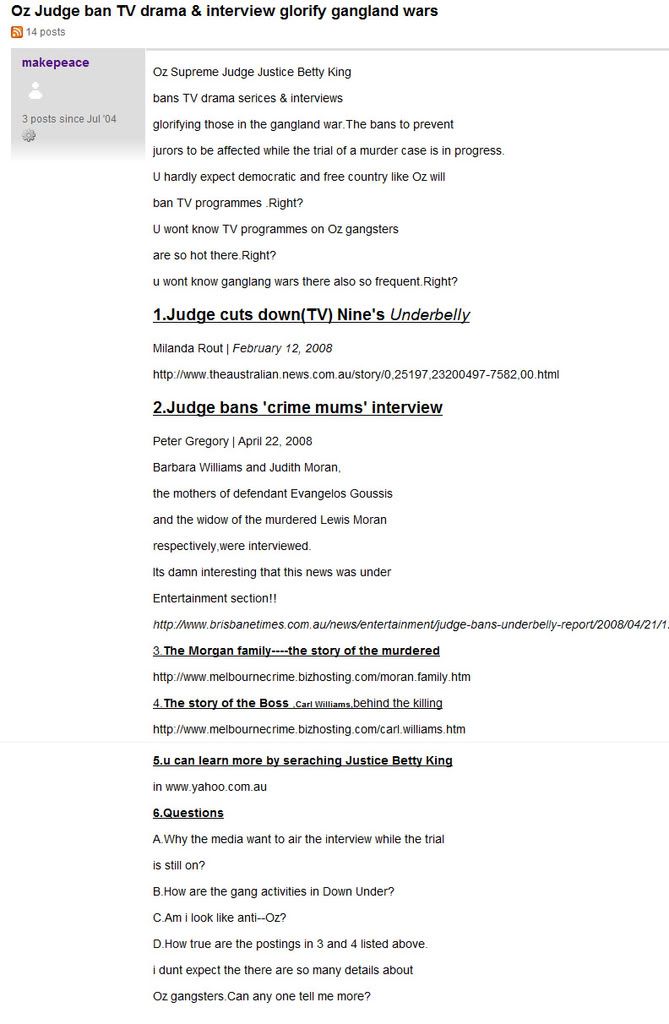
29th April 0932hrs a "user" called "makepeace" that had never posted before created a lionnoisy-sounding titled thread called "Oz Judge ban TV drama & interview glorify gangland wars "
Already suspisions were raised because the structure and phrasing of the title was signature of lionnoisy. The first post by this "makepeace" was as such:
Originally posted by makepeace:
Oz Supreme Judge Justice Betty King
bans TV drama serices & interviews
glorifying those in the gangland war.The bans to prevent
jurors to be affected while the trial of a murder case is in progress.
U hardly expect democratic and free country like Oz will
ban TV programmes .Right?
U wont know TV programmes on Oz gangsters
are so hot there.Right?
u wont know ganglang wars there also so frequent.Right?
1.Judge cuts down(TV) Nine's Underbelly
Milanda Rout | February 12, 2008
http://www.theaustralian.news.com.au/story/0,25197,23200497-7582,00.html
2.Judge bans 'crime mums' interview
Peter Gregory | April 22, 2008
Barbara Williams and Judith Moran,
the mothers of defendant Evangelos Goussis
and the widow of the murdered Lewis Moran
respectively,were interviewed.
Its damn interesting that this news was under
Entertainment section!!
http://www.brisbanetimes.com.au/news/entertainment/judge-bans-underbelly-report/2008/04/21/1208742836107.html?s_cid=rss_news
3.The Morgan family----the story of the murdered
http://www.melbournecrime.bizhosting.com/moran.family.htm
4.The story of the Boss ,Carl Williams,behind the killing
http://www.melbournecrime.bizhosting.com/carl.williams.htm
5.u can learn more by seraching Justice Betty King
in www.yahoo.com.au
6.Questions
A.Why the media want to air the interview while the trial
is still on?
B.How are the gang activities in Down Under?
C.Am i look like anti--Oz?
D.How true are the postings in 3 and 4 listed above.
i dunt expect the there are so many details about
Oz gangsters.Can any one tell me more?
Note that other then for the user name, this post is virtually indistinguishable from the countless of other lionnoisy posts we can compare it with. The excessive reliance on the media, posting of hyperlinks, using warped logic that takes issues out of their context, and most tellingly the horrible english which make typos and grammatical errors right down to what lionnoisy would EXACTLY make is exactly what you'd expect from lionnoisy.
Hence lionnoisy must have been someone disappointed because after 20 minutes still nobody bothered to reply to his post under makepeace. Hence he decided to bump his own thread.
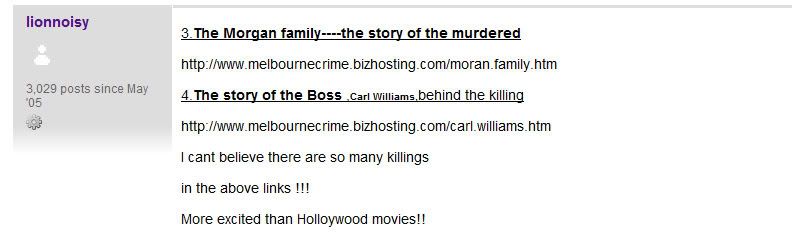
But after a few lackluster replies, he finally decided to "talk" to makepeace
Originally posted by lionnoisy:
3.The Morgan family----the story of the murdered
http://www.melbournecrime.bizhosting.com/moran.family.htm
4.The story of the Boss ,Carl Williams,behind the killing
http://www.melbournecrime.bizhosting.com/carl.williams.htm
I cant believe there are so many killings
in the above links !!!
More excited than Holloywood movies!!
Note the bad acting, where he pretended to be "excited" and "surprised" about what he wrote himself.
Now this is the funny part, if his account was really hacked as he claimed it to be, he would certainly not be replying back to his "hacked" account so happily in such a way.
But in any case when he was exposed he made this very funny, frantic and desperate post trying to suddenly divorce himself from the actions of his sockpuppetry by claiming he was hacked. Unfortunately all a basic look at the thread will reveal what really happened, and that is nothing other then lionnoisy was caught red-handed sockpuppeting.
Originally posted by lionnoisy:
Why did u check IP and English of forumers?
i just know my acct has been hijacked and u post it!!
It seems u are faster than me?Looks so strange!!
Looks like it is a cyber crime and /or frame up.
Hv anyone(u know who i mean) hacked into my e mails and computers ?
Do i have to hire armed guards to stay outside my
pigeon hole?
I am seeking helps from ISD,CIA,FBI,MI 5 and 6,
PRC Kong Ang, etc to check who hijack my acct
and make me appearing as ''makepeace'' after
i click submit.How safe in this forum??
I will buy you Ya Kun coffee if your info can lead to
catch the criminal,
Forums owners and mods are hereby notified my formal ,written and distressing complaints to cyber crimes!!
Another paethetic, and desperate reply from him when he was cornered:
Originally posted by lionnoisy:
oh it is good.Then can help me saving time to see counsellors How to get rid of computers addicts!!bye
Those who want to see what happened can go here:
http://sgforums.com/forums/10/topics/315326
And some screencaps, so the evidence is preserved:
"mysterous" makepeace appears:
and of course his own excited and poorly acted "reply" to his own clone.
and his own desperate and feeble attempts to wriggle out of the situtation: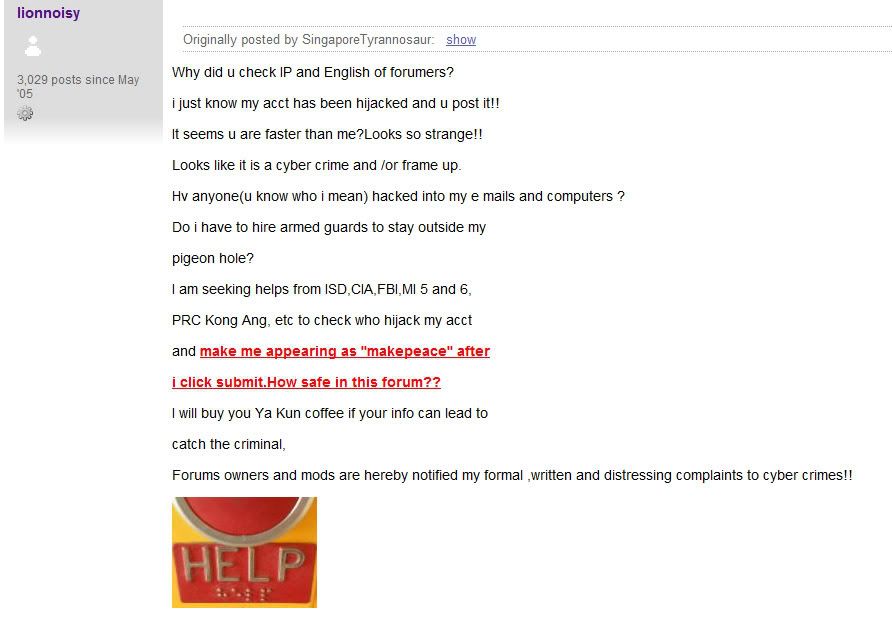

LOL, what a joker!
List of Falling Singapore Stocks:
-
1700 B.C.E.
- Ahmes (c. 1650 B.C.E.) *MT
700 B.C.E.
- Baudhayana (c. 700)
600 B.C.E.
- Thales of Miletus (c. 630-c 550) *MT
- Apastamba (c. 600)
- Anaximander of Miletus (c. 610-c. 547) *SB
- Pythagoras of Samos (c. 570-c. 490) *SB *MT
- Anaximenes of Miletus (fl. 546) *SB
- Cleostratus of Tenedos (c. 520)
500 B.C.E.
- Katyayana (c. 500)
- Nabu-rimanni (c. 490)
- Kidinu (c. 480)
- Anaxagoras of Clazomenae (c. 500-c. 428) *SB *MT
- Zeno of Elea (c. 490-c. 430) *MT
- Antiphon of Rhamnos (the Sophist) (c. 480-411) *SB *MT
- Oenopides of Chios (c. 450?) *SB
- Leucippus (c. 450) *SB *MT
- Hippocrates of Chios (fl. c. 440) *SB
- Meton (c. 430) *SB
- Hippias of Elis (fl. c. 425) *SB *MT
- Theodorus of Cyrene (c. 425)
- Socrates (469-399)
- Philolaus of Croton (d. c. 390) *SB
- Democritus of Abdera (c. 460-370) *SB *MT
400 B.C.E.
- Hippasus of Metapontum (or of Sybaris or Croton) (c. 400?)
- Archytas of Tarentum (of Taras) (c. 428-c. 347) *SB *MT
- Plato (427-347) *SB *MT
- Theaetetus of Athens (c. 415-c. 369) *MT
- Leodamas of Thasos (fl. c. 380) *SB
- Leon (fl. c. 375) *SB
- Eudoxus of Cnidos (c. 400-c. 347) *SB *MT
- Callipus of Cyzicus (fl. c. 370) *SB
- Xenocrates of Chalcedon (c. 396-314)
- Heraclides of Pontus (c. 390-c. 322)
- Bryson of Heraclea (c 350?)
- Menaechmus (c. 350) *SB
- Theudius of Magnesia (c. 350?)
- Thymaridas (c. 350)
- Dinostratus (fl. c. 350) *SB
- Speusippus (d. 339)
- Aristotle (384-322) *SB *MT
- Aristaeus the Elder (fl. c. 350-330) *SB *MT
- Eudemus of Rhodes (the Peripatetic) (fl. c. 335) *SB
300 B.C.E.
- Autolycus of Pitane (fl. c. 300) *SB
- Euclid (fl. c. 295) *SB *MT
- Aristarchus of Samos (c. 310-230) *SB *MT
- Archimedes of Syracuse (287-212) *SB *MT
- Philo of Byzantium (fl. c. 250) *SB
- Nicoteles of Cyrene (c. 250)
- Strato (c. 250)
- Persius (c. 250?)
- Eratosthenes of Cyrene (c. 276-c. 195) *SB *MT
- Chrysippus (280-206)
- Conon of Samos (fl. c. 245) *SB
- Apollonius of Perga (c. 260-c. 185) *SB *MT
- Nicomedes (c. 240?) *SB *MT
- Dositheus of Alexandria (fl. c. 230) *SB
- Perseus (fl. 300-70 B.C.E.?) *SB
200 B.C.E.
- Dionysodorus of Amisus (c. 200?) *SB
- Diocles of Carystus (fl. c. 180) *SB *MT
- Hypsicles of Alexandria (fl. c. 175) *SB *MT
- Hipparchus of Nicaea (c. 180-c. 125) *MT
- Umaswati (c. 150)
100 B.C.E.
- Zenodorus (c. 100?? BCE?)
- Posidonius (c. 135-c. 51) *SB
- Marcus Terentius Varro (116-27)
- Zeno of Sidon (c. 79 BCE)
- Geminus of Rhodes (fl. c. 77 BCE) *SB
- Cleomedes (c. 40? BCE?) *SB
1 C.E.
- Theodosius of Tripoli (c. 50? CE?)
- Pamphila (c. 60 CE)
- Heron of Alexandria (fl. 62 C.E.) (Hero) *SB *MT
100 C.E.
- Balbus (fl. c. 100) *SB
- Menelaus of Alexandria (c. 100 CE) *MT *SB
- Nicomachus of Gerasa (c. 100) *SB
- Zhang Heng (78-139)
- Theon of Smyrna (c. 125)
- Ptolemy (Claudius Ptolemaeus) (c. 100-c. 170) *SB *MT
- Marinus of Tyre (c. 150)
- Nehemiah (c. 150)
- Apuleius of Madaura (Lucius Apuleius) (c. 124-c. 170)
200 C.E.
- Diogenes Laertius (c. 200)
- Liu Hong (fl. 178-187)
- Wang Fan (217-257)
- Diophantus of Alexandria (c. 250?) *SB *MT
- Sun Zi (c. 250?)
- Zhao Shuang (Jun Qing) (c. 260)
- Liu Hui (c. 263) *SB
- Porphyry (c. 234-c. 305) (Malchus the Tyrian, Porphyrius)
- Anatolius of Alexandria (fl. c. 269) *SB
- Sporus (c. 280)
- Iamblichus (c. 250-c. 350) *SB
- Xiahou Yang (c. 350?)
300 C.E.
- Pappus of Alexandria (fl. c. 300-c. 350) *SB *MT
- Serenus of Antinopolis (c. 350)
- Pandrosion (c. 350)
- Theon of Alexandria (c. 390)
- Martianus Capella (c. 365-440) *SB
- Synesius of Cyrene (c. 370-c. 413)
- Hypatia of Alexandria (c. 370-415) *SB *MT
400 C.E.
- Dominus of Larissa (fl. c. 450) *SB
- Proclus Diadochus (410-485) *SB *MT
- Zhang Qiujian [Chang Ch'iu-chien] (c. 450?)
- Zu Chongzhi (Wenyuan) [Tsu Ch'ung-chih] (429-500) *MT
- Eutocius of Ascalon (fl. c. 480) *SB
- Marinus of Sichem (Neapolis) (c. 480?) *SB
500 C.E.
- Metrodorus (c. 500)
- Anicius Maulius Severinus Boethius (c. 480-524) *MT
- Simplicius of Cilicia (c. 530)
- Anthemius of Tralles (d. c. 534) *SB *MT
- Aryabhata (476-c. 550) *SB *MT
- Flavius Magnus Aurelius Cassiodorus (c. 480-c. 575) *SB
- John Philoponus (c. 490) *SB
- Varahamihira (c. 505-c. 558)
- Isidorus of Miletus (c. 540?) *SB
- Eutocius of Ascalon (c. 550?)
- Liu Zhuo (544-610)
- Zhen Luan (Shuzun) (fl. 566)
- Isidore of Seville (c. 560-636) *SB
600
- Brahmagupta (c. 598-c. 670) *MT
- Wang Xiaotong [Wang Hs'iao-t'ung] (fl. c. 625)
- Li Chunfeng (fl. 664)
- Bede (673-735) *SB
700
- Yi Xing (683-727)
- Levensita (fl. 718)
- Alcuin of York (c. 735-804) *SB *MT
- Muhammad ibn Ibrahim al-Fazari (fl. c. 771) *SB
800
- Banu Musa (Muhammad, Ahmand, and al-Hasan, sons of Musa ibn Shakir) (ninth century) *SB
- al-Hajjaj ibn Matar (c. 800)
- Abu Jafar Muhammad ibn Musa al-Khwarizmi (c. 780-c. 850) *SB *MT
- Hrabanus Maurus (784-856)
- Leo the Mathematician (c. 790-post 869) *SB
- Govindaswami (c. 800-850)
- al-Abbas ibn Said al-Jawhari (fl. c. 830) *SB
- Hunayn ibn Ishaq (Johannitius) (808-873)
- Pruthudakaswami (c. 850)
- `Abd al-Hamid ibn Turk (c. 850)
- Ahmad ibn `Abdullah al-Marwazi Habash al-Hasib (fl. 825-870) *SB
- Mahavira (Mahaviracharya) (c. 850) *SB
- Abu `Abd Allah Muhammad ibn Isa al-Mahani (fl. c. 860, d. c. 880) *SB
- Thabit ibn Qurra (836-901) *MT
- al-Fadl al-Nayrizi (c. 880)
- Qusta ibn Luka (d. 912)
- Abu Kamil Shuja ibn Aslam ibn Muhammad ibn Shuja (c. 850-c. 930) *SB
- Abu Bakr Muhammad ibn Zakariya al-Razi (Rhazes) (c. 865-c. 932) *SB
- Abu `Abd Allah Mohammad ibn Jabir al-Battani (Albatenius) (c. 858-929) *SB *MT
- Abu Nasr Muhammad ibn Muhammad Tarkhan ibn Awzalagh al-Farabi (Alpharabius) (c. 870-c. 950) *SB
- Abu'l-Abbas al-Fadl ibn al-Nayrizi (fl. c. 897, d. c. 922) *SB
900
- Sridhara (c. 900)
- Ahmad ibn Yusuf (fl. c. 900-905) *SB
- Ibrahim ibn Sinan ibn Thabit ibn Qurra (909-946) *SB
- Manjula (c. 930)
- Abu Sahl al-Kuhi (c. 950)
- Abu l'Hasan al-Uqlidisi (c. 952)
- `Abd al-`Aziz al-Qabisi (c. 950) *SB
- Prashastidhara (fl. 958)
- Abu Jafar Muhammad ibn al-Hasan al-Khorasani al-Khazin (d. c. 965) *SB
- Aryabhata II (fl. c.? 950-1100) *SB
- Muhammad Abu'l-Wafa al-Buzjani (940-998) *SB *MT
- Gerbert d'Aurillac, Pope Sylvester II (c. 945-1003) *SB
- Abd al-Jalil al-Sijzi (c. 970)
- Abu'l-Hasan ibn Yunus (950-1009) *MT
- Abu Mahmud Hamid ibn al-Knidr al-Khujandi (d. c. 1000) *SB
- Abu `Ali al-Hasan ibn al-Haytham (Alhazen) (c. 965-c. 1039) *SB *MT
- Abu l-Rayhan Muhammad ibn Ahmad al-Biruni (973-1055)
- Halayudha (c. 975)
- Abu Sahl Wayjan ibn Rustam al-Quhi (fl. 970-1000) *SB
- Abu l-Quasim Maslama ibn Ahmad al-Faradi al-Majriti (fl. 980-1000) *SB
1000
- Jayadeva (c. 1000)
- Abu Ali al-Husain ibn 'Abdullah ibn Sina (Avicenna) (980-1037)
- Abu Bakr ibn Muhammad ibn al-Husayn al-Karaji (al Karkhi) (c. 1000) *SB
- Abu `Abdallah al-Hasan ibn al-Baghdadi (c. 1000)
- Al-Jili Kushyar ibn Labban ibn Bashahri (c. 1000) *SB
- Abu Nasr ibn Ali Mansur ibn Iraq (d. 1030) *SB
- Abu Abd Allah Muhammad ibn Muadh al-Jayyani (c. 990-post 1079) *SB
- Abu Mansur al-Baghdadi (c. 1025)
- Ali ibn Ahmad al-Nasawi (fl. 1029-1044) *SB
- Hermann of Reichenan (Contractus) (1013-1054) *SB
- Sripathi (fl. 1039)
- Michael Constantine Psellus (1018-1078) *SB
- Jia Xian (c. 1050)
- Shen Kuo (1031-1095)
- `Umar al-Khayyami (Omar Khayyam) (c. 1048-c. 1131) *SB *MT
- Adelard of Bath (1075-1164) *SB *MT
1100
- Peter Abelard (1079-1142)
- Hemachandra Suri (b. 1089)
- Abraham ben Meir ibn Ezra (Avenare) (c. 1090-c. 1167) *SB
- Abu Bakr Muhammad ibn Yahya ibn al-Sa'igh ibn Bajja (Avenpace) (d. 1139) *SB
- Abu Muhammad Jabir ibn Aflah al-Ishbili (Geber) (c. 1125) *SB
- John of Seville (c. 1125)
- Domingo Gundisalvo (c. 1125)
- Abraham bar Hiyya ha-Nasi (Savasorda) (c. 1125) *SB
- Plato of Tivoli (c. 1125) *SB
- Girard of Cremona (1114-1187) *MT
- Abu-l-Walid Muhammad ibn Ahmad ibn Muhammad ibn Rushd (Averroes) (1126-1198)
- Bhaskara (1114-c. 1185) *MT
- Ibn Yahya al-Samaw'al (1125-1180)
- Gerard of Cremona (c. 1114-1187)
- `Abd al-Rahman al-Khazini (c. 1150)
- Robert of Chester (c. 1150)
- Sharaf al-Din at-Tusi (c. 1175)
- Robert Grosseteste (c. 1168-1253) *SB *MT
- Leonardo Fibonacci of Pisa (C. 1170-post 1240) *SB *MT
1200
- Cangadeva (fl. 1205)
- Li Zhi (Li Ye) (Jingzhai) (1192-1279) *SB
- Albertus magnus (1193-1280)
- William Sherwood (c. 1195-1249)
- Albertus Magnus (c. 1200-1280) *SB
- Nasir al-Din at-Tusi (1201-1274)
- Zakariya ibn Muhammad ibn Mahmud al-Qazwini (c. 1203-1283) *SB
- Alexandre de Villedieu (c. 1225)
- Liu Yi (fl. c. 1225)
- Michael Scot (d. c. 1235) *SB
-
How lionnoisy? You have no answers to all this?

-
more funniness by lionnoisy:
Originally posted by lionnoisy:
Why did u check IP and English of forumers?
i just know my acct has been hijacked and u post it!!
It seems u are faster than me?Looks so strange!!
Looks like it is a cyber crime and /or frame up.
Hv anyone(u know who i mean) hacked into my e mails and computers ?
Do i have to hire armed guards to stay outside my
pigeon hole?
I am seeking helps from ISD,CIA,FBI,MI 5 and 6,
PRC Kong Ang, etc to check who hijack my acct
and make me appearing as ''makepeace'' after
i click submit.How safe in this forum??
I will buy you Ya Kun coffee if your info can lead to
catch the criminal,
Forums owners and mods are hereby notified my formal ,written and distressing complaints to cyber crimes!!
-
lionnoisy unable to comprehend the MOD is not on his side:
It is a crime------hacking into others' accounts!!
can all mods do somethings.
how long can we truth this forum?
i dunt complaint those changing my posted photos.
But now,u do it openly.
can any one help me to catch this cyber criminal?
u really have sense of humor.'
But i dunt have in this moment.
-
Originally posted by lionnoisy:
It is regretable that MOD or his authorized persons or hacker
have amended the thread without my consent.
Under the terms and conditions of this forum,can MOD amend
the thread,not to mention amending a thread INSULTING the poster!!
This is the first time i come across MOD amend the thread to insult
poster.I have seen them locked or deleted the thread.
I think this forum is advocating freedom of expression.
Containment or special VIP treatment
I dunt know if i can open another thread.
Do the MOD want to contain me in this dog pen?
I think i have rights to share my brilliant ideas here.
Actually this has become a picture thread about you, please stick to the topic and don't go off tangent or your posts will simply be removed.
Any other threads you try to start will be locked.
Simple as that.
LOL, "brilliant ideas"?
-
reality speaks for itself-----few more Funds Run.
Mortgage Funds stop redemption,as bad as banks close door
on business day.If there is banks run,u will see the photo.
But u can see Mortgage Funds.
THREE more mortgage funds scrambled to freeze redemptions yesterday as unitholders rushed to the exits.
It is not funny,Sg Ty.
The financial crisis has seen more than $14 billion in funds -- held by almost 100,000 investors -- thrown into limbo.
The East Coast Mortgage Trust, Northern Investment Trust Fund and the Richmond Mortgage Fund -- holding a combined $660 million -- all froze redemptions yesterday as spooked investors attempted to liquidate holdings.The latest freezes followed an announcement yesterday by the giant Challenger Howard Mortgage Fund that it had frozen $2.8 billion of funds, claiming the federal Government's pledge to guarantee bank deposits had exacerbated a run on redemptions.
Northern Investment Trust Fund manager Greg Anderson said investments in the $325 million fund would be frozen for an initial 90 days.
http://www.theaustralian.news.com.au/business/story/0,28124,24531049-643,00.html
Mortgage funds frozen
Anthony Klan
THREE more mortgage funds scrambled to freeze redemptions yesterday as unitholders rushed to the exits...
mmm
-
Singapore stagflation : May 2008 exports fell most in 17 months; inflation at 26-year highs
<!-- ADDTHIS BUTTON BEGIN --> <!-- ADDTHIS BUTTON END -->
This article belongs to the Singapore stagflation watch story arc.
Singapore's exports fell the most in 17 months in May [2008] as the island's manufacturers shipped fewer electronics and other goods to the US and Europe. Non-oil domestic exports dropped 10.5% from a year earlier, the trade promotion agency said today [17 Jun 2008]. Manufacturers across Asia face easing demand amid slowing growth in the US, the region's largest overseas market. Pharmaceutical shipments dropped 48.5% in May from a year earlier, while electronics shipments slipped 8.5%, the 16th consecutive drop. Semiconductor shipments dropped 12.6%. Sales to the European Union fell 28% in May and US shipments dropped 22.3%.
- The Singapore economy continues to be confronted by stagflation as economic weakness persists and shows signs of actually worsening, while inflation continues to run at 26-year highs. As I have commented earlier, this is as classic as it gets regarding the definition of stagflation : stagnant or slowing economic growth in a time of rising inflation.
Sure, biotech manufacturing is subject to some "lumpiness" as equipment needs to be cleaned and re-setup for the next batch of medicines, but a 48.5% drop year-on-year? This is as good as "falling off the cliff", a sinking sensation that many in the peakoiler community are very, very familiar with. And electronics? 16 consecutive drops in 16 months. They could be trying for some kind of record here, together with semiconductors. A very ugly picture, especially given that inflation is still ongoing, and crude oil continues to set new record highs regularly.
This is the kind of situation that can lead to restlessness amongst the population, and in extreme cases descend into disorder and chaos and in fact it already has in some countries. You can be very sure that the government has got to be very concerned about it. Meanwhile, as an individual, in order to hedge against slowing economic growth, you might want to look into getting a job in a traditionally defensive sector, such as government, military, education, healthcare, and such. And as an investor, in order to hedge against inflation, what you can do is to buy into commodities, hold on to them, and sit tight. Gold and oil and uranium and food and other resources are going higher. Much, much higher. We ain't seen nothing yet.
Singapore CPI inflation rate for May 2008 continues at 26-year high of 7.5%
Singapore's consumer prices rose at a slower-than-expected pace last month [May 2008], reducing the need for further currency gains to rein in inflation. The consumer price index [CPI] jumped 7.5% from a year earlier, matching April's 26-year high record, the Department of Statistics said [23 Jun 2008]. The Monetary Authority of Singapore [MAS] had forecast a 5-6% inflation rate for 2008. The central bank has allowed its currency to strengthen against the US dollar, saying the exchange rate remains its most effective tool to fight inflation.
- The Singapore inflation rate is reportedly stabilizing and analysts are already predicting that it will come down in the second half of 2008. Singapore M3 money supply figures also appear to be stabilizing around the 12-13% level in the past half year, down from a high of 23.62% in 2007. But the money supply growth rate is only half the story - the other half is its relationship to the growth of available goods and services in the economy. For the inflation rate to be stable, economic growth has to at least keep up with money supply growth. With a looming global economic slowdown and imminent worldwide recession, the economic growth factor is the big wildcard.
Gold and crude oil prices may have paused from breaking new all-time record highs for the time being, but the inflationary storm is far from over as yet. We may only be passing through the eye of the hurricane here - just when people start to get lulled into complacency, the winds of inflation could well pick up with renewed force - perhaps even stronger than ever. We need to remain vigilant against inflation. This is no time to let down your guard yet.
Singapore economy stuck in mud : inflation rising, M3 falling, GDP crashing - the stagflation formula
This article belongs to the Singapore stagflation watch story arc.
mas.gov.sg -> mas.gov.sg (pdf) :
The latest Singapore money supply figures are out. For the month of Dec 2007, the Singapore M3 money supply growth has continued to slow, and it now stands at 14.14% year-on-year. However, real inflation shows no signs of abating because we are at the point where economic growth is falling (crashing) faster than M3 money supply growth is slowing. The Singapore economy is thus stuck in mud, and the stagflation formula goes as follows :
14.14% M3 growth - (-4.8% economic growth) = 18.94% real inflation rate.
For your reference, the money supply figures for the year of 2007 are as follows (click here for the spreadsheet if the inline frame is not shown) :
As you can see, in 2007 we have been roaring along with an average M3 money supply growth of 20.6% year-on-year. It was only in the last 3 months (Oct-Dec 2007) that the money supply growth has slowed down considerably.
However, if anything else, this is even worse than the time where it was reported on this blog when M3 growth hit a high of 23.62% back in Jun 2007. At the time, GDP growth was reported to be a still-healthy 8.6% so the M3-to-GDP differential was 23.62% - 8.6% = 15.02% then.
Hence, for myself and for those of you readers who subscribe to the classic Austrian-school definition of monetary inflation as money supply growth relative to economic growth, the fight to maintain our purchasing power has just gotten a lot harder, and this stagflationary environment just makes things even worse.
See also :
1. Singapore 2007Q4 GDP contracted 4.8%, 2008 economic growth forecast lowered
2. Singapore economy shrinks first time since 2003
3. Singapore CPI inflation hits new 25-year high of 4.4% in December
4. Singapore : Inflation rate could push past 6% in Q1 2008(2008-02-25 13:10:42 SGT) [Biz] Permalink Comments [1]
-
Rising inflation across Asia mauls Singapore Reits
Trusts may still get big lift from higher rents, higher hotel rates, say analystsSOARING inflation across Asia has sucked the life out of real estate investment trusts (Reits), whose high-yielding dividends have made them wildly popular among investors in recent years.
Investors had wrongly penalised Reits with concerns over acquisition growth and credit-tightening conditions. They have ignored the ‘organic’ boost Reits may get from higher rents and hotel rates. - MORGAN STANLEY, in a report recommending property trusts to its clients — ST FILE PHOTOReits, in general, have fallen about 32.5 per cent in value from their peaks last year, but those with assets in inflation-prone economies, such as China, have fared even worse, according to financial portal Shareinvestor.com.
CapitaRetail China Trust, for instance, has fallen 52 per cent in four months, as inflation in China galloped to 7.1 per cent - its highest level in over a decade.
Reits are financial instruments investing in real estate like shopping malls, office buildings and hotels.
Investors can buy units, which are much like shares, offering attractive dividend yields of 6 per cent to 8 per cent derived from rents.
This is far higher than the 1.5 per cent interest on one-year fixed deposits at a bank.
Historically, a low interest rate environment has been good for Reits - if accompanied by low inflation.
Take CapitaMall Trust, the first Reit listed in Singapore. Its assets include the Tampines Mall and Junction 8 shopping centres.
It received an overwhelming response from investors when it listed six years ago, rising from just 96 cents in July 2002 to a record high of $4.32 in July last year. Inflation played its part by staying at a benign 1 per cent.
As the consumer price index, however, surged from 1.3 per cent in June to 4.4 per cent in December, CapitaMall slid 20 per cent over the period.
The inflation pressure is unlikely to abate in the near future.
Last week, the Government revised its estimates upwards to between 4.5 per cent and 5.5 per cent for the year, from an earlier forecast of 3.5 per cent to 4.5 per cent.
So, while fears of a United States recession are causing much grief among investors as they watch the value of their growth stocks evaporate, inflation is becoming a big threat to those with high dividend-yield plays like Reits.
One trader explained: ‘A Reit may offer 6 per cent in dividend yield. But if inflation is running at 4.5 per cent, the actual yield an investor is getting is only 1.5 per cent.’
To compensate for the lower return, an investor will demand a lower price for the Reit, which escalates the pressure on its share price.
Still, analysts have not stopped promoting Reits, despite their lacklustre performance, to clients.
Morgan Stanley made a case last month with a report arguing that investors had wrongly penalised Reits with concerns over acquisition growth and credit-tightening conditions.
Investors have ignored the ‘organic’ boost Reits may get from higher rents as leases expire and hotel rates are jacked up during peak periods.
Citigroup noted on Tuesday that while there may not be a clear growth strategy for Reits this year, some are trading at hefty discounts to their net asset values, despite offering single-digit or even double-digit dividend yields.
‘This makes Reits potential takeover targets, if they have loose shareholding structures,’ it added.
Its top picks include Ascendas Reit, Suntec Reit and Parkway Life Reit.
Source : Straits Times - 23 Feb 2008
-
SINGAPORE, Oct 10 - Singapore has slipped into recession and the Government has revised its 2008 growth forecast to around 3 per cent from a previous estimate of 4 to 5 per cent.
The economy shrank at an annualised, seasonally adjusted rate of 6.3 per cent in the third quarter, according to third quarter advance estimates released by the Ministry of Trade and Industry on Friday morning, pushing the export-dependent economy into its first recession since 2002.
The government also revised down its 2008 growth forecast to around 3 per cent from a previous estimate of 4 to 5 per cent.
Economists had expected the Republic to narrowly escape a recession in the third quarter by growing 1.1 per cent, lifted by a slight improvement in electronics output.
A recession is often defined as two consecutive quarters of economic contractions.
The deepening financial crisis, which sparked banking crises in the United States, Iceland, Britain, Germany and Ireland, is threatening to drag the world economy into recession.
The advance estimate, based largely on July and August data, gives an early indication of the economy's performance during the July-September period.
MTI said the Singapore economy is estimated to contract by 0.5 per cent in the third quarter, than a year ago.
On a seasonally adjusted, annualised quarter-on-quarter basis, real GDP declined by 6.3 per cent, following a 5.7 per cent decline in the previous quarter.
On the outlook for the year, MTI said since the revised GDP forecast in August, "external economic conditions have deteriorated more than expected and some sectors of the economy have weakened significantly on account of industry-specific or domestic factors.
"The worsening of the financial crisis in the US in recent weeks has deepened the credit crunch, making it more difficult for businesses to sustain economic activities. With unemployment on the rise and house prices continuing to fall, US consumer sentiment has weakened further and will affect demand for exports from Asia and the rest of the world."
It added that Singapore's export-oriented sectors, such as manufacturing, will be affected, noting that Europe is also facing severe strains in the banking sector, tighter credit conditions, and adjustments in housing prices.
Growth in major economies such as Germany, France, Italy and the UK has dipped sharply in the second quarter.
Growth forecasts for several Asian economies, such as China, India and South Korea, have been revised downwards since the start of the year.
The estimates showed that Singapore's manufacturing sector continued to be weighed down by the negative growth in biomedical sciences, as pharmaceutical companies are still producing a mix of pharmaceutical ingredients with values lower than compared to a year ago.
The precision engineering and chemicals clusters have also slowed, because of weaker external demand.
The construction sector grew by 7.8 per cent in the third quarter, compared to the 18.3 per cent growth in the first half of 2008. Despite a strong pipeline of construction projects, a shortage of contractors, a tight labour market for engineers and project managers, and longer waiting times for equipment, have delayed the realisation of these projects.
MTI said the financial services sector is likely to see slower growth in the coming months as the ongoing global financial crisis has heightened uncertainties for sentiment-sensitive segments such as stocks trading and fund management activities.
"Taking into account the slowdown in the global economy and key domestic sectors, MTI has revised the 2008 GDP growth forecast to around 3 per cent. The inflation forecast of 6 - 7 per cent for 2008 remains unchanged," it said. - The Straits Times
Singapore First Asian Economy to fall into Recession
Singapore becomes the first Asian victim of recession
AFP, SINGAPORE
Saturday, Oct 11, 2008, Page 1Singapore has become the first Asian economy to fall into recession, analysts said yesterday, after the government revised downward its full-year growth estimate and eased monetary policy for the first time in years.
The Ministry of Trade and Industry lowered the city-state’s full-year growth forecast to around 3 percent, citing a slowdown in the global economy and key domestic sectors.
The move came as the ministry released preliminary data showing that real GDP declined by 6.3 percent in the third quarter after contracting 5.7 percent in the previous quarter, the ministry said.
While it did not describe the economy as being in recession, a technical recession is generally defined as two consecutive quarters of contraction in economic output.
“Singapore will be the first Asia economy to fall into a technical recession,” DBS Group Research said in an assessment of the data.
In a move to confront the downturn, the Monetary Authority of Singapore (MAS) — its de facto central bank — said it was easing monetary policy for the first time in more than four years.
“The Singapore economy has weakened over the course of 2008, alongside an escalation in the turmoil in financial markets and a more severe deceleration in global economic activity,” MAS said.
These developments meant new uncertainties for the Singapore economy, while slower Asian growth would restrain activity in a range of service industries such as transportation and tourism, it said.
“The risks to external demand conditions continue to be on the downside and a more severe global downturn cannot be discounted,” the bank said.
Singapore is Southeast Asia’s wealthiest economy in terms of GDP per capita, but is heavily dependent on trade. This makes it sensitive to hiccups in developed economies, particularly key export markets the US and Europe.
Economists polled by Dow Jones Newswires had forecast a 0.3 percent quarter-on-quarter rise in GDP, the value of goods and services produced in the economy.
Compared with the third quarter of last year, the ministry said Singapore’s economy contracted by 0.5 percent in real terms, against the 0.8 percent expansion foreseen in the Dow Jones poll.Singapore in recession
Written by Webmaster Friday, 10 October 2008SINGAPORE'S economy has slid into its first technical recession since 2002, as a slump in exports pushed quarterly growth into negative territory for the second quarter in a row.The economy shrank by a worse-than-expected 0.5 per cent in the third quarter compared to the same period last year, according to estimates from the Ministry of Trade and Industry (MTI) released on Friday morning.MTI has also revised its full-year growth forecast for the second time this year, lowering it to 'around 3 per cent' from 4 to 5 per cent previously. This would make it the weakest pace in seven years.
Recognising growth concerns, the Monetary Authority of Singapore also changed its policy stance to zero appreciation of the Singapore dollar, reversing the gradual appreciation policy it has adopted since 2003.
On a quarterly basis, third-quarter GDP contracted 6.3 per cent from the second quarter, on top of a 5.7 per cent decline in the previous three months. A technical recession is generally defined as two consecutive quarters of decline.
Manufacturing led the slowdown again this time around, weighed down by a poor performance in the biomedical sciences segment. It was also hit by weakened global demand for exports as the United States-triggered financial crisis spreads around the world.
The sector shrank by 11.5 per cent in the third quarter, after declining 4.9 per cent in the previous quarter.
Growth in construction and services also slowed. Construction, in particular, saw its pace of expansion halved to single-digit growth, as projects were delayed by the construction squeeze, said MTI.
Services, touted as a key driver of growth this year, is likely to take a hit as well as financial services falters in the wake of the global credit crunch.
Most economists expect the economy to grow even more slowly next year, with the chance of a technical recession turning into a 'real' one.
'With external conditions deteriorating and the lack of domestic demand support, we expect Singapore to register no growth next year... with a muted recovery, if at all, expected only in the second half of next year at the earliest,' said Morgan Stanley economists in a report.
Inflation peaks
Inflation, which reached a 26-year high earlier this year, has peaked, said MAS. Consumer prices will rise between 6 per cent and 7 per cent this year, and gains will ease to between 2.5 per cent and 3.5 per cent in 2009, it predicted.'Against the backdrop of a weakening external economic environment and continuing stresses in global financial markets, the growth of the Singapore economy is expected to remain below potential in the period ahead,' said MAS.
'Inflation is expected to trend down in 2009 as the global and domestic economies slow.'(Straits Times Singapore)
Wednesday, 10 October, 2001, 04:56 GMT 05:56 UK
Singapore economy in recession
<!-- NOLImage -->
Discounts in Singapore's shops are a sign of recession<!-- /NOLImage -->The recession-hit economy of Singapore has shrunk by a record 5.6% during July to September.
The sharp contraction was expected by analysts, and the government is now forecasting that the economy will contract by 3% for the full year.
"In the light of the uncertainty in the global economy, Singapore has now revised its full year growth forecast to minus 3.0%," said Trade Minister George Yeo.
Previously the government had forecast 0.5-1.5% growth.
US ties
The country is suffering from its exposure to the US - its biggest trading partner - which is battling with its own economic problems.
Last month's terrorist attacks on the US have also exacerbated problems by denting consumer confidence.
"The appalling attacks on September 11 and the resulting train of events have probably tipped the global economy into a recession," said Mr Yeo.
Electronics downturn
The sharp contraction in the third quarter was blamed on the downturn in the electronics sector.
The goods producing sector in the trade-driven country fell by 15% while manufacturing output fell by 21% compared with a year ago.
This constitutes the sharpest fall since the 1985 recession.
"From the data so far, it certainly describes the economy is in a far worse shape than it has ever been," said Song Seng Wun, a regional economist at GK Goh brokerage.
However, Aberdeen Asset Management's Hugh Young told the BBC's World Business Report:"The feeling on the streets is not nearly as bad or as gloomy as it was when the Asian crisis hit. Certainly there is a lot of fear over job security right through Singapore at the moment."
Singapore slides into recession
Singapore has become the first Asian country to fall into recession, after growth fell for the second successive quarter.
By Jamie Dunkley
Last Updated: 11:13AM BST 10 Oct 2008
Singapore falls into recession Photo: EPAThe Ministry of Trade and Industry also revised downwards full-year growth forecast to around 3pc, citing a slowdown in the global economy and key domestic sectors.
Southeast Asia's wealthiest economy saw gross domestic product fall by 6.3pc during the third quarter having previously contracted by 5.7pc.
While the ministry did not describe the economy as being in recession, a technical recession is generally defined as two consecutive quarters of contraction in economic output.
In a move to confront the downturn, the Monetary Authority of Singapore - its de facto central bank - said it was also easing monetary policy for the first time in more than four years.
Singapore's economy expanded by 7.7pc last year but have been signs of a slowdown following contractions in Singapore's key manufacturing sector, which includes the country's electronic and pharmaceutical industries.
Construction growth slowed to 7.8pc from 19.8pc, during the quarter, although service industries grew by 6.1pc, marginally down from 7pc in the second quarter.
Singapore's last technical recession was recorded in 2002, when the economy contracted by 2.4pc during the year. The country is seen as an important indicator of economic trends in the rest of Asia due to its export-dependent economy.
Singapore Prime Minister Lee Hsien Loong said Asian economies face a "rough ride" for at least the next year as weakening consumer demand from developed countries hurt the region's exports.
TODAYonline, Weekend, October 11, 2008
................The Singapore dollar, already battered in recent weeks, is expected to weaken further against its United States counterpart. Goldman Sachs predicts the Singapore dollar would weaken to $1.54 to the greenback in the next six months, while UBS expects it to reach $1.50 by the end of the year, according to Bloomberg. The Singapore dollar was trading at around $1.48 yesterday evening, almost 10 per cent off its recent high of $1.35 on July 16. .............
-
Singapore Biodiesel Gloomy in 2008
Wilmar International, an integrated biodiesel producer is badly affected by high crude palm oil (CPO), feedstock for its its biodiesel plants in Indonesia and Malaysia. The biodiesel plants are running at 20% capacity for the first three months of 2008.
Despite the gloomy biofuels sector, Wilmar International, posted on the Singapore-listed firm reported a four-fold surge in fourth-quarter operating profits to $394.2m from $98.8m. Wilmar is also expanding its joint ventures with local companies in Africa, China and Europe.S'pore manufacturers cautious on next 6 months: survey <!-- headline one : end --><!-- more than 7 paragraphs --><!-- story content : start -->
SINGAPORE manufacturers are cautious about the business prospects in the next six months, a Government survey released on Thursday showed, reflecting concerns over a slowing global economy.
In the latest quarterly survey conducted by the Economic Development Board (EDB) among manufacturers, 87 per cent said the outlook for the next six months will not improve from the previous quarter when manufacturing output contracted 5.6 per cent.
A separate survey by the Department of Statistics showed companies in the services sector sharing the same cautious sentiment over the six-month period.
According to the survey, 24 per cent of the services firms polled expected business conditions to improve, while 22 per cent were less optimistic.
The responses are weighted by operating receipts and value added.
<!-- show media links starting at 7th para -->Chemical makers had the gloomiest outlook, with a net weighted 23 per cent of firms expecting business conditions to worsen on the back of high material costs.
Producers in the general manufacturing industries, which include the food, tobacco and printing sectors, were the most optimistic, with a net weighted 11 per cent expecting business to improve.
Singapore's economy shrank 6.6 per cent in the second quarter after seasonal adjustments, its biggest contraction in five years amid a slowdown in key export markets the United States and the European Union.
The less positive business outlook comes against a backdrop of rising unemployment in Singapore.
The jobless rate in the second quarter went up to 2.3 per cent after seasonal adjustments, compared to the previous quarter's 2 per cent, according to latest estimates released by the Ministry of Manpower on Thursday morning.
The data showed that employment grew by 70,600 in the second quarter this year, which is slightly lower than the increase of 73,200 in the previous quarter.
In his National Day message for Singaporean workers, NTUC chief Lim Swee Say on Thursday urged workers to moderate their wage expecations for this year, warning that pushing wages up to fully offset inflation is a risky move, as they will end up paying ever higher prices.
'Instead of pushing wages up to fully offset inflation, we must continue to link built-in wage increase to productivity gain and help our people through various non-wage measures', he said.
This will prevent a 'price-wage spiral', he said.
Singapore still faces woes despite millions spent to boost visitor numbers
With 100,000 set to flock at F1, Singapore tourism is still slowing down
19 Sep 200837 viewsTourism makes up nearly to 10 per cent of Singapore total GDP and the local tourism industry will take a ‘battering’ as analyst predicts Singapore tourism to slow despite our upcoming inaugural F1 first ever night race
The global credit crisis and slowing economy also didn’t help in the slowdown in Singapore tourism. Some 100,000 visitors are expected for the F1 weekend and some 40,000 of those are from overseas
F1 Singapore Grand Prix is part of our nation plan to make it a more global and a unique place. Not only we’re attracting international act of F1 which will earn around S$100 million ($70 million) a year in tourism revenue, there’s also our integrated casino which will open end of next year
MAKEPEACE, MAKE CLONES?
A REPORT ON ATTEMPTED ASTROTURFING AND SOCKPUPPETING BY LIONNOISY
a lion puppet
For those who wondered what happened.
Lionnoisy created a clone called "makepeace" which he used in speakers corner to further his own agenda, trying to give people the impression that there are others out there that would agree with him.
Unfortunately he did a very poor job of hiding it.
This kind of behaviour is called sockpuppeting, ie. creating a false online identity to praise, defend or create the illusion of support for one’s self, allies or company.
A sockpuppet is an online identity used for purposes of deception within an Internet community. In its earliest usage, a sockpuppet was a false identity through which a member of an Internet community speaks while pretending not to, like a puppeteer manipulating a hand puppet.[1]
In current usage, the perception of the term has been extended beyond second identities of people who already post in a forum to include other uses of misleading online identities. For example, a NY Times article claims that "sock-puppeting" is defined as "the act of creating a fake online identity to praise, defend or create the illusion of support for one’s self, allies or company."[2]
The key difference between a sockpuppet and a regular pseudonym (sometimes termed an "alt") is the pretense that the puppet is a third party who is not affiliated with the puppeteer.
To "flame wars" and "phishing" we can now add "sock puppet." A sock puppet, for those still boning up, is a false identity through which a member of an Internet community speaks while pretending not to, like a puppeteer manipulating a hand puppet. Recently, a senior editor at The New Republic got in trouble for some particularly colorful sock puppetry.
When Lee Siegel began blogging for The New Republic, he found, as many others have, that Internet posters tend to be fairly outspoken — and a good number of the posters on the blog were harshly critical. An exception was ''sprezzatura,'' who regularly offered extravagant praise. After Mr. Siegel was criticized for his writing about Jon Stewart, host of ''The Daily Show,'' sprezzatura wrote: ''Siegel is brave, brilliant and wittier than Stewart will ever be. Take that, you bunch of immature, abusive sheep.'' A reader charged that sprezzatura was in fact Mr. Siegel, but sprezzatura denied it.
The reader turned out to be right. ...
After making some lame and hasty excuse about his account being hacked, lionnoisy suddenly abandoned all this threads in which him being sockpuppeting was being mentioned. Unfortunately his excuse cannot stand up to logic as he was seen responding to and talking back TO HIS OWN ACCOUNT.
This is what happened:
29th April 0932hrs a "user" called "makepeace" that had never posted before created a lionnoisy-sounding titled thread called "Oz Judge ban TV drama & interview glorify gangland wars "
Already suspisions were raised because the structure and phrasing of the title was signature of lionnoisy. The first post by this "makepeace" was as such:
Originally posted by makepeace:
Oz Supreme Judge Justice Betty King
bans TV drama serices & interviews
glorifying those in the gangland war.The bans to prevent
jurors to be affected while the trial of a murder case is in progress.
U hardly expect democratic and free country like Oz will
ban TV programmes .Right?
U wont know TV programmes on Oz gangsters
are so hot there.Right?
u wont know ganglang wars there also so frequent.Right?
1.Judge cuts down(TV) Nine's Underbelly
Milanda Rout | February 12, 2008
http://www.theaustralian.news.com.au/story/0,25197,23200497-7582,00.html
2.Judge bans 'crime mums' interview
Peter Gregory | April 22, 2008
Barbara Williams and Judith Moran,
the mothers of defendant Evangelos Goussis
and the widow of the murdered Lewis Moran
respectively,were interviewed.
Its damn interesting that this news was under
Entertainment section!!
http://www.brisbanetimes.com.au/news/entertainment/judge-bans-underbelly-report/2008/04/21/1208742836107.html?s_cid=rss_news
3.The Morgan family----the story of the murdered
http://www.melbournecrime.bizhosting.com/moran.family.htm
4.The story of the Boss ,Carl Williams,behind the killing
http://www.melbournecrime.bizhosting.com/carl.williams.htm
5.u can learn more by seraching Justice Betty King
in www.yahoo.com.au
6.Questions
A.Why the media want to air the interview while the trial
is still on?
B.How are the gang activities in Down Under?
C.Am i look like anti--Oz?
D.How true are the postings in 3 and 4 listed above.
i dunt expect the there are so many details about
Oz gangsters.Can any one tell me more?
Note that other then for the user name, this post is virtually indistinguishable from the countless of other lionnoisy posts we can compare it with. The excessive reliance on the media, posting of hyperlinks, using warped logic that takes issues out of their context, and most tellingly the horrible english which make typos and grammatical errors right down to what lionnoisy would EXACTLY make is exactly what you'd expect from lionnoisy.
Hence lionnoisy must have been someone disappointed because after 20 minutes still nobody bothered to reply to his post under makepeace. Hence he decided to bump his own thread.
But after a few lackluster replies, he finally decided to "talk" to makepeace
Originally posted by lionnoisy:
3.The Morgan family----the story of the murdered
http://www.melbournecrime.bizhosting.com/moran.family.htm
4.The story of the Boss ,Carl Williams,behind the killing
http://www.melbournecrime.bizhosting.com/carl.williams.htm
I cant believe there are so many killings
in the above links !!!
More excited than Holloywood movies!!
Note the bad acting, where he pretended to be "excited" and "surprised" about what he wrote himself.
Now this is the funny part, if his account was really hacked as he claimed it to be, he would certainly not be replying back to his "hacked" account so happily in such a way.
But in any case when he was exposed he made this very funny, frantic and desperate post trying to suddenly divorce himself from the actions of his sockpuppetry by claiming he was hacked. Unfortunately all a basic look at the thread will reveal what really happened, and that is nothing other then lionnoisy was caught red-handed sockpuppeting.
Originally posted by lionnoisy:
Why did u check IP and English of forumers?
i just know my acct has been hijacked and u post it!!
It seems u are faster than me?Looks so strange!!
Looks like it is a cyber crime and /or frame up.
Hv anyone(u know who i mean) hacked into my e mails and computers ?
Do i have to hire armed guards to stay outside my
pigeon hole?
I am seeking helps from ISD,CIA,FBI,MI 5 and 6,
PRC Kong Ang, etc to check who hijack my acct
and make me appearing as ''makepeace'' after
i click submit.How safe in this forum??
I will buy you Ya Kun coffee if your info can lead to
catch the criminal,
Forums owners and mods are hereby notified my formal ,written and distressing complaints to cyber crimes!!
Another paethetic, and desperate reply from him when he was cornered:
Originally posted by lionnoisy:
oh it is good.Then can help me saving time to see counsellors How to get rid of computers addicts!!bye
Those who want to see what happened can go here:
http://sgforums.com/forums/10/topics/315326
And some screencaps, so the evidence is preserved:
"mysterous" makepeace appears:
and of course his own excited and poorly acted "reply" to his own clone.
and his own desperate and feeble attempts to wriggle out of the situtation:LOL, what a joker!
List of Falling Singapore Stocks:
-
1700 B.C.E.
- Ahmes (c. 1650 B.C.E.) *MT
700 B.C.E.
- Baudhayana (c. 700)
600 B.C.E.
- Thales of Miletus (c. 630-c 550) *MT
- Apastamba (c. 600)
- Anaximander of Miletus (c. 610-c. 547) *SB
- Pythagoras of Samos (c. 570-c. 490) *SB *MT
- Anaximenes of Miletus (fl. 546) *SB
- Cleostratus of Tenedos (c. 520)
500 B.C.E.
- Katyayana (c. 500)
- Nabu-rimanni (c. 490)
- Kidinu (c. 480)
- Anaxagoras of Clazomenae (c. 500-c. 428) *SB *MT
- Zeno of Elea (c. 490-c. 430) *MT
- Antiphon of Rhamnos (the Sophist) (c. 480-411) *SB *MT
- Oenopides of Chios (c. 450?) *SB
- Leucippus (c. 450) *SB *MT
- Hippocrates of Chios (fl. c. 440) *SB
- Meton (c. 430) *SB
- Hippias of Elis (fl. c. 425) *SB *MT
- Theodorus of Cyrene (c. 425)
- Socrates (469-399)
- Philolaus of Croton (d. c. 390) *SB
- Democritus of Abdera (c. 460-370) *SB *MT
400 B.C.E.
- Hippasus of Metapontum (or of Sybaris or Croton) (c. 400?)
- Archytas of Tarentum (of Taras) (c. 428-c. 347) *SB *MT
- Plato (427-347) *SB *MT
- Theaetetus of Athens (c. 415-c. 369) *MT
- Leodamas of Thasos (fl. c. 380) *SB
- Leon (fl. c. 375) *SB
- Eudoxus of Cnidos (c. 400-c. 347) *SB *MT
- Callipus of Cyzicus (fl. c. 370) *SB
- Xenocrates of Chalcedon (c. 396-314)
- Heraclides of Pontus (c. 390-c. 322)
- Bryson of Heraclea (c 350?)
- Menaechmus (c. 350) *SB
- Theudius of Magnesia (c. 350?)
- Thymaridas (c. 350)
- Dinostratus (fl. c. 350) *SB
- Speusippus (d. 339)
- Aristotle (384-322) *SB *MT
- Aristaeus the Elder (fl. c. 350-330) *SB *MT
- Eudemus of Rhodes (the Peripatetic) (fl. c. 335) *SB
300 B.C.E.
- Autolycus of Pitane (fl. c. 300) *SB
- Euclid (fl. c. 295) *SB *MT
- Aristarchus of Samos (c. 310-230) *SB *MT
- Archimedes of Syracuse (287-212) *SB *MT
- Philo of Byzantium (fl. c. 250) *SB
- Nicoteles of Cyrene (c. 250)
- Strato (c. 250)
- Persius (c. 250?)
- Eratosthenes of Cyrene (c. 276-c. 195) *SB *MT
- Chrysippus (280-206)
- Conon of Samos (fl. c. 245) *SB
- Apollonius of Perga (c. 260-c. 185) *SB *MT
- Nicomedes (c. 240?) *SB *MT
- Dositheus of Alexandria (fl. c. 230) *SB
- Perseus (fl. 300-70 B.C.E.?) *SB
200 B.C.E.
- Dionysodorus of Amisus (c. 200?) *SB
- Diocles of Carystus (fl. c. 180) *SB *MT
- Hypsicles of Alexandria (fl. c. 175) *SB *MT
- Hipparchus of Nicaea (c. 180-c. 125) *MT
- Umaswati (c. 150)
100 B.C.E.
- Zenodorus (c. 100?? BCE?)
- Posidonius (c. 135-c. 51) *SB
- Marcus Terentius Varro (116-27)
- Zeno of Sidon (c. 79 BCE)
- Geminus of Rhodes (fl. c. 77 BCE) *SB
- Cleomedes (c. 40? BCE?) *SB
1 C.E.
- Theodosius of Tripoli (c. 50? CE?)
- Pamphila (c. 60 CE)
- Heron of Alexandria (fl. 62 C.E.) (Hero) *SB *MT
100 C.E.
- Balbus (fl. c. 100) *SB
- Menelaus of Alexandria (c. 100 CE) *MT *SB
- Nicomachus of Gerasa (c. 100) *SB
- Zhang Heng (78-139)
- Theon of Smyrna (c. 125)
- Ptolemy (Claudius Ptolemaeus) (c. 100-c. 170) *SB *MT
- Marinus of Tyre (c. 150)
- Nehemiah (c. 150)
- Apuleius of Madaura (Lucius Apuleius) (c. 124-c. 170)
200 C.E.
- Diogenes Laertius (c. 200)
- Liu Hong (fl. 178-187)
- Wang Fan (217-257)
- Diophantus of Alexandria (c. 250?) *SB *MT
- Sun Zi (c. 250?)
- Zhao Shuang (Jun Qing) (c. 260)
- Liu Hui (c. 263) *SB
- Porphyry (c. 234-c. 305) (Malchus the Tyrian, Porphyrius)
- Anatolius of Alexandria (fl. c. 269) *SB
- Sporus (c. 280)
- Iamblichus (c. 250-c. 350) *SB
- Xiahou Yang (c. 350?)
300 C.E.
- Pappus of Alexandria (fl. c. 300-c. 350) *SB *MT
- Serenus of Antinopolis (c. 350)
- Pandrosion (c. 350)
- Theon of Alexandria (c. 390)
- Martianus Capella (c. 365-440) *SB
- Synesius of Cyrene (c. 370-c. 413)
- Hypatia of Alexandria (c. 370-415) *SB *MT
400 C.E.
- Dominus of Larissa (fl. c. 450) *SB
- Proclus Diadochus (410-485) *SB *MT
- Zhang Qiujian [Chang Ch'iu-chien] (c. 450?)
- Zu Chongzhi (Wenyuan) [Tsu Ch'ung-chih] (429-500) *MT
- Eutocius of Ascalon (fl. c. 480) *SB
- Marinus of Sichem (Neapolis) (c. 480?) *SB
500 C.E.
- Metrodorus (c. 500)
- Anicius Maulius Severinus Boethius (c. 480-524) *MT
- Simplicius of Cilicia (c. 530)
- Anthemius of Tralles (d. c. 534) *SB *MT
- Aryabhata (476-c. 550) *SB *MT
- Flavius Magnus Aurelius Cassiodorus (c. 480-c. 575) *SB
- John Philoponus (c. 490) *SB
- Varahamihira (c. 505-c. 558)
- Isidorus of Miletus (c. 540?) *SB
- Eutocius of Ascalon (c. 550?)
- Liu Zhuo (544-610)
- Zhen Luan (Shuzun) (fl. 566)
- Isidore of Seville (c. 560-636) *SB
600
- Brahmagupta (c. 598-c. 670) *MT
- Wang Xiaotong [Wang Hs'iao-t'ung] (fl. c. 625)
- Li Chunfeng (fl. 664)
- Bede (673-735) *SB
700
- Yi Xing (683-727)
- Levensita (fl. 718)
- Alcuin of York (c. 735-804) *SB *MT
- Muhammad ibn Ibrahim al-Fazari (fl. c. 771) *SB
800
- Banu Musa (Muhammad, Ahmand, and al-Hasan, sons of Musa ibn Shakir) (ninth century) *SB
- al-Hajjaj ibn Matar (c. 800)
- Abu Jafar Muhammad ibn Musa al-Khwarizmi (c. 780-c. 850) *SB *MT
- Hrabanus Maurus (784-856)
- Leo the Mathematician (c. 790-post 869) *SB
- Govindaswami (c. 800-850)
- al-Abbas ibn Said al-Jawhari (fl. c. 830) *SB
- Hunayn ibn Ishaq (Johannitius) (808-873)
- Pruthudakaswami (c. 850)
- `Abd al-Hamid ibn Turk (c. 850)
- Ahmad ibn `Abdullah al-Marwazi Habash al-Hasib (fl. 825-870) *SB
- Mahavira (Mahaviracharya) (c. 850) *SB
- Abu `Abd Allah Muhammad ibn Isa al-Mahani (fl. c. 860, d. c. 880) *SB
- Thabit ibn Qurra (836-901) *MT
- al-Fadl al-Nayrizi (c. 880)
- Qusta ibn Luka (d. 912)
- Abu Kamil Shuja ibn Aslam ibn Muhammad ibn Shuja (c. 850-c. 930) *SB
- Abu Bakr Muhammad ibn Zakariya al-Razi (Rhazes) (c. 865-c. 932) *SB
- Abu `Abd Allah Mohammad ibn Jabir al-Battani (Albatenius) (c. 858-929) *SB *MT
- Abu Nasr Muhammad ibn Muhammad Tarkhan ibn Awzalagh al-Farabi (Alpharabius) (c. 870-c. 950) *SB
- Abu'l-Abbas al-Fadl ibn al-Nayrizi (fl. c. 897, d. c. 922) *SB
900
- Sridhara (c. 900)
- Ahmad ibn Yusuf (fl. c. 900-905) *SB
- Ibrahim ibn Sinan ibn Thabit ibn Qurra (909-946) *SB
- Manjula (c. 930)
- Abu Sahl al-Kuhi (c. 950)
- Abu l'Hasan al-Uqlidisi (c. 952)
- `Abd al-`Aziz al-Qabisi (c. 950) *SB
- Prashastidhara (fl. 958)
- Abu Jafar Muhammad ibn al-Hasan al-Khorasani al-Khazin (d. c. 965) *SB
- Aryabhata II (fl. c.? 950-1100) *SB
- Muhammad Abu'l-Wafa al-Buzjani (940-998) *SB *MT
- Gerbert d'Aurillac, Pope Sylvester II (c. 945-1003) *SB
- Abd al-Jalil al-Sijzi (c. 970)
- Abu'l-Hasan ibn Yunus (950-1009) *MT
- Abu Mahmud Hamid ibn al-Knidr al-Khujandi (d. c. 1000) *SB
- Abu `Ali al-Hasan ibn al-Haytham (Alhazen) (c. 965-c. 1039) *SB *MT
- Abu l-Rayhan Muhammad ibn Ahmad al-Biruni (973-1055)
- Halayudha (c. 975)
- Abu Sahl Wayjan ibn Rustam al-Quhi (fl. 970-1000) *SB
- Abu l-Quasim Maslama ibn Ahmad al-Faradi al-Majriti (fl. 980-1000) *SB
1000
- Jayadeva (c. 1000)
- Abu Ali al-Husain ibn 'Abdullah ibn Sina (Avicenna) (980-1037)
- Abu Bakr ibn Muhammad ibn al-Husayn al-Karaji (al Karkhi) (c. 1000) *SB
- Abu `Abdallah al-Hasan ibn al-Baghdadi (c. 1000)
- Al-Jili Kushyar ibn Labban ibn Bashahri (c. 1000) *SB
- Abu Nasr ibn Ali Mansur ibn Iraq (d. 1030) *SB
- Abu Abd Allah Muhammad ibn Muadh al-Jayyani (c. 990-post 1079) *SB
- Abu Mansur al-Baghdadi (c. 1025)
- Ali ibn Ahmad al-Nasawi (fl. 1029-1044) *SB
- Hermann of Reichenan (Contractus) (1013-1054) *SB
- Sripathi (fl. 1039)
- Michael Constantine Psellus (1018-1078) *SB
- Jia Xian (c. 1050)
- Shen Kuo (1031-1095)
- `Umar al-Khayyami (Omar Khayyam) (c. 1048-c. 1131) *SB *MT
- Adelard of Bath (1075-1164) *SB *MT
1100
- Peter Abelard (1079-1142)
- Hemachandra Suri (b. 1089)
- Abraham ben Meir ibn Ezra (Avenare) (c. 1090-c. 1167) *SB
- Abu Bakr Muhammad ibn Yahya ibn al-Sa'igh ibn Bajja (Avenpace) (d. 1139) *SB
- Abu Muhammad Jabir ibn Aflah al-Ishbili (Geber) (c. 1125) *SB
- John of Seville (c. 1125)
- Domingo Gundisalvo (c. 1125)
- Abraham bar Hiyya ha-Nasi (Savasorda) (c. 1125) *SB
- Plato of Tivoli (c. 1125) *SB
- Girard of Cremona (1114-1187) *MT
- Abu-l-Walid Muhammad ibn Ahmad ibn Muhammad ibn Rushd (Averroes) (1126-1198)
- Bhaskara (1114-c. 1185) *MT
- Ibn Yahya al-Samaw'al (1125-1180)
- Gerard of Cremona (c. 1114-1187)
- `Abd al-Rahman al-Khazini (c. 1150)
- Robert of Chester (c. 1150)
- Sharaf al-Din at-Tusi (c. 1175)
- Robert Grosseteste (c. 1168-1253) *SB *MT
- Leonardo Fibonacci of Pisa (C. 1170-post 1240) *SB *MT
1200
- Cangadeva (fl. 1205)
- Li Zhi (Li Ye) (Jingzhai) (1192-1279) *SB
- Albertus magnus (1193-1280)
- William Sherwood (c. 1195-1249)
- Albertus Magnus (c. 1200-1280) *SB
- Nasir al-Din at-Tusi (1201-1274)
- Zakariya ibn Muhammad ibn Mahmud al-Qazwini (c. 1203-1283) *SB
- Alexandre de Villedieu (c. 1225)
- Liu Yi (fl. c. 1225)
- Michael Scot (d. c. 1235) *SB
-
It is not funny,Sg Ty.
Of course you don't find it funny what, you spent a lot of time and effort to create the clone and got found out just after a few threads...
But the rest of us find it very funny, especially your response:
Originally posted by lionnoisy:
Why did u check IP and English of forumers?
i just know my acct has been hijacked and u post it!!
It seems u are faster than me?Looks so strange!!
Looks like it is a cyber crime and /or frame up.
Hv anyone(u know who i mean) hacked into my e mails and computers ?
Do i have to hire armed guards to stay outside my
pigeon hole?
I am seeking helps from ISD,CIA,FBI,MI 5 and 6,
PRC Kong Ang, etc to check who hijack my acct
and make me appearing as ''makepeace'' after
i click submit.How safe in this forum??
I will buy you Ya Kun coffee if your info can lead to
catch the criminal,
Forums owners and mods are hereby notified my formal ,written and distressing complaints to cyber crimes!!
-
wah.....this one, another EPIC in the making. bigger than Ben Hur!!!
-
Also, lionnoisy is so funny pple actually composed a poem for him:
Originally posted by sgstars:
where are u lionnoisy ?? where are you..
a little poem to ask lionnoisy to come back and post :
youve been missing for 8 days.
my belly is missing an ache .
from laughing at all the eggs
that were thrown in your face
maybe its the f1 race
or someone sprayed you with a can of mace
Keep posting lionnoisy, it keeps us entertained!
-
MAS seem also charge premium for the bank gurantee.
If it is true ,We have yet to see reactions of banks and finance companies.
Why do A$280 b in merchants banks fleeing to bank gurantee banks
PM Rudd and his Cabinets 's faults!!
It is not easy as a Leaders.U have to think very carefully
and thoroughly.
Branches of foreign banks, which can take deposits only of
more than $250,000, were excluded from the guarantee. They have complained that, in leaving them out, the Government has created a two-tier system.
Some big-money investors have started to shift deposits in foreign banks, which have total liabilities of about $280 billion, to banks or building societies the Government backs..
Rudd forced to amend bank guarantee
Rudd Government changes its unqualified promise to underwrite all bank deposits.
Wednesday October 22, 2008 smh.com
,,,,,
-
Up to now,u still can use A$21,000 as down payment!!
Home loan advertising blitz attacked
U will be little navie to believe that the Oz default rate in so called prime mortgage
is less than 1% and sub prime (Oz calls non--conforming loan) of few %!
-
Singapore stagflation : May 2008 exports fell most in 17 months; inflation at 26-year highs
<!-- ADDTHIS BUTTON BEGIN --> <!-- ADDTHIS BUTTON END -->
This article belongs to the Singapore stagflation watch story arc.
Singapore's exports fell the most in 17 months in May [2008] as the island's manufacturers shipped fewer electronics and other goods to the US and Europe. Non-oil domestic exports dropped 10.5% from a year earlier, the trade promotion agency said today [17 Jun 2008]. Manufacturers across Asia face easing demand amid slowing growth in the US, the region's largest overseas market. Pharmaceutical shipments dropped 48.5% in May from a year earlier, while electronics shipments slipped 8.5%, the 16th consecutive drop. Semiconductor shipments dropped 12.6%. Sales to the European Union fell 28% in May and US shipments dropped 22.3%.
- The Singapore economy continues to be confronted by stagflation as economic weakness persists and shows signs of actually worsening, while inflation continues to run at 26-year highs. As I have commented earlier, this is as classic as it gets regarding the definition of stagflation : stagnant or slowing economic growth in a time of rising inflation.
Sure, biotech manufacturing is subject to some "lumpiness" as equipment needs to be cleaned and re-setup for the next batch of medicines, but a 48.5% drop year-on-year? This is as good as "falling off the cliff", a sinking sensation that many in the peakoiler community are very, very familiar with. And electronics? 16 consecutive drops in 16 months. They could be trying for some kind of record here, together with semiconductors. A very ugly picture, especially given that inflation is still ongoing, and crude oil continues to set new record highs regularly.
This is the kind of situation that can lead to restlessness amongst the population, and in extreme cases descend into disorder and chaos and in fact it already has in some countries. You can be very sure that the government has got to be very concerned about it. Meanwhile, as an individual, in order to hedge against slowing economic growth, you might want to look into getting a job in a traditionally defensive sector, such as government, military, education, healthcare, and such. And as an investor, in order to hedge against inflation, what you can do is to buy into commodities, hold on to them, and sit tight. Gold and oil and uranium and food and other resources are going higher. Much, much higher. We ain't seen nothing yet.
Singapore CPI inflation rate for May 2008 continues at 26-year high of 7.5%
Singapore's consumer prices rose at a slower-than-expected pace last month [May 2008], reducing the need for further currency gains to rein in inflation. The consumer price index [CPI] jumped 7.5% from a year earlier, matching April's 26-year high record, the Department of Statistics said [23 Jun 2008]. The Monetary Authority of Singapore [MAS] had forecast a 5-6% inflation rate for 2008. The central bank has allowed its currency to strengthen against the US dollar, saying the exchange rate remains its most effective tool to fight inflation.
- The Singapore inflation rate is reportedly stabilizing and analysts are already predicting that it will come down in the second half of 2008. Singapore M3 money supply figures also appear to be stabilizing around the 12-13% level in the past half year, down from a high of 23.62% in 2007. But the money supply growth rate is only half the story - the other half is its relationship to the growth of available goods and services in the economy. For the inflation rate to be stable, economic growth has to at least keep up with money supply growth. With a looming global economic slowdown and imminent worldwide recession, the economic growth factor is the big wildcard.
Gold and crude oil prices may have paused from breaking new all-time record highs for the time being, but the inflationary storm is far from over as yet. We may only be passing through the eye of the hurricane here - just when people start to get lulled into complacency, the winds of inflation could well pick up with renewed force - perhaps even stronger than ever. We need to remain vigilant against inflation. This is no time to let down your guard yet.
Singapore economy stuck in mud : inflation rising, M3 falling, GDP crashing - the stagflation formula
This article belongs to the Singapore stagflation watch story arc.
mas.gov.sg -> mas.gov.sg (pdf) :
The latest Singapore money supply figures are out. For the month of Dec 2007, the Singapore M3 money supply growth has continued to slow, and it now stands at 14.14% year-on-year. However, real inflation shows no signs of abating because we are at the point where economic growth is falling (crashing) faster than M3 money supply growth is slowing. The Singapore economy is thus stuck in mud, and the stagflation formula goes as follows :
14.14% M3 growth - (-4.8% economic growth) = 18.94% real inflation rate.
For your reference, the money supply figures for the year of 2007 are as follows (click here for the spreadsheet if the inline frame is not shown) :
As you can see, in 2007 we have been roaring along with an average M3 money supply growth of 20.6% year-on-year. It was only in the last 3 months (Oct-Dec 2007) that the money supply growth has slowed down considerably.
However, if anything else, this is even worse than the time where it was reported on this blog when M3 growth hit a high of 23.62% back in Jun 2007. At the time, GDP growth was reported to be a still-healthy 8.6% so the M3-to-GDP differential was 23.62% - 8.6% = 15.02% then.
Hence, for myself and for those of you readers who subscribe to the classic Austrian-school definition of monetary inflation as money supply growth relative to economic growth, the fight to maintain our purchasing power has just gotten a lot harder, and this stagflationary environment just makes things even worse.
See also :
1. Singapore 2007Q4 GDP contracted 4.8%, 2008 economic growth forecast lowered
2. Singapore economy shrinks first time since 2003
3. Singapore CPI inflation hits new 25-year high of 4.4% in December
4. Singapore : Inflation rate could push past 6% in Q1 2008(2008-02-25 13:10:42 SGT) [Biz] Permalink Comments [1]
-
Rising inflation across Asia mauls Singapore Reits
Trusts may still get big lift from higher rents, higher hotel rates, say analystsSOARING inflation across Asia has sucked the life out of real estate investment trusts (Reits), whose high-yielding dividends have made them wildly popular among investors in recent years.
Investors had wrongly penalised Reits with concerns over acquisition growth and credit-tightening conditions. They have ignored the ‘organic’ boost Reits may get from higher rents and hotel rates. - MORGAN STANLEY, in a report recommending property trusts to its clients — ST FILE PHOTOReits, in general, have fallen about 32.5 per cent in value from their peaks last year, but those with assets in inflation-prone economies, such as China, have fared even worse, according to financial portal Shareinvestor.com.
CapitaRetail China Trust, for instance, has fallen 52 per cent in four months, as inflation in China galloped to 7.1 per cent - its highest level in over a decade.
Reits are financial instruments investing in real estate like shopping malls, office buildings and hotels.
Investors can buy units, which are much like shares, offering attractive dividend yields of 6 per cent to 8 per cent derived from rents.
This is far higher than the 1.5 per cent interest on one-year fixed deposits at a bank.
Historically, a low interest rate environment has been good for Reits - if accompanied by low inflation.
Take CapitaMall Trust, the first Reit listed in Singapore. Its assets include the Tampines Mall and Junction 8 shopping centres.
It received an overwhelming response from investors when it listed six years ago, rising from just 96 cents in July 2002 to a record high of $4.32 in July last year. Inflation played its part by staying at a benign 1 per cent.
As the consumer price index, however, surged from 1.3 per cent in June to 4.4 per cent in December, CapitaMall slid 20 per cent over the period.
The inflation pressure is unlikely to abate in the near future.
Last week, the Government revised its estimates upwards to between 4.5 per cent and 5.5 per cent for the year, from an earlier forecast of 3.5 per cent to 4.5 per cent.
So, while fears of a United States recession are causing much grief among investors as they watch the value of their growth stocks evaporate, inflation is becoming a big threat to those with high dividend-yield plays like Reits.
One trader explained: ‘A Reit may offer 6 per cent in dividend yield. But if inflation is running at 4.5 per cent, the actual yield an investor is getting is only 1.5 per cent.’
To compensate for the lower return, an investor will demand a lower price for the Reit, which escalates the pressure on its share price.
Still, analysts have not stopped promoting Reits, despite their lacklustre performance, to clients.
Morgan Stanley made a case last month with a report arguing that investors had wrongly penalised Reits with concerns over acquisition growth and credit-tightening conditions.
Investors have ignored the ‘organic’ boost Reits may get from higher rents as leases expire and hotel rates are jacked up during peak periods.
Citigroup noted on Tuesday that while there may not be a clear growth strategy for Reits this year, some are trading at hefty discounts to their net asset values, despite offering single-digit or even double-digit dividend yields.
‘This makes Reits potential takeover targets, if they have loose shareholding structures,’ it added.
Its top picks include Ascendas Reit, Suntec Reit and Parkway Life Reit.
Source : Straits Times - 23 Feb 2008
-
SINGAPORE, Oct 10 - Singapore has slipped into recession and the Government has revised its 2008 growth forecast to around 3 per cent from a previous estimate of 4 to 5 per cent.
The economy shrank at an annualised, seasonally adjusted rate of 6.3 per cent in the third quarter, according to third quarter advance estimates released by the Ministry of Trade and Industry on Friday morning, pushing the export-dependent economy into its first recession since 2002.
The government also revised down its 2008 growth forecast to around 3 per cent from a previous estimate of 4 to 5 per cent.
Economists had expected the Republic to narrowly escape a recession in the third quarter by growing 1.1 per cent, lifted by a slight improvement in electronics output.
A recession is often defined as two consecutive quarters of economic contractions.
The deepening financial crisis, which sparked banking crises in the United States, Iceland, Britain, Germany and Ireland, is threatening to drag the world economy into recession.
The advance estimate, based largely on July and August data, gives an early indication of the economy's performance during the July-September period.
MTI said the Singapore economy is estimated to contract by 0.5 per cent in the third quarter, than a year ago.
On a seasonally adjusted, annualised quarter-on-quarter basis, real GDP declined by 6.3 per cent, following a 5.7 per cent decline in the previous quarter.
On the outlook for the year, MTI said since the revised GDP forecast in August, "external economic conditions have deteriorated more than expected and some sectors of the economy have weakened significantly on account of industry-specific or domestic factors.
"The worsening of the financial crisis in the US in recent weeks has deepened the credit crunch, making it more difficult for businesses to sustain economic activities. With unemployment on the rise and house prices continuing to fall, US consumer sentiment has weakened further and will affect demand for exports from Asia and the rest of the world."
It added that Singapore's export-oriented sectors, such as manufacturing, will be affected, noting that Europe is also facing severe strains in the banking sector, tighter credit conditions, and adjustments in housing prices.
Growth in major economies such as Germany, France, Italy and the UK has dipped sharply in the second quarter.
Growth forecasts for several Asian economies, such as China, India and South Korea, have been revised downwards since the start of the year.
The estimates showed that Singapore's manufacturing sector continued to be weighed down by the negative growth in biomedical sciences, as pharmaceutical companies are still producing a mix of pharmaceutical ingredients with values lower than compared to a year ago.
The precision engineering and chemicals clusters have also slowed, because of weaker external demand.
The construction sector grew by 7.8 per cent in the third quarter, compared to the 18.3 per cent growth in the first half of 2008. Despite a strong pipeline of construction projects, a shortage of contractors, a tight labour market for engineers and project managers, and longer waiting times for equipment, have delayed the realisation of these projects.
MTI said the financial services sector is likely to see slower growth in the coming months as the ongoing global financial crisis has heightened uncertainties for sentiment-sensitive segments such as stocks trading and fund management activities.
"Taking into account the slowdown in the global economy and key domestic sectors, MTI has revised the 2008 GDP growth forecast to around 3 per cent. The inflation forecast of 6 - 7 per cent for 2008 remains unchanged," it said. - The Straits Times
Singapore First Asian Economy to fall into Recession
Singapore becomes the first Asian victim of recession
AFP, SINGAPORE
Saturday, Oct 11, 2008, Page 1Singapore has become the first Asian economy to fall into recession, analysts said yesterday, after the government revised downward its full-year growth estimate and eased monetary policy for the first time in years.
The Ministry of Trade and Industry lowered the city-state’s full-year growth forecast to around 3 percent, citing a slowdown in the global economy and key domestic sectors.
The move came as the ministry released preliminary data showing that real GDP declined by 6.3 percent in the third quarter after contracting 5.7 percent in the previous quarter, the ministry said.
While it did not describe the economy as being in recession, a technical recession is generally defined as two consecutive quarters of contraction in economic output.
“Singapore will be the first Asia economy to fall into a technical recession,” DBS Group Research said in an assessment of the data.
In a move to confront the downturn, the Monetary Authority of Singapore (MAS) — its de facto central bank — said it was easing monetary policy for the first time in more than four years.
“The Singapore economy has weakened over the course of 2008, alongside an escalation in the turmoil in financial markets and a more severe deceleration in global economic activity,” MAS said.
These developments meant new uncertainties for the Singapore economy, while slower Asian growth would restrain activity in a range of service industries such as transportation and tourism, it said.
“The risks to external demand conditions continue to be on the downside and a more severe global downturn cannot be discounted,” the bank said.
Singapore is Southeast Asia’s wealthiest economy in terms of GDP per capita, but is heavily dependent on trade. This makes it sensitive to hiccups in developed economies, particularly key export markets the US and Europe.
Economists polled by Dow Jones Newswires had forecast a 0.3 percent quarter-on-quarter rise in GDP, the value of goods and services produced in the economy.
Compared with the third quarter of last year, the ministry said Singapore’s economy contracted by 0.5 percent in real terms, against the 0.8 percent expansion foreseen in the Dow Jones poll.Singapore in recession
Written by Webmaster Friday, 10 October 2008SINGAPORE'S economy has slid into its first technical recession since 2002, as a slump in exports pushed quarterly growth into negative territory for the second quarter in a row.The economy shrank by a worse-than-expected 0.5 per cent in the third quarter compared to the same period last year, according to estimates from the Ministry of Trade and Industry (MTI) released on Friday morning.MTI has also revised its full-year growth forecast for the second time this year, lowering it to 'around 3 per cent' from 4 to 5 per cent previously. This would make it the weakest pace in seven years.
Recognising growth concerns, the Monetary Authority of Singapore also changed its policy stance to zero appreciation of the Singapore dollar, reversing the gradual appreciation policy it has adopted since 2003.
On a quarterly basis, third-quarter GDP contracted 6.3 per cent from the second quarter, on top of a 5.7 per cent decline in the previous three months. A technical recession is generally defined as two consecutive quarters of decline.
Manufacturing led the slowdown again this time around, weighed down by a poor performance in the biomedical sciences segment. It was also hit by weakened global demand for exports as the United States-triggered financial crisis spreads around the world.
The sector shrank by 11.5 per cent in the third quarter, after declining 4.9 per cent in the previous quarter.
Growth in construction and services also slowed. Construction, in particular, saw its pace of expansion halved to single-digit growth, as projects were delayed by the construction squeeze, said MTI.
Services, touted as a key driver of growth this year, is likely to take a hit as well as financial services falters in the wake of the global credit crunch.
Most economists expect the economy to grow even more slowly next year, with the chance of a technical recession turning into a 'real' one.
'With external conditions deteriorating and the lack of domestic demand support, we expect Singapore to register no growth next year... with a muted recovery, if at all, expected only in the second half of next year at the earliest,' said Morgan Stanley economists in a report.
Inflation peaks
Inflation, which reached a 26-year high earlier this year, has peaked, said MAS. Consumer prices will rise between 6 per cent and 7 per cent this year, and gains will ease to between 2.5 per cent and 3.5 per cent in 2009, it predicted.'Against the backdrop of a weakening external economic environment and continuing stresses in global financial markets, the growth of the Singapore economy is expected to remain below potential in the period ahead,' said MAS.
'Inflation is expected to trend down in 2009 as the global and domestic economies slow.'(Straits Times Singapore)
Wednesday, 10 October, 2001, 04:56 GMT 05:56 UK
Singapore economy in recession
<!-- NOLImage -->
Discounts in Singapore's shops are a sign of recession<!-- /NOLImage -->The recession-hit economy of Singapore has shrunk by a record 5.6% during July to September.
The sharp contraction was expected by analysts, and the government is now forecasting that the economy will contract by 3% for the full year.
"In the light of the uncertainty in the global economy, Singapore has now revised its full year growth forecast to minus 3.0%," said Trade Minister George Yeo.
Previously the government had forecast 0.5-1.5% growth.
US ties
The country is suffering from its exposure to the US - its biggest trading partner - which is battling with its own economic problems.
Last month's terrorist attacks on the US have also exacerbated problems by denting consumer confidence.
"The appalling attacks on September 11 and the resulting train of events have probably tipped the global economy into a recession," said Mr Yeo.
Electronics downturn
The sharp contraction in the third quarter was blamed on the downturn in the electronics sector.
The goods producing sector in the trade-driven country fell by 15% while manufacturing output fell by 21% compared with a year ago.
This constitutes the sharpest fall since the 1985 recession.
"From the data so far, it certainly describes the economy is in a far worse shape than it has ever been," said Song Seng Wun, a regional economist at GK Goh brokerage.
However, Aberdeen Asset Management's Hugh Young told the BBC's World Business Report:"The feeling on the streets is not nearly as bad or as gloomy as it was when the Asian crisis hit. Certainly there is a lot of fear over job security right through Singapore at the moment."
Singapore slides into recession
Singapore has become the first Asian country to fall into recession, after growth fell for the second successive quarter.
By Jamie Dunkley
Last Updated: 11:13AM BST 10 Oct 2008
Singapore falls into recession Photo: EPAThe Ministry of Trade and Industry also revised downwards full-year growth forecast to around 3pc, citing a slowdown in the global economy and key domestic sectors.
Southeast Asia's wealthiest economy saw gross domestic product fall by 6.3pc during the third quarter having previously contracted by 5.7pc.
While the ministry did not describe the economy as being in recession, a technical recession is generally defined as two consecutive quarters of contraction in economic output.
In a move to confront the downturn, the Monetary Authority of Singapore - its de facto central bank - said it was also easing monetary policy for the first time in more than four years.
Singapore's economy expanded by 7.7pc last year but have been signs of a slowdown following contractions in Singapore's key manufacturing sector, which includes the country's electronic and pharmaceutical industries.
Construction growth slowed to 7.8pc from 19.8pc, during the quarter, although service industries grew by 6.1pc, marginally down from 7pc in the second quarter.
Singapore's last technical recession was recorded in 2002, when the economy contracted by 2.4pc during the year. The country is seen as an important indicator of economic trends in the rest of Asia due to its export-dependent economy.
Singapore Prime Minister Lee Hsien Loong said Asian economies face a "rough ride" for at least the next year as weakening consumer demand from developed countries hurt the region's exports.
TODAYonline, Weekend, October 11, 2008
................The Singapore dollar, already battered in recent weeks, is expected to weaken further against its United States counterpart. Goldman Sachs predicts the Singapore dollar would weaken to $1.54 to the greenback in the next six months, while UBS expects it to reach $1.50 by the end of the year, according to Bloomberg. The Singapore dollar was trading at around $1.48 yesterday evening, almost 10 per cent off its recent high of $1.35 on July 16. .............
-
Singapore Biodiesel Gloomy in 2008
Wilmar International, an integrated biodiesel producer is badly affected by high crude palm oil (CPO), feedstock for its its biodiesel plants in Indonesia and Malaysia. The biodiesel plants are running at 20% capacity for the first three months of 2008.
Despite the gloomy biofuels sector, Wilmar International, posted on the Singapore-listed firm reported a four-fold surge in fourth-quarter operating profits to $394.2m from $98.8m. Wilmar is also expanding its joint ventures with local companies in Africa, China and Europe.S'pore manufacturers cautious on next 6 months: survey <!-- headline one : end --><!-- more than 7 paragraphs --><!-- story content : start -->
SINGAPORE manufacturers are cautious about the business prospects in the next six months, a Government survey released on Thursday showed, reflecting concerns over a slowing global economy.
In the latest quarterly survey conducted by the Economic Development Board (EDB) among manufacturers, 87 per cent said the outlook for the next six months will not improve from the previous quarter when manufacturing output contracted 5.6 per cent.
A separate survey by the Department of Statistics showed companies in the services sector sharing the same cautious sentiment over the six-month period.
According to the survey, 24 per cent of the services firms polled expected business conditions to improve, while 22 per cent were less optimistic.
The responses are weighted by operating receipts and value added.
<!-- show media links starting at 7th para -->Chemical makers had the gloomiest outlook, with a net weighted 23 per cent of firms expecting business conditions to worsen on the back of high material costs.
Producers in the general manufacturing industries, which include the food, tobacco and printing sectors, were the most optimistic, with a net weighted 11 per cent expecting business to improve.
Singapore's economy shrank 6.6 per cent in the second quarter after seasonal adjustments, its biggest contraction in five years amid a slowdown in key export markets the United States and the European Union.
The less positive business outlook comes against a backdrop of rising unemployment in Singapore.
The jobless rate in the second quarter went up to 2.3 per cent after seasonal adjustments, compared to the previous quarter's 2 per cent, according to latest estimates released by the Ministry of Manpower on Thursday morning.
The data showed that employment grew by 70,600 in the second quarter this year, which is slightly lower than the increase of 73,200 in the previous quarter.
In his National Day message for Singaporean workers, NTUC chief Lim Swee Say on Thursday urged workers to moderate their wage expecations for this year, warning that pushing wages up to fully offset inflation is a risky move, as they will end up paying ever higher prices.
'Instead of pushing wages up to fully offset inflation, we must continue to link built-in wage increase to productivity gain and help our people through various non-wage measures', he said.
This will prevent a 'price-wage spiral', he said.
Singapore still faces woes despite millions spent to boost visitor numbers
With 100,000 set to flock at F1, Singapore tourism is still slowing down
19 Sep 200837 viewsTourism makes up nearly to 10 per cent of Singapore total GDP and the local tourism industry will take a ‘battering’ as analyst predicts Singapore tourism to slow despite our upcoming inaugural F1 first ever night race
The global credit crisis and slowing economy also didn’t help in the slowdown in Singapore tourism. Some 100,000 visitors are expected for the F1 weekend and some 40,000 of those are from overseas
F1 Singapore Grand Prix is part of our nation plan to make it a more global and a unique place. Not only we’re attracting international act of F1 which will earn around S$100 million ($70 million) a year in tourism revenue, there’s also our integrated casino which will open end of next year
MAKEPEACE, MAKE CLONES?
A REPORT ON ATTEMPTED ASTROTURFING AND SOCKPUPPETING BY LIONNOISY
a lion puppet
For those who wondered what happened.
Lionnoisy created a clone called "makepeace" which he used in speakers corner to further his own agenda, trying to give people the impression that there are others out there that would agree with him.
Unfortunately he did a very poor job of hiding it.
This kind of behaviour is called sockpuppeting, ie. creating a false online identity to praise, defend or create the illusion of support for one’s self, allies or company.
A sockpuppet is an online identity used for purposes of deception within an Internet community. In its earliest usage, a sockpuppet was a false identity through which a member of an Internet community speaks while pretending not to, like a puppeteer manipulating a hand puppet.[1]
In current usage, the perception of the term has been extended beyond second identities of people who already post in a forum to include other uses of misleading online identities. For example, a NY Times article claims that "sock-puppeting" is defined as "the act of creating a fake online identity to praise, defend or create the illusion of support for one’s self, allies or company."[2]
The key difference between a sockpuppet and a regular pseudonym (sometimes termed an "alt") is the pretense that the puppet is a third party who is not affiliated with the puppeteer.
To "flame wars" and "phishing" we can now add "sock puppet." A sock puppet, for those still boning up, is a false identity through which a member of an Internet community speaks while pretending not to, like a puppeteer manipulating a hand puppet. Recently, a senior editor at The New Republic got in trouble for some particularly colorful sock puppetry.
When Lee Siegel began blogging for The New Republic, he found, as many others have, that Internet posters tend to be fairly outspoken — and a good number of the posters on the blog were harshly critical. An exception was ''sprezzatura,'' who regularly offered extravagant praise. After Mr. Siegel was criticized for his writing about Jon Stewart, host of ''The Daily Show,'' sprezzatura wrote: ''Siegel is brave, brilliant and wittier than Stewart will ever be. Take that, you bunch of immature, abusive sheep.'' A reader charged that sprezzatura was in fact Mr. Siegel, but sprezzatura denied it.
The reader turned out to be right. ...
After making some lame and hasty excuse about his account being hacked, lionnoisy suddenly abandoned all this threads in which him being sockpuppeting was being mentioned. Unfortunately his excuse cannot stand up to logic as he was seen responding to and talking back TO HIS OWN ACCOUNT.
This is what happened:
29th April 0932hrs a "user" called "makepeace" that had never posted before created a lionnoisy-sounding titled thread called "Oz Judge ban TV drama & interview glorify gangland wars "
Already suspisions were raised because the structure and phrasing of the title was signature of lionnoisy. The first post by this "makepeace" was as such:
Originally posted by makepeace:
Oz Supreme Judge Justice Betty King
bans TV drama serices & interviews
glorifying those in the gangland war.The bans to prevent
jurors to be affected while the trial of a murder case is in progress.
U hardly expect democratic and free country like Oz will
ban TV programmes .Right?
U wont know TV programmes on Oz gangsters
are so hot there.Right?
u wont know ganglang wars there also so frequent.Right?
1.Judge cuts down(TV) Nine's Underbelly
Milanda Rout | February 12, 2008
http://www.theaustralian.news.com.au/story/0,25197,23200497-7582,00.html
2.Judge bans 'crime mums' interview
Peter Gregory | April 22, 2008
Barbara Williams and Judith Moran,
the mothers of defendant Evangelos Goussis
and the widow of the murdered Lewis Moran
respectively,were interviewed.
Its damn interesting that this news was under
Entertainment section!!
http://www.brisbanetimes.com.au/news/entertainment/judge-bans-underbelly-report/2008/04/21/1208742836107.html?s_cid=rss_news
3.The Morgan family----the story of the murdered
http://www.melbournecrime.bizhosting.com/moran.family.htm
4.The story of the Boss ,Carl Williams,behind the killing
http://www.melbournecrime.bizhosting.com/carl.williams.htm
5.u can learn more by seraching Justice Betty King
in www.yahoo.com.au
6.Questions
A.Why the media want to air the interview while the trial
is still on?
B.How are the gang activities in Down Under?
C.Am i look like anti--Oz?
D.How true are the postings in 3 and 4 listed above.
i dunt expect the there are so many details about
Oz gangsters.Can any one tell me more?
Note that other then for the user name, this post is virtually indistinguishable from the countless of other lionnoisy posts we can compare it with. The excessive reliance on the media, posting of hyperlinks, using warped logic that takes issues out of their context, and most tellingly the horrible english which make typos and grammatical errors right down to what lionnoisy would EXACTLY make is exactly what you'd expect from lionnoisy.
Hence lionnoisy must have been someone disappointed because after 20 minutes still nobody bothered to reply to his post under makepeace. Hence he decided to bump his own thread.
But after a few lackluster replies, he finally decided to "talk" to makepeace
Originally posted by lionnoisy:
3.The Morgan family----the story of the murdered
http://www.melbournecrime.bizhosting.com/moran.family.htm
4.The story of the Boss ,Carl Williams,behind the killing
http://www.melbournecrime.bizhosting.com/carl.williams.htm
I cant believe there are so many killings
in the above links !!!
More excited than Holloywood movies!!
Note the bad acting, where he pretended to be "excited" and "surprised" about what he wrote himself.
Now this is the funny part, if his account was really hacked as he claimed it to be, he would certainly not be replying back to his "hacked" account so happily in such a way.
But in any case when he was exposed he made this very funny, frantic and desperate post trying to suddenly divorce himself from the actions of his sockpuppetry by claiming he was hacked. Unfortunately all a basic look at the thread will reveal what really happened, and that is nothing other then lionnoisy was caught red-handed sockpuppeting.
Originally posted by lionnoisy:
Why did u check IP and English of forumers?
i just know my acct has been hijacked and u post it!!
It seems u are faster than me?Looks so strange!!
Looks like it is a cyber crime and /or frame up.
Hv anyone(u know who i mean) hacked into my e mails and computers ?
Do i have to hire armed guards to stay outside my
pigeon hole?
I am seeking helps from ISD,CIA,FBI,MI 5 and 6,
PRC Kong Ang, etc to check who hijack my acct
and make me appearing as ''makepeace'' after
i click submit.How safe in this forum??
I will buy you Ya Kun coffee if your info can lead to
catch the criminal,
Forums owners and mods are hereby notified my formal ,written and distressing complaints to cyber crimes!!
Another paethetic, and desperate reply from him when he was cornered:
Originally posted by lionnoisy:
oh it is good.Then can help me saving time to see counsellors How to get rid of computers addicts!!bye
Those who want to see what happened can go here:
http://sgforums.com/forums/10/topics/315326
And some screencaps, so the evidence is preserved:
"mysterous" makepeace appears:
and of course his own excited and poorly acted "reply" to his own clone.
and his own desperate and feeble attempts to wriggle out of the situtation:LOL, what a joker!
List of Falling Singapore Stocks:
-
1700 B.C.E.
- Ahmes (c. 1650 B.C.E.) *MT
700 B.C.E.
- Baudhayana (c. 700)
600 B.C.E.
- Thales of Miletus (c. 630-c 550) *MT
- Apastamba (c. 600)
- Anaximander of Miletus (c. 610-c. 547) *SB
- Pythagoras of Samos (c. 570-c. 490) *SB *MT
- Anaximenes of Miletus (fl. 546) *SB
- Cleostratus of Tenedos (c. 520)
500 B.C.E.
- Katyayana (c. 500)
- Nabu-rimanni (c. 490)
- Kidinu (c. 480)
- Anaxagoras of Clazomenae (c. 500-c. 428) *SB *MT
- Zeno of Elea (c. 490-c. 430) *MT
- Antiphon of Rhamnos (the Sophist) (c. 480-411) *SB *MT
- Oenopides of Chios (c. 450?) *SB
- Leucippus (c. 450) *SB *MT
- Hippocrates of Chios (fl. c. 440) *SB
- Meton (c. 430) *SB
- Hippias of Elis (fl. c. 425) *SB *MT
- Theodorus of Cyrene (c. 425)
- Socrates (469-399)
- Philolaus of Croton (d. c. 390) *SB
- Democritus of Abdera (c. 460-370) *SB *MT
400 B.C.E.
- Hippasus of Metapontum (or of Sybaris or Croton) (c. 400?)
- Archytas of Tarentum (of Taras) (c. 428-c. 347) *SB *MT
- Plato (427-347) *SB *MT
- Theaetetus of Athens (c. 415-c. 369) *MT
- Leodamas of Thasos (fl. c. 380) *SB
- Leon (fl. c. 375) *SB
- Eudoxus of Cnidos (c. 400-c. 347) *SB *MT
- Callipus of Cyzicus (fl. c. 370) *SB
- Xenocrates of Chalcedon (c. 396-314)
- Heraclides of Pontus (c. 390-c. 322)
- Bryson of Heraclea (c 350?)
- Menaechmus (c. 350) *SB
- Theudius of Magnesia (c. 350?)
- Thymaridas (c. 350)
- Dinostratus (fl. c. 350) *SB
- Speusippus (d. 339)
- Aristotle (384-322) *SB *MT
- Aristaeus the Elder (fl. c. 350-330) *SB *MT
- Eudemus of Rhodes (the Peripatetic) (fl. c. 335) *SB
300 B.C.E.
- Autolycus of Pitane (fl. c. 300) *SB
- Euclid (fl. c. 295) *SB *MT
- Aristarchus of Samos (c. 310-230) *SB *MT
- Archimedes of Syracuse (287-212) *SB *MT
- Philo of Byzantium (fl. c. 250) *SB
- Nicoteles of Cyrene (c. 250)
- Strato (c. 250)
- Persius (c. 250?)
- Eratosthenes of Cyrene (c. 276-c. 195) *SB *MT
- Chrysippus (280-206)
- Conon of Samos (fl. c. 245) *SB
- Apollonius of Perga (c. 260-c. 185) *SB *MT
- Nicomedes (c. 240?) *SB *MT
- Dositheus of Alexandria (fl. c. 230) *SB
- Perseus (fl. 300-70 B.C.E.?) *SB
200 B.C.E.
- Dionysodorus of Amisus (c. 200?) *SB
- Diocles of Carystus (fl. c. 180) *SB *MT
- Hypsicles of Alexandria (fl. c. 175) *SB *MT
- Hipparchus of Nicaea (c. 180-c. 125) *MT
- Umaswati (c. 150)
100 B.C.E.
- Zenodorus (c. 100?? BCE?)
- Posidonius (c. 135-c. 51) *SB
- Marcus Terentius Varro (116-27)
- Zeno of Sidon (c. 79 BCE)
- Geminus of Rhodes (fl. c. 77 BCE) *SB
- Cleomedes (c. 40? BCE?) *SB
1 C.E.
- Theodosius of Tripoli (c. 50? CE?)
- Pamphila (c. 60 CE)
- Heron of Alexandria (fl. 62 C.E.) (Hero) *SB *MT
100 C.E.
- Balbus (fl. c. 100) *SB
- Menelaus of Alexandria (c. 100 CE) *MT *SB
- Nicomachus of Gerasa (c. 100) *SB
- Zhang Heng (78-139)
- Theon of Smyrna (c. 125)
- Ptolemy (Claudius Ptolemaeus) (c. 100-c. 170) *SB *MT
- Marinus of Tyre (c. 150)
- Nehemiah (c. 150)
- Apuleius of Madaura (Lucius Apuleius) (c. 124-c. 170)
200 C.E.
- Diogenes Laertius (c. 200)
- Liu Hong (fl. 178-187)
- Wang Fan (217-257)
- Diophantus of Alexandria (c. 250?) *SB *MT
- Sun Zi (c. 250?)
- Zhao Shuang (Jun Qing) (c. 260)
- Liu Hui (c. 263) *SB
- Porphyry (c. 234-c. 305) (Malchus the Tyrian, Porphyrius)
- Anatolius of Alexandria (fl. c. 269) *SB
- Sporus (c. 280)
- Iamblichus (c. 250-c. 350) *SB
- Xiahou Yang (c. 350?)
300 C.E.
- Pappus of Alexandria (fl. c. 300-c. 350) *SB *MT
- Serenus of Antinopolis (c. 350)
- Pandrosion (c. 350)
- Theon of Alexandria (c. 390)
- Martianus Capella (c. 365-440) *SB
- Synesius of Cyrene (c. 370-c. 413)
- Hypatia of Alexandria (c. 370-415) *SB *MT
400 C.E.
- Dominus of Larissa (fl. c. 450) *SB
- Proclus Diadochus (410-485) *SB *MT
- Zhang Qiujian [Chang Ch'iu-chien] (c. 450?)
- Zu Chongzhi (Wenyuan) [Tsu Ch'ung-chih] (429-500) *MT
- Eutocius of Ascalon (fl. c. 480) *SB
- Marinus of Sichem (Neapolis) (c. 480?) *SB
500 C.E.
- Metrodorus (c. 500)
- Anicius Maulius Severinus Boethius (c. 480-524) *MT
- Simplicius of Cilicia (c. 530)
- Anthemius of Tralles (d. c. 534) *SB *MT
- Aryabhata (476-c. 550) *SB *MT
- Flavius Magnus Aurelius Cassiodorus (c. 480-c. 575) *SB
- John Philoponus (c. 490) *SB
- Varahamihira (c. 505-c. 558)
- Isidorus of Miletus (c. 540?) *SB
- Eutocius of Ascalon (c. 550?)
- Liu Zhuo (544-610)
- Zhen Luan (Shuzun) (fl. 566)
- Isidore of Seville (c. 560-636) *SB
600
- Brahmagupta (c. 598-c. 670) *MT
- Wang Xiaotong [Wang Hs'iao-t'ung] (fl. c. 625)
- Li Chunfeng (fl. 664)
- Bede (673-735) *SB
700
- Yi Xing (683-727)
- Levensita (fl. 718)
- Alcuin of York (c. 735-804) *SB *MT
- Muhammad ibn Ibrahim al-Fazari (fl. c. 771) *SB
800
- Banu Musa (Muhammad, Ahmand, and al-Hasan, sons of Musa ibn Shakir) (ninth century) *SB
- al-Hajjaj ibn Matar (c. 800)
- Abu Jafar Muhammad ibn Musa al-Khwarizmi (c. 780-c. 850) *SB *MT
- Hrabanus Maurus (784-856)
- Leo the Mathematician (c. 790-post 869) *SB
- Govindaswami (c. 800-850)
- al-Abbas ibn Said al-Jawhari (fl. c. 830) *SB
- Hunayn ibn Ishaq (Johannitius) (808-873)
- Pruthudakaswami (c. 850)
- `Abd al-Hamid ibn Turk (c. 850)
- Ahmad ibn `Abdullah al-Marwazi Habash al-Hasib (fl. 825-870) *SB
- Mahavira (Mahaviracharya) (c. 850) *SB
- Abu `Abd Allah Muhammad ibn Isa al-Mahani (fl. c. 860, d. c. 880) *SB
- Thabit ibn Qurra (836-901) *MT
- al-Fadl al-Nayrizi (c. 880)
- Qusta ibn Luka (d. 912)
- Abu Kamil Shuja ibn Aslam ibn Muhammad ibn Shuja (c. 850-c. 930) *SB
- Abu Bakr Muhammad ibn Zakariya al-Razi (Rhazes) (c. 865-c. 932) *SB
- Abu `Abd Allah Mohammad ibn Jabir al-Battani (Albatenius) (c. 858-929) *SB *MT
- Abu Nasr Muhammad ibn Muhammad Tarkhan ibn Awzalagh al-Farabi (Alpharabius) (c. 870-c. 950) *SB
- Abu'l-Abbas al-Fadl ibn al-Nayrizi (fl. c. 897, d. c. 922) *SB
900
- Sridhara (c. 900)
- Ahmad ibn Yusuf (fl. c. 900-905) *SB
- Ibrahim ibn Sinan ibn Thabit ibn Qurra (909-946) *SB
- Manjula (c. 930)
- Abu Sahl al-Kuhi (c. 950)
- Abu l'Hasan al-Uqlidisi (c. 952)
- `Abd al-`Aziz al-Qabisi (c. 950) *SB
- Prashastidhara (fl. 958)
- Abu Jafar Muhammad ibn al-Hasan al-Khorasani al-Khazin (d. c. 965) *SB
- Aryabhata II (fl. c.? 950-1100) *SB
- Muhammad Abu'l-Wafa al-Buzjani (940-998) *SB *MT
- Gerbert d'Aurillac, Pope Sylvester II (c. 945-1003) *SB
- Abd al-Jalil al-Sijzi (c. 970)
- Abu'l-Hasan ibn Yunus (950-1009) *MT
- Abu Mahmud Hamid ibn al-Knidr al-Khujandi (d. c. 1000) *SB
- Abu `Ali al-Hasan ibn al-Haytham (Alhazen) (c. 965-c. 1039) *SB *MT
- Abu l-Rayhan Muhammad ibn Ahmad al-Biruni (973-1055)
- Halayudha (c. 975)
- Abu Sahl Wayjan ibn Rustam al-Quhi (fl. 970-1000) *SB
- Abu l-Quasim Maslama ibn Ahmad al-Faradi al-Majriti (fl. 980-1000) *SB
1000
- Jayadeva (c. 1000)
- Abu Ali al-Husain ibn 'Abdullah ibn Sina (Avicenna) (980-1037)
- Abu Bakr ibn Muhammad ibn al-Husayn al-Karaji (al Karkhi) (c. 1000) *SB
- Abu `Abdallah al-Hasan ibn al-Baghdadi (c. 1000)
- Al-Jili Kushyar ibn Labban ibn Bashahri (c. 1000) *SB
- Abu Nasr ibn Ali Mansur ibn Iraq (d. 1030) *SB
- Abu Abd Allah Muhammad ibn Muadh al-Jayyani (c. 990-post 1079) *SB
- Abu Mansur al-Baghdadi (c. 1025)
- Ali ibn Ahmad al-Nasawi (fl. 1029-1044) *SB
- Hermann of Reichenan (Contractus) (1013-1054) *SB
- Sripathi (fl. 1039)
- Michael Constantine Psellus (1018-1078) *SB
- Jia Xian (c. 1050)
- Shen Kuo (1031-1095)
- `Umar al-Khayyami (Omar Khayyam) (c. 1048-c. 1131) *SB *MT
- Adelard of Bath (1075-1164) *SB *MT
1100
- Peter Abelard (1079-1142)
- Hemachandra Suri (b. 1089)
- Abraham ben Meir ibn Ezra (Avenare) (c. 1090-c. 1167) *SB
- Abu Bakr Muhammad ibn Yahya ibn al-Sa'igh ibn Bajja (Avenpace) (d. 1139) *SB
- Abu Muhammad Jabir ibn Aflah al-Ishbili (Geber) (c. 1125) *SB
- John of Seville (c. 1125)
- Domingo Gundisalvo (c. 1125)
- Abraham bar Hiyya ha-Nasi (Savasorda) (c. 1125) *SB
- Plato of Tivoli (c. 1125) *SB
- Girard of Cremona (1114-1187) *MT
- Abu-l-Walid Muhammad ibn Ahmad ibn Muhammad ibn Rushd (Averroes) (1126-1198)
- Bhaskara (1114-c. 1185) *MT
- Ibn Yahya al-Samaw'al (1125-1180)
- Gerard of Cremona (c. 1114-1187)
- `Abd al-Rahman al-Khazini (c. 1150)
- Robert of Chester (c. 1150)
- Sharaf al-Din at-Tusi (c. 1175)
- Robert Grosseteste (c. 1168-1253) *SB *MT
- Leonardo Fibonacci of Pisa (C. 1170-post 1240) *SB *MT
1200
- Cangadeva (fl. 1205)
- Li Zhi (Li Ye) (Jingzhai) (1192-1279) *SB
- Albertus magnus (1193-1280)
- William Sherwood (c. 1195-1249)
- Albertus Magnus (c. 1200-1280) *SB
- Nasir al-Din at-Tusi (1201-1274)
- Zakariya ibn Muhammad ibn Mahmud al-Qazwini (c. 1203-1283) *SB
- Alexandre de Villedieu (c. 1225)
- Liu Yi (fl. c. 1225)
- Michael Scot (d. c. 1235) *SB
-
An Australian story - from fading uncle to economic success
I want to take you back to the early 1990s to the kind of nation we were then - insecure, uncertain about our economic prospects, battered by recession, suffering high unemployment and job insecurity, and scarred by the recent experience of 17 per cent mortgage interest rates.
On a visit to Australia in 1994 the former Prime Minister of Singapore Lee Kuan Yew reiterated a previous warning that Australia could become the “poor white trash of Asia”. This was partly a reflection on Australia’s economic state. It was also a reflection on the rise of the “Asian Tigers”.
The dynamic growth of East Asia was in stark contrast to the economic malaise of Australia. When the government appealed for “enmeshment” in Asia it was making an economic appeal. The thinking was that if we could join a region that was successful we could overcome our own weakness.
I want to take you back to the early 1990s to the kind of nation we were then - insecure, uncertain about our economic prospects, battered by recession, suffering high unemployment and job insecurity, and scarred by the recent experience of 17 per cent mortgage interest rates.
On a visit to Australia in 1994 the former Prime Minister of Singapore Lee Kuan Yew reiterated a previous warning that Australia could become the “poor white trash of Asia”. This was partly a reflection on Australia’s economic state. It was also a reflection on the rise of the “Asian Tigers”.
The dynamic growth of East Asia was in stark contrast to the economic malaise of Australia. When the government appealed for “enmeshment” in Asia it was making an economic appeal. The thinking was that if we could join a region that was successful we could overcome our own weakness.
-
The rise of the Asian Tigers through the ’80s and the comparative decline of Australia through the recession of the early ’90s sapped our confidence as a nation. And what is more, it sapped the respect for Australia among our neighbours and the wider international community.
The Coalition Government was elected in March 1996. We laid down an economic program setting out medium-term targets on fiscal policy, monetary policy and debt management. By July 1997 we were on track to balance the budget for the first time in seven years. It was a close run.
Beginning with mass capital outflow from Thailand in June-July 1997, financial contagion began spreading around the region. Those in Australia who had marvelled at the growth rates and saving rates of Asian Tigers saw these countries stagger and reel. They could only shudder to think what would happen to Australia - considered by many to have a weaker economy.
But Australia did not succumb to the Asian financial and economic collapse. In 1997-98 our growth rate was 4.5 per cent. We produced the first balanced budget in seven years. Paul Krugman writing in Fortune Magazine in December 1998 dubbed Australia “the miracle economy”.
In March 1996 the APEC Finance Ministers met in Japan. It was the first APEC meeting I attended. We were given a polite welcome but we were not respected. Australia was tolerated much as a fading uncle is tolerated at Christmas dinner - there out of politeness and past association rather than present or future expectation.
But we proved strong and resilient through the Asian economic crisis. We survived and we offered financial assistance to badly affected economies in the region.
In May 1999 APEC Finance Ministers met at Langkawi in Malaysia. We were not the fading relation at this meeting. Australia had won a great deal of respect. The region knew Australia was a success story and they wanted to learn from its experience. Now we had people talking of the “Australian model”.
Since 1996 Australia has had continuous growth averaging 3.5 per cent per annum. During that period Singapore has had three recessions, Hong Kong has had three recessions, Korea has had one recession, Taiwan has had two recessions, Japan has had four recessions, and the United States went into a recession in 2001.
Over the last 10 years Australia has earned a great deal of respect amongst its neighbours and the other economies of the world. Australia’s achievements have given its people a lot more self respect. The nation feels more secure about itself. This is the Australian revival.
-
Competition with compassion - Australia's economic success story
Conference
Di Yerbury Lecture Sydney
Summary
The most recent OECD economic survey of Australia declared that in “the last decade of the 20th century Australia became a model for other OECD countries”. It is a report card which confirms that the sacrifices which went into stripping back protection and making all sectors of the Australia economy more competitive have, for the most part, been worth it.
-
A stable and competitive economy
Australia has recorded 17 consecutive years of economic growth since 1992 – averaging 3.3 per cent a year.
It has been one of the most stable and productive periods of Australia’s modern history, and places Australia in the top echelon of developed countries in terms of sustained rates of growth.
Australia is forecast to grow again at 2.75 per cent in 2008-09 which is above the average growth rate members of the Organisation of Economic Cooperation and Development (OECD) of 2.2 per cent.
Furthermore, Australia ranks first in the Asia-Pacific region for labour, agricultural and industrial productivity per person employed, according to the IMD World Competitiveness Yearbook.
The 2006 OECD Economic Survey noted that living standards in Australia surpass those of all Group of Eight countries except the United States.
Sound economic management
Australia’s positive outlook is also sustained by its strong fiscal position. A sustained period of Government budget surpluses has enabled the Australian Government and many state level Governments to retire large amounts of Government debt.
Net Government debt was eliminated in 2005-06 making Australia a net creditor nation. In May 2008, the Australian Government committed to a budget surplus equivalent to 1.8 per cent of GDP – some $21.7 billion.
Australia’s independent central bank, the Reserve Bank of Australia (RBA), is responsible for monetary policy, in particular to keep consumer price inflation between two and three percent, on average, over business cycles.
Advanced economic structure
Australia has a sound and practical structure of financial regulations and institutions that provides certainty for business and is open to investment without undue delay. There is a strong, transparent corporate governance system along with business-oriented corporate regulation and insolvency regimes.
Australia also has low barriers to trade and investment. Since a wave of micro-economic reform in the early 1990s, competition policy has been a key ingredient of the economy’s continuing success, including in key areas such as transport, telecommunications, electricity and gas.
According to the World Bank, a new business can be established in Australia within two days compared with an OECD average of 20 days.
The goods and services tax (GST) – Australia’s value-added tax – is levied at 10 per cent and applies to almost all goods and services transactions across the economy. There is no stamp duty on share transactions and a flat corporate tax rate of 30 per cent.
Australia’s long and extensive period of economic growth has stretched its infrastructure capacity to the limit. Recognising the potential capacity restraints resulting from this problem, the Government committed in 2008 to creating an organisation called ‘Infrastructure Australia’ to provide a new, national approach to planning, funding and implementing the nation's future infrastructure needs.
Safe, stable and prosperous, Australia is an increasingly attractive hub for global and regional business operations.
Did you know?Australia is home to citizens from some 200 countries, making it the most multilingual workforce in the Asia–Pacific region. More than 4 million Australians speak a second language.
Knowledge-based industries
In the last century, it could be strongly argued that Australia’s economic success was based on its abundant agricultural and later mineral and fuels resources. While these sectors are still important, Australia has increasingly become a knowledge-based economy.
Numerous factors have contributed to this development: the pace of technological and social change; advances in transport making travel, and the exchange of ideas, easier; and broader access to higher standards of education.
Information and communications technology (ICT) is a key driver of economic growth, and continuing expansion of ICT infrastructure is essential to keep pace with world standards. Australia’s ICT market is worth an estimated $89 billion with 25 000 companies employing 236 000 IT specialists.
Did you know?Australia was ranked the third most technology-savvy country in the world in the 2007 Globalisation Index (conducted for Foreign Policy by consulting firm A.T. Kearney).
Financial markets
Australia is a major regional financial centre and a vital cog in the global financial system.
The Australian Stock Exchange and the Sydney Futures Exchange merged in 2006 to form the world’s 8th largest listed exchange – the Australian Securities Exchange (ASX). As at 30 June 2007, the ASX had 2,090 listed companies with a domestic market capitalisation of $1.63 trillion. Every day, some 150 000 equities and 400 000 futures and options are traded.
Australia’s trading day spans the closure of the markets in the United States and the opening of markets in Europe. The ASX also has strong links with the major stock markets of Asia.
Australia has one of the highest percentages of shareholders in the world. More than 50 per cent of the adult population own shares in publicly-listed companies.
-
Singapore Asean's failure: the limits of politeness
-
The Association of South-East Asian Nations used to boast of the virtues of being an easy-going club. No longer.
NOBODY likes to admit his dependence on others' goodwill. For the proud leaders of south east Asia, once so cocksure about their political and economic prowess, the experience has been especially galling. The global markets have, with a vengeance, taken a toll on their economic miracle. And, to sort out the mess, they are reduced to complaining that the rich world-the United States, Japan and Europe-is not doing enough to help. They may be right. But the financial turmoil has also shown up the inadequacy of the region's own self-help mechanisms.
None of the much-touted institutions and forums designed to promote regional stability and economic health has had much to contribute, especially not the region's own club: the Association of south east Asian Nations (ASEAN). This favours carrots over sticks, consensus over breakthrough, camaraderie over formality and process over substance. Above all, ASEAN resists "interference in the internal affairs" of its members. Although this served the region well in the years after ASEAN's founding in 1967, enabling old sores to be salved and mutual confidence to be built, it has rendered the organisation incapable of providing a concerted response to the financial disaster. The "ASEAN way" no longer works.
Economic sclerosisTHE organisation has, since last July, faced serious challenges to its effectiveness on three fronts: the economic, with the contagious effect of currency depreciations and market meltdowns; the political, from the bloody putsch in Cambodia just before it was due to join ASEAN; and the environmental, because of the poisonous smog from Indonesian forest fires. In each case the organisation's cardinal principle of non-interference has run into the reality of interdependence.
One of the ironies is that the economic integration to which ASEAN has always aspired has arrived in the saddest of circumstances. The group has made some progress in economic co-operation. Intra-regional trade had been growing fast, lessening the reliance on America for exports, and a regional free-trade area is in the works. There is some co-ordination between central banks. But the speed with which the markets turned on the region as a whole exaggerated its member countries' similarities, and the unity between them.
Meanwhile, the differences within the region made it hard to come up with an effective regional response. There have been several occasions when, had ASEAN not been so averse to meddling in its members' affairs, friendly criticism might have helped to avert calamity. Thailand, where south east Asia sprang a leak early last year, had for some time been heading for the rocks. The IMF had cautioned its government; the markets had sent warning shots across its bows; but any persuasion from fellow ASEAN members to set a new course was so discreet that it was easy to ignore.
Later, after the Thai currency, the baht, had been floated and sank, and its neighbours found their own currencies and markets under siege, each country became painfully vulnerable to policy mistakes made by the others. For three months, for example, Malaysia's prime minister, Mahathir Mohamad, made repeated vitriolic attacks on speculators and on the West, and threatened to impose capital controls. Each outburst was followed by a sell-off, not just in Malaysia, but across the region. Many ASEAN leaders, as well as Malaysian businessmen, must have wished Dr Mahathir would keep his mouth shut. But it is unthinkable, in the ASEAN context, that they should tell him so.
And they certainly cannot boss President Suharto of Indonesia around. The only ASEAN leader in power since the group's founding, Mr Suharto, in his quiet Javanese way, calls the shots. Indonesia is the regional giant, and has become the local bully. Containing Indonesia after the excesses of its "confrontation" with Malaysia and Singapore in the early 1960s was one of ASEAN's prime objectives and its greatest diplomatic success. Now, Mr Suharto's economic mismanagement poses the biggest threat to regional economic recovery.
Other South-East Asian leaders, such as Dr Mahathir and Goh Chok Tong, the prime minister of Singapore, have visited him, presumably to coax him into implementing the sort of reforms the IMF has prescribed. But telephone calls from President Bill Clinton and Chancellor Helmut Kohl probably did more to get Mr Suharto apparently to shelve a much-criticised plan to peg the stricken Indonesian currency, the rupiah, to the dollar by means of a currency board.
Many south east Asians were alarmed. Asked about such "shock therapy", one finance minister says he is not sure that "therapy" is the right word. But he would not say so in public. That is not "the ASEAN way". When Singapore's senior minister, Lee Kuan Yew, suggested that Mr Suharto's apparent choice of a new vice-president might rattle the markets, there were angry editorials in the Indonesian press.
Yet the continuing economic dismemberment of Indonesia is, in a sense, the first test for the most significant initiative ASEAN has taken to deal with the crisis. The "Manila framework", agreed upon in the Philippine capital last November, envisages a regional surveillance mechanism whereby ASEAN members would pool economic data and apply "peer pressure" on those pursuing dangerous policies. This was virtually all that was left of a bold plan for an "Asian monetary fund", pursued with particular gusto by Dr Mahathir. Japan, which would have provided much of the money, pulled out, faced with the disapproval of the United States and the IMF.
In the absence of a fund, ASEAN had no choice but to accept the IMF's primacy in prescribing economic cures. Although there is still talk of a "standby facility", the idea is, in the words of Lee Kuan Yew's son, Lee Hsien Loong, the head of Singapore's monetary authority, for "a kind of neighbourhood watch scheme".
Although such initiatives might ease the next crisis, they come too late to help with this one. Instead, it is hoped that western governments will persuade their banks not to call in their loans; that Japan will stimulate its economy; that Europe and the United States will come up with more aid; and that China will not devalue its currency and set off a new round of regional depreciation. But as south east Asian leaders and diplomats grumble about the inadequacy of the rich countries' offers of help, and mutter about "fair-weather friends", they might think about the shortcomings of their own approach. A spot of "peer pressure" on governments causing instability would be a fine thing. But there is little sign of it; and none that it is working.
Diplomatic paralysisCALLS for a rethink of ASEAN's ways were first prompted, not by the economic debacle, but by a political upheaval: the savage coup mounted in Cambodia on July 5th last year, in which the country's second prime minister, Hun Sen, got rid of the first, Prince Norodom Ranariddh.
Mr Hun Sen blew two holes in ASEAN's cosy style of business. Cambodia was due to join on July 23rd, along with Myanmar and Laos, thereby realising the founders' vision of a group including all ten countries of south east Asia. But the organisation had little choice but to defer Cambodia's accession. It had to admit that there were, after all, some limits to "non-interference", and some basic criteria for the domestic behaviour of members. But nobody could agree exactly what those criteria should be.
Second, efforts to find a solution in "the ASEAN way" were thwarted by Mr Hun Sen's refusal to play by such rules. He was rude in public and private to ASEAN officials, and repeatedly pointed out the hypocrisy of their position. They had, after all, proceeded with the admission of Myanmar, despite its government's illegitimate seizure of power in 1988, its overturning of an election result in 1990, and its continued repression of dissenters. When, this month, hopes of a breakthrough in Cambodia finally emerged, it was as a result of a proposal, not from ASEAN, but from Japan.
Although ASEAN diplomats express exasperation about Cambodia, they have a bigger worry. The regional crisis raises the fear of a catastrophic explosion of unrest and repression in Indonesia. Diplomatic efforts are directed at ensuring that it does not happen-largely by ensuring the rich world is aware of the potential danger, and so dips deep into its pocket to buy stability.
Lee Kuan Yew laments that ASEAN can only show a "solidarity of fellow chicken-flu sufferers." On February 28th, the group's finance ministers were due to discuss measures such as Dr Mahathir's idea for greater use of local currencies in inter-regional trade, and Singapore's proposal for foreign guarantees to help finance Indonesian trade. But the important decisions are out of ASEAN's hands. As Mr Lee says: "We can't help each other."
-
-
-
Emigration
An ironic phenomenon
Authoritarian rule may have quickened Singapore's economic growth as we're told, but it also contributes to a flight of local talent. By Seah Chiang Nee.
Sep 6, 2008A BAFFLING aspect of affluent Singapore, with all its economic finery, is the large – and growing – exodus of its citizens over the past 10 years.
While the hot economy has attracted more than a million foreigners to its shores, its own citizens have been leaving in record numbers to settle down abroad.
Their exit seemed to have taken on a new life in recent years, ironically when the economic growth and the job market were at their best.
In fact, one survey has placed Singapore’s outflow at 26.11 migrants per 1,000 citizens – the second highest in the world. Only Timor Leste (51.07) fares worse.
The explanation is, of course, globalisation, the new borderless economy, which is offering more job options for skilled Singaporeans who want a better life in bigger countries.
But the reason doesn’t end there.
Other comparable city-populations have similarly been affected, but Singapore seems to have been hit hardest of all.
The explanation must involve a higher non-economic priority strong enough to propel Singaporeans away from a stable, comfortable living towards the uncertainties of a new life elsewhere.
Yet this is what is happening, as new statistics have shown.
More educated Singaporeans – many taking their children with them – are leaving or are planning to leave their country, which is itself a traditional haven for outsiders fleeing from trouble.
A recent indication of the scope of the dilemma was the rising number of Singaporeans who asked for a document needed to apply for permanent residency overseas.
It has exceeded 1,000 a month to reach 12,707 last year from 4,996 in 1998, or a rise of 170% over 10 years, said Home Affairs Minister Wong Kan Seng.
These people, over the age of 16, could be leaving for good, but they also included students and businessmen, who may eventually return.
In 10 years, they totalled 97,990 Singaporeans (a far greater number if children were included).
The government says about 140,000 Singaporeans are studying, working or in business in foreign countries, which by itself is not a bad thing, given Singapore’s global ambitions. The trouble is many of them may not return.
All the current statistics point to an upward emigration among Singaporeans who apply for PR or citizenship abroad. Some of the PRs, it is feared, may keep their citizenship but have no intention of returning home.
“After coming back, I find that other countries have much more to offer than Singapore, which is very boring,” one youth remarked.
The number of Singaporeans who gave up their citizenship, Wong said, averaged 1,000 a year in the last three years.
Other negative trends that reflect the tenuous link between many citizens and their country are:
* Two-thirds of Singaporeans (aged 21-34) said in a survey that they had considered retiring in another country with a slower pace of life and lower cost of living.
* Among youths (15-29 years of age), 53% are considering emigration. Despite having gone through national education, 37% say they are not patriotic. (Indian youths are the most ready to emigrate – at 67%, compared with 60% of Malays and 49% of Chinese).
* Six out of 10 undergraduates said they wanted to go abroad to live or work, mostly to enjoy a higher quality of life with less stress.
* An ACNielsen poll showed 21% of Singaporeans, mainly professionals, were considering emigration, half opting for Australia and New Zealand.
For this small state with a short history, the steady exit is not just a ‘numbers’ problem which can be – and is being – resolved by substituting Singaporeans with foreigners.
It has a serious security dimension, since the island is defended by its own reservist soldiers after a two-year mandatory national service (NS).
Fewer true-blue Singaporeans means fewer soldiers because permanent residents are not required to serve NS (only their 18-year-old sons are).
A bigger impediment to nation-building is the looser physical bond between today’s generation of Singaporeans and their country. Nearly half of them do not think they need to reside here to be emotionally rooted to the country.
It is estimated that half the Singaporeans who annually apply for foreign PRs – 6,000 to 7,000 – eventually settle down overseas.
The brain drain is serious.
Even if 0.5% of its brightest minds were to leave, it would hit Singapore hard, said Senior Minister Goh Chok Tong.
“These are bright young people, children of very well-educated Singaporeans. They study overseas now, and the very good ones are right away green harvested by companies,” Goh said.
So why is Asia’s second wealthiest state losing its youths at a higher rate than its poorer neighbours?
“Many Singaporeans leave because of the stifling atmosphere of the country and the political and intellectual lock-step enforced by the government,” said one analyst.
“It would reverse if the government would begin to democratise, and to allow its people to develop their talents – in Singapore, not abroad.”
Importing large numbers of migrants from China and India, most of whom treat it as a study or transit point, is not a solution.
Minister Mentor Lee Kuan Yew once admitted: “They come in here, they get an English education ? and they're off to America.”
However, he seems resigned to it. Recently he told his political party youth members: “As a government, and personally for me and my colleagues, my responsibility is to look after those who cannot migrate.”
With one-third of the population now making up of foreigners, that task is becoming harder to achieve.
-
-
Puzzle of migrating Singaporeans
It has been a new spring that left me with mixed feelings about what it really means to be a native-born Singaporean. I realised that two of my cousins' families have migrated without saying a word or leaving any contacts. One has gone to the United States and the other to Australia after living in Hong Kong for two years.
Why are so many middle-aged university-educated professional Singaporeans leaving? Is it the National Service, our education system or the changes in our society that are pushing them away? Has the influx of foreign "talents" from India and China made them feel that being citizens count for very little nowadays or is it the pull of greener pastures where life is less pressurised and less stressful?
That my cousins left quietly the soil where they were born and educated without any fanfare or leaving any form of contacts can only mean one thing - they are cutting all ties with their motherland for good. Are our policies inadvertently driving our own talents away while taking in foreigners as new citizens? This vicious cycle cannot be good for Singapore.
2. Brain drain in our backyard (3 Feb 2006)
While visiting relatives in the United States and Canada, I had the opportunity to chat with some elderly Asians, including Singaporeans. Most migrated when they were in their 20s and 30s, and they never looked back. Why should they when they are well taken of in terms of healthcare and welfare?
I know of some young people who choose to remain there after their studies. Most secure good jobs and do not encounter any discrimination at work. They have no intention of returning to Singapore, and it is not because they do not miss home or want to cut ties with their motherland. One reason is they find it difficult to adapt to our environment when they have a lot of breathing space where they are now. Also, they do not wish to compete with much sought-after foreign talent in Singapore. We must not be over-zealous in our pursuit of foreign talent that we lose sight of our own people. Persuading one local talent not to leave Singapore is far better than encouraging two or three foreign talents to come here.
3. Gloomy job prospects for middle-aged professionals (4 Feb 2006)
I refer to the letter, "Puzzle of migrating S'poreans' (Feb 2). I'm 38 and am migrating to Australia in three months' time. Despite being a degree-holder armed with 10 years of working experience, having upgraded my skills a year ago and lowered my pay expectations, I still have not found a job for almost two years. I have tried switching careers but have not met an employer willing to give me a chance to even start from the bottom.
My brother and his family emigrated to New Zealand six years ago and have no intention of coming back. He disliked the work stress, government policies and the education system here.
In short, gloomy job prospects for the middle-aged and professionals, work stress and an inflexible education system are driving us out of Singapore.
4. Can you blame them for leaving? (6 Feb 2006)
A hopeful graduate, fresh from his victory in the educational system, may be in for a rude shock when he discovers that the job market - with its plentiful supply of foreign talent - is not prepared to pay him enough for a decent lifestyle. When setting up a family, most couples will learn that the house they buy will probably cost them a lifelong mortgage. The middle-aged professionals, when they are retrenched, will have to decide whether to "upgrade" themselves - taking up menial jobs despite their immense experience in white-collared posts - or to throw their savings into entrepreneurship, for which the chances of success are slim.
Unemployment fell to a low of 2.5 per cent last quarter. However, wages have yet to recover to the level they were at in the previous cycle. In other words, jobs were created but at lower value added as a whole. The private sector has been asked not to discriminate based on age when hiring, yet public organisations continue to recruit based on age limits.
The biggest issue may be the refusal to acknowledge that the problems exist - let alone working on solving them. Given such an environment, is it any wonder that some Singaporeans choose to migrate? As I hear someone saying in a coffeeshop say: "Stayers are people who do not have the means to quit!"
If Singaporeans feel that they are not given priority over foreign talent because they are more expensive, would it not be natural for them to seek greener pastures elsewhere? Many qualified Singaporeans have given up good jobs here and moved to countries such as Australia, Canada and the United States in their families because they think these countries can offer a better quality of life. In the 1940s and '50s, our forebears left their homes and came here to seek a better life. Likewise, Singaporeans may choose to emigrate to escape the ratrace and tough competition for jobs.
5. A 'leaver' says stayers are tied down (7 Feb 2006)
I refer to the letter, "Gloomy job prospects for the middle-aged professionals" (Feb 4-5). I am 32 and am considering emigrating to Australia for good. Although I am not quite a middle-aged professional, I am getting there very soon. I agree with previous writers on their views about the prospect of living in Singapore getting gloomier.
Some say that Singapore will eventually develop into a more creative society. For now however, there are many middle-aged professionals who are jobless at the same time. Others speak of Singapore's grand policies and "vision" to be a creative society. Having the experience of both as a professional and an educator, I have first-hand experience that such grand visions do not translate into real practice.
It is sad to admit that the only "stayers" are the ones who are tied down by their families and dependents, and not passion. The "leavers", like myself, are the ones who will be separated from their family and loved ones, in search for the truly creative society and place.
- My comments : well, what do you think I'm doing staying here in Singapore? (and continuing to blog on such "gloom and doom" topics all this while). I'm now 33 and on my way to falling into similar circumstances as the other 30+ folks above. My friends and colleagues are mostly in a similar age range and we share some of the same concerns. What irony. Software R&D engineers - we're supposed to be doing pretty well - at least, in theory. But, at least for myself, the reality is just that I'm biding my time. Most likely, I can't (won't? shouldn't?!) stay here forever. The only questions remaining now are money and timing. I'm working on the money part, and my blog entries chronicle the timing part somewhat.
And, in response to Akikonomu's recent comment, of course I don't buy the happy talk of achieving some "European standard of living". With all due respect, I surely hope our dear SM wasn't referring to the declining British standard of living, driven by UK's peak oil situation in the North Sea.
In the next 25 years, global peak oil would have long arrived and gone by. Game over, one way or another.
-
A Singaporean speaks:
Why I Would Like to Leave, by Kitana
Before I went to Canada for a year, I had to go for a medical check-up. During that check-up, the doctor told me that I would love Canada. And he had said that most of the people he knew that went to Canada, either never came back; or when they did, they’d returned to Canada shortly after. Few ever stayed in Singapore.
At the time, I wondered why. I don’t anymore.
The government asks us why we leave. They calls us quitters and deserters, for leaving our country, our homeland, for some other place that we perceive to be greener pastures. Why leave Singapore, where we rank tops for good governance (save for voice and accountability, where we scored a low of 38.2% this year), where we are so clean and safe and secure, and where we are so efficient?
The fact of the matter is, that there are people who will give up all of the above, for more freedom.
I was happy in Canada. Sure, it was expensive, and taxes were a killer. With a 14% combination of GST and PST on all consumer items, and income taxes hitting a high of 40%; it was definitely difficult to make ends meet for someone who did not work there. And of course, on days where the buses went on strike, I’d be stuck in campus and not be able to go to town. Also, we did have a bit of a furor when Parliament was dissolved late last year, only to have the Conservatives voted in after 13 years under the Liberals. Oh and before I forget, yes it was definitely more inefficient. Expect to wait when you queue up to pay for something; the cashier will inevitably engage everyone before you as to how their day was (and their kids, and their parents, and what they think of the weather; etc). Expect to wait for the buses because the bus driver might have stopped somewhere to grab a cup of Starbucks while doing his rounds (yes, with passengers in the bus). Oh, and how can I forget the drug problem: you can get drugs anywhere off the street if you know where to look; marijuana is about as commonplace as cigarettes and alcohol.
But for all the possible gripes that I might have about that place, the benefits far outweighed all the detriments (if you even saw them as that) combined. Firstly, we were really free. I’m not just talking about freedom with regard to political freedom to vote, to protest, to strike, to demonstrate, or to have a point of view; but also real freedom of the mind and the body. You can think differently, dress differently, live differently. Society is inclusive.
The city that I lived in had a whole mix of races and nationalities. I’ve met everyone from locals to the Koreans, Japs and Chinese, Iranians, Iraqis, Philippinos, Latin Americans, French, Africans, Indians etc etc etc. It’s as much a cultural mix, if not more so, than Singapore. And the best part is: everyone more or less gets along. There is no need for the implementation of “Racial Harmony Day” or racial quotas for HDB flats. Everyone just does – because prejudice just does not exist there.
And it wasn’t just about race and religion; you could be a conservative or a liberal, be it cerebral or waist-down. It didn’t matter. Such criteria was just not a measure of your worth. You could be thin or fat. It didn’t matter too. People weren’t as image-conscious. You could walk down the streets dressed in goth punk outfits with multiple piercings in your face and people would still talk to you normally, and not avoid you. And in Village area, men held hands with men; they kissed on buses, and no one even batted an eye lid.
In Singapore, can you comprehend this inclusiveness? The majority of Singaporeans are notably close-minded and inflexible. Even if a straight couple were to kiss on the bus, there would be chitters regarding the offensiveness of public displays of affection. When the gay community wishes to throw a party, they get turned down because the overly-conservative majority decides that this is a justification for the prevention of AIDS. Singapore is one of the few countries, if not the only, where drug trafficking attracts a mandatory death penalty, such that the courts do not even have the discretion to pardon the poor 18 year old Nigerian who became a drug mule without him realizing the folly of his error.
If you decide to stage a demonstration, you require a permit that will always be turned down on the vague notions of security; if you support a party other than the one in power, you risk getting asked for your particulars and photographed. If you hold a view other than the one in the local papers (which is so effectively-controlled, all for the sake of “the national interest”), you are forced to keep that view to yourself. If you attempt to post that view up on a platform, such as a blog, you might be sent a warning letter especially with a threat of defamation. If you decide to print out that view and distribute it on a phamplet, you may get investigated under s 151 of the Penal Code. Oh, and you can’t do podcasts with political content, unless you are the party in power.
In Singapore, besides the overwhelming humidity, there is a notorious lack of personal space. There are too many people in Singapore. It’s so difficult to find a place which isn’t swarming with people. The roads are full of cars, the buses are packed to full capacity at various times of the day; Raffles Place strikes me as a factory churning out goods as people chope seats with tissue packets on busy lunch hours. And everyone is always in a rush. There is always this inane need to do something, be somewhere, get caught up in this inexplicable rat race, and just work and work and work until you succeed… and then realize that you don’t even know what the fuck ‘success’ really means.
The stress is crazy; the pressure unfightable. It starts from the time we enter primary school; the education system does prepare us for the real world in that sense – we get exposed to pressure cooker type stress and a level of competition that makes having a life outside of academia almost impossible, unlike in other countries whose universities also produce Nobel laureates. Our parents push us, our schools push us; society pushes us… And our goal is this:
Money. Money and the economy.
In Singapore, this is the definition of the good life. Some people may subscribe to religion as what defines a good life, particularly in reaction to the imposition of money as the new god; but for the most part, Singaporeans are a consumeristic and materialistic lot. So many girlfriends see the Mango and Zara sales as the defining point of their lives; or believe that sipping lychee martinis at Zouk Wine Bar is the epitome of class. Everyone wants to get more money, buy more items, be more powerful; be it career success or material possession, this is all that most Singaporeans dream of and spend their entire lives clamouring towards.
And this works great for Singapore, because all of Singapore’s objectives are geared towards only 1 thing and one thing alone: money. Or in the case of this country, the economy. Everything we do, we do it for the sake of our economy. We have no minimum wage; we have no protection against the ills that globalization necessarily brings us. We have no protection for the rising income equality (all we have is an article in the newspapers telling us to disbelieve the Gini-coefficient), we have no solutions for our elderly except to either dump them in Johor or Batam, or to encourage our young to bring more babies into this pressure cooker life.
Someone told me that this was not a bad thing. Because we have different races and religions, the economy is the one thing that can unite us. I told him that he was a mere subject of years of successful indoctrination. He talked like just another average Singaporean.
“Money unites us.”
In a country where I would like to live, it is not money, but dreams that unite. Dreams that transcend the material; dreams of ideals of maybe caring for a family; caring for the environment within which we live; dreams of bettering oneself, or dreams or learning for the sake of learning; dreams to be whatever I want to be; that unite people.
In Singapore, it is difficult to dream. Difficult to dream of anything beyond the material. I don’t wish for a future where I am stuck in my dead end job wondering what the fuck I want in my life. I don’t want a future where I die to myself, murder my idealism and my dreams of being different, simply because ‘different’ is a bad word in Singapore.
And because Singapore is not a place where such dreams flourish, Singapore is just not a place where I envision myself realizing these dreams.

