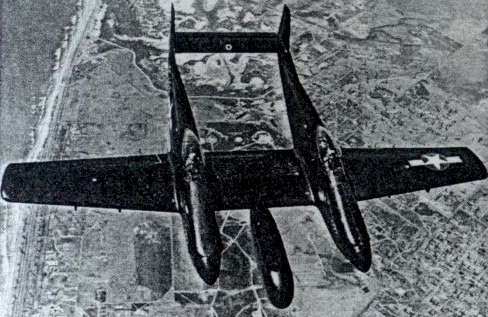
Any WW2 Fighter Aircraft Fans here?
-
I hope i'm not the only one.

Grumman/General Dynamics FM-2 Wildcat.
Grumman F6F5 Hellcat.
Chance Vought F4U Corsair.
-
Lim Wei Ming : "The first rule of thumb in aerial combat is an altitude advantage."
er.... i thot the first rule is to have speed? what about AAM or cannons? -
I'm a fan. Especially of the Pacific War, Hellcats and aircraft based in Singapore before, during and after the Japanese invasion to surrender.
A bit of sad trivia here; The first picture posted, of the "F4F Wildcat" in early war markings (actually a late war Eastern-built FM2 Hot-Rod Wildcat), crashed in Texas a couple of weeks ago. Unfortunately, the pilot was killed. -
Well if u fly high they cant shoot you down like the U-2 and TR-1Originally posted by espanol_man:Lim Wei Ming : "The first rule of thumb in aerial combat is an altitude advantage."
er.... i thot the first rule is to have speed? what about AAM or cannons?
Btw i prefer them Il-2 ,Me-109,P-51,hurricane,Ju-87 and Me-202!!!!!! -
During WW2 aerial combat, An altitude advantage on your opponent is extremely important. With altitude, you'll have speed, advantage, an basically everything. A low flying A6M Zeke cannot touch a Spirfire which is flying 1000 feet higher. If the Zeke tries that, he'll bleed all his energy and speed away which makes him a sitting duck. The Spitfire pilot on the otherhand can climb when he sees the Zeke coming from lower. This will cause enough seperation of the two of the planes. Once the Zeke bleeds all his energy away, the Spitfire can then hammer his rudder and drop back down to the required angle of attack to continue the manuever.Originally posted by espanol_man:Lim Wei Ming : "The first rule of thumb in aerial combat is an altitude advantage."
er.... i thot the first rule is to have speed? what about AAM or cannons?
This theory works extremely well for modern jet fighters too. You can always attack a target lower than you. But never try attacking a target higher. Because he has ALL the advantages. -
not a fan but this is cool.. the P-38...
its 2 engines give it a climb that made enemy planes unable to follow

-
The Germans called the P-38 the "forked Tail Devil". It's climb rate isn't really the best. The Japanese Kawasaki Ki-84 can actually out climb the Lockheed P-38 Lightning if the pilot starts with an altitude / speed advantage.
What the P-38 excels its that both propellers are counter-rotating which in turn, eliminate torque effects.
It is a very popular plane among pilots because it's a plane with a very low stall speed. (60 knots with full flaps) This in turn makes landing extremely easy.
The P-38 is the TRUE master of the HAMMERHEAD ACM move. Single engine planes such as the German's BF-109 and FW-190 will tend to torque roll at low speed / vertical manuevers.
The P-38 was also the 1st plane in service to have all flushed metal riverted skin, tricycle landing gear, turbo-charged engines, one nose mounted cannon (AN-M1) and 4 machine guns (.50 cal MK-2)
Its nose mounted armaments removes all gun convergence issues which is a major problem in both the Supermarine Spitfire and Hawker Hurricane. (Hurricanes have a factory default gun convergence of 400 yards. If the pilot fires at a target at say, 200 yards, the bullets will simply fly right past the target plane. Pilots solved the problem by tuning their guns. P-38s don't have convergence which makes its guns very accurate even at long distances.
Also to add. The P-38 gained most credit when it shot down the Mitsubishi G4M "Betty" carring Japanese Admiral Yamamoto.
There are two drawbacks to the P-38 design.
1.) It's unique size makes it an extremely big target. It's easy to spot it from a distance.
2.) The P-38's air-frame wasn't designed to go anywhere above 250 knots / 400 mph. Many loss of the P-38 were due to over-speeding, causing the plane's air-frame to "compress" at high speeds, which in turn, locking up the controls. Newer models of the P-38 had "Dive-brakes" installed to correct this problem.
I think that's about it all. Maybe someone can continue for me here.

-
yah i guess you're right
and the weapons on the thing is scary.. a 37mm cannon.. that's the same bloody calibre as the Stuart "Honey" light tank -
A little correction here. The P-38 carries a 20mm nose cannon.
If I have not mistaken, only 2 USAF planes had 37mm cannon. The P-39 Air Cobra & the P-63 King cobra.
God... 37mm is damm huge! One well placed shot can easily blow up a tank!
-
orh.. my pickled mind is screwed i guess
read about all these almost 20 years ago
what about some plane which carried a bloody howitzer in the nose?
not too sure about it.. but i think it was the size of a bomber and they modified it to hammer ships or something?Originally posted by Lim Wei Ming:A little correction here. The P-38 carries a 20mm nose cannon.
If I have not mistaken, only 2 USAF planes had 37mm cannon. The P-39 Air Cobra & the P-63 King cobra.
God... 37mm is damm huge! One well placed shot can easily blow up a tank! -
I suppose the bomber your refering to is the B-25. They had one version where is was modified for low altitude land attack.
Here are some pictures of it.
NOTE: These have not been modified. You'll notice that there's no 37 / 30 / 75 mm cannon at the nose.

-
yah.. the B-25.. if i'm not wrong, they stuck a 75mm gun in the plane.. and it was pointless after a while as it was too slow and too big a target
these days, they got a bloody 105mm howitzer in the AC130
why, i don't know.. i mean, it's got these bloody vulcan chainguns throwing out 6,000 rounds per minute...
oh well.. -
2 P-51 & a P-38 in formation.

The B-17 Flying Fortress.
The plane that dropped the nuke. The B-29 Super Fortress.
-
B-29, didn't need escorts as it flew higher, faster and longer than anything in the air, right?
i remember reading that somewhere... -
Not entirely sure. What I know is that the B-29 with their super-charged engines can bring them well over 35.000 feet - 38.000 feet. Japan did try intercepting them with their Ki-61, Ki-84 and the Ki-100. The problem is that fighters tend to be extremely sluggish at high-altitudes due to thinner air. With this, Japanese fighters wasn't "quite" able to reach them.
As for the escorts, certain day-flying B-29 formation did have P-51 fighter escorts. During night bombing missions, they usually fly along with hundreds of other B-29 in tight formation.
wow. -
I love the P-38 and the Spitfire. Axis planes, I love the 109 and especially the Fock Wulfe 190.
-
the ENOLA GAY!Originally posted by Lim Wei Ming:2 P-51 & a P-38 in formation.
The plane that dropped the nuke. The B-29 Super Fortress. -
i've seen pictures of spitfires and mosquito operating out of seletar. will try to contact the person for a digital copyOriginally posted by Viper52:I'm a fan. Especially of the Pacific War, Hellcats and aircraft based in Singapore before, during and after the Japanese invasion to surrender.
A bit of sad trivia here; The first picture posted, of the "F4F Wildcat" in early war markings (actually a late war Eastern-built FM2 Hot-Rod Wildcat), crashed in Texas a couple of weeks ago. Unfortunately, the pilot was killed. -
"Bock's Car" & "Elona Gay" were the names of the two B-29 Super Fortress that dropped the nukes. The one seen in the picture was named "FIFI".
-
HELLCAT is COOL!!!!
The first plane to be able to outclass the Zero in air combat. Though later aircraft like the Cosair were more advanced, the Hellcat was extremely popular among pilots for its toughness, and handling on the ground. -
There used to be a british aircraf during the WW2 call singapore, it operated out of seletar
http://www.jaapteeuwen.speedlinq.nl/html%20pages/SHORT%20S19%20SINGAPORE%20III.htm
for those interested in raf developments in seletar, u can refer to this book it mentions of a local chinese who became a pilot for the raf too. -
Being a military buff myself...I cannot help but answering this as well
I personally love the Spitfire ever since I watched this movie 'Battle of Britain', its slick wings and speed just impresses me...also the P-40, ableit the B and C models since this are the models used by Claire Lee Chennault's American Volunteer Group (AVG, better known as The Flying Tigers).
As for the Pacific Theatre, couple of planes stood as my favourite, for instance, the F4U Corsair, great plane with excellent diving characteristics, fought side by side with the F6F Hellcat against the Japanese.
The P38 is also an absolute favourite, flown by the top American WW2 fighter ace, Richard Bong and its design is well-suited for the Pacific, totally outperforming the Zero, unlike its previous performance in the Med. or in ETO.
Speaking of ETO, my favourites are the P-47D, excelling in ground attack and the P-51D Mustang, the plane that changed the tide of war in Europe.
Do you also know that the P-47 is responsible for the surrender of a German division in WW2, making it the first in military history where ground forces surrendered to an air unit.
well, that's my 2 cents.. -
Seletar is a historic place as far as the RAF is concerned. It was the place where 4 historic RAF types flew their respective RAF operational missions, they are:Originally posted by cavsg:i've seen pictures of spitfires and mosquito operating out of seletar. will try to contact the person for a digital copy
Supermarine Spitfire - PR.XIX of 81 Sqn in Apr 1955
DH Mosquito - PR.34 RG314 of 81 Sqn in Dec 1955
Shorts Sunderland - ML797 'P' of 205 Sqn in May 1959
Bristol Beaufighter - TT.10 RD761 of 1524 Flight(?) in May 1960 -
Another book I can recommend is 'Lion in the Sky' by Sqn Ldr Neville Shorrick (an ex-RAF officer based at Seletar). Book was written in the 60s, so memories of events were still fresh then. Details the story of Seletar from its birth in the 1930s (Do you know Jalan Kayu is named after an Englishman?) to the late 1960s when the RAF left (including the Occupation in the 40s). some wonderful b/w pics of lots of things, aircraft and people of Seletar
Long out-of-print unfortunately, tho' I got my copy from a bookshop in New Zealand via mail order. -
The most revamped mustung in history