Inter-ReligiousDialogue
-
Push these fiery korean protestants over border and prison at North korea....and cleansing them with socialist values for a few years then send them back to south korea...this will solve the problem....hiak hiak...!! Remember Karl Marx said: Religions is the opiate of the masses !! hoho !!Originally posted by bohiruci:excellent .
May the fiery protestant part in Korea atone for their "evil" in south korea


-
Sorri don understandOriginally posted by rahula25:Well....South Korea got too much religious freedom...koreans take advantage of such priviledges...sigh.. 
-
Dalai Lama to Represent Buddhism at EC Interfaith Meeting
By Kalsang Rinchen, Phayul, May 29, 2006
Dharamshala, India -- The Dalai Lama will represent Buddhism at an interfaith discussion in Brussels tomorrow. Representatives from various faiths will meet in Brussels to participate in a discussion on 'fundamental rights and mutual respect'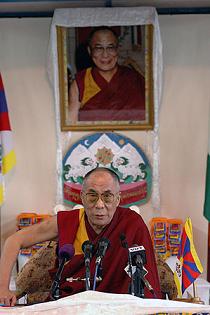
Federal Chancellor Schussel, the President in office of the European Council, and Commission President Barroso will interact with leading representatives of world faiths during the discussion that is scheduled for three hours.
The discussion will centre on the issue of the contribution that the faith communities can make in a common Europe. The meeting will take place in the European Commission (Berlaymont).
The Dalai Lama will also attend a Press briefing with Chancellor Schussel, President Barroso and representatives of the faith communities before the discussion.
Richard Chartres, Bishop of London, will represent the Anglican Church.
Anas Shakfeh, President of the Islamic Community in Austria, Imam Abduljalil Sajid, Muslim Council for Religious and Racial Harmony and Ayatollah Seyyed Abbas Ghaemmaghami, Head of the Islamic Centre in Hamburg, will represent Islam.
Chief Rabbi of France Joseph Sitruk, Chief Rabbi of Brussels Albert Guigui and Rene Gutman, Chief Rabbi of Strasbourg et du Bas-Rhin will represent Judaism.
His Eminence, Emmanuel, Metropolit of France and Bishop Athanasios of Achaia will represent Orthodox Church.
Jean Arnold de Clermont, President of the Conference of European Churches, and Bishop Wolfgang Huber, Chairman of the Council of the EKD, will represent Protestant Church.
Jose Cardinal da Cruz Policarpo, Patriarch of Lisbon, Christoph Cardinal Schonborn, Archbishop of Vienna, and Adrianus van Luyn, President of the Commission of the BishopsÂ’ Conferences of the European Community will represent Roman Catholic Church.
Participants from the European Commission are Franco Frattini, Vice-President of the Commission and Commissioner for Justice, Freedom and Security, Margot Wallstrom, Vice-President of the Commission and Commissioner for Institutional Relations and Communication Strategy, Jan Figel', Commissioner for Education, Training, Culture and Multilingualism, and Vladimir ?pidla, Commissioner for Employment, Social Affairs and Equal Opportunities. -
Taiwanese Buddhist Master Hsing Yun meets with pope
Taiwan News, June 23, 2006
Taipei, Taiwan -- Pope Benedict XVI met with visiting Master Hsing Yun, founder of the Buddha's Light International Association in Taiwan, Wednesday in a general audience at St. Peter's Basilica in Vatican. During the meeting, Benedict XVI expressed his best regards for the Taiwanese people and said he will pray for them. The pope also expressed the hope of meeting the Taiwanese people if the chance arises.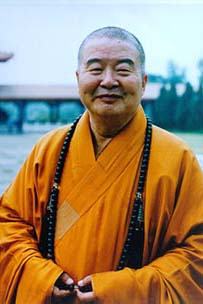
<< Dharma Master Hsing Yun
Hsing Yun arrived in Rome on Tuesday. In the company of Ambassador Tou Chou-sheng of the Republic of China, the Buddhist master extended his respects to the pope on behalf of all Taiwanese Buddhists and invited the leader of the Roman Catholic world to visit Taiwan any time he felt like it.
Calling himself a pilgrim during his Rome trip, Hsing Yun said he hopes the journey will act to help boost mutual understanding and cooperation between Buddhists and Catholics.
Hsing Yun founded the Fo Guang Shan Buddhist Monastery in 1967 in southern Taiwan, which has since then evolved to become the largest Buddhist monastery in Taiwan.
Now, Fo Guang Shan has more than 200 branch temples throughout the world with the express aim of promoting humanistic Buddhism.
After his meeting with Benedict XVI, Hsing Yun called on Paul Cardinal Poupard, president of the Pontifical Council for Culture of the Holy See, for talks on issues of mutual concern.
Hsing Yun, heading a group of his followers, is currently on a tour of Fo Guang Shan branches in Europe. He is scheduled to leave for Geneva Wednesday evening to attend an inauguration ceremony for a new Fo Guang Shan branch temple in the Swiss city. -
AT THE UNITARIAN UNIVERSALIST CHURCH IN SPOKANE

They started the service with moments of silence and their beautiful prayers.

They then enjoyed some moments of silence and then called up the children to have story time. The story was about the life of Buddha.
Venerable then gave teachings which inspired all who were there.

-
I think Buddhism and LIBERAL Christianity have many things in common.
1. It seems to me from the Bible that Jesus showed many signs that he may have been enlightened in the Buddhist sense, although of course he didn't use that terminology. Examples - he was utterly unattached to possessions, wandered about homeless, relied on friends for food, etc. and urged people to be happy - pointing out that flowers and birds do not worry about things and neither should we. Also when he visited the house of Mary and Martha (sisters), Mary sat at peace with him (mindfulness?) while Martha fussed over preparing food, and Jesus told her just to be at peace - "only one thing is necessary". There are many indicators that the wisdom of Jesus Christ is not dissimilar to enlightenment.
2. Ethics - example, the 5 precepts, very similar in content to the 10 commandments.
3.The actual meditative experience of Buddhist monks/nuns appears to parallel that of Christian contemplatives in terms of stages one passes through - this is especially true of Christian mystics.
4. "As you reap, so shall you sow" , also "He who fights by the sword shall die by the sword" - the concept of karma is not unknown to the Bible.
5. Remember that the whole concept of Jesus being the only Son of God or specially Divine (unlike the rest of us) was only decided upon three centuries after his death, at the Council of Nicea, and this was because the emperor Constantine regarded it as politically convenient. The weight of the evidence in the Bible suggests that Jesus himself as well as his followers regarded him as simply one in a long line of wise Jewish teachers. Many liberal Christians are starting to come to terms with this and in fact it does not diminish the importance of Jesus' teachings in any way.
Anyway, just some of my thoughts as an ex-Christian! -
Some even suggested that he studied BuddhismOriginally posted by la lapine blanche:I think Buddhism and LIBERAL Christianity have many things in common.
1. It seems to me from the Bible that Jesus showed many signs that he may have been enlightened in the Buddhist sense, although of course he didn't use that terminology. Examples - he was utterly unattached to possessions, wandered about homeless, relied on friends for food, etc. and urged people to be happy - pointing out that flowers and birds do not worry about things and neither should we. Also when he visited the house of Mary and Martha (sisters), Mary sat at peace with him (mindfulness?) while Martha fussed over preparing food, and Jesus told her just to be at peace - "only one thing is necessary". There are many indicators that the wisdom of Jesus Christ is not dissimilar to enlightenment.
2. Ethics - example, the 5 precepts, very similar in content to the 10 commandments.
3.The actual meditative experience of Buddhist monks/nuns appears to parallel that of Christian contemplatives in terms of stages one passes through - this is especially true of Christian mystics.
4. "As you reap, so shall you sow" , also "He who fights by the sword shall die by the sword" - the concept of karma is not unknown to the Bible.
5. Remember that the whole concept of Jesus being the only Son of God or specially Divine (unlike the rest of us) was only decided upon three centuries after his death, at the Council of Nicea, and this was because the emperor Constantine regarded it as politically convenient. The weight of the evidence in the Bible suggests that Jesus himself as well as his followers regarded him as simply one in a long line of wise Jewish teachers. Many liberal Christians are starting to come to terms with this and in fact it does not diminish the importance of Jesus' teachings in any way.
Anyway, just some of my thoughts as an ex-Christian!
-
Actually what is the core teachings of liberal Christianity? Does it believe in the Bible and the sovereignty of God?Originally posted by la lapine blanche:I think Buddhism and LIBERAL Christianity have many things in common.
1. It seems to me from the Bible that Jesus showed many signs that he may have been enlightened in the Buddhist sense, although of course he didn't use that terminology. Examples - he was utterly unattached to possessions, wandered about homeless, relied on friends for food, etc. and urged people to be happy - pointing out that flowers and birds do not worry about things and neither should we. Also when he visited the house of Mary and Martha (sisters), Mary sat at peace with him (mindfulness?) while Martha fussed over preparing food, and Jesus told her just to be at peace - "only one thing is necessary". There are many indicators that the wisdom of Jesus Christ is not dissimilar to enlightenment.
2. Ethics - example, the 5 precepts, very similar in content to the 10 commandments.
3.The actual meditative experience of Buddhist monks/nuns appears to parallel that of Christian contemplatives in terms of stages one passes through - this is especially true of Christian mystics.
4. "As you reap, so shall you sow" , also "He who fights by the sword shall die by the sword" - the concept of karma is not unknown to the Bible.
5. Remember that the whole concept of Jesus being the only Son of God or specially Divine (unlike the rest of us) was only decided upon three centuries after his death, at the Council of Nicea, and this was because the emperor Constantine regarded it as politically convenient. The weight of the evidence in the Bible suggests that Jesus himself as well as his followers regarded him as simply one in a long line of wise Jewish teachers. Many liberal Christians are starting to come to terms with this and in fact it does not diminish the importance of Jesus' teachings in any way.
Anyway, just some of my thoughts as an ex-Christian! -
There is like a big spectrum of belief within Christianity, ranging from very liberal to very fundamentalist. Unfortunately the fundamentalist end is the loudest and gets heard most often.
Fundamentalists - try to take the bible literally as much as possible. It is a very textual interpretation much like the Muslim respect for the words of the Koran. They will believe that Jesus is literally the son of God, that God came down and impregnated a virgin without her ever having sex, and she was still a virgin when Jesus was born. They believe that by dying on the cross he was somehow a sacrifice that took away the sins of everybody else. You have to accept this teaching to be "saved". I've always found this problematic and impossible to accept.
Liberal Christians - will acknowledge that the Bible is full of metaphors and figurative teachings, not always to be taken literally. Some will go so far as to acknowledge that Jesus was just a wise and holy man, in the same way that any other member of the human race could be (in theory). They may believe that the crucifixion was just a political event - Jesus was put to death because he was challenging the corruptness and hypocrisy of the established Church at the time. To that extent, he is to be admired for speaking up and putting himself in mortal danger in order to be true to himself, but his death does not "magically" take away the sins of the world.
Probably the majority of Christians - don't really agree with the fundamentalist position because it is so illogical and difficult for an intelligent individual to accept but neither do they really challenge it at an intellectual level - they just go along to Church and recite prayers/creeds they don't really believe because it is more convenient. If you ask them why they do this, they will say it is because they agree with the overall principles of Christianity- love, justice, peace, etc. so they try to ignore the small, difficult details. I tried to do this but I find I can't anymore. What's the point in reciting something you don't really believe? -
-
Actually I believe strongly and is also mentioned by my master, that Jesus is a bodhisattva. I particularly like Gospel of Thomas - it is one of the first gospels to be written. In fact many scholars of early Christianity believe that it was first written down prior to the Gospels of the Bible, closer in time to the period in which all Christian teachings were passed on orally, and therefore may in some ways be a more accurate portrayal of the true words of Jesus. Gospel of Thomas is mystical in nature and has close resemblance to Buddhist teachings.
But I think many times his teachings is interpreted wrongly and there is alot of distortions in the bible for political reasons... meaning it is no longer the original words of Jesus Christ.
Just my views, not necessarily you must share them. -
interfaith church is not a church. at all.
-
You mean universalist church? yea tats not mainstream christianity.Originally posted by NT2:interfaith church is not a church. at all. -
It is a misconception that Jesus was "only" a great teacher to his followers. It is obvious that he is God to them. The agenda of the Council of Nicaea is not to deify Jesus. The majority of Christians already know Jesus is God. Did you get this from Da vinci code or something? Go read wikipedia. Anyway, any link of Jesus with Buddhism is merely a conjecture, like how Dan Brown claims Christianity has much in relation to paganism.Originally posted by la lapine blanche:I think Buddhism and LIBERAL Christianity have many things in common.
1. It seems to me from the Bible that Jesus showed many signs that he may have been enlightened in the Buddhist sense, although of course he didn't use that terminology. Examples - he was utterly unattached to possessions, wandered about homeless, relied on friends for food, etc. and urged people to be happy - pointing out that flowers and birds do not worry about things and neither should we. Also when he visited the house of Mary and Martha (sisters), Mary sat at peace with him (mindfulness?) while Martha fussed over preparing food, and Jesus told her just to be at peace - "only one thing is necessary". There are many indicators that the wisdom of Jesus Christ is not dissimilar to enlightenment.
2. Ethics - example, the 5 precepts, very similar in content to the 10 commandments.
3.The actual meditative experience of Buddhist monks/nuns appears to parallel that of Christian contemplatives in terms of stages one passes through - this is especially true of Christian mystics.
4. "As you reap, so shall you sow" , also "He who fights by the sword shall die by the sword" - the concept of karma is not unknown to the Bible.
5. Remember that the whole concept of Jesus being the only Son of God or specially Divine (unlike the rest of us) was only decided upon three centuries after his death, at the Council of Nicea, and this was because the emperor Constantine regarded it as politically convenient. The weight of the evidence in the Bible suggests that Jesus himself as well as his followers regarded him as simply one in a long line of wise Jewish teachers. Many liberal Christians are starting to come to terms with this and in fact it does not diminish the importance of Jesus' teachings in any way.
Anyway, just some of my thoughts as an ex-Christian! -
its not christianity, is it? It a mixture of many kinds of religion, if you are talking about unitarian universalism. Just like scientologists also call themselves 'church'.Originally posted by An Eternal Now:You mean universalist church? yea tats not mainstream christianity. -
Something like that. You can consult wikipediaOriginally posted by SocialOutcast:its not christianity, is it? It a mixture of many kinds of religion, if you are talking about unitarian universalism. Just like scientologists also call themselves 'church'.