In South Korea, Immersion in Buddhist AusterityBy CATHERINE PRICE, New York Times, November 26, 2006Seoul, South Korea -- AT 3:30 a.m. in a temple in South Korea the sound of the moktak — a wooden percussion instrument that Buddhist monks play every morning to start the temple’s day — jolted me awake. I pulled myself up from my floor mat, straightened my itchy gray uniform and stumbled through the pre-dawn darkness to the temple, where pink lotus lanterns illuminated a small group of people waiting to begin their morning prostrations.
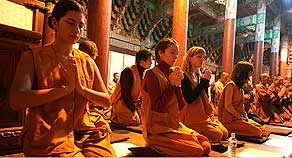 Sungsu Cho/Polaris, for The New York Times
Guests at one of the temples participating in Templestay Korea, not long after the early-morning wakeup sound of the moktak.I was at the Lotus Lantern International Meditation Center on an overnight trip run by an organization called Templestay Korea. Created by the Jogye Order of Korean Buddhism — the largest Buddhist order in Korea — the program aims to allow visitors to “sample ordained lifestyle and experience the mental training and cultural experience of Korea’s ancient Buddhist tradition,” according to its Web site. Although the program only began in 2002 on the occasion of the World Cup soccer tournament held in Korea and Japan, it has grown swiftly over the last four years from 14 temples to 50, with 52,549 participants in 2005
The meditation center on Ganghwa Island, about two hours from Seoul by public transportation, certainly seems like the sort of place that could inspire calm. The grounds are nestled between rice paddies and a leafy forest, and the centerÂ’s brightly painted temple sits several stone steps up from a gentle brook and a small pond stocked with lotus flowers and koi. Monks wander silently, occasionally gathering at an outdoor wooden table and offering tea and small snacks to guests.
But be forewarned — the point of the temple stay is not, as the pictures on its Web site might make it seem, to lounge next to a brook nibbling crackers as you consider what it means to reach nirvana. The point is to live like a monk. And monks, it turns out, keep strict schedules, are vegetarian and spend a lot of time silently meditating in positions that can become, quickly and without much warning, incredibly uncomfortable for those unused to them......