Questions on No Self
-
I was attending my Dharma class today and had learnt something new. However it is not really that new but the idea just struck me which left me with some questions that I can't answer.
It is about no-self (wu2 wo3). The Dharma standpoint (or so I had heard) is that everything is of natural phenomena be it cause or effect. So lemme give an example: When a person raises his hands up, he will say "I raise my hands up." The mechanics in raising his hands up will be the movement of his muscles with the instructions from his brain. And the results from this will be his hands are raised and he gets tired after awhile. My questions are:
1) The actions of raising his hands are natural phenomena?
2) The hands are tired are the natural phenomena of raising his hands up. This I understand. You do something, you will get something. But what truely puzzle me is the above. If it is no I who raise the hands, then what raise the hands? Natural phenomena? If it is natural phenomena that raises the hands, I am stuck here again. What caused these natural phenomena?
If everything are nautral phenomena, then we are part of natural phenomena or we are natural phenomena itself. By doing something, we get something. Hope someone can disspell my darkness. Thanks! -
Originally posted by oldkid:
It is a phenomena. There is actually no need for distinctions between natural and man-made. What we call man-made, is to facilitate communication. We can also called it compounded too. It is by convention of language, and a common subscribed mindset that we depend on the ego to function in this world. The crux lies in us being forever trapped in this state of ego-identification, being mind dependent on mental labels that we fail to experience this world in all its real nature. Just like everyone in this world subscribe to time. While we know it is just a Concept, to get trapped by it is suffering. But if everyone don't follow, this world will be in chaos.
1) The actions of raising his hands are natural phenomena?
Everything in this universe is conditioned, subjected to birth and decay. The tiredness of hands is a display of "Progression to expiry" of that phenomena. Herein, energy inside your body is being used to withstand the weight of your hand. Energy, in the form of say carbohydrates are expended to fuel the muscles and generates heat. The slow, but steady and surely depletion of energy gives you the sense of tiredness. Note that in accordance with science and Buddhist doctrine, there is no fundamental creation nor destruction. But a change of state of matter. Energy is not created nor destroyed but changes from one state to another. Universal flux or impermanence as we call it. That is the meaning of Buddha nature neither increase nor decrease in the Heart Sutra
2) The hands are tired are the natural phenomena of raising his hands up. This I understand. You do something, you will get something. But what truely puzzle me is the above. If it is no I who raise the hands, then what raise the hands? Natural phenomena? If it is natural phenomena that raises the hands, I am stuck here again. What caused these natural phenomena?
Being aware of phenomena is not an end because we are aware and yet a part of it. Therefore the real practitioner is a Dharma Master - or a Master of Phenomena. An analyst, a doer and a wheel turner
If everything are nautral phenomena, then we are part of natural phenomena or we are natural phenomena itself. By doing something, we get something. Hope someone can disspell my darkness. Thanks! -
So in recognising all these as natural phenomena, how does one brings cessation to all these and attain liberation? From what I understand, even if I were to accumulate merits, it is still "I'm accumulating merits." which will only led me to higher rebirths and not out of samsara as there is still a recognition of "I" in doing good deeds.
What should be my motivation when accumulating merits and what sort of seeds should I plant so that my projecting karma will be towards liberation?
-
My opinion is:Originally posted by oldkid:It is about no-self (wu2 wo3). The Dharma standpoint (or so I had heard) is that everything is of natural phenomena be it cause or effect. So lemme give an example: When a person raises his hands up, he will say "I raise my hands up." The mechanics in raising his hands up will be the movement of his muscles with the instructions from his brain. And the results from this will be his hands are raised and he gets tired after awhile. My questions are:
1) The actions of raising his hands are natural phenomena?
2) The hands are tired are the natural phenomena of raising his hands up. This I understand. You do something, you will get something. But what truely puzzle me is the above. If it is no I who raise the hands, then what raise the hands? Natural phenomena? If it is natural phenomena that raises the hands, I am stuck here again. What caused these natural phenomena?
If everything are nautral phenomena, then we are part of natural phenomena or we are natural phenomena itself. By doing something, we get something. Hope someone can disspell my darkness. Thanks!
1) Actions of raising hands consists of many processes, the first process is always the raise of the thought in our mind though this can be broken down further. Once this thought is raise, the rest will happen naturally. Is a thought a natural phenomena? Then it comes to the question of what is natural phenomena. Anyone?
2) It is the thought that raise the hand. -
Hi first of all sorry for being unable to reply your questions by PM just now, cos I was busy just now with my projects and I think it will be better to hear more more views from other forummers, so it's better than they be posted here

Originally posted by oldkid:
It depends on what you mean by natural. Some people think that 'natural' means actions arising without intentions, while unnatural are actions that arises out of our intention. That is seeing things dualistically. Actually both intentional and non-intentional actions are natural in the higher sense -- they are conditioned arising, and that is perfectly natural as it is, but it must not be misunderstood.
I was attending my Dharma class today and had learnt something new. However it is not really that new but the idea just struck me which left me with some questions that I can't answer.
It is about no-self (wu2 wo3). The Dharma standpoint (or so I had heard) is that everything is of natural phenomena be it cause or effect. So lemme give an example: When a person raises his hands up, he will say "I raise my hands up." The mechanics in raising his hands up will be the movement of his muscles with the instructions from his brain. And the results from this will be his hands are raised and he gets tired after awhile. My questions are:
1) The actions of raising his hands are natural phenomena?
My taiwanese teacher also talk about walking as being natural, what he meant is not that somehow your walking is somehow controlled by some natural forces.
What he meant is that there is completely no need for a sense of doer or dualistic volition involved in walking, it is so natural that you never gave it a second thought, and that is possible to be natural because in the first place the sense of a doer or there being a 'controller' of an action is an illusion.
A sense of a doer, controller or the necessity for you to "think" (here I mean dualistic thinking, thinking in terms of a Subject and Object) your walking (i.e "I want to walk, I want to walk, I want to walk" ) in order to walk is absolutely unnecessary, because whatever arises, arises spontaneously and naturally as part of conditioned arising at that very moment. It is not caused by a self, there is no self and no doer.
Means whether intention, or thinking, or action, all these arise SPONTANEOUSLY and NATURALLY with no agent, thinker, or doer.. it just self-arise out of conditions.
The reason why you think there is a doer/self/thinker is because you review the previous thoughts and find a coherence and chain them up together, causing the impression of a 'doer' or 'thinker'. This is called dualistic thinking. In reality reality is spontaneous and disconnected.
That is why in Buddhist practise we must not dwell in meaning, content and dualistic thinking, we must let go and plunge into moment to moment experience with naked awareness to experience/BE the arising and ceasing as it is moment to moment. If you can do that, then that very moment is unborn, because you no longer see time or the birth and death of a 'self' or entities.
So back to topic, whatever arises, whether there is intention or no intention, arises spontaneously and is not caused by any Doer. This is a profound truth and easily misunderstood.
Please read our forummer Longchen (he has profound insights on the reality of No Doer and No Self, you may want to check out other similar articles in that website): Doer and the being done
If theres anything you don't understand from my explanation please ask... and I do appreciate if other insightful forummers can share their opinions and understandings.
If you don't understand so far, continue to read on, you might understand later.2) The hands are tired are the natural phenomena of raising his hands up. This I understand. You do something, you will get something. But what truely puzzle me is the above. If it is no I who raise the hands, then what raise the hands? Natural phenomena? If it is natural phenomena that raises the hands, I am stuck here again. What caused these natural phenomena?
Everything occur spontaneously out of conditions, it occurs so fast but our mind mistakenly interpretes them to be linked and connected by a sense of doership or a sense of self. It's like this:
Moment1, intention of raising hands arises.
Moment2, the intention conditions the raising up of the hands.
Meanwhile, there is never at any point a separate self behind the intention or the action of raising hand itself, intention arise without thinker, raising hand occurs without doer. They just arise spontaneously out of conditions (conditioned arising) yet in a disconnected, spontaneous fashion. There is continuity but in a spontaneous fashion, ultimately an action is not caused by a a self (it can't be found), it is also not even caused by a thought, the thought arise and ceases instantaneously as it arise, the action too arise and ceases out of conditions, spontaneously.
When I said "the thought does not cause the action" it is again easily misunderstood. I don't mean that all actions arises without any intentions. What I mean't is, thought is not a discrete entity (i.e a separate self/doer) causing the action, but rather action arises conditioned by thought, they are not separate. This means that at that very moment, the intention is a conditioning factor for action to arise, they arise simulataneously and spontaneously in an interdependent and conditioned fashion. Does this make sense?
And therefore, every moment of arising arises out of conditioned arising, but there is no doer, no observer and no agent/self.
But you mistaken it to be a self -- you think you raised your hand because there is a doer or controller giving commands to raise up your hands. This is because you observe your previous thoughts and thought it was your separate self that is 'willing' your action. Actually, the thought is just a thought, it is not the self or doer, or rather a self or doer cannot be found anywhere in your thoughts. A thought is not the 'doer' or a 'self'! It is merely a thought at that very moment, get it?
p.s. what I mean by disconnected and spontaneous fashion means moment to moment arises in this way: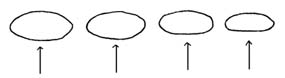
and NOT this way: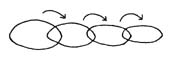
Please read 'Non-dual thinking' to have a much much better understanding on this, the author is highly enlightened and explains much better than I could ever explain: Nondual Thinking and the Mahayana Deconstruction of TimeIf everything are nautral phenomena, then we are part of natural phenomena or we are natural phenomena itself. By doing something, we get something. Hope someone can disspell my darkness. Thanks! [/b]
There is no separate self/doer/observer apart from moment to moment arising, this is a Dharma Seal!
By doing something we get something that's true, but I'm not sure what you're trying to say..?
Anyway these things are quite difficult for me to explain and in the first place I don't have any direct insights into this reality, unlike some forummers here.. but does my post makes senses to you? Please feel free to ask and we can continue discussing.. -
Originally posted by oldkid:
There is no liberation because we are attached to the ignorance that ourself and the world are truly, inherently existing, though in ultimate reality they are empty.
So in recognising all these as natural phenomena, how does one brings cessation to all these and attain liberation?
When you see them as empty, as being non-self, then you do not see birth and death, and you are liberated from samsara. You see our true nature as the Unborn nature.
Also, 'recognising' that all phenomena as Anatta, Empty, isn't just about mentally 'knowing' it. It is BEING it (luminous-emptiness arising) with naked awareness.
(12:21 AM) Thusness: what is the role of insight meditation?
(12:22 AM) Thusness: why bare attention?
(12:22 AM) Thusness: why naked awareness?
(12:22 AM) Thusness: when insight meditation is taught and Buddha said when hearing just the sound...this and that...
(12:23 AM) Thusness: what Buddha wanted is to experience directly what awareness is, the arising, the ceasing, the clarity, the non-dual nature
(12:23 AM) Thusness: in DO
(12:24 AM) AEN_____: icic..
(12:24 AM) Thusness: not to note it with thought or place any conclusion on any experience.
(12:25 AM) Thusness: "this is impermanence" is not about noting and place any conclusion about a phenomenon arising.
(12:26 AM) Thusness: but experience impermanence directly, not in words
(12:26 AM) AEN_____: icic.. yea
(12:26 AM) Thusness: be impermanence and know what is it really...
(12:26 AM) Thusness: see what clarity is, not what it should be
(12:27 AM) Thusness: it is luminous and yet empty...experience it directly...it is so.
(12:27 AM) AEN_____: icic..
(12:27 AM) Thusness: break the solidity until there is no holding simply thus.From what I understand, even if I were to accumulate merits, it is still "I'm accumulating merits." which will only led me to higher rebirths and not out of samsara as there is still a recognition of "I" in doing good deeds.
Very simple. There is a difference between leaking-blessings and non-leaking-blessings. Leaking blessings may be good deeds but tainted by not keeping the 5 precepts, or that it may be good deeds done with certain agenda/wish behind it, some desire for some good outcome from that doing. There is still attachment to the 4 forms will performing the virtuous deeds. That blessing resulted will be small and will 'leak away'.
What should be my motivation when accumulating merits and what sort of seeds should I plant so that my projecting karma will be towards liberation?
If you are liberated constantly, one who like in Diamond Sutra said, does not hold onto the form of a self/doer, of an other, of a sentient being, and of age/time. At that time whatever good deeds you do are not done due to any agenda, or due to craving, and there is no dualistic illusions or the four forms. Then the merits will be immeasurable.
So when you are doing good deeds or doing anything, practise the dharma, and do not give rise to the four forms, do not give rise to dualistic thinking or craving. When doing good deeds, just do it without any extra thinking, and practise the Dharma.
http://www.jenchen.org.sg/understa.htm
Real merits
Merits are consequences of the non-orignation and non-cessation of the mind. During the Tang Dynasty in ancient China, Emperor Liang Wu-Ti asked the patriarch Bodhidharma, "Venerable One, I have built many monasteries for the well being of the Sangha and I have also performed many virtuous deeds. What merits have I accumulated? Bodhidharma answered, "You have no merits." Why is that so? It is because when Emperor Liang Wu-Ti performed those acts of giving, he was attached to them. Thus, even though he had performed many virtuous deeds, because he had not cultivated the purity of his mind, he did not attain "non-origination and non-cessation". Therefore, his actions can only be considered as cultivation of blessings, not merits. Without liberation there are no merits. On the other hand, when there is liberation, all virtuous deeds will reap merits. -
Rejoice!!! Thank you very much AEN for giving me many precious advises! Somehow I do understand abit, just abit only. I will need time to contemplate on them... maybe I can do it during today's meditation session at ABC.
Hopefully I can understand them in time.
For your 2nd and 3rd posts, I understand but I do have a question. For all the good deeds I had done or the positive energies accumulated during sessions like Dharma class or meditation class, I would definitely do them with a motivation. My motivation is to accumulate merits so that with the merits, I can dedicate it to all sentient beings of the ten directions and also attain Buddhahood one day to liberation all. My question is that I don't think my motivation is wrong, right?
-
Yes a good motivation for the benefit of all sentient beings is right, because naturally with such motivations you are less attached to the four forms, the ego/self. Your motivation for sentient beings will probably 'increase' your merits by many many times. Relative Bodhicitta is also very important and sets one on the paths towards Buddhahood.Originally posted by oldkid:Rejoice!!! Thank you very much AEN for giving me many precious advises! Somehow I do understand abit, just abit only. I will need time to contemplate on them... maybe I can do it during today's meditation session at ABC.
Hopefully I can understand them in time.
For your 2nd and 3rd posts, I understand but I do have a question. For all the good deeds I had done or the positive energies accumulated during sessions like Dharma class or meditation class, I would definitely do them with a motivation. My motivation is to accumulate merits so that with the merits, I can dedicate it to all sentient beings of the ten directions and also attain Buddhahood one day to liberation all. My question is that I don't think my motivation is wrong, right?
But the highest Bodhicitta, or the absolute Bodhicitta, is still the realization of emptiness. If you never realise emptiness or attain liberation, then your merits will still not be as great. When you reach that level, your merits will really be immense beyond bounds.
The 6th Zen Master Hui Neng said:
http://www.angelfire.com/realm/bodhisattva/platform-sutra.htmlOne day Prefect Wei entertained the Patriarch and asked him to preach to a big gathering. At the end of the feast, Prefect Wei asked him to mount the pulpit (to which the Patriarch consented). After bowing twice reverently, in company with other officials, scholars, and commoners, Prefect Wei said, "I have heard what Your Holiness preached. It is really so deep that it is beyond our mind and speech, and I have certain doubts which I hope you will clear up for me." "If you have any doubts," replied the Patriarch, "please ask, and I will explain." "What you preach are the fundamental principles taught by Bodhidharma, are they not?" "Yes," replied the Patriarch. "I was told," said Prefect Wei, "that at Bodhidharma's first interview with Emperor Wu of Liang he was asked what merits the Emperor would get for the work of his life in building temples, allowing new monks to be ordained (royal consent was necessary at that time), giving alms and entertaining the Order; and his reply was that these would bring no meritsar all. Now, I cannot understand why he gave such an answer. Will you please explain." "These would bring no merits," replied the Patriarch. "Don't doubt the words of the Sage. Emperor Wu's mind was under an erroneous impression, and he did not know the orthodox teaching. Such deeds as building temples, allowing new monks to be ordained, giving alms and entertaining the Order will bring you only felicities, which should not be taken for merits. Merits are to be found within the Dharmakaya, and they have nothing to do with practices for attaining felicities." The Patriarch went on, "Realization of the Essence of Mind is Kung (good deserts), and equality is Teh (good quality). When our mental activity works without any impediment, so that we are in a position to know constantly the true state and the mysterious functioning of our own mind, we are said to have acquired Kung Teh (merits).
Within, to keep the mind in a humble mood is Kung; and without, to behave oneself according to propriety is Teh. That all things are the manifestation of the Essence of Mind is Kung, and that the quintessence of mind is free from idle thoughts is Teh. Not to go astray from the Essence of Mind is Kung, and not to pollute the mind in using it is Teh. If you seek for merits within the Dharmakaya, and do what I have just said, what you acquire will be real merits.
He who works for merits does not slight others; and on all occasions he treats everybody with respect. He who is in the habit of looking down upon others has not got rid of the erroneous idea of a self, which indicates his lack of Kung. Because of his egotism and his habitual contempt for all others, he knows not the real Essence of Mind; and this shows his lack of Teh. Learned Audience, when our mental activity works without interruption, then it is Kung; and when our mind functions in a straightforward manner, then it is Teh. To train our own mind is Kung, and to train our own body is Teh.
Learned Audience, merits should be sought within the Essence of Mind and they cannot be acquired by almsgiving, entertaining the monks, etc. We should therefore distinguish between felicities and merits. There is nothing wrong in what our Patriarch said. It is Emperor Wu himself who did not know the true way.".....etc -
(continued from above)
“There is only a subjective happening, never an action done by any entity.”
This is a very profound statement that unfortunately isn't very apparent to most people.
Longchen said: At non-duality (non-duality of subject & object) realisation, body is not seen as entity but as perceptions and sensations that are 'not separated from environment'. In fact perception and sensation is the 'environment'.
This is very important. Even our thoughts, and all our perceptions and sensations are the UNIVERSE arising in naturalness. There is no inner and outer, there is only One Universal Mind ultimately. "Inner" and "outer" are deduction and interpretation of the dualistic mind.
What does this mean? This is not some poetic expression, but a very important experiential insight. What this implies is that it is the Universe eating an apple, it is the Universe scrubbing the stains in the toilet. Everything self-arises naturally as conditioned arising including your thoughts.
Everything that is done just arise spontaneously, there is no doer, there is only the Whole Universe in action, it is one interdependent Wholeness, like the Net of Indra.
Thusness said: http://awakeningtoreality.blogspot.com/2007/05/different-degrees-of-non-duality.html
When insight of non-duality peaks, the experience is described as such:
4. Only one tremendous spontaneous clarity flows, there is no differentiation between what that spins the earth or what that pumps your heart beats or what that makes the plants grow. When you eat an apple, it is the entire universe that eats the apple. Just one whole clarity spontaneity flow. Continual experience of transcendence joy and bliss.
BTW,
*6th Chinese Zen Patriarch.Originally posted by An Eternal Now:6th Zen Master Hui Neng -
The follow conversation I had with Thusness took place, after he attended one of my taiwanese dharma teacher's dharma talk last year's March.
<^john^> what do u think is the essence of what he is trying to convey?
'wu si wu nian'?
emptiness?
btw u said u like the part about mahayana and theravada isit?
<^john^> did u hear the sound first?
sorry back
oh isit the did u hear the sound first or know first
<^john^> yes.
o icic
<^john^> Thusness is right at this moment, this moment b4 arising of thought and taking perception.
icic..
<^john^> the entire Fa that arises and subsides is always in its purest state
icic..
<^john^> it is conditions and causes but absolutely pure
oic
<^john^> remember i told is about there is no purest
<^john^> every state of moment is purest
icic..
<^john^> and this is awareness
oic
<^john^> before any formation of thoughts
<^john^> extending to the 18 dhatus
icic..
<^john^> all forms coming into contacts arise and subside
<^john^> pop in and out of thusness flow
<^john^> when he say now there is no-self...haahha
<^john^> he is not kidding u know..
which part?
<^john^> during the last part, now there is no mind, no mind..etc
<^john^> he is not kidding...it is only when we query...errr what he meant then problems arise.
<^john^>
huh which part ??
<^john^> however because we are not used to being no thought, we cannot grasp what he meant.
oic..
<^john^> he said...right now, all of us without thought, without mind...
oic then what about no self
<^john^> then how can there be a self?
oic..
ya
<^john^> it is every time when a condition and cause arise, contact is made, perception arise almost immediately
<^john^> that is the problem.
<^john^> therefore the immediate buddha nature is not known.
icic
<^john^> do know that thoughts arise just like phenomenon existence.
<^john^> like the yuan, its a fa
<^john^> a happening of thus
<^john^> do not arise another mind on top of it.
<^john^> just like ur heartbeat.
oic
not arise another mind as in
<^john^> do not make it an imputed reality out of Fa.
not have another thought to stop it?
icic
<^john^> yes...that is Awareness at that moment, the raw Thus of arising.
icic..
<^john^> but it is no diff from Pure Awareness, when we do not impute reality, there is no diff, no separation and no line drawn between inner and outer.
<^john^> existence will continue to arise
<^john^> the earth will spin
<^john^> everyting is no diff from this moment of heartbeat.
oic
<^john^> this is pure awareness without self. The purity of Fa...arising in its naturalness.
icic
<^john^> there is another important aspect
<^john^> when he said thought arises, when u see it, what happened?
hmm cant remember
as in u are aware of the thought arising
?
hmm
dunnu'
<^john^> the tree and the bird, what did he say?
orh
he said those who have lots of thoughts then they will grasp on the moving of the bird and neglect the tree?
<^john^> then
dunno
<^john^> kok ur head...yuan qi (conditioned arising)
orh okok
<^john^> thought that arises must be seen that way too.
icic..
<^john^> then u can 1 fa guan tong.
oic..
<^john^> but having known the fa, u must know the luminosity, clarity and presence at the same time.
<^john^> emptiness, luminoisity, clarity and presence
--------------------------
<^john^> there is also this depth of experience on the 2 aspects of reality.
<^john^> from both luminosity and emptiness.
<^john^> tastinnnnnnnnnnnnnnnnnnnnngggggggggggggggggggggggggg
<^john^> in its minuest moment, the sensation and sensitivity.
<^john^> the degree of clarity in its minuest moment of arising
icic
<^john^> luminosity is clarity presence
<^john^> but it is also in appearance and dreamlike
oic
<^john^> emptiness is the dreamlike fleeting nature
<^john^> the 2 are inseparable.
icic..
<^john^> clarity and presence and emptiness must become one thusness flow
<^john^> one spontaneous-self-arising-purity
oic
<^john^> if this is not experience, then it is not true pure presence emptiness.
icic..
<^john^> emptiness without self and still clarity presence, what is this?
<^john^> it is this self-so-spontanous-flow that is orignally pure and self-liberating.
<^john^> it is we becoz we impute labels and conceptual ideas onto the flow that confuses us.
<^john^> a thought moment arise, it is already self-liberating
icic..
<^john^> but it must not be labeled and chased after
<^john^> tasting touching...etc all is self-liberating and self arising
<^john^> hearing must be in its clearest state without self
<^john^> then self spontaneous arising can be understood.
icic..
<^john^> the key is to understand its nature
<^john^> not to stop it.
oic
<^john^> the will and effort to stop is the problem
<^john^> but the capacity to see all arising is self-arising and liberating is wisdom
icic..
<^john^> but first clarity presence, then emptiness nature
<^john^> luminosity + emptiness = thusness flow -
(continued)
<^john^> we must come to this experience of all is Consciousness in terms of Luminosity
<^john^> all phenomenon existence is Consciousness
<^john^> but pops in and out of existence this is its emptiness nature
oic
<^john^> but when this 2 aspects are understood as a whole, it becomes the one Thusness flow.
icic..
<^john^> that is self-liberating, abiding, pure, luminous and bliss.
<^john^> in all moment and every arising is just so.
<^john^> this is the ultimate nature.
oic
<^john^> when we fully understood this, we are true yogi.
<^john^> we do not stop anything or reject anything
<^john^> emotion, thought...etc all formation
<^john^> just arises and subsides
<^john^> we see this nature and don't pan yuan
icic..
<^john^> but this cannot be taught.
oic
<^john^> it can only come in its own course.
oic
<^john^> whether buddha or sentient being, when a bell sound, it's sounding according condition arising
<^john^> the sounding soundsssssssssss
<^john^> always so
<^john^> doesn't need buddha to be here or there, or whether we enlightened or not.
<^john^> there is arising
<^john^> but with ignorance we impute labels and extra things onto it
<^john^> so its nature and reality not seen and experience.
icic..
<^john^> when u begin to natural, oridinary, simple, pure and undefine
<^john^> the relationship becomes clear
<^john^> the sun, earth, heartbeat, sound, thought, becomes one flow. -
Wow! Thanks for the effort and really rejoice! I will take some time to digest all these and have to contemplate through them. Thank you so much!
-
Haha.. just some of my ramblings, nothing muchOriginally posted by oldkid:Wow! Thanks for the effort and really rejoice! I will take some time to digest all these and have to contemplate through them. Thank you so much! -
Sounds more like an erection of thoughts to me..... Both unnatural and unhealthy.
-
What are the erection of thoughts you're talking about? It seems like your post above is truly an 'erection of thoughts' fabricated by the dualistic mind, whereas what I wrote is about true experience/experiential insight that is beyond all mental fabrications.Originally posted by Herzog_Zwei:Sounds more like an erection of thoughts to me..... Both unnatural and unhealthy.
Also like I kept saying, all thoughts are conditioned arising, and not created by any thinker. Therefore all thoughts are 'natural' and 'self-arisen'.
It has nothing to do with whether the thoughts are healthy or unhealthy. Obviously you did not understand what I was talking about.
Also, to an enlightened being, thinking dualistically in terms of a subject and object is totally unnatural, and unhealthy in the sense that it is the ignorance of seeing dualistically that causes endless sufferings. -
I highly understand what you are talking about and I realized what you said can thus far cannot be considered true nor logical.Originally posted by An Eternal Now:What are the erection of thoughts you're talking about? It seems like your post above is truly an 'erection of thoughts' fabricated by the dualistic mind, whereas what I wrote is about true experience/experiential insight that is beyond all mental fabrications.
Also like I kept saying, all thoughts are conditioned arising, and not created by any thinker. Therefore all thoughts are 'natural' and 'self-arisen'.
It has nothing to do with whether the thoughts are healthy or unhealthy. Obviously you did not understand what I was talking about.
Also, to an enlightened being, thinking dualistically in terms of a subject and object is totally unnatural, and unhealthy in the sense that it is the ignorance of seeing dualistically that causes endless sufferings.
If all thoughts are natural and self-arisen, thus mankind would not be stuck in an age of uncertainty as thoughts do control the action of mankind. Thus, non-duality is illogical by nature. -
If you are interested with what some researchers said, they did MRI scanning and discover that 1/2 a second before people consciously decide to raise their hands, their brains already made the decision to raise their hands. Go figure! BTW this is scientific research.Originally posted by oldkid:I was attending my Dharma class today and had learnt something new. However it is not really that new but the idea just struck me which left me with some questions that I can't answer.
It is about no-self (wu2 wo3). The Dharma standpoint (or so I had heard) is that everything is of natural phenomena be it cause or effect. So lemme give an example: When a person raises his hands up, he will say "I raise my hands up." The mechanics in raising his hands up will be the movement of his muscles with the instructions from his brain. And the results from this will be his hands are raised and he gets tired after awhile. My questions are:
1) The actions of raising his hands are natural phenomena?
2) The hands are tired are the natural phenomena of raising his hands up. This I understand. You do something, you will get something. But what truely puzzle me is the above. If it is no I who raise the hands, then what raise the hands? Natural phenomena? If it is natural phenomena that raises the hands, I am stuck here again. What caused these natural phenomena?
If everything are nautral phenomena, then we are part of natural phenomena or we are natural phenomena itself. By doing something, we get something. Hope someone can disspell my darkness. Thanks! -
That's probably because of habit and routine.Originally posted by AndrewPKYap:If you are interested with what some researchers said, they did MRI scanning and discover that 1/2 a second before people consciously decide to raise their hands, their brains already made the decision to raise their hands. Go figure! BTW this is scientific research. -
Uncertainty and ignorance is just as self-arising as wisdom.Originally posted by Herzog_Zwei:I highly understand what you are talking about and I realized what you said can thus far cannot be considered true nor logical.
If all thoughts are natural and self-arisen, thus mankind would not be stuck in an age of uncertainty as thoughts do control the action of mankind. Thus, non-duality is illogical by nature.
Also just because everything is self-arising, doesn't mean you don't need to do your part to get something done. It just means everything you are doing is also self-arising. Your thoughts and intentions are all also self-arising. There is no thinker and doer, there is just thinking and doing. -
MSN conversation can be quite misleading if we ignore the the context from which it arises. In my opinion it is also not advisable to talk too much about self-arising and self-liberation. Try not to dwell too deeply into this topic before experiencing non-duality aka no-self in Buddhism, more often than not, it is misinterpreted. My 2 cents.
-
What habit and routine? They ask people to make an indication once they decide to raise their hands in a controlled experiment (while the researchers are observing with MRI).Originally posted by An Eternal Now:That's probably because of habit and routine.
1/2 a second before the participants "decide" to raise their hands, the MRI shows that their brains have already decided to, base on the areas that the brain "lights" up in the scanning.
That is to say, half a second before a person consciously decides to raise his hand, the brain already made the decision.
After the brain makes the decision, 1/2 a second later, the person makes the decision the decision.
So the question is, if the brain made the decision 1/2 a second before the man makes the decision, who made the decision? Certainly not the man because he made the decision 1/2 a second after the decision was already made. -
To AEN:
But that does not mean what you posted are irrelevant. IMO, they are very relevant...
Why not discuss about how we came to percieve existence as dualistic and how the 'self' came about. When we asked the question "who am I", do we already assumed that 'I' already existed? Is 'Self' an idea that is molded by our system of thoughts or is it truth? -
Hi, I this is a very good research.Originally posted by AndrewPKYap:What habit and routine? They ask people to make an indication once they decide to raise their hands in a controlled experiment (while the researchers are observing with MRI).
1/2 a second before the participants "decide" to raise their hands, the MRI shows that their brains have already decided to, base on the areas that the brain "lights" up in the scanning.
That is to say, half a second before a person consciously decides to raise his hand, the brain already made the decision.
After the brain makes the decision, 1/2 a second later, the person makes the decision the decision.
So the question is, if the brain made the decision 1/2 a second before the man makes the decision, who made the decision? Certainly not the man because he made the decision 1/2 a second after the decision was already made.
Come to think about it, I think it's not just a matter of routine.
Actions may arise immediately out of Prajna before one makes conscious mental statements about it.
My dharma teacher gave an example...Someone used to ask him "What is Awareness?" He didn't reply him, but used a sharp object to poke him.. he immediately withdraw his hand and shouted "ouch!"
This is before dualistic knowing, yet there is awareness.Then my teacher asked him, why did you shout? He said "I was in pain." Then he said the perceiving of the pain, the immediate withdrawing and shouting are all (nondual) Awareness... the notion "I was in pain" is a (dualistic) thought.
This is dualistic knowing, the 'post 1/2 second'. -
Hanor conversations are very misleading when you ignore context
-
As I understand... 'Self' is just a deeply rooted way that our mind perceives due to the karmic momentum, it's like a sort of unconscious habit to see in terms of 'self'. It is just how the mind works and tries to understand things. But it is not truth.Originally posted by Thusness:To AEN:
But that does not mean what you posted are irrelevant. IMO, they are very relevant...
Why not discuss about how we came to percieve existence as dualistic and how the 'self' came about. When we asked the question "who am I", do we already assumed that 'I' already existed? Is 'Self' an idea that is molded by our system of thoughts or is it truth?