Begginer meditation
-
what should be done ?
-
since gt 84 thousand dharma doors , other than meditation and chanting , other activities to awaken ur mind ?
sweeping floor ?
-
I am always confused. What are the 84,000 ways ? Got any website that can list all ?
-
Originally posted by knightlll:
I am always confused. What are the 84,000 ways ? Got any website that can list all ?
84000 means uncountable. There are in reality more than 84000, 84000 is just a figurative term often used in Buddhism to mean numberless.
All are equally good, just choose a method that suits you and practice it.
-
insight meditation starts with mindfulness of breath?
that's the method buddha used .
I feel the need to develop access concentration before moving on .
the 840000 also means unlimited , same as after shi wan yi dharma land , pureland lies there .
shi wan yi means unlimited ,
-
what does meditating do?
-
Originally posted by Ed11790:
what does meditating do?
8. Right Meditation
Meditation means the gradual process of training the mind to focus on a single object and to remain fixed upon the object without wavering. The constant practice of meditation helps one to develop a calm and concentrated mind and help to prepare one for the attainment of Wisdom and Enlightenment ultimately.
http://www.geocities.com/Tokyo/5215/eight.html
by "object" it can mean countless things, hence the meaning of countless.
84000 mean prefection, 圆满, complete.
/\
-
Originally posted by Ed11790:
what does meditating do?
Meditation can do a lot of things. It makes our mind more focus, sharp, calm. More importantly, you will have less attachment. Attachment is the obstacle of all good quality.
-
Originally posted by goldevil:
insight meditation starts with mindfulness of breath?
that's the method buddha used .
I feel the need to develop access concentration before moving on .
the 840000 also means unlimited , same as after shi wan yi dharma land , pureland lies there .
shi wan yi means unlimited ,
Yes anapanasati would be good.
Anapanasati can be both insight meditation and samatha meditation depending on how it is practiced.
Excerpt from http://www.aimwell.org/Books/Other/Anapana/anapana.html
Insight Meditators Must Know Realities
However in vipassana meditation every object of meditation must be absolute reality, ultimate reality, paramattha. In vipassana meditation no concept can be the object of meditation. Concept cannot be the object of vipassana meditation because vipassana meditators need to realise the specific characteristics and general characteristics of mental and physical phenomena, which are absolute realities. So the object must be either mental or physical processes which are ultimate realities. If concept is the object of vipassana meditation, vipassana meditators cannot realise any characteristics of mental and physical processes because you cannot find any real characteristics in concepts. Concepts are created by the mind.
Say your name is Pannananda. Even though you might have died, if I memorise your name as Pannananda, the name is there in my mind (though the actual Pannananda has gone). Why? Because my mind memorises it, and makes it exist. This shows that a name is just a concept because it is created, memorised or made to exist by the mind. So concepts are not realities. They are things made up by the mind, so they do not have any characteristics to realise.
If the red circle is the object of meditation, we see the form of the circle in our mind and concentrate on it. Gradually our mind becomes more and more concentrated on the red circle that we see in our mind. When the mind is totally absorbed in that circle, then we say we have attained jhana. However, that red circle is not reality, because the mind makes the object; so it is just a concept. It hasn’t any characteristics to realise. Even though you concentrate your mind on it for a hundred years continuously, you cannot realise any characteristics; because it is not an absolute reality, it is a mind-made thing — just a concept.
Respiration Meditation
Then as to respiration meditation (anapanasati), in the Visuddhimagga it is mentioned as samatha meditation, concentration meditation. In the Mahasatipatthana Sutta it is mentioned as vipassana meditation. Then how can we distinguish it between the vipassana aspect of respiration and the samatha aspect of respiration? If we are mindful of the absolute reality of respiration, that will be vipassana meditation. If we are mindful of the concept regarding respiration, then it will be samatha meditation.
So the Visuddhimagga mentions the method of concentrating on the touching sensation whenever you breathe in and breathe out. When you concentrate your mind on the coming in and going out of the breath, then it is samatha meditation because you have to concentrate on the coming in and going out, not on the wind or air. When it is coming in you note ‘in’; when it is going out you note, ‘out’. ‘In, out, in, out’. Your mind is not on the breathing air but on the ‘coming-in’ and the ‘going-out’. ‘Coming-in’ and ‘going-out’ are not ultimate realities.
Say you come into the room through the door and go out of the room through the door. We may ask, “What is this coming in and going out?” it is neither you, nor a person. It is just ‘coming-in’ and ‘going-out.’ It is just concept. In the same way, when you concentrate on the coming in and going out of the breath, it is just a concept. Since concept is the object of meditation, it is samatha meditation. You cannot realise any specific characteristics or general characteristics of ‘coming-in’ and ‘going-out’ because they are not realities, just concepts, so that’s samatha meditation.
However, if you focus your mind on the point where the breath touches whenever it comes in or goes out, it touches the nostrils. When you observe this touching sensation and are mindful of it, then it is (ultimate) reality. That touching point is composed of the four primary material elements: pathavi; dhatu, hard or soft; apo dhatu, liquidity or cohesion; tejo dhatu, hot or cold; vayo dhatu, movement or vibration. These four elements are there whenever you focus your mind on the touching sensation. So the object is absolute reality. What can we call it — samatha or vipassana meditation? It is vipassana.
That is what the Venerable Mahasi Sayadaw wrote about the distinction between the samatha and vipassana aspects of respiration meditation. I appreciate it very much. So then we can say respiration meditation is vipassana meditation in accordance with the Mahasatipatthana Sutta. We can also say that respiration meditation is samatha in accordance with the Visuddhimagga. It is very subtle and profound to differentiate between these two aspects of respiration meditation, but I think those who have practised meditation very well can differentiate between these two aspects -
Originally posted by Ed11790:
what does meditating do?
There are many different kinds of meditation. The most common one is Anapanasati which means Mindfulness of breathing. In this practice the practitioner is aware of the sensations of breathing in and out, and he concentrates his awareness in the sensations of the breathing.
The purpose of meditation in Buddhism is to reach deeper states of tranquility and also to gain insights into our true nature leading to liberation.
-
Originally posted by An Eternal Now:
84000 means uncountable. There are in reality more than 84000, 84000 is just a figurative term often used in Buddhism to mean numberless.
All are equally good, just choose a method that suits you and practice it.
84000?8 fold path
4 noble truth
0 Buddha
0 Dharma
0 Sangha
Does it mean this?

-
Originally posted by maggot:
84000?8 fold path
4 noble truth
0 Buddha
0 Dharma
0 Sangha
Does it mean this?
No lah, what 0 dharma 0 sangha 0 buddha. doesn't even make sense. -
Originally posted by maggot:
84000?8 fold path
4 noble truth
0 Buddha
0 Dharma
0 Sangha
Does it mean this?

More like:
8 fold path
4 noble truth
0 Greed
0 Ignorance
0 Delusion
-
Originally posted by An Eternal Now:
No lah, what 0 dharma 0 sangha 0 buddha. doesn't even make sense.
Or that picture by David Loy where there is a lot of circles where we need to de link the circles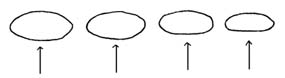
In the non dual thinking
-
Originally posted by maggot:
84000?8 fold path
4 noble truth
0 Buddha
0 Dharma
0 Sangha
Does it mean this?
Interesting view by maggot....
-
the non dual thinking is the wuwei article right .
it simply mean thinking due to causes and conditions , or simple thinking when necessary ?
-
Originally posted by junosukesan1988:
the non dual thinking is the wuwei article right .
it simply mean thinking due to causes and conditions , or simple thinking when necessary ?
No, they are separate article.
It means thinking without linking thoughts of past present and future up with a presumed thinker behind thought. Then thoughts are spontaneous and when arise leaves no trace.
-
so how to meditate?
What to meditate?
WHen?
Place?
Time?
How many repeatation?
-
Originally posted by Zarks:
so how to meditate?
What to meditate?
Sit upright. Relax. Sit in either full lotus (I sit this way but not everyone can) or half lotus position.

Above: Full Lotus

Above: half lotus
Hand folded in the way like the guy above. (Dhyani mudra)
Practice awareness of breathing (Anapanasati)
Whether breathing in or out, be aware of the sensation of the breathing. Whether it is hot or cold, soft or solid, the whole texture of the air is felt. Remain aware of the breathing. If thought arises, do not follow nor suppress the thought, let it be and continue awareness of breathing. Your mind should gradually calm down and clarity will increase.
That is generally the practice for Anapanasati, but do seek qualified and enlightened teachers to guide you on your practice.
WHen?
Anytime. Preferably morning, evening also can.
Place?
Anywhere quiet and comfortable. Best to have a meditation cushion of some sort, would be better.
Time?
For beginners try 30 minutes everyday, you can then gradually lengthen it when you are used to sitting. You will gradually like to sit.
How many repeatation?
\No need to count. Just be aware of the breathing. Awareness is important, and should be cultivated at all times, not only in sitting meditation. Also in daily lives, it is important to maintain mindfulness. What is mindfulness/awareness? See http://www.urbandharma.org/udharma4/mpe13.html
-
84000 means the total teaching of buddha. As to my chinese buddhist dictionay:佛所说之法,å�³å…«ä¸‡å››å�ƒæ³•é—¨ã€‚佛所得之法,å�³æ— 上之真ç�†æ˜¯ã€‚佛所知之法,å�³ä½¿ä¸€çªƒè¯¸æ³•æ˜¯ã€‚
Zazen mediation...
http://www.zenguide.com/zenmedia/books/content.cfm?t=zazen_meditation_guide&chapter=03
-
last part should be 佛所知之法,�是一窃诸法是。typo mistake on the above.