Should Buddhist strive for a successful life ?
-
I could like to ask for perspective:
From a Buddhist point of view, do u think Buddhist should strive for a successful life ?There will definitely be a certain amount struggle in career, in inner emotion, in our relationship, in our family etc.
On the other hand, we can choose not to strive for success and instead choose to live a simple life, with less worries and responsiblities.
Be it successful or unsuccessful, how can one be learn to be content with what one has have ? By knowing your limitation and knowing your capability, to find the one matches your inclination ?
Some people might have to lie, to plot, to trample on others, to get rid of those ahead of them in order to climb up the ladder of success. In the older days, the chinese emperor murdered his kins to for a golden chair or face the danger himself. In the modern society, office politics has became the battlefield for power of struggles.
Now, all this scenarios i have raised, is something real that has happened in life but is ultimately meaningless.
As no matter how much wealth we hoarded, we can never bring it across when we pass on.
-
I think we all should do our best and work hard for the future.... but as Eckhart said, not to make this moment as a means to an end... but to fully be in the moment, be one with what you are doing, instead of chasing after goals.. chasing after the future. In this way we do not worry ourselves with responsibilities and so on. When you do whatever you are doing without attachment, there is more attention/quality in what you are doing... so it is more 'real'.
Detachment is not necessarily being withdrawn or not actively participating on our work, it just means we are paying attention to what we are doing rather than being obsessed with attachments to past, present and future. In this way, we are content and yet at the same time actively working towards whatever we aim to work towards. When we are like this, we will not be attached to any outcome and are content and at peace with whatever the outcome is, and content with what we have or are at now... content with just this moment.
But whatever we must do, we must do with right action and right livelihood, in accordance with 8 fold path... As a Buddhist practitioner we should try to cause minimal harm to others and to pursuit progress in our own career or anything with as little wrong action and so on as possible. We may not be perfect but we try to practice to our abilities.
http://www.jenchen.org.sg/vol6no2a.htm


Volume 6 no 2
Feature
Seize The Day
In the Noble Eight-fold Path[1] taught by Buddha, the Right Action[1] advocates practitioners of Buddhism to pursue all that are virtuous with zeal and a commitment to progress. Such should be the correct attitude whether in our career or in pursuit of the ultimate truth. The following short story may help to illustrate Buddha's teaching more clearly.
Early one morning Buddha and one of his chief disciples, Ananda, set out from Jetavana to seek alms. They came to the city of Sravasti. As they entered the city gate and were walking along a path by the city wall, they saw an aged couple.
Their backs were crooked and they could neither straighten themselves nor move about. They were dressed in rags, appearing unhygienic and well worn with age: frail, toothless, grey hair, hard of hearing and poor eyesight. They lived next to a pile of rubbish by the derelict wall of a sleazy alley. They crouched close to each other, facing a small fire for warmth. With eyes only for each other, they resembled a pair of old swans that cannot bear to part.
The Buddha turned his head and asked Ananda, "Did you see that aged couple by the wall and the warmth of the burning cow dung?"
Ananda replied, "World Honoured One, I see them."
The Buddha continued, "If this old couple had been determined and diligent when they were young and strong, regardless of the nature of their work as long as it is legitimate, perhaps at this age they are already amongst the wealthiest class of people in Sravasti. On the other hand, if they had chosen to renounce their worldly life to learn and cultivate the right path with diligence, perhaps they would have already attained the Arhat [2] by now.
Even if they were not that determined when they were young, but are ambitious and diligent only at a later age and they work with the Right Action, perhaps they are already amongst the second wealthiest class of people in Sravasti. Similarly, if on the other hand, they had chosen to renounce their worldly life to learn and cultivate the right path with diligence, perhaps they would have already attained the Anagami [2].
Worse still, should they only realise about diligence and progress when they are already at their middle age, and only then began to work with the Right Action, perhaps they are already amongst the third wealthiest class of people in Sravasti. If they had chosen to renounce their worldly life to learn and cultivate the right path with diligence, perhaps they would have already attained the Sakrdagamin [2].
However, they did none of the above. Instead, they spent their life times loving and possessing each other, and wasted the most useful time of their lives. That is why today they are helpless and have no way out of their predicament. They live in poor conditions, are penniless and there is nothing that they can do. For them it is a living death, having to face the retribution of their own doing, and nobody took any pity on them. What meaning is there in a life like this?"
In order to encourage people not to fall into the same predicament, the Buddha said, "Ananda, always remember to advise and guide people:
In youth, be determined, diligent, and thrifty and strive to acquire knowledge.
Maintain a mind that is distant and unchained from desire and be focused on building a career during the prime of life.
In middle age, realise a stable career that is based on diligence, zeal, progress and Right Action.
Always use the wealth meaningfully to benefit self and others.
Do not wait till old age and rely on the people's benevolence like the aged swan."
The above incident demonstrates the compassion of the Buddha in caring for sentient beings and encouraging people to be determined in striving for progress, regardless of whether one is concerned with building a career, or one who has renounced the worldly life to learn and cultivate the right path. His only wish was for all sentient beings to be distant from suffering and attain happiness in life.
Notes:
[1] Noble Eight-fold Path:
1. Right Speech
2. Right Action
3. Right Livelihood
4. Right Effort
5. Right Mindfulness
6. Right Concentration
7. Right Views
8. Right Thought
[2] The four stages in Hinayana sanctity:
- 1st stage - srota-apanna
- 2nd stage - sakrdagamin
- 3rd stage - anagami-phala
- 4th stage - arhat, the highest stage


© Copyright 2002.Jen Chen Buddhism Centre
Designed by DCS Solutions Ltd -
In this ERA so different from the chronicle time from the Shakyamuni time, this soceity is very tense and fast, everyone are trying to lead a suscessful life, but think again, a suscessful life is the root of greed.
A person would not be happy of a small sucess, so what is the actual suscessful life a person is persuaing? Would a person revise his self esteam? Would a person be contended? Would a person cherish what is the fruit of his work..In this Era, I find that living in a peaceful and simple life is pretty much harder than striving a sucessful life...as this soceity has many barriers and hinders such lifestyle, for those who are working adult like me, will understand.
But living in such harsh environment makes a person better firm up in his practise, as the exposure to this harsh environment could makes one relise the meaning of life....using the nature of difficulties and resolve things within his abilities and with mindfulness, a person could acheive much more in life.
�管环境多么嘈�,有一颗清�的心,这个世界就是��的。
-
Sometimes in adverse situation have we asked why is that so ?
I am currently in an Sales job , to me its okie ,becos initial times is tough
ppl will despise you ,but end of day is their problem not yours
I agree with what Bodhi hut say , nothing should deter us from progressing in life
in a sales or technical environment
-
The Buddhist Way of Life for Householders
The Buddha considered economic welfare as a requisite for human happiness, but moral and spiritual development for a happy, peaceful and contend life.
A man named Dighajanu once visited the Buddha and said, "Venerable Sir, we are ordinary layman, leading a family life with wife and children. Would the Blessed One teach us some doctrines which will be conducive to our happiness in this world and hereafter?
The Buddha told him that there are four things which are conducive to a man's happiness in this world. First: he should be skilled, efficient, earnest, and energetic in whatever profession he is engaged, and he should know it well (utthana-sampada); second: he should protect his income, which he has thus earned righteously, with the sweat of his brow (arakkha-sampada); third he should have good friends (kalyana-mitta) who are faithful, learned, virtuous, liberal and intelligent, who will help him along the right path away from evil; fourth: he should spend reasonably, in proportion to his income, neither too much nor too little, i.e., he should not hoard wealth avariciously nor should he be extravagant- in other words he should live within his means (sama-jivikata)
Then the Buddha expounds the four virtues conducive to a hayman's happiness hereafter: (1) Saddha: he should have faith and confidence in moral, spiritual and intellectual values; (2) Sila: he should abstain from destroying and harming life, from stealing and cheating, from adultery, from falsehood, and from intoxicating drinks: (3) Caga: he should practise charity, generosity, without attachment and craving for his wealth; (4) Panna: he should develop wisdom which leads to the complete destruction of suffering, to the realisation of Nibbana.
Some times the Buddha even went into details about saving money and spending it, as, for instances, when he told the young man Sigala that he should spend one fourth of his income on his daily expenses, invest half in his business and put aside one fourth for any emergency. Once the Buddha told Anathapindika, the great banker, one of His most devoted lay disciples who found for Him the celebnted Jetavana Monastery at Savatthi, that a layman who leads an ordinary family life has four kinds of happiness. The first happiness is to enjoy economic security or sufficient wealth acquired by just and righteous means (atthi-sukha): the second is spending that wealth liberally on himself, his family, his friends and relatives, and on meritorious deeds (bhoga-sukha): the third to be free from debts (anana-sukha): the fourth happiness is to live a faultless, and a pure life without committing evil in thought, word or deed. (anavajja - sukha)
It must be noted here that first three are economic and material happiness which is 'not worth part' of the spiritual happiness arising out of a faultless and good life.
From the few examples given above, one can see that the Buddha considered economic welfare as a requisite for human happiness, but that he did not recognize progress as real and true if it was only material, devoid of a spiritual and moral foundation. While encouraging material progress, Buddhism always lays great stress on the development of the moral and spiritual character for a happy, peaceful and contented society.
Many people think that to be a good Buddhist one must have absolutely nothing to do with the materialistic life. This is not correct. What the Buddha teaches is that while we can enjoy material comforts without going to extremes, we must also conscientiously develop the spiritual comforts without going to extremes, we must also conscientiously develop the spiritual aspects of our lives. While we can enjoy sensual pleasures as laymen, we should never be unduly attached to them to the extent that they hinder our spiritual progress. Buddhism emphasizes the need for man to follow the Middle Path.
http://www.asiantribune.com/?q=node/9636
-
I believe a Buddhist who renounces the world must first be a successful layman. I am not talking about wealth and fame. I am saying someone becomes monk not because he is escaping from the mandane world but rather he graduated from the worldly life.
Going to the cave and meditate for the rest of your life is easier than remaining in the mandane world and cultivate.in it. Being successful, you can not only help others in physical means with charity but you are showing to the world that one can be successful in a Buddhist way.
Of course it must be warned that the mandane world is ultimately an illusion and if we are too engrossed living in it, we are just wasting our human life. We must not forget to cultivate and meditate, and practice what Buddha taught.
So go ahead and be Successful and still be on your path to Enlightenment.
-
It depends on what you mean by successful. Wealth, career, status etc are obviously depend on merits accumulated in past lifes. The best successful example is probably Yuan LiaoFan as told in LiaoFan's lesson (了凡四è®ï¼‰ã€‚
Another well-known successful person is 维摩诘居士, his standard is much higher compared to Yuan LiaoFan though:
梵文 Vimaiakirti。音译:维摩罗诘,毗摩罗诘,略称维摩或维摩诘。æ„�译为净å��ã€�æ— åž¢ç§°è¯˜,æ„�æ€�是以æ´�净,没有染污而称的人。他是一个在家的大乘佛教的居士,是著å��的在家è�©è�¨ã€‚æ�®ã€Šç»´æ‘©è¯˜ç»�》 讲,维摩诘是å�¤å�°åº¦æ¯—èˆ�离地方的一个富ç¿�,家有万贯,奴俾æˆ�群。但是,他勤于攻读,虔诚修行,能够处相而ä¸�ä½�相,对境而ä¸�生境,得圣果æˆ�å°±,被称为è�©è�¨ã€‚
有一次,他称病在家,惊动了佛陀。佛陀特派文殊师利è�©è�¨ç‰åŽ»æŽ¢ç—…。佛知é�“维摩诘è�©è�¨å�ªæ˜¯è¯ˆç—…,所以派去了被誉为智慧第一的文殊è�©è�¨ã€‚文殊è§�到维摩诘å�Ž,两ä½�è�©è�¨äº’斗机锋,å��å¤�论说佛法,义ç�†æ·±å¥¥,妙è¯è¿žç� ,使å�ŒåŽ»æŽ¢è®¿çš„è�©è�¨,罗汉们都å�¬å‘†äº†ã€‚一场论战å�Ž,文殊è�©è�¨å¯¹ç»´æ‘©è¯˜å€�åŠ æŽ¨å´‡,人们对维摩诘è�©è�¨ä¹Ÿæ›´åŠ 崇敬了 -
Having good karma bring to this life is a bonus, but a person should be realistic and continue such good deeds and practise in this current life, one bad thing done could just diminish all the good things done previously..so we must work hard for suscess in this life..
-
行善 is not so easy, quoted from Liofan's lessons (source from www.dfg.cn):
更精确地æ�¥æŽ¨è®ºè¡Œå–„,那么善行还有真有å�‡ï¼Œæœ‰ç«¯æœ‰æ›²ï¼Œæœ‰é˜´æœ‰é˜³ï¼Œæœ‰æ˜¯æœ‰é�žï¼Œæœ‰å��有æ£ï¼Œæœ‰å�Šæœ‰æ»¡ï¼Œæœ‰å¤§æœ‰å°�,有难有易。需è¦�ç²¾ç ”æ˜Žè¾©ï¼Œæ‰�能å�šåˆ°çœŸå®žåœ°è¡Œå–„积德,自利利人。
什么å�«çœŸå�‡å‘¢?从å‰�æœ‰å‡ ä¸ªå„’ç”Ÿé—®ä¸å³°å’Œå°šï¼š"ä½›æ•™è¯´çš„ï¼Œå› æžœæŠ¥åº”å¦‚å½±éš�形。å�¯æ˜¯æˆ‘们看到的,有人行善å�å™ä¸�兴,有人作æ�¶è€Œå®¶é—¨éš†ç››ã€‚ä½›è¯´çš„å› æžœé�“ç�†æ˜¯æ²¡æœ‰ 办法è¯�实的。ä¸å³°è¯´ï¼š"世俗的人情ä¸�曾洗涤掉,看问题就难以准确,以致认善为æ�¶ï¼Œè®¤æ�¶ä¸ºå–„ã€‚æœ‰äº†è¿™æ ·çš„é”™è¯¯çœ‹æ³•ï¼Œè¿˜ä¸�责怪自己的是é�žé¢ 倒,å��è€Œæ€¨å› æžœæŠ¥åº” ä¸ºæ— ç¨½ã€‚"儒生们å�ˆé—®ï¼›"å–„æ�¶çš„问题怎么会看æˆ�相å��å‘¢?"ä¸å³°å�«ä»–们å�„谈善æ�¶çš„区别。有人说:"贪财妄å�–是æ�¶ï¼Œå»‰æ´�æ“�守是善。"ä¸å³°è¯´ï¼š"未必如æ¤ã€‚" å�„人å�„说出对于善æ�¶çš„看法,ä¸å³°éƒ½è¯´ä¸�ä¸€å®šæ˜¯è¿™æ ·ã€‚å„’ç”Ÿä»¬å› è¯·é—®é‚£æ˜¯ä»€ä¹ˆé�“ç�†å‘¢?ä¸å³°è¯´ï¼š"凡是有益于人的是善,å�ªåˆ©å·±çš„是æ�¶ã€‚有益于人,就是骂人打人都 是善的。利人的就是公,公就是真;利己的就是ç§�,ç§�就是å�‡ã€‚还有,从全心出å�‘的是真,表é�¢ä¸Šè£…å�šè¡Œå–„å½¢å¼�的是å�‡ã€‚è¿™é—®é¢˜ï¼Œä½ ä»¬éƒ½åº”è¯¥å…¨é�¢è€ƒè™‘çš„å•Šï¼�"
什么å�«å�šç«¯ã€�曲呢?凡是想å�šå¥½äº‹ï¼Œå†³ä¸�å�¯è¢«è€³ç›®æ‰€è¿·ï¼Œéš�世俗è§�解,应从内心éš�微处,默默审察,是ä¸�是纯粹从济世利人之心出å�‘ã€‚å¦‚æžœè¿™æ ·ï¼Œé‚£å°±æ˜¯ç«¯ã€‚å�‡ä½¿æœ‰ 一毫沽å��钓誉的媚世之心,那就是曲。完全是爱人之心的,就是端,行善而有一毫牢骚愤世之心,就是曲。纯是敬人之心的就是端,有一毫玩世ä¸�æ�,侮弄世人之心 的就是曲。这些都应该详细分辩的。
什么å�«å�šé˜´ã€�阳呢?凡å�šäº†ä¸€ä»¶å–„事,为人们所知é�“的,å�«å�šé˜³å–„ï¼›å�šäº†å–„事别人ä¸�知é�“的;这å�«å�šé˜´å¾·ã€‚阴德能转å�˜è‡ªå·±çš„业力,能获得æ„�æ–™ä¸�到的幸ç¦�。阳善å�¯ 得善报,并享å�—世间的å��誉,被人称誉,美å��远扬也是ç¦�,但必须å��符其实;若是享大å��,而实际上å�´æ²¡æœ‰çœŸå®žå¾·è¡Œçš„,就往往会得奇ç�¾å¤§ç¥¸ã€‚相å��的,没有过咎的 人而横被æ�¶å��的,他的å�å™å�´å¾€å¾€ä¼šå�‘达起æ�¥ï¼Œæ‰€ä»¥é˜´é˜³ä¹‹é—´ï¼Œæ˜¯å¾ˆå¾®å¦™çš„å•Š!
什么å�«å�šæ˜¯é�ž?é²�国的法率规定:é²�人有从诸侯那里替别人赎出姬妄,都得å�—政府的èµ�èµ�。å�è´¡å› ä¸ºè‡ªå·±å¯Œæœ‰ï¼ŒèµŽäº†äººè€Œä¸�å�—èµ�èµ�。å”å�å�¬åˆ°è¿™ä»¶äº‹ï¼Œå°±æž�ä¸�高兴地 说:"å�è´¡å�šé”™äº†äº‹å•Šï¼�è¦�知é�“圣人å�šçš„事,是å�¯ä»¥ç§»é£Žæ˜“俗的;他的教导是å�¯ä»¥ä¸ºäººä½œæ¦œæ ·ï¼ŒæŽ¨è¡ŒäºŽç™¾å§“的,ä¸�å�ªæ˜¯æ±‚得自己一时的快æ„�。如今é²�国人富的少,穷 的多,如果以为å�—政府的èµ�èµ�为ä¸�廉,为ä¸�清高,怎么还会有人肯替别人相赎呢?从今以å�Žï¼Œä¸�会å†�有人愿æ„�å�‘诸侯那里替别人赎人了。"
有人失足è�½æ°´ï¼Œå�路救了他的命。这人牵了一å�ªç‰›è°¢å�路,å�路把牛接å�—下æ�¥ã€‚å”å�å�¬äº†ï¼Œå¾ˆé«˜å…´åœ°è¯´ï¼Œ"å�è·¯å�šå¾—对!从今以å�Žï¼Œå�„国就会有许多能够勇于救难的人了!"
照世俗的眼光æ�¥çœ‹ï¼Œå�è´¡ä¸�接å�—èµ�èµ�是好的表现,å�è·¯å�—了别人的牛是ä¸�好的。å�¯æ˜¯å”å�å�´èµžç¾Žå�路而斥责å�贡。å�¯çŸ¥æ‰€è¡Œå–„事的功过得失,ä¸�应光从事情的本身æ�¥ 看,还得看它的影å“�å�ŠäºŽå½“时和以å�Žçš„,是利还是害,æ�¥åŠ 以区分和定论的。现行虽善,而其æµ�风足以害入,那是似善而实é�žå–„。现在所å�šçš„虽似ä¸�善,而其æµ�风足 以济人,则其实å�´æ˜¯å–„的。但这是从是ã€�é�žä¸€ç‚¹è€Œè®ºï¼›å…¶å®ƒå¦‚é�žä¹‰ä¹‹ä¹‰ï¼Œé�žç¤¼ä¹‹ç¤¼ï¼Œé�žä¿¡ä¹‹ä¿¡ï¼Œé�žæ…ˆä¹‹æ…ˆï¼Œéƒ½æ˜¯åº”该考虑决择的。
什么å�«å�šå��ã€�æ£å‘¢?从å‰�有一ä½�å�•æ–‡æ‡¿å…¬ï¼Œä»–辞了宰相的è�Œä½�,告è€�返乡,人们都é�žå¸¸å°Šæ•¬ä»–。有一次,有个乡下人å�ƒé†‰äº†ï¼Œå½“ç�€ä»–çš„é�¢ï¼ŒæŠŠä»–ç—›éª‚ä¸€é¡¿ï¼Œæ‡¿å…¬æ— åŠ¨ 于衷,é�¢ä¸�改色,对他的仆人说:"å�ƒé†‰äº†é…’的人,ä¸�必与他计较。"把门一关,就é�¿å¼€äº†ã€‚过了一年以å�Žï¼Œè¿™ä¸ªä¹¡ä¸‹äººçŠ¯äº†æ»åˆ‘,关进监狱。å�•å…¬æ‰�懊梅地说:" å�‡ä½¿æˆ‘当时ç¨�与计较,把他é€�进衙门惩戒一番,是å�¯ä»¥å�šåˆ°å°�惩而大戒,就ä¸�会害他犯æ»ç½ªäº†ã€‚我当时å�ªé¡¾è‡ªå·±å˜å¿ƒäºŽåŽšé�“,想ä¸�到å�´å…»æˆ�了他的罪æ�¶ä¹ 性,竞到了 è¿™æ ·çš„åœ°æ¥ã€‚"这是以善心而å�šäº†å��事的一个例å�。
还有以æ�¶å¿ƒè€Œå�šå–„事的,如æŸ�一家大富户,有一次逢到è�’年,穷人们白昼公开抢他家的米。他å�‘政府去告状,政府ä¸�肯å�—ç�†è¿™ä»¶æ¡ˆå�ã€‚ç©·äººä»¬å› æ¤æ›´åŠ åš£å¼ ã€‚ä»–å°±ç§� 自执行,把抢米的拿办困辱,人心æ‰�安定下æ�¥ï¼›ä¸�ç„¶ï¼Œå‡ ä¹Žé…¿æˆ�大乱了。善者为æ£ï¼Œæ�¶è€…为å��,这是大家都知é�“的,以善心而行æ�¶äº‹ï¼Œè¿™æ˜¯æ£ä¸ä¹‹å��,以æ�¶å¿ƒè€Œè¡Œå–„ 事的,是å��ä¸ä¹‹æ£ï¼Œè¿™æ˜¯äººæ‰€ä¸�çŸ¥çš„ã€‚å› æ¤ï¼Œå�šä¸€ä»¶äº‹ï¼Œåº”把动机与效果结å�ˆèµ·æ�¥çœ‹ã€‚
什么å�«å�šå�Šã€�满呢?从å‰�有一个女å�æ�¥åˆ°ä½›å¯ºï¼Œæƒ³è¦�布施供养,å�¯æ˜¯èº«è¾¹å�ªæœ‰äºŒæ–‡é’±ï¼Œå°±æŠŠè¿™äºŒæ–‡é’±æ��献了,寺里的方丈è€�和尚亲自替她仟悔。å�Žæ�¥è¿™ä¸ªå¥³å�选进王 宫,享å�—å¯Œè´µï¼Œå¸¦äº†å‡ å�ƒä¸¤çš„银å�,å�ˆåˆ°è¿™æ‰€ä½›å¯ºæ�¥å¸ƒæ–½ã€‚è€�和尚å�«ä»–的徒弟替她"回å�‘"就算了。这女å�就问è€�和尚,我当åˆ�布施二文钱,è€�师父亲自替我仟悔, 今天我布施数å�ƒä¸¤çš„银å�,è€�师父倒ä¸�替我仟悔,这是什么缘故呢?è€�和尚说:"以å‰�的二文钱;钱虽少而布施心很真,ä¸�是è€�僧亲自代为仟悔,ä¸�足以报德;今天 钱虽多,而布施之心,ä¸�如å‰�日的æ�³åˆ‡ï¼Œæ‰€ä»¥æˆ‘派别人代为å¿�悔就å�¯ä»¥äº†ã€‚"这是å�ƒé‡‘为å�Šï¼Œè€ŒäºŒæ–‡ä¸ºæ»¡çš„é�“ç�†ã€‚
æ±‰é’Ÿç¦»ä¼ æŽˆä¸¹æ³•ç»™å�•ç¥–。这丹法能点é“�æˆ�金,å�¯ä»¥æµŽä¸–。å�•ç¥–é—®é�“:"以å�Žè¿˜ä¼šè¿˜åŽŸå�˜æˆ�é“�å�—?"钟离说:"五百年å�Žï¼Œå½“æ�¢å¤�本质。"å�•ç¥–说:"这就害了五百年 以å�Žçš„人了。我ä¸�æ„¿å¦è¿™æ ·çš„法术。"钟离心ä¸æš—喜,说:"修仙è¦�积三å�ƒåŠŸè¡Œï¼Œä½ 这一å�¥è¯�,三å�ƒçš„功行已ç»�圆满了。"
è¿˜æœ‰è¡Œå–„è€Œå¿ƒæ— æ‰€æœ‰ï¼Œä¸�è§�有人ã€�我å�Šæ‰€æ–½ä¹‹ç‰©çš„,这å�«"三轮体空",也å�«ä¸€å¿ƒæ¸…å‡€ï¼Œèƒ½è¿™æ ·è¡Œå–„çš„ï¼Œå°±æ˜¯æ‰€æ–½çš„å�ªæœ‰ä¸€æ–—米,也ç§�æ— è¾¹çš„ç¦�,一文钱也å�¯ä»¥æ¶ˆå�ƒåŠ«ä¹‹ç½ªï¼Œæ‰€æœ‰å–„行都是圆满。倘使心ç�€äºŽå–„,斤斤计较得失,虽然布施了万两黄金,也仅æ¢äºŽå�Šå–„罢了。
什么å�«å�šå¤§ã€�å°�å‘¢?从å‰�å�«ä»²è¾¾å�šå®˜æ—¶ï¼Œè¢«æ‘„引到冥å�¸ã€‚冥å�¸å‘½ä¸‹å±žå®˜å��检呈有关他的善æ�¶è®°å½•ã€‚但è§�æ�¶å½•ç›ˆåºï¼Œè€Œä»–的善录,仅如ç·å�大å°�罢了。å�–秤æ�¥ç§¤ï¼Œé‚£ç›ˆ åºçš„æ�¶å½•å��而比ç·è½»ï¼Œé�¢åƒ�ç·å�大å°�的一æ�Ÿå–„录å��而é‡�。仲达说:"我的年龄还ä¸�到四å��,哪有这么多的过æ�¶å‘¢?"冥官说:"一念ä¸�æ£å�³æ˜¯æ�¶ï¼Œä¸�一定è¦�å�šã€‚"å› é—®å–„å½•è½´é‡Œæ‰€è®°çš„æ˜¯ä»€ä¹ˆã€‚å†¥å®˜è¯´ï¼š"æœ�åºæ›¾è®¡åˆ’兴建大工程,修三山石桥(这在å°�建时代è¦�拉民工去æœ�役的)ï¼Œä½ ä¸Šç–�拦阻,这轴里就是ç–�稿。"仲达说:"我虽 è°�阻,但是æœ�åºæ²¡æœ‰é‡‡çº³ï¼ŒäºŽäº‹å®žä¸Šæ— æ‰€è¡¥æ•‘ï¼Œæˆ‘èƒ½æœ‰è¿™æ ·çš„å–„åŠŸå�—?"冥官说:"æœ�å»·è™½æ²¡æœ‰é‡‡çº³ï¼Œä½†ä½ çš„å˜å¿ƒæ˜¯ä¸ºä¸‡æ°‘ç�€æƒ³çš„。倘使æœ�廷接å�—äº†ï¼Œé‚£ä½ çš„å–„åŠ¨å°± è¦�更大了。"所以凡是å˜å¿ƒä¸ºå¤©ä¸‹å›½å®¶ç�€æƒ³çš„,那善虽å°�而大,倘使为了自己一身打算的,那善虽多也是少了。
什么å�«å�šéš¾ã€�易呢?先儒说,克已须从难克制的地方去下手。å”å�论为ä»�,也说,应从难处去å�šã€‚在æ¤å¿…须象江西舒ç¿�é‚£æ ·èˆ�了二年仅得的工资代别人å�¿è¿˜äº†å®˜é“¶ï¼Œ ä¿�全了一家夫妇å…�于离散。å�ˆå¦‚é‚¯éƒ¸å¼ ç¿�é‚£æ ·ï¼Œèˆ�了å��年所积蓄的钱,代别人还清赎银,救活人家的妻å�,这都是所谓难èˆ�处能èˆ�。å�ˆå¦‚镇江é�³ç¿�è€�æ�¥æ— å�,他的妻 å�给他买了一个少女作妾。他ä¸�å¿�以邻家的幼女为妾,而é€�她还家,这是难å¿�能å¿�çš„äº‹ï¼Žå› æ¤ï¼Œä»–们所获得的ç¦�报也是很厚的。è§�是有钱有势的人,如果他è¦�立功积 德,å�´æ˜¯å¾ˆå®¹æ˜“的。易而ä¸�å�šï¼Œè¿™æ˜¯è‡ªæš´è‡ªå¼ƒï¼›è´«ç©·çš„人å�šç¦�很难,难而能å�šï¼Œè¿™æ‰�算是难能å�¯è´µã€‚
-
Originally posted by Isis:
I could like to ask for perspective:
Some people might have to lie, to plot, to trample on others, to get rid of those ahead of them in order to climb up the ladder of success. In the older days, the chinese emperor murdered his kins to for a golden chair or face the danger himself. In the modern society, office politics has became the battlefield for power of struggles.
After some contemplation, this is my two cents:
For those who have done harm to others will live their life without much inner peace and in constant fear.
As a Buddhist, we should avoid doing evil, do good and purify the mind. Even if we face dire situation, seek refuge in the triple gems and practise the Dharma diligently, the wise teaching of the buddha will lead us all to self-liberation.
Amituofo
/\
-
This is one question that had bothered me for sometime. In the process of doing what I do, I often encountered people, techniques, methods, process, etc that are unethical, dishonest and selfish in nature. And some of the top people in my field are all that and they preach all that to the juniors.
-
Originally posted by airgrinder:
This is one question that had bothered me for sometime. In the process of doing what I do, I often encountered people, techniques, methods, process, etc that are unethical, dishonest and selfish in nature. And some of the top people in my field are all that and they preach all that to the juniors.
Wow, welcome to the real world. This is a real test for you. I wouldn't say what you should do and what you shouldn't do. It seems like if you do not do what he taught, you will be left behind. On the other hand, if you practice what he taught, you will suffer guilty conscious. Just remember everything has a cause and effect, that;'s all.
-
Originally posted by airgrinder:
This is one question that had bothered me for sometime. In the process of doing what I do, I often encountered people, techniques, methods, process, etc that are unethical, dishonest and selfish in nature. And some of the top people in my field are all that and they preach all that to the juniors.
The hightlight in blue: I got a hunch that the flaws is largely magnified.
Sometime, It is better to be an elephant who live in solitude than to be in the world of the fool.
-
i don't think buddhist should strive ,they should posses a let go attitude.Since everything is empty,but to make life meaningful ,they do what they love to.They do buddhism practice for joy.In the other concept ,they should work hard ,coz there is concept mentioned "精进". What i understand that,is u do thing
not driven by desire ,but joy.
-
努力修修自己的心。。观看自己的心。。。�从心以新的心念观�对人生。。��用心宣扬佛的教育。。自己�能修。。怎么�能修别人。。
-
shit ,just now what i key in dissappear ,i have u rekey in it .Seems that u r refering to å¿ƒå¦ by 王阳明,but i know u r not,å¿ƒå¦ is a mixture of all three religions ,if u take confucius as one too.
-
Originally posted by Bodhi hut:
努力修修自己的心。。观看自己的心。。。�从心以新的心念观�对人生。。��用心宣扬佛的教育。。自己�能修。。怎么�能修别人。。
Actually we should �觉��心
Because our thoughts and mind are very impermanent... we easily change our mindset, we can easily get influenced, change descisions, change our thinking and get affected by external world.
But if we �觉 and constantly watch over our mind and know its every moment, know whether its good or bad, aware of every moment of thought... wisdom can arise. If we are not aware we can easily get tricked by our mind... our mind can bring us to heaven and hell, and we can get tricked by it if we don't watch over it.
觉 = 佛
-
Originally posted by An Eternal Now:
Actually we should �觉��心
Because our thoughts and mind are very impermanent... we easily change our mindset, we can easily get influenced, change descisions, change our thinking and get affected by external world.
But if we �觉 and constantly watch over our mind and know its every moment, know whether its good or bad, aware of every moment of thought... wisdom can arise. If we are not aware we can easily get tricked by our mind... our mind can bring us to heaven and hell, and we can get tricked by it if we don't watch over it.
觉 = 佛
i don't whether u heard this before, 万法唯识,一切唯心。if our mindset is not stable ,we should keep it stable .that's a good result of practising buddhism.
-
Originally posted by rokkie:
i don't whether u heard this before, 万法唯识,一切唯心。if our mindset is not stable ,we should keep it stable .that's a good result of practising buddhism.
The only way we can keep our mind "stable" is by watching our mind, not being tricked by it.
My local dharma teacher wrote this article about 6 years ago --
http://www.humanbliss.com.sg/blissful_articledetails.asp?articleNo=180
ä¿� æŒ� 觉 ç…§ 动 ä¸ ä¿® 自 è’™ æ�© 师 圣 å¼€ 上 人 ä¼ æŽˆ 法 è¦� 之 å�Žï¼Œ 有 空 æ—¶ å°± 打 å�� ä¿® 法, 没 空 æ—¶ 一 è¿ž æ•° 天 或 是 æ•° 月 也 éš¾ å¾— 打 å�� 一 次。 如 æ¤ æ– æ– ç» ç» ä¿® 法 大 约 å�� 多 年, 大 部 分 ä¿® 法 æ—¶ é—´ 都 在 动 ä¸ã€� å¿™ ä¸ã€‚ 最 è¿‘ 两 年, å¼€ 始 为 自 å·± 固 定 é�™ å�� ä¿® 法 çš„ æ—¶ 间, 但 是 å¾€ å¾€ 事 与 æ„¿ è¿�, æ¯� 当 è¦� å¼€ 始 é�™ å�� 时, 常 有 电 è¯� 或 是 æ›´ é‡� è¦� çš„ 事 ç‰ ç�€ 处 ç�†ï¼Œ 总 是 å¿™ 完 一 件 事 å�ˆ 一 件 事, æ— æ³• 固 定 一 个 大 家 都 未 å…¥ ç�¡ çš„ æ—¶ é—´ æ�¥ ä¿® 法, å�ª 好 选 æ‹© å�ˆ 夜 å�� 二 点 å�� 到 一 点, 结 æžœ ä¿® 法 之 å�Žï¼Œ ç²¾ 神 奕 奕, éš¾ 于 å…¥ çœ ï¼Œ å°± å�š å…¶ ä»– 阅 读 或 æ•´ ç�† æ–‡ 件 ç‰ äº‹ 务, 结 æžœ 一 æ‹– å°± 到 å�ˆ 夜 三 æ—¶ æ‰� å…¥ ç�¡ï¼Œ 次 æ—¥ å…« æ—¶ å�ˆ è¦� èµ· 身 上 ç�, è¿ž ç» ä¸‹ æ�¥ï¼Œ æ•´ 个 ç�¡ çœ çš„ 生 ç�† æ—¶ é—´ 大 å�— å¹² 扰, 有 æ�Ÿ 身 体 å�¥ 康, ç»� 过 一 番 å�� æ€�, 决 定 采 用 éš� 缘 é�™ å�� ä¿® 法( 有 æ—¶ é—´ å°± å��, 没 æ—¶ é—´ å°± ä¸� å��)。 白 天 å°± å¿™ 于 丈 夫 çš„ 事 业, æ—¥ ç�† 万 机, å�´ 是“ æŒ� 觉 ä¸� 失”, æ—¶ æ—¶“ 与 ä½› å�Œ 在” 如 å�Œ 呼 å�¸ 一 æ ·ï¼Œ è¦� æ´» ç�€ å°± ä¸� 能 离 å¼€ 空 气, è¦� 解 脱 自 在, å…‰ 明 觉 照, å°± ä¸� 能 离 å¼€“ 觉”。
动 ä¸ ä¿® 法, 是 在 å¿™ 碌 çš„ 人ã€� 事ã€� 物 ä¸ ä¿®“ 与 觉 å�Œ 在”, å› ä¸º 有 觉 而 知 é�““ 心” é�¢ 对 外 缘ã€� 外 境 æ—¶ 所 èµ· çš„ 生 ç� 相, å› ä¸º 觉 知 而 能 够 当 下 å�³ èˆ�, ä¿� æŒ� 觉 ç…§ å�š 事, 处 ç�† 而 ä¸� 生 心 动 念。 æ¸� æ¸� 地 体 会 到 心 ä¸ æ—¶ æ—¶ 有“ 觉”, å°± 如 一 é�¢ ç¨� å¾® å¹² 净 明 亮 çš„ é•œ å�, 物 æ�¥ å�³ 现, 物 去 å�³ æ— ï¼Œ ä¸� ç•™ ç—• 迹, å› è€Œ ä¸� 论 é�‡ 到 顺 境 或 逆 境, 好 事 或 是 å�� 事, 好 心 人 或 å�� 心 人 都 是 自 然 对 待, 内 心 ä¸� 为 所 动, éš� 缘 应 机 从 容 地 处 ç�†ï¼Œ 自 然 地 内 心 å°± 安 定 了, 当 下 三 心 å›› 相 å�³ 了, 心 ä¸ æ²¡ 有“ 过 去 çš„ 执 ç�€”,“ 现 在 çš„ 挂 ç¢�”, 对“ 未 æ�¥ çš„ æ‹… 心”。 æ—¢ 然 三 ç§� 心 都 ä¸� 起, å›› 相 é¡¿ 除, ä¸� èµ· 作 用。 å› ä¸º 有“ 心” 对 事 相 å°± 有“ 执 ç�€”, æ•… 生 挂 ç¢� å’Œ 烦 æ�¼ï¼› å› ä¸º 有 了 挂 ç¢�, 于 是 一 个 心 接 ç�€ 一 个 心, æ¤ èµ· å½¼ è�½ï¼Œ æ¤ è�½ å½¼ 起,“ 心” ä¸� å�œ 地 é€ ä½œï¼Œ 对 人 相ã€� 我 相ã€� ä¼— 生 相ã€� æ—¶ é—´ 相 执 ç�€ ä¸� èˆ� ä¸� æ– å�‘ 外 攀 缘, æ—§ 业 未 了, å�ˆ é€ æ–° 殃, è½® 回 ä¸� æ�¯ï¼Œ 而 有“ å… é�“ è½® 回” 之“ 心 å�—”, 在 一 æ°” ä¸� æ�¥ 时, 内 心 如 æžœ 还 未 能 离 å¼€ è¿™ æ · çš„ è½® 转 æ–¹ å¼�, 接 ç�€ çš„ å°± 是 å… é�“ è½® 回 çš„ 生 æ» ä¸� æ�¯ çš„ 业 命 之 惑 业 苦。 如 æžœ è¦� 解 脱 生 æ» ä¸� æ�¯ çš„ å… é�“ è½® 回 之 苦, å°± è¦� æ—¶ æ—¶ ä¿� æŒ� ä¸� 生 ä¸� ç�, 心 ä¸� 妄 动, éš� 缘 生 活, ä¸� é€ æ�¶ 业, ä¾�“ 觉” 生 智 慧, 奉 è¡Œ ä¼— 善, ä¸� èµ· 执 ç�€ï¼Œ 在 事 相 上 ä¸� 生 分 别 想, æ¸� æ¸� 地 å°± 能 体 会 到 觉 ç…§ 五 è•´ 皆 空, 度 一 切 苦 厄, 色 å�³ 是 空, 空 å�³ 是 色, 色 ä¸� 异 空, 空 ä¸� 异 色, å�— 想 è¡Œ 识, 亦 å¤� 如 是, å°± è¿™ æ · ä¿� æŒ� ä½� è¿™ æ · çš„ 心 境, 积 æž� 地 é�¢ 对 人 生, ç²¾ è¿› 于 ä½ çš„ 事 业 ä¸ï¼Œ 家 业 ä¸ï¼Œ 生 æ´» ä¸ï¼Œ“ 心” 与“ 境” 自 然 æ¸� æ¸� 地 寂 ç� 了。 è¿™ 是 真 æ£ çš„ 净 化 人 心。
自 从 在 心 境 上 产 生 了 è¿™ ç§� 转 å�˜ 之 å�Žï¼Œ 体 会 到“ 心 生 万 法 生”,“ 心 ç� 万 法 ç�”,“ è‹¥ æ— ä¸€ 切 心, 何 æ�¥ 一 切 法”, æ›´ åŠ æ·± æ·± 地 æ„Ÿ å�— 到 师 父 圣 å¼€ 上 人 çš„ 大 悲 愿, ä¸� å¿� è§� ä¼— 生 生 æ» è½® 回 苦, ä¼ æ³• ç»™ 弟 å� 们, 希 望 弟 å� 们 æ—© æ—¥“ 明 心 è§� 性” å¾— 解 脱, 与 生 æ´» ä¸ æ—¶ æ—¶“ 净 化 自 心”, 处 处“ 觉 ç…§ 自 在”, 利 å·± 利 人, 实 è·µ è�© è�¨ çš„ æ…ˆ 悲 心, 智 æ…§ 行, ç¦� æ…§ å�Œ 修, 接 引 æ›´ 多 有 å–„ æ ¹ ä½› 缘 çš„ 世 人 如 法 ä¿® æŒ�, 创 é€ å¹¸ ç¦� çš„ 人 生, å…± 建 幸 ç¦� çš„ 人 é—´ 净 土。醒 群
-
yes , keep stable out of unstable
-
http://www.humanbliss.com.sg/blissful_articledetails.asp?articleNo=89
è¿™ 个“ 知 é�“” å°± 是 觉 ç…§
有 人 说 我 çš„ 心 清 净 了, 是 自 净 å…¶ æ„�, è¿™ æ · 讲 是 ä¸� 对 的, å› ä¸º ä½ è¿˜ 有 一 个 心, 怎 么 能 解 脱 呢? è¦� 把 心 æ„� 都 清 净 了 æ‰� 能 解 脱。 但 è‹¥ 是 憨 憨 å‚» å‚» 也 ä¸� 对, è¦� æ—¶ 刻 都 知 é�“ 自 å·± çš„ 心 æ„� 是 清 净 的, èµ· 念 头 自 å·± 知 é�“, ä¸� èµ· 念 头 自 å·± 也 知 é�“, è¿™ 个“ 知 é�“” å°± 是 觉 照。
� 圣 开 法 师
-
http://www.humanbliss.com.sg/blissful_articledetails.asp?articleNo=99 观 心 å› ä¸º 大 家 都 有 心, 我 们 最 好 天 天 看 æ— å¿ƒï¼Œ å�« å�šâ€œ 观 心â€�, 心 有 污 染 çš„ æ—¶ 候, å°± 用 ä½› çš„ 甘 露æ�¥ 把 心 æ´— å¹² 净, 我 们 è¿™ 个 心 如 æžœ å¹² 净 了, é‚£ å°± 能 够 è·Ÿ ä½› è�© è�¨ çš„ 心 一 æ ·ï¼› å�‡ 如 我 们 è¿™ 个心 能 够 净 了, é‚£ 么 è¦� å¦ ä½› æˆ� ä½› 也 å°± 很 å¿« 了。 â—� 圣 å¼€ 法 师
-
Originally posted by rokkie:
i don't think buddhist should strive ,they should posses a let go attitude.Since everything is empty,but to make life meaningful ,they do what they love to.They do buddhism practice for joy.In the other concept ,they should work hard ,coz there is concept mentioned "精进". What i understand that,is u do thing
not driven by desire ,but joy.
This is just my opinion. Putting the right effort is important. We have many responsibilites to the society, to our family, to friends and by putting in our best effot is also a form of practise for cultivation for perfection of vigour. We put in our best effort into a task but don't be attached to the outcome.
It is important not to have too much greed. Knowing your own body and mind, whether can you take up the extra responsibilies. Though i always like to challenge myself against my own limitation as i like the growing phrases but there is always a need for moderation at times, to prevent one from overburning.
Yes I think 观 心 is beneficial in our daily life.
As Eckhart Tolle mentions in his book " the new earth" that people who don't meditate, have many repetitive thought running in their mind and most of time, we get lose in the content of thought. Thus not living in the moment and wasting alot of energy.
-
AEN.
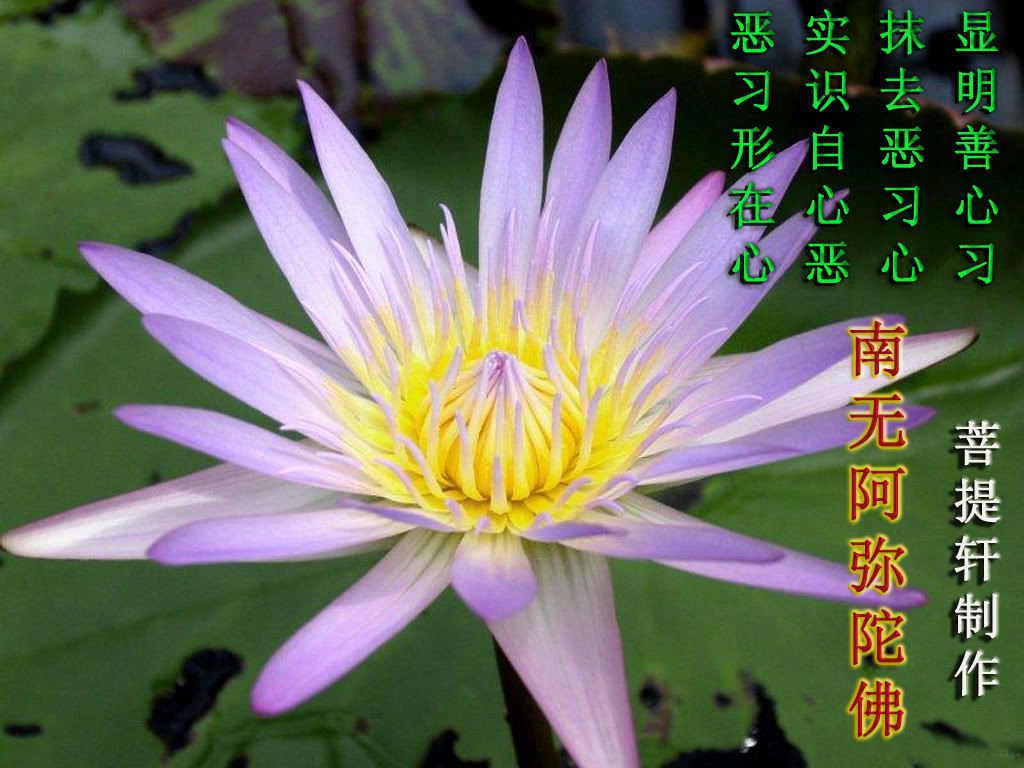
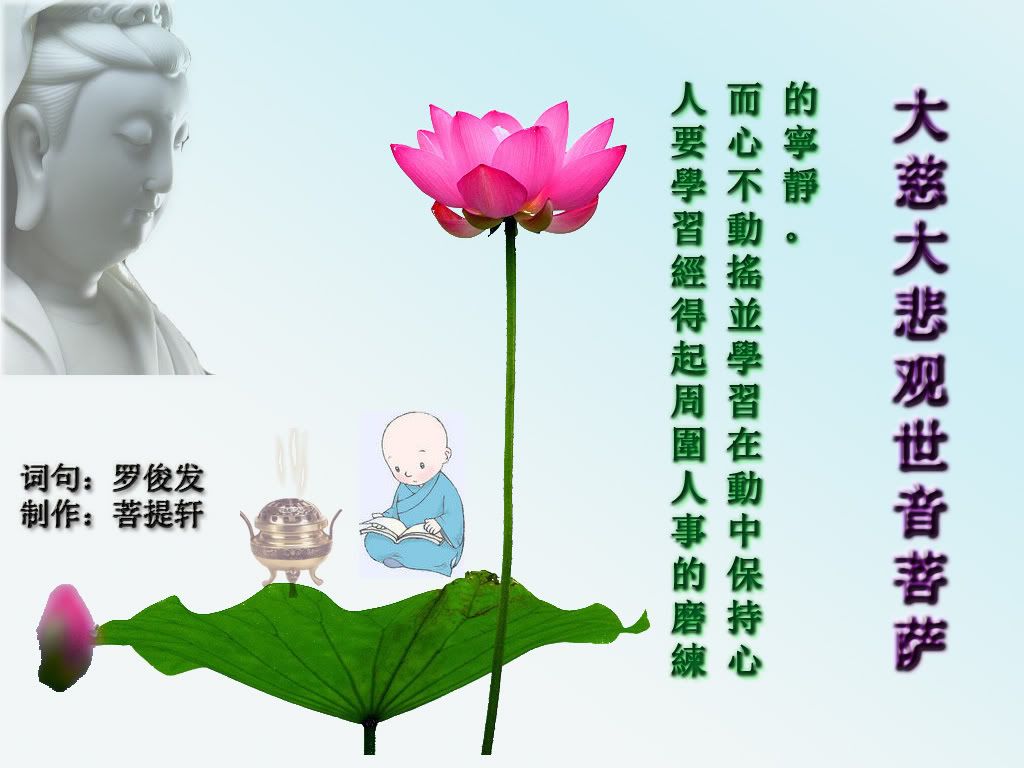
我说的是观心。。而修心。。。
ä½ è¯´çš„è§‰æ˜¯å¯¹çš„ã€‚ã€‚ä½†ä¸�是 觉=ä½›
觉�以说开悟。。。�到佛的境界,�些开悟。。。
但我们还是è¦�些修ç�†æˆ‘们的æ€�想,修å¤�æ�¶ä¹ ,在多多观心。。那æ‰�有æ£ç¡®çš„人生观,æ‰�有能力帮助需è¦�的人。。。
阿弥陀佛。。
-
Aen 好象说的是,
身是è�©æ��æ ‘ï¼Œå¿ƒæ˜¯æ˜Žå‡€å�°ã€‚
时时勤拂æ‹ï¼ŒèŽ«ä½¿æƒ¹å°˜åŸƒ