Buddhism under seige from within
-
Buddhism under siege from within
by Bhikkhu K. Tanchangya, The Buddhist Channel, July 17,
Kandy, Sri Lanka --The latest attempt to proselytize the Buddhist world comes in the form of a book entitled ‘Peoples of the Buddhist World: A Christian Prayer Guide’ by Hattaway Paul. Anthropologically speaking, the book deserves credit for its excellent well-researched materials as it deals with 238 distinct people-group profiles, photographs and maps of the Buddhist world – something that Buddhists are capable of producing, but are lazy to do so.
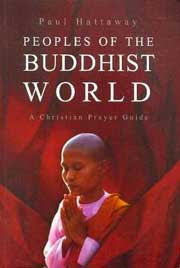
Make no mistake: this most conspicuous book is enterprisingly well done. But it has a hidden agenda: This book serves as a layout and roadmap of Christian evangelical interests and zeal. It is a precise blueprint, a battle plan drawn to craftily attack the peoples of the Buddhist world.
Educated and affluent Buddhists, however, should thank the author, an active evangelic leader for producing such an enlightening overview of the peoples of the Buddhist world because not many at all know about the majority of these 238 groups mentioned by him.
Indeed, many of these Buddhist communities are little-known and often forgotten. They are some of the most neglected peoples of the world. Much has been said on the evil intentions of the Christian evangelical missionaries for trying to ‘pray and touch the souls of ordinary people’ and bringing them into ‘the merciful rescue of God, the ruler of heaven’.
My intention here is neither to write a review of the book condemning it as anti-Buddhist nor to parrot the accusations labeled against such greedy evangelical missionaries but to urge my fellow educated and affluent Buddhist brothers and sisters of the civilized world to understand that the wisest solution to such proselytization of the Buddhist world.
It does not lie on how logically and convincingly we criticize such undertakings and how many anti-conversion laws we need to enact. The intention is to undertake an honest, objective re-examination of our own Buddhist system within.
It is often proudly claimed by us Buddhists that Buddhism has survived for 2550 years armed with its teachings of non-violence, tolerance, ability for different adaptation, and compassion. Perhaps we have forgotten the lost history of Buddhist lands of the entire Indian subcontinent.
We have lost Afghanistan and Pakistan (East and West) to Muslim invaders, India and Nepal to Hindus and far eastern regions of the Middle East to hard-line Muslims. Having lost so much, how much more are we waiting to lose? This is a question that every progressive Buddhist needs an answer to.
Despite having survived the historic onslaught of Islamic invaders, these unknown Buddhist lands face the grim reality of losing their communities to the onslaught of Christian evangelism. 20th century South Korea is an example of how easy it is indeed for Buddhism to fall prey to aggressive evangelism.
Historically speaking, the strength of Buddhist evolution centered on the members of its monastic - the Sangha. The Sangha institution became the backbone of the entire Buddhist community in any given social context, be it Theravada, Mahayana or Tibetan throughout its 2550 years of history.
The success of Buddhism is often measured by the strength of the Sangha. The traditional defenders of Buddhism have been and are still, the monks and nuns. As a natural consequence, Buddhist adherents tend to look up to the monastic Sangha for guidance. Unfortunately, this dependency has brought forth a devastating paralysis, especially at a time when the monastic priesthood is losing its pristine social and spiritual position as moral models and embodiments of love, compassion and wisdom.
For the last many decades the Buddhist monastic Sangha in every Buddhist country have not been faring well enough to retain its followers and attract new converts. Some monks have been busy filling up pockets while some others are poorly trained to cope with modern challenges. And yet some of these monks keep themselves busy by fighting for ecclesiastical ranking and power within the monastic system.
All these unsavoury activities leave behind great gaps, neglecting the development of promising and creative social and religious leadership within Buddhist circles. Christian evangelicals have been quick to fill up this "Sangha-lay followers" vacuum.
It is believed that private properties owned by the monastic sangha may well surpass the private properties owned by the government of any given Buddhist country. Enormous public generosity have produced some of the richest monks and temples ever seen in Buddhist history, while millions of Buddhists unknown to many of us have been left out on their own, neglected and forgotten.
Even the very existence of the small but distinct minority Buddhist communities such as the Chaungtha people of Burma, the Khamiyang tribe from India, the Huay tribe of Thailand, the Kutangs of Nepal, the Gtsang of Tibet and the Brokkats of Bhutan - to name but a few - are hardly ever known to more educated and affluent Buddhists.
The Buddhist communities from this part of the globe somehow managed to survive with the harshest realities of existence by sticking to their Buddhist identities under oppressive and unfriendly governments. Is it their karma? How long more do we expect them to continue under the banner of Buddhism faced with everyday realities? Can't Buddhism change their karma? Can't the call of Buddha give them a hope, and a chance to live with less poverty?
Any one claiming that even Buddha cannot alter the course of peoples’ living standard, say unto him that this is "utter nonsense". In any case, if Buddha cannot promise to help these desperate people who have been yearning for change and a better life, then why shouldn’t they look up to a foreign God who promises them immediate prosperity, wealth and change here and eternal heaven hereafter? Indeed, the ‘new God, new country’ – a phrase often utilized by missionaries to pinpoint modern Korea under Christianity – has been an enticing and eye-catching example of change brought about by Christian evangelism.
It is time for the progressive Buddhists to meditate on this.
Yes, these Buddhist communities are illiterate and poor. They are easy targets for evangelism. But they deserve education and material prosperity before they could think of religion. And evangelical missionaries are providing just that.
Why can't the richest monks, richest temples and richest Buddhist organizations of the affluent world mobilize work teams to visit and look into the grievances of these forgotten fellow Buddhists? Why are we just shouting at others who are helping them when we chose not to act ourselves?
The Buddhist teachings of karma, rebirth, suffering, selflessness, and contentment have all been part and partial of a deeper level of misunderstanding of Buddhism even among the most educated and affluent civilized Buddhists, and their misunderstanding has been a boon for the greedy missionaries to take advantage of these Buddhist teachings.
Maybe somebody is born poor because of his karma. And someone else out there is suffering and dying without proper hospice care. So what? He's got lots more rebirths coming up next. Somebody is poor but wants to have a better life. So instead of providing skills and opportunities, they are asked to "practice contentment". This is the unfortunate mentality of Buddhists towards those who are at the bottom rung of society.
No matter how openly they deny, sadly this has been proved to be the case over and over again. Highly spiritual monks and committed practicing lay Buddhists tend to overlook the necessity of material development.
But what these people forget to realize is that there cannot be spirituality where there is widespread hunger and poverty; and healthy spirituality cannot exist where there is widespread illiteracy, ignorance and superstitions. It is only in the very recent time that the affluent Buddhist world has felt the need to counter evangelism by establishing parallel institutions like schools, colleges, hospitals, aged homes and carry out relief works but the fact that this is largely to meet the needs of the local community, this is yet to affect the millions of forgotten Buddhists in unknown parts of the world.
And this raises the extreme Buddhist need to establish cohesive, well-financed, dedicated and inspired international Buddhist organizations to safeguard the very existence of the peoples of the Buddhist world through active participation on field.
But it is easier said than done. Believe it or not, Buddhists tend to be very proud and suspicious of fellow Buddhists. The powerful ecclesiastical monastic sangha of Thailand would not allow temples from other Buddhist countries to be built on its soil, while the building of aTheravada temple in the Korean soil is most likely to be seen as an attempt to Theravadize the Mahayanist Koreans. Such is the suspicion and pride among Buddhists of different countries.
Some other Buddhists yet take pride in promoting so-called inter-religious dialogues between Buddhists and Christians, between Buddhists and Muslims but the irony is that Buddhists of Theravada, Mahayana and Tibetan seldom get along together.
Sadly there is hardly any effective contactsbetween and among these three major Buddhist dominations. Economically weak Theravada Buddhist temples and monks of Sri Lanka, Thailand, Burma, Laos and Cambodia have been struggling to cater the needs of their respective native followers living in the West. Meanwhile the economically stronger Mahayana Buddhist temples and monks of China, Taiwan, Korea and Japan have been struggling to expand their influences throughout the rich West. And despite having poured millions of dollars for building temples and universities there, yet Tibetan monks have been struggling to get fame and popularity to draw the attention of the world to their Tibetan issue.
All these trends have effectively left millions of native Buddhists forgotten and neglected. In their unknown lands, it is they who are in dire need of financial investments, education, creative leadership and social betterment more than the West.
It cannot be denied that the West needs promising monks and Buddhist leaders more than anyone else. The Western public is intelligent and affluent but it is we, the Asians, who have taught them the Dharma. But while we try to meet their spiritual needs with our limited spiritual Asian resources, we must also never never forget Buddhists from these unknown lands
They have been, and are our fellow Buddhists for centuries. We share identical Buddhist culture and history but are not getting what they deserve from their more fortunate and affluent fellow Buddhists.
So this being the case, how ethical correct are we to oppose anyone who goes to standby, help and live with these unwanted peoples of the Buddhist world? What Buddhist doctrine can we possibly use to justify and declare that such an action is immoral?
Even the most fanatic Buddhists among us would have to accept the fact that no matter with what ulterior motives the Evangelicals choose to help such forgotten and neglected peoples, the intrinsic goodness of their action is something that cannot be denied or downplayed.
And this only questions our inability and unwillingness to help our own fellow Buddhists.
Indeed, evangelical groups are proving to be very successful with their slogan - ‘believe in Jesus, he will be always with you’. Many things would change if we Buddhists could learn to say ‘we are your friends in your need’ and prove our say with our active social engagement. The kind of Humanistic Buddhism promoted by some creative and progressive Buddhists or Engaged Buddhism as promoted by some is not inclusive enough because it has effectively failed to address and respond to the acute needs of these forgotten Buddhist communities who are now the targets of Christian evangelism.Indeed, the greatest challenge of sectarian Buddhist traditions and organizations is the unwillingness and hesitation to help those who are not following the form of Buddhism each of them follows.
There seems to be the demand of internal evangelization within and among various sectarian Buddhists before they could be considered fit for help. The most affluent Mahayana Buddhists of Korea and Taiwan, for example, might not be willing to go and help those neglected Buddhist ethnic groups scattered throughout the border areas of Thailand, Burma, Bangladesh and India who are followers of Theravada Buddhism, while the able Theravada Buddhists of Thailand, Sri Lanka and Burma might not be willing to come out for the ethnic minorities of the Himalayan regions who are mostly followers of Tibetan Buddhism.
This is certainly not the kind of mentality the Buddha would very much like his followers to have towards fellow Buddhists. The result is that this has effectively barred the interaction between and among the various sectarian groups of Buddhism.
Let’s not deny the historical fact that Buddha was the first and a successful leader of missionary activities hundreds of years before Christ got the smell of this earth. Let’s not pretend that we Buddhists do not convert followers. We do but the difference in us is that we love to target the most educated, the most affluent, and the most intelligent pundits of the world rather than taking advantage of peoples’ poverty and illiteracy.
We take peoples’ intelligence and wisdom to our advantage which is the uniqueness of Buddhist evangelism. Perhaps this very prospect is leading us to the other disadvantage: losing our fellow poor, neglected and illiterate Buddhists. And this only calls for the implementation of the much acclaimed Buddhist ‘Middle Way’.
The well established large monastic sanghas and lay Buddhist organizations of the known Buddhist world are effectively failing to perform their duties well enough due to unscrupulous remnants of corruption, misbehaviors, mismanagement and inefficiency within.
Some of these monastic sanghas need internal reformation to cope with modern challenges. The high rate of disrobing among the intelligent, educated, energetic and promising young clergy is indeed a headache for many of us. Yet despite all these weaknesses and shortcomings there are lots more that can be done, if we are only willing and are truly selfless – ‘for the welfare and happiness of many’, the slogan used by the Buddha himself to denote his kind of evangelism.
So how and when will these 238 or so people-groups of the Buddhist world fall as victims of Christian evangelism? Is there something that we - as informed Buddhists - can do, or should we just fold our arms and rant in our chests about these "evil evangelists"?
It is time for Buddhists to get our act together, look out for one another and redeem ourselves by rallying to Buddha's call to "go forth... for the good of many, for the benefit and well being of many." Failing which, predatory Christian groups will only be too happy to forage by the wayside, preying on our inaction.
And if we were to let this happen, then the only ones to blame will be us - the indifferent, indolent, complacent Buddhists.
Original article can be found here.
-
Great article! Btw actually if you have checked Amazon.com for this book, quite a number of people are flaming this book as well.
http://www.amazon.com/Peoples-Buddhist-World-Christian-Prayer/dp/1903689902
-
also discussed in esangha:
http://www.lioncity.net/buddhism/index.php?showtopic=91123
last time i also recalled attending a masses in the past, where the speaker, forgot his name, quite famous, speak quite good about Buddha/Buddhism but in the end said something like Buddhism no matter how fantastic it may be, it is still base on Human 人本, but Bible is base on God send 神本 , with the impression that "God" is still more above than huMan.
he also sarcastically said Buddha as a prince leave his family, as if Buddha do not care. u can sort of imagine, what people may think.
/\
-
There seems to be the demand of internal evangelization within and among various sectarian Buddhists before they could be considered fit for help. The most affluent Mahayana Buddhists of Korea and Taiwan, for example, might not be willing to go and help those neglected Buddhist ethnic groups scattered throughout the border areas of Thailand, Burma, Bangladesh and India who are followers of Theravada Buddhism, while the able Theravada Buddhists of Thailand, Sri Lanka and Burma might not be willing to come out for the ethnic minorities of the Himalayan regions who are mostly followers of Tibetan Buddhism.
If the charity organization don't particularly label themselves as Theravada or Mahayana or whatever religion you are from and just want help.. i think anyone who need help will welcome the help.
-
And so? Buddhism is a dying religion as there is no truth or logic in it.
-
Originally posted by Herzog_Zwei:
And so? Buddhism is a dying religion as there is no truth or logic in it.
What is truth or logic to you?In fact Buddhism is very logical. You can reasons things out with good common sense.
-
Originally posted by Isis:
What is truth or logic to you?In fact Buddhism is very logical. You can reasons things out with good common sense.
Common sense cannot be found in buddhism, there is too much mysticism and rituals. -
Originally posted by Herzog_Zwei:
Common sense cannot be found in buddhism, there is too much mysticism and rituals.you are confused lar.
-
Originally posted by Herzog_Zwei:
And so? Buddhism is a dying religion as there is no truth or logic in it.
Islam is a growing religion by stats, there is only truth and logic in it?
-
Originally posted by Bangulzai:
Islam is a growing religion by stats, there is only truth and logic in it?
Nope, Islam is growing due to bloody coercion. If anybody tries to leave, they get ostrascized. -
Originally posted by Herzog_Zwei:
Common sense cannot be found in buddhism, there is too much mysticism and rituals.
Clinging to rituals is not the way to attain enlightened and not according to the Buddhism. You can google on stream entry - there is one of the criteria.Wiki..
Clinging to rites and rituals - Clinging to the view that one becomes pure simply through performing ritual or rigid moralism, such as praying to God for deliverance, slaughtering animals for sacrifice, ablutions, etc. is eradicated because the Sotapanna realizes that rites and ritual are nothing more than an obstructive tradition, repetitious rites and dead dogmas; Deliverance can be won only through the practice of the Noble Eightfold Path.
-
Originally posted by Isis:
Clinging to rituals is not the way to attain enlightened and not according to the Buddhism. You can google on stream entry - there is one of the criteria.Wiki..
Clinging to rites and rituals - Clinging to the view that one becomes pure simply through performing ritual or rigid moralism, such as praying to God for deliverance, slaughtering animals for sacrifice, ablutions, etc. is eradicated because the Sotapanna realizes that rites and ritual are nothing more than an obstructive tradition, repetitious rites and dead dogmas; Deliverance can be won only through the practice of the Noble Eightfold Path.
Then why bother to chant sutras and mantras? Why bother to think in a certain way? Why meditate? -
right speech
right mindfulness
the truth of cause and effect is omnipresent, once in motion 'no one can stop it, one's reaction will only feed it
-
Originally posted by geis:
right speech
right mindfulness
the truth of cause and effect is omnipresent, once in motion 'no one can stop it, one's reaction will only feed it
Imperfect speech and imperfect thoughts are part and parcel of life, get on with it.Cause and effect is not always omnipresent as I have explained before.
-
---------------------
-
Originally posted by Herzog_Zwei:
Then why bother to chant sutras and mantras? Why bother to think in a certain way? Why meditate?Meditation and chanting done correctly is not a mere ritual but helps calm the mind and in gaining wisdom. Bare attention, mindfulness and observation, results in insights.
Being aware of each moment in a fresh, unconditioned manner (by any sort of external/internal habitual programming), is not the same as mindlessly acting out something out of routine and habit. Even brushing teeth is no longer a routine habitual activity but something you are aware of in each moment.
Practicing in this way, wise actions spontaneously arise not due to conforming with rules but due to natural wisdom and awareness.
Rituals cannot lead to liberation and blindly following of rituals without awareness (which is a form of cultural/religious conditioning) is known as a fetter and obstruction in Buddhism and cannot lead to the unbinding and freedom from all conditionings.
From your posts, it is clear you have no idea what Buddhism is about, so it is best you stop making ridiculous comments and start learning Buddhism from authentic sources and teachers seriously instead of following your false ideas of it.
-
Originally posted by An Eternal Now:
Meditation and chanting done correctly is not a mere ritual but helps calm the mind and in gaining wisdom. Bare attention, mindfulness and observation, results in insights.
Being aware of each moment in a fresh, unconditioned manner (by any sort of external/internal habitual programming), is not the same as mindlessly acting out something out of routine and habit. Even brushing teeth is no longer a routine habitual activity but something you are aware of in each moment.
Practicing in this way, wise actions spontaneously arise not due to conforming with rules but due to natural wisdom and awareness.
Rituals cannot lead to liberation and blindly following of rituals without awareness (which is a form of cultural/religious conditioning) is known as a fetter and obstruction in Buddhism and cannot lead to the unbinding and freedom from all conditionings.
From your posts, it is clear you have no idea what Buddhism is about, so it is best you stop making ridiculous comments and start learning Buddhism from authentic sources and teachers seriously instead of following your false ideas of it.
From my posts, you should know that my knowledge of buddhism is both pragmatic and practical, not airy-fairy theories. Try chanting something in a language you don't know and you having no knowledge of what you chant, that is how you know whether a teaching is true or false and whether it is a ritual. Try reciting this mantra for peace and goodwill throughout the world:Gan Nee Nah Beh Chao Chee Bye
You have closed your mind to the truth and hide behind a false teaching from a bygone era. Asking a person to go approach people who will brainwash the person is the dumbest way of enlightening someone, give the person the theory and let them experiment is a better idea.
-
buddhism does indeed encourage self-inquiry and analysis that "give the person the theory and let them experiment" for people who are scholarly, practical, logical-minded, smarty-pants know-it-all types, that prefers not to take the teachings word-for-word and would like to think for themselves the meaning behind the words. so there are scholarly teachings like the various schools of thoughts, Madhyamaka analysis, philosophies.. etc. well and good.
but buddhism also caters for people from the other spectrum. just-tell-me-what-to-do-type of people who don't prefer overly complex teachings where they can just follow the instructions and do prayers, chanting..etc. *drum roll* just chant xxx-hundred-thousand mantras and you will be the lucky winner to get enlightened.. yay! in fact, they can't get enough of "mysticism and rituals", the more the merrier, the more motivation and faith. well and good too.
buddha gave so many teachings as skillful means simply for the benefits of people of different capacities. most suitable teachings to the most suitable receipient leads to the most auspicious outcome. its all about getting the right fit.
a round peg plugs a round hole and a square peg plugs a square hole. a round peg cannot plug a square hole and a square peg cannot plug a round hole. so a square peg will see a square hole as the only "truth". the square peg will declare a round hole to be "a false teaching from a bygone era" simply because it cannot fit in. the square peg will also turns around and tells the round peg that "You have closed your mind to the truth". this is all true from the square peg's perspective. and interestingly, the round peg will probably think the same way about the square peg too. ego can only appreciate its own truth. relative truth is always so subjective and paradoxical isn't it?
perhaps one day when all humanity in the world has become exact clones of each other both physically and mentally (i wouldn't want to be there), then we can all finally agree that we only need one version of the "truth" and pat each other happily on the back on a job well done. but until that day, let's just enjoy the diversity of samsara while you're at it my friends :-)
-
Originally posted by Herzog_Zwei:
Then why bother to chant sutras and mantras? Why bother to think in a certain way? Why meditate?Why meditate ? - To see reality as it is.
What is reality? - There is to find out for yourself.
Why bother to chant sutras and mantras? - There are 84000 ways to enlightenment - Chanting is one of them. Some prefer to meditate and some prefer to chant. There are other methods too. Chanting calms the mind and also gain wisdom.
I do agreed with your last reply with AEN : "There is to experiment." To investigate and validified for yourself whether it is true or not.
Cheers
-
Originally posted by Isis:
Why meditate ? - To see reality as it is.
What is reality? - There is to find out for yourself.
Why bother to chant sutras and mantras? - There are 84000 ways to enlightenment - Chanting is one of them. Some prefer to meditate and some prefer to chant. There are other methods too. Chanting calms the mind and also gain wisdom.
I do agreed with your last reply with AEN : "There is to experiment." To investigate and validified for yourself whether it is true or not.
Cheers
Since I open my mind, I am not bound to your line of thought.Meditation is not seeing reality as it really is, but rather binding reality to a thought-notion your mind can understand.
So, how do mantras and chanting help? Despite the long time Buddhist thought has been in existence, how many people have been enlightened and compared to how many people have not been enlightened in the same time period is so infinitestically minute. Ritualistic practice is thus shown scientifically to be ineffective in bringing about enlightenment. In fact, if I so like it, chanting "Gan ni nah bu chao chee bye" may bring about my own enlightenment if chanting mantra and sutra will do so.
-
HZ: Meditation is not seeing reality as it really is, but rather binding reality to a thought-notion your mind can understand.
No, we do not think during meditation. We observe, we feel, sense, be aware, bring bare attention to this moment of our sensate reality. We observe its true nature, not by concepts but by naked awareness of what is. Practicing this way, insight manifests.
HZ: So, how do mantras and chanting help? Despite the long time Buddhist thought has been in existence, how many people have been enlightened and compared to how many people have not been enlightened in the same time period is so infinitestically minute. Ritualistic practice is thus shown scientifically to be ineffective in bringing about enlightenment. In fact, if I so like it, chanting "Gan ni nah bu chao chee bye" may bring about my own enlightenment if chanting mantra and sutra will do so.
So what if not everyone is enlightened? The point is people do get enlightened in Buddhism. Just because not everyone who starts playing piano will get to Grade 8, doesn't mean there isn't that possibility. Even if people only get to Grade 2, 3, 4, etc, that's still an accomplishment.
Chanting vulgarities simply enforces a bad habit and is usually linked to bad emotions and is not considered Right Speech in the 8 fold path. The purpose of chanting is to clear the mind, attain stillness and build a positive momentum. Also, there are merits in chanting Buddha's names, so it is better and preferable. However any word will do, and there are indeed Buddhist teachers that teach even if you chant Coca Cola wholeheartedly you can enter samadhi.
Anyway, chanting alone can result in samadhi, but if one is not aware, one does not practice being naked in awareness then insights still cannot arise.
-
Wow. This HZ , like me, is still alive? And double wow, like me, still so ignorant...
I think we can be great friends.

-
Interesting... "Since I open my mind, I am not bound to your line of thought.". Ironically, not bounding to "your" line of thought simply implies bounding to "my" line of thought.
As can be plainly seen from the persistency of HZ's line of debate, this isn't going to go anywhere, though it does provide for intellectually interesting debates to see how diverse people's views can be :-) All i can say is perhaps the cirumstances isn't right at the moment. I guess correct/incorrect views do still require the right circumstances for them to arise in different individuals' experience.
-
Originally posted by Jamber:
Interesting... "Since I open my mind, I am not bound to your line of thought.". Ironically, not bounding to "your" line of thought simply implies bounding to "my" line of thought.
As can be plainly seen from the persistency of HZ's line of debate, this isn't going to go anywhere, though it does provide for intellectually interesting debates to see how diverse people's views can be :-) All i can say is perhaps the cirumstances isn't right at the moment. I guess correct/incorrect views do still require the right circumstances for them to arise in different individuals' experience.
All you can say is that circumstances will never right for me, even if going through millions or billions of kalpa (eons of time). This can be said as forever or infinity. Why? Because I will not and cannot be so stupid enough to convert my thoughts to a twisted logic. Thus so, it can be seen that a human does not naturally has a buddha nature. -
Originally posted by An Eternal Now:
HZ: Meditation is not seeing reality as it really is, but rather binding reality to a thought-notion your mind can understand.
No, we do not think during meditation. We observe, we feel, sense, be aware, bring bare attention to this moment of our sensate reality. We observe its true nature, not by concepts but by naked awareness of what is. Practicing this way, insight manifests.
HZ: So, how do mantras and chanting help? Despite the long time Buddhist thought has been in existence, how many people have been enlightened and compared to how many people have not been enlightened in the same time period is so infinitestically minute. Ritualistic practice is thus shown scientifically to be ineffective in bringing about enlightenment. In fact, if I so like it, chanting "Gan ni nah bu chao chee bye" may bring about my own enlightenment if chanting mantra and sutra will do so.
So what if not everyone is enlightened? The point is people do get enlightened in Buddhism. Just because not everyone who starts playing piano will get to Grade 8, doesn't mean there isn't that possibility. Even if people only get to Grade 2, 3, 4, etc, that's still an accomplishment.
Chanting vulgarities simply enforces a bad habit and is usually linked to bad emotions and is not considered Right Speech in the 8 fold path. The purpose of chanting is to clear the mind, attain stillness and build a positive momentum. Also, there are merits in chanting Buddha's names, so it is better and preferable. However any word will do, and there are indeed Buddhist teachers that teach even if you chant Coca Cola wholeheartedly you can enter samadhi.
Anyway, chanting alone can result in samadhi, but if one is not aware, one does not practice being naked in awareness then insights still cannot arise.
The point is that Buddhist thought is an enforced artificial nature and not a natural nature that evolves naturally.
