As Simple as Tea and Bread
-
Sergeant Paul Kendel is a Georgia National Guardsman who was stationed in Iraq in 2005. At that time he became disillusioned with the American mission and with the aggression starting to overwhelm his unit. He then found himself reading Sakyong Mipham’s book Turning the Mind into an Ally and resonating with its message of how to calm the mind and develop an attitude of openness and empathy toward one’s self and the world. He impulsively sent an email off to Sakyong Mipham’s office, which was forwarded to Margot Neuman, Executive Director of The Ratna Peace Initiative. Margot was touched by Paul’s situation of uncovering spiritual teachings in a war zone and became his advisor. She exchanged emails with him for the ten months he spent in Iraq and provided him with useful literature and necessary emotional support.
Paul returned from Iraq and has completed a memoir detailing his experiences applying meditation principles in a combat zone. His memoir is called Walking the Tiger’s Path: A Soldier’s Spiritual Journey in Iraq.
Sgt. Kendel’s story has inspired The Ratna Peace Iniative to develop a pilot secular meditation program for combat veterans suffering from post-traumatic stress disorder (PTSD) called, Veterans Project.
----------------------------------------------------------------
As Simple as Tea and Bread
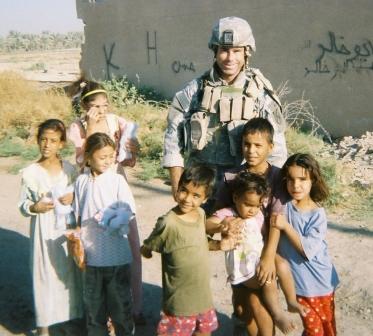
October 3, 2009 – 8:00 am |Sgt. Paul Kendel with Iraqi children
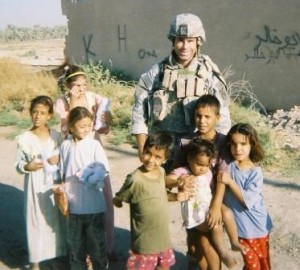 By Sgt. Paul Kendel
This is an excerpt from a book SSG. Paul Kendel is writing, called Walking the Tiger’s Path: A Soldier’s Spiritual Journey in Iraq.
Many of my fellow soldiers in Iraq often found my attitude and actions a bit inexplicable, particularly my interest in inviting myself into random Iraqi homes and asking the families to make tea and bread for me. This may sound peculiar, but I was never really scared when I was around the local people with whom we interacted on a daily basis.
The majority of Arabs I’ve met throughout my travels have been kind and helpful. I didn’t see my service in Iraq as a patriotic effort to expunge terrorism. I felt a loyalty toward those I served with, and I had something to prove to myself, that after seventeen years in the military I could acquit myself honorably in real war. I also looked at my deployment as an opportunity to visit the cradle of civilization.
I had looked forward to meeting the local people. I wanted the experience, but I would be considered an “idiot” who lacked “common sense” because I didn’t have a blanket fear and hatred. Other soldiers considered me suspicious and somewhat untrustworthy because I didn’t see the same “reality” they did. Maybe I was a little too trusting at times, but it was a fair tradeoff to having a universal mistrust and ignorance of the people, who, at least in theory, relied on us for their protection.
Often the whole family would come out. Sometimes I would ask for tea, or chai, but usually people in the house would offer it to me. Hosting American soldiers seemed a big occasion for them. And honestly for me, I found the intimate interaction with Iraqis a truly rewarding experience. It opened a window into a completely different world, one which very few soldiers serving in Iraq ever chose to see.
We’d set up at Observation Post 1 (OP1) occasionally just for something to do, and it was safer there than driving around, but sitting around OP1 was boring duty, hence we had time to explore the run down neighborhood filled with displaced, squatting Iraqi families.
Not long after our arrival, we set off to inspect a nearby building. The family occupying the dilapidated former military structure came out to greet us and the father invited us into their yard. When I asked for tea, he responded enthusiastically and invited us into his home. Being my sometimes overly trusting self, I walked straight in, leaned my weapon against the wall, took off my vest and sat down, making myself right at home.
My friends, including Cpl. Gibbs and Pvt. Ross, hesitated removing their gear. For most soldiers, this kind of friendly, informal, social encounter with local Iraqis was unusual. We usually spoke with Iraqis only about security matters, something that affected American forces in our sector. Most soldiers wanted nothing to do with the locals for various reasons, the most obvious one being that they didn’t trust them. Our job was to patrol our sector and stay alive.
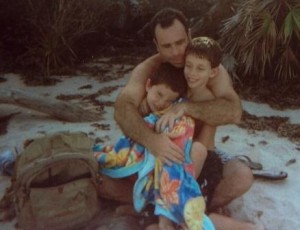
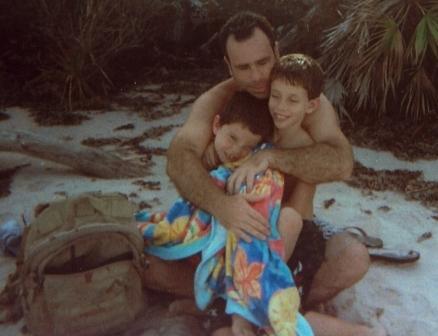
Sgt. Paul Kendel with his sons
This particular family – a young father and mother and their two year old daughter – welcomed us warmly. While the mother prepared tea, I attempted a conversation with the father who spoke little English, but smiles and hand gestures can say a lot. When I asked them if they were Sunni or Shiite, the father replied with little pride in his voice that they were Sunni. The Sunnis held a privileged status under Saddam. Not anymore. Many were now just squatters living in the remnants of the Saddam years. I gave the father a little money before I left. The mother held her young daughter, a beautiful child with big brown eyes and dark hair that fell to her shoulders. As I was leaving the Mother asked, “Toys?”
“No,” I said. “But I will try to return soon with something.”
The issue of potable water was important and the father asked if we had any water to give them. Fortunately I was able to return the following day and make good on my promise. On this second visit we drove up to the house. The family seemed shocked that I’d returned so soon. The Iraqis are used to the Americans making pledges to them about security, medical supplies, water, and such, and not following through on their claims. I handed them two crates of water bottles and a big box full of candy, toiletries, and school supplies. And yes, I even brought a small Barbie doll for the little girl. When I held out the doll, she reached for it eagerly. The entire family responded with big smiles and genuine looks of gratitude. I left feeling good – it was a far more pleasurable to help the Iraqis than shoot at them.
-------------------------------------------
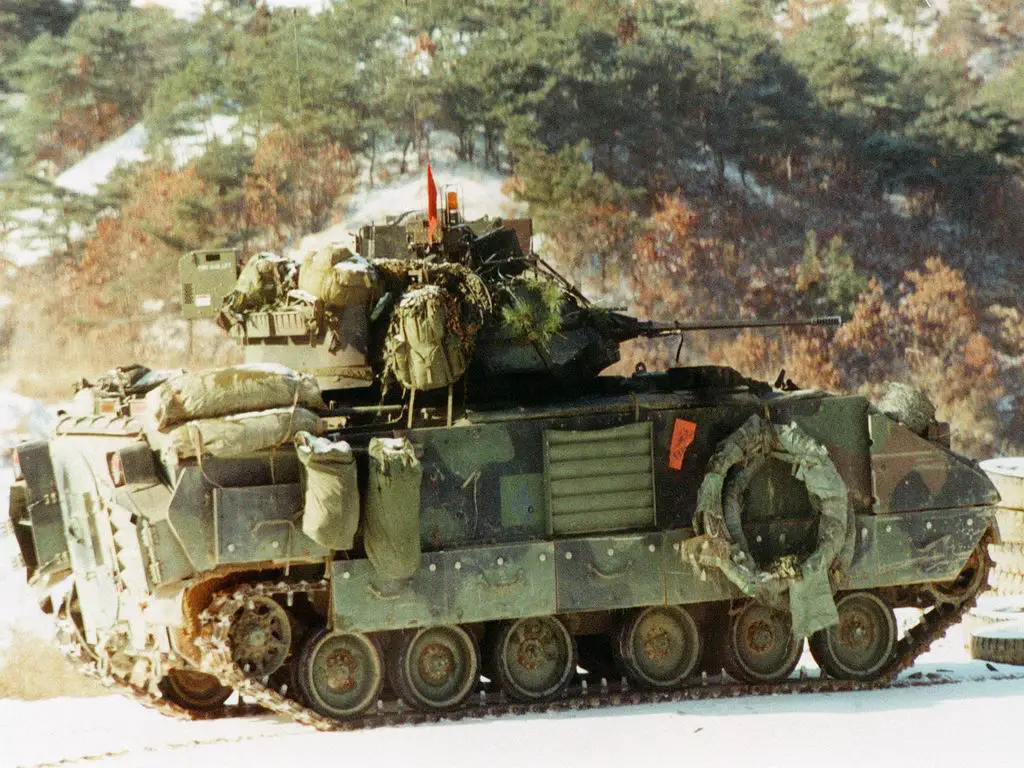
What follows is an excerpt from Walking the Tiger’s Path, which takes place after a Bradley Fighting Vehicle spills over into a ditch, drowning a soldier, Sergeant Mercer.

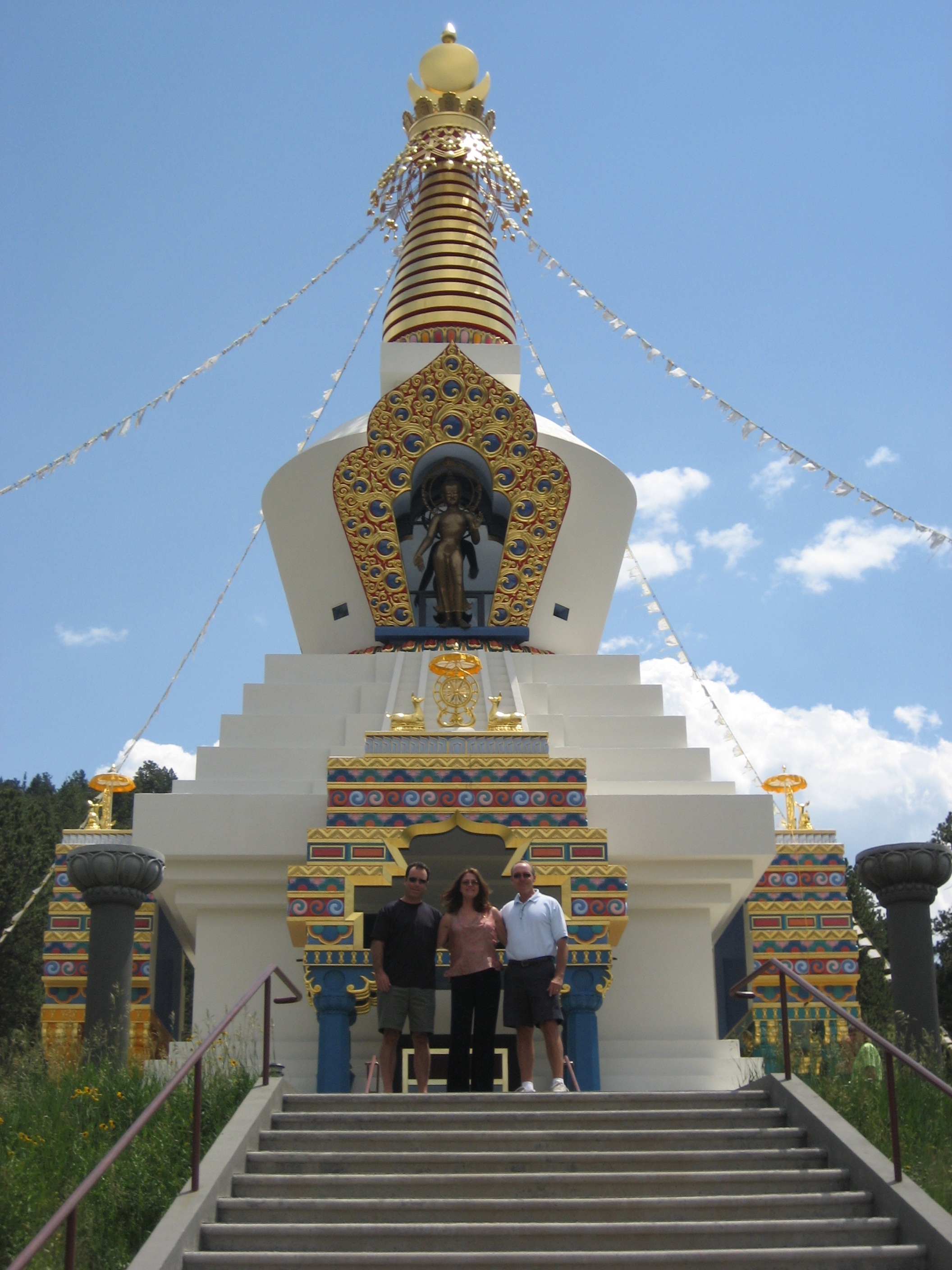
Paul Kendel with Margot and Cliff Neuman, Shambhala Mountain Center, July 2005
When the sun rose, the farmers and general population began driving to their various destinations for the day. The recovery crew arrived and began attaching tow cables to pull the Bradley out of the ditch. At that moment a car drove up to our security checkpoint and came too close. I was still pissed off over Mercer’s death. I thought things should’ve been handled quicker, that the helicopter should’ve arrived and landed faster. At this point we were still recently deployed; I’d yet to fire my weapon. I walked toward the car with my hand in the air motioning for him to stop. I waited a couple of seconds, but the car inched closer. This was precisely what a suicide bomber might do: find a congregation of soldiers that he could drive into and detonate his explosive-packed trunk. I thought I might have to fire, but wondered if I’d be seen by the leadership above me as over-zealous. The car then inched ahead a little further.
Suddenly feeling that it would relieve me of my anguish and anger over Mercer’s death, I decided to fire. I discharged three rounds in the dirt to the left of the car to make it stop. Private Baker, standing guard next to me, fired off two rounds of his own as insurance. For a fleeting moment I believed firing at that car had placated my anger over Mercer. The violent gesture created a moment of relief. Behind me the Battalion Commander’s PSD (personal security detail), who’d accompanied the Colonel outside Camp Stryker to view Mercer’s Bradley, began cheering and shouting things like, Fuck, yeah! Shoot the fucker! That’s what I’m talking about! My aggressive outburst was clearly well received. Suddenly I was surrounded in approval. I felt exultant. However, none of these people had held Mercer’s hand the night before, hoping for him to spit out enough mud so he’d breathe again, so he’d open his eyes and live but they were just excited to see a little action.
I looked at the Iraqi’s face, his eyes wide with fear. He quickly put the car in reverse, backing away about two hundred feet, wheeling around, and driving off down a different road. This man was just a farmer trying to get to work, nothing more. My high began to recede. I returned back up the road with Baker toward the humvees [a type of military vehicle] and the rest of my section. My platoon sergeant, SFC [Sergeant First Class] Janes looked at Private Baker and asked, “Which of you fired first?” He clearly assumed Baker was more likely to have taken the aggressive action against the driver.
Baker shrugged at Janes. “It wasn’t me. It was Sergeant Kendel.”

Sargeant Kendel at the Euphrates River, Iraq
Janes looked a little taken aback. He didn’t expect a “California liberal” to take such aggressive action. I felt pleased that I’d dispelled some preconceptions about me, but I felt hollow. I remembered a passage I’d just read in the Sakyong’s book, Turning the Mind into an Ally, where he’s in India trapped behind a truck, ground to a halt in traffic, frustrated and angry that the truck ahead of him isn’t moving as the traffic grinds on for hours - and then finally the traffic opens up, and they pass the truck, and when he sees that the truck driver was also stuck in traffic, just trying to make a living, he sees the pointlessness of anger at this innocent guy going about his life.
Even though I had to fire on the man for genuine security reasons, the thrill of the gunfire dissolved into guilt. I’d directed all that anger and frustration at an innocent man. What if I’d hit him by mistake? I realized I’d succumbed to aggression easily and automatically, and wasn’t proud of it. Arrogantly, I’d believed I was a cut above others, that I wouldn’t so easily slip into the pitfall of hatred. I thought I was more balanced and rational than that, but suddenly I realized that it wasn’t true.