energies and enlightenment
-
Inner Energies
Scientists of the twentieth century discovered that the entire visible universe consists of matter-energy. All matter, including our bodies and our planet, may convert to energy and vice versa. All forces arise through the interaction of matter-energies. No surprise, then, that the matter-energies within us determine the quality of our inner life. Just as we cannot see electromagnetic or gravitational energy, but only the results of their action, so too we cannot measure or objectify inner energies. But we can experience their action directly. For this we need an acquired taste, a comprehension of what to look for, and a gradual refinement of our perceptions. The understanding of energies brings crucial support to our spiritual path, because energies provide the fuel, the light for all our experiences.
Each energy defines a particular mode of being, a particular kind of world. The energy with which we operate at any given moment determines the kind of experience we have, the kind of world we live in, and the possible modes of operation of our will. The study of the spiritual worlds and their associated sacred energies is an ancient endeavor, with roots in Christian, Buddhist, Hindu, Sufi, Taoist, Kabbalistic and other sources. J.G. Bennett gives a particularly clear and modern account in his book Deeper Man [1]. His concepts and terminology form the basis of this presentation of energies.
The inner energies constitute a hierarchy. Actions undertaken with a higher energy can organize and subsume a lower energy. Lower energies can form a field in which higher energies may be contained, created, and transformed. Remarkably, we are able to transform a wide range of energies within our bodies and souls. At the simplest level, we transform food and oxygen to create the energy that powers our bodily actions. But this human ability to transform energies runs right up the scale toward the most sacred and likely stands as a major reason for the existence of life. Spiritual practices include methods for recognizing, containing, creating, and transforming progressively higher and finer energies. At first we study the energies to recognize their presence and action. Later we must shoulder the burden of learning not to waste our energies unnecessarily or misuse them. Finally, we contact, collect, organize, and transform energies directly, gradually refining our ability to do so.
As we advance on the path, the higher energies grow even more important to us, because only through their action on us can we find real transformation. And by becoming an instrument for the descent of the higher energies into this world, we serve not only our own soul, but also our fellow travelers through this life.
Energies characterize the stages of spiritual development. The pure-hearted occupy a spiritual station of a higher energy than the rest of us. When we are more deeply present, we live in a richer, more substantial, and more truly satisfying world than we experience with a perennially scattered attention.
In the articles linked below, we briefly describe each step in the scale of energies beginning with the energy of our physical life.
See Vital, Automatic, Sensitive, Conscious, Creative, Love, and Transcendent energies.
...............................................................
Vital Energy
I once saw a just-captured, rather fearsome leopard pacing its cage in a Mexican jungle. Exuding strength and vitality, this dignified predator was no zoo animal. Stunningly beautiful and powerful, the leopard radiated a palpable, rippling energy. Some people, such as athletes in top condition, also exhibit an abundance of vital energy, the energy of physical life. When the glow of vital energy abounds, our bodies wax vigorous and ready for action. When the level of vital energy drops, our bodies grow tired or ill. Proper rest, food, exercise, and energy breathing feed our vitality and contribute to good health. Emotional stress, unnecessary muscular tensions, fidgeting, overconsumption of alcohol or food, and other wasteful activities sap our vitality.
In our spiritual life, vitality matters because a depleted or distressed vitality may limit the quality of our contact with the higher energies. Conversely, contact with the higher energies often produces a remarkable cascade of vitality. Proper care of our body creates the vitality that supports our very life and sets the stage for our spiritual work. But the diminished vitality of aging and illness may inhibit our inner work. So while we have the vital strength, we work.
............................................................
Automatic Energy
Have you ever gotten into the shower, shampooed your hair by habit, and a moment later stood there in the shower wondering whether you had shampooed yet? Have you ever looked for your glasses, only to find them on top of your head? My favorite example: sitting at dinner, frantically looking all around for my fork, until I finally discovered it in the least expected place – in my hand. To see the automatic energy in action like this is a sobering event. Whatever we do under the automatic energy, we only partially experience and only vaguely remember. We live and act in a pre-programmed mode: if A happens, we do B, every time, and without the consideration or participation of our cognizing self. Nevertheless, the automatic energy has its important uses.
Awkwardness reigns when we first learn a complex task, such as driving a car. Its unfamiliarity forces us to think about where the gas pedal is, where the brake pedal is, which foot to use, where the rearview mirrors are, what the traffic signs and signals mean, when we have the right-of-way, and so on. Thinking how to drive makes us clumsy and inefficient, as we use the mind to do the body’s work. Eventually, we learn to drive with ease when it all becomes automated: the appropriate responses emerging without needing to think of them. Our body drives the car while our mind freely engages in conversation, listens to the radio, plans our day, or considers higher level driving strategies like how to bail out of a traffic jam. The driving itself happens automatically.
The automatic energy can work in the body, in the mind, and in the heart. We learn to play a musical instrument, play a sport, brush our teeth, walk, type on a keyboard, speak and read a language, know the product of 7 times 8, recognize a face, and recall a name — all with the help of the automatic energy. For such purposes, the automatic energy finds its appropriate place: directing repetitive or simple processes, thereby freeing up the higher energies for tasks befitting them.
The nearly continuous stream of random, loosely connected, aimless thoughts and images that flows through our mind usually carries us with it and prevents us from being fully present in the moment. This persistent current of automatic thought all too often captures our attention, drawing us into passivity in a dreamlike world, disorganizing and usurping the higher energies of sensation, consciousness, and creativity.
Another problem with the automatic energy occurs when it acts in ways that deplete us. Our habitual and unnecessary muscular tensions burn energy we could better use elsewhere. Our bad habits drain us: smoking, excessive drinking, overeating - all due, at least in part, to misuse of the automatic energy, letting it control rather than serve.
Automatic emotional reactions to life situations, such as anger, rage, fear, jealousy, lust, greed, timidity, and sadness, may be appropriate and even useful for a brief period. But when we allow our automatic energy to run with them, unseen by consciousness, our thoughts and feelings dwell on the reactive emotions. We wallow in them to the point where they take a central role in our inner life, controlling us. All manner of social and psychological troubles result.
The automatic energy, while useful and even necessary, does not bring us into real contact with life. To our unrecognized misfortune, we live almost exclusively under the domination of the automatic energy, enthralled by our habits and conditioning, forever repeating similar patterns of behavior, inner and outer. Our lives pass us by without our participation. Centered in the automatic energy, we are, in effect, asleep. We relish anything that temporarily alleviates the dullness. We even go for strong reactive emotions or thrill seeking, substituting them for a freer, more satisfying, non-automatized way of living. The proven remedy is to embark on a path of spiritual practice leading to greater wakefulness and greater awareness in the midst of normal life.
.............................................................
Sensitive Energy
The basic energy that fuels our inner work and that forms the material of the lower body of the soul is the sensitive energy, which brings vibrant color and vivid impressions to our life. This energy fuels what we ordinarily consider to be awareness, connecting us to our perceptions, to the present moment. Within the sensitive energy we find our medium for actual contact with the particulars of life, for noticing the large and the small. We can breathe. We can taste our food. Though not yet fully awake, we are not as asleep as when the automatic energy dominates our being. Choice, initiative, and independence from merely reacting to events, all become possible. Life is enriched and natural, no longer so habitual.
The possibilities enabled by the sensitive energy are immensely important to the quality of our inner life. Lasting benefits accrue when we explore and understand its role in our emotions, in our thoughts, and in our physical perceptions. We can learn specific spiritual practices to manage, collect, contain, and transform it into higher energies.
In the body, the sensitive energy enhances our kinesthetic and proprioceptive impressions. We can sense directly that we actually have a hand or a leg. Under the automatic energy we move without contact with our body; unless we stub a toe, we walk with no awareness of our feet, like our half-awareness when we drive. The sensitive energy, however, provides a visceral, organic awareness of our body in movement and at rest, bridging the chasm between mind and body. In later sections we suggest methods for learning to be in touch with the sensitive energy in the body, to experience and even direct its flow. When we refer to the Energy Body, we mean the sensitive energy. Intentionally sensing the body affords a powerful grounding in the present, a most useful method on the spiritual path.
In the mind, the sensitive energy enables us to be aware of thoughts as thoughts. With the automatic energy, thoughts pass through our mind and we pass along with them, carried unawares by our thought stream. With the sensitive energy, we know our thoughts, we know their meaning, and can solve problems by intentional thinking.
In the emotions, the sensitive energy brings awareness of the spectrum of feelings passing through our heart. With the automatic energy, our emotions have us, we lose ourselves in them. With the sensitive energy we feel our emotions as emotions, without being completely lost or entrapped in them.
As the highest energy under our direct control, the sensitive energy provides the immediate, tangible substance of our spiritual work. Through practice we can collect and organize it into a robust whole, the basis of the lower part of our soul, a firm foundation and container for the higher energies, a platform from which to live a less-dreamlike, more natural and organically joyful life.
The world of the sensitive energy corresponds to the worlds known as Asiyah (Action) in Kabbalah and Ajsam (Bodies) in the Sufi cosmology.
..........................................................
Conscious Energy
Left-click for MP3 audio stream, right-click to download
Though the reality they point to is fundamental to our possibilities, we use the terms “conscious” and “consciousness” rather loosely. Usually we mean them to indicate a simple sensory awareness. So when we say “I am conscious,” or “I am conscious of” something, we actually refer to the working of the sensitive energy, the substance of our awareness of our bodies, thoughts, emotions, and sensory perceptions. Here we adopt a quite different meaning for the term consciousness: the spacious, empty, infinite, cognitive field that forms the ever-present background of all awareness. In this sense, the full experience of consciousness is rare and fleeting in our lives. But to taste true consciousness, you need only place your attention through the gap between thoughts, into the cognizant space surrounding your thoughts.
Reworking an analogy due to J. G. Bennett (Energies 1964, p. 90), if we compare the sensitive energy to the images on a movie screen, the conscious energy forms the screen itself. Consciousness enables us to be aware of our sensitive awareness. The still pool of consciousness underlies, permeates, and surrounds our ordinary awareness, in the relationship of context to content. This cognizant stillness of pure consciousness corresponds to sitting in the darkened movie theater with no images on the screen, nor sounds from the audio system. Like the screen during the movie, the subtle blank slate of consciousness remains profoundly difficult to recognize, because of its inherent emptiness. Chronically immersed in and concealed by our sensitive energy, consciousness usually remains indistinct and lost to us. The sensitive energy movie so captivates us that we lose ourselves. Transported by the images, we forget the theater, the screen, and even our own existence.
Sensitivity affords awareness of particulars, the content of life: an arm, a leg, a thought, a sound, the person in front of us. Consciousness affords contextual awareness. We recognize thoughts as just thoughts. With the automatic energy, thoughts run on their own by association, bouncing off each other and off sensory impressions. With the sensitive energy we are in contact with the meaning of our thoughts, we can engage them, intentionally direct them, and think sequentially on a subject or problem. We can think logically: if A then B, if B then C, and so on. With consciousness, we move to a higher perspective to see thoughts as thoughts. In conscious thinking, we can focus on a topic, allow our thoughts to gather around it, and see what combinations offer new insight. We can think holistically, seeing and considering all aspects at once.
Automatic emotions react on their own to thoughts, to other emotions, and to external events, thereby driving our feelings haphazardly and with no oversight. The sensitive energy puts us in contact with what we are feeling. We can feel our emotions. But we can also feel consciously. The conscious energy enables us to see our emotions as emotions, to let them come and let them go, to not be under the spell of identification that we are what we feel. In the same way that we are not the objects we see, we are also not our thoughts or feelings. The paradigm of conscious emotion is equanimity, a pervasive tenor of peace and calm. But any emotion can be conscious. Conscious anger, for example, is an awakened person’s response to evil deeds. Conscious emotions do not come from egoism and we are not identified with being the feeling. We allow the emotion appropriate to the situation and, while we feel it fully and deeply, we are never overwhelmed or controlled by the emotion. There are also higher emotions that come from beyond consciousness, such as love and compassion for all, and longing for the Divine.
Consciousness brings awareness of ourselves and our surroundings as a whole. Lacking boundaries, more than personal, consciousness permeates everything. We cannot have it, but we may participate in it. Yet consciousness also provides a distinctive sense of being ourselves.
Attention is a form of will and acts through the conscious energy. Since attention can direct our senses and our sensitive energies, it must use a higher energy, in this case consciousness. The conscious energy responds directly to will, to attention, and mediates the action of our will in the sensitive and lower energies.
The pivotal importance of the conscious energy in our spiritual work cannot be overstated. Consciousness both connects us with will and forms the frontier of the truly spiritual realms. Spiritual practices, such as presence, work to raise consciousness out of sensitivity and give us access to it. Awareness of bodily sensations organizes the sensitivity into a less chaotic and more stable vehicle in which consciousness may assume its rightful place.
The conscious energy resides in an eternal, timeless dimension, deathless and unchanging, not subject to the conditions of space and time. Coming into the vast stillness of consciousness is like entering a large cathedral, temple, or mosque. The expansive ceiling and cavernous space open to a new kind of freedom and a substantive peace. That great hall of peace is always here, just beneath our ordinary perceptions, where consciousness invites our participation in the world beyond me and mine. Though our contact with consciousness certainly varies, it constitutes the all-pervasive bedrock of our inner world, the continuum of cognizance, the plenum of peace.
At the same time, many of today’s major writers and commentators on spiritual subjects overrate consciousness, confusing the ultimate expansion of consciousness with God. Consciousness is indeed unbounded and infinite. The alternative names applied to experiences of the true nature of consciousness include presence, non-dual awareness, and in its more expansive form, cosmic consciousness. Spiritual seekers can mistake the boundlessness and peace of consciousness for nirvana or for the ultimate nature of God. While God may manifest at the level of the conscious energy, God also resides beyond this and all other forms of consciousness. Indeed, consciousness is merely the ground on which God walks. We may more aptly consider God to be associated with Will, with the action of Love and the Divine Purpose than with any of the energies such as consciousness.
Who uses the energies? At the level of our limited world of sensitivity and below, we do. At the level of the universe, God does. The Divine is no more identical with consciousness than we are with the electricity we use to power our gadgets. Nevertheless, we must work to understand and to live in consciousness because of its critical role in forming our being and because it brings us closer to will, to “I am.”
The world of the conscious energy corresponds to the worlds known as Yetzirah (Formation) in Kabbalah and Arvah (Spirits) in the Sufi cosmology.
..................................................................
Creative Energy
Beyond and veiled by consciousness, behind the spacious stillness within, lies the realm of the creative energy, an ocean of bliss and light, the Primordial Sacred Sun, the hem of the garment that God wears. To become directly aware of the creative energy we must steer our perception outside consciousness itself. Although we might enter the creative world through an act of grace, our reach typically falls far short of that world. Nevertheless, the creative reaches us. So instead of attempting to describe the world of the creative itself, we will look at how it manifests in our life.
The creative makes new connections and opens doors of opportunity. This energy can bring order out of the chaos of the higher energies. The creative domain encompasses synchronicity and karma, sowing and reaping the results of our actions, creating and selecting possibilities. It ushers events into our lives, events meant for us. The power of sex and the perception of beauty derive from this energy.
Only in emptiness can something new be created: the white canvas, the blank sheet of paper, the formless lump of clay. The creative energy introduces us to our essential emptiness, a prerequisite for entering the true depths of the sacred. The reverse also holds: to contact the creative energy we must empty ourselves, through an inner act of surrender. This act of emptying oneself of oneself opens a channel to the creative realm of the spirit, opening our heart to joy, generosity, and peace. The event releases an influx of the lower energies that we experience directly and unambiguously. Vitality, for example, pours down when the creative energy touches us, completely changing the state of our body. Superhuman feats of strength in dire circumstances are powered by the creative energy.
By its name, we would expect the creative energy to be intimately associated with the arts and sciences, and indeed it is. In any of the arts, the artist knows the crucial role of surrender, surrendering to the work, to its needs, to its possibilities. Discipline and training in the methods of the art prepare the artist to be a vehicle of art. Cultivating spontaneity helps open the channel to the creative. The artist empties herself, allowing her acts to be guided by the creative power, often accompanied by ecstasy. This is perhaps most obvious in music. The great musician gives himself over to the music in an ecstatic embrace, becoming an instrument of the music.
Similarly, in the spiritual path, we must empty ourselves to become instruments of the Divine Will. In this emptying, in our malleable nothingness, the creative energy creates our being. It is said that the perfected human, the great saint, the bodhisattva, achieves the station of being centered in the creative energy, able to transmit the higher energy of universal love. Thus, the creative energy serves as the abode of the heavenly host, the devas, the creative wisdom, responding directly to the Divine Will. This is the place of the demiurge, the elohim, agents of the intelligent force that continuously creates and sustains this great universe.
The world of the creative energy corresponds to the worlds known as Beriyah (Creation) in Kabbalah and Imkyan (The Possible) in the Sufi cosmology.
..................................................................
Love and Compassion
The sacred energy of love and compassion, the Great Heart of the World, embraces us all, without condition, unifying all of life, unifying the whole creation within the warm spirit of kindness, appreciation and concern. With good fortune, we may meet people in whom this unfettered love shines strongly, allowing all around to bask in its light. The great saints and bodhisattvas, utterly emptied of themselves, transmit such love and compassion. In some instances of communal worship, the substance of this boundless ocean of love may envelop the whole assembly. It may enter a true marriage and may inform the bonds between parents and children. Whenever we look into another person’s eyes and recognize the sameness, that that person and I are the same, not really separate, this is love.
Despite appearances to the contrary, Divine love and compassion suffuse every corner of the world, even our own. Divine love stands before the awesome contradictions in our lives: our God-given freedom that offers the promise of profound joy as well as the suffering attendant on living. The Divine heart of compassion celebrates the beauty of the freedom within each person, a celebration made bittersweet by the price of freedom: inevitable suffering.
When we hear of or see another person’s misfortune, and we feel the pang of their suffering, and are moved to extend the help that lies within our power, this is compassion. For this we need strength, because suffering lies all around us. The daily news’ litany of catastrophes and evil deeds, large and small, could devastate us, were we awake to the whole of it and lacked the strength to bear it. But awakening through spiritual practice brings its own strength. And the suffering we see is more than balanced by the joy that flows to us along with love, protecting the compassionate from being overwhelmed by the force of suffering.
Universal love lies far beyond its pale imitation in the lower energies, where emotional attachment turns from “love” to hate, jealousy, or despair. Nevertheless, the world is so constructed that it remains within our possibilities to participate in love knowingly. But that can only happen to the degree we empty ourselves of ourselves.
Self-referential motives, self-centeredness, attachment, expectation of something in return, grasping, setting of conditions, partial-heartedness - none of these have any place in love and, in practice, completely block the action of love. Placing ourselves first and at the center forecloses the possibility of love. Yet moments do come even to us, perhaps with our children or our pets or unexpectedly with a stranger, when we are briefly free of egocentric attachment and the true heart of objective love opens within us. In unguarded moments, our natural response to people is friendship, one of the faces of love. To be able to love is a goal lofty and worthy enough to sustain our long journey along the path, drawing us ever forward.
Our common mother, the Earth, also loves, loves each one of us and all life in her biosphere. Like a self-centered and petulant child, we only too rarely return this love. And like a child, we so take for granted the love of our mother Earth, that we do not even recognize it. Yet her love is there for us individually, in nature and in the city, if we can but open to it. One simple expression of it manifests as the beauty with which nature adorns herself. And there are other more direct expressions we may perceive, including a reservoir of spiritual energies within the Earth that we can draw upon. But as a species, we need to mature and not expect the Earth to continue indefinitely absorbing every insult and injury we pile upon her. We push these limits at the Earth’s, and our own, peril. The Earth gives and gives and gives, perhaps more than she can afford. But because our material strength now exceeds our collective wisdom, the Earth needs us to find a place in our hearts for her. By our inner work, by opening to higher energies, by purifying our will and intentions, we help cleanse our collective will, raise our collective level of being, and give back to the Earth and to human society. And we do this for love.
Love manifests in many forms, but always serves to unify. Love’s unmistakable hallmark dissolves our veils of isolation and separation, allowing us to become more fully ourselves within the sweet scent of merging. Out of love we are born, and into love we depart. In between, we seek love and love seeks us.
The world of universal love, a world beyond all forms, even beyond the world of light, corresponds to the worlds known as Atzilut (Emanation) in Kabbalah and Lahut (Boundless) in the Sufi cosmology.
...........................................................................
Transcendent Energy
The names abound: God, the Most High, the Unconditioned, the Divine, the Unfathomable, Allah, Nirvana, Brahman, Adonai, the Real, the Deathless, the Omnipresent, the One, the Unique, the Tao, the Absolute, Ein Sof, the Void. Not only does everything arise from the transcendent Source, but It also exerts the one powerful attraction on us all. Every other attraction merely misappropriates and distorts the primal draw of the Source. We call the abode of the Source the Transcendent Energy, the holy mountain.
With a wild, chaotic, and powerful freedom, this ultimate energy acts as the direct vehicle of the Divine Purpose, the Will of the World, the Creator and Sustainer of the Universe. Beyond space, beyond time, the Transcendent intimately touches everything within space and time, working through Its intermediaries of universal love and the creative energy, endowing life with freedom and the possibility of return.
By creating a coherent soul built of the energies of sensitivity, consciousness, and the creative, emptied of attachments and personal desires, with a profound yearning to serve the Greatness, a human being can have real hope of contact with the Transcendent Energy and the Divine Will. The deconditioning of our mind-heart opens the door to the Unconditioned, and utter surrender is the act of walking through. -
You can post this in the forum here "Sea of Affinity".
-
The whole Universe is made up of energy, including living things, non-living things, thoughts, words, feelings etc. The only difference is the frequency in which they vibrate at. You may read more about it under the field of "vibrational energy". Because everything is made of the same 'substance', it's possible for people experienced in energy work to do seemingly impossible things, unexplainable by modern logic, by simply controlling the use and flow of energy.
As for the article above, while it's good that it tries to explain that energy plays a much bigger role in our lives than commonly known, I personally don't quite like the various categories of energy that the author uses. Such specific categorisations are favoured for dissertations and academic texts, but in reality, the only difference between types of energy is in their frequencies.
Rainbow Jigsaw of Life
-
energy is just a word, what is the definition of energy?
i think ultimate reality is even more subtle than our usual sense of energy... i think energy is still based on dualism...
but maybe this is new age topic?
-
In direct experience, we cannot even find an external universe.
There is only Mind... and all the energies/manifestations we experience are only consciousness.
Dear Rupert,
What is meant by 'the world is within you?'
I think you are adhering to that when you said, "Allow everything to take shape, evolve and disappear in you!"
I guess my problem is that if we are not the doer, then how is it that the "world is within you?"
Again thanks, and yes your book is excellent. I just have to not intellectualize it and allow my heart to unfold around it.
Love,
Paul
Dear Paul,
Paul: What is meant by ‘the world is within you?’ I think you are referring to that when you said, "Allow everything to take shape, evolve and disappear in you!”
Rupert: The phrase, ‘The world is within you,’ is said to one who believes that the world is ‘outside’ of him or herself. And in order to believe that the world is ‘outside’ one must first consider him or herself to be an individual entity, separate from the world.
In other words, this is said to the apparent one who believes in ‘duality,’ in the existence of an entity here, the subject, ‘I,’ and an entity there, the object, that is, the ‘other’ or ‘world.’
However, if we look towards our self, this ‘I,’ that apparently knows or experiences the ‘world,’ we do not find any objective qualities. However, what we find is undoubtedly present and knowing (in the sense of ‘experiencing’).
That is, we find Knowing Presence.
And what is it that finds or recognises this Knowing Presence? Whatever it is, is both knowing and present. That is, this Knowing Presence knows itself.
Having seen clearly that we are this Knowing Presence that cannot be found as an object, it becomes clear at the same time that it cannot be located either in or as the body.
So instead of thinking, “I, the body/mind, experience the world,” we realise that “I, Knowing Presence, experience the body/mind/world.”
Now if we look closely at the experience of the body/mind/world we find that it is made only of sensations, thoughts and perceptions and that all sensations, thoughts and perceptions are inseparable from Knowing Presence.
We have already seen from our own intimate, direct experience that there is no boundary to Knowing Presence and we therefore have no experience of anything outside of it.
At this point it becomes clear that the world, that is, the current perception, appears within Knowing Presence and hence the saying, “The world is within you.”
Up to this point the phrase, “The world is within you,” is true and replaces the less true belief that the world is outside us.
However, although it is true in relation to the previous position in which the world was considered to be outside, it is found, on looking more deeply at our experience, to be untrue.
Although the world may be felt to appear within us, there is still a distinction between the world made of perceptions and the Knowing Presence in which it appears. In other words, there is still a subtle duality.
However, if we go deeply into the actual experience of these perceptions, we find no substance there other than Knowing Presence itself.
At this point, the phrase, ‘The world is within you,’ is seen to be limiting and can be abandoned.
It becomes clear that it was a mistake to start with the world and to think of it arising in Knowing Presence. We only started there because of the initial presumption that the world is outside and we wanted to meet that presumption on its own terms.
In reality, there is nothing else in the experience of the world other than Knowing Presence itself and Knowing Presence does not arise within itself. It is already fully present as itself with no separate parts capable of arising or disappearing within it.
So we start with Knowing Presence which is our primary, and in fact our only experience, and see that it is this Knowing Presence that ‘takes the shape of’ perceiving and, as a result, seems to become a world, but in fact never becomes anything other than itself, just as the screen we are looking at now seems to take the shape of numerous documents and images but in fact always simply remains the screen.
And what is it that experiences Knowing Presence seemingly taking the shape of all experience? Knowing Presence!
That is, it is Knowing Presence that is always only ever knowing and being itself, and all seeming things, objects, others and worlds are simply modulations of this Knowingbeing.
At this point it is seen clearly that there is not one thing (a world) within another thing (myself) but rather that there is just Knowingbeing, with no inside, no outside, no object, no world, no other, no self.
There is just itself knowingbeing itself.
Even this formulation is not completely accurate and as the mind searches for a word or a phrase that would adequately express the nature of experience it dissolves in the impossibility of the task. It is like a candle that burns itself out.
And all that is left is Knowingbeing knowing and being Knowingbeing eternally, taking the shape of all seeming things, objects, others, selves and worlds but never knowing or being anything other than itself.
With love,
Rupert
-
Originally posted by wisdomeye:
energy is just a word, what is the definition of energy?
i think ultimate reality is even more subtle than our usual sense of energy... i think energy is still based on dualism...
but maybe this is new age topic?
Yes, if by 'energies' we are refering to an objective universe, then indeed we are indeed falling into a dualistic (subject-object view) error/view. It is often the tendency that people catergorize certain experience and then objectify it as something happening in space and time 'out there'.
If we realise that all energies are but consciousness, then it is non-dual.
As Guru Padmasambhava puts it in Self-Liberation through Seeing with Naked Awareness:
Appearances are not erroneous in themselves, but because of your grasping at them, errors come into existence.
But if you know that these thoughts only grasp at things which are mind, then they will be liberated by themselves.
Everything that appears is but a manifestation of mind.
Even though the entire external inanimate universe appears to you, it is but a manifestation of mind.
Even though all of the sentient beings of the six realms appear to you they are but a manifestation of mind.
Even though the happiness of humans and the delights of the Devas in heaven appear to you, they are but manifestations of mind.
Even though the sorrows of the three evil destinies appear to you, they are but manifestations of mind.
Even though the five poisons representing ignorance and the passions appear to you, they are but manifestations of mind.
Even though intrinsic awareness, which is self-originated primal awareness, appears to you, it is but a manifestation of mind.
Even though good thoughts along the way to Nirvana appear to you, they are but manifestations of mind.
Even though obstacles due to demons and evil spirits appears to you, they are but manifestations of mind.
Even though the gods and other excellent attainments appear to you, they are but manifestations of mind.
Even though various kinds of purity appear to you, they are but manifestations of mind.
Even though (the experience) of remaining in a state of one-pointed concentration without any discursive thoughts appears to you, it is but a manifestation of mind.
Even though the colors that are the characteristics of things appear to you, they are but manifestations of mind.
Even though a state without characteristics and without conceptual elaborations appears to you, it is but a manifestation of mind.
Even though the non-duality of the one and the many appears to you, it is but a manifestation of mind.
Even though existence and non-existence, which are not created anywhere, appear to you, they are but manifestations of mind.
There exist no appearances whatsoever that can be understood as not coming from mind. -
I highly recommend the book 'The crystal and the way of light', if you see it, get it. It's a very good book on Dzogchen.
The section here has a very relevant explanation regarding energies: (please cut and paste the following link as hyperlinking here won't work) - http://books.google.com.sg/books?id=C1WtWHq1I_4C&pg=PA99&lpg=PA99&dq=dang+rolpa+energy+essence&source=bl&ots=aSUX-LtIlG&sig=BCpYJO7K9N0jMRvKpCeOYrfDwi0&hl=en&ei=Chm-S9b0FsqxrAe21pnfDw&sa=X&oi=book_result&ct=result&resnum=8&ved=0CBoQ6AEwBw#v=onepage&q=dang%20rolpa%20energy%20essence&f=false
A summary is as follows:
Three aspects of energySentient beings have their energy manifested in 3 aspects:
* Dang: Energy of an individual on the dang level is essentially infinite and formless but like a mirror has the capacity to adopt any form.
* Rolpa: In the form of rolpa energy forms appear as though seen with 'the eye of the mind'. Many practices of thödgal and yangthig work on the basis of functioning of the rolpa aspect of individual's energy. It is also the original source of the deities visualized in Buddhist tantric transformational practices and of manifestations of one hundred peaceful and wrathful deities in bardo.
* Tsal: Tsal is the manifestation of the energy of the individual him or herself, as apparently 'external' world.
External world versus continuum
According to Dzogchen teachings, energy of an individual is essentially totally formless and free from any duality. However, karmic traces, contained in the individual's stream of consciousness give rise to two kinds of forms:
* Forms that the individual experiences as his or her body, voice and mind and
* Forms that the individual experiences as an external environment.What appears as a world of apparently external phenomena, is the energy of the individual him or herself. There is nothing external or separate from the individual. Everything that manifests in the individual's field of experience is a continuum. This is the Great Perfection that is discovered in the Dzogchen or Ati-yoga practice.
-
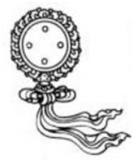
The following is a generous extract from Norbu, N. & Shane, J. (1999). The Crystal and the Way of Light: Sutra, Tantra and Dzogchen. Snow Lion Publication. ISBN 1559391359, pp.99-107:Energy manifests in three characteristic ways, which are known as Dang, Rolpa, and Tsal. These terms are untranslatable, and we have to use the Tibetan words. They are explained with three examples: the mirror, the crystal ball, and the crystal-prism.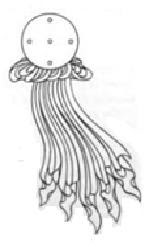
Dang
A mirror has neither form nor color. Yet when a red cloth is placed in front of it, the mirror seems red, and with a green cloth in front of it, it seems green, and so on. Thus, although a mirror's voidness is essentially infinite and formless, the mirror may fill itself with any content. The same happens with the individual's energy: although at the Dang level it is essentially infinite and formless, it is clear that it has the capacity to adopt any form.In fact, although essentially our energy is totally formless and free from any duality, the karmic traces contained in our stream of consciousness give rise to the forms that we experience as body, voice, and mind, as well as to those that we perceive as an external environment -- whose characteristics are in both cases determined by the causes accumulated during numberless lives. The problem is that these karmic traces also give rise to the dualistic delusion and the attachment that cause us to be utterly unaware of our own true condition, so that we experience a radical separation between our person -- body, speech, and mind -- and that which we take for an external world. This causes us to experience both ourselves and the 'world around us' as absolute, self-existing realities. The result of this delusion is what is known as 'karmic vision'.When freed from this illusion, the individual experiences his or her own nature as it is and as it has been from the very beginning: as an awareness free from any restrictions and as an energy free from any limits or form. To discover this is to discover the Dharmakaya or 'Body of Truth', which is better rendered as 'Body of the True Nature of Reality'.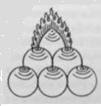
Rolpa
This type of manifestation of the individual's energy is illustrated with the example of a crystal ball. When an object is placed near a crystal ball, an image of the object may be seen inside the ball, so that the object itself seems to be found inside it. The same may happen with the energy of the individual, which has the potentiality to appear as an image experienced 'internally', as though it were seen 'with the eye of the mind', although what appears is truly neither 'inside' nor 'outside': no matter how vivid this seemingly 'internal' image may be, it is, just as in the previous case, a manifestation of the individual's own energy, this time in the form of Rolpa energy.It is on the basis of the functioning of this type of manifestation of energy that many of the practices of Thodgal and of the Yangthig work...It is the source of the one hundred peaceful and wrathful deities which, according to the Bardo Thodrol or Tibetan Book of the Dead, arise in the experience of the chonyid bardo (or bardo of the Dharmata); and it is also the original source of the deities that are visualized by practitioners of the Path of Transformation in order to transform their impure vision into pure vision.Finally, it is precisely this level of their own energy that realized individuals experience as the Sambhogakaya or 'Body of Wealth'. The wealth referred to is the fantastic multiplicity of forms that may manifest at this level, corresponding to the essence of the elements, which is light and which realized individuals do not perceive in dualistic terms.Tsal
Tsal is the manifestaiton of the energy of the individual him or herself, as an apparently 'external' world. But, in fact, the apparently external world is a manifestation of our own energy, at the level of Tsal. Together with the arising of dualism, however, there simultaneously arises the illusion of a self-existing individual who feels separate from a world which he or she experiences as external. The fragmented dualistic consciousness takes the projections of the senses for objects existing independently and separately from the illusory 'self' with which it identifies and to which it clings.The example used to illustrate the illusory nature of our sense of separateness establishes a parallel between the way in which the individual's energy manifests and what happens when a crystal-prism is placed in the light of the sun: when the sun's light falls on a crystal it is refracted and decomposed by it, causing the appearance of rays and forms in the colors of the spectrum which seem to be separate from the crystal, but which are actually functions of the crystal's own nature.In the same way, what appears as a world of apparently external phenomena is the energy of the individual him or her herself, as perceived by his or her senses. In truth, there is nothing external to, or separate from, the individual, and all that manifests in the individual's field of experience is a continuum, fundamentally free from duality and multiplicity: this is precisely the 'Great Perfection' that is discovered in Dzogchen.For a realized individual, the level of manifestation of energy called 'Tsal' is the dimension of the Nirmanakaya, or 'Body of Manifestation'. But we must keep in mind that neither the Dang, Rolpa, and Tsal forms of the manifestation of energy, nor the Dharmakaya, the Sambhogakaya, and the Nirmanakaya, are separate from each other. Limitless, formless Dang energy, the correct understanding of which is the Dharmakaya, manifests on the level of the essence of the elements, which is light, as the nonmaterial forms of the Rolpa energy, the correct understanding of which is the Sambhogakaya, which can only be perceived by those having visionary clarity. On the 'material' level, it manifests as the forms of Tsal energy, which deluded individuals perceive as external to their consciousness, as solid and material, but the correct understanding of which is the Nirmanakaya...When we understand the non-dual nature of reality as described in the explanations of the Base as Essence, Nature, and Energy, and know how the Energy of the individual manifests as Dang, Rolpa and Tsal, we can understand how someone who has reintegrated their Energy is capable of actions not possible for an ordinary being. Then the actions of such a master no longer seem incomprehensible.
-
BTW as for the article itself that TS posted: it is pretty good. Though it is talking about the I AM level of realisation with regards to Conscious energy.
At this level, the other aspect of one's being like sensations and thoughts are being separated from the I AMness, and the I AMness is treated as ultimate in contrast to thoughts and sensations. Thus Awareness is still experienced as a background or Witness, non-dual insight has not arisen.
As Thusness wrote to Longchen while Longchen was still in the I AM stage many years ago:
Hi LongChen,
It is not that it is pointless to experience all as pure presence.
Your experience of "All there is are actually the all-pervading Presence" is most valuable and sacred.
Nothing is more real and clear than IT -- The reality of All.
There is no doubt about it.
I am sure you have experienced 'Pure Presence' but I am equally sure that it escapes you in daily life experiences.
Why is this so?
Because during the process of analysis we have unknowingly divided 'Pure Presence' from sensation, thoughts, images, taste and forms..etc
and worst still we have made this a blueprint for us to 'see' and 'experience' the phenomenon existence.
This unintentional re-enforcement of our karmic forces will prevent us from experiencing our nature in full
and 'Pure Consciousness' will become a transparent like-substance hiding somewhere waiting forever to be found.
This Pure Consciousnes as a 'transparent-formless-light' is an image created by thought, it is not the true face of Pure Consciousness.
Do explore into the concept of Emptines and Conditional Arising of buddhism in detail if you have time.
Thusness------------
Eternal Now,
When the pure, formless, clear, brilliance bright, boundless and luminous enters
the sphere of thoughts, the mind transforms the Presence into an 'ENTITY' that is pure, formless,
clear, brilliance bright, boundless and luminous.
This entity, this something is the 'Self' added by a divided mind.
Without creating this 'center', this base, this something, a divided mind does not know how to function. Because the thinking mind understands through measurement and comparison.
In buddhism, this 'Self' is extra and created. In reality it does not exist.
This is the wisdom to be awaken in order to see reality in its nakedness.
When this is clear, the stream always IS. -
Originally posted by An Eternal Now:
BTW as for the article itself that TS posted: it is pretty good. Though it is talking about the I AM level of realisation with regards to Conscious energy.
At this level, the other aspect of one's being like sensations and thoughts are being separated from the I AMness, and the I AMness is treated as ultimate in contrast to thoughts and sensations. Thus Awareness is still experienced as a background or Witness, non-dual insight has not arisen.
As Thusness wrote to Longchen while Longchen was still in the I AM stage many years ago:
Hi LongChen,
It is not that it is pointless to experience all as pure presence.
Your experience of "All there is are actually the all-pervading Presence" is most valuable and sacred.
Nothing is more real and clear than IT -- The reality of All.
There is no doubt about it.
I am sure you have experienced 'Pure Presence' but I am equally sure that it escapes you in daily life experiences.
Why is this so?
Because during the process of analysis we have unknowingly divided 'Pure Presence' from sensation, thoughts, images, taste and forms..etc
and worst still we have made this a blueprint for us to 'see' and 'experience' the phenomenon existence.
This unintentional re-enforcement of our karmic forces will prevent us from experiencing our nature in full
and 'Pure Consciousness' will become a transparent like-substance hiding somewhere waiting forever to be found.
This Pure Consciousnes as a 'transparent-formless-light' is an image created by thought, it is not the true face of Pure Consciousness.
Do explore into the concept of Emptines and Conditional Arising of buddhism in detail if you have time.
Thusness------------
Eternal Now,
When the pure, formless, clear, brilliance bright, boundless and luminous enters
the sphere of thoughts, the mind transforms the Presence into an 'ENTITY' that is pure, formless,
clear, brilliance bright, boundless and luminous.
This entity, this something is the 'Self' added by a divided mind.
Without creating this 'center', this base, this something, a divided mind does not know how to function. Because the thinking mind understands through measurement and comparison.
In buddhism, this 'Self' is extra and created. In reality it does not exist.
This is the wisdom to be awaken in order to see reality in its nakedness.
When this is clear, the stream always IS.THanks AEN for your very great detailed information. I'm rushing now, will go thru at leisure later then reply. I have the book by Namkhai Norbu. Love his writings, he is out-of-box thinking, with respect to his views on Bon-Dzogchen and so forth, he is controversial but i kinda agree with him.
I am contemplating buying "Dzogchen and Zen" by him too, wonder if u have the book and any comments. Wld like to go deeper in understanding the similarities and differences between these two schools.I think awareness (rigpa) is different from presence. Presence is still self-confirming...there is still unnecessary flashing back and forth, still dualistic isn't it? I think in Dzgchen school, one can directly be intro to small rigpa right away (technical term, effulgent rigpa)... skip all the presence and all that. Not sure, correct me based on your meditation experience n theory.
Actually i am somewhat reluctant to go too deep into the specifics of the theory cos it distracts me from the actual meditation and sets up preconceptions, do u find same problem?
You are 20? Wow, i'm blown away. You have great potential. practice hard and then in future you can guide others. besides meditation, please cultivate bodhichitta too. The extent that one is able to benefit others is not dependent on only realisation of the nature but the aspiration and bodhichitta. There are many Buddhas, but extent of activities are different due to different levels of aspirations and compassion while on the path...
one great master HH Jigme Phuntsok, who is considered to be Manjushri himself, said a practitioner who attains accomplishment / realisation but is unable to benefit others is like a beautiful ornament in the dark (no-one can appreciate him), or like a dead corpse... he defined spirituality as benefitting others and realisation is the tool for that.
Buddha said if all his teachings were to be encapsulated, it wld be bodhichitta and nothing else. So have great motivation and aspirations...
just my feelings...
-
Originally posted by wisdomeye:
THanks AEN for your very great detailed information. I'm rushing now, will go thru at leisure later then reply. I have the book by Namkhai Norbu. Love his writings, he is out-of-box thinking, with respect to his views on Bon-Dzogchen and so forth, he is controversial but i kinda agree with him.
Yes. I and Longchen and Thusness all collect Namkhai Norbu Rinpoche books :P
I am contemplating buying "Dzogchen and Zen" by him too, wonder if u have the book and any comments. Wld like to go deeper in understanding the similarities and differences between these two schools.Unfortunately I did not have that one.
I think awareness (rigpa) is different from presence. Presence is still self-confirming...there is still unnecessary flashing back and forth, still dualistic isn't it? I think in Dzgchen school, one can directly be intro to small rigpa right away (technical term, effulgent rigpa)... skip all the presence and all that. Not sure, correct me based on your meditation experience n theory.
Our essence is a vivid presence and luminous clarity.
Dzogchen talks about it as well:
Namkhai Norbu Rinpoche:
In Dzogchen contemplation, free from the defects of sleepiness, agitation and distraction, both the moments of calm that occur between one thought and another, and the movements of thoughts themselves are integrated in the non-dual presence of Enlightened awareness. The term rigpa (the opposite of marigpa-the fundamental delusion of dualistic mind) indicates the pure presence of this inherently self-liberating awareness, in which thought is neither rejected nor followed.
If one cannot find this pure presence, or rigpa, one will never find Dzogchen: to find Dzogchen, one must bring forth the naked state of rigpa. The state of rigpa is the pillar of the Dzogchen teachings, and it is this state that the master seeks to transmit in the Direct Introduction, the transmission of which, as my master Changchub Dorje showed me, is not dependent on either formal ritual initiations or intellectual explanations.Namkhai Norbu Rinpoche:
Without wishing for the state to continue for a long time and without fearing the lack of it altogether, all that is necessary is to maintain pure presence of mind, without falling into the dualistic situation of there being an observing subject perceiving an observed object.
(http://www.fudomouth.net/thinktank/now_nnawareness.htm)
Tenzin Wangyal Rinpoche:
The gap between two thoughtsis essence. But if in that gap there is a lack of presence, it becomes ignorance and we experience only a lack of awareness, almost an unconsciousness. If there is presence in the gap, then we experience the dharmakaya [the ultimate].
Tenzin Wangyal Rinpoche:
It is pure Presence. Fully integrating oneself with Space is integrating with the ground of being
etc...
The problem isn't about 'Presence'... as Thusness said to Longchen previously,
It is not that it is pointless to experience all as pure presence.
Your experience of "All there is are actually the all-pervading Presence" is most valuable and sacred.
Nothing is more real and clear than IT -- The reality of All.
There is no doubt about it.And when asked about a samadhi state without presence/clarity, Thusness said:
The blankness is a form of absorption where the knowing faculty of consciousness is temporarily suspended. Complete clarity and Presence without a 'Self' is more crucial.Whether Dzogchen practitioners go through the I AM stage I think would depend on individual, though I have witnessed many people in Dzogchen also go through the I AM stage.
I wrote this a few years back:
Again just my take.. well first of all I acknowledged there are some great masters and practitioners who get full enlightenment in no time, but most of us and dzogchen novices as well do not have that calibre and so as you said, have to work on dzogchen ngondro, and so on even after direct introduction. And for these people [prior to being able to enter true contemplation] they would usually have to pass through the various stages, such as the 6 stages listed by my friend.
As my friend (Thusness) commented last month, "experiencing "I AM", as a rigpa experience, is crucial in dzogchen, coz it is the first glimpse of direct experience of our pristine awareness. in fact if read correctly the six stages are very suitable for the practice of dzogchen. but only stage 5and6 together is real dzogchen, however the practice is introduced step by step, it will be like the 6 stages, except that 3 is bypass, coz due to the profound teaching, and 5 and 6 becomes one. stage 1-2 [I AM] is an intro, the first experience of rigpa. 5-6 [non-dual + emptiness] is the mature stage, but the purpose is the know[ledge] that 5-6 is an already is all the time. it starts from 5-6 as an already is.
that is dzogchen, from the understanding that it is an already is, and practice, but yet it is still step by step, so no diff. but with only the understanding that it is possible to be enligthened within one life because one already is. it is the speed of arriving at non-dual and emptiness, to realise this 'already is' aspect of pristine awareness from before begining. therefore i said, in mahayana, it is already perfected, in theravada, it is a seal, in dzogchen it is self perfection. all is taught but not understood."
As my friend says at first the 'already is' is intellectual, but the purpose of course is to realise it asap. But without 5-6 insights it's not possible [to realise 'already is]. Dzogchen takes emptiness as its base of the path.(stages are refering to Thusness/PasserBy's Seven Stages of Enlightenment)
Actually i am somewhat reluctant to go too deep into the specifics of the theory cos it distracts me from the actual meditation and sets up preconceptions, do u find same problem?
It is still important to learn the teachings and have the right view, even conceptually.
But when I meditate, I simply observe non-conceptually. Words can only point, instead of looking at the pointing finger we should look at the moon.
When one is resting in the state of Presence, there is a natural confidence and certainty not born from mental knowledge. You can never find that kind of certainty in mental knowledge. That is why the mind is always dissatisfied with its own level of knowing and always seeks to know more... which is fine. But there is a higher level of knowing that is non-conceptual, that is certain and beyond doubt. I discussed this in Certainty of Being
Incidentally a few days after I wrote that, I found an article by Sogyal Rinpoche that also talks about this certainty - What is the View?
You are 20? Wow, i'm blown away. You have great potential. practice hard and then in future you can guide others. besides meditation, please cultivate bodhichitta too. The extent that one is able to benefit others is not dependent on only realisation of the nature but the aspiration and bodhichitta. There are many Buddhas, but extent of activities are different due to different levels of aspirations and compassion while on the path...
one great master HH Jigme Phuntsok, who is considered to be Manjushri himself, said a practitioner who attains accomplishment / realisation but is unable to benefit others is like a beautiful ornament in the dark (no-one can appreciate him), or like a dead corpse... he defined spirituality as benefitting others and realisation is the tool for that.
Buddha said if all his teachings were to be encapsulated, it wld be bodhichitta and nothing else. So have great motivation and aspirations...
just my feelings...
Thanks for the advice. I'm just beginning my path really.
-
Hi wisdomeye,
IMO, Rigpa is the Presence that we are taking about. It is just that there are various stages to it.
Noting practice can lead to a reducing of engagement with thoughts, etc. But this practice itself is not rigpa. Noting is the vispassana practice. The thing i notice about noting is that for it to be effective, the unconscious background desires and their 'causes' must also be made conscious in order for the thoughts flows to be effectively 'cut'.
The vispassana practice is not rigpa but can 'cut' awareness from getting caught up with thoughts. Presence itself cannot be in anyway be led into.
'I AM/Eternal Witness' is the initial stage of Presence. 'Non-dual' is the next stage. The hardest to realised and understand is 'emptiness'. Actually with the correct understanding, i think, it maybe possible for a practitioner to skip the I AM stage as it is more of a misconception of what Reality is like.
Actually from the viewpoint of non-conceptuality, non-dual and emptiness are also worded concepts. What we need to know is what reality is not, therefore the need to understand that reality is not-dual. That is, to break the subject-object assumption. But non-dual in actuality cannot be described, so we can only speak in terms of what it is not. Also there is an energetic aspect to Rigpa.
Just a sharing.
-
Thank you both AEN and Longchen,
I will muse over both your teachings...
Longchen, one point, yes, i think the I-AM stage is not necessary. If a person truly recognises upon intro, it is non-dual directly.
Not sure, as usual... pls forbear.
-
I think i will need to go thru the Thusness stages to reflect on the meaning of emptiness apart from non-dual.


