Club 30's "Kill the Boredom Demon" Jive Pad, 24th Edition
-
I dunno why you even like condi in the first place. she creeps me outOriginally posted by Fatum:gong li is such a classy lady ... I'll trade condi for her ...

-
Fwah leave so early for dinner ah

/packs up gets ready to go home too ...
...  Originally posted by the_don:byebye all! time to go for company christmas dinner. gonna be singing 12days of christmas - a very badly modified version.
-
guys' ones are different ....Originally posted by choco B:Cos he has them too ? 
some even have strands of hair growing around them ... -
Originally posted by viciouskitty74:Even if he did.
His earlier posts, he admitted to not having sex for how long?
What makes you think he really knows what a real nip -pple looks like?
I believe he is being educated by his jap av vids
-
i'd trade Rice for a cactus.. cacti look better

and i'm not guessing anyone's foot size or anything.. trying to guess ladies' measurements of anything is a bigtime no-no
*runs away* -
Originally posted by the Bear:i'd trade Rice for a cactus.. cacti look better
* -
Originally posted by the Bear:i'd trade Rice for a cactus.. cacti look better
and i'm not guessing anyone's foot size or anything.. trying to guess ladies' me asurements of anything is a bigtime no-no
*runs away* -
Lara Bush creeps me out too...she's like a robot or a stepford wife
-
she's an elite ....Originally posted by av98m:Lara Bush creeps me out too...she's like a robot or a stepford wife
rumour has it that she knocked down and killed someone in a car accident when she was young and got away with it ...
not much diff between the US and us ... just that we have only one party to choose from ... and two parties take turns over there ... -
we took a roundabout way coming back from lunch.
And got to see some new houses being built. They are really those sort that Resorts magazines raved about. With hills behind them, and the beach in front. For angmohs.
I was looking at some of the older kampong style shophouses and figuring how I can acquire them cheap and add in a mezzanie floor to lay mattress on as sleeping quaters. Their ceilings are high enough to put in another level.
Most of the low cost new housing here are shopfront kind with one bedroom at the back. Like the one I am living at now.
Strangely, I am not keen to be living in some apartments here. Why? -
the demos and the republicsOriginally posted by Fatum:she's an elite ....
rumour has it that she knocked down and killed someone in a car accident when she was young and got away with it ...
not much diff between the US and us ... just that we have only one party to choose from ... and two parties take turns over there ... -
oh yah ... I forgot ...
in the US, the big businesses own the goverment ...
in singapore the goverment owns the big businesses ... -
Well, Dubya is a war criminal who should be hanged but nobody can touch himOriginally posted by Fatum:she's an elite ....
rumour has it that she knocked down and killed someone in a car accident when she was young and got away with it ...
not much diff between the US and us ... just that we have only one party to choose from ... and two parties take turns over there ... -
well putOriginally posted by Fatum:oh yah ... I forgot ...
in the US, the big businesses own the goverment ...
in singapore the goverment owns the big businesses ... -
Anyone in favour of my sandy foot imprinted on somes backside.Originally posted by the Bear:and i'm not guessing anyone's foot size or anything.. trying to guess ladies' measurements of anything is a bigtime no-no
*runs away*
Type Aye. -
I dunno... I kinda see the similarities here
Condi vs Ape

Don't you think kinda like mirror images?
Ok here is one of Bush vs a Chimp
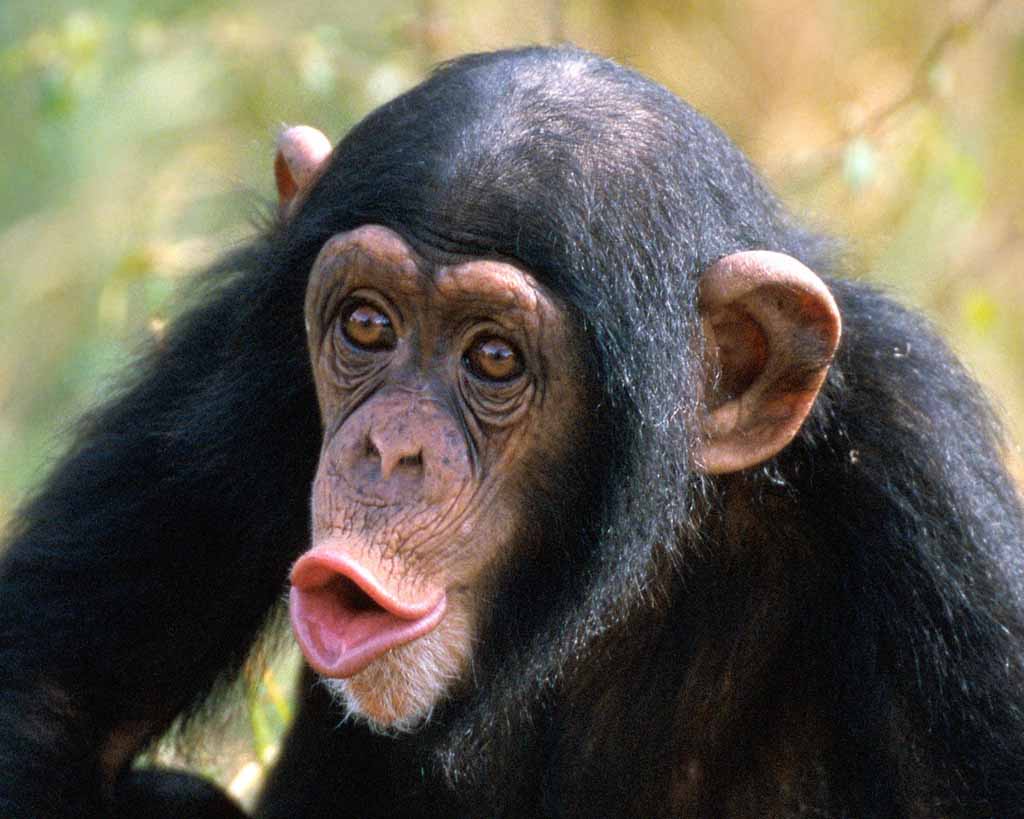
-
leave condi alone ! ...


-
Now stepmother is suggesting we go swimming.
Errr.... -
condi is a touchy issue
-
I can't believe you put Condi and Gong Li on the same boatOriginally posted by Fatum:leave condi alone ! ...
But seriously, I stand by my point that Condi looks like an ape and Bush like a chimp -

-
oh no, not my Gong LiOriginally posted by elindra:I can't believe you put Condi and Gong Li on the same boat
But seriously, I stand by my point that Condi looks like an ape and Bush like a chimp
Gong Li will never be same level as Condi
Die fartum -
travelling between Singapore & USA.
refuses to think about politics. -
This debate is occurring because of, umm, the Supreme Court's ruling that said that, uhh, we must conduct ourselves under the Common Article III of the Geneva Convention. And that Common Article III says that there, you know, will be no outrages upon human dignity. Uhh, it's, uhh, it's, it's a, like, it's very vague. What does that mean? Outrages upon human dignity. Tha, tha, that's a statement that, uhh, is, is wide open to interpretation.
-- If Dubya needs to have "outrages upon human dignity" explained to him, we're a lot worse off than we all feared. White House, Sep. 15, 2006
I would hope people aren't trying to rewrite the history of Saddam Hussein -- all of a sudden, he becomes kind of a benevolent fellow. He's a dangerous man. And one of the reasons he was declared a state sponsor of terror was because that's what he was. He harbored terrorists. He paid for families of suicide bombers. Never have I said that Saddam Hussein gave orders to attack 9/11.
-- Apparently "9/11" has been attacked... White House, Sep. 15, 2006
There -- it's -- you know, one of the hardest parts of my job is to connect Iraq to the war on terror.
-- Yes, we've been noticing... Interview with Katie Couric (CBS News), White House, Sep. 6, 2006
In some cases, we determine that individuals we have captured pose a significant threat, or may have intelligence that we and our allies need to have to prevent new attacks. Many are al Qaeda operatives or Taliban fighters trying to conceal their identities, and they withhold information that could save American lives. In these cases, it has been necessary to move these individuals to an environment where they can be held secretly, questioned by experts, and -- when appropriate -- prosecuted for terrorist acts.
-- The White House website marked "secretly" with the [sic] notation, so apparently Dubya was supposed to say "securely" or something else less accurate than what he said. White House, Sep. 6, 2006
I'll explain the strategy we're pursuing to protect America, by defeating the terrorists on the battlefield, and defeating their hateful ideology in the battle of ideas. The terrorists who attacked us on September the 11th, 2001, are men without conscience -- but they're not madmen. They kill in the name of a clear and focused ideology, a set of beliefs that are evil, but not insane.
-- Speaking in direct contradiction with statements he's made at least four times in the past, Washington, D.C., Sep. 5, 2006
It's important to have members of the United States Senate who understand the call of history and are willing to stand strong in the face of an enemy who is relenting.
-- Wrong word, Dubya. This one means the opposite of what you were probably trying to say. Salt Lake City, Utah, Aug. 31, 2006 -
Originally posted by the Bear: