::Homework Crapbox::
-
Film offers us a powerful tool to shift awareness and inspire action. It offers a method to break our dependence on the mainstream media and become the media ourselves. We don't need to wait for anyone or anything.
Just imagine what could become possible if an entire city had seen just one of the documentaries above. Just imagine what would be possible if everyone in the country was aware of how unhealthy the mainstream media was for our future and started turning to independent sources in droves.
Creating a better world really does start with an informed citizenry, and there's lots of subject matter to cover. Our country has to come to terms with the true history of Western civilization. It has to learn about basic ecology. It needs to understand some basic truths about peak oil and the monetary system, the truth about capitalism and governments.
Our society needs a new story to belong to. The old story of empire and dominion over the earth has to be looked at in the full light of day - all of our ambient cultural stories and values that we take for granted and which remain invisible must become visible.
But most of all, we need to see the promise of the alternatives - we need to be able to imagine new exciting ways that people could live, better than anything that the old paradigm could ever dream of providing.
And all of this knowledge and introspection, dreaming, questioning, and discovery is essential for a cultural transformation that addresses root causes. This knowledge is vitally necessary. Taken together, this knowledge, which is documented throughout the 350+ documentaries we've featured above, will lay the foundation on which the next paradigm will be built, post empire.
So take this library of films and use it. Host film screenings, share these films with friends, buy and give copies to your elected officials and school faculty. Get this information out in to your community and you will be laying the foundation for a local movement for mass societal, environmental and economic change.
-
There is no serious need to give citizenship to so many as we have done the past few years. Lets not forget, those who became citizens early in their working life, will face similar issues to deal with, just like other Singaporeans, and they may end up not marrying or having a very small family. And we will be back to square one. By then they already have citizenship rights.
If we can keep most foreigners as PRs or work passes, the financial burden on the government will also not increase so much more as we add services for families and the elderly. Therefore the need to increase taxes or GST will be limited.
Like in the middle east, Singapore citizens also get regular handouts from the government, sharing some of the economic surplus dished out during the annual budget. It has been very useful for the lower income group. If we are strict in granting new citizenship, the size of the handouts and other welfare budget will not increase so much.
Singaporeans whose families have been here since before & after the 2nd world war, and since before and after the independence of Malaya (1957), as part of Malaysia (1963) and then independent Singapore (1965) have at least some common short history together as one people.
In the 1960s to the 1980s, as we embarked on economic development programme, people were asked to make early sacrifices for the sake of the country. One of which is when the Government acquired their land at around $1 psf for economic purposes.
Most villages were torn down and the established communities were dissolved. People were uprooted from their villages and moved to housing estates. Everyone had to adjust to new surroundings.
My village head used to own a 50-acre coconut plantation. We were all moved to Toa Payoh, Hougang, Kallang and Whampoa. We still stayed in touch. I met the children of the village head recently. They are mostly taxi drivers, property agents & hawkers.
They had to struggle hard to make a living and could only imagine what it would be like if their land (estimated to be worth a few billion dollars today) had remained with the family.
There are many other stories of locals working with the Government to ensure Singapore’s survival as the future looked very uncertain in 1960s. We all felt that we were all in ONE TEAM, as if everyone were looking after each other and have a greater common interest in mind. The government was seen as very caring and the people responded accordingly.
Back then we rode on Democratic-Socialist values – a mix of democracy with some essence of socialism that allowed us to come up with pro-people national policies – cheap education, housing, medical care and welfare assistance for the needy. We even erected stand pipes in villages.
I think we were all poorer but somehow I could feel that THE SENSE OF UNITY WERE A LOT STRONGER. This include the SENSE OF BELONGING and TEAM SPIRIT between the people and the government. It felt like we were all ONE BIG MULTI-RACIAL FAMILY. We moved as one, act as one – all for the good of the people and the nation.
Today we are so much richer – one of the richest country by per capita income. But I am not sure if the SENSE OF UNITY, SENSE OF PURPOSE & NATIONAL TEAM SPIRIT between the people and the Government have all become stronger. I suspect it has not grown stronger. Not everyone is doing as well. Not everyone earns as much as the per capita income number. But property prices had skyrocketed.
Naturally with one of the highest income in the world, our cost of living here is also one of the highest. Everyone understand this. But I cant say that THE SPECIAL FEELING OF BEING ONE BIG SINGAPORE FAMILY STRUGGLING TOGETHER FOR THE COMMON GOOD is still there. Maybe not as strong as it used to be. Although it should have become stronger.
And I suspect the newer development motto of Singapore Inc – CAPITALISM – had a lot to do with this situation. Capitalism, in extreme and especially as it is advocated in America, means to each his own. You do well, you enjoy your good life (even to the extreme). If you don’t do well, that’s too bad. Its your own fate or fault.
While some argued that capitalism will also bring out some good in people and the nation, I worry it will bring about some serious social problem. It can weaken, even tear, the fabric of our society. We may end up with a class society – the super rich, the rich, the upper-middle income, lower middle and the lower class – the ordinary folks.
The problem is, under such a system, everything will be priced according ‘to the market value’ – be it housing, medical care, food etc. And such prices are easily affordable by the richer people in our society. The not so rich will face problems.
For example, in 1971 when my family moved to Toa payoh, my father could only afford a 3-room flat. The price was $6,800. While his salary was so small, he had no problem to service the loan. While most people today are earning many times more than my late father’s generation then, they will not feel as easy to own and service the loan of a 3-room flat. The price has gone up like 30 times.
Somehow this and many more experiences of our people, has eroded the sense of ‘being cared’ by the Government. More people felt they had to struggle on their own all their lives, beginning at kindergarten age, in order to have a life here.
And today, with so many ‘new citizens’ included, whatever surpluses and economic benefits through Government ‘giveaways’ had to be shared with all the ‘new Singaporeans’. More people sharing the same cake.
But they, their fathers and grandparents, were not here then in our poorer days. Back then our parents and grandparents had to make sacrifices (land, home, kampungs etc) and sweat it out for our families, the people and the country.
This will forever mark the difference between the original citizens of Singapore and the newbies.
Will the capitalist system that the Government adopted and the big jump in demographic changes that has occurred the past few years create a wider gap between the people and government? Will we end up with LESSER UNITY AS ONE NATION, ONE PEOPLE? I feel it has happened. I just hope it wont get worst.
If we are to move ahead stronger and more united, I think the Government need to study these carefully and make the necessary move to RE-UNITE THE NATION, so that we can all MOVE AS ONE again. I doubt we are.
It has become more fashionable these days for people to disagree with the government. That is to be expected as the people becomes more educated and discerning.
The more worrying trend is, many more people than before simply disagree with everything that the Government does. They even criticise good government efforts. But why? For them, its like there is no more trust left. They have entered a mode of less trusting the government.
It’s sad if we end-up a more fractious society with the people looking at the Government far differently than the earlier generation used to. Whatever has happened since about a decade ago, must have caused some hurt in the hearts and minds of the people. It caused a rift to occur. We need to do something to address and heal this.
The key to this healing is to BUILD TRUST between the people and the government. Otherwise, a DISUNITED Singapore, is not at all good for this little red dot’s future.
regards
Maidin Packer, Singapore -
[China] - Training to be a waitress in China's restaurants
http://www.youtube.com/watch?feature=player_embedded&v=ypEl7A2pNLI -
-
皇上驾到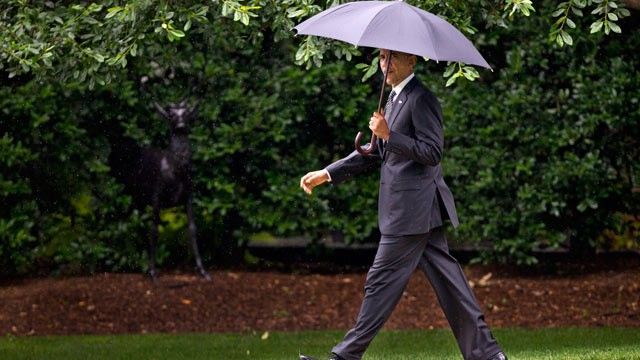





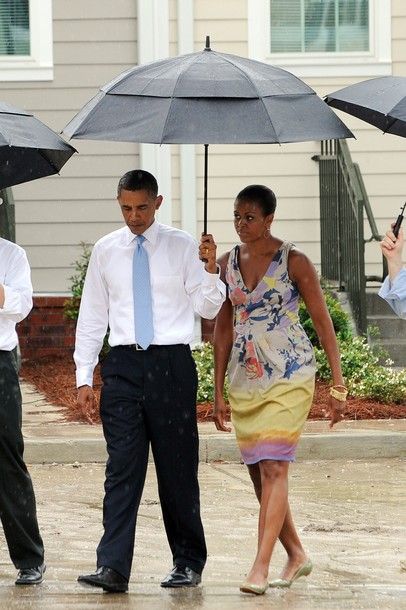
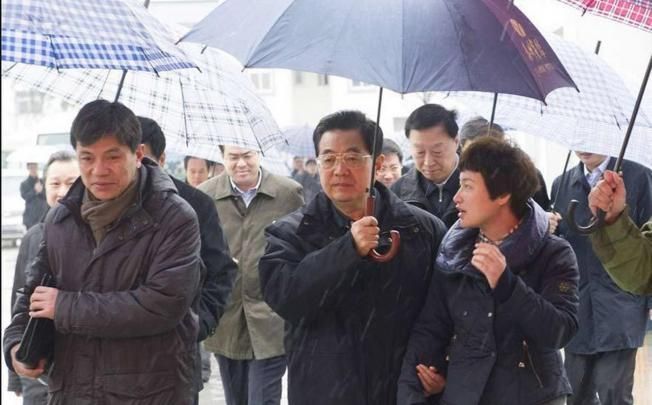
-
The presidents took their own umbrellas....while.....hmm!!!
-
and u mean it is not even raining???
-
UltimaOnline the umbrella part is so funny! And nice short-essay you got there.
-
Glad you guys enjoyed it. Good thing, this crapbox thread, for folks to share interesting random stuff, like that 'essay' you mentioned like most of my posts in this thread, is probably a copy-&-paste from elsewhere; I try to include the original URL if possible, but SgForums has a rule which says no linking to other (ie. rival) Singapore forums.
Did you guys watch the Panda segment of Random Island (that I posted previously)? The Pandas were soooooo cute!!!

http://www.youtube.com/watch?feature=endscreen&v=XMv_PxZWQ8kThe Pandas are back again in episode 5 :
http://www.youtube.com/watch?v=Yk0ctigbZhI -


-
Originally posted by FireIce:
ya i saw. hahaha. but he dint answer the question either. It says "using the same red bird".
-
anyway, ideas to improve this forum? It has been quite sometime since i reviewed this forum. Been out of job and starting new job next week so i am rather free these few days
-
[Turkey] - Assassination attempt caught on video
In case you're wondering, it's because the gun jammed (the would-be assassin *did* pull the trigger).
-
WOMAN SHITS ON DANCE FLOOR, KEEPS DANCINGFEATURED ARTICLE
Club Daum erupted into pandemonium Saturday night after 24 year old Ellen Harris, while under the influence of an explosive cocktail of drugs and alcohol, defecated on the dance floor. "She just squatted on the floor, let loose a giant deuce, and kept dancing as if nothing had happened," says James Deer, the manager and proprietary of the venue. "I was across the room, talking with the bartender when I noticed what happened."
The dance floor was crowded at the time of the incident. Party goers near Harris soon found themselves slipping and sliding through her brown river. "I was walking towards the bar to buy some mojitos for me and my girlfriend when I noticed three people fall down in front of me. When they got up, their arms and shirts were soaked and nasty looking. One of the guys who got up sniffed his arm and within seconds of doing that, he puked all over himself" says Clarence Brown, a 19 year old American who was visiting Montreal for his birthday. "He just kept puking. It was all over the floor, which caused other dancers to slip and fall. I turned tail to return to my girlfriend, but someone behind me grabbed my shoulder for support as they were falling down, which caused me to go down with them. When I hit the ground, I could feel that my pants were wet. I was sitting in vomit. I got up as best as I could without touching the floor, but I still managed to get a bunch on my hand and arms. I'm surprised I didn't puke, because everyone else was."
"Ellen was still dancing like nothing had happened. Everyone around her was on the floor, covered in vomit, yelling and screaming and freaking out, and she was just bopping her head, oblivious to it all, trapped in some sort of drug fuelled alternate reality" says James Deer. "I was in a state of shock. No one can prepare a club owner for a situation like this. It was like a war zone. The vomiting was contagious. Within minutes of that idiot crapping on the dance floor, there must have been twenty or thirty people puking all over themselves and each other in my club. The place stunk of feces, bile, and human failure."
The paramedics were called, and the bouncers cleared the dance floor.
"I closed the club early, but I don't know if i'll ever open it again. Not without a serious overhaul. Ellen Harris ruined Club Daum. From now on, Daum will forever be associated with people vomiting all over each other."
Ellen Harris couldn't be reached for comment. -
Largest Cave in the World, Vietnam's Son Doong Cave :
http://singaporeseen.stomp.com.sg/stomp/sgseen/this_urban_jungle/1574236/vietnams_largest_cave_in_the_world_can_fit.htmlBeing within the cave invokes surrealistic memories of a Hollow Earth, moreso than almost any other cave, because there's actually an entire forest within the cave (due to light entering from a collapsed section of the roof).

-

-
Ellen Harris

-
BuiKia posted :
I think this taxi driver is telling the truth except for the parts where I highlighted in red.
once i picked up an angmoh lady at clarke quay at wee hrs of morning. she was 24yr old but looks younger and cute. she wanted to go to simei, so i made a wild guess and casually asked if its melville park condo? she was quite surprised and asked how come i know her condo, which i cheekily replied that i could read her mind. then with a caring voice i gently asked her how was her night? probably she didnt meet any sweet guy that night and one cabby was so nice, so gentle and so sweet... and could 'read her mind' and that made her really happy and chatty..... we chatted warmly and openly along the journey....i found out she was from UK and working as an english language teacher here. after we reached her condo, she paid her fare, gave me some tips and ....then she asked me cordially to go up to her apt. i was so tempted to go up with her, while she was waiting for my answer....i thot of my beloved wife at home waiting for me and i politely declined her. i think i did the right thing not to cheat on my wife....as it could have been my first sexual experience with an angmoh lady....i was so tempted....i almost cheated on my wife....but in the end.....thanks god i didnt.... -
Amusingly, this social phenomenon holds true for all Asian countries, not just China. In fact, this was already noticeable in Singapore well over a decade ago.

-
[Taiwan] - Man dies in escalator accident.
Do be careful on escalators, they're a lot more dangerous than you might think.
http://www.liveleak.com/view?i=bc5_1312420246 -
SiongKia :
In many other places you just have to heighten your alertness and safety - mindedness. This will help in your overall awareness and lessen the chances of personal harm to yourself.Many singaporeans are so protected and safe here that their survival quotient is very low, making them easy prey when they travel.
Enforcer :I have always said the sane thing. Singaporeans are very poor travellers, very unsafe I would say. They took for granted the safety in Singapore and failed to display even the simplest of street intelligence while overseas.
Goldeneye :Even within Singapore, there are areas like Geylang where your risk goes up ten times after dark..
Enforcer :The only danger in Geylang is, all those chickens waving at me.
The most dangerous place is actually those foreign workers dorm. I have heard alot of rapes going on at those areas that never made the news.
Buikia :Share some of the stories leh.
Enforcer :One case was a PRC girl, came here to work as an admin and the company put her up at the dorm in Tuas. Went back late one day due to OT and got raped by 3 Indians. The girl committed suicide after that. Both news not reported. I pity those serangoon gardens residents. -
[China] - The Rich get Richer, the Poor get Angrier
The worsening Gini coefficient is certainly familiar in Singapore (and no doubt, to some extent or other, the same throughout the world), which is precisely why the ruling party lost the most recent Punggol East By-Election.
The Chinese have an expression to describe coping with hardship: chi ku—to eat bitterness. The sensation is familiar to Wang Hui, a 50-year-old salesman in Beijing. Wang earns less than $6,000 a year, struggles to put his son through school, and is openly jealous of those around him who have made out better in the new China. A former colleague, for example, who invested in real estate at the right time, now owns four apartments and a Mercedes-Benz.“I’ve seen so many people get rich so quickly,” says Wang, whose missing bottom tooth and cracked watch seem to accentuate his Willy Loman predicament. “If I worked for 50 years, I wouldn’t make that much money. Of course I’m envious.”
Wang isn’t alone. In fact, he reflects a widespread dissatisfaction in China, one that at first glance might seem counterintuitive. It’s been more than 30 years since Chinese leader Deng Xiaoping opened the country and the Communist party embraced the mantra “to get rich is glorious.” In the decades since, hundreds of millions have been lifted out of poverty. In 2010, China surpassed Japan as the world’s second-largest economy. The Chinese today are four times richer than they were 20 years ago, and people like Wang have opportunities and creature comforts unheard of a generation ago.
But despite China’s economic miracle, recent studies suggest Chinese aren’t any happier than they were in the early 1990s—the result of an income-inequality gap that has grown to a chasm, and demographic trends that have created complicated new realities for millions. These have created increasingly evident pressures, and frustrations are bubbling to the surface. Protests large and small have been growing across the country in recent years—protests against environmental problems, corrupt officials, government land grabs and more. The number of protests doubled to 180,000 “mass incidents” between 2006 and 2010, according to research by the Chinese Academy of Governance. This fall, residents in the coastal city of Ningbo organized through social media, and rallied against the expansion of a chemical plant. A similar protest occurred last year in the prosperous city of Dalian. In 2008, residents of Shanghai successfully fought the expansion of a magnetic-levitation train line, and in late 2011, citizens of Wukan, in Guangdong province, briefly seized control of their village in response to a land grab by corrupt officials.
Protests are happening so frequently in China that further unrest seems inevitable, and this is worrying China’s ruling Communist party, which has long staked its legitimacy on the promise of prosperity through economic growth. While getting rich is still glorious in China today, officials are busy trying to appease a dissatisfied populace by belatedly addressing corruption and the country’s growing list of social and environmental maladies.
According to a study published in May from researchers at the University of Southern California (USC), Chinese people’s life satisfaction actually declined between 1990 and the mid-2000s, a period when gross domestic product and average consumption increased fourfold. The trend rebounded in recent years but is still below 1990 levels, according to the report, which was published in the journal of the National Academy of Sciences.
The USC study drew links to post-Soviet countries where, like China, economic growth corresponded with rising unemployment and the dismantling of social safety nets, which have hit the poor especially hard. The report’s authors argue that the main reason for China’s stagnant life satisfaction is resentment of the haves by the have-nots. The boom times have disproportionately benefited the rich and, while average Chinese have grown wealthier in absolute terms, they feel relatively disadvantaged, especially since wealth is often flaunted in China through material possessions—from Ferraris to Gucci handbags to rare pets. (A coal magnate recently paid a record $1.5 million for a Tibetan mastiff at a dog auction in the port city of Qingdao.) While middle-income earners reported little change in their level of happiness, life satisfaction among low-income earners dropped precipitously.
“The evidence is that the rich-poor gap in life satisfaction in China is quite high relative to most countries,” says Richard Easterlin, an economist at USC who was the lead author of the report. In the 1970s, Easterlin developed what has become known as the “Easterlin paradox,” which suggests economic prosperity makes people happier only to a point.
Other surveys in China have drawn similar conclusions. Last year, a state-owned information portal, China.com.cn, polled 1,350 Chinese and found that only six per cent of respondents described themselves as “very happy,” compared with 48 per cent who were “not happy.” (The results were briefly published online in a story in China Daily, a state-owned newspaper, before censors removed the story from the Internet.) A 2011 Gallup poll ranked China 92nd, near the bottom, on its list of 124 countries where people were asked to assess their well-being. Only 12 per cent of Chinese said they were thriving—the same as in Yemen and Afghanistan.
“My life is not happy,” says Zhou Hao Hao, a 27-year-old lawyer for a state-owned company in Beijing. He half-jokingly describes himself as an “underprivileged loser” and counts himself among an unfortunate member of a growing cohort of young men known in China as the san wu, the “three have-nots”—no apartment, no car, no wife. (Buying an apartment is a particular challenge for young Chinese, with high real estate prices despite a glut of empty apartments, many of which require a cash down payment of up to 50 per cent.) Zhou, who came to Beijing from coastal Shandong province eight years ago, feels pressure from all directions—his parents, himself, society—to acquire all those things and more. Sometimes it seems futile. “I don’t have any clear objectives in life,” he says over coffee in downtown Beijing. “I don’t see a clear path for the future.”
China’s government has taken note of the people’s melancholy, making happiness a key part of the next five-year development plan and promising to tackle non-economic quality-of-life factors such as health care, education, housing and the environment. “Everything we do is aimed at letting people live more happily and with more dignity,” said Premier Wen Jiabao, in his New Year’s address to the nation. He added that officials would be judged on their ability to make people happy. President Xi Jinping pledged at the 18th Party Congress in November to improve citizens’ lives with “better schooling, more stable jobs, more satisfying incomes, more reliable social security, higher levels of health care, more comfortable housing conditions and a more beautiful environment.”
What officials aren’t talking about, however, is that part of what is fuelling resentment is a widespread belief that government is synonymous with corruption. “Besides income inequality, corruption is the biggest factor” contributing to people’s dissatisfaction, says Hu Xingdou, an economics professor at the Beijing Institute of Technology. Hu argues that China has lost its spiritual centre—Confucianism, especially, is a conservative philosophy that guides an individual’s ethical behaviour within a community—and that the quest for wealth has filled the void. “Chinese people don’t believe in anything,” Hu says. “Money worship dominates, and this is the biggest factor contributing to corruption.”
In 2012, China ranked 80th out of 174 countries in Transparency International’s Corruption Perceptions Index, with Denmark being the least corrupt at No. 1. (By way of comparison, Canada ranked 10th.)
Exacerbating discontent among regular Chinese are profound demographic trends that have transformed Chinese society in recent decades. Some 250 million people have migrated from the countryside to major urban centres. This mass urban migration has strained the family unit, traditionally the centre of social life in China. The one-child policy, now more than 30 years old, has created a generation of only children, many of whom have moved alone to cities to pursue lives and careers.
On the Internet, commentators have adopted the term bei piao—or “Beijing floater”—to describe the legion of young people in the Chinese capital who find their lives lacking in meaning and direction. Lu Peng, a 26-year-old who works in the financial industry, is a self-described bei piao. Like Zhou, the Beijing lawyer, Lu is a san wu, a have-not, and he has struggled to adapt to life in Beijing after a year and a half, often finding himself overcome with feelings of loneliness. On the surface, however, Lu has much going for him. While his parents worked their whole lives in factories in Jiangsu province, he earns almost $24,000 a year. He is likeable and working on improving his social life, but still reports an overall feeling of discontent. “I’m struggling,” he says.
A 2009 paper in the Journal of Happiness Studies, titled “The China puzzle: Falling happiness in a rising economy,” described people like Lu and Zhou as “frustrated achievers,” those who are prospering but who don’t necessarily feel they are. They are doing far better than previous generations, but because they see others doing much better, they feel less satisfied with their lives. Today, suicide is a leading cause of death among young people.
Urban women are also not immune from the stresses of modern Chinese society. Much pressure is placed on women to marry wealthy men and promptly produce a child; ambition and success are often frowned upon. In 2007, China’s Women’s Federation defined the term “leftover” women (sheng nu) as unmarried women over the age of 27, an increasingly stigmatized group. According to a 2010 Women’s Federation survey, more than 90 per cent of male respondents said women should marry before the age of 27 or risk a loveless life.
“In this society, you should be married and have kids while you’re young,” says Yang, a sheng nu in Beijing who works in public relations and gave her age as “around 30.” (She asked that her surname not be published.) Yang says many men she meets find her too old to marry. She doesn’t want to settle for someone she’s not satisfied with, but feels pressure from parents and peers to enter into a relationship soon. “When I meet new people, they feel weird around me because I’m single.”
There is some positive news, however. Gao Wei, a sociology professor from China Youth University for Political Sciences, who has conducted research on happiness in China since 2008, says Chinese born after 1990, in particular, are learning that life is about more than just earning a buck. “Post-’90s Chinese care more about their quality of life, leisure time and work-life balance rather than money,” Gao says. “This is a good trend.” Many Chinese are also looking for spiritual meaning beyond the pursuit of wealth and material possessions. Confucianism and Taoism have both undergone revivals here in recent years and a growing number of Chinese are turning to Buddhism, which has an estimated 300 million followers in China, for spiritual guidance.
For now, however, resentment rules for Wang Hui, the Beijing salesman. He’s tried praying to Buddha, too, but it hasn’t worked so far. Wang dreams of one day opening a small restaurant and of taking up his passion—painting—once again. But he recognizes those dreams will likely remain just dreams. He’s resigned to continue eating bitterness. “There’s nothing I can do,” he says. “Real life is cruel.”
-
[Singapore] - "Ah Boys to Men" music videos
Theme song
http://www.youtube.com/watch?v=3gI0s1r6_HQTheme song (acoustic)
http://www.youtube.com/watch?v=qmKBLGPwJTo


