


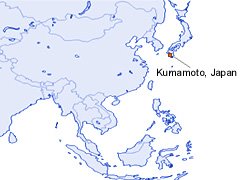
 The city of Kumamoto is located in the center of the southern island of Kyushu Japan. Ramen from this region is dominated by the famous Hakata style ramen that is from the northern city of Fukuoka, but the ramen from Kumamoto has a few distinct features that sets itself apart.
Kumamoto style ramen soup is a tonkotsu based, white colored broth, but where it differs from Hakata style ramen is its milder flavor. Kumamoto style ramen is also often flavored with fried garlic oil that is noticeable with the brown oil. The noodles are often thicker than the Hakata style, and includes unique toppings such as kikurage mushrooms, and lightly cooked or raw cabbage.
Hakata and Kumamoto style ramen are definitely very similar. Hakata style ramen has really taken over the ramen scene in Tokyo since the early 90's and remains very popular today. I like to think of Kumamoto style ramen as the reserved younger sibling that has slowly built a strong reputation for itself.
 ★★★★ ã�ªã‚“ã�¤ãƒƒäº (Nantsuttei) - Tokyo
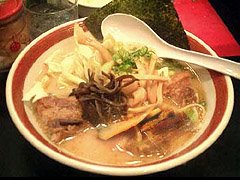 ★★★ ã�²ã�”ã‚‚ã‚“ã�š (Higomonzu) - Tokyo
★★★ ��もん� (Higomonzu) - Tokyo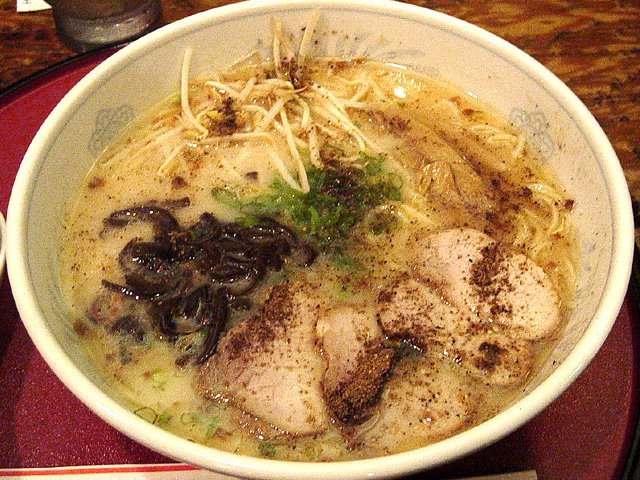 ★★★ �むら�� (Ko-Murasaki) - Shin Yokohama
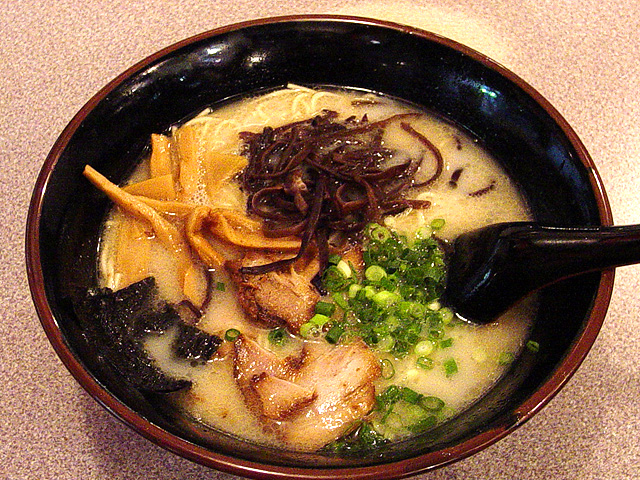 ★★★ 肥後�れん (Higonoren) - Tokyo
 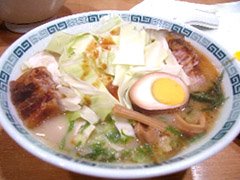 ★★★ 桂花 (Keika) - Tokyo
 ★ 味�ラーメン (Ajisen) - Tokyo


 Japanese authorities intend to set a new record of tourists coming in from Singapore and organized a special campaign centered on Japanese food to achieve the goal.
 Fun dining at Japan's street food stalls
 Japan is famed for its elaborate fine dining, but tough economic times means that street-food culture is flourishing in cities such as Kyoto and Tokyo. Street food has never flourished in Japan. The Japanese still see it as rude to eat on the go. But that's starting to change. Sushi started as Tokyo street food, and the best places to eat it are still down by the city's Tsukiji fish market. At one tiny stall, with four stools, I tried chirashi - "scattered sushi". It was the off-cuts of the sushi (mine arrived with salmon, tuna and salmon roe) artfully presented on a donburi. A Tokyo speciality, and - right on the doorstep of Tsukiji - the freshest leftovers I've ever tasted. The best places for ramen - the delicious Japanese noodle dish - are also on the squares down by the fish market. Inoue for instance (4-9-16 Shin Ohashi Dori, Tsukiji, Chuo-ku, Tokyo), serves a light ramen based on chicken stock - a real treat to eat among the shoppers and market workers.
 The name Okinawa means "rope in the open sea," and the island archipelago in southern Japan offers tropical beauty that lassos in more than 5 million tourists annually. Over the past year, the Japanese prefecture has offered a new lure for visitors: Nissan LEAF electric cars. Setting its island-style pace aside, Okinawa touts one of the country's most aggressive EV infrastructures, with 220 Nissan LEAF rental cars and 27 quick-chargers at 18 locations. Starting this month, Nissan and JTB Travel are jointly offering a tablet application called "Camploo - Okinawa! Campaign 2012". The app highlights spring training activities for some of Japan's most popular baseball teams.


