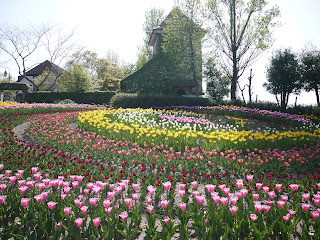


 æ’®å½±å ´æ‰€ï¼šã‚¨ãƒªã‚¢ï¼¡ã€€æ’®å½±æ—¥ï¼š2011/04/01


.jpg)
.jpg)
.jpg)
.jpg)

.jpg)
.jpg)
.jpg)
.jpg)
.jpg)
.jpg)


.jpg)
.jpg)

.jpg)


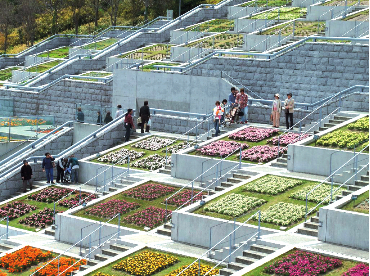


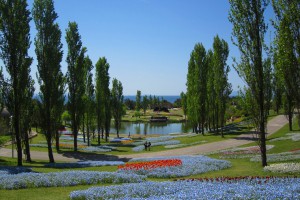



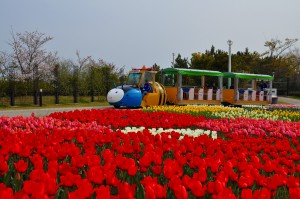


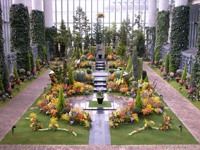


This flower park lies surrounded by greenery at the foot of Mt. Fukuchi. Visitors will delight in seeing the flowers each season has to offer: cherry blossoms and poppies in the spring, hydrangea and lotus in the summer, and cosmos as well as the changing leaves in the fall! In addition, as the name of the area where the park is found (Yuribaru) would suggest, an abundant variety of lilies, or yuri, have been planted there, including several rare species like the bamboo lily (in bloom from late May to early June), which has been designated an endangered species. Besides flowers, there are open, grassy spaces and rest areas where visitors can take a blissful break while taking in the view! Every other week, events are held! Participate in a walking event! The perfect spot to relax and eat lunch on a weekend or holiday. For visitors with a green thumb, the gift shops in the park sell seedlings and potted plants, so pick one up on your way home and start a home garden!





In Chokuan Area are a lot of events which the four seasons can be felt. Enjoy rich nature and colorful flowers, and join in exiting festivals! You will forget about tiring daily life busy with works!
April
The 130,000 tulips color Nogata's spring
Nogata Tulip Fair

On one side of the Onga River are tulips. Almost 20 years ago local volunteers planted 10,000 tulip bulbs. Presently, there are 18 varieties of 130,000 tulips that color the riverbank of the Onga River. In spring, the cherry blossom trees in the n...

June
Watch fireflies' dance at Miyawaka surrounded by water and greenery!
Miyawaka Firefly Festival

This firefly festival is held at Nishikura no Oka Sports Park. At the beginning of June, many fireflies dance around the whole park! On the weekend, in the great outdoors many attractions are held! This is the best time to take the Hotaru Festiva...
July
Watch the heroic lion dance passed down from the Edo period and escape from evil!
Narazu Lion dance

This traditional dance is known as the Lion Dance and is held every year on July 1st in the Narazu area of Kotake town. Originally began in the year 1752, this dance continued for 8 years to celebrate a good harvest and was called Aki no Okunchi....
July
The feature, Niagara and 6,000 fireworks are spectacular!
Nogata Summer Festival

More than 150,000 people every year gather in Riverside Park which is located near Nogata City Hall to watch as 6,000 fireworks are shot off. A fireworks launcher with a diameter of 200m launches a fireworks display of a beautiful large wheel int...
October
The men's roar resonates! The large festival which has been passed down since Edo Era.
Wakamiya Yahachigu Hojyoe / Daimyo Procession

A Hojyoe festival is a religious festival where participates release captive animals. This traditional festival is one of Fukuoka biggest and has continued from the Edo Period. On the first day of the festival, the town is wrapped in a wonderful a...
Winter
The naturally created mysterious scenery Sear the magnificent view into your memory!
Sea of clouds of Kiyomizu Temple

Kiyomizu Temple which was established by the priest Gyoki in the Tempyo period (729-748) is a temple with a history of paying respect to the statue of the Goddess of Mercy which is located in the main temple. Due to its high elevation, this temple...
December and January
The huge and beautiful Kadomatsu made by the hands of the locals!
Japan’s Greatest Kadomatsu Festival

Kadomatsu are a traditional Japanese decoration of the New Year placed in pairs in front of homes to welcome ancestral spirits or kami of the harvest. In Miyawaka City an event is held every year where these traditional Japanese decorations are bi...
A lot of remarkable events!
Have a relaxing time at a flower park
Mt. Fukuchi Flower Park

This flower park lies surrounded by greenery at the foot of Mt. Fukuchi. Visitors will delight in seeing the flowers each season has to offer: cherry blossoms and poppies in the spring, hydrangea and lotus in the summer, and cosmos as well as the ...















 OtoNaru Yoko
 Mongamae also heavy "Akebono Ryokan"
 I ease the vegetables, and mix to put seafood
 And toss the whole to put the vinegared miso
 I also enjoy the beauty of the vessel



 Taste of Saga to have you in the caliber of the beautiful Saga
 "Tossed over". Because it is a dish that is served as a dish of course cuisine, required contact details.






 Nakamura's Tsu Oigo
 And skinned by down into three pieces, sardines occupy in vinegar with salt thin
 The pickpocket sesame seeds, put the miso, to put the sugar
 Vinegared miso is completed and mix well by adding vinegar
 I mix squeeze moisture radish, carrot
 Put the bowl in the vinegared radish and carrot is on, it put a sardine
 And toss to mix quickly by hand


 Steamed rice and sushi that uses a homemade rice
 "Tossed over" I had made


 Nakao Ryoko
 Cut by hand to sharpen pencils radish and carrot
 Mix the sugar and miso, and stir in the juice of sardines which made
 I squeeze in moderate moisture vegetables
 Even tasting After mixing
 The "toss over" yellow skin of yuzu also good accent you have finished


















 The island of Kujuku with its ria coastline is best for farming fish because of the calm waves created by its landscape. Oyster farming is particularly active, and the oysters in Sasebo are well known for their flavor and quality. The oyster season is between November and March, and you can enjoy them fresh, grilled, in soups, au gratin, etc.
 Sea bream is also farmed in Kujuku Island, and you can try freshly caught sea bream in restaurants. Fresh sashimi is a fixture, but in Sasebo, Sea Bream Shabu is popular. You dip a slice of sea bream in simmering soup, and once it is cooked, you dip it in a tangy ponzu sauce or sesame sauce.
 Hamburger is a household dish all over the world, but in Sasebo, we insist that it is homemade. Some shops bake their own buns, and the burger is grilled after the order is taken. It is priced around 300 yen to 500 yen. Hamburger was introduced to Sasebo in the 1950's by the American Navy handing down its recipe. It is now famous throughout Japan as Sasebo Burger.
 Lemon Stake is the Japanese version of the stake eaten by the American Navy officers. The beef is thinner than the normal stake, and it is lightly seasoned with soy based seasonings. The flavor of the fresh lemon added at the end brings out the flavors of the stake. It is priced around 1,000 yen to 2,500 yen.
 A military port was established in 1889 in Sasebo. Heihachiro Togo who was serving as the Commanding Admiral at the time was captivated by beef stew while studying in Britain, and introduced it to Sasebo. This beef stew is the recreation of that dish based on the recipe from that time. You can try it in hotel restaurants and eateries, and it is priced around 700 yen to 2,000 yen.
 Like the beef stew, this is another old navy food that has been recreated. Zenzai is a traditional sweet dish made of stewed aduki beans and sugar, and it is said that it was eaten by sailors to relieve fatigue and to celebrate a safe return home. Sometimes it contains “mochi”, a traditional Japanese rice cake. It is priced around 300 yen to 700 yen.
 The Japanese people's favorite Ramen differs greatly throughout Japan from the way the soup is made to its flavor. Tonkotsu soup (made from black pig) is the mainstream in Kyushu where Sasebo is, but in Sasebo, Agodashi Ramen made with the soup of flying fish is popular. It is a soy based soup with a very light flavor. It is priced around 600 yen.


