|
SOURCE: SPOON & TAMAGO
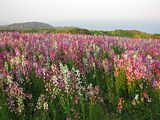
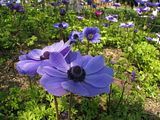
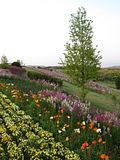
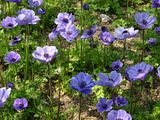
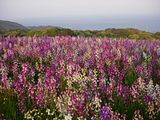
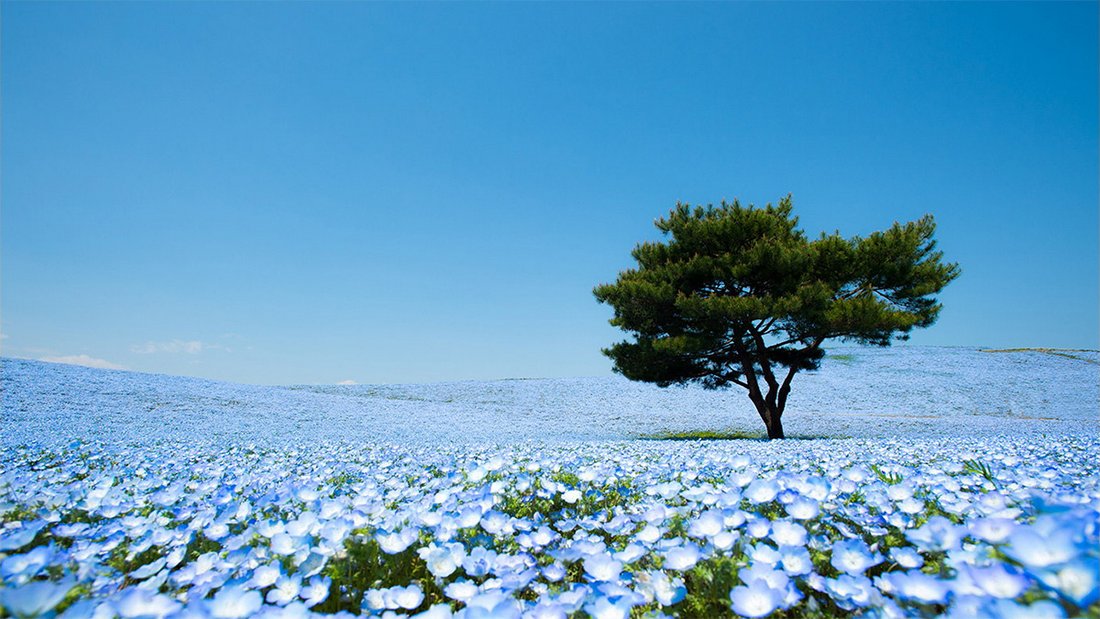 Japan’s cherry blossoms usually get all the attention for their short-lived beauty. But equally ephemeral are Japan’s Nemophelia, or Baby Blue Eyes. And once a year, around late April to Early May, an astounding sea of 4.5 million of these little flowers cover the land for a little over a week. If you missed the cherry blossoms you can still catch these. And don’t worry–these photos are from last year. photo by kobaken Hitachi Seaside Park is located on the coast of Ibaraki Prefecture, a little over 2 hours north of Tokyo. There, according to this helpful flower calendar, 4.5 million of these Baby Blue Eyes “paint the hills blue in Spring” in an event referred to as “Nemophelia Harmony.” It’s worth noting that a few of these photos have been digitally manipulated, but mainly to remove people from the photos because “it’s impossible to capture this without any people in the field,” says one of the photographers. ” Especially in the Golden Week Period.” You’ve been warned. 
photo by ituki kadiwara 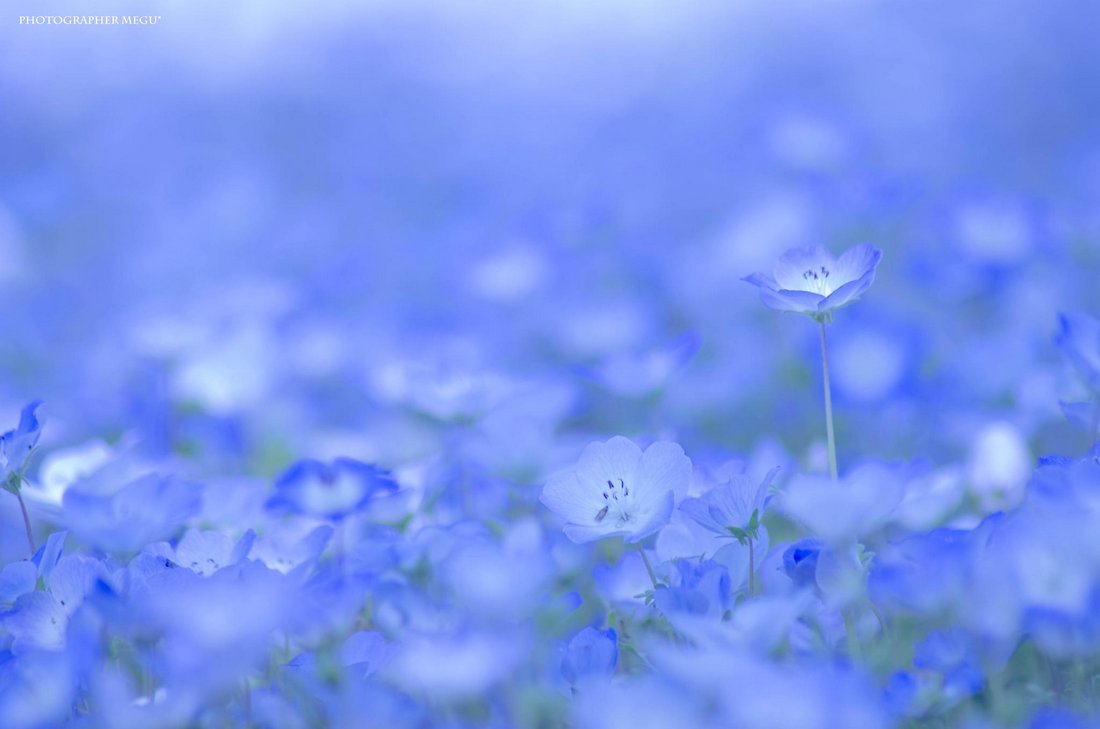
photo by Megu 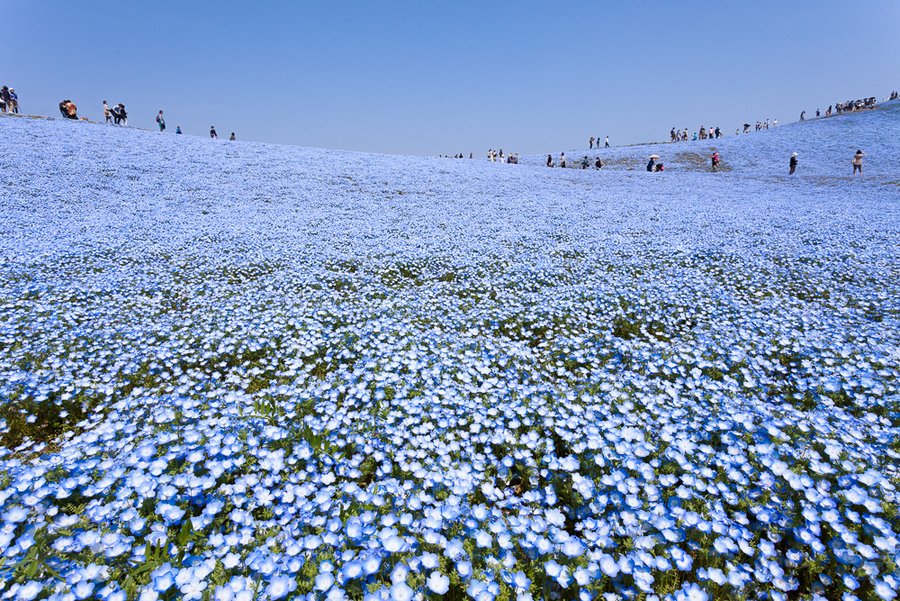
photo by atsuyoshi motoyama 
photo by Syota Takahashi Related posts:
|










Sensoji – The Ins and Outs of Tokyo’s Oldest Temple
April 8, 2015 Share 90 Tweet 2Everybody knows Tokyo doesn’t really have landmarks (think quick: what is Tokyo’s Statue of Liberty, Big Ben or Eiffel Tower—there isn’t one, right?) but if it did, it would have to be Sensoji Temple in Asakusa, a 15-minute train ride from Tokyo station, (20 from Shinjuku, 30 from Shibuya or just 5 from Akihabara). In a city full of temples, Sensoji is the eldest, boasting almost one and a half millennium of history, Tokyo’s biggest souvenir market and perhaps the gaudiest rendezvous point: its Kaminarimon Gate with the huge red chochin lantern.
 Photo by Grigoris Miliaresis
It all started in the river
Sensoji Temple was the reason the insignificant village Asakusa became a town: Ieyasu, the Tokugawa shogun who created the great city of Edo and made it Japan’s de facto capital in the early 1600s saw in Sensoji a very convenient symbolism (also, being the toughest warlord of his time, he needed all the help he could get from the gods and Buddhas). According to ancient geomancy, potential invaders come either from the northeast or the southwest, the front and rear “demon gates”. Sensoji Temple was the guardian of the northeast gate and Zojoji Temple in Shiba, near Tokyo Tower took care of the southwest; Ieyasu made them both his family temples.
When this happened, Sensoji Temple was already 1,000 years. Its chronicles put its founding at 628 AD through one of these stories that legends and religions are made of: while fishing in the Sumida river in the morning of March 18th, the brothers Hinokuma Hamanari and Takenari caught in their nets a small golden statue of the Buddhist deity Kannon; they tried to get rid of it but it kept coming up so they decided to keep it. When they returned to the village, they showed it to one of the chieftains, Haji no Nakatomo who, being a devout Buddhist understood what it was, and built a temple to house it. The temple was, of course, Sensoji –“Senso” is another reading of the characters for “Asakusa” and “ji” is “temple”.
 Photo by Grigoris Miliaresis
The miraculous statue became a local legend and soon pilgrims from all over Japan started flocking in; some of them being eminent Buddhist leaders and advertising their visit to their followers didn’t harm either. The only thing missing was the support of the samurai and this came later during the 10thand 11th centuries when noble warlords from the powerful Taira and Minamoto families came to visit and help build/rebuild various parts of the temple complex—one of them, Taira no Kinmasa is responsible for both the Kaminarimon Gate and the second big gate, the Hozomon.
Sensoji Temple (and Asakusa—their stories always go together) really boomed during the Edo period, first when Ieyasu made it his family temple and even more so when he “decommissioned” it in 1625. With its status as “shogun’s temple” gone, the townspeople of the new city felt closer to it; when the authorities decided to move to its vicinity Edo’s already famous red-light district, Yoshiwara (this happened in 1657 because a fire had destroyed the original Yoshiwara near Nihonbashi), the crowds multiplied. Consequently, Asakusa became the city’s hub and Sensoji Temple became even bigger and wealthier. It was then that the temple as we know it today was first built, by Ieyasu’s grandson, Iemitsu, the third Tokugawa shogun.
Standing at the gate
 Photo by Grigoris Miliaresis
There are many ways to visit Sensoji and appreciate the temple and its environments but the standard is to start from the Kaminarimon Gate and move up. The two statues guarding it are of the two rather obscure deities Fujin-sama and Raijin-sama, “god of wind” and “god of thunder and lightning” respectively; the latter (i.e. the left one) has given his name to the gate since another reading of “rai” is “kaminari”. Incidentally, this is what the characters on the big red lantern say: “Kaminarimon” or “thundergate”. When passing through the gate, check under the base of the lantern—you’ll find a dragon hiding there! This is because the official name of Sensoji Temple is “Kinryuzan” or “Golden Dragon Mountain”; the same thing is written on the green plate above the lantern.
The street lined with shops (mostly souvenir but also regular shops, some of them over 100 years old) is Nakamise Dori, meaning “inside street”, i.e. inside the temple grounds. They might seem like a recent invention to help relieve you of your tourist dollars but actually the Nakamise goes way back: you can find it in pilgrim guides from the times of Edo. Apparently, 18th century Edoites were as entrepreneurial as 21st century Tokyoites and 18th century pilgrims were as consumeristic as we are today! You can buy your souvenirs here—pretty much everyone does—but (a) there are some better alternatives and (b) let’ see Sensoji first, OK?

Somewhere in the middle of Nakamise you’ll see on your left a yard filled with “no photographs allowed” signs—reason being there is a kindergarten there that belongs to Denpoin Temple (which is part of Sensoji and residency of its abbot). Denpoin is almost always closed but if you happen to be here in the spring, check for the possibility it is open to visitors: once a year there is an exhibition of artworks from Sensoji’s collection in one of Denpoin’s buildings and by visiting this you also get to see its garden (it’s beautiful!).
At the second gate
After you’ve passed Denpoin, you have almost reached the real thing: the Hozomon, Sensoji Temple’s actual main gate (originally from the early 10th century like the Kaminarimon but, of course, rebuilt) and at the left the Goju no To five-storied pagoda (there are very few of them in Tokyo so take lots of pictures!) The pagoda, also from the 10th century is always closed to visitors because, well, it’s a graveyard. It contains memorial tablets of thousands of families and individuals, so you can only see its insides if you can prove that you have family there, so to speak, and even then only during very specific times of the year.

Next to the pagoda is the Hozomon with its two Nio statues-protectors –the story goes that the models for them where 1960’s sumo wrestlers Kitanoumi (on the left) and Myobudani Kiyoshi (on the right). The sculptor who made the right statue comes from a city called Murayama in Yamagata prefecture and to honor him and Sensoji that was kind enough to offer him the opportunity to showcase his work (in such a grandiose way!) 800 citizens of Maruyama get together every few years and create a pair of enormous waraji straw sandals –you will see them at the back side of the gate but don’t get too close: they weigh about 2,5 tons each!
Having passed the Hozomon Gate, you’ve reached Sensoji proper, the main temple (Hondo or Kannon-do) still housing the statue of Kannon the fishermen found 1400 years ago (or so they say: the statue was allegedly so radiant that they buried it in the ground inside Sensoji Temple and no one has actually seen it since). The shops at both sides of the last stretch sell the official Sensoji merchandise: omamori amulets, scrolls, incense to burn at the huge burner in front of the temple’s stairs, books about the temple, (in Japanese) and omikuji fortunes. If you aren’t set on some particular souvenir, something from there will be cheaper and more worthy as a conversation piece; personally I’d go for the goshuin calligraphy with the temple’s red stamp and the date of your visit: it goes for ¥500 and it’s written just for you by the temple’s priests.
 Photo by Grigoris Miliaresis