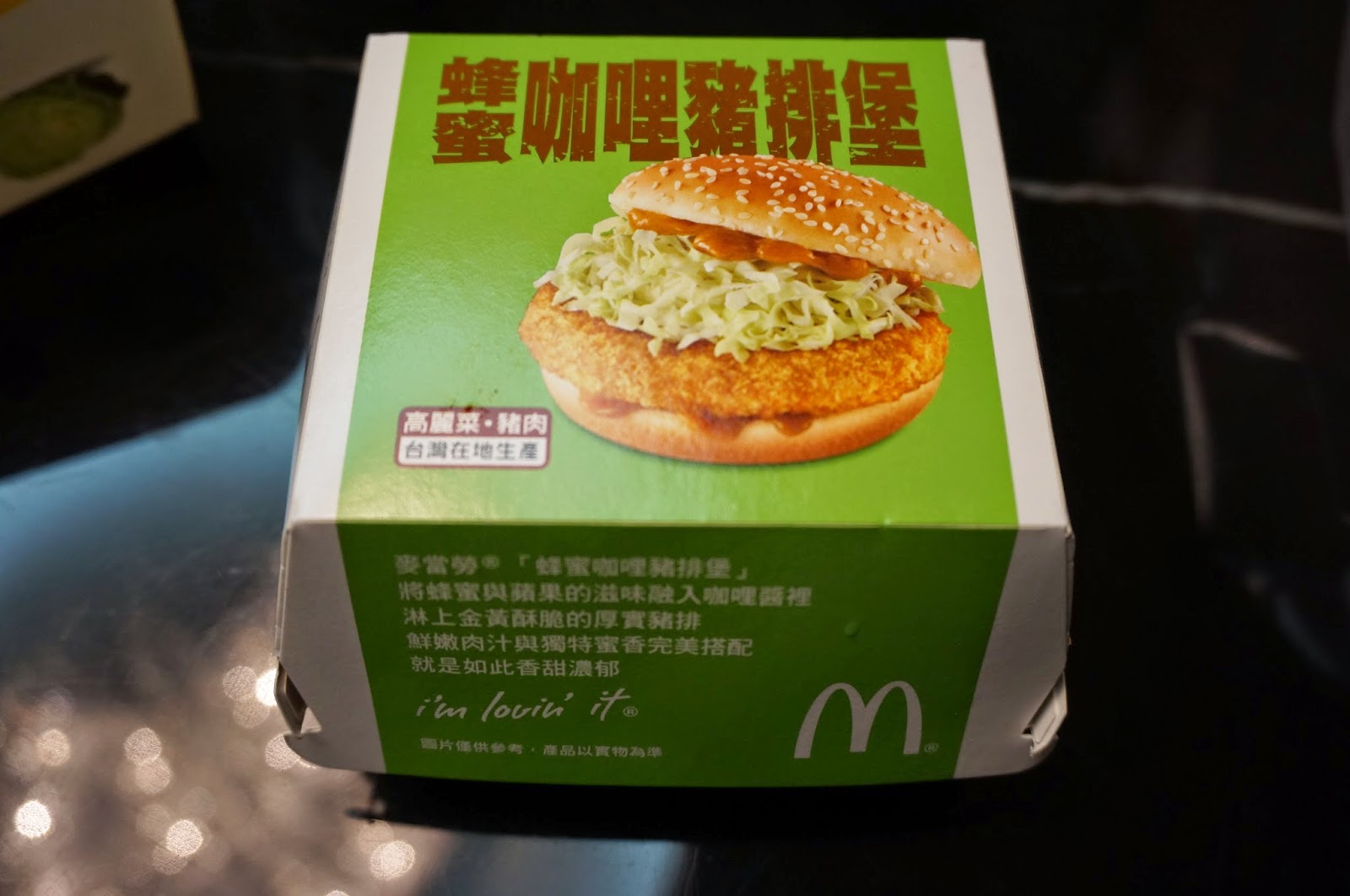
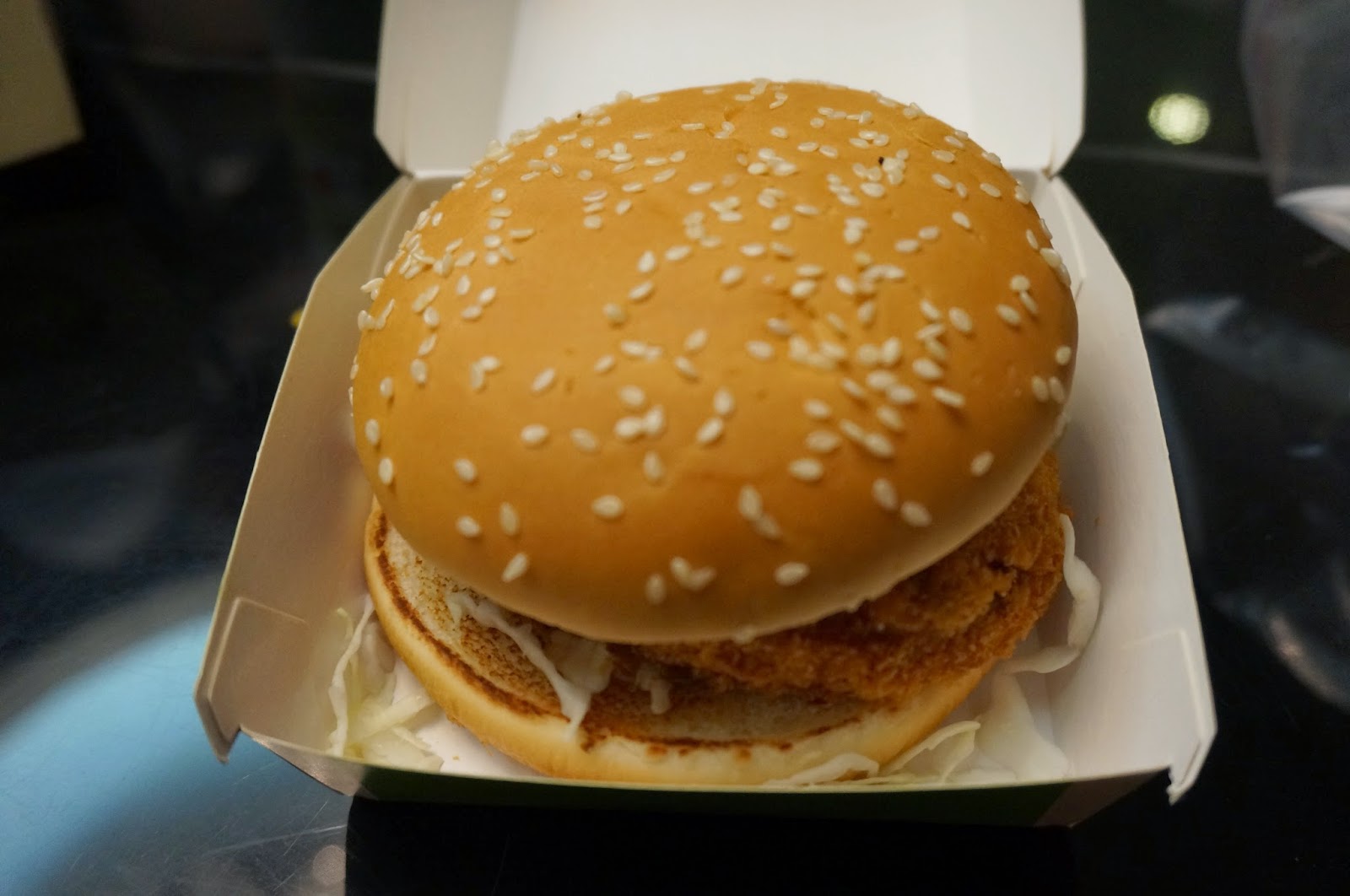
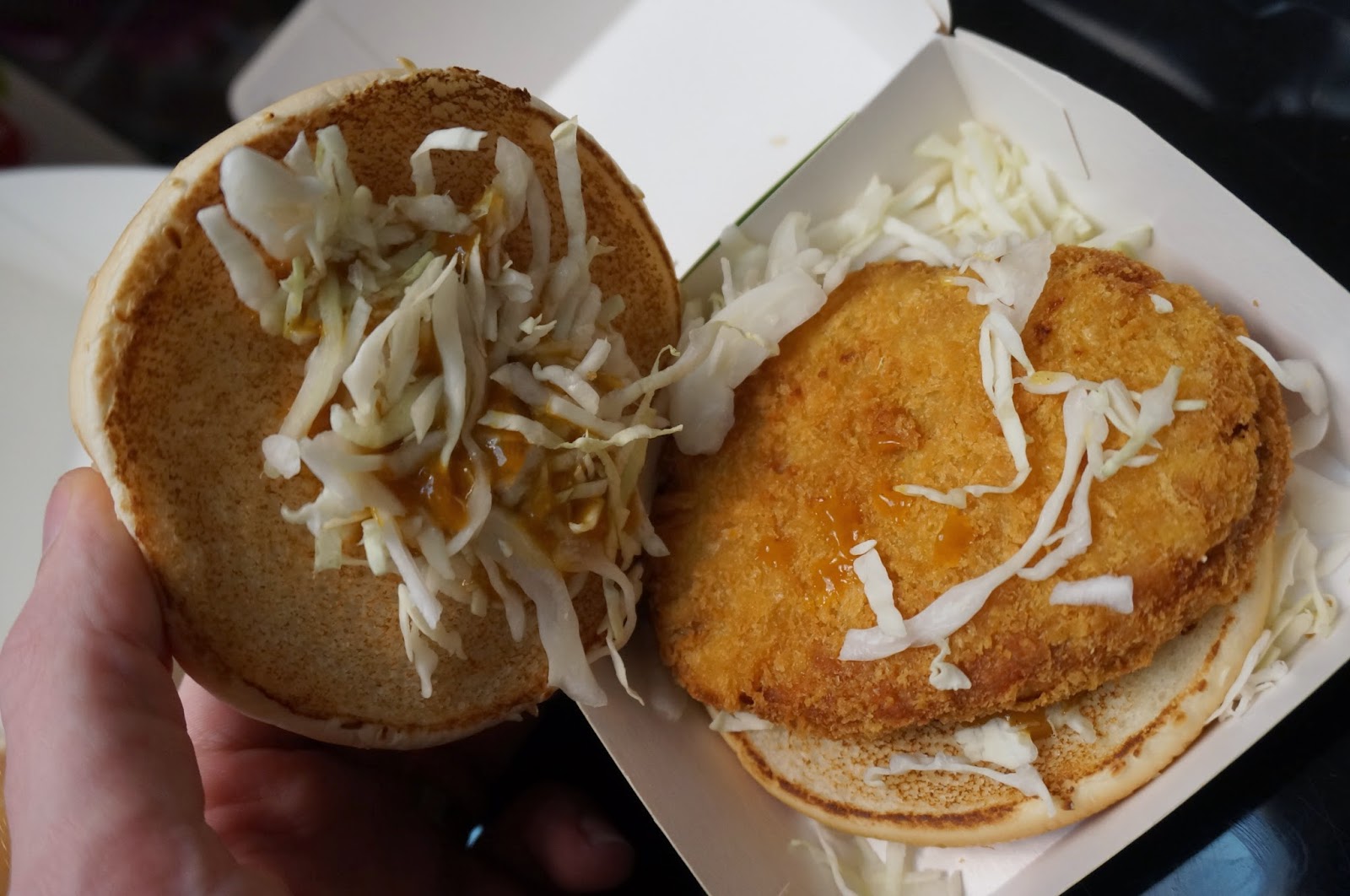
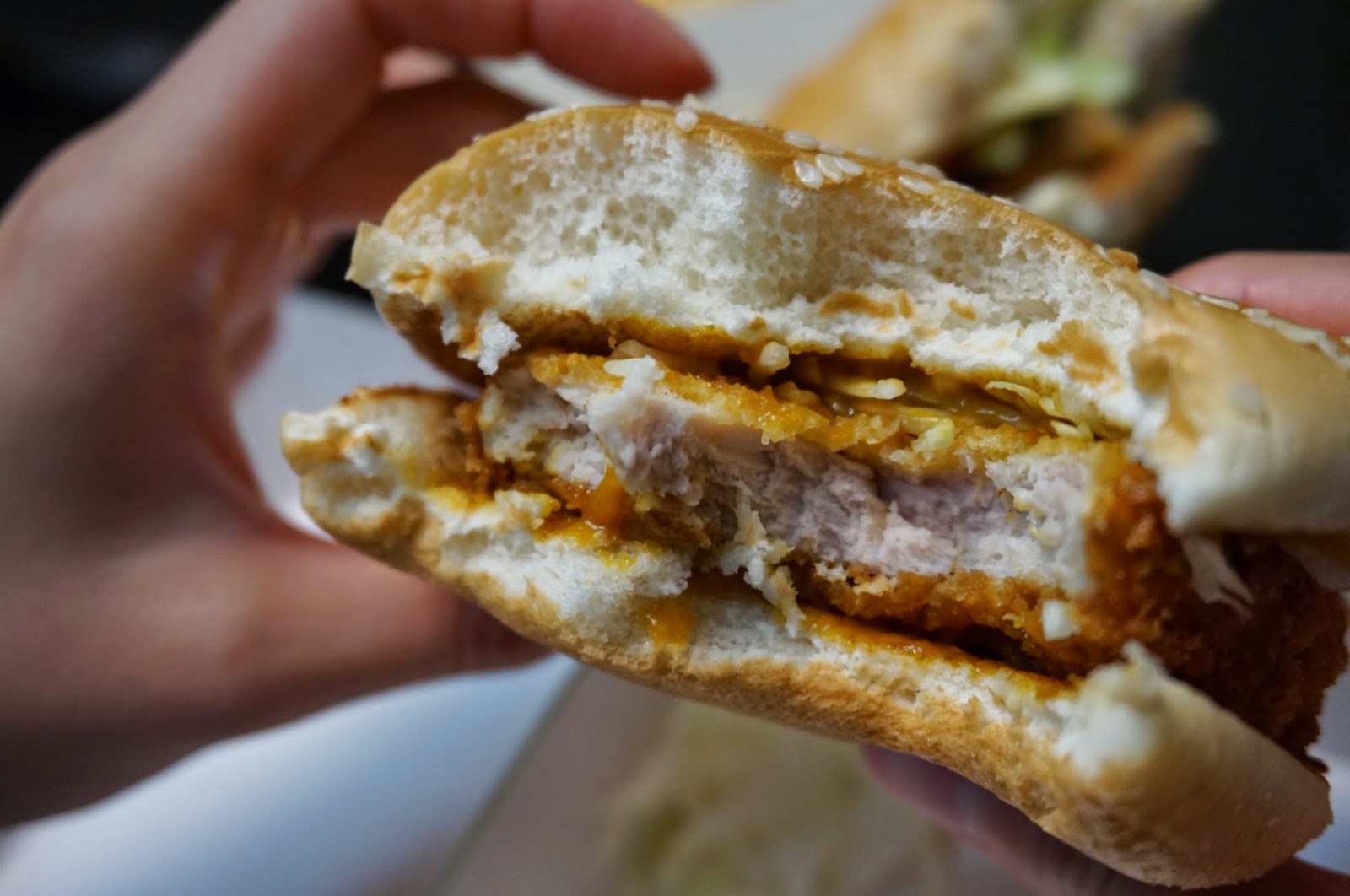
| McDonald's Taiwan - Japanese Curry Burger 2015 |
| This burger is on sale through September. |
It’s a burger, that looks like the world. Ta da! (Picture: Orbi Yokohama)
Amazing sushi, vending machines full of knickers and real life geishas are just some of the reasons we want to go to Japan. And now we can add eating a burger with a bun that looks like earth to that list.
Yes, just when we thought we’d seen every burger trend going, the Orbi Yokohama museum in Japan creates the Blue Burger.
So what exactly is it. Well, it appears to be a deep-fried chicken breast smothered in barbecue sauce and mayonnaise, on a bed of lettuce (so far so meh), in an eye-poppingly bright blue and green bun that looks like earth. Ta da!
Yes, the sensible side of our brains are telling us that it’s just a burger bun pumped full of artificial colourings, but the fun side is saying GET THIS IS IN YOUR FACE IMMEDIATELY.
What can we say, the belly wants what the belly wants.
MORE: There’s a Pikachu cafe in Japan serving crazy Pokémon themed food (and we want to go)
Read more: http://metro.co.uk/2014/08/19/the-blue-burger-from-japan-is-out-of-this-world-4839001/#ixzz3dcHLQ1tT
| McDonald's Taiwan - Japanese Curry Burger 2015 |
| This burger is on sale through September. |
When “have it your way” is your company tagline, you have to be ready for a little corporate creativity. In America, that means extra pickles and bacon sundaes. In Japan, we’re looking at fried garlic, Spam sliders (specifically for women), bamboo charcoal, and squid ink.
In 2001, Burger King (NYSE:BKW) completely fell out of Japan’s competitive fast food industry. After re-entering the market, the company has spent the past five-and-a-half years proving it can keep up — and in Japan, that means getting a little weird.
Here are 10 of the weirdest burgers on Japan’s Burger King menus.
As just one of Burger King Japan’s fifth-anniversary burger offerings, the Koru Burger — koru meaning “black” in Japanese — hit the menu on September 28, 2012, at 790 yen ($8.05) for a meal. The black buns were made with bamboo charcoal, and the black ketchup was colored with squid ink and flavored with garlic.
Why black? Because Burger King Japan shares an anniversary with Coke Zero, and everyone knows the best couples always color-coordinate at anniversary parties.
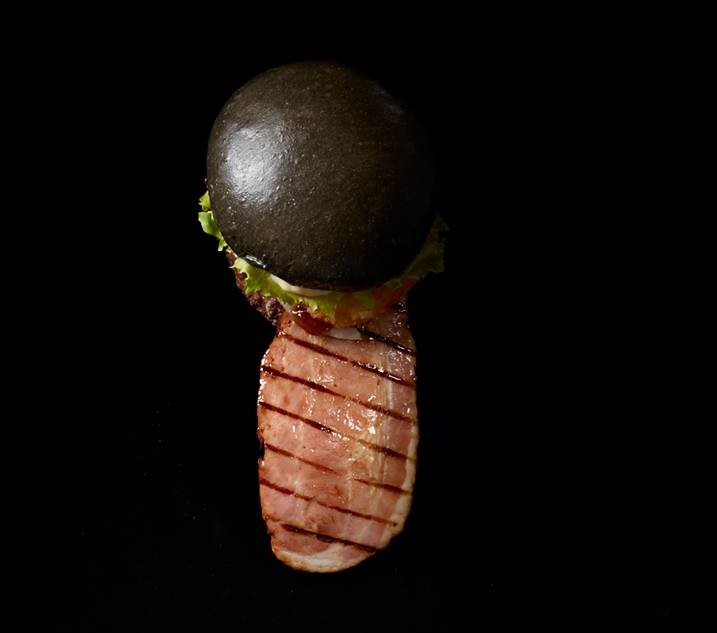
For those who like their Koru Burgers dressed up for Halloween with a side of sass, this burger is meant to resemble a ninja sticking its tongue out at consumers.
The offering stars black buns made with bamboo charcoal, black-brown garlic soy Chaliapin sauce, and a “tongue” of what BK is calling king’s bacon, which resembles Irish rashers more than crispy, American-style bacon. Though decidedly less ninja-like, the patty is also topped with onions, lettuce, mayo, and hash browns. For those who like fun facts, Chaliapin sauce is named after Russian opera singer Feodor Chaliapin, making this a ninja with some class.
Complete with its own anime character logo, Burger King’s most recent release hit menus in Japan on October 25; it’s selling for 680 yen ($6.93). As for the nagging question we’ve all been asking — why a ninja would stick his tongue out at you — Burger King has offered no answer.
On the menu during the 2013 summer months is a sandwich Burger King called the Garlic Meat Monster in Japanese and the Garlic Meat Beast in English. This Quarter Pounder patty was topped with a garlic-seasoned pork patty, chicken breast filet, red miso and green onion sauce, teriyaki sauce, the typical lettuce/onion/tomato/mayo fixings, and plenty of fried garlic slices. Sure to thwart vegetarians, bikini season, and vampires, the Meat Beast sold for 650 Yen ($6.62) — clearly a small price to pay for such a triple threat.
Having absolutely nothing to do with Ringo Starr, this burger takes its name from the Japanese word for apple. It’s a beef patty topped with a cinnamon-spice grilled apple slice and honey mustard, as well as lettuce, tomato, and mayo. It’s healthier than the Meat Beast, though it does sport a strange flavor combination — with spiced apples and honey mustard, the pork patty may have been the way to go on this one. This “Fresh, Juicy, and Spicy!” sandwich sold through February for 490 yen ($4.99).
Sometimes, a fancy spaghetti dinner can be just a bit too expensive. That’s where the Bolognese Burger stepped in. Complete with a pork patty, cheese, a hash brown, and a Bolognese sauce with ground beef, tomatoes, onions, and red wine between hamburger buns, this limited-edition menu item featured all the carbs of a big plate of spaghetti in your hand and clocked in at 290 yen ($2.95). White tablecloth, candles, and a date were not included.
Another fifth-anniversary stunt, this burger contained — you guessed it — five patties. With only two buns, this was either a serious mouth full of meat or, for those of us who can’t unhinge our jaws, two unequal, open-face burgers. Really getting into the fifth anniversary spirit, Burger King slashed the price-that-never-was in half before the burger hit the menu, bringing it down to 550 yen ($5.60).
The Windows 7 Whopper makes BK’s Five-Patty Whopper look like a short stack. As a promotion for the release of the Microsoft (NASDAQ:MSFT) operating system in 2009, this 5-inch tall burger was available for only seven days. (Clever.) The burger was sold for 777 yen ($7.90), though only to the first 30 customers. (Less clever?) Everyone else had to put down 1,450 yen ($14.75) for the privilege that was this pillar of uninterrupted meat.
While we’re on the topic of ridiculously sized burgers you can find in Japanese Burger Kings, this menu item appeared just in time for the holidays in both 2010 and 2011. In 2010, it really was a pizza burger: four whopper patties topped with mozzarella, marinara, and pepperoni, stacked into a 9.5-inch sesame bun and then pre-sliced into six wedges. This particular calorie bomb (the whole thing clocked in at 2,520 calories and 144 grams of fat) was available in Japan and the BK Whopper Bar in Midtown Manhattan. In Japan, this sold for 1,680 yen ($17.79), but sold in New York for only $13.
The following year, Japan brought the pizza-size burger back with flavor upgrades in the Fresh Avocado and the Cheesy Nacho. The first was a normal, albeit gigantic, Whopper topped with slices of fresh avocado. The second was topped with Whopper fixings, cheese, tortilla chips, and jalapeños. Better yet, for a limited time, you could order a Party Set, complete with your choice of Pizza-Size Whopper, four medium soft drinks, and a side of fries, onion rings, and BK chicken wings. The BK party-for-four set was yours for 2,680 Yen ($27.32). We’re guessing that the calorie count on the Cheesy Nacho style pizza-burger and party pack tops the charts. ‘Twas the season for artery clogging, though, right?
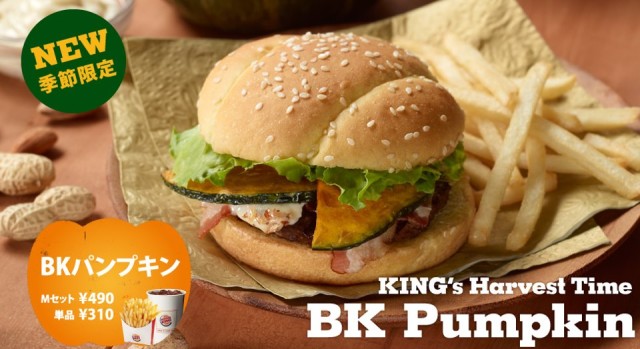
Decidedly more gourmet than its mega-bacon burger campaign, in which you could add bacon in 15-strip increments for 100 Yen ($1.02), October 2012 brought Burger King Japan customers the BK Pumpkin Whopper: a Whopper patty, lettuce, bacon, a couple of fried kabocha pumpkin slices, and a nut sauce made of peanuts, almonds, cashews, hazelnuts, and sesame seeds. For ultra-gourmets who couldn’t get enough, Burger King also offered the BK Pumpkin Bomb, with a total of 10 slices of fried kabocha pumpkin. Included in a BK meal, this actually tasty-sounding special was yours for 490 Yen ($4.99) for those who could restrain their pumpkin love and 590 Yen ($6) for those who couldn’t.
There was some controversy about calling this offering BK Shots, so these little burgers officially debuted as BK Bites. Sporting the tagline “What Women Want, Women Get,” BK’s gender-driven summer 2011 campaign claims that the sliders — compared to normal-size Whoppers and Meat Beasts — are “lighter” and “suitable for women.” These BK shots come in supposedly lady-friendly duo packs, since everyone knows that women either A) want it all or B) can’t make up their minds. Rather than having to pick just one, women could soothe their BK craving with appropriately sized Spam and BLT or beef and chicken slider packs. Thank God BK Japan is looking out for us girls — they know how much we love our petite Spam sliders.
Never say you Never know.

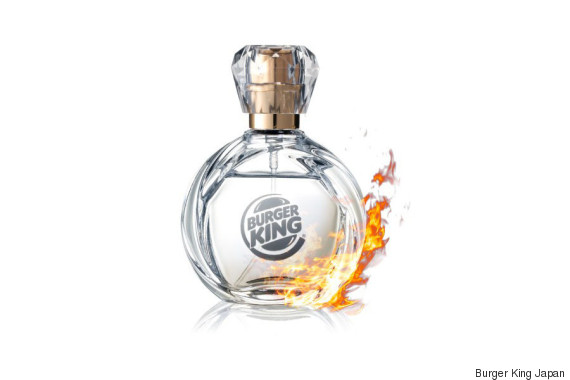
Do you and your nose prefer the scent of meat and grease to flowers and fresh laundry? Feel like there's not enough representation of your kind on the market? Burger King can smell what you're cooking, and it's got just the thing for you!
Celebrate with one giant whiff of relief: Burger King Japan will release a Whopper-scented perfume for one day only, on April 1.
![]()
Incidentally, Flame-Grilled, the name of the fragrance, is available on the inaugural Whopper Day. A day when Burger King envisions Whopper lovers celebrating their favorite burger by dousing themselves with its scent, and eating one, too. Each purchase comes with a Whopper and costs 5,000 yen -- roughly 4 US dollars.
The product's release date does make this whole thing reek of a hoax; skeptics suspect that the parfum au vache is just one elaborate, well-planned April Fool's Day joke. But if it is real, this wouldn't be BK's first go with a beauty product. Back in 2008 the fast food joint released "Flame by BK," a body spray for men described as "the scent of seduction with a hint of flame-broiled meat." You'll have to wait until next month to sniff out the truth.
H/T: Mashable
|
SOURCE: TOKYO5
A few years ago, Burger King Japan offered a black burger…even the bread cheese were black! And then, last year, McDonalds Japan decided to get in the game. McDonalds Japan’s pink 「ã�•ã��らã�¦ã‚Šã�Ÿã�¾ã€� (Sakura Teriyaki & Egg) burger. And now, Burger King Japan has decided to offer new, unusually-colored burgers this summer (2015). From July 3rd (until sometime in August), they will offer two new spicy red sandwiches…even thecheese and buns are red!
The “Aka (Red) Samurai Beef”
The “Aka (Red) Samurai Chicken” And then, for a limited-time from August 21st, Burger King Japan will offer two new black sandwicheswith black cheese and buns…but different from the ones they offered a few years back.
The “Kuro (Black) Shogun” burger with black cheese and eggplants.
The “Kuro (Black) Taiso” burger with black cheese and hash-potato. …CONTINUE READING |
This post is also available in: Chinese (Traditional)
randb.jp
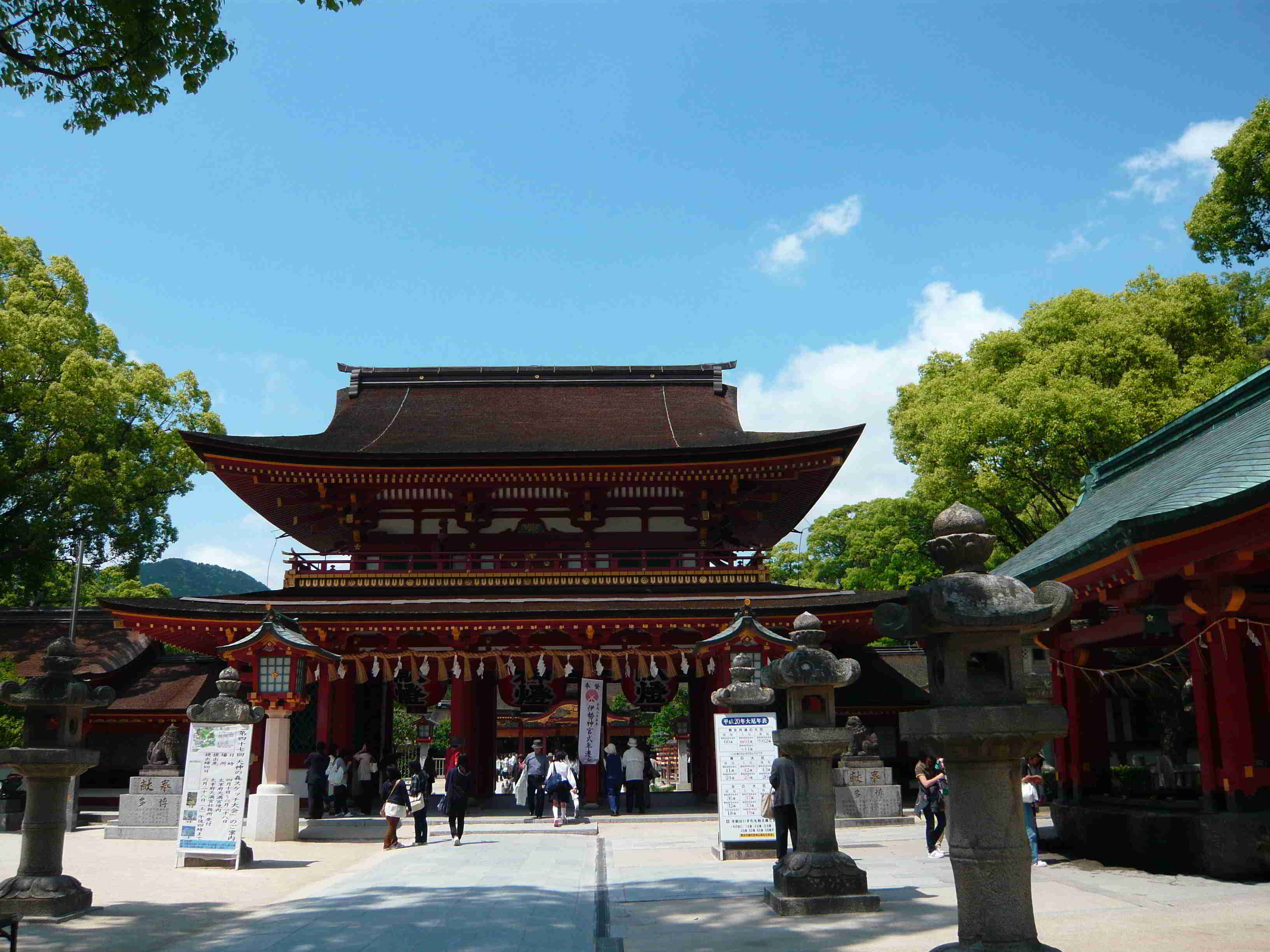
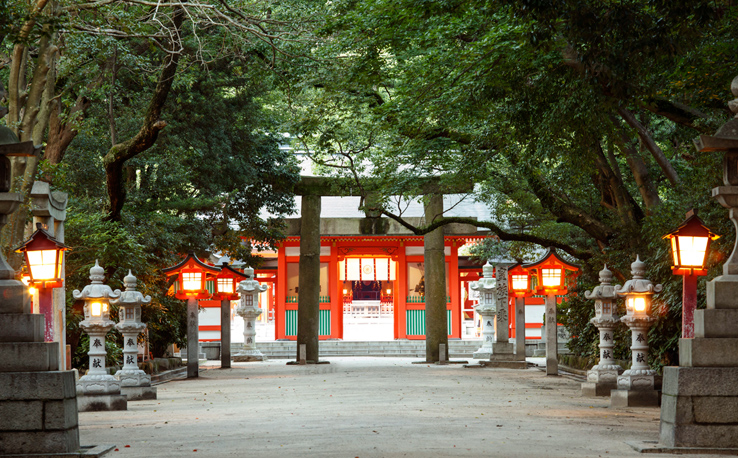
Dazaifu Tenman-gu is one of the many Tenmangu shines that enshrine Sugawara no Michizane. Within the grounds of the shrine, you can find a number of cultural treas-ures, including the main hall, which was built based on the traditional Shinto architec-tural style, Nagare Zukuri, and the torii gate along its path that was built during the Kamakura Period. This is definitely the place to visit if you are looking to learn more about the temples and shrines in Hakata.
4travel.jp
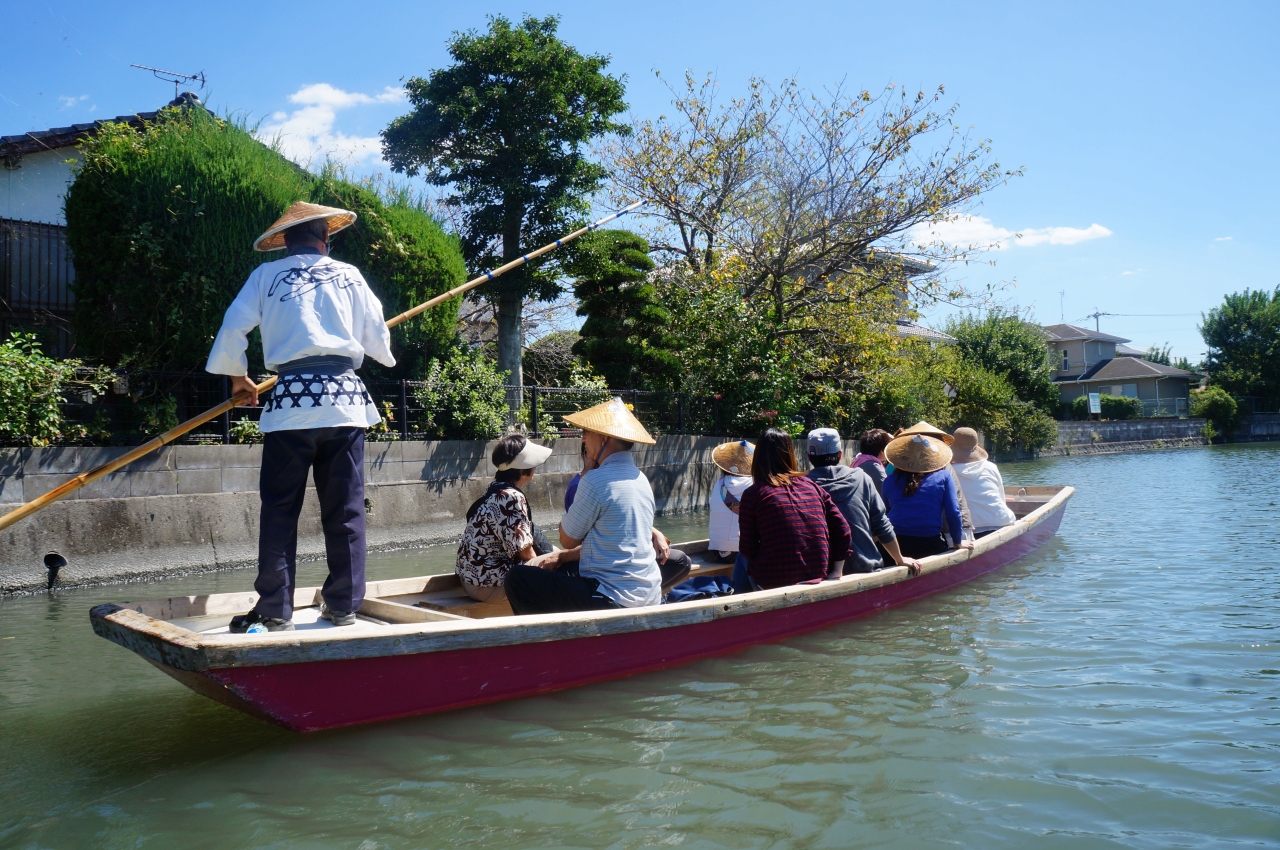
The Yanagawa River was orinally made as a moat surrounding Yanagawa Castle. There are boat tours along the river for visitors. In autumn, these boat tours also run at night, giving you a chance to enjoy the river on a moonlit cruise. Nearby, you can find the Yanagawa Ohana, the former residence of the Tachibana Clan, which has been turned into a restaurant and hotel, as well as many other sites. This is definitely the best place to go to experience what Japan used to be like in the good old days.
yado.co.jp
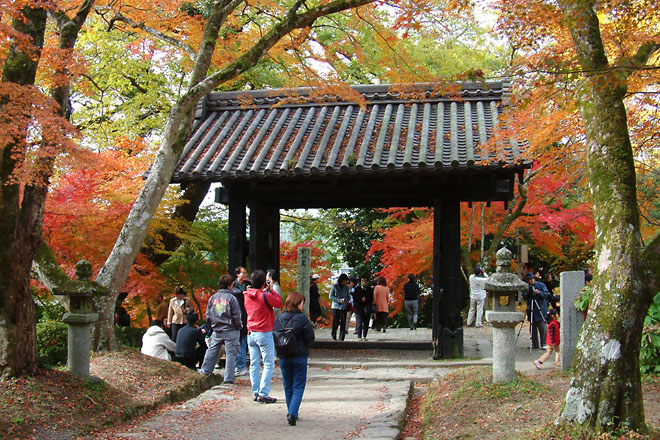
Akizuki is a historical town about 70 minutes by train from Fukuoka City. This is a well-known place to come and enjoy the cherry blossoms in spring and to see autumn colors. This popular tourist spot is also fondly known as Chikuzen’s Little Kyoto. The black gate on the path to Suiyou Shrine was once the main gate to Akizuki Castle and it is a popular spot that provides visitors a sense of what the Edo Period was like.
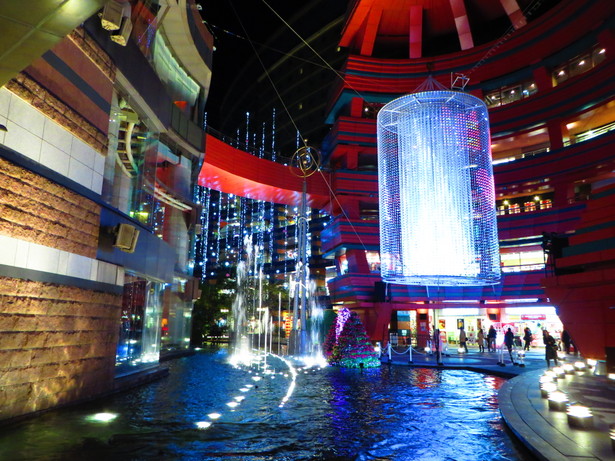
Canal City Takata is a commercial complex with hotels, a cinema, shops and restau-rants surrounding a canal. There are shows and events held daily here, making it a popular leisure spot. This is a popular place for visitors from abroad that are rushing for time, as they can shop for souvenirs and also some delicious cuisine here.
yokanavi.com
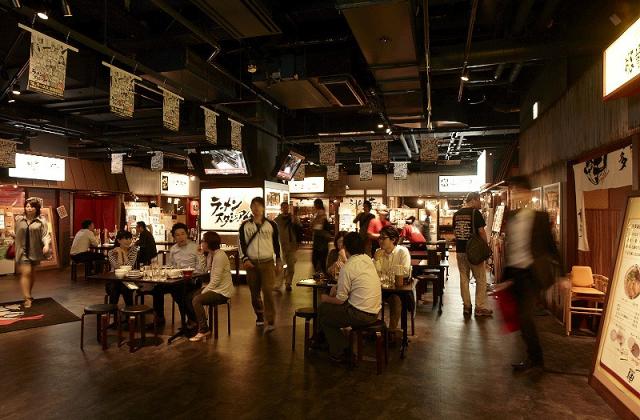
If you want to eat your fill of Hakata’s ramen, then the Ramen Stadium in Canal City Hakata is the place for you. This restaurant was recently renovated in March 2015 and it not only has Hakata’s famous ramen but it also offers famous ramen from all over Japan. You could also challenge yourself to eat every single ramen available here to truly understand the ramen culture in Japan.
yokanavi.com
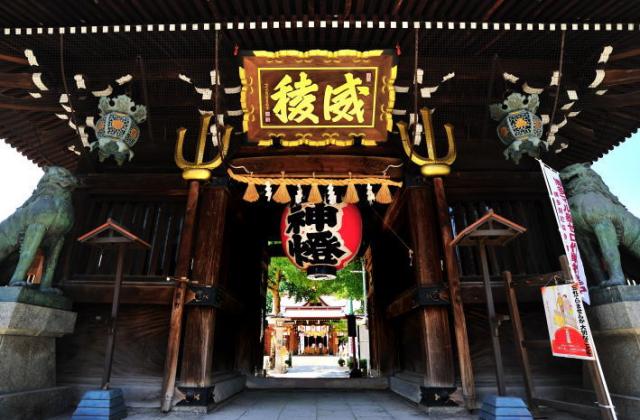
Kushida-jinja is a famous shrine that holds the Hakata Gion Yamakasa festival in July and the Hakata Okunchi festival in October. Fukuoka also celebrates the Hakata Don-taku festival in May, which is a festival that originated from not from Kushida-jinja but the Matsubayashi procession which starts from Kushida-jinja. If your visit coincides with the festivals, you mustn’t miss them.
con-quest
In Hakata, udon is known as “uron” and just like ramen, it is a popular dish. Even though this restaurant opened in 1885, it still runs strong, proving that it is well loved and supported by the people here. Each area of Japan makes and serves its udon dif-ferently, so you definitely don’t want to miss out on Hakata’s udon to experience the difference in the texture and the taste of the broth served with the udon.
www.mapple.net
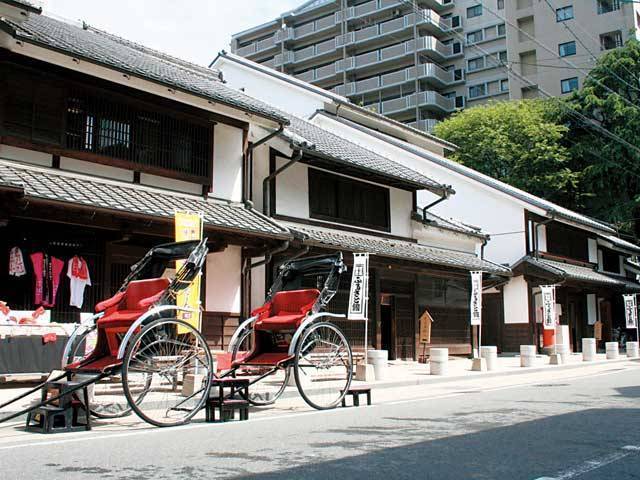
Hakatamachiya Furusatokan is a facility that serves to introduce the Hakata of the Meiji and Taisho Period. Here you can buy famous local sweets and traditional arts and crafts like the Hakata dolls, Hakata textiles, Hakata spinning tops and Hakata tiger figurines. If you are looking for a wide variety of traditional Japanese souvenirs, this is the best place to go to.
t-wave5d
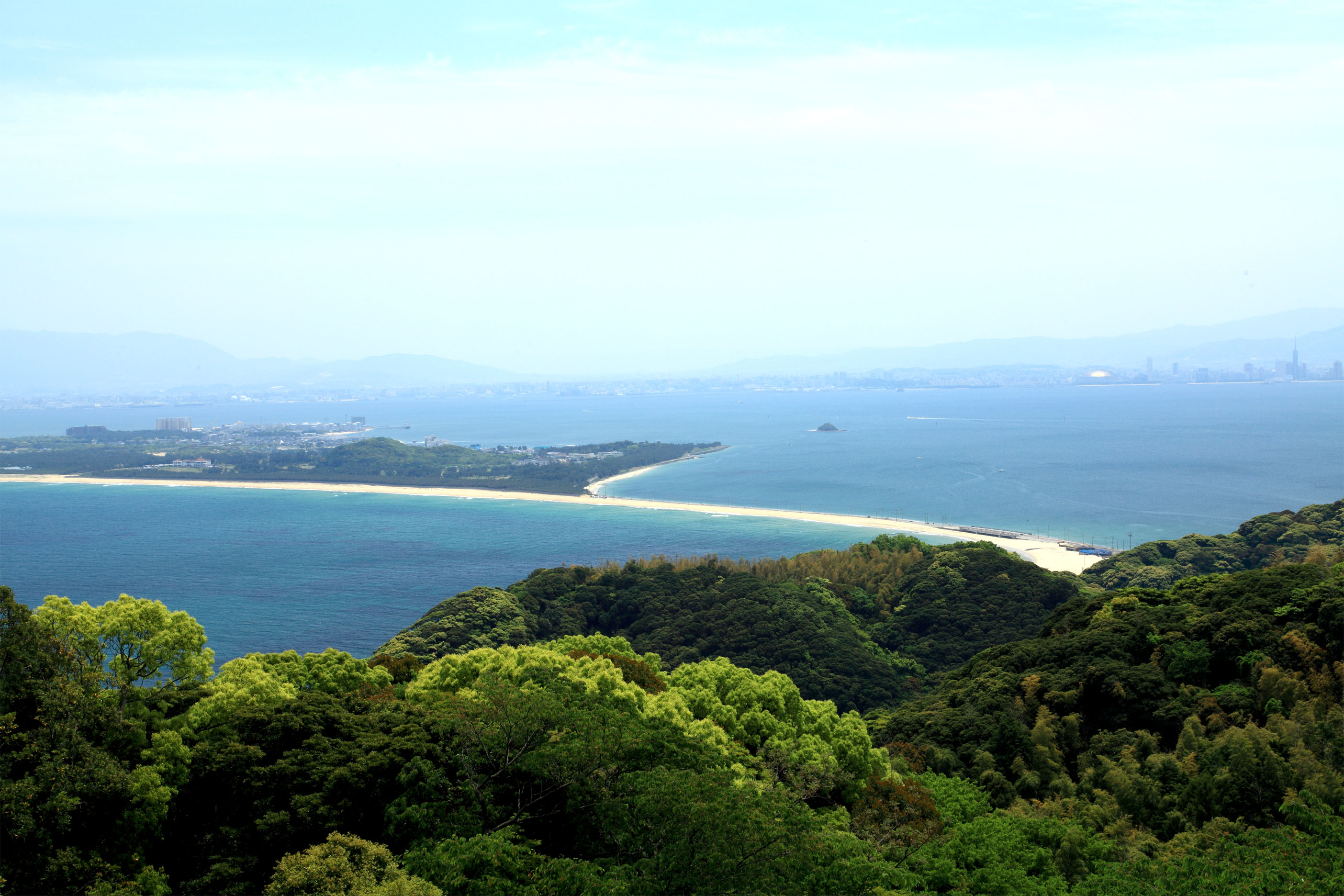
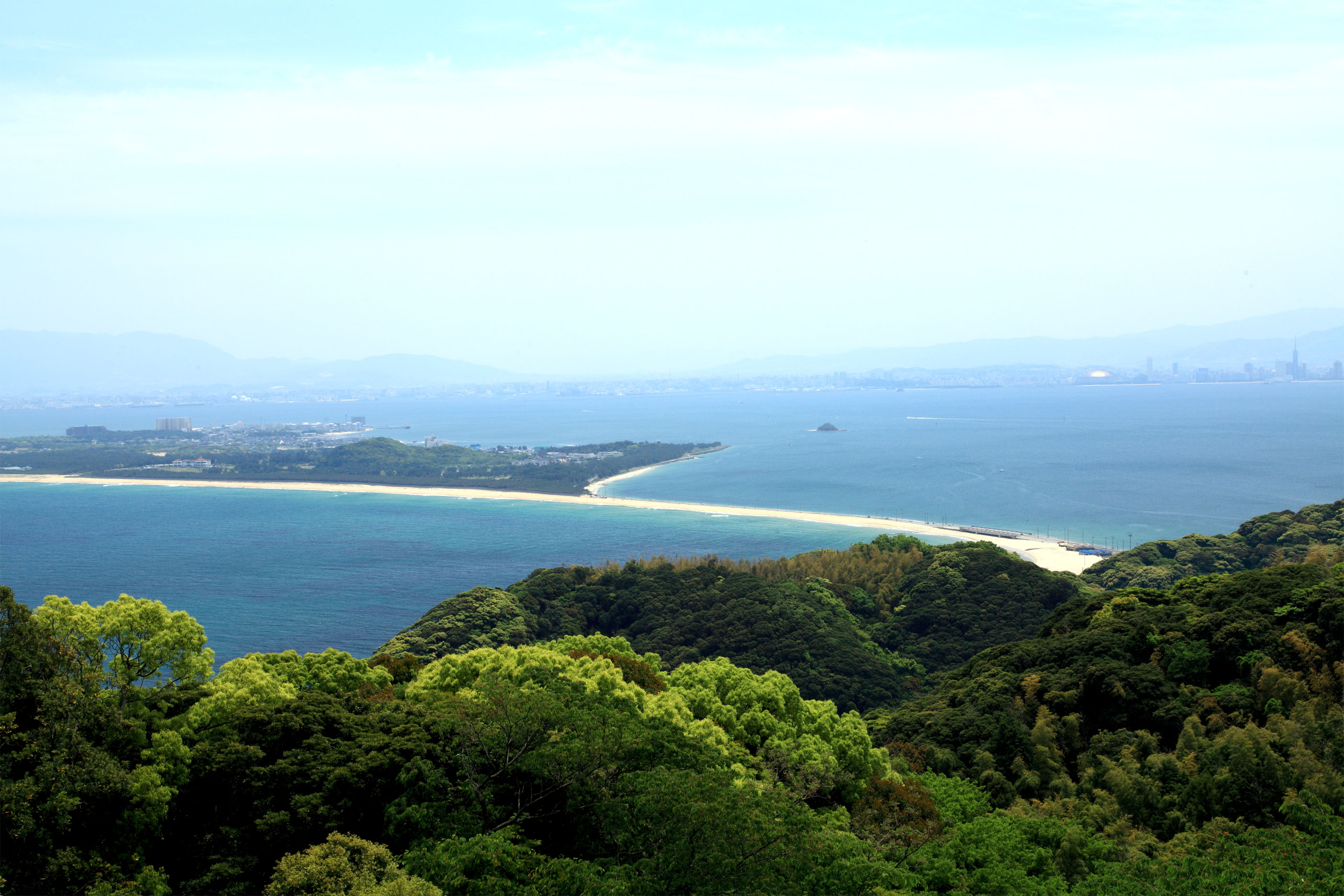
If you are looking to enjoy outdoor activities like cycling or driving, we definitely rec-ommend you to head to Shika Island. Here you can enjoy a panoramic view of Hakata Port and the Genkai Sea. On the island, there is the Shikaumi Shrine that is part of the Watatsumi Shrines that house water deities. If you are wondering where to go to eat, just head to the Nakanishi Shokudo that is famous for its sazae (turban shell) dishes.
nanxiongnandi
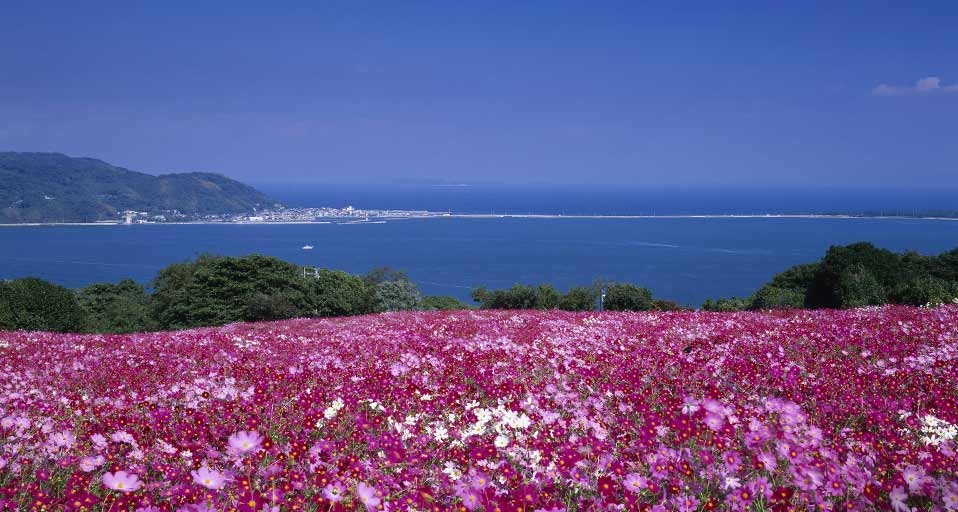
Nokoshima Islandpark is the place to go to enjoy Japan’s beautiful flora. In spring, you can enjoy the cherry blossoms and rhododendrons, in summer the hydrangeas and sunflowers, in autumn, the cosmos and salvia splendens and in winter, camellias and plums. The landscape here changes according to the seasons with different flowers blooming throughout the year.
at.very7.net
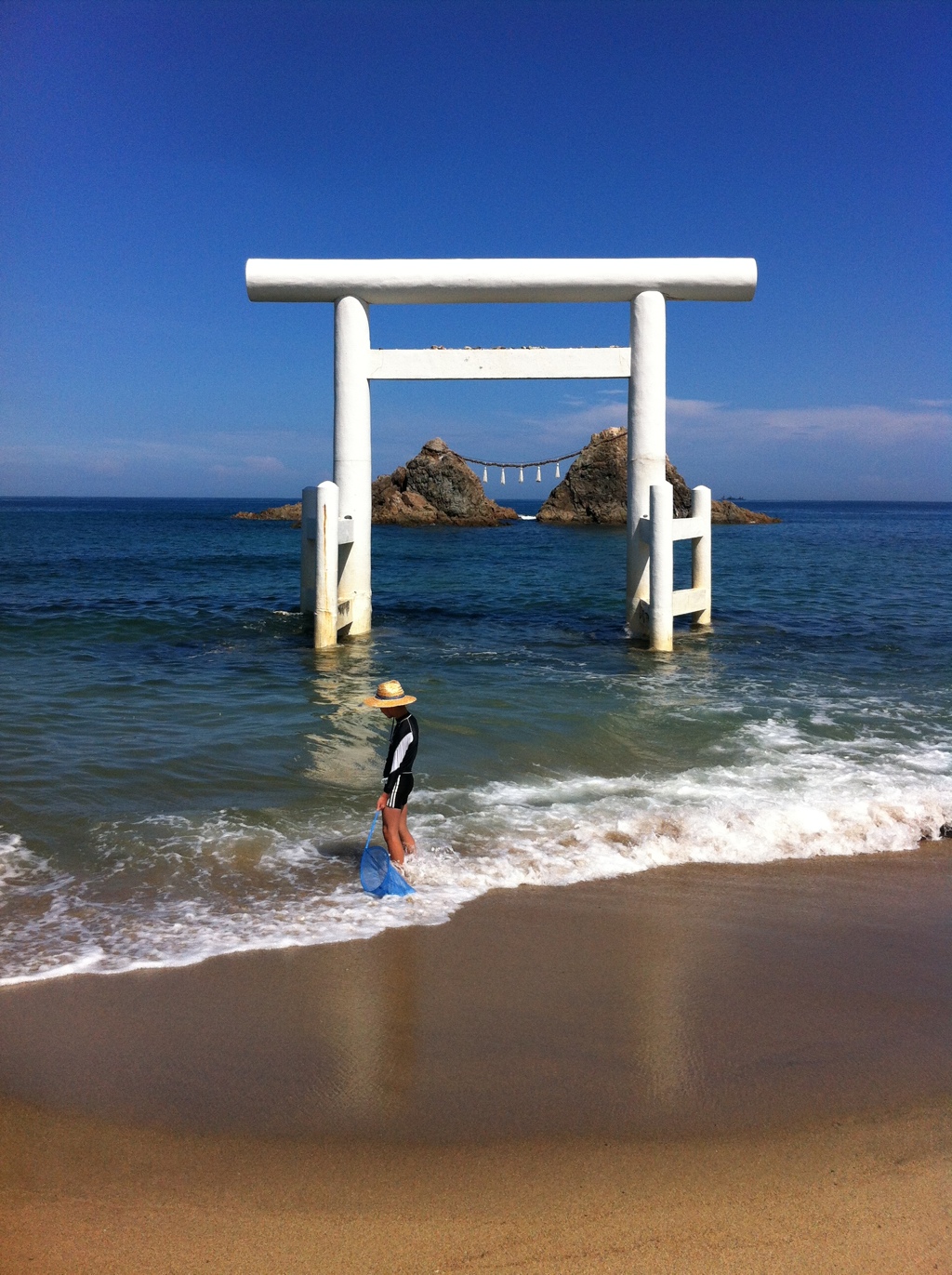
At Itoshima Peninsula, which is about 30 to 40 minutes from Fukuoka City by car, where you can enjoying buying hand-carved seals, getting your hands dirty in some pottery lessons at a craft center or an art gallery, or renting a boat for some fishing. Here you can also find many cafes and restaurants that serve some really good food.
fukuokadays
Ohori Park is a place where local residents come to take a breather after a hectic day. The park has a Japanese garden, a tea-ceremony teahouse and a teahouse garden. The landscape boasts some beautiful ponds and miniature hills, flowing streams and rock gardens. Visitors can come here and enjoy this park that was built for leisurely strolls. This is also the place to come to see black pine trees, oak trees, the highly valuable phoebe zhennan trees, different variants of rhododendrons and Japanese andromedas.
oit.ac
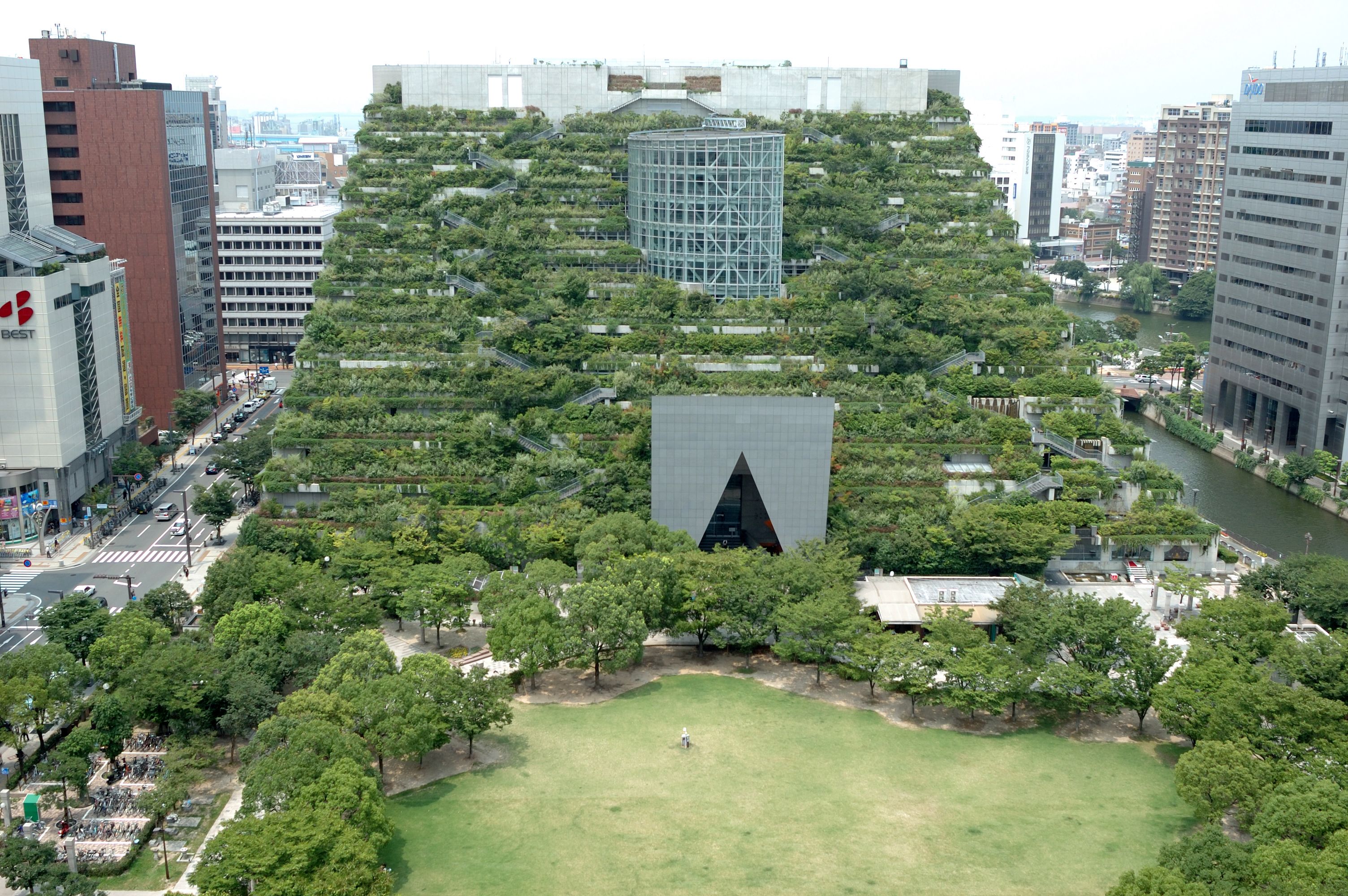
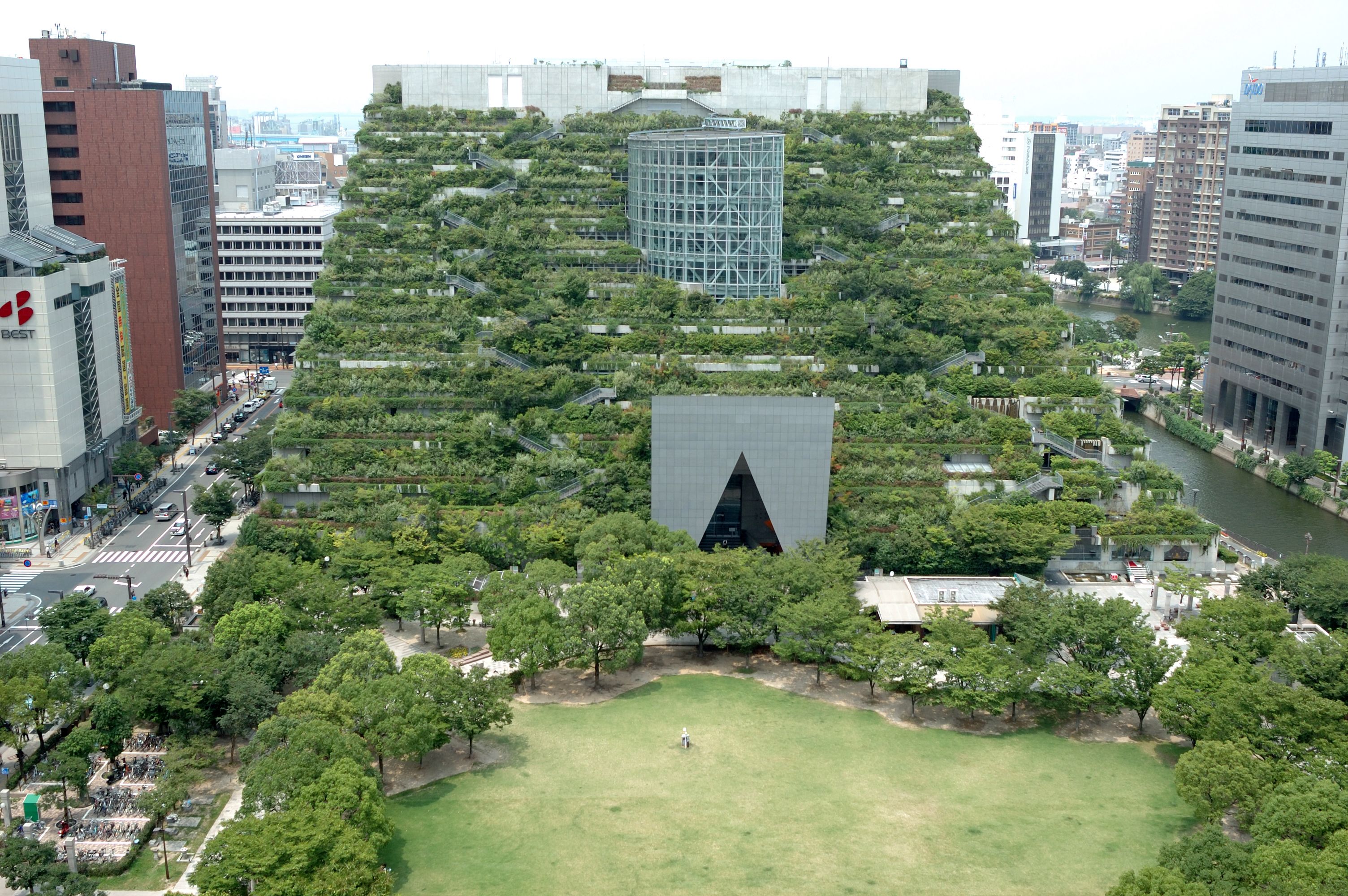
Acros Fukuoka is an international cultural information exchange center in Tenjin. The Fukuoka Symphony Hall in the center has about 1,800 seats and caters for classical music concerts as well as multi-purpose halls and galleries that showcase Fukuoka’s traditional handicraft daily. Don’t forget to visit the Cultural Information Center here that caters to visitors to Fukuoka who would like to know more about the area.
wikimedia
This shopping center has more than 200 speciality stores that will meet your every need and desire. When it comes to food, you will be spoiled for choices with a variety of dishes, from Hakata’s local delights to cuisine from other parts of Japan. At the rooftop garden, you can enjoy the panoramic view as well as the garden that is full of seasonal flowers. There is a viewing terrace and a Railway Shrine, too.
exblog.jp
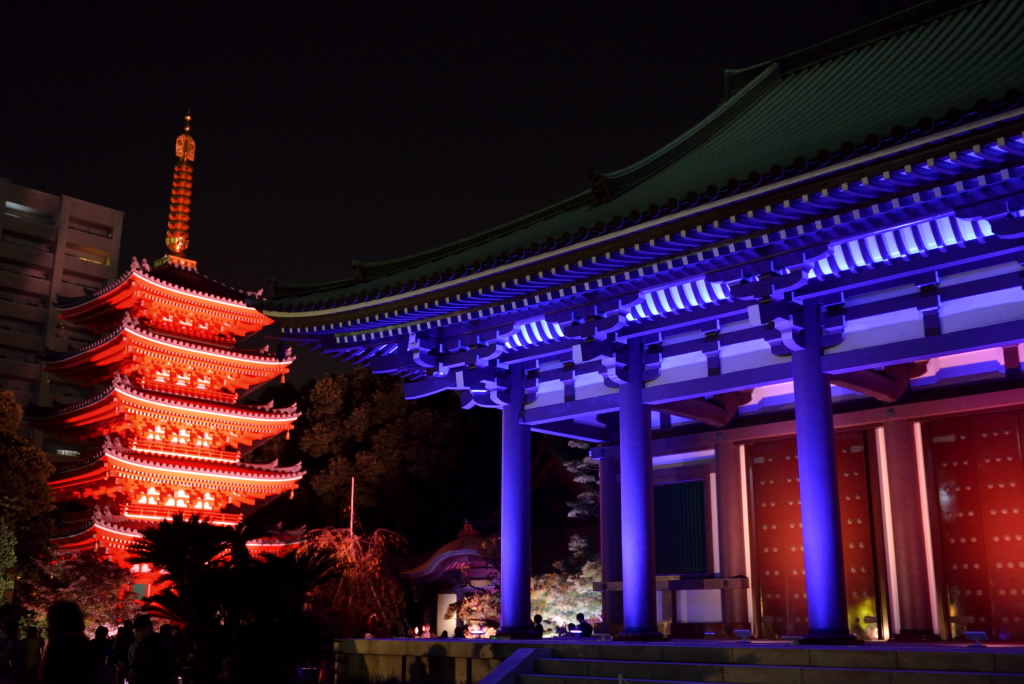
Tocho-ji is the first temple that Kukai built in Japan and it houses the popular seated wooden Buddha statue that is the biggest in the whole country. Just ahead of the relief of the hell scrolls, there is a dark path with a handrail for visitors to hold on to while walking along, and it is said that if you can find and touch the Buddha’s Ring, you will get to enter paradise.
pds.exblog.jp
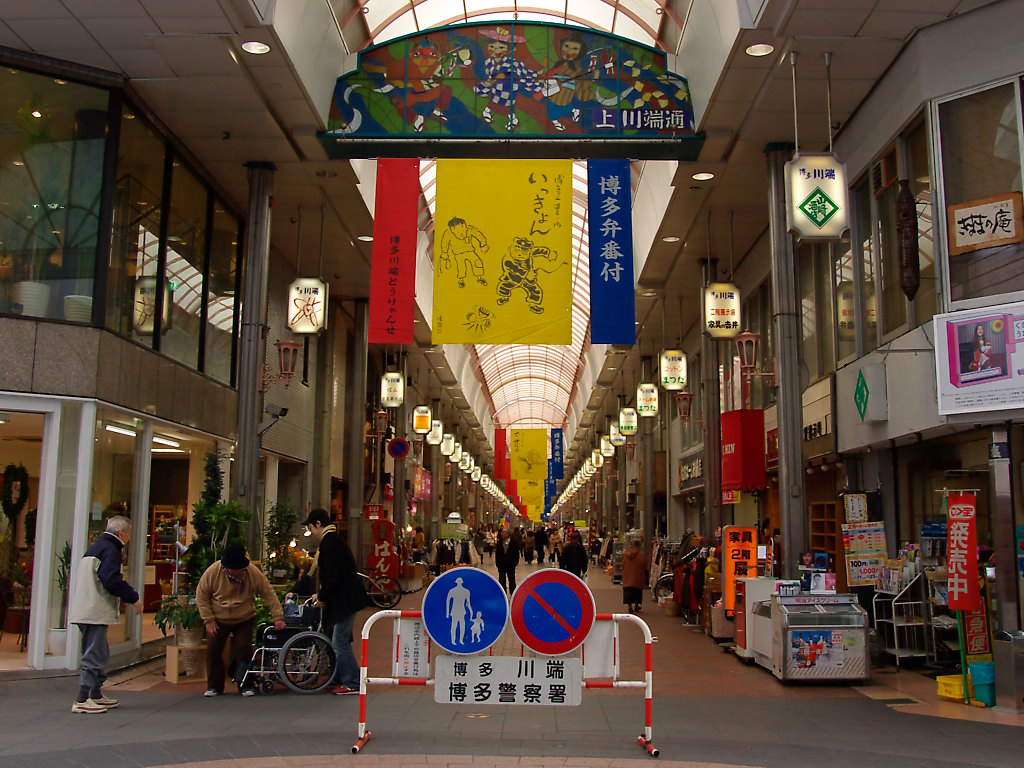
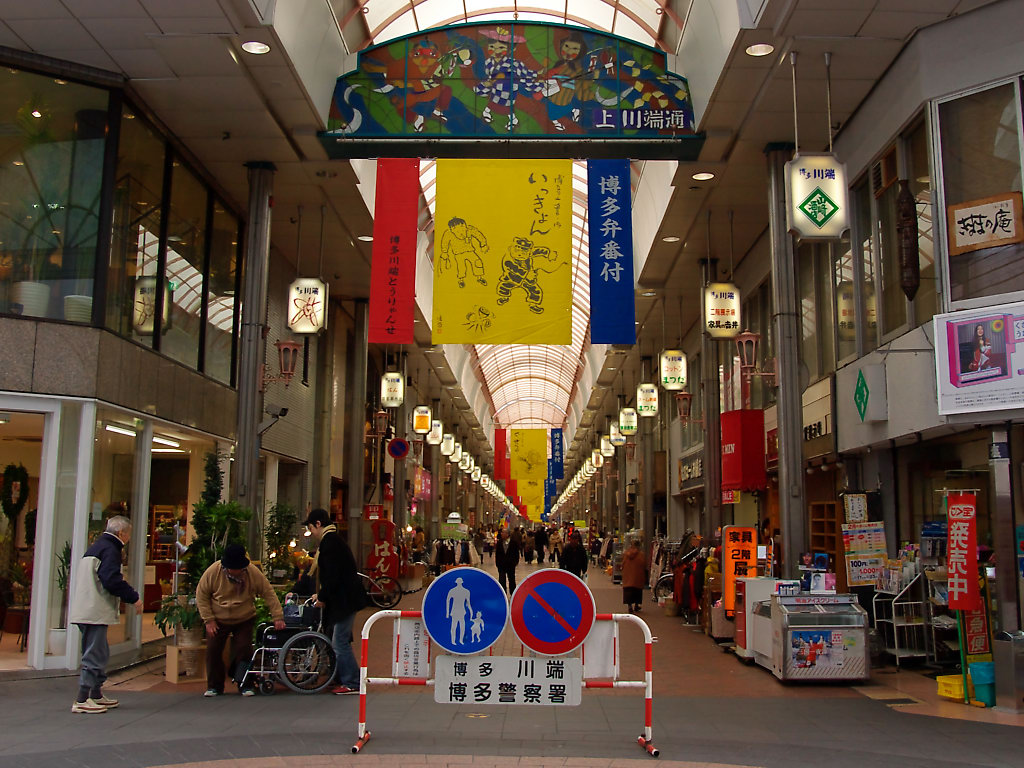
This huge arcade has about 100 stores that stretches about 400m from Hakata Riverain to the Hakataza Theatre and all the way to Canal City Hakata. This is the perfect place to come if you are looking to buy some souvenirs, such as Hakata dolls or famous local sweets. This shopping street, with its nostalgic downtown atmosphere, is different to your average shopping mall. The arcade is also decorated with hanging banners that display daily expressions in the Hakata dialect.
bridalcounter
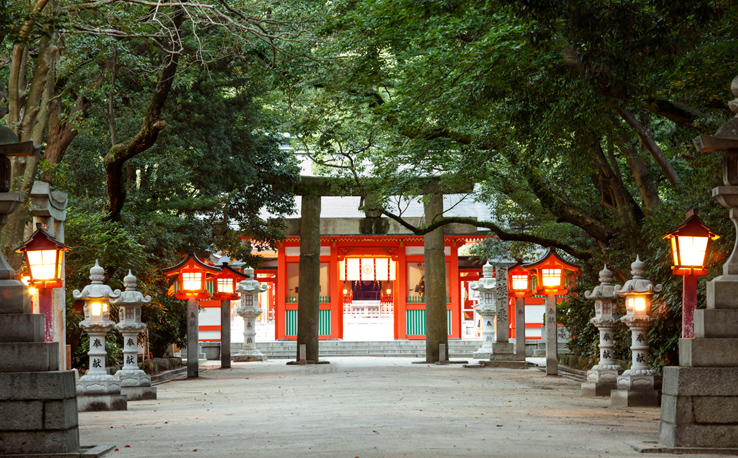
In Japan, there are 2,129 Sumiyoshi shrines, but this one here in Fukuoka is the oldest of them all. The pavilion here was built based on the oldest ancient Shinto shrine ar-chitectural style known as Sumiyoshi Zukuri, and is recognized as an important cul-tural treasure in the country. There are some must-see spots in the shrine, such as the Shinboku sacred pine tree, the Nohgakuden hall and the Kaguraden hall.
qb-ch.com
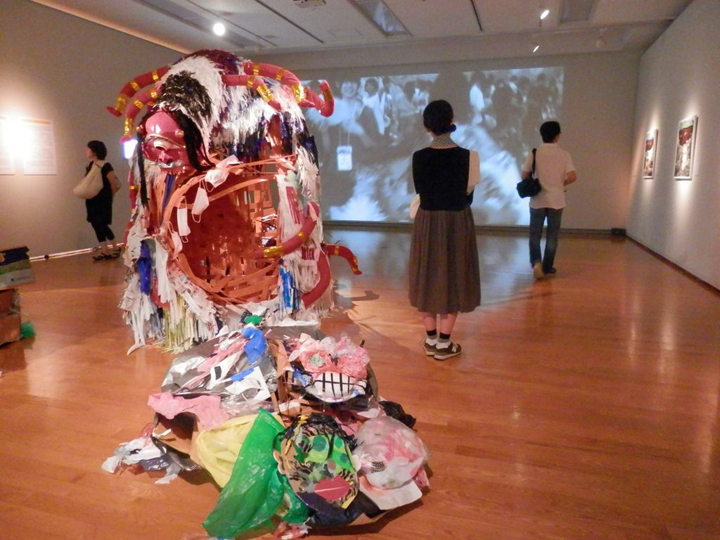
Fukuoka Asian Art Museum is the only museum in the world that systematically dis-plays modern Asian art. At the museum, you are sure to find new inspiration in the unique pieces created by modern Asian artists, that differ from both classical and west-ern pieces.
blog.goo.ne.jp
Joten-ji is the birthplace of Hakata’s famous festival, the Hakata Gion Yamakasa festi-val. Even nowadays, during the festival the Yamakasa float is paraded around the streets while being splashed with holy water, and the men carrying the float will stop in front of Joten-ji to pay respects to the chief priest. But of course, even without the festival, this temple has a beautiful rock garden called Sentohtei in front of the main hall.
www.tour.ne.jp
If you were thinking of staying in a traditional Japanese inn, we would recommend Kashima Honkan which was built based on the Japanese Buddhist architectural style of the Taisho Period. The rooms are naturally laid with tatami mats and were built ac-cording to the traditional Sukiya Zukuri style that gives patrons a chance to experience the authentic Japanese atmosphere. This inn is located 10 minutes on foot from Canal City Hakata and 5 minutes on foot from Nakasu’s food street.
This post is also available in: Chinese (Traditional)
blog.livedoor.jp
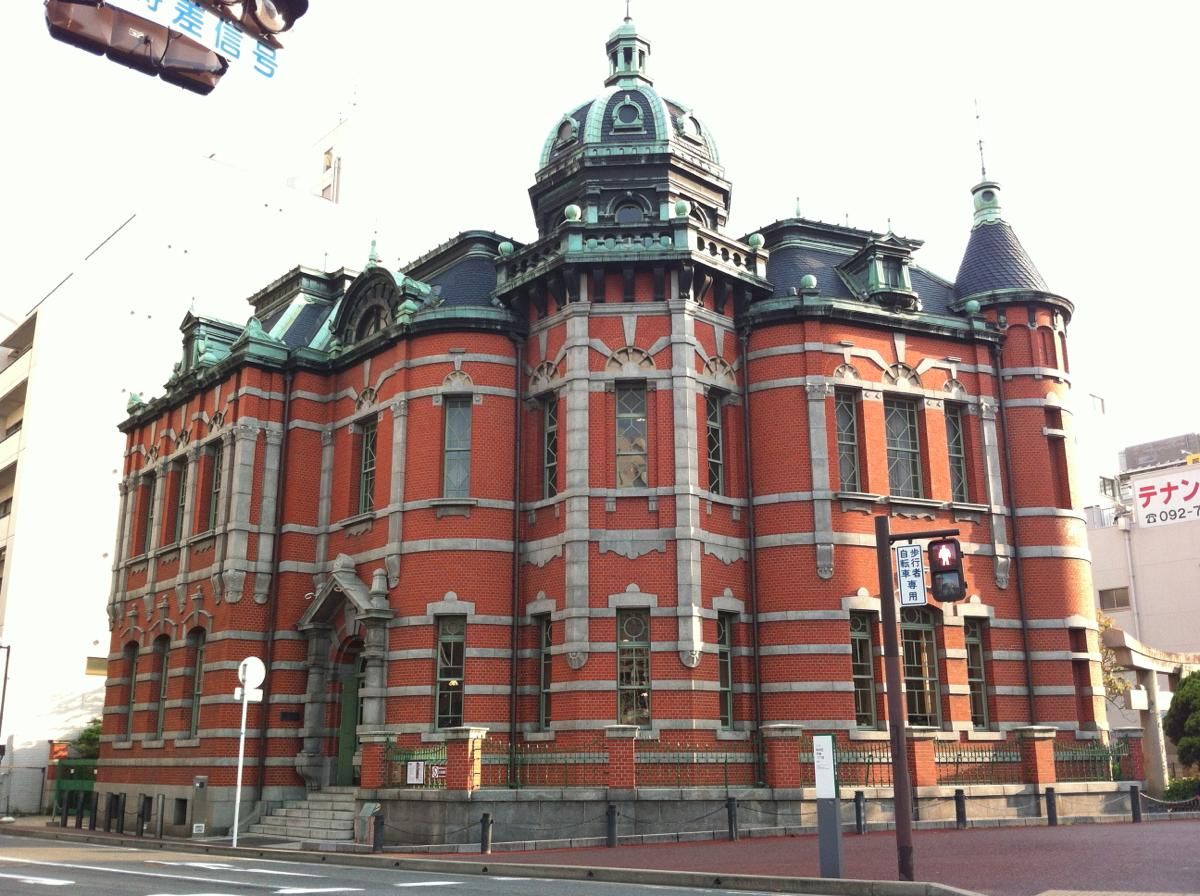
Fukuoka Akarenga Cultural Center is a beautiful piece of architecture with red bricks and white granite slabs reminiscent of a 19th century English building. This building was built in the Meiji period and as time went on, a minaret and dome was added to it. This center also provides visitors with information on the history of western architec-ture in Japan.
blog.goo.ne.jp
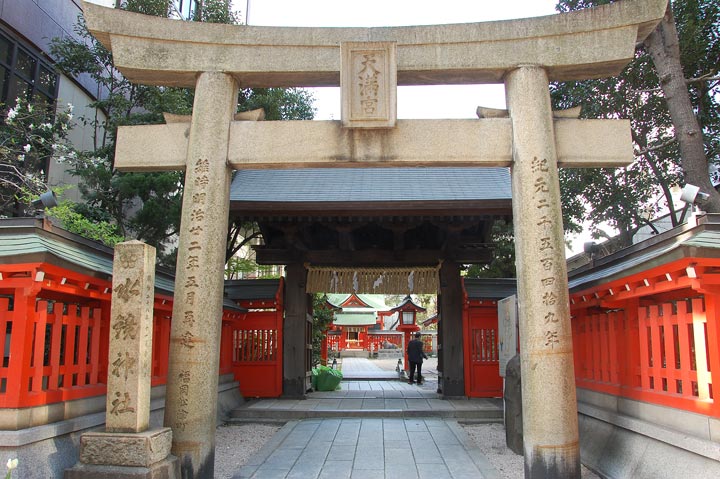
This shrine was built in memory of Sugawara no Michizane, who is said to have grieved at seeing the reflection of his haggard face in the Aikawa River. The shrine is also known as Suikyo Tenjin and Sugatami Tenjin. Nearby there is a the Hakata Meibutsu Umakamon Street that offers all sorts of great food.
ja.wikipedia.org
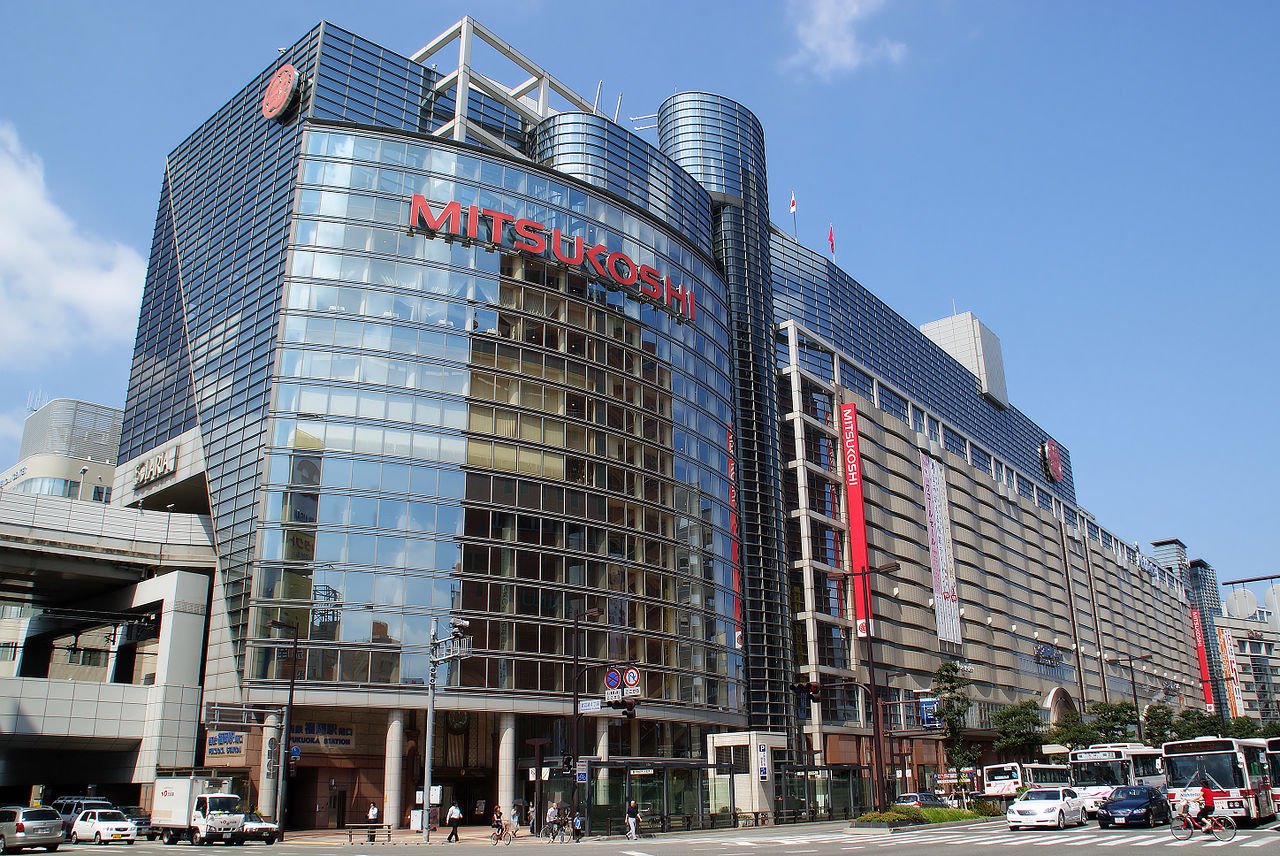
In this famous building, which makes part of the station’s building at Nishitetsu Fuku-oka’s Tenjin station, you will find Fukuoka’s Mitsukoshi department store. Fukuoka Mitsukoshi offers a wide variety of products for clients of all ages. On the 1st floor of this building, you’ll find a visitor information plaza that provides information on the Tenjin area.
qb-ch.com
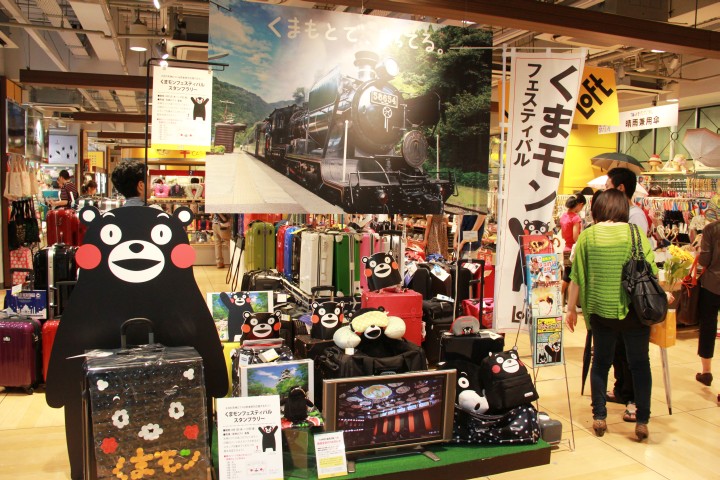
Tenjin Loft is the place to go to for souvenir shopping. Tenjin Loft offers a huge selec-tion of high-quality items, and we are certain you will never get bored of strolling down the aisles. They also sell travel items, so if you are looking for some travel necessities, you can always drop by here to find them. If you are looking to buy high-quality made-in-Japan products, this is the place to go.
blogs.yahoo.co.jp
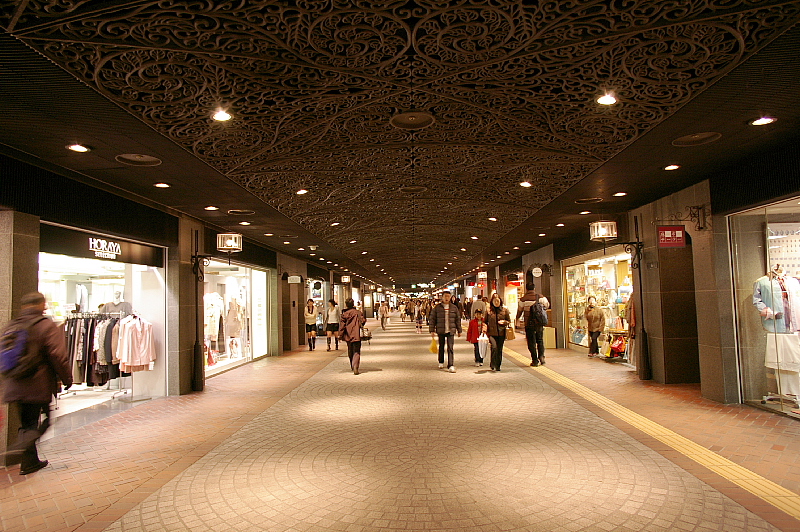
This is Kyushu’s biggest underground shopping centre, running from 1st Avenue all the way to 12th Avenue. You might not have enough time to actually visit all the shops in the area, but here you can find everything under the sky. This underground area was built to replicate a 19th century European town, with its European style cobblestone paths and arabesque-designed ceilings.
ohashi-navi.com
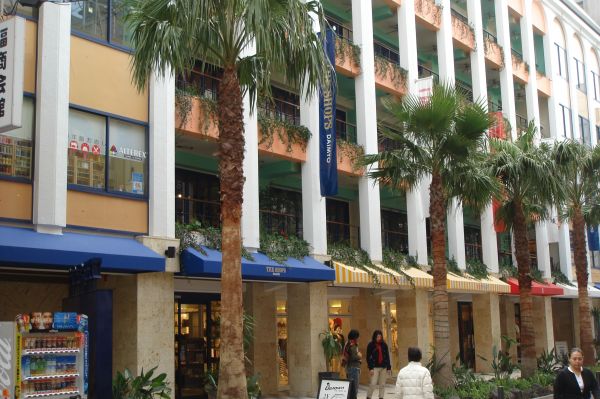
Step into this shopping mall and get transported to a west coast American malls. This is a popular place among young female patrons because it not only offers a fun shopping and dining experience, but also has beauty parlors and nail salons as well. For those who are into fashion and would like to get to know the current Japanese fashion trends, we recommend you include this in your travel itinerary.
allabout.co.jp
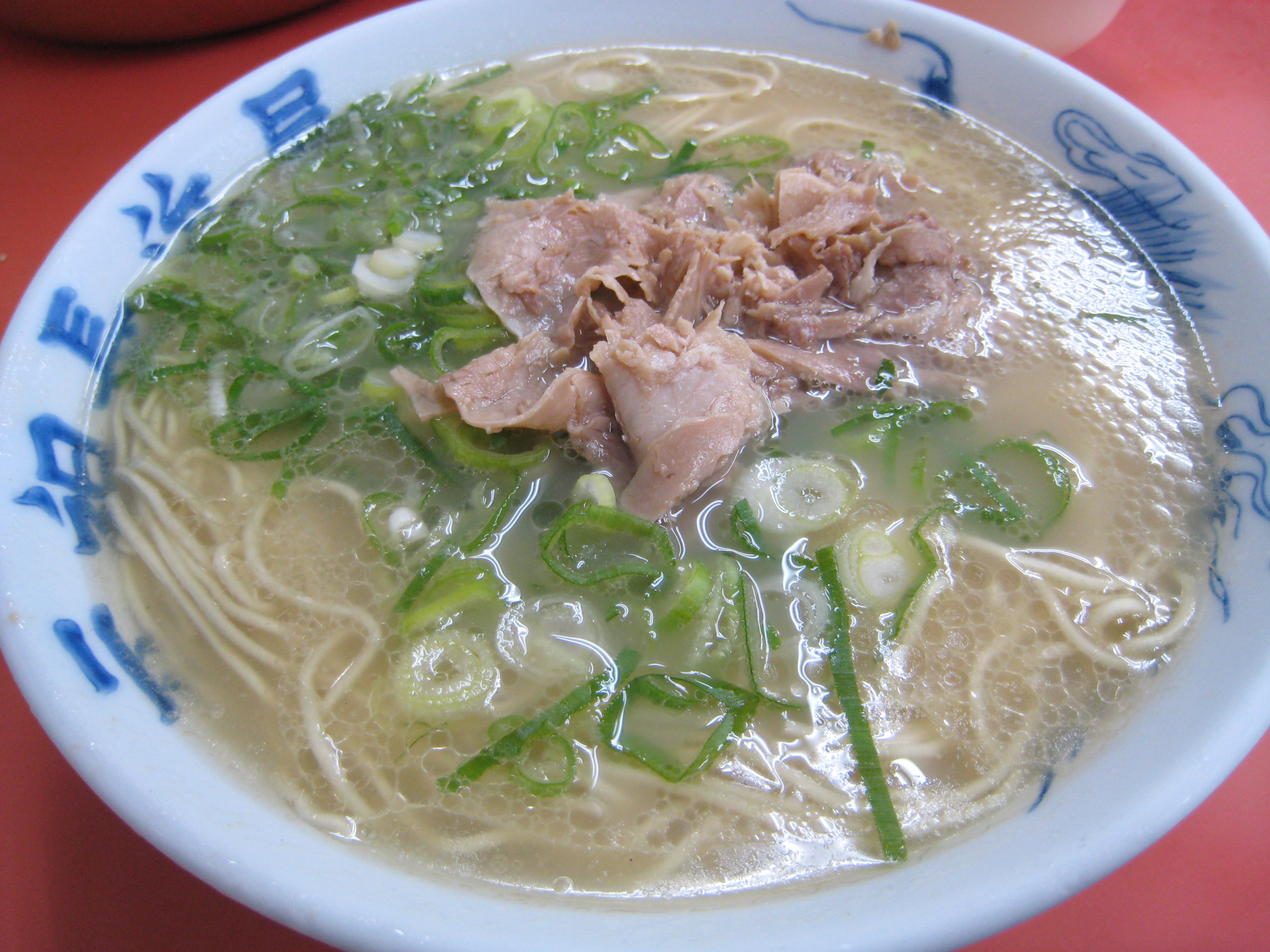
This is a long established Hakata pork-broth ramen stall. In Fukuoka, there ia a ramen tradition called “kaedama” where patrons can add more noodles after they have finished their first serving, and it is said that Ganso Nagahamaya was the place where this tradition began. For first-timers, you might find the smell of the broth a little pun-gent, but try it once and you are sure to come back for more.
r.gnavi.co.jp
retty.me
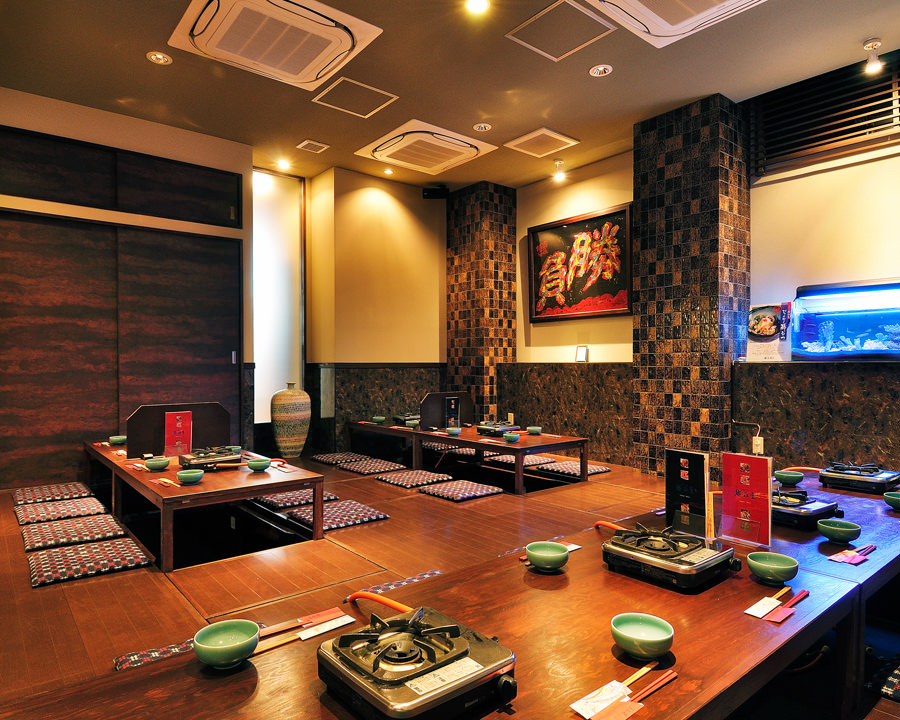
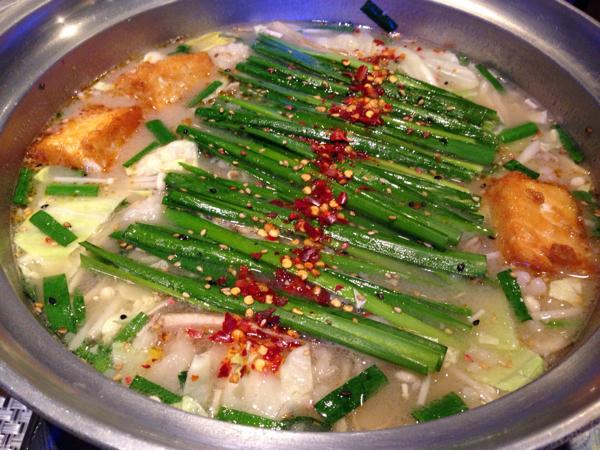
When it comes to Hakata, one should never miss out on a hot pot of motsunabe or gib-lets. This famous restaurant prepares its motsunabe with Kyoto style white miso paste, thus giving it a distinct flavor from the typical motsunabe. This building has its own wine cellar, so patrons can enjoy great wines with their motsunabe.
shigee.biz
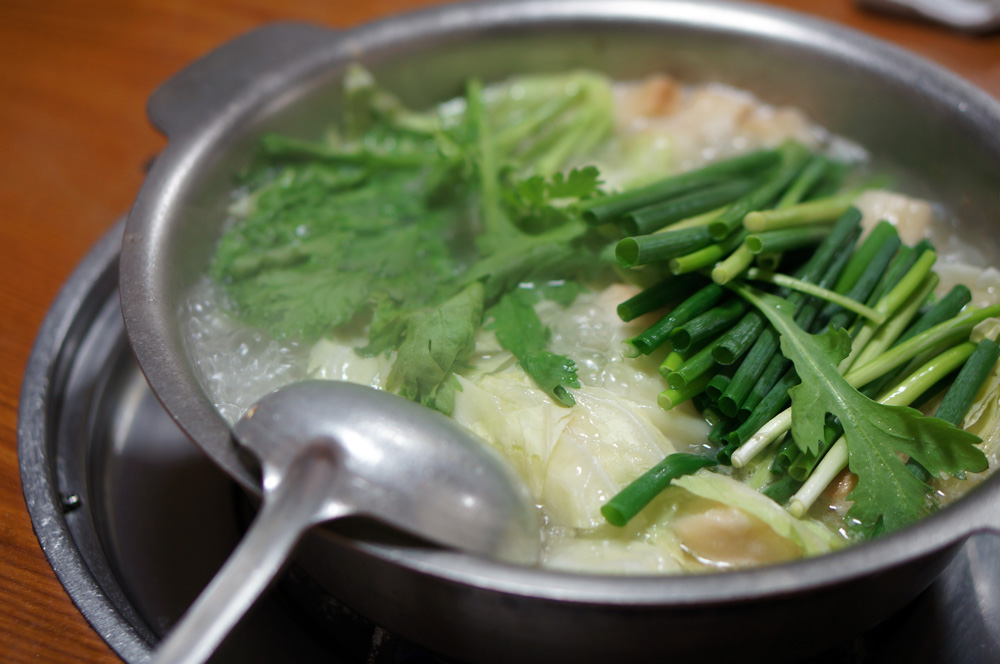
Fukuoka’s specialty hot pots would have to be mizutaki and motsunabe. The mizutaki here is made from a clear chicken broth and the chicken used here is the famous 90-day-old low fat Hanamidori chicken raised on organic feed. In all hot pot meals in Ja-pan, to close it off, rice is added into the leftover broth and made into a porridge.
www.jfa.maff.go.jp
If your tummy starts to grow for fresh seafood, you should head straight to Fukuoka’s Central Wholesale Fish Market Building. It is no secret that Japan loves raw fish and here at the market you will get the chance to savor some delicious raw fish at a great price. In rhe market there is the Uocching Plaza, where visitors can learn more about the fishes and how the market operates.
www.yakei-kabegami.com
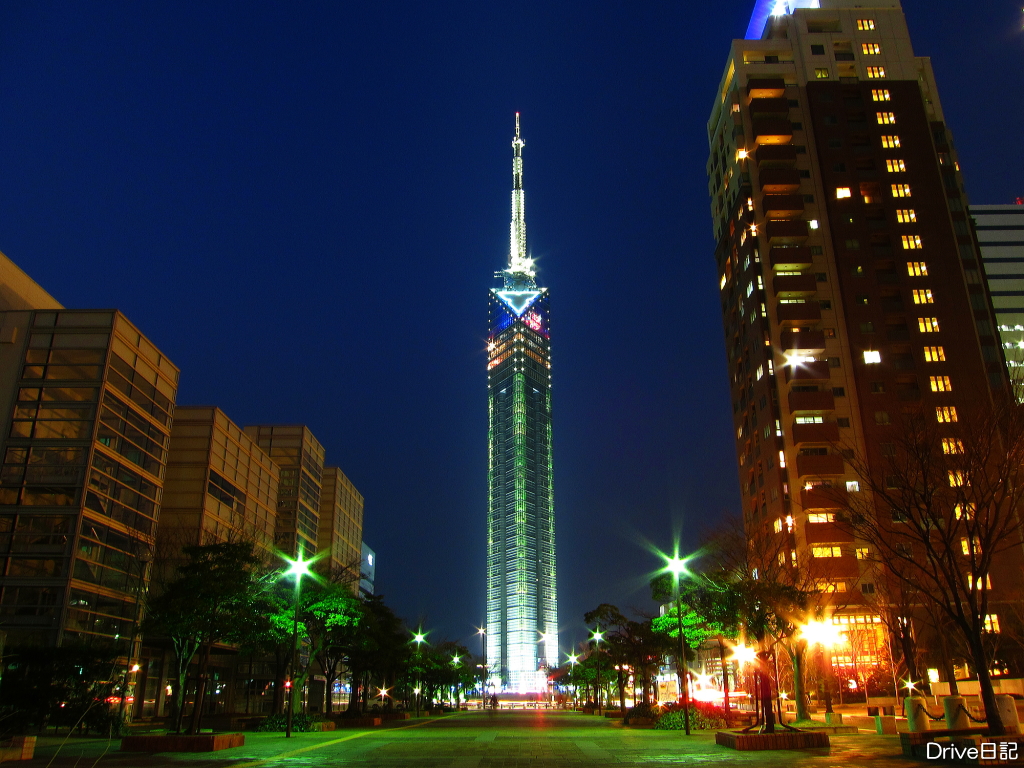
At a height of 234m and triangular body covered with 8,000 one-way mirrors, Fukuoka Tower is known as the Mirror Sail. There is also a Lover’s Sanctuary in the tower for couples, making it a popular romantic date spot with unique facilities catering for cou-ples.
yokanavi.com
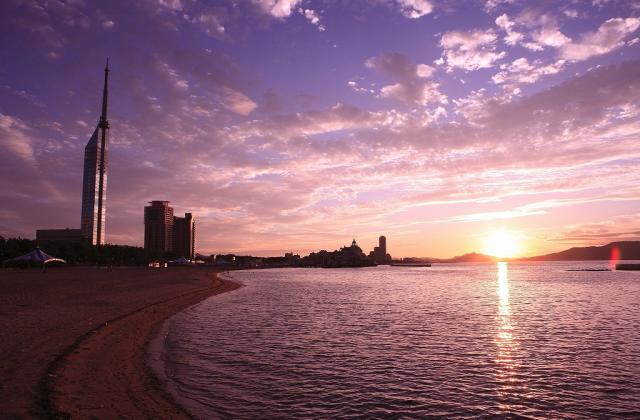
To the north of Fukuoka Tower, lies a manmade Seaside Momochi Beach Park. Visitors can enjoy outdoor marine activities by the beach and also spend time at the shops and restaurants built on a manmade island called Marizon in the middle of the beach. This beach park will keep you entertained for the whole day.
datespo.jp
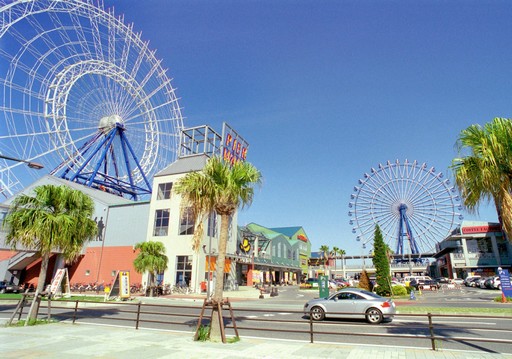
Marinoa City Fukuoka is the right place to go if you love shopping. This is Fukuoka’s biggest outlet mall with more than 120 shops. If you need a break from the shop-till-you-drop experience there, you can take a ride on the Sky Wheel ferris wheel.
blog.livedoor.jp
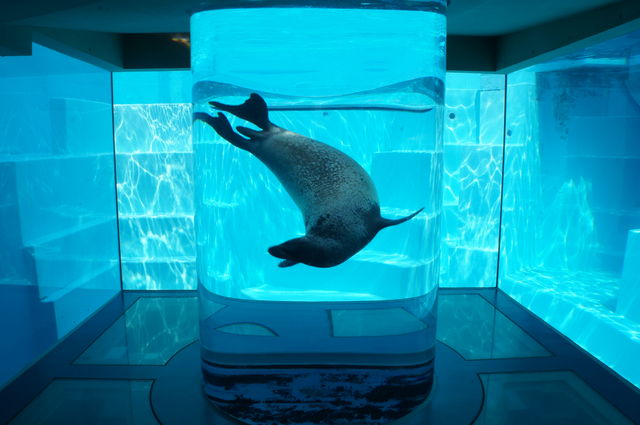
Umi no Nakamichi is a big reef 2.5km wide and 8km long. It started off as a seaside park and now it is equipped with a wide variety of facilities and attractions. There is an aquarium called Marine World Umi no Nakamichi, where visitors can see underwater creatures close up through their walk-through tunnel tank and cylindrical tanks.
brunch.jp
Hakozaki is one of the three biggest Hachiman shrines in Japan. The shrine contains many cultural treasures, such as the Ichi no Torii gate erected by Kuroda Nagamasa and the stone lanterns that were made popular by Sen no Rikyu. Hakozaki Shrine also serves as an important stop during the Gion Yamakasa festival as the float heads down to Hakata Port. This shrine also hosts one of Hakata’s biggest festivals, the Hojo-e fes-tival.
www.daiwahouse.co.jp
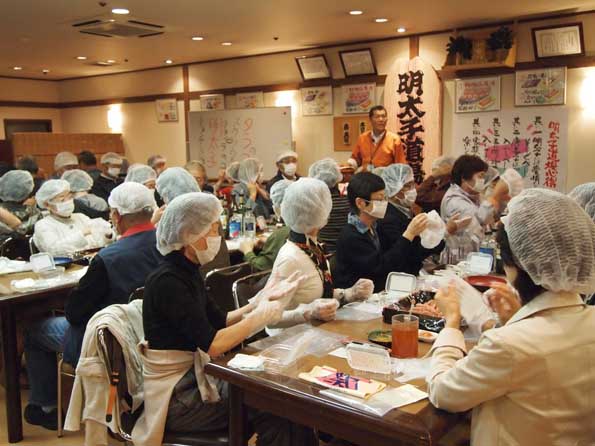
Here at Fukuoka Tourist Hall Hakata, you’ll get to know Fukuoka’s specialty, mentaiko, or marinated roe. You can participate in lessons organized to teach visitors on how to marinate mentaiko. As you are allowed to create your own marinade with the ingre-dients available, you can make your own original marinated mentaiko.
blog.livedoor.jp
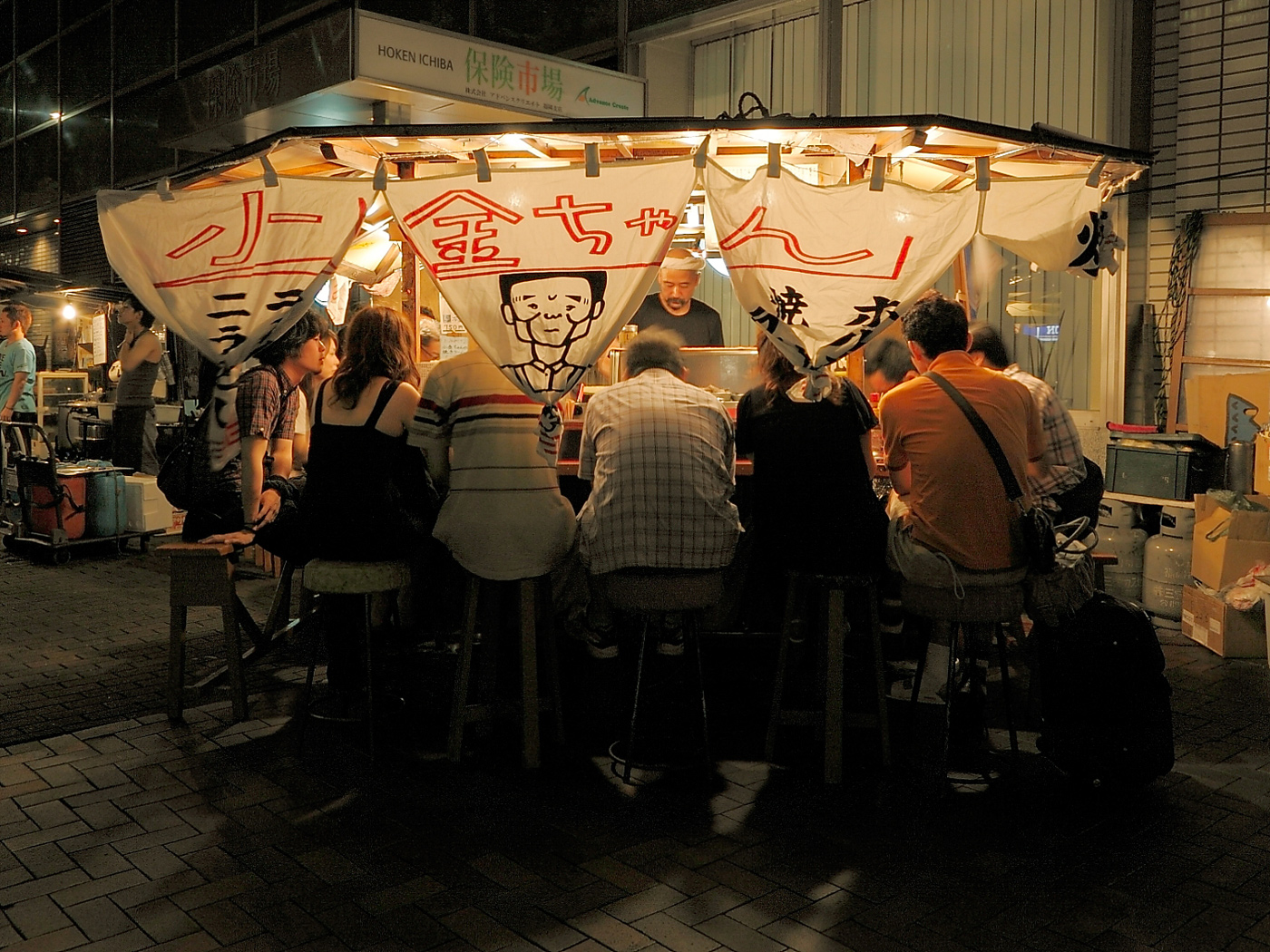
Nakasu is famous for its large number of stalls, and Yatai Bar Ebi-chan is the one and only bar you will find out of these. It is a great place to come and release with a cocktail in one had after you have eaten to your hearts galore at the other stalls here in Nakasu. Their tapas like grilled cheese served with marmalade and other snacks will help you end the night off right.
yatai.tenjin.jp
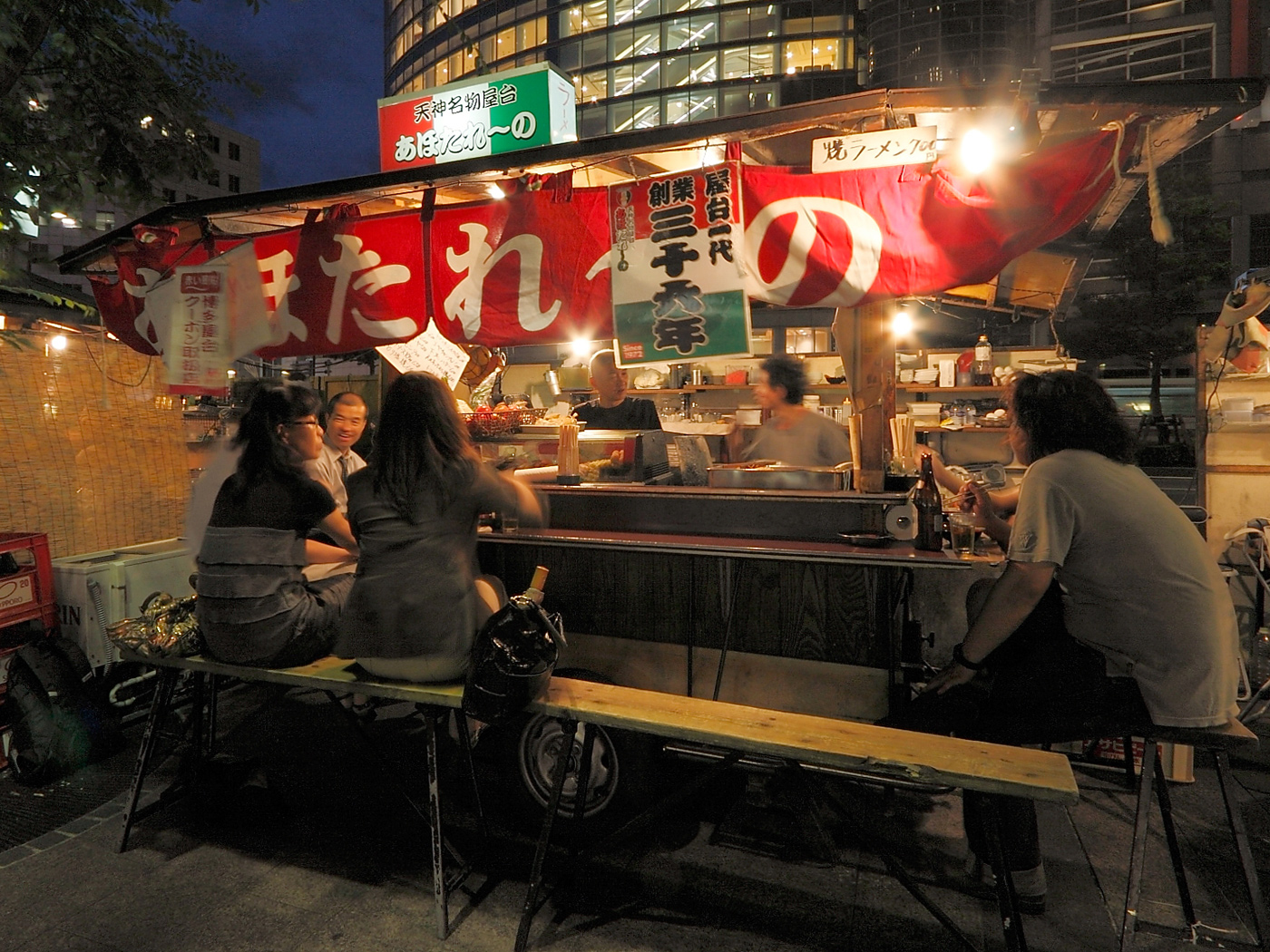
If you are craving for some variety in the food scene, head over to Ahotareno for some Mexican food. Besides their yummy tacos and cheesy tortillas, you can also find the usual Fukuoka delights like ramen and oden here. Don’t forget to try their homemade salsa sauce too.
As you can see there are many delicious ramen and oden and other stalls in Fukuoka. When you come to Fukuoka, make sure to give it a try and find your favorite.
yatai.tenjin.jp
imaonline.jp
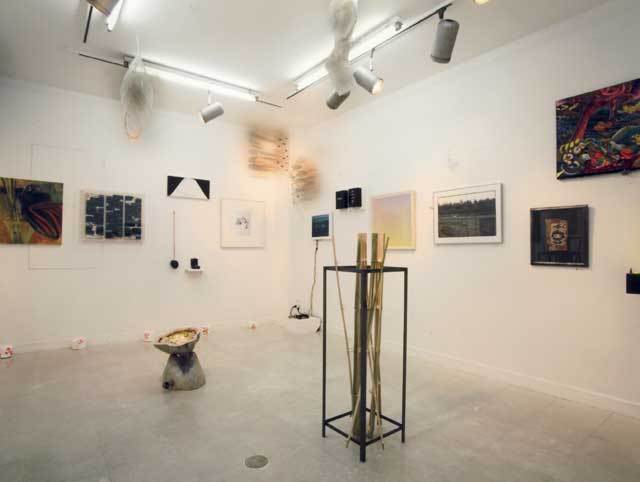
Art Space Baku here in Hakata exhibits a wide variety of artwork from indie artists. Within this art space, there is a cafe called Yaneura Baku, where you can take a break after viewing all the artwork in the gallery among its antique furniture.
showcase.city.fukuoka.lg.jp
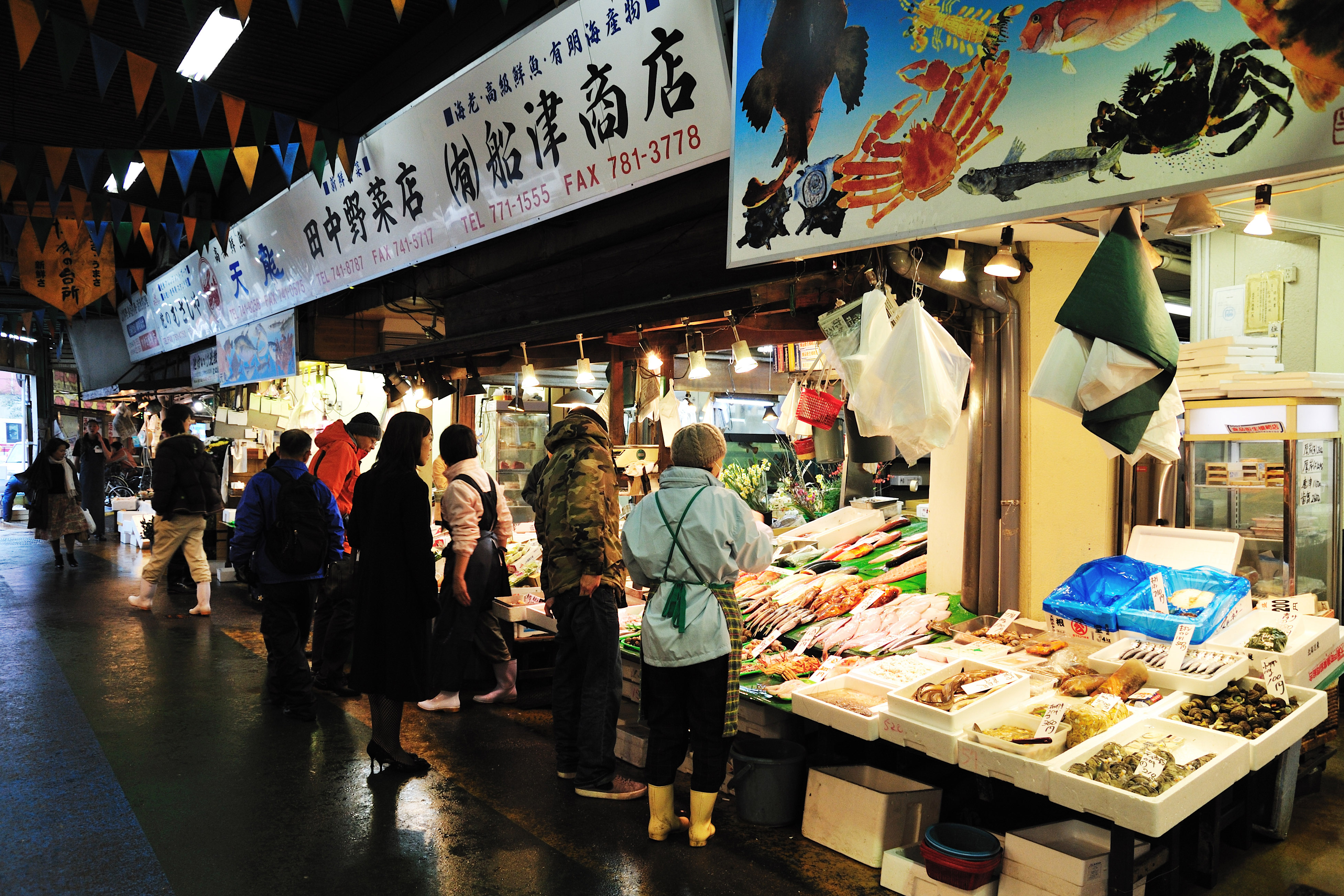
This market offers both fresh and processed food. Every year in November, the market organizes the Umakamon festival where special performances are held and many stalls are opened. Throughout the whole year, other events are also held too, including tuna filleting shows.
In Japan trains are paragons of efficiency and speed, transporting countless millions across plains, under the sea, through mountains and between islands every year. For foreign visitors, the Japan Rail Pass is by far the most convenient way to see the country as it allows unlimited travel spanning from the island of Hokkaido in the north to the bright, subtropical city of Kagoshima more than 1,500 miles to the south.
The Green Car on a Shinkansen is a top-notch travel experience.
The Japan Rail Pass is reasonably priced and can be purchased for either one, two or three week durations. For the price of a round-trip journey by train from Tokyo to Kagoshima, you could buy a three week rail pass valid nationwide (excludes Okinawa). Given that the pass is so reasonable, you might very well consider indulging yourself by getting a “Green Car” ticket. The “Green Car” is Japan’s equivalent of first class, and it provides a truly luxurious touch to your voyages on Japan’s rails. You can purchase it as a supplement to the Japan Rail Pass which allows you to use the Green Car in any train you travel on. If you are just making a single journey, you can buy a single Green Car supplement to your normal ticket as well, giving you full flexibility over how to use it.
The benefits of the Green Car are numerous. Firstly, it gives you more legroom than you would find in the business class section of any domestic airline, and a plush seat that has a built in foot rest and reclines up to forty degrees. This will allow you to watch as Japan’s vistas float by your window, or perhaps to catch up on sleep after a busy day of sightseeing. In addition, on scenic routes such as the Sonic, which takes you along the north-eastern coast of Kyushu, the Green Car gives you access to the panoramic viewing windows at the end of the train. Finally, at busy periods such as New Years and the Golden Week holidays in May, Japanese trains often become uncomfortably crowded, especially if you are trying to travel with luggage. The Green Car is an oasis of calm even on the busiest days, allowing you to separate yourselves from the hustle and truly relax and enjoy your vacation. Such is the experience that when the time comes to disembark from the train and do some sightseeing, you may well find yourself reluctant to leave the comfort and class of the Green Car behind. But there is always another journey to be made, and the Green Car will always be available to give your trip an unforgettable note of luxury.
photo credit: Thunderbird Oaska>kanazawa via photopin (license)
This post is also available in: Chinese (Traditional)
www.cafetribe.com
Tucked in a corner at the Yanagibashi Rengo Fish Market along the Nakagawa River, this café not only provides great coffee but a great view, too. It is open from 7:00 a.m. to 10:00 p.m. and you can get a cup of coffee for 200 yen. Its laidback style allows you to also bring in food bought at Yanagibashi Rengo Fish Market and eat in within its premises.
fff.bi-ki.jp
The Owl Café in Hakata is the answer to all those who are longing to have owls as pets. Under the one-hour-one-drink system, patrons can spend their time in appreciat-ing the owls and even take pictures with them. The café also sells pet related items and owl souvenirs.
imgfp.hotp.jp
For some authentic motsunabe, you should head to Motsuryori Kawano in Hakata, which has been around since 1953. Their soy sauce base broth motsunabe is made based on a secret recipe and is a favorite among its patrons. Instead of using rice to close the meal, this restaurant created the tradition of using Chanpon noodles instead.
poohsuke.blog.so-net.ne.jp
For those who would like to have a crash course on Tenjin, Hakata or the Seaside area, the Fukuoka Open Top Bus is your answer. The open top double decker bus is a great way to see Fukuoka City without having to do all the walking. The bus guides that rides with the passengers are local entertainers or models.
yukemuri-kaido.jp
Manyo-no-yu Hakata Yufuin Takeo Hot Springs in Hakata is open 24 hours and we definitely recommend it to visitors who are would like to take a dip in Fukuoka’s hot spring waters. The waters here are brought in daily all the way from Kyushu’s famous hot spring areas like Ota’s Yufuin and Saga’s Takeo. There are also spa and bedrock bath facilities available.
showcase.city.fukuoka.lg.jp
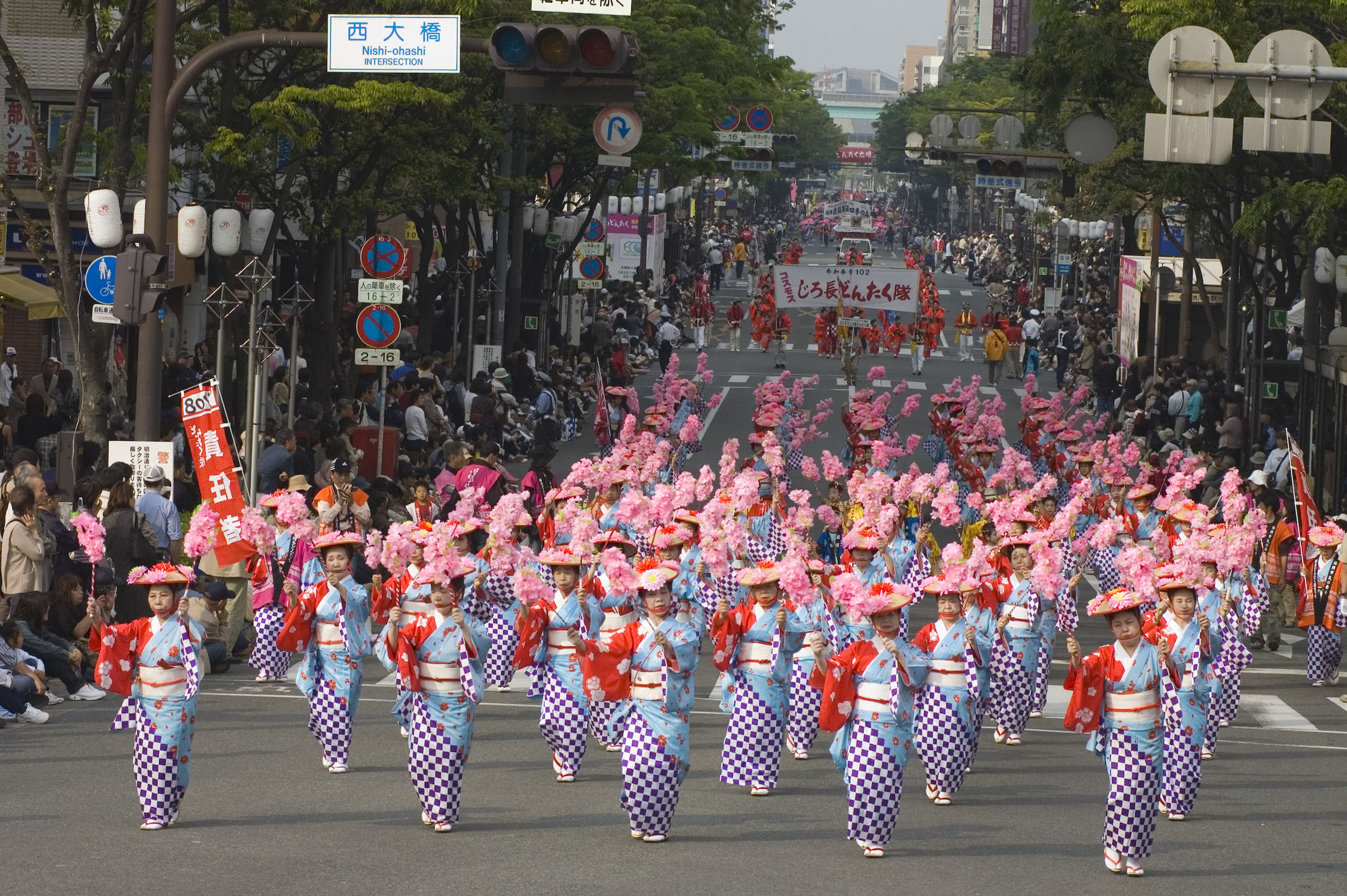
This is the one of the biggest city festivals in the whole of Japan held every year from 3rd to 4th May. You’ll get to witness a variety of traditional dances and the famous pa-rade along the Meiji street where beautifully decorated floats called Hana Jidosha are lit up at night.
yokanavi.com
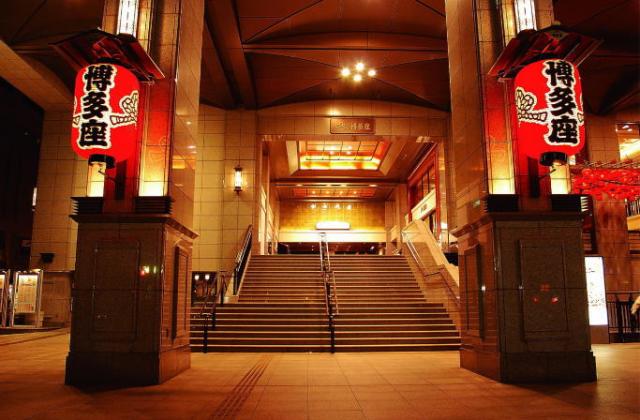
For those who love theater arts, Hakata-za is the place to visit. Here, you can watch the traditional Japanese Kabuki performances or the Takarazuka shows that are played out by an all-female troop. There are also musicals and concerts being shown here.
yokanavi.com
For avid baseball fans that are familiar with Japanese professional baseball players like Ichiro and Matsui, you might want to drop by at Fukuoka Yahuoku! Dome. Of course when baseball season is on, you can get a ticket to watch the game but even if there isn’t a game being held, there is Oh Sadaharu Baseball Museum which commem-orates the baseball player Oh Sadaharu who holds the world lifetime homerun record.
yokanavi.com
Within the compounds of Shofukuji, you will get to share a piece of Japan’s rich history through its structures like the Sanmon Gate, Butsuden Hall, the main Hondo Hall and Shoro Bell Tower. This is Japan’s oldest Rinzai temple and this temple offers a unique atmosphere that you cannot get at any other temple. Shofukuji offers Shakyo (which is an activity of copying religious sutras by hand) and Zazen (zen meditation) lessons for those who would like to get to know the Buddhist teachings better.
robosquare.city.fukuoka.lg.jp
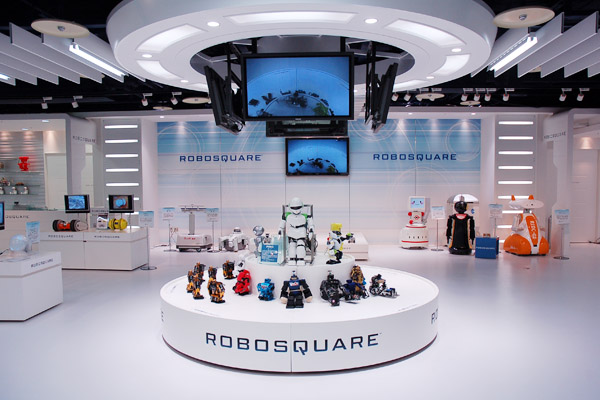
Science and technology buffs would love this place, as there are about 200 robots of 70 different types being displayed here at Robosquare. There are also daily robot shows, classes and events held here.
|
Ultra Stationmaster Tama |
||
|
Tama Museum, Kishi Station |
Tama Train |
Toy Train |
Tama is a Calico ( Mi-Ke: 3color, White Brown and Black ) cat and appointed to be the Station Master at Wakayama Electric Railway Kishigawa Line. She works at Kishi Station. She's served as a symbol of revitalization of Kishigawa Line. So, she was promoted to be Executive Officer (2009), Managing Executive Officer (2011) and Deputy of President at Wakayama Electric Railway (2013).
Kishi Station is designed in the motif of Tama. Kishi station is equipped with Station master's office and gift shop with cozy café.
Wakayama Electric Railway runs 3 attractive trains - Omocha (toy) and Ichigo (strawberry) and Tama Train.
* There is no parking available at Kishi Station, so please come by train.
|
Address |
803 Kodo, Kishigawa Town, Kinokawa City |
|---|---|
|
Opening hours |
Waiting room: 9:00 - 17:30 Tama Cafe: 9:00 - 17:00 |
|
Closed days |
Tama Cafe: 3rd Wednesday of the month * Ultra Stationmaster Tama's official holiday is on Saturdays, Sundays and Mondays. |
| Contact information |
Telephone number: +81-(0)73-478-0110 ( Wakayama Electric Railway Co Ltd.) |
| Related Website | Wakayama Electric Railway |
|
Access |
Take the Wakayama Electric Railway Kishigawa Line from the 9th gate at Wakayama Station and get off at Kishi Station. |
Michael Shearer (right), British consul general in Osaka, meets Tama, the late cat stationmaster of Wakayama Electric Railway's Kishi Station in Kinokawa, Wakayama Prefecture, last September. | KYODOKYODO
WAKAYAMA – Tama, a cat “stationmaster” of a railway station in Wakayama Prefecture whose immense popularity helped boost the railway’s revenues and the local sightseeing industry, died Monday at a local animal hospital aged 16 years and two months, the equivalent of about 80 years in human age, the railway said Wednesday.
Tama was a “tourism superstar extremely popular in and out of Japan who contributed greatly to promoting tourism in our prefecture. I am filled with deep sorrow and appreciation,” Wakayama Gov. Yoshinobu Nisaka said in a statement.
According to Wakayama Electric Railway Co., which appointed the female tortoiseshell cat to master of Kishi Station in January 2007, Tama had been recuperating from rhinitis since May. She is believed to have died of acute heart failure.
The day before her death, Wakayama Electric Railway President Mitsunobu Kojima visited Tama to wish her a speedy recovery. At the time, Tama stood up and let out a strong meow.
Before taking up the company’s post, Tama was kept at a kiosk in front of Kishi Station.
Her cuteness and the novelty of a cat stationmaster turned the money-losing Kishigawa Line into a popular sightseeing spot. The number of passengers on the line jumped to 2.27 million in fiscal 2014 from 1.92 million in fiscal 2005. Photos of Tama and other merchandise also sold well, leading to her appointment to acting president of Wakayama Electric Railway in January 2013.
The railway said it will hold a funeral for Tama on Sunday at her station, with the president serving as chairman of her funeral committee.
This post is also available in: Chinese (Traditional)
Are you coming to Japan for vacation or for a longer stay? Congratulations! Everyone around you is probably jealous. It’s okay, though. You can appease them by buying them cool things from Japan, which is a nice way of saying “Look, I went to this awesome country and you didn’t, but I brought you back a souvenir to make you feel kind of like you went.” Kind of.

Japanese snacks are so good that they’ve started to infiltrate supermarkets worldwide. You probably know about Pocky and Pretz and where to get them where you live (if you can). But going to Japan is an entirely different experience. You will forget about Pocky and Pretz – at least the regular chocolate flavors. Your eyes will glitter at the expanse of cakes and chocolates and cracker candies in SO MANY DIFFERENT FLAVORS that you don’t even know where to begin.
You can begin here, which is a list of all the articles on Tsunagu tagged with “snacks.” If you buy these the day before you leave Japan, they will stay fine en route to your final destination (make sure you put them in your carry-on luggage). You can also buy boxes of snacks–some on the more traditional side–at the airport. Just make sure they don’t have liquid if you are planning to put them in your carry-on luggage.
Be sure to also take note of the ridiculous number of Kit-Kat flavors that Japan has. Don’t believe that it can get any crazier than green tea? Check out 20 Kit Kats only Found in Japan.

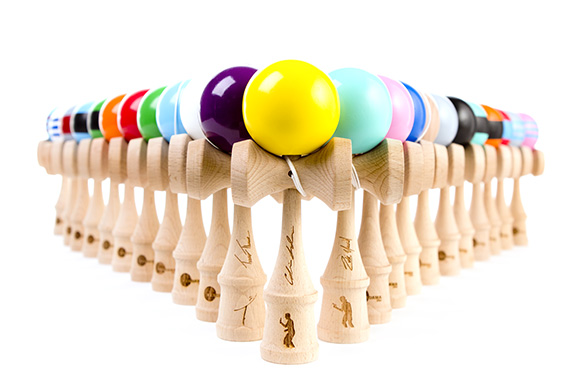
A kendama is a ball-and-string toy that came to Japan in the 1700s and is popular with children. Nowadays, it’s also popular worldwide, especially among b-boys in California who hold kendama competitions in the middle of the sidewalk. There are even kendama associations around the world.
You don’t have to be a b-boy from California to enjoy kendama, though. They come in a lot of different designs and are a good souvenir for people who like knick-knacks or art.

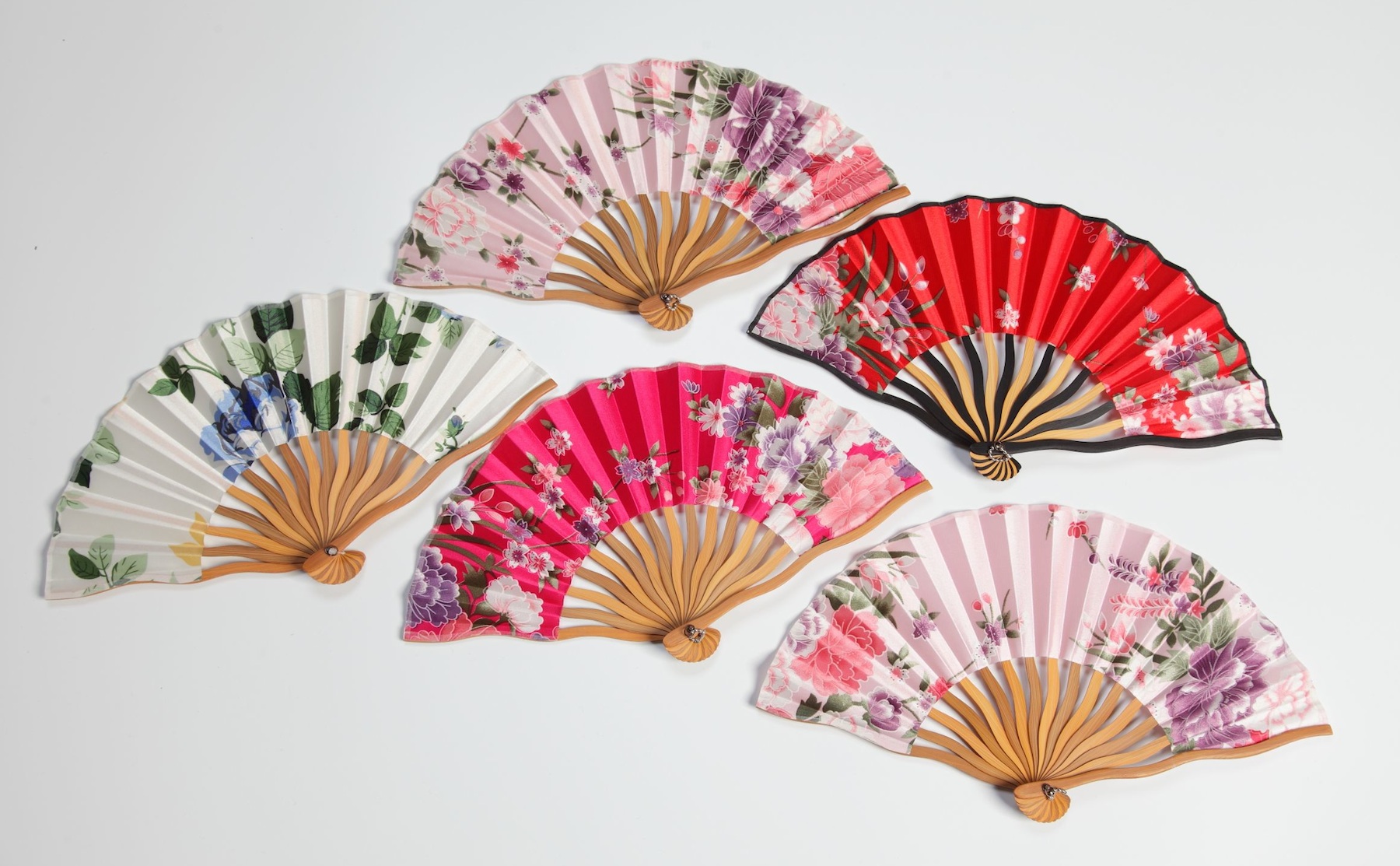
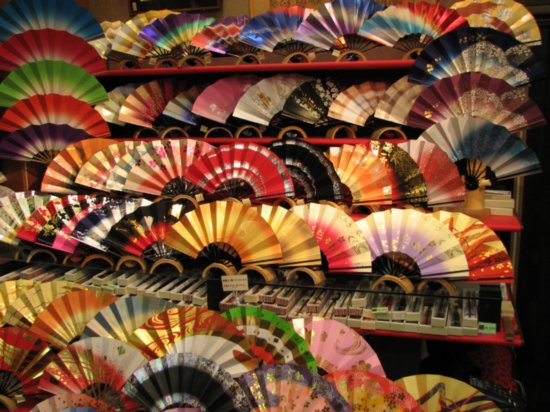
I say “nice quality” because I don’t mean the cheap folding fans you can get at Asian supermarkets everywhere. I mean real folding fans made out of genuine Japanese fabrics and wood. These are common in Japan, although a bit pricier than what you might be used to seeing. Worth it, though!

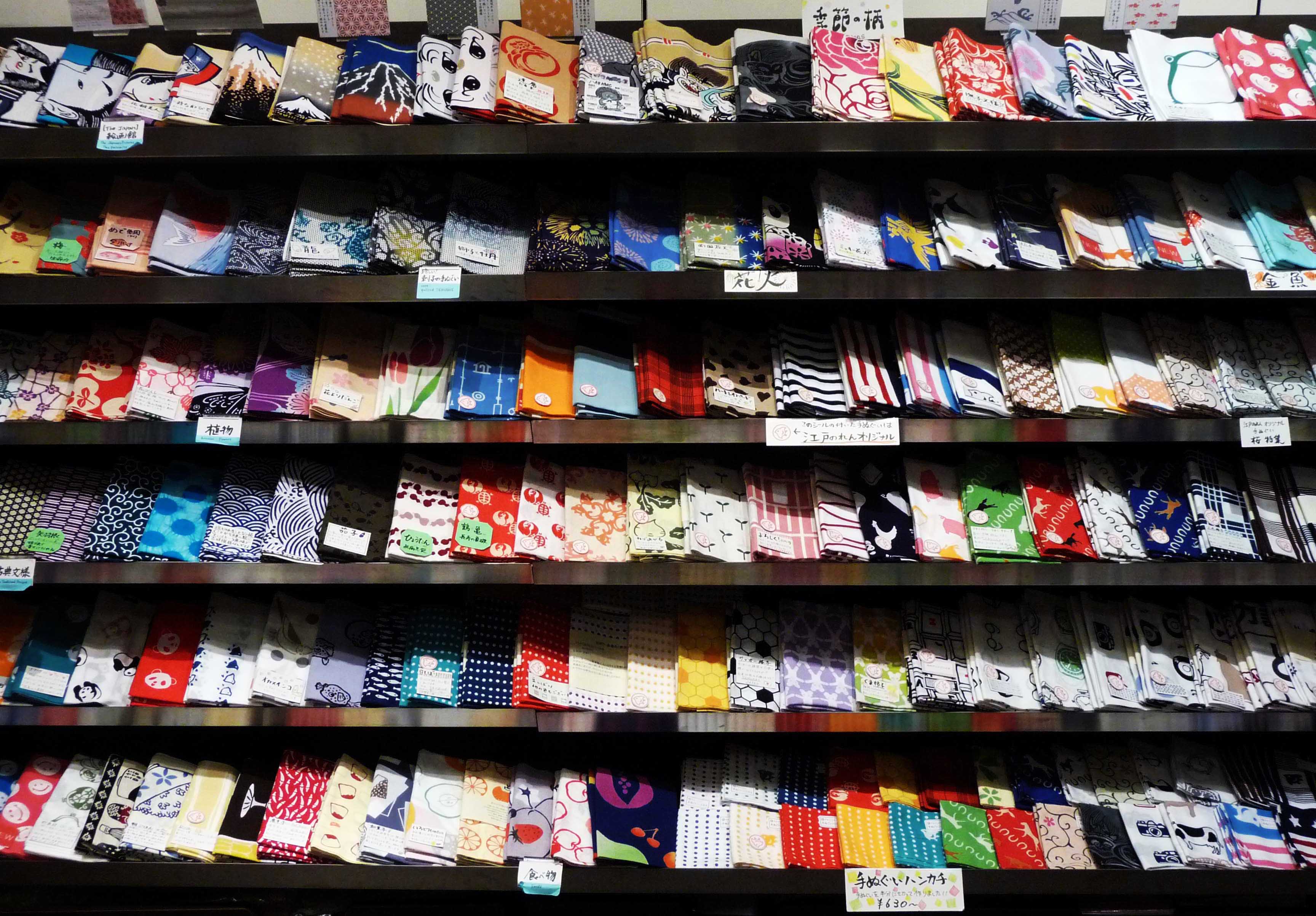
A Tenugui (手æ‹ã�„) is a thin Japanese hand towel made of cotton.
It is typically about 35 by 90 centimeters in size, plain woven and is almost always dyed with some pattern.
It can be used for anything a towel could be used for – as a washcloth, dishcloth, but often as a headband, souvenir or decoration. Towels made from terry cloth have replaced many of its use in the household. However tenugui are still popular as souvenirs, decorations, and as a head covering in kendo, where it functions as a sweatband, as extra padding beneath the headgear (men), and to identify the participants by team color.
For more details about tenugui, check “Tenugui are functional, fashionable, and convenient!” as well.

Yes, keychains. You can be cheesy and get Mt. Fuji ones. Or ones that say “JAPAN” on them with a background of the flag. Or Skytree or Tokyo Tower ones.
Or you can buy keychains with plastic food samples. See item #15.
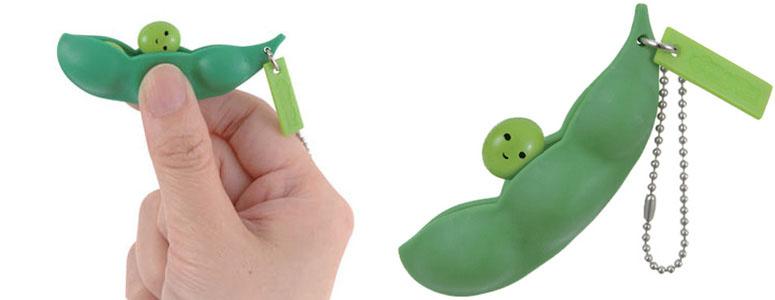
You can also get keychains with cute plushies that have microfiber butts to clean your cell phone! Or edamame that pop out when you squeeze it. Or ones that vibrate when you pull on a string. I still don’t know the point of those.

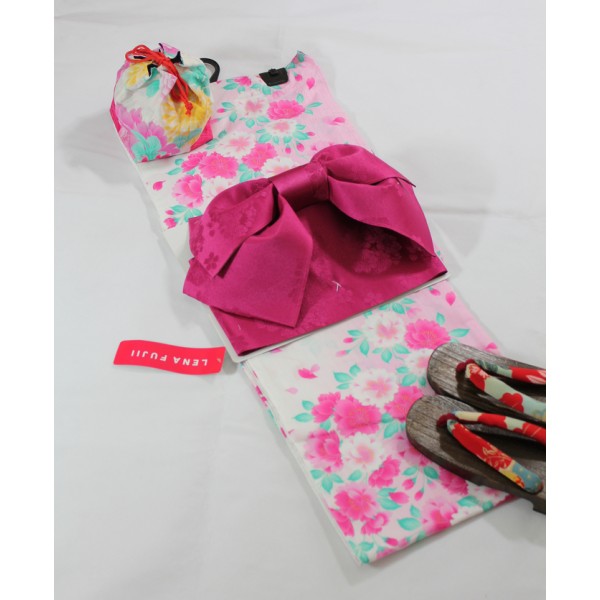
Yukata sets are very common in tourist areas like Asakusa and Akihabara. They are exactly what they sound like: a set that contains a yukata, an obi, yukata strings (himo) and geta (the shoes). Some come with the small bag as well. These are especially nice for kids, and the kids’ sets are cheaper. Also they will look super cute.

People are not lying when they tell you that Japan is a mecca of electronics and that Akihabara is the place to go for them. Do you want a very nice rice cooker? Go to Akihabara. Do you want an entire wall full of headphones? Akihabara, or a Bic Camera or Yodobashi Camera electronics store. Not only is the selection hard to beat, but the prices are often very good as well. Or you can buy a $300 rice cooker.

The good thing about shopping in Japan is that, depending on where you go, you can find entire stores dedicated to cute and cheap accessories. Even the hundred yen shops have worthy items. Of course you can always go for the nicer, more traditional accessories–which can probably be found in the same stores as the nice quality fans mentioned above. But popular areas like Takeshita-dori have MANY stores dedicated to giving the average high schooler with a monthly allowance her accessory fix, and you are welcome to shop there too.

Japan is heaven for trainspotters. Trains, everywhere. So many trains. A train every few seconds. A train for everyone, young and old.
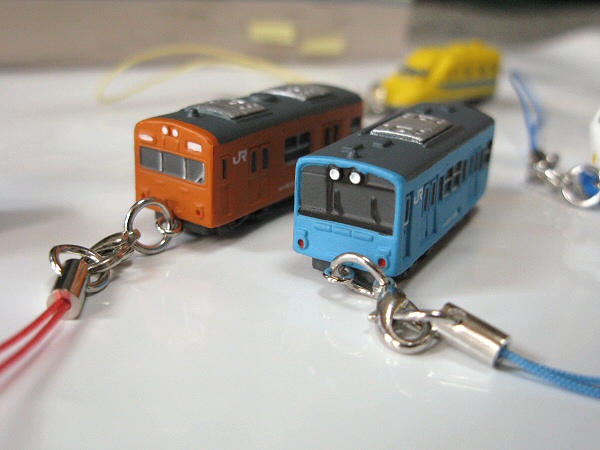
For the train lover in your life, you can get them anything their heart desires based on Japanese trains. A train plushie? This exists. A train towel? This exists, too. Cookies shaped like trains. Train keychains. Train tumblers. Train socks. Train onesies. Tote bags with trains. Train tissue boxes. Train t-shirts. Train planners. Train pens. Train pencil cases. Train wallets. GO WILD.

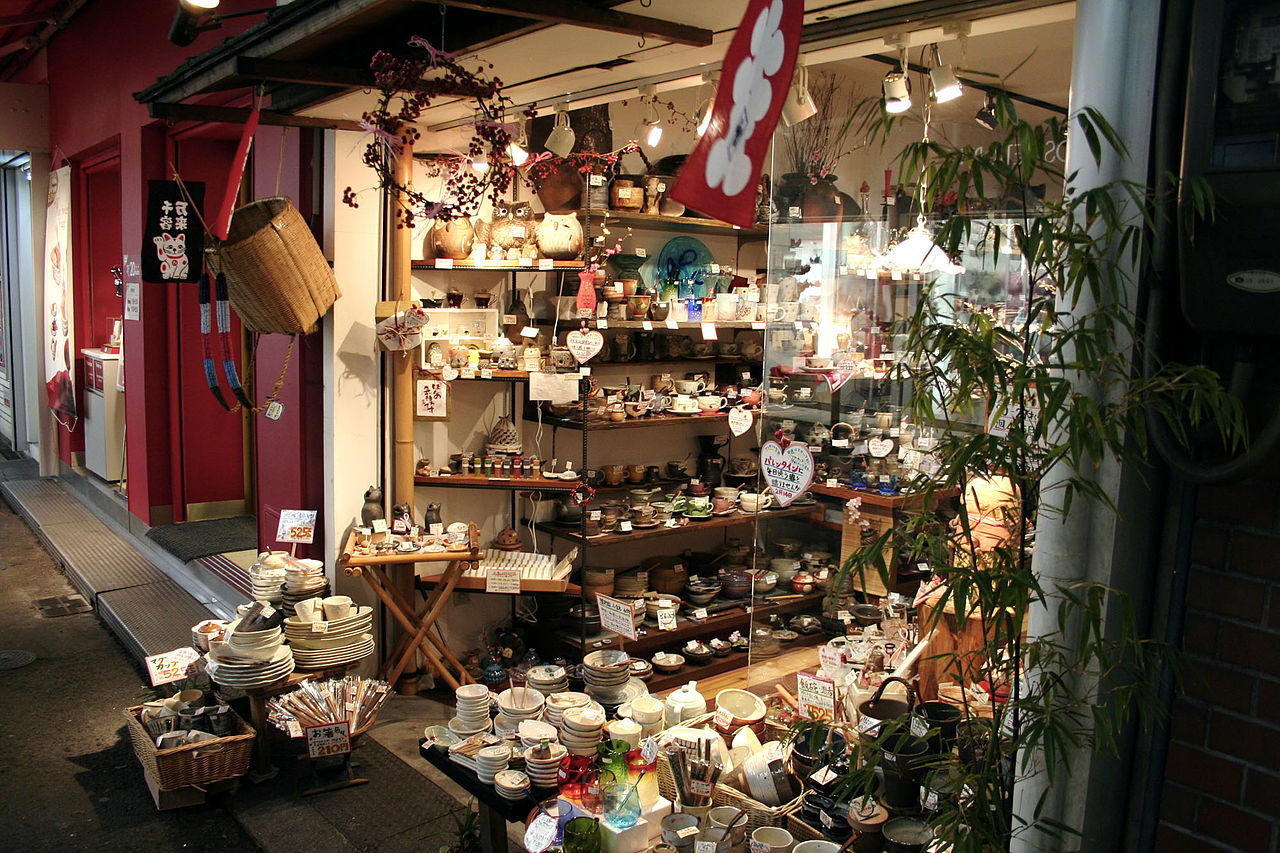
Japanese pottery and porcelain (é™¶ç£�器, Jp. tojiki; also 焼ã��ã‚‚ã�®, Jp. yakimono; 陶芸, Jp. tÅ�gei), one of the country’s oldest art forms, dates back to the Neolithic period. Kilns have produced earthenware, pottery, stoneware, glazed pottery, glazed stoneware, porcelain, and blue-and-white ware.
Japanese ceramic history records distinguished many potter names, and some were artist-potters, e.g., Honami Koetsu, Ogata Kenzan, and Aoki Mokubei. Japanese anagama kilns also have flourished through the ages, and their influence weighs with that of the potters. Another characteristically Japanese aspect of the art is the continuing popularity of unglazed high-fired stoneware even after porcelain became popular. Since the 4th century, Japanese pottery and porcelain was often influenced by the Chinese and Korean. Japan transformed and translated the Chinese and Korean prototypes into a uniquely Japanese creation, and the result was distinctly Japanese in character. In the 20th century, a ceramics industry (e.g., Noritake, Schimid Kreglinger (Kelco), and Toto Ltd.) grew up.
While buying ceramics may initially seem like a nightmare for your luggage, many shops have overseas mailing services, or will at least package whatever you buy and then you can send it off from the local post office. Or you can just buy a few plates and cups and nestle them securely in your luggage. Whatever you get, having Japanese ceramics is very classy and will be a cherished souvenir.

Are you buying a souvenir for someone who loves cats?
You are in the correct country.
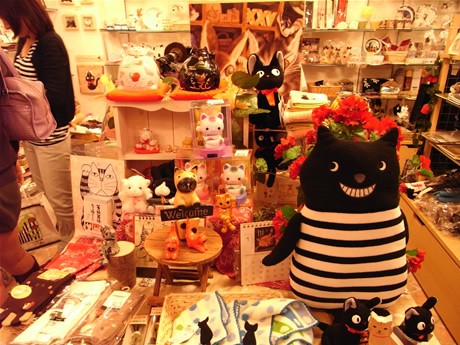
Cat. Things. Are. Everywhere. Cat watches. Cat bags. Shoes with cats. Coats with cat patterns. Cat mugs. Cat porcelain. Cat socks. Cat earrings. Cat hats. Cat plates. Cat tissue holders. Cat wallets. Giant cat plushies. Small cat plushies. Cat keychains. Cat charms. Cat lingerie. Cat phone cases. Cat earphones. Cat tumblers. I could go on.

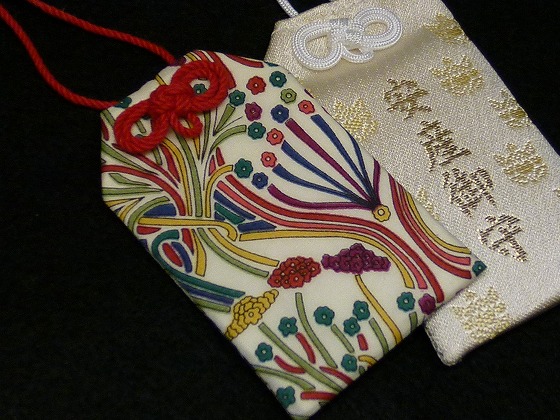
Omamori (御守 or �守り omamori) are Japanese amulets (charms, talismans) commonly sold at religious sites and dedicated to particular Shinto deities as well as Buddhist figures, and may serve to provide various forms of luck or protection.
Some omamori are very cute, while others are more traditional looking, and they often have the name of the place where you bought them. There are charms for luck, love, school, money, family – whatever you want.

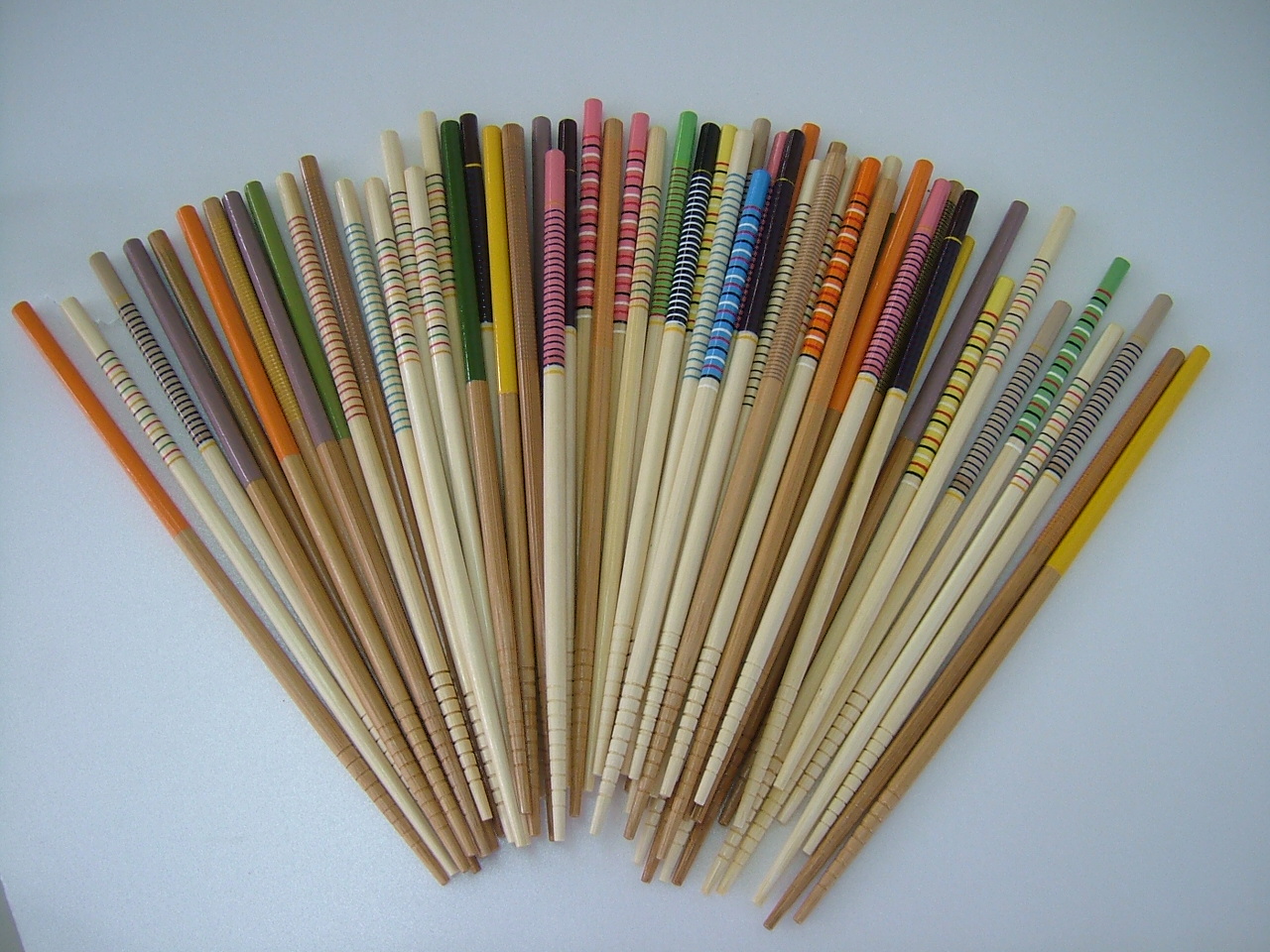
Do not give away the breakable chopsticks you get at conbini. This is rude and you are not being funny, unless you then produce high quality chopsticks.

Another thing you’ll want to bring back is Japanese stationery. As with many things on this list, you can opt for the more traditional variety or the more cutesy or modern, but there is an overwhelming variety to choose from. Pens, pencils, paper stationery, notebooks – get as much as you can because you’ll be wishing you’d bought more soon enough.

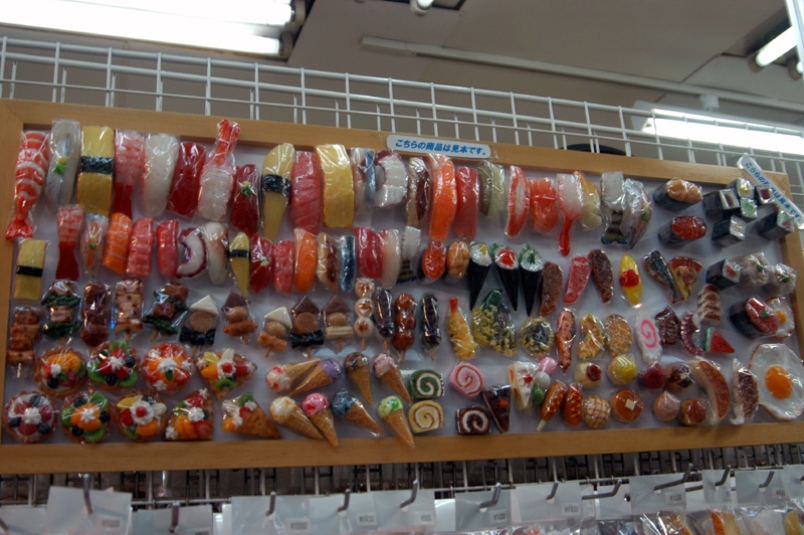
Yes, you can buy plastic models of food to take home, whether as keychains or paperweights or full-on models. This is definitely a souvenir people might not expect, which is why you should give this to them and watch their faces go from questioning to even more questioning.


~The Eruption of Mount Sakurajima~


Mount Sakurajima erupted on 18th August 2013, 16:31 HRS, sending a column of ash cloud rising up to 5,000m. There has been no record of human injuries. Feel free to travel around Kagoshimaas per normal.
Photograph: Mount Sakurajima and Kagoshima city on 19th August 2013, 07:15 HRS.
.
.
|
|
Originally posted by Yurporada:
My friend from Ukraine.
Yurporada
Ла�каво про�имо мого друга з України. Дайте нам знати більше про ваші так�і проми�лово�ті у вашій країні. не �оромте�� напи�ати в з декількох лінії в цьому форумі. ваш вне�ок.
|
SOURCE: SAVVYTOKYO.COM
Natsumatsuri (å¤�ç¥ã‚Š), or summer festivals, are usually held between the months of June and September, and they’re the most spectacular thing—treetops swaying in humid summer nights’ breeze, people young and old strolling about in nothing but yukata, crickets chirping their version of a lullaby, and the soft low light of the paper lanterns. The cool attitude towards strangers, which is so rampant in Tokyo, melts and everyone joins in the festivities—over food and drink, naturally. But what to eat?
Then the fun stuff that kids will beg you for:
|
|
SOURCE: GAIJIN POT
The first time I visited Canal City I got lost for almost an hour. It’s so big and its layout is so confusing that getting a little bit lost feels like part of the Canal City shopping experience. It’s a huge, sprawling, red building split into five smaller areas, and all of these areas are filled with shops, restaurants and amusements. Whatever you are looking for, Canal City is likely to have it… as well as five other things you didn’t even know you needed until you started walking around. The key to Canal City of course, are the shops. Canal City prides itself on having something for everyone. Japanese companies like Bershka and Uniqlo sit side by side with their western rivals, Zara and H&M. Disney, Ghibli and Jump Comics all have shops in Canal City, catering to animation lovers, whilst Adidas, Northface, and Vans cover more sporty types. It’s not just these companies though; Canal City has hundred’s of different shops catering to all your needs whatever your interest, or budget. Best of all, these shops are within five minutes of each other making Canal City the easiest place to shop in Fukuoka (as long as you don’t get lost like me). There’s no traipsing around with 3 heavy bags like you sometimes do in Tenjin or Hakata; everything is close for your convenience. Canal City is more than just shops though. There are plenty of things to do here for people that don’t love shopping. Canal city has a 12 screen cinema (one of which is an IMAX screen) showing all of the newest movies for any regular movie goers. It also has a huge amusement arcade with plenty of Purikura stations, video games and UFO catchers to keep you busy. On weekends, at the center of …CONTINUE READING |
|
SOURCE: GAIJIN POT
The Hakata Gion Yamakasa Festival is an exciting and high energy summer festival held in Hakata, Fukuoka. The Hakata Gion Yamakasa Festival first started in the 13th Century when it is believed according to legend a Buddhist priest was carried aloft, sprinkling holy water on the street to help victims of the plague. The festival is now over 750 years old and attracts up to a million spectators every year. It is Fukuoka’s most anticipated annual festival and a must see festival in Japan The festival is the main festival of Fukuoka and one of the major festivals of the Kyushu region of Japan. It even has been designated an Important Intangible Folk Culture Property so has a lot of tradition and history attached to it. Festival Highlights The Hakata Gion Yamakasa Festival gives you the chance to see half-naked men in loincloths as well as elaborate festival floats that are truly impressive in size and colour. The festival features two types of floats. One called Kazariyama, which are colourful floats used for display purposes only, and Kakiyama, which are carried in the festival and feature in the climax of the festival. The decorative Kazariyama Floats are set up for display on the street corners from July 1 and are fun to look at while you stroll through the streets of the city. The 10 meter tall floats are over two tonnes and are decorated with samurai or popular anime characters that are made by master Hakata craftsmen. Photo by Ville MisakiThe highlight of the festival is the 5 meter tall, one tonne Kakiyama festival floats that are elaborately…CONTINUE READING |
Just only got one yesterday over here Botanic Garden. UNESCO Heritage site.
Let see how many over in Japan
The United Nations Educational, Scientific and Cultural Organization (UNESCO) is an agency of the United Nations that aims to promote the preservation and growth of the world's intellectual and cultural property. UNESCO is probably best known for designing World Heritage Sites, cultural and natural sites that show "outstanding universal value". There are currently 19 world heritage sites in Japan, 15 cultural ones and 4 natural ones.
![]() |
|
![]() |
|
![]() |
|
![]() |
|
![]() |
|
![]() |
|
![]() |
|
![]() |
|
![]() |
|
![]() |
|
![]() |
|
![]() |
|
![]() |
|
![]() |
|
![]() |
|
![]() |
|
![]() |
|
![]() |
|
![]() |
|
true