



 The oldest literature that notes the existence of shochu was written in 1546.
 Even though shochu has long been a part of people’s life in Satsuma, the shochu of 500 years ago was made from rice and grain. Satsuma Imo didn’t exist in Japan at that time. The modern day Kagoshima product, Satsuma Imo Shochu, however, is made from Satsuma Imo (Japanese Sweet Potato). This sweet potato is not native to Japan. Originally it came from Central South America. Then in 1605, it came to Ryukyu island (Modern day Okinawa ) from Philippines by way of the China. About 100 years later, in 1705, it started to spread widely in Kagoshima.
 Even though the Satsuma Imo only arrived about 300 years ago, it was so well suited to Kagoshima’s climate and environment that it spread extremely quickly. Because it grew so quickly, during a famine in 1732, Satsuma Imo saved many people from starvation and it was so valued.
 In old days, people were allowed to produce Shochu at home without any government permission. But in 1899, the production of shochu came under government regulation by Meiji shogunate. Shochu manufacturers needed to hire professionals and the demand for skillful master brewers called 'Toji' in Japan grew. Here in Kagoshima, the town called Kurose is home to so many of these high skilled Toji master brewers. At the beginning of Meiji era, three artisans learned the skill of making shochu with Kuro Koji (Black Koji) from the Ryukyu craftsman. This is the foundation of the modern Imo shochu. After that, they brushed up their skills more and built their own traditions. From generation to generation, the Toji brew masters pass their knowledge only onto those trustworthy apprenticing with them.


Kuratake surprised me as soon as I opened the bottle. The rich sweet potato aroma and flavor I expect from imo shochus is largely absent from this spirit until you pay attention. It’s got a subtle presence, but not the overwhelming sensation you’ll get from a traditional Kagoshima style black koji imo shochu like Shiranami Kuro. This shochu takes the experience in a completely different direction.















By Mandy Bartok, March 2013

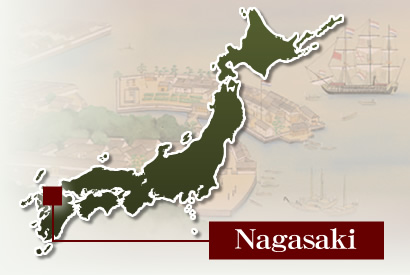
Every region in Japan has its specialty, from miso to melons to mentaiko. Nagasaki, on the shores of western Kyushu, is no different, only its most famous food is actually an import.
Castella (or kasutera, in Romanized Japanese) is a light sponge cake that has its origins in the kitchens of Europe. When the Portuguese first landed in Japan in the mid-1500s, they brought with them a cake called Pão de Castela, or “bread from Castile”, named after a region of central Spain. Whether the cake is originally Spanish or Portuguese is hard to determine, but it wasn’t too long before castella became a staple on the Nagasaki food scene.
The main ingredients for castella are fairly basic – eggs, sugar or honey, flour and a bit of starch. This plain version of sponge cake is the one most often seen in department stores, but if you frequent a specialty shop like Bunmeido, you’ll find a few more high-end cakes on end.
Bunmeido is purportedly Nagasaki’s most famous castella shop, occupying a busy corner near historicalDejima since 1900. While other castella shops in Nagasaki such as Fukusaya predate Bunmeido by a few centuries, the former rose to prominence in the 1960s thanks to a TV commercial. A group of dancing kittens would sing the following jingle:
Castella is number one.
The telephone is number two.
It’s Bunmeido for the 3 o’clock snack.
I’m not entirely sure I get it, but enough people were galvanized by the advertisement that Bunmeido’s sales rocketed upwards and remain fairly high to this day. With that in mind (and with the blind luck of stumbling across Bunmeido on my way to Dejima), I decided to pop in and see what the fuss was about.
The display at Bunmeido is terribly enticing, and I walked away with both a small square of plain sponge cake and a larger offering of their special “peach castella”, a white cake topped with gooey fondant decorated to resemble, what else, a peach. Surprisingly, the peach castella, while delicious, was too large of a portion and far too sweet. My taste buds haven’t been that overwhelmed with sugar in quite a while and I could barely finish the portion. Much better was the small square of sponge cake – moist and perfectly browned on the top, it was exactly the sort of culinary pick-me-up I needed to get through my Nagasaki sightseeing. Bunmeido, I may not understand your advertising, but you sure do know how to bake a cake.
(There are Bunmeido outlets all across Japan, but it’s a real treat to sit down with a cup of tea and a slice of cake in the building where it all began.)

Written by Mandy Bartok
Regional Partner, Tokyo