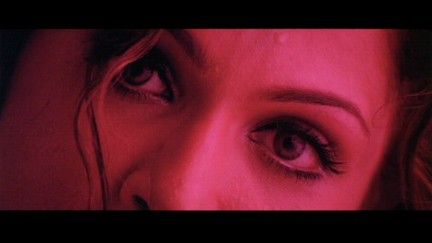
It has become a multi winged empire and has yielded about 27,000 feature films and thousands of documented short films.
India's "Bollywood" industry, as it has come to be known, currently holds the record as being the worlds largest film producer. This article examines the dramatic changes which have taken place since the past 2 decades in the industry.In Bollywood just as in Hollywood, science and art are combined to produce the end result.
Nowadays, the quality of the sound and vision is superb. The editing is very carefully done most of the time. This, rather surprisingly becomes evident in the body of the film and especially during the songs. Many of the new directors of Bollywood had a history in music video production
 Storylines,screenplay ect:
In the 80s,Director Maniratnam lead the way in revolutionizing India's tradition-bound film biz, rejecting classic costume musicals and weepy melodramas for gritty, urban, high-budget realism.It was not till the 1990s , when director Maniratnam and a few others like Shankar and Ram Gopal Varma took the scene to a whole new level with new ideas and concepts.Romance is packaged in the backdrop of politics, history and real issues which aimed to woo an international audience. To an extent , bollywood was indeed successful as it ventured into foreign markets with films like Dil Se which was a flop in India but a success in UK and US.
 Cinematography, sets, props ect:
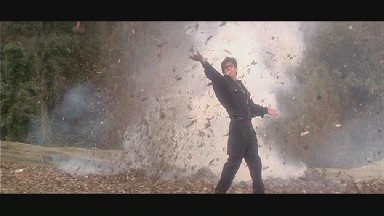
MTV-style, quick-cut editing and other gimmicky filmmaking techniques together with elaborate sets and backdrops, costumes have the biggest evolution in the industry.The use of steadicam and rapid moving camera's have become a staple in the industry.Another trend which seems to emerge is increase use of ad-style cinematography which gives an amatuerish feel. This trend was first seen in director Maniratnam's 1989 urban movie "agni natchithiram" with cinematographer PC Sreeram,the whole movie shot in the dark with shades of dark and light. Shot in an ad like manner with glossy camerawork using extensive backlighting and flare filters with rapid cutting and extensive dissolves much like a long slick music video.Since then the technique had not been used very often till recent movies like Saathiyaa which was a love story shot like a full length commercial video Another mentionable even would be the train song sequence in the 1998 DIl se , where an entire 5 minute scene have been shot on top an actual moving train. Acclaimed cinematographers in the industry includes the long time veteran PC Sreeram, Rajiv Menon, Santosh Sivan and recently Ravi K Chandran
 Music:
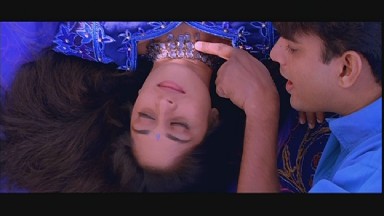
Sometime in 1992, a relatively unknown 21 year old composer,AR Rahman emerged out of nowhere and his surprise arrival had created waves in the industry.To simply put it, he's the biggest thing to happen this generation. This composer struck a chord with his very first soundtrack which was a futuristic leap in time. Unheard voices, strange musical arrangement, and a vibrant presentation all recorded in crystal clarity sound. Everything about this album was new.A new digital revolution began and filmaking techniques had indeed rather evolved to cater to Rahman's advanced music .Though A.R. Rahman now sells more records than Madonna and Britney combined, he began his career composing music for commercials.Spanning a career of more than 10 years , Rahman is here to stay.Others worthy of mention is the recent composer Harris Jayaraj who had been gaining in popularity and currently in no 2. place after Rahman
 Technical aspects:
Currently DTS has gained a firm foothold in India's all-important Movie Industry.Prior to the 90s,most movies were released in Dolby stereo or SR when the trend shifted somewhere in early 90s. Recently in 2002, the movie "kannathil Muthamittal" by director Maniratnam received an official THX certification by Lucas Arts studios for best sound effects.Without a doubt the growth of DTS in India has been rapid. From no theaters in Jan 1996 to 623 theaters in June 2001 is an average growth of over 125 theaters a year. Another relatively new technological revolution Digital cinema is on its way currently in India though not yet in mainstream use.Bollywood's profilic sound engineers include H Sridhar and S Sivakumar and a few others


