ST survey on singaporeans view of aisa' most beautiful women
-
rainie yang better

-
Why don't you ask the threadstarter to stop his cloning nonsense instead. What he does is even more crappy.Originally posted by valentinoo:shut the fuck up lah...clone ur farking head...farking bunch of morons...dont like dont post lah...clone clone clone..shut ur kraps! -

ASHWARYA RAI
Looks made her a star they say,she was India's first claim to fame in the international beauty arena and one of the most beautiful women in world, Miss World 1994 Ashwarya Rai charmed a million viewers as well as the judges with her amazing mental acumen. Her ebullience and zest for life won her even more fans as she crossed over to Bollywood and became India's most prized Jewel.Though initially she made a couple of movies which bombed at the box office, she's became most sought after actress in India today.
SUSHMITA SEN
She is the first Indian model to win a Miss Universe Title in the early 90s.A leggy Delhi belle with the most compelling personality, towered over 76 other beauties in the most viewed and talked-about international pageant in 1994.She brought to her duties as ambassador of beauty and purpose an irresistibly cheeky grin and a now well schooling led sense of etiquette.Her decision to join movies was well accepted and Bollywood welcomed her with open arms
DIYA MIRZA
Her confidence belies her status in the industry. But it is her keen sense of direction and her intrinsic intelligence which makes her so poised and confident.Diya Mirza won the prestigious Miss Asia Pacific title at the beauty pageant held on 2 December, 2000, in Manila. She is the second Indian contestant to be crowned Miss Asia Pacific and the first in 29 years.Her first film, did not make a big splash. But it spelt one thing - Diya Mirza had arrived.
PREITHY ZINTA
Her cute heartwarming smile and her sexy girl-next-door image proved hard to resist.Uncannily resembling an Italian belle this young lady's first brush with fame were the popular Lyril and Perk ads before she crossed over to movies. Spunky, witty and talkative, Preity Zinta has created a niche for herself in Bollywood.She proved immensely popular with brilliant performances and did any kind of role with ease[/b][/quote] -
have to agree she should be in the listOriginally posted by pokkagreentea:Miss Japan should be no.1!


-

Kandukondain Kandukondain (also known as I Have Seen it in English) is a 2000 Tamil film directed by Rajiv Menon. The films was also dubbed into English and other languages. The movie stars Ajith,Mammootty,Aishwarya Rai and Tabu. The film is a contemporary Indian take on Jane Austen's Sense and Sensibility.
Kandukondain Kandukondain,directed by Rajiv Menon, comes across as a refreshing change from the formulaic films churned out by Bollywood week after week. The film, a major improvement over his previous film Sapnay, looks at the trials and tribulations of a family consisting of a mother and three daughters and about the men who walk into the lives of the elder two girls of marriageable age. In a cruel interplay of destiny and betrayal, the family stripped of their house and belongings sets out to the city to build a new life. How they eventually find success and love and learn to live a life of dignity is what the film is all about.

Music for the film is composed by A.R. Rahman and the movie is said to have the most unique sound of his to date in the millenium. He has undoubtedly infused a whole new different sound in this one.
A.R.Rahman's music score for this film fetched audio rights worth Rs2.2+ crores. This record still remains unbeaten as the film audio market has gone into recession since 2000.The music by A.R. Rahman goes a little innovative on his usual heavy use of synthetic sounds and a lot of it is, in fact, based on ragas of Carnatic music
The film works quite well even if some of the problems faced by the characters and their solutions appear a little too pat and predictable like Tabu solving the computer programming glitch in the office and immediately being promoted. The contrast between the two elder sisters - the elder one (Tabu) sober and cautious, the younger one (Aishwarya) vivacious and passionate is well brought out and the unique bond they share among themselves is truly heartwarming. However the narrative flow of the film could have been smoother. At times the story follows the travails of one sister for far too long before suddenly coming back to the other. Also, the faithful servant who follows the family to the city is never established earlier so her decision to do so comes more as a bolt out of the blue.
The film is aided by two strong central performances by Tabu and Aishwarya Rai and they are more than ably supported by Mammooty (who is as usual outstanding), Ajith and Abbas though admittedly the latter is handicapped by a sketchily underwritten role. His flamboyance and sweeping Aishwarya off her feet doesn't quite come off.
The film is well shot by Ravi K. Chandran with an appreciable aesthetic sensibility and visual sense barring a couple of tacky special effects as in Tabu's flat with the fireworks in the background. . Among the songs, Aishwarya's song in the village fields stands out for its innovative picturisation.
A couple of technical flourishes stand out like the lead into Aishwarya's first song and the cut from the train to the tracks in Egypt to the song between Tabu and Ajith.
What is interesting is that instead of dubbing the film in another language, the makers have had the film subtitled in English. According to Rajiv Menon this helps the film retain its 'very Tamil' flavour yet be understood perfectly by outside viewers. Also since the film is a story of relationships and focuses on performances with lots of close-ups, dubbing into another language and mismatched dialogues would take away from the film. Though the subtitles work well and the film is enjoying a good run at the box office, albeit in a limited release, this restricts the audience to a minority who would understand and appreciate a good effort like this.
Menon acknowledges the role of Sringar Films who picked up the film and hoped this would start a new trend like Hyderabad Blues did. One could thus break down language barriers while retaining the authentic flavour of the original film. And after all, isn't Cinema a universal medium?.jpg)
-
Kandukondain Kandukondain (also known as I Have Seen it in English) is a 2000 Tamil film directed by Rajiv Menon. The films was also dubbed into English and other languages. The movie stars Ajith,Mammootty,Aishwarya Rai and Tabu. The film is a contemporary Indian take on Jane Austen's Sense and Sensibility.
Kandukondain Kandukondain,directed by Rajiv Menon, comes across as a refreshing change from the formulaic films churned out by Bollywood week after week. The film, a major improvement over his previous film Sapnay, looks at the trials and tribulations of a family consisting of a mother and three daughters and about the men who walk into the lives of the elder two girls of marriageable age. In a cruel interplay of destiny and betrayal, the family stripped of their house and belongings sets out to the city to build a new life. How they eventually find success and love and learn to live a life of dignity is what the film is all about.
Music for the film is composed by A.R. Rahman and the movie is said to have the most unique sound of his to date in the millenium. He has undoubtedly infused a whole new different sound in this one.
A.R.Rahman's music score for this film fetched audio rights worth Rs2.2+ crores. This record still remains unbeaten as the film audio market has gone into recession since 2000.The music by A.R. Rahman goes a little innovative on his usual heavy use of synthetic sounds and a lot of it is, in fact, based on ragas of Carnatic music
The film works quite well even if some of the problems faced by the characters and their solutions appear a little too pat and predictable like Tabu solving the computer programming glitch in the office and immediately being promoted. The contrast between the two elder sisters - the elder one (Tabu) sober and cautious, the younger one (Aishwarya) vivacious and passionate is well brought out and the unique bond they share among themselves is truly heartwarming. However the narrative flow of the film could have been smoother. At times the story follows the travails of one sister for far too long before suddenly coming back to the other. Also, the faithful servant who follows the family to the city is never established earlier so her decision to do so comes more as a bolt out of the blue.
The film is aided by two strong central performances by Tabu and Aishwarya Rai and they are more than ably supported by Mammooty (who is as usual outstanding), Ajith and Abbas though admittedly the latter is handicapped by a sketchily underwritten role. His flamboyance and sweeping Aishwarya off her feet doesn't quite come off.
The film is well shot by Ravi K. Chandran with an appreciable aesthetic sensibility and visual sense barring a couple of tacky special effects as in Tabu's flat with the fireworks in the background. . Among the songs, Aishwarya's song in the village fields stands out for its innovative picturisation.
A couple of technical flourishes stand out like the lead into Aishwarya's first song and the cut from the train to the tracks in Egypt to the song between Tabu and Ajith.
What is interesting is that instead of dubbing the film in another language, the makers have had the film subtitled in English. According to Rajiv Menon this helps the film retain its 'very Tamil' flavour yet be understood perfectly by outside viewers. Also since the film is a story of relationships and focuses on performances with lots of close-ups, dubbing into another language and mismatched dialogues would take away from the film. Though the subtitles work well and the film is enjoying a good run at the box office, albeit in a limited release, this restricts the audience to a minority who would understand and appreciate a good effort like this.
Menon acknowledges the role of Sringar Films who picked up the film and hoped this would start a new trend like Hyderabad Blues did. One could thus break down language barriers while retaining the authentic flavour of the original film. And after all, isn't Cinema a universal medium? -
she does not look japanese at all.Originally posted by borgkilla:have to agree she should be in the list -
I expected Aish - No1

Ayumi - No 2
Zhang Ziyi - No 3
Why didn't Ayumi come 2nd or 3rd?
if I would have taken part, i would also say Aish. She has a distinctive quality about her looks which wins the world over. She can be cute at one moment and sophicated and sexy another.
I have went to Japan and many ppl there idolise Aish. I
In UsA, she is been invited for Cannes and MTV awards.
Queen of the world ,most sought after woman
But not changing for my opnions, I still think the coolest women on earth is Aish. AISH AISH AISH ALL THE WAY!!
Insert Pic ( have many pics of her)
India better treasure their jewel, Aish. She has contributed fame to her country. If SG had her, we will be famous too

-
If you watched her TAAL movie, in which she plays this villager in which she was talent discovered and grew to become a singing pop sensation, you'll be exposed to the most pretty sides of her. THink she was younger than . Taal was in 1999. TAAL PICS:

actually some of these bollywood storylines are pretty good and i really LOVE their songs (most of them). they have the good sound in them.
The music for the Bollywood movies are very good, I TAAL really got very good music in it. must say! The instruments and vocals they used... hypnotic!
State of the ART sound. Awesome.
And frankly, other than Lot of The Ring, and Cave of The Golden Rose and some other wonderful movie soundtracks, I haven't really found any movies with music as amazing as the Bollywood movies especially TAAL. -

"Taal" is a mega musical starring Aishwarya Rai RELEASED IN 1999 by techy Indian composer A.R.RAHMAN . Anyone who has heard the music is raving about it to the skies. A lethal combination of technology, sound, notes and instruments brings about some rich and superhit music for the music lovers. . Taal's sound is based on an ingenious fusion of electronic beats and breaks with an audaciously original arrangement for symphony orchestra
Taal is a celebration MUSIC AT ITS BEST
The added dimension to the music are the computerised sound effects using fully state of the art sound technology.The best Bollywood music today uses multitrack engineering and sophisticated arrangements that can hold their own with the slickest hits at the top of the Western pop charts
Each of the songs in the album oozes so much rich sounds it awes the world and sold a record number of copies abroad as well.
Taal was in the making since 1995 and the prehype with the rise of the internet, generated considerable exposure to the project.Taal was originally conceived by AR Rahman to be a mainstream commercial music project, but production went back to the drawing boards to be a mainstream and broadway musical hybrid....Hence, its supposed release date got delayed as the soundtrack was originally slated to release in 1997.
However, everyone else who'd heard the music of Taal even before the sondtrack released, was saying that Rahman is at his best in Taal, and has reached the pinnacle in his career since his debut in 1992.
That's the charisma of 'Taal''s music. AR Rahman and his TAAL created music so melodious, so lyrical that it will be a milestone for decades to come.
It will be ranked among the great musical scores. -

-
All Aish movies have great music.
Over in western countries, TAAL has caught the attnetion of music buffs.
http://www.ebertfest.com/seven/taal.htm -
If you watched her TAAL movie, in which she plays this villager in which she was talent discovered and grew to become a singing pop sensation, you'll be exposed to the most pretty sides of her. THink she was younger than . Taal was in 1999. TAAL PICS:

actually some of these bollywood storylines are pretty good and i really LOVE their songs (most of them). they have the good sound in them.
The music for the Bollywood movies are very good, I TAAL really got very good music in it. must say! The instruments and vocals they used... hypnotic!
State of the ART sound. Awesome.
And frankly, other than Lot of The Ring, and Cave of The Golden Rose and some other wonderful movie soundtracks, I haven't really found any movies with music as amazing as the Bollywood movies especially TAAL.
-
[b]

"Taal" is a mega musical starring Aishwarya Rai RELEASED IN 1999 by techy Indian composer A.R.RAHMAN . Anyone who has heard the music is raving about it to the skies. A lethal combination of technology, sound, notes and instruments brings about some rich and superhit music for the music lovers. . Taal's sound is based on an ingenious fusion of electronic beats and breaks with an audaciously original arrangement for symphony orchestra
Taal is a celebration MUSIC AT ITS BEST
The added dimension to the music are the computerised sound effects using fully state of the art sound technology.The best Bollywood music today uses multitrack engineering and sophisticated arrangements that can hold their own with the slickest hits at the top of the Western pop charts
Each of the songs in the album oozes so much rich sounds it awes the world and sold a record number of copies abroad as well.
Taal was in the making since 1995 and the prehype with the rise of the internet, generated considerable exposure to the project.Taal was originally conceived by AR Rahman to be a mainstream commercial music project, but production went back to the drawing boards to be a mainstream and broadway musical hybrid....Hence, its supposed release date got delayed as the soundtrack was originally slated to release in 1997.
However, everyone else who'd heard the music of Taal even before the sondtrack released, was saying that Rahman is at his best in Taal, and has reached the pinnacle in his career since his debut in 1992.
That's the charisma of 'Taal''s music. AR Rahman and his TAAL created music so melodious, so lyrical that it will be a milestone for decades to come.
It will be ranked among the great musical scores. -

-
I *personally* feel Ms Japan is a poor representative of an Asian country. Her smile does not look natural.. it takes on a very painful look. A case of bad botox? Her face greatly lacks symmetry - her left eye is very visibly smaller than the right one.
I'd vote Gong Li for no 1 spot for these reasons :
1 - She has class, poise and smarts.. she carries herself like the Asian equivalent of Audrey Hepburn.. and the way she turns gives her movie roles a 3D depth speaks volumes of her intelligence. Hollywood critics were amazed at how she outclassed the main female lead when she played Hatsumomo in "Memoirs of a Geisha".
2 - Dark asian features set on flawless Porcelain skin - makes her look exquisite, radiant and youthful. Like a pearl of the orient. She stands out from the other beauties sporting fake tans. She is all natural.
3 - Her getting the no 1 spot could shake up Hollywood's wrong image of Chinese beauties .. she would be the perfect representative of what is considered classical chinese beauty. -
gong li looks a bit 'pa chiao'.
no disrespect to her, though. -
Gong Li is no doubt a beauty. She seems to age gracefully. Her porcelain silky smooth complexion and volumptious figure are her best features. Too bad, she's not up to my liking.Originally posted by spinsugar:I *personally* feel Ms Japan is a poor representative of an Asian country. Her smile does not look natural.. it takes on a very painful look. A case of bad botox? Her face greatly lacks symmetry - her left eye is very visibly smaller than the right one.
I'd vote Gong Li for no 1 spot for these reasons :
1 - She has class, poise and smarts.. she carries herself like the Asian equivalent of Audrey Hepburn.. and the way she turns gives her movie roles a 3D depth speaks volumes of her intelligence. Hollywood critics were amazed at how she outclassed the main female lead when she played Hatsumomo in "Memoirs of a Geisha".
2 - Dark asian features set on flawless Porcelain skin - makes her look exquisite, radiant and youthful. Like a pearl of the orient. She stands out from the other beauties sporting fake tans. She is all natural.
3 - Her getting the no 1 spot could shake up Hollywood's wrong image of Chinese beauties .. she would be the perfect representative of what is considered classical chinese beauty.
As for Miss Japan, I think Kurara Chibana is one of the best-looking Japanese I've seen so far. Okay maybe her face is not perfect, she has a slightly bigger eye than the other but she still looks like a beauty.
I don't assume she had botox plus there's not confirmation report on it. But I think her smile is beautiful.
But what I like most about her is that she had put up her best behaviour during the pageant. Her poise was elegant. She could speak 4 languanges: english, japanese, spanish and french and that's pretty amazing. (considering she's still in her 20s).
Her answers to the final question was up to standards but unfortunately, her intepreter missed some points from her. That cost her defeat to become Miss Universe but no matter what, she has done her best and she accepted it gracefully. -
wah so many ppl defend mi.... i m touched...

anyway... tis looks like a bollywood ting liao... -
Still the India models one of the best in the world.
India i think is the record holder for winning beauty contests.
Now stop sprouting nonsense and welcome that fact.
This Miss Japan just comes and disappears in a flash. nodoby will know her. But Aishwarya Rai is talked about from Japan to Sweden and UK. She got an award by EU for diversity. -
compare this pic . AIsh is definetely more prettier than the
GONG LI (left), AISHWARYA RAI at the gala opening of the 57th Cannes Film Festival. And Aish also has a nicer body and boobs.Makes every man horney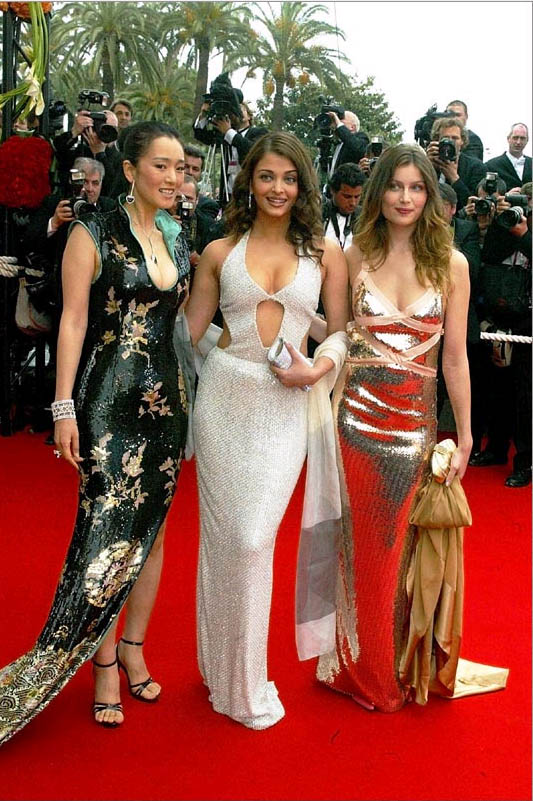
-
VERY SIMPLE . CLEAR ALL THE ARGUMENTS
ASK A BABY AROUND 1 YEAR OLD AND SHOW IT PICTURES OF BOTH AISH AND GONG LI. THE BABY WILL STARE AT THE PIC OF AISH.BECAUSE INFANTS HAVE VEEN RESEARCHED TO SHOW PREFERENCE FOR BEAUTIFUL FACES. AND INFANTS DON'T LIE. THEIR PREFERENCES ARE NOT INFLUENCED BY THOUGHTS OR EXPEREINCES OR SEXUAL MATURITY. THEIR PREFERENCE IS INSTINCT DRIVEN DOWN TO THE MOST BASIC HUMAN LEVEL. -

Dhoom 2 is a forthcoming Hindi film, to be directed by Sanjay Gadhvi starring Hrithik Roshan, Aishwarya Rai, Bipasha Basu, Abhishek Bachchan, Uday Chopra and Rimi Sen. The movie is the sequel to the Bollywood blockbuster, Dhoom. The film will be Sanjay Gadhvi's fourth directorial venture after Tere Liye (2000), Mere Yaar Ki Shaadi Hai (2003), and Dhoom (2005), and his third with Yash Raj Films. The story of Dhoom 2 takes place after the events that occurred in Dhoom. Nothing about the story has been officially revealed by the producers so far. The movie is slated for an November 2006 release -

First look for J.P. Dutta's upcoming film Umrao Jaan. The film that stars Aishwarya Rai in lead seems to be inspired by the 1981 hit with same title. The original Umrao Jaan which had Rekha play the role of a singer/ dancer who sells her body was mainly an Urdu film. The film had a 'Nawabi' touch which also seems to be the case in this Aishwarya Rai starrer. J.P. Dutta however claims that the film isn't a remake of the old Umrao Jaan but is based on the story which was written long back by his father O.P. Dutta.. For the 2006 film with the same title and subject directed by J.P. Dutta starring Aishwarya Rai and Abhishek Bachchan, see Umrao Jaan (2006 film -
You trust a baby to make such choices for you? Says a lot about you really. Your mentality isn't very much better than a 1 yr old anyway.Originally posted by Tioman:VERY SIMPLE . CLEAR ALL THE ARGUMENTS
ASK A BABY AROUND 1 YEAR OLD AND SHOW IT PICTURES OF BOTH AISH AND GONG LI. THE BABY WILL STARE AT THE PIC OF AISH.BECAUSE INFANTS HAVE VEEN RESEARCHED TO SHOW PREFERENCE FOR BEAUTIFUL FACES. AND INFANTS DON'T LIE. THEIR PREFERENCES ARE NOT INFLUENCED BY THOUGHTS OR EXPEREINCES OR SEXUAL MATURITY. THEIR PREFERENCE IS INSTINCT DRIVEN DOWN TO THE MOST BASIC HUMAN LEVEL.