Aussie dollar--jumping kangaroo or paper kangaroo?
-
u may have to buikd up your reputation in 3 years or 30 years.
It just take 3 days to ruin it.
Rudd once saluted to Bush!!

PM Rudd leaked Bush's ignorance on incoming G20 meeting.
It caused USA officials losing confidences on Oz.
Rudd was reported teaching Bush how to handle the crisis.
What's G20?: Rudd won't deny Bush leak
Video: Turnbull presses Rudd in Parliament
Anger at Rudd's leaked Bush call
Rudd dodges question over phone leak
"The view in DC is that as a result of that article, a lot of hard work done over a very long time has now been impacted adversely.
"From the point of view of other countries, the view will now have to be that their leaders will have to be much more guarded in their dealings with Kevin Rudd.''
-
Aussies going broke in record numbers
@@@@@@@@@@@@@@
Oz major bank analyst predicts Oz $$ cash rate drop
to 3.75% by March.OMG!This is 1.5% cut from current rate!
Mortgage relief with rates to be halved

INTEREST rates are tipped to fall to 3.75 per cent rate by March so that the Government can steer the country away from recession.,,,,,,,,,,,,,
Despite official interest rates dropping two percentage points in the past three months, NAB expects the Reserve Bank to lower rates by another 0.75 of a percentage point next month to 4.5 per cent.
"This will be followed by another cut of 50 basis points in February and a further 25 basis point reduction in March to take the cash rate to 3.75 per cent," Mr Oster said. -
TOC Report: Singaporean, 57, employed, married but cannot buy HDB flat
Wednesday, 12 November 2008, 10:06 am | 864 views
Andrew Loh / Deputy Editor
 Mr Sinnathamby Silvalinkam, 57, is a very disheartened and desperate man.
Five months of correspondences with the Housing and Development Board (HDB) have failed to help him get what he desperately needs – a roof over his head for himself and his 41-year old wife, Emma Joy.
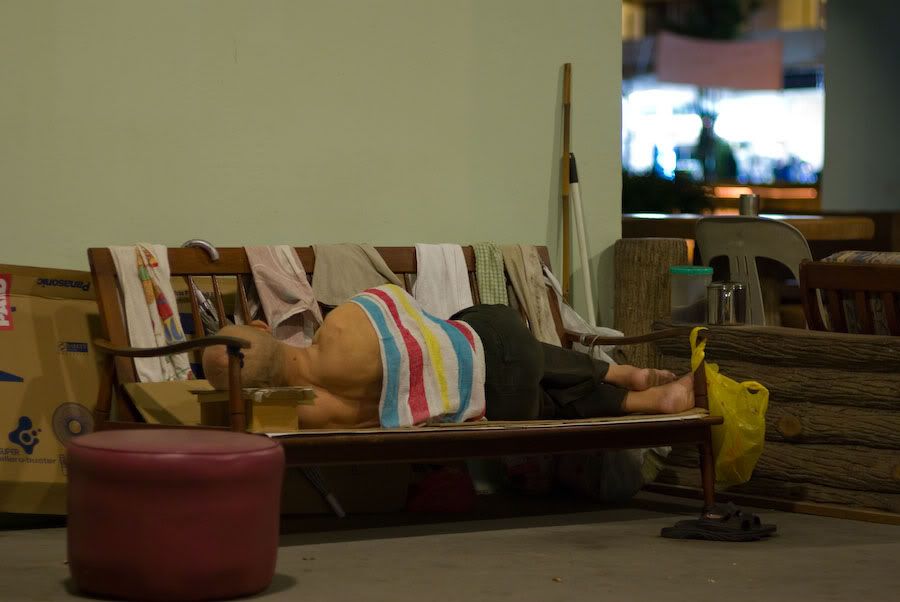
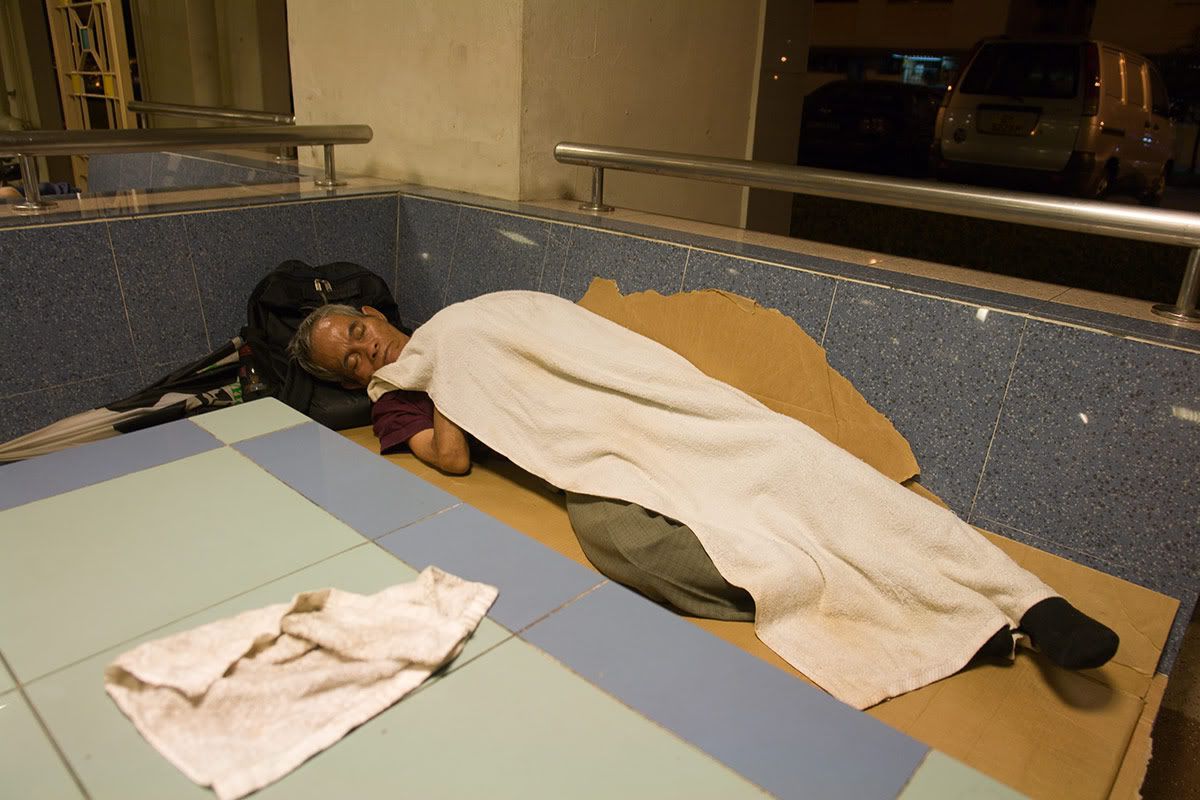
Despite being employed and married, the HDB and the CPF Board have rejected his application to release his CPF in order for him to purchase a 3-room HDB flat. This has led to Mr Silvalinkam and his wife having to put up at his sister’s one-room rental flat. He sleeps in Bishan Park on weekends.
Mr Silvalinkam’s friend contacted The Online Citizen (TOC) as a last resort in the hope that the HDB will be compassionate about his friend’s circumstances.
Mr Silvalinkam’s current predicament started in 2006 when he sold his 3-room flat in Ang Mo Kio to settle some debts he had incurred. He had borrowed some money from a friend to help with his family expenses. Mr Silvalinkam has three younger sisters and two younger brothers, all of whom got married before him. “It was a negative sale,” he told TOC, referring to the sale of the flat which he had bought in 1999 in the open market.
After the flat was sold, he rented a room in the same flat from the new owner for $800 a month and lived there until July this year. The landlord informed him in April that he was raising the rental to $1,200. “How can I continue to rent from him? My salary is only $1,500,” said an exasperated Mr Silvalinkam, who has been working as an operations assistant since 1996. “After I pay rental, transport and food, I have nothing left,” he said. “It’s like living from hand to mouth.”
Caught in a corner
It was then that the couple, who have been married for 14 years, applied to the HDB for a rental flat. Unfortunately, the HDB told them that they were ineligible because one, applicants must not have sold an HDB flat within 30 months from the date of application; two, the applicant must be a Singapore citizen and “have a proper family nucleus comprising at least one other Singapore citizen or permanent resident”; and three, the household income must not exceed $1,500 per month.
“But all our applications for my wife to obtain PR status have been rejected by the ICA,” explained Mr Silvalinkam. ICA is the Immigration and Checkpoints Authority in charge of approving such applications. According to Mr Silvalinkam, the ICA rejected their repeated application “because of my finances”. With his wife not being able to get PR status, his hope of purchasing a flat from the HDB was dashed.
The HDB suggested to him that he could, however, purchase a resale flat in the open market under the Non-Citizen Spouse Scheme (NCSS).
No to HDB flat, yes to resale flat
The couple decided to do that. Mr Silvalinkam had $13,000 in his ordinary account and he had sold his Ang Mo Kio flat for $140,000 in 2006. Since he was also 55 years old then, half of his proceeds went into his Retirement Account while the rest, in cash, was used to pay rental and settle his debts.
But they ran into problems with the HDB again. He was told that the money in his CPF Retirement Account could not all be used to purchase a flat.
The HDB, however, told him that it could give him a loan of $57,000 to purchase a flat under the NCSS and that he could use a part ($28,000) of his CPF Retirement Account as well. However, the total amount of $85,000 would still not be enough to get the couple a flat in the open market. He requested that the CPF Board released the rest of his funds in his Retirement Account.
His request was denied.
Singaporeans above 55 are required to retain a minimum sum of $94,600 in their Retirement Account – half of which must be in cash and the other half in the form of property pledge.
Mr Silvalinkam was informed by the CPF Board that he would be able to draw on his Retirement Account for his living expenses when he has reached 64 – seven years from now.
The HDB explained to him that he needed to retain $47,300 as his part of the minimum sum of $94,600. “It is important that the Retirement Account savings is preserved as it may be the only source of income which members can turn to for financing living expenses when they reach their draw-down age,” the CPF Board explained in a letter to him.
But this left Mr Silvalinkam bewildered. “Why can’t they release my CPF money so I can have a roof over my head?” he asked. He feels that he is being caught in a no-way-out situation.
Thus began a 5-month long attempt to get the HDB to reverse its decision. Mr Silvalinkam turned to his friend, Mr Viswa (not his real name), for help in writing to his Members of Parliament and with the various government departments. So far, he has approached almost all the MPs in his constituency – Mr Lee Hsien Loong, Mr Wee Siew Kim, Mr Inderjit Singh, Mr Ho Peng Kee and had approached the secretary of the Minister of State for National Development, Mrs Grace Fu, as well. All to no avail.
He suffered a heart attack in 2005 and sees a doctor every month. “It costs at least $150 each time,” he says. He visits a cardiologist every four months for his condition.
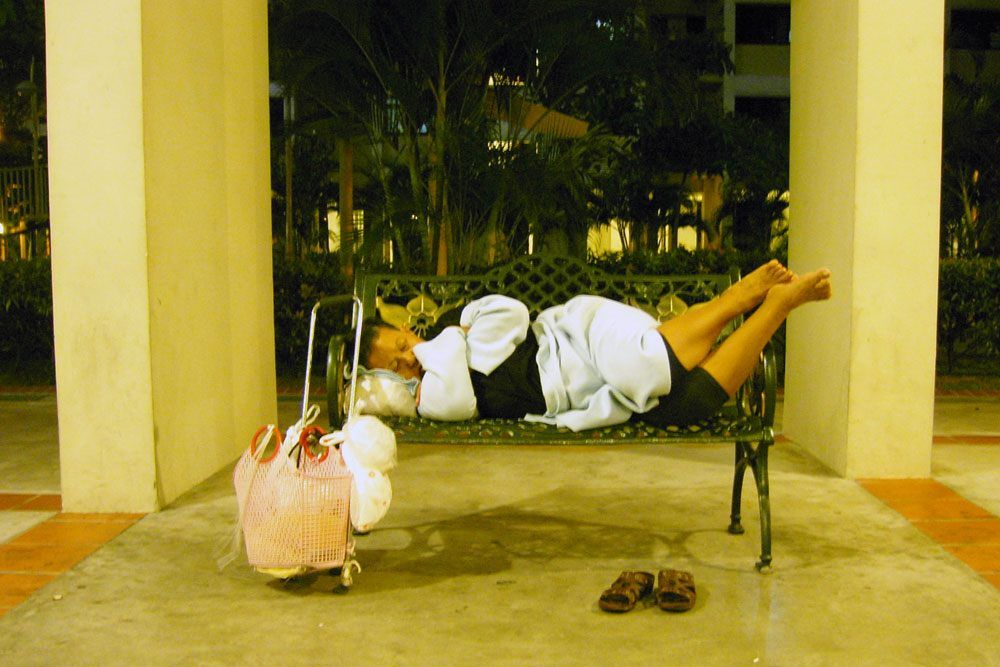
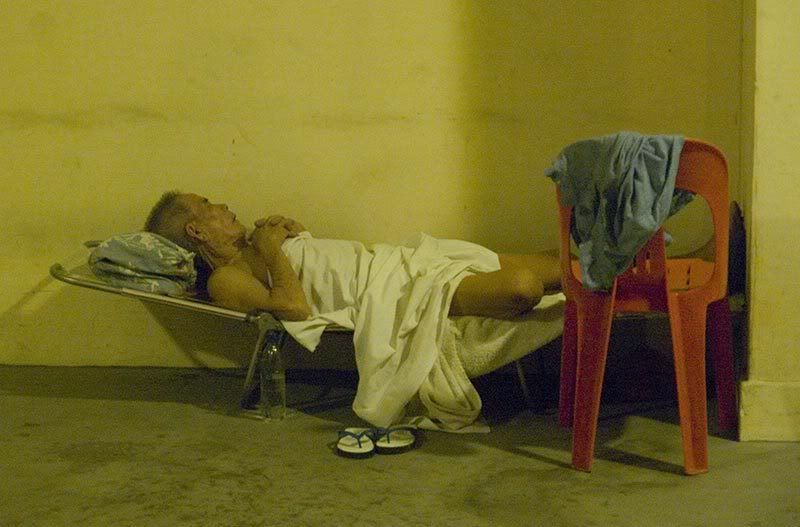
He sleeps at Bishan Park on weekends and on some week days so that he can save money when he goes to work. He works in Ang Mo Kio and he stays on some days with his sister and her three teenage children in her one-room rental flat in Boon Lay. “It’s expensive to travel from Ang Mo Kio to Boon Lay,” he explained. “On weekends, I sleep at Bishan Park to save money.” Mr Silvalinkam told TOC. He would wash up at coffeeshops in the mornings before going to work.
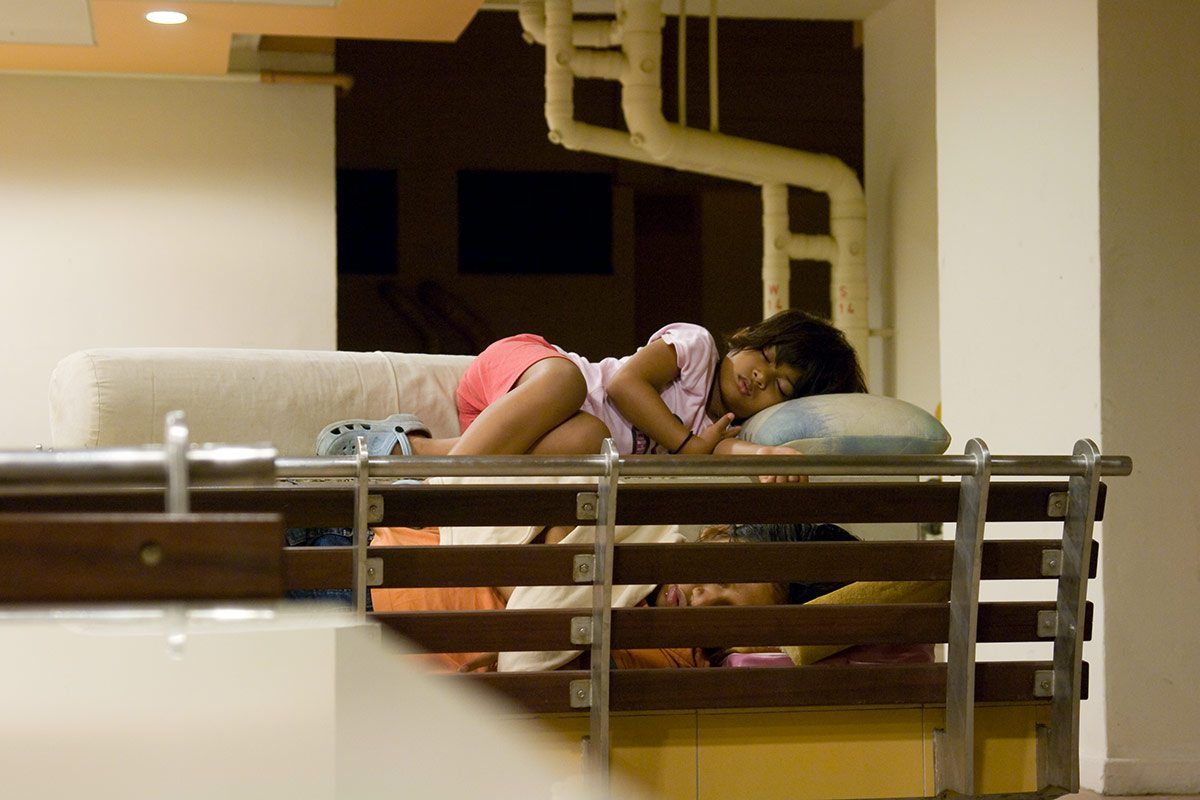
Mr Silvalinkam told TOC that his wife had tried applying for a job several times but has been unsuccessful. She is in Singapore on a Long-term Social Visit Pass, thanks to PM Lee who had helped her obtain it. She too is presently living with Mr Silvalinkam’s sister. “She sleeps in the balcony,” Mr Silvalinkam told TOC. When he is at the place, he too sleeps in the balcony with his wife.
In his last few correspondences with the HDB in October, the HDB continues to deny him his request. His friend, Mr Viswa, has referred him to the Ang Mo Kio Family Service Centre for help.
The HDB, when told about this, replied that it is waiting for the centre’s report.
“My age is catching up with me now,” Mr Silvalinkam said wistfully. “I am already 57.”
-
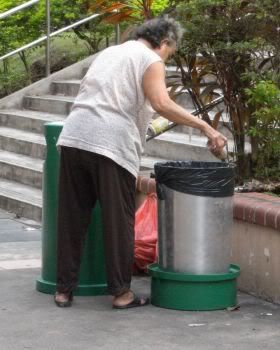
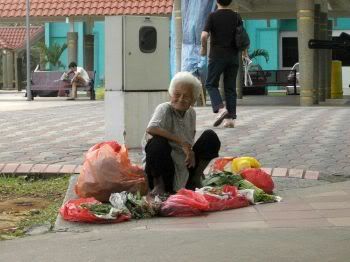

-
Singapore’s healthcare system - uniquely Singapore? F1 or F9? (Part 1)
Friday, 18 May 2007, 3:00 am | 1,094 views
 By Leong Sze Hian
This is part one of a three-parts chronological treatise on healthcare issues over the last 2 years or so, like means-testing, non-priority for subsidised rates healthcare, wards down-grading, medical fees competition, costs of medicines and alternatives, healthcare spending, MediShield, ElderShield, implications for foreigners, PRs and Singaporeans, etc.
What will the future of healthcare be like for Singaporeans? What are some issues that we may need to be concerned with? What are your fears? What sort of healthcare system do you want? How do we compare with other countries?
Here are the first 3 issues with our healthcare system.
F1. May 2007 - REVERSE MEANS-TESTING:
 I went to the Travellers’ Health and Vaccination Clinic at Tan Tock Seng Hospital for a Yellow Fever vaccination recently. The charge was $130.20, compared to just $15 for the same vaccination I had at the same clinic 10 years ago. This is an increase of 768 per cent or a 24 per cent compounded increase per annum.
The clinic was furnished lavishly with leather sofas, leather chairs, paintings on the walls, flowers in vases, etc, like a five-star hotel. The same vaccination costs about HK$200 (S$39), A$50 (S$63) and 35 euros (S$72) in Hong Kong, Australia and Ireland, respectively.
Why has the cost of vaccination increased by so much over the last 10 years, when inflation in Singapore was less than 2 per cent per annum?
When I paid the $130.20 fee, the staff gave me a brochure and said that if I had a platinum credit card, I would receive a 12 per cent discount for health screening.
Why do the more affluent who qualify for a platinum card get a discount of 12 per cent, whereas the lower income have to pay 13.6 per cent more, in a government restructured hospital?
Is this not, in a way, like reverse means testing - the rich pay less, the poor pay more?
F2. April 2007 - ELDERSHIELD:
 The MOH has announced that the two insurers of ElderShield will give a one-time rebate to policyholders because of low claims relative to the premiums collected, since the scheme started.
Why pay a rebate, and increase premiums at the same time? Why not just use the excess funding accumulated to reduce future premiums or increase benefits?
At the end of last year, there were about 750,000 policyholders, with a total of 2,366 successful claims. About 16 per cent of claims declined. The claims payout last year was about $8.5 million (2,366 claims x $300 monthly x 12 months).
Even if we assume all 750,000 policyholders paid the lowest premiums at age 40 of $169.74 (male $148.84 + female $190.63 divided by 2), premiums per year were $127.3 million ($169.74 x 750,000 policyholders).
This means the claims ratio was only about 6.7 per cent ($8.5 million in claims but $127.3 million in premiums).
As the 2,366 claims were the cumulative total for the four years since the scheme started, the claims payout over premiums per year is actually much lower.
What was the claims ratio for each of the four years of the scheme? I believe this may be the most profitable insurance scheme in the history of insurance in any country.
How much profit has been made since the scheme started?
Notwithstanding the proposal to increase the monthly payout by $100 and the payout period from five to six years, in view of the above, how is it possible that the proposal now is to have existing policyholders pay a one-off adjustment to make up for lower premiums paid in earlier years under the current ElderShield scheme, increase premiums of about $10 a month for the older age group, and have policyholders registered automatically for the new scheme after September pay premiums of $1 to $2 more a month?
As to the opt-out rate having gone down steadily from 38 per cent when the scheme was launched to 14 per cent last year, there are 1.26 million residents (Singaporeans and PRs) aged 40 to 64, according to the Department of Statistics’ ‘key statistics demography Singapore residents by age group end June 2006′.
So, isn’t the opt-out rate about 40 per cent (with about 750,000 policyholders among 1.26 million residents)?
Does the Ministry of Health’s study on the opt-out rate refer to the current opt-out rate of new entrants who reach age 40, or the overall opt-out rate of those eligible?
F3. April 2007 - HOSPITAL WARDS DOWNGRADING:
 The Health Minister clarified in Parliament on April 10 that downgrading to subsidised wards is a two-day process and his plans to introduce means testing in hospitals within a year.
Some Singaporeans who can afford higher class wards might be reluctant to opt for them, fearing that their hospital stay might be prolonged due to unexpected complications and the charges incurred might exceed their Medisave account balance, medical insurance and cash reserves.
Thus, higher-income Singaporeans might opt for Class C or B2 subsidised wards if, for example, they believe that they could be required to stay in hospital for longer than, say, five days. The logic is that if it’s five days or less, they might think that they can afford the luxury of higher class ward facilities. But, since there is always the possibility of them staying for an indefinite period, they might think it is better not to risk opting for a higher class ward.
Now that this worry is being exacerbated by means testing, the problem of overcrowding in Class C wards may get worse.
In any case, when the Class C or B2 ward is full, one can go to a higher class ward and still pay the lower rates. So, why risk opting for a higher class ward in the first place?
In this regard, I would like to suggest that patients and their families be assured that if they opt for a higher class ward, and end up staying for much longer than expected, such as over three weeks, they will automatically be allowed to downgrade to C class or B2.
This may result in fewer people opting for C class or B2 on admission to the hospital.
 Currently, those who opt for a higher class ward, and subsequently request for downgrading, are subject to means testing — this I believe is what Singaporeans fear most. Thus, this may be the root cause for many patients opting for subsidised wards.
It was clarified in Parliament that it takes two days or longer to process a ward-downgrading request, if patients are unable to produce the relevant documents to support their applications when means-testing is involved.
Only those with a per capita family income of $1,000 a month or lower can downgrade to Class B2, and $500 or lower to Class C. For outpatients applying to downgrade, it takes an average of two weeks to secure an appointment with a medical social worker to assess whether the patient qualifies.
So, for say a three-person family with a household income of just $1,501 a month, downgrading to Class C is not allowed. Only 1 per cent of patients in Class A or B1 wards who sought to downgrade were successful.
Judging from this, no wonder Singaporeans are opting for lower-class wards — due to the fear of not being able to downgrade.
-


-
Singapore: Rising Costs, Dipping Wages
By amrcCreated 09/13/2007 - 16:59By James Gomez
Singapore, the only Southeast Asian country to avert a recession during the Asian Crisis, became the only Southeast Asian country to fall into a recession, or to quote the Trade & Industry Ministry on 18 May 2001, a “technical recession”. The city-state enjoyed a prolonged period of economic growth between 1986 and 1997 averaging 8.6 percent per annum. However, after the Asian financial crisis, Singapore’s GDP is more volatile -

According to quarterly reports by the government, unemployment has been steadily increasing in the run up to the recession. By June 2001, unemployment had reached 3.4 percent, breaching the internationally accepted unemployment level of three percent. The official unemployment rate worsened to 4.7 percent in December 2001, the highest in 15 years, as companies retrenched workers. The rate exceeds the 4.4 percent recorded in December 1998 during the Asian financial crisis. The Manpower Research and Statistics Department published a report, Labour Market 2001, in March 2002 in which the overall unemployment rate was projected to reach about 5.5 - six percent by the second half of 2002. The record rate of six percent was in March 1986 resulting from a recession.1
Meanwhile, the cost of living in Singapore has not been reduced by much even in the economic downturn. During the second half of 2001, the Consumer Price Index (CPI) rose 0.5 percent for households in the lowest 20 percent income group but fell by 0.3 percent for the top 20 percent income group. For households in the middle 60 percent income group, the CPI remained stable in this period. Households in the lowest 20 percent and middle 60 percent income groups registered lower inflation rates of 1.3 percent and 0.4 percent respectively in 2001, the rises being due to dearer cooked food and higher electricity tariffs. The CPI for households in the top 20 percent income group dipped by 0.2 percent in 2001, due largely to lower car prices.2 In a study done by the Relocation Journal & Real Estate News in August 2000, Singapore was the fifth most expensive city to live in after New York, Seoul, Tokyo, and London.
It is with this backdrop that one should understand the wage situation and the impact on workers. Except for unionised companies in Singapore, there is no legal minimum wage. Therefore there is really no jurisdiction over how much an employer should pay an employee or offer a job-seeker.
Between an employer and employee, there exists a contract of service and the terms and conditions cannot run contrary to the Employment Act, which stipulates the minimum standards for an employee, e.g. overtime, annual leave, and maternity benefit, but nothing governs the actual salary that should be paid to an employee, apart from compensation calculations in the Third Schedule of the Employment Act and that employees who earn more than S$1,600 (US$869)3 are not entitled to overtime etc.
In unionised corporations, the minimum wage is spelt out in a collective agreement (CA) between company and union, legally endorsed and renewed once every two to three years. It also provides for an annual increment, being negotiable on an annual basis after National Wages Council (NWC) recommendations. But if the company can prove that it is not doing too well, any agreed increment can be smaller or even waived for the year, and the CA can be re-negotiated before it expires. There is also an Industrial Arbitration Court if employers refuse to up salaries in the CA to a reasonable level.
However, wage negotiations between employer and union rest on the employer’s right to a final say, and typically in Singapore, success rests much on the usual day to day ‘good relations’ between employers and unions, that help foster the possibility of securing better benefits for workers. Direct confrontation between employer and employees, using the courts, is generally frowned upon.
The Ministry of Manpower in December 2001 backed a call from the NWC for severe restraint or cuts in wages. Citing worsening economic conditions and uncertainty in 2002, the government urged companies to freeze or cut wages in the city-state’s worst recession yet. A survey quoted in the Straits Times revealed that 18 percent of Singapore-based companies had already frozen pay levels in 2001 and 28 percent planned to do so in 2002. During the financial crisis in 1998, the NWC asked workers to accept wage cuts of between five and eight percent.
At the height of the 1998 financial crisis, the government announced a blanket policy of cutting the employers’ share of monthly Central Provident Fund (CPF) payments to employees from 20 percent to 10 percent. This policy was aimed as a cost saving package to revive the economy but it placed the burden on ordinary wage earners and not on the state’s coffers. This 10 percent cut was applied to all companies regardless of profitability and financial situation. It penalised workers even in companies that were breaking profit records. Overnight, many workers had trouble keeping up their mortgage payments that were serviced through the CPF. Instead they had to dig into their salaries to make up the difference. There was a public outcry and some quick fix measures were assembled to assist those who were unable to continue paying mortgages.
It was then that the NWC recommended the monthly variable component (MVC), to allow companies to adjust monthly wage bills quickly to remain competitive and minimise job losses. This move exempted the government from involvement and becoming the target of bad publicity and collective unhappiness of the workers whose wages are cut. Over the years the number of companies that use the MVC has increased and wages in general have become more flexible. For instance the variable component of total wages was 15-16 percent in 2000 compared to 11 percent in 1997. The Ministry of Manpower is now seeking to speed up the implementation of the MVC even further and to promote performance-based pay structures to replace seniority-based systems. In addition, other components of the employment benefits system, including implementing medical co-payment and changing retrenchment compensation so that companies have greater flexibility in managing wage costs.
The central issue in introducing and operating the MVC is how to define a justifiable cut in each industry, especially in large MNCs where profit transfer between countries could be easily carried out. Since financial situations and management capabilities vary from company to company, it is unclear whether the Ministry of Manpower and the National Trades Union Congress (NTUC) are sufficiently informed about the technical details of industries to function as a watchdog against unjust wage-cuts or to set out intelligent guidelines for a MVC cut.
Major concerns are, how much to allow companies/government to cut the MVC? How to calculate and define a cut? Does a well managed economy require frequent MVC wage-cut to rank and file workers to keep employment levels? Can a company convert part of a worker’s present salary into MVC?
As cited earlier, Singapore is the fifth most expensive city to live in. Of all components of cost, workers’ wages are not the highest contributing cost factor. Workers’ wage levels have actually fallen behind other Asian countries such as Japan, South Korea, and Hong Kong. If factors other than workers’ wages are the biggest contributors to high costs, it is not logical to pursue wage cuts as a priority. More should be done to lower government charges and duties.
There is a concern that adjusting the workers’ wage structure for the sake of keeping business costs low may be abused, leaving workers more vulnerable. For instance, it is not usual for government wage surveys to show that since the Asian crisis wage growth has reached pre-crisis levels. However a comparison of pay increases of rank-and-file employees shows that throughout the 1990s average annual wage growth declined from eight to ten percent in the early half to between five and seven percent in the latter. This is largely due to attempts to keep business costs down, and wage cuts are one way of doing this.
Employers are suspected of using the economic crisis as an excuse to restrain wage increases, creating an employer’s market. For instance, the starting salary of university graduates in the latter half of 2001 fell to pre-1997 secondary school-leaver levels. Without a minimum wage, employers, even when making profits, can offer graduates salaries below what used to be the graduate benchmark of $1,600.
Wage issues remain problematic as they are not regulated by law. The NTUC is said to play a pragmatic role, but a tame one in the perception of some. Part of the problem is that the NTUC is aligned with the ruling People’s Action Party (PAP) and therefore its independence is questionable. Changes arising from economic restructuring, which included job cuts and new forms of employment relationships, are unsettling workers and testing worker-employer relations. But the PAP wants to deepen the tripartite partnership between its administration, the employers, and the NTUC, to preserve ‘harmonious’ industrial relations.
The push for more MVC is in the name of minimising retrenchment in a volatile economy. The increasing attack on wages is explained in part as a result of a drop in workers’ productivity. So workers are presented as receiving less wages because they are less productive and not because the PAP administration has introduced a policy that penalises workers first.
The MVC is a political solution to a political problem. It is of no help in saving jobs at all. It is unclear whether MNCs will stay in Singapore simply because they can cut wage costs by five to ten percent when wages constitute less than ten percent of total costs to most MNCs. Such cuts are increasingly painful for workers when the CPI does not fall in the same period. If workers’ wages are cut by more than ten percent without corresponding reductions in other living costs, more people will find it difficult to make ends meet.
A thorough review of all other aspects of the Employment Act is thus urgently required to meet the fast changing job environment. It is worrisome that historically the government has a tendency to chant policies that favour large MNCs and government linked companies (GLC) and ignores the needs of small- and medium-sized enterprises (SME). Tremendous efforts have to be made to regain the balance where SMEs can co-exist with MNCs and GLCs for a more balanced and sustainable economy.
Because Singapore is small, housing space, land use, transportation, water, and electric supply, must become more efficient. But they are increasingly costly and without subsidies. Additionally, health care, education, food, and recreation are also becoming expensive. There is increasing public pressure to review policies to include further concessions on state subsidies and relief.
With increasing anxiety to make ends meet, more workers are treated for depression as Singapore slips into its deepest recession. The Institute of Mental Health reports that the number of patients has almost doubled since April 2001. Psychiatrists confirm that more people are now treated for depression. Men, especially 30 to 49 year-olds, feel the most heat in the current economic meltdown.
The government has long rejected the notion of a welfare state, preferring short-term incentives to those in need to avoid relying on welfare. In Singapore, families shoulder part of the responsibility and more than 260 private welfare organisations take up the rest, some aided by public money. However the challenge is for the government to provide a safety net for people when the global economy is volatile, impacting the local one, and family and community support is gradually being eroded.
In the run up to the general election in November 2001, the government announced budget measures that included tax relief and rebates for conservation charges and utilities. To boost PAP chances in the elections it introduced New Singapore Shares which is essentially a staggered cash handout. However, such rebates and handouts are not efficient ways to redistribute accumulated state wealth and are not targeted to reduce basic household needs or to create jobs. Most see them as short-term stop gap measures motivated by electoral politics.
There has been some decentralised and delegated social service through the government administered Community Development Councils (CDC) aimed at identifying and helping the poor. Short-term loan schemes have also been introduced. The budget for CDCs grew from S$19 million in 1997 to S$153 million in 2001, largely due to social assistance schemes. But eligibility for government assistance is stringent so as not to encourage a dependence mentality. The Ministry of Community Development and Sports, together with other agencies link short-term financial assistance closely with job counselling, job seeking, training, and placement.
However, short-term assistance is generally judged as not guaranteeing that the unemployed can become economically stable. Job placement services have on many occasions not been successful. A Jobs Task Force has been set up to give training, job assistance, and counselling to those affected by economic restructuring. There have also been promises of jobs in new ‘growth areas’. But what ‘growth areas’ are, how many they will employ, and when, is not clear. Areas such as wafer fabrication and biotechnology that were celebrated as the way forward are high-tech and need specialists so their contribution to job creation is questionable. The promise that more Singaporean companies operating world-wide will facilitate Singaporeans to work overseas is also speculative. Most Singaporean companies overseas are GLCs and it is unclear how good they are at creating new jobs at home.
In this context, there is a need to review the CPF scheme, to ensure that in addition to providing members with adequate savings for housing, medical, and retirement, that there is a scheme where some form of social security is available for sudden job loss and a means to tide over times when jobs are scarce. In the absence of new jobs for older and retrenched workers, rules need relaxing to allow the growth of a ‘regulated informal sector’. Singaporean workers need to be able to operate from home to keep costs down and at the same time to be gainfully employed to make a contribution to the economy and society.
James Gomez is chairman of the Think Centre Asia, based in Bangkok
Notes
1 Statistical source: Department of Statistics, Singapore
2 Ibid.
3 US$1.00 = S$1.84 .Source: ALU Issue No. 42, January - March 2002
-
The Poor and Social Reality in Singapore
<!--/adcode-->Does it mean that because we are educated that we think that people are merely lazy? Or do we think we have done our job just because we have policies* available to help the people? It is one thing to have policies, it is another to have enough people to implement them effectively. It is one thing to be educated, it is another to think that every Singaporeans have the same opportunity as you to be educated.
As James Scott argues, I paraphase, Let’s not conflate state’s policies with the actual social reality and implementation on the ground. Wise words indeed.
Help for the poor: So close, yet so far
By Vivi Zainol, For The Straits Times
WHY do needy Singaporeans continue to fall through the cracks despite the Government’s array of public aid schemes?
To tackle this question, 18 of my students at Ngee Ann Polytechnic interviewed more than 30 low-income households for a vacation module. They found the biggest barriers to be education and language.
Many are illiterate. With little knowledge or understanding of schemes to help them, it’s not surprising that some say they know the Government is helping them, but they feel it is not doing enough.
Some would rather get an extra job than ask for help. Others struggle to make themselves understood and say they do not have the time, money or energy to make return trips to their MP or Community Development Councils (CDCs) to ask for more help.
For those who did bother, a common complaint heard by students was that the CDC officers are rude.
Several years ago, as a Straits Times community reporter, I had heard the same comment when I asked a woman with three children, and whose husband was in jail for a drug offence, why she did not ask for help. Describing how her experience with CDCs turned her off, she said a CDC officer had sarcastically asked her: ‘Didn’t your husband leave you any money?’
‘If he had, why would I be asking for help?’ said the troubled woman, who had contemplated suicide.
One group of Ngee Ann students decided to observe CDC officers in action after receiving the feedback. At one CDC, officers were unfailingly polite - it was the low-income group which was being demanding and uncooperative. However, all the CDC officers were Chinese - help-seekers speaking Malay and Indian had to struggle to make themselves understood.
At another CDC, student Nurlina Fatima Shafrin, 18, recalled how a CDC officer was heard commenting loudly to another officer nearby on how ‘irritating’ the people who had come to ask for help were, even when the latter, who were filling up forms, could hear them.
What is interesting to note is that interviews by students uncovered a perception among low-income earners that the higher-educated tend to look down on them and are arrogant. Formally attired CDC officers also unintentionally give the impression that they are less approachable.
Not all CDC officers are trained social workers - there are not enough social workers to go around in Singapore.
Also, some members of the low-income group can be downright prickly, believing they have a right to receive handouts from the state.
But surely everybody deserves good customer service regardless of income group? The poor have their pride too.
Could CDCs perhaps train their staff to understand the sensitivities and psyche of the lower-income group? Steps could also be taken to ensure that staff on duty speak different languages and dialects. Members from the low-income group could even be employed to help.
It’s good news indeed to hear that the Government has raised public assistance spending from $96 million to $140 million, and ComCare funding from $43 million to $67 million. With that much money allocated to the needy, it makes sense to ensure these funds reach the ones who need immediate assistance.
Take Mr Ramasamy Ratran, a 52-year-old Indian man, who was a pitiful sight when my students and I chanced upon him. He was lying on the dusty floor in his rented two-room flat, having been discharged from hospital just two weeks earlier.
Fortunately, a former female neighbour and a male friend had taken it upon themselves to look after Mr Ramasamy, who is epileptic and living on his own. Medical social workers had settled his hospital bills, but he was getting no financial help while he was recuperating and unable to work.
‘Can you please help him? He needs help. When I first came two weeks ago, there was no electricity. His flat was in total darkness,’ pleaded the former neighbour, who had helped to top up his prepaid utilities smart key to get the electricity back on.
Mr Ramasamy was not the only one my students and I found in need of assistance. When barber Yahya Pinghani, 39, was hospitalised for a kidney problem, he could not work and had no daily income for weeks. His children skipped school that week because there was no money for the bus fare.
Mr Pinghani’s wife Murni, 41, complained how, after three weeks, her single friend who had applied for help with her at a CDC had already received assistance while she and her family were still waiting. She revealed that her family owed a whopping $4,000 in utilities bills.
CDCs do give $200 once-off emergency assistance, after which the needy wait six to eight weeks for CDCs to respond. So what do they do when help is a long time coming? Many see their MPs, getting a $50 cheque for their trouble, or resort to collecting food from voluntary welfare organisations. How many know that they can get immediate assistance from your Citizens Consultative Committee? I did not either, for that matter, till I asked around.
Perhaps it is time that bulletin boards in HDB flats were put to better use. They could advertise where the poor can get help and give details of the schemes. Many low-income earners are illiterate, but the ones who are not will surely help to spread the word around.
It could also be made mandatory for medical social workers in hospitals to inform social workers or CDCs when a person who is from the low-income group is discharged so they will give him temporary financial assistance during his recovery period.
Last year, the Ministry of Community Development, Youth and Sports (MCYS) set up a community care network for the elderly in Ang Mo Kio. Under this scheme, grassroots leaders are trained by family service centres to identify needy households.
Perhaps if this outreach scheme is formally extended to include all needy Singaporeans, not just the elderly, it could be used to ensure no one falls through the cracks and to explain the help schemes available to the needy.
MCYS minister Vivian Balakrishnan recently called on Singaporeans to be eyes and ears on the ground, saying ‘we need the whole of society’ and not ‘an army of bureaucratic civil servants’, when he outlined $140 million worth of initiatives for the low-income group.
The findings of the 18 Ngee Ann polytechnic students who ventured out of their classroom may not be conclusive, but simple observations like theirs should not be belittled. Like any jigsaw puzzle enthusiast will tell you, even one small piece makes a difference.
The writer is a lecturer at the School of Interdisciplinary Studies at Ngee Ann Polytechnic.
-
What happened to Singapore, the land of plenty?
Friday, 19 January 2007, 12:28 am | 367 views
This article is taken from Asiaweek (For Richer Or Poorer), to allow our readers to revisit the issues of welfare, the aged, foreign workers, and wages in Singapore.
It is quite troubling to note that this article was first published in Nov, 2000. The problems faced by those who are struggling are largely the same today - 6 years on.
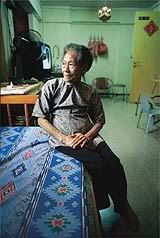 The article is by Roger Mitton
Lee Chong Peng is the symbol of Singapore’s broken dream. She lives alone in a one-room flat on about $3 a day. “I watch television and take short walks,” she says. “My legs ache now, so I cannot go so far.” But without fail, every Wednesday afternoon, Lee takes the lift down eight floors to the ground level of her public housing block.
There she joins dozens of other poor folk from her district in Chinatown to sit, waiting, on concrete benches. Lee, 84, chats with friends, while others remain sullen, lacking even the warmth of comradeship. At 5 p.m. they all form into a line and shuffle forward to receive a plastic bag containing six eggs, 1.5 kg of rice, a can of baked beans, a can of sweet corn, one packet of hot chocolate, one packet of coffee, some cereal and a single toilet roll. Without this weekly donation from a charitable group, Lee and her neighbors find it tough to survive.
What happened to Singapore, the land of plenty?
In its rush to forge a manufacturing, then a high-tech economy, the city-state rarely bothered to look back at those who were lagging. Senior Minister Lee Kuan Yew developed a system based on hard work and government support for industry. Singaporeans were expected to earn their rewards. The results were astounding: a middle class emerged to build Asia’s second-richest country.
But with the advent of globalization and an influx of cheap foreign workers, Singapore’s economy is becoming increasingly ruthless. According to its own statistics, the nation’s rich are getting richer and the poor are falling further behind. To most Singaporeans, the mere existence of poor folk in need of care packages comes as a shock. And this realization has prompted an uncharacteristic bout of soul-searching. The rich-poor disparity strikes right at the heart of Singapore’s development model — and challenges the city’s smug self- image. Many younger Singaporeans raised in middle-class comfort are beginning to think that Lee’s ideal is outdated; they argue that the government has a responsibility to care more for the downtrodden.
Lowest 10% of society had an average monthly income of only $75.81
The issue burst into Singapore’s consciousness in May, when the media reported a Department of Statistics disclosure that the lowest 10% of society had an average monthly income of only $75.81. Officials said the figure (which included unemployed and retired people) had been misused to present a distorted view. Trade and Industry Minister George Yeo presented a raft of numbers in parliament to show that Singapore’s poor really were not so poor after all. “The standard of living among the lower income has gone up,” said Yeo. Nearly all had televisions and telephones, on average they had about $11,500 in the state retirement fund (CPF), and all but a quarter lived in 3-room or larger flats. “In other words, many in the bottom 10% have significant wealth in the form of CPF savings and their homes,” added Yeo. “They are not an underclass.”
The hot potato might have cooled there, except that in a classic piece of mistiming the government then announced substantive pay hikes for the civil service. On average, salaries jumped 13%. Prime Minister Goh Chok Tong’s wage soared to a cool $1.1 million — almost $3,000 a day. Goh says the new wage bill will cost each Singaporean about $6 a year — the equivalent of five plates of char kway teow, a popular noodle dish. But opposition legislator Chiam See Tong noted: “I think U.S. President Bill Clinton receives only about S$600,000 [about $343,000] a year. Surely that should also be enough for a minister in Singapore?”
Goh claims qualified Singaporeans are not interested in such a “poor” salary. “Several high-fliers pleaded young family or lack of interest for not coming into politics,” he says. “They never say it is because they can earn more outside, but I can tell clearly that pay is a consideration.” The ill-timed raise further exacerbated the festering subject of income divergence. Admits legislator Charles Chong: “The ratio between the top and bottom has been increasing.”
“They won’t starve or go homeless or be refused medical care”
As a result of prosperity and shifting values, attitudes toward the poor are slowly beginning to change. Singapore already is doing something to reduce the adverse effects of the income gap. For starters, the city’s poor don’t have it too badly. Says Chong, from the ruling People’s Action Party: “We look after our disadvantaged people. They won’t starve or go homeless or be refused medical care.” Adds National University of Singapore academic Mukul Asher: “By spreading the consumption of basic amenities like housing, schooling, healthcare and transport in a more equal way than other societies, the government mitigates some of the effects of large and growing income inequalities.”
But helping the poor directly would go against the grain of the ruling party’s old guard. Notes veteran oppositionist J. B. Jeyaretnam: “It is Lee Kuan Yew’s dogma that nothing is free in this world. There is no free lunch, no handouts, no subsidies.” Jeyaretnam has called on the government to lessen the inequalities by providing free medical treatment, free education and old-age pensions to those in need. Younger members of the ruling party are beginning to realize that poverty is a growing problem — one that the government will have to address to stay in power. “It’s true, there is a kind of paranoia among older leaders about Singapore degenerating into a welfare state,” says legislator Chong. “But nowadays, the younger leaders are saying that if we want to be considered as a humane, civilized society we have to help these poor people more.”
How did Singapore leave its poor behind?
In part, cheap foreign labor shoved unskilled Singaporeans aside. To achieve high growth rates, the government has increasingly allowed larger numbers of foreign workers to make up the labor shortfall caused to some extent by low birthrates. Explains academic Asher: “Singapore does not believe in redistribution of wealth. Instead, it always wants high rates of growth to reduce poverty levels.”
Electrical fitter Bazlur Rahman, a Bangladeshi working in Singapore, puts up with his small salary — something few Singaporeans would be willing to do. He earns $11 a day and saves more than $170 a month, which he sends home. Bazlur lives with 3,200 other foreign workers in a cramped, tight-security compound at Kaki Bukit. Says Asher: “Singapore has been able to use these foreign workers and their low wages and conditions to maintain its competitiveness and high growth rates.”
Reduce wages or be priced out of the market
To compete with Bazlur and thousands like him, Singapore workers must reduce their wage demands or be priced out of the market. Yet to keep top-end managers and professionals at home, the government and its private sector must make matching offers. Says Asher: “All round you have got a larger wage inequality; wealth is more concentrated.”
Admits Prime Minister Goh: “Yes, the income gap in Singapore is widening because of globalization and the knowledge revolution, which have enhanced the value of talent dramatically and pressed down the wages of the unskilled.” Can the government do anything? It has already ruled out the idea of holding down wages at the top or artificially raising wages at the bottom.
It is already running capable retraining programs. Says Goh: “We must not envy those who have made it rich. Rather, we must provide the opportunities for more to be like them. It means operating on the basis of meritocracy — that you can get ahead in life if you work hard, regardless of your background.”
What else can be done? As a result of growing concern about the poor, the government has set up nine community development councils, which are jointly funded and operated by local officials and charities. Community leaders draw up policies and every dollar donated to the councils is matched three-to-one by the government. This initiative has moderated attitudes. “We don’t want the government to take over the voluntary welfare organizations, but we’ll enhance their work,” says Chong. “If in this way we are seen to be helping the less well-off, there will be fewer social problems.”
Money politics
But where there is money, there is politics. Opposition legislators such as Chiam claim that the ruling party uses this aid for political gain — in effect, to buy votes. “The chairman of a community development council will go around like Santa Claus giving money away to the poor and unemployed,” says Chiam. “It’s the politicians who go out to give this money and of course they’ve got to get their votes. That’s the way they dish out welfare: very selectively.” The council chairman in Chiam’s constituency, the ruling party’s Andy Gan, denies that aid is used to garner votes. “Our office is open to all residents and I do not ask for their votes before seeing to their needs,” Gan says.
The circumstances of Teng Ah Mui suggest that this community-based assistance is inadequate anyway. Teng, 54, lives alone and recently began receiving charity food packages each week in order to survive. She has held various unskilled jobs, but since falling and injuring her leg six months ago she now relies on public assistance. After paying her rent and utilities bills, she is left with about $80 a month. “It’s not enough, so I have to depend on food donations and help from friends,” she says. A decade ago, it might have been easier for Teng to rejoin the workforce. These days, there is too much competition for menial work and too few opportunities.
Public assistance of about $115 per month.The bottom line is that the government’s willingness to help the poor is still minimal. In Singapore, children are required by law to look after their elderly parents. But often they cannot do this, especially if they are low-income, single children. Admits Minister of State without Portfolio Matthias Yao: “Parents know what their children can afford. They don’t bring cases to court when they know that their children are too poor to look after them.” If neither friends nor family can help, and if the person is unable to get work, then — and only then — will the government step in with the barest subsistence-level help. Last year 2,238 people qualified for this public assistance (usually about $115 per month). The number has increased each year for the past three.
So what will happen when the number of aged people quadruples in the next 30 years? They already comprise the largest chunk of Singapore’s new poor (the other major components are retrenched workers, single mothers and the disabled). Even now, rich Singapore cannot look after its older folk without drawing on the services of charity groups. Says Asher bluntly: “The government will need to do more.” If it does not, income disparities could threaten the country’s cherished social harmony. They might even eat into the ruling party’s monolithic hold on power.
The government knows this is a serious matter — perhaps the most serious socio-economic threat Singapore has faced. Despite some bluster about meritocracy, retraining and limits on foreign workers, no one really knows a surefire way to solve the problem. Says Asher: “Policy-makers are still thinking in terms of economic output and growth; while the people are increasingly thinking more and more of their welfare.” But don’t count out the ruling party. It has been skillful at adapting to meet the needs of its citizens. Adds Asher: “One can expect that they will begin to change as this issue becomes more pressing. They will have to in order to maintain their legitimacy and their support.”
Just don’t call it welfare
For now, the subject remains virtually taboo. But soon Singapore will be forced to find a remedy for its new, more disparate, reality. Just don’t call it welfare.
-
Singapore's Poor

No poverty in S'pore? Think again.
Singapore's poor emerge as delicate political issue
Asian Wall Street Journal
January 30, 2007
SINGAPORE
By YAROSLAV TROFIMOV
DURING rush hour in Singapore's ultramodern subway system, wrinkled old ladies squat on the underpass floor with handfuls of small tissue packets that they sell at one Singapore dollar, or 65 US cents, apiece.
These are the poor of Singapore, left behind by the boom that has transformed this tropical island of 4.5 million people into a regional business, finance and technology hub. Poverty here isn't nearly as desperate as in its Asian neighbors, or even many Western societies. But it has become an increasingly sensitive political issue, prompting new tax and social policies that the government is expected to unveil in the annual budget presentation Feb 15.
According to official statistics, at least 40% of Singapore's households saw their real incomes decrease from 2000-2005 -- while the overall economy posted some of the world's highest growth rates, surging by 7.7% last year.
"The question is, who is all this growth for?" says Manu Bhaskaran, an adjunct fellow at Singapore's Institute of Policy Studies and a partner at the Centennial Group, an advisory firm. "Shouldn't the government be aiming for lower growth, but better distribution? "
The government's strategy so far is to pursue a balancing act of generating more revenue for helping the poor without scaring off the global investors who have long been attracted by the city-state's low-tax regime. "The dual objective is to ensure that the Singaporean economy continues to remain competitive, and to strengthen the inclusiveness of Singaporean society," says Lim Swee Say, secretary-general of the National Trades Union Congress and a government minister.
Most of Singapore's poor are in their 50s or older, and many are onetime manufacturing workers who lost their jobs to cheaper competitors in China, Vietnam or India. Many lack education and English-language skills that are needed to prosper in expanding sectors such as services and finance.
It is only in recent months that senior officials began to speak out on the problem of structural poverty, recognizing the potential perils for a multiracial, multireligious society such as Singapore's. "It is essential for us to tilt the balance in favor of lower-income Singaporeans, because globalization is going to strain our social compact," Prime Minister Lee Hsien Loong said in a speech last fall.
Singapore's People's Action Party, founded by Mr Lee's father Lee Kuan Yew -- who is still a senior government member with the title of Minister Mentor -- has controlled the island since independence in 1965, winning nearly every seat in parliamentary elections. The country's mixed population of Chinese, Malays and Indians has accepted decades of the PAP's often authoritarian rule in exchange for phenomenal economic growth that has transformed this former British trading outpost into one of the world's most prosperous states.
While providing subsidized housing and health care, Singapore's government has long resisted calls for European-style unemployment benefits for the poor, describing welfare as a "dirty word" and rejecting the idea of a minimum wage. Instead, the government has come up with the concept of "workfare" -- a large-scale program to top off the incomes of those Singaporeans who accept low-paid work. Details of the program will likely be given in the budget presentation.
"We can't stop the income gap from widening because the wages are determined by the global competition for knowledge workers, and by the excessive supply of unskilled workers," says Mr. Lim, the minister and union leader. "But what we're trying to do is to make sure that the widening income gap doesn't necessarily translate into a widening social gap."
Most developed economies fund such social programs by redistributing wealth through progressive taxation: the top-bracket federal income tax rate is 35% in the US, and at least 40% in most of Western Europe. But Singapore is ideologically opposed to this model: the island-state has been steadily slashing its top income-tax rate, from 55% at independence in 1965 to 28% in 2000, to 20% today. Making up for the shortfall in revenue, Singapore established a general sales tax, currently at 5%.
It is the sales tax that the government is planning to tap again to pay for the "workfare" initiative. According to Mr Lee, with the new budget the sales tax is likely to rise to 7% -- a measure that, economists calculate, will generate some S$1.5 billion of extra government revenue.
The plan is far from popular. In the two months since Mr Lee in November first mentioned a likely sales-tax rise, the proposal elicited unusually vocal criticism from Singapore's corporate world and opposition leaders alike. The influential Singapore Chinese Chamber of Commerce and Industry complained the sales-tax increase is "likely to have an immediate and detrimental effect on local spending," undermining Singapore's long-term competitiveness.
Sylvia Lim, leader of the Singapore Workers' Party and an opposition Parliament member, also pointed out that the poor -- the ostensible beneficiaries of the proposal -- would be hurt the most. "We need to strengthen our safety nets through some redistributive policies," she asserted, adding that consumption taxes, such as the sales tax, "are generally regressive and likely to compound the underclass problem."
While the government usually ignores the minuscule opposition in this tightly regulated country, the business community's pleas found a receptive audience. Aware that corporate taxes are even lower in rival business centers such as Hong Kong and Ireland, Singapore signaled it would sweeten the pill for businesses: To compensate for the higher sales tax, the corporate tax rate, currently 20%, would be shaved by at least one percentage point.
"This is a tough and competitive world," Minister Mentor Lee told Singaporean journalists as he explained the planned corporate-tax cut. "People don't come here because they like Singapore -- they come because the returns are better." -
-
ComfortDelGro to increase taxi fares
http://www.straitstimes.com/Free/Story/STIStory_183435.html
IT IS official. Taxi fares are going up.
Taxi giant ComfortDelGro Corp has notified the Public Transport Council (PTC) about an imminent fare increase. The PTC could not say more.
Commuters can expect to pay more from as early as the week before Christmas, as taxi operators have to inform the council at least two weeks before any fare changes.
For its part, ComfortDelGro again declined to comment, as it has for several weeks since speculation about a hike first started.
Sources, however, said the adjustment will include a 30-cent rise in flag-down rate. This would bring the minimum starting fare to $2.80. For newer cabs which meet the stringent Euro IV emission standard, the flag-down will go from $2.70 to $3.
Currently, ComfortDelGro has about 2,000 of such cabs in its fleet.
Commuters can expect changes to the distance and time-based charges too. Surcharges are also expected to be streamlined.
There is speculation that the operator might help cabbies defray electronic road- pricing charges to encourage them to enter the Central Business District - where demand for cabs is high.
The signs of a fare hike had been there for some time as cabbies and their associations have been lobbying for it for several months now, arguing the increase in diesel price and the goods and services tax have eroded drivers' income substantially.
The plight of cabbies is not lost on commuters. Said merchandiser Ivy Ong, 41, who takes cabs regularly: 'Will this fare adjustment be helping the taxi-drivers? If their taxi rental goes up, I don't think it would.'
Citigroup Singapore strategist Lim Jit Soon does not think ComfortDelGro would raise rental this time round as it wants to retain as many drivers as possible 'in this buoyant market'.
'What it means is that it might gradually remove some subsidies,' he said.
For instance, ComfortDelGro is still selling diesel to cabbies at 94 cents a litre, 36 cents cheaper than diesel dispensed at stations run by oil companies.
[email protected]-
Golden Village to increase ticket price by 50 cents
Posted: 26 March 2008 1944 hrs
SINGAPORE: Starting on Thursday, there will be a 50 cents increase for movie tickets at Golden Village cinemas.
Golden Village Multiplex has announced that it will revise its ticket prices at its nine outlets.
The organisation said the price increase is a result of the current market situation and rising costs.
However, Gold Class and Cinema Europa ticket prices, movie promotional packages and rates with banks, students and other promotional partners will remain unchanged.
Other organisations like Cathay Cineplex and Eng Wah Organisation have no plans to increase ticket prices.
by - CNA/so
-
NETS CashCard Price Hike!
From 1 May 2008, Singapore’s leading electronic payments provider,
NETS, said that the price of a NETS CashCard would include the cost of
the card. Since the launch of NETS CashCard in 1996, NETS has issued
over 4.5 million cards at no cost to Singapore motorists; the cost was
borne by the local banks. The revised $10 price comprises $5 for the card
cost and another $5 for the stored value amount, i.e. NETS is richer
by $5 per card.
THAT IS A WOOPING EASY PROFIT OF $22,500,000.
(The cost of producing a CashCard is only 50 cents.
If that is not sheer profiteering, what is?
The new $10 NETS CashCards, which feature an Orange Laser design, will
first be introduced at the major distributors like 7-Eleven and Cheers. The
current Blue Butterfly design cards will continue to be sold at $7, while
stocks last.
The good news according to the people at NETS is that when the revised
pricing takes effect, motorists would have cause to celebrate since they
no longer need to pay a deposit for the purchase of the NETS CashCard.
Currently, a refundable $2 deposit is payable for each NETS CashCard.
The new $5 card cost is not refundable, which adds up to a tidy bonanza
of $22,500,000 for the kind souls at NETS.
===============================================
When It All Started
“From 1 June 1999, motorists who pass through an operational Electronic
Road Pricing (ERP) gantry without a properly inserted CashCard in the
in-vehicle unit (IU), or with a CashCard with insufficient balance to pay
for the ERP charges, will receive a letter requesting them to pay the
outstanding ERP charge plus an administrative charge of $10, within
two weeks of the violation.
Motorists are advised that if the administrative charge and the ERP charge
are not paid within this period, they will receive a Notice of Traffic Offence
offering to compound the offence for $70 payable within 28 days. Upon
expiry of the Notice, the matter will be referred to the Court.
The composition fine for passing through an ERP gantry without an IU
will remain at $70.”
===============================================
-
Expect to pay higher electricity bills
No relief soon as high oil prices push up costs for power companies
By Yang Huiwen
http://www.straitstimes.com/Free/Story/STIStory_235409.html
IF YOUR latest power bill gave you a jolt, you had better get used to it because there is more to come.
Soaring crude oil prices drove the benchmark market price of electricity to a record last month, and there is not much relief in sight.
In fact, the pain for consumers will likely go on for the next two quarters. That is because oil prices will continue to be high, and the six months from April to September tend to see higher power use nationwide.
The wholesale price is what power companies pay for electricity, plus a small amount of regulation and administrative costs and adjustments. It affects how much consumers end up paying.
Yesterday, the Energy Market Co, which runs the wholesale electricity market here, said that this price - known as the Uniform Singapore Energy Price - jumped 17.7 per cent from March to hit $173 per megawatt hour (MWh) last month.
That is the highest monthly average since 2003, when wholesale market trading began, and well up on the last high of $168.34 per MWh in August 2006. Last year, the average price was $124.57 per MWh.
The result is a corresponding spike in electricity prices consumers pay, though it is not a direct correlation.
In response to rising wholesale prices, Singapore Power Services (SPS), which supplies electricity to about 1.2 million households, has been steadily increasing electricity tariffs.
The so-called Low Tension Tariff, which is what the man-in-the-street pays, was 18.88 cents per kilowatt hour (kwh) from April to June last year.
The rate jumped to 22.62 cents per kwh by the first quarter of this year. And a month ago, the rate - which is set by SPS every quarter - rose 5.7 per cent to 23.88 cents per kwh.
For people such retiree Loh T.E., this means higher electricity bills.
Mr Loh, who lives in a five-room flat without air-conditioning, said electricity costs now make up 12 per cent of his household expenses, compared with 8 per cent last year.
EMC chief executive David Carlson said yesterday that the main reason behind the higher bills is the rising price of crude oil, which hit close to US$124 (S$170) per barrel yesterday.
And fuel oil, which is priced in tandem with crude oil, forms the largest cost component for power generating companies.
'Fuel oil prices continued to rise coming into this year, so during the first quarter, fuel costs have had to be paid by (power) generators. That had an impact on what they can offer into the market,' said Mr Carlson.
'We expect to see higher demand (for power) in the second and third quarter.'
But he declined to predict if that would translate to higher electricity prices, saying that there were other factors at play.
First, demand is heavily influenced by economic growth. If the economy slows down, then prices should ease a little.
Second, Singapore's power market has been liberalised, and new power generation companies are free to enter the market and compete, bringing down prices.
Mr Carlson said greater competition has cushioned the impact of oil prices on electricity prices in the past three years and will continue doing so.
[email protected]
-
Inflation erodes real gains in wages
6.6% inflation cuts into average rise of close to 11%
By Zakir Hussain
http://www.straitstimes.com/Free/Story/STIStory_248600.html
WAGES here have risen by close to 11 per cent, the highest in almost a decade.
But the impact of soaring food and fuel prices meant that for employees in manufacturing, transport and administrative jobs, their real wages - pay minus the effect of inflation - actually fell.
The Manpower Ministry's labour market report for the first quarter, released yesterday, is the first set of official figures to show the impact of inflation, at a 26-year high of 6.6 per cent, on the wage increases that workers across different sectors received.
And with annual inflation forecast at 6 per cent this year, analysts were not entirely optimistic.
National University of Singapore labour economist Park Cheolsung said it is a matter of time before real earnings dip for those in other sectors.
The report noted that on average, real earnings grew by 3.6 per cent compared to the same three-month period last year.
Workers made $4,316 a month on average this quarter. But after adjusting for inflation, they effectively earned $3,982.
This monthly figure is derived from an average of all full-time and part-time CPF members.
Rising global prices of food and fuel saw the consumer price index rise by 6.6 per cent in the first three months of this year.
The Government rolled out help schemes for the needy and the strong Singapore dollar is helping maintain purchasing power. The National Wages Council also asked firms to give one-off bonuses to help rank-and-file workers cope with inflation.
Still, Prime Minister Lee Hsien Loong has said the best way to manage rising prices is to grow the economy so real incomes outpace inflation.
But for now, salary consultant Peter Lee is not optimistic real earnings can do so. 'Nobody can control inflation, and most employers cannot adjust wages to fight it,' said the managing consultant of RDS Remuneration Data Specialists.
His firm's recent survey of 200 companies showed pay packets were likely to rise by 5 per cent - lower than what prices have risen already by, and below the 6 per cent inflation forecast this year.
But for now, the economy is growing, with jobs aplenty.
The ministry's report showed a record 73,200 new jobs from January to March. This includes 46,500 in services, 14,500 in construction and 11,800 in manufacturing.
But unemployment crept up to 2 per cent in March, from 1.7 per cent in December. Among residents, the rate was 2.9 per cent, up from 2.4 per cent.
As for vacancies, there were 38,200 openings in March with more jobs for professionals, managers, executives, technicians, clerical, sales and service staff.
Analysts like Dr Park believe unemployment may rise and job growth could slow - a point backed by a Monetary Authority of Singapore survey of economists, who see growth slowing to 4.7 per cent this quarter.
[email protected]
-
-
An Australian story - from fading uncle to economic success
I want to take you back to the early 1990s to the kind of nation we were then - insecure, uncertain about our economic prospects, battered by recession, suffering high unemployment and job insecurity, and scarred by the recent experience of 17 per cent mortgage interest rates.
On a visit to Australia in 1994 the former Prime Minister of Singapore Lee Kuan Yew reiterated a previous warning that Australia could become the “poor white trash of Asia”. This was partly a reflection on Australia’s economic state. It was also a reflection on the rise of the “Asian Tigers”.
The dynamic growth of East Asia was in stark contrast to the economic malaise of Australia. When the government appealed for “enmeshment” in Asia it was making an economic appeal. The thinking was that if we could join a region that was successful we could overcome our own weakness.
I want to take you back to the early 1990s to the kind of nation we were then - insecure, uncertain about our economic prospects, battered by recession, suffering high unemployment and job insecurity, and scarred by the recent experience of 17 per cent mortgage interest rates.
On a visit to Australia in 1994 the former Prime Minister of Singapore Lee Kuan Yew reiterated a previous warning that Australia could become the “poor white trash of Asia”. This was partly a reflection on Australia’s economic state. It was also a reflection on the rise of the “Asian Tigers”.
The dynamic growth of East Asia was in stark contrast to the economic malaise of Australia. When the government appealed for “enmeshment” in Asia it was making an economic appeal. The thinking was that if we could join a region that was successful we could overcome our own weakness.
The rise of the Asian Tigers through the ’80s and the comparative decline of Australia through the recession of the early ’90s sapped our confidence as a nation. And what is more, it sapped the respect for Australia among our neighbours and the wider international community.
The Coalition Government was elected in March 1996. We laid down an economic program setting out medium-term targets on fiscal policy, monetary policy and debt management. By July 1997 we were on track to balance the budget for the first time in seven years. It was a close run.
Beginning with mass capital outflow from Thailand in June-July 1997, financial contagion began spreading around the region. Those in Australia who had marvelled at the growth rates and saving rates of Asian Tigers saw these countries stagger and reel. They could only shudder to think what would happen to Australia - considered by many to have a weaker economy.
But Australia did not succumb to the Asian financial and economic collapse. In 1997-98 our growth rate was 4.5 per cent. We produced the first balanced budget in seven years. Paul Krugman writing in Fortune Magazine in December 1998 dubbed Australia “the miracle economy”.
In March 1996 the APEC Finance Ministers met in Japan. It was the first APEC meeting I attended. We were given a polite welcome but we were not respected. Australia was tolerated much as a fading uncle is tolerated at Christmas dinner - there out of politeness and past association rather than present or future expectation.
But we proved strong and resilient through the Asian economic crisis. We survived and we offered financial assistance to badly affected economies in the region.
In May 1999 APEC Finance Ministers met at Langkawi in Malaysia. We were not the fading relation at this meeting. Australia had won a great deal of respect. The region knew Australia was a success story and they wanted to learn from its experience. Now we had people talking of the “Australian model”.
Since 1996 Australia has had continuous growth averaging 3.5 per cent per annum. During that period Singapore has had three recessions, Hong Kong has had three recessions, Korea has had one recession, Taiwan has had two recessions, Japan has had four recessions, and the United States went into a recession in 2001.
Over the last 10 years Australia has earned a great deal of respect amongst its neighbours and the other economies of the world. Australia’s achievements have given its people a lot more self respect. The nation feels more secure about itself. This is the Australian revival.
Competition with compassion - Australia's economic success story
Conference
Di Yerbury Lecture Sydney
Summary
The most recent OECD economic survey of Australia declared that in “the last decade of the 20th century Australia became a model for other OECD countries”. It is a report card which confirms that the sacrifices which went into stripping back protection and making all sectors of the Australia economy more competitive have, for the most part, been worth it.
A stable and competitive economy
Australia has recorded 17 consecutive years of economic growth since 1992 – averaging 3.3 per cent a year.
It has been one of the most stable and productive periods of Australia’s modern history, and places Australia in the top echelon of developed countries in terms of sustained rates of growth.
Australia is forecast to grow again at 2.75 per cent in 2008-09 which is above the average growth rate members of the Organisation of Economic Cooperation and Development (OECD) of 2.2 per cent.
Furthermore, Australia ranks first in the Asia-Pacific region for labour, agricultural and industrial productivity per person employed, according to the IMD World Competitiveness Yearbook.
The 2006 OECD Economic Survey noted that living standards in Australia surpass those of all Group of Eight countries except the United States.
Sound economic management
Australia’s positive outlook is also sustained by its strong fiscal position. A sustained period of Government budget surpluses has enabled the Australian Government and many state level Governments to retire large amounts of Government debt.
Net Government debt was eliminated in 2005-06 making Australia a net creditor nation. In May 2008, the Australian Government committed to a budget surplus equivalent to 1.8 per cent of GDP – some $21.7 billion.
Australia’s independent central bank, the Reserve Bank of Australia (RBA), is responsible for monetary policy, in particular to keep consumer price inflation between two and three percent, on average, over business cycles.
Advanced economic structure
Australia has a sound and practical structure of financial regulations and institutions that provides certainty for business and is open to investment without undue delay. There is a strong, transparent corporate governance system along with business-oriented corporate regulation and insolvency regimes.
Australia also has low barriers to trade and investment. Since a wave of micro-economic reform in the early 1990s, competition policy has been a key ingredient of the economy’s continuing success, including in key areas such as transport, telecommunications, electricity and gas.
According to the World Bank, a new business can be established in Australia within two days compared with an OECD average of 20 days.
The goods and services tax (GST) – Australia’s value-added tax – is levied at 10 per cent and applies to almost all goods and services transactions across the economy. There is no stamp duty on share transactions and a flat corporate tax rate of 30 per cent.
Australia’s long and extensive period of economic growth has stretched its infrastructure capacity to the limit. Recognising the potential capacity restraints resulting from this problem, the Government committed in 2008 to creating an organisation called ‘Infrastructure Australia’ to provide a new, national approach to planning, funding and implementing the nation's future infrastructure needs.
Safe, stable and prosperous, Australia is an increasingly attractive hub for global and regional business operations.
Did you know?Australia is home to citizens from some 200 countries, making it the most multilingual workforce in the Asia–Pacific region. More than 4 million Australians speak a second language.
Knowledge-based industries
In the last century, it could be strongly argued that Australia’s economic success was based on its abundant agricultural and later mineral and fuels resources. While these sectors are still important, Australia has increasingly become a knowledge-based economy.
Numerous factors have contributed to this development: the pace of technological and social change; advances in transport making travel, and the exchange of ideas, easier; and broader access to higher standards of education.
Information and communications technology (ICT) is a key driver of economic growth, and continuing expansion of ICT infrastructure is essential to keep pace with world standards. Australia’s ICT market is worth an estimated $89 billion with 25 000 companies employing 236 000 IT specialists.
Did you know?Australia was ranked the third most technology-savvy country in the world in the 2007 Globalisation Index (conducted for Foreign Policy by consulting firm A.T. Kearney).
Financial markets
Australia is a major regional financial centre and a vital cog in the global financial system.
The Australian Stock Exchange and the Sydney Futures Exchange merged in 2006 to form the world’s 8th largest listed exchange – the Australian Securities Exchange (ASX). As at 30 June 2007, the ASX had 2,090 listed companies with a domestic market capitalisation of $1.63 trillion. Every day, some 150 000 equities and 400 000 futures and options are traded.
Australia’s trading day spans the closure of the markets in the United States and the opening of markets in Europe. The ASX also has strong links with the major stock markets of Asia.
Australia has one of the highest percentages of shareholders in the world. More than 50 per cent of the adult population own shares in publicly-listed companies.
Singapore Asean's failure: the limits of politeness
-
The Association of South-East Asian Nations used to boast of the virtues of being an easy-going club. No longer.
NOBODY likes to admit his dependence on others' goodwill. For the proud leaders of south east Asia, once so cocksure about their political and economic prowess, the experience has been especially galling. The global markets have, with a vengeance, taken a toll on their economic miracle. And, to sort out the mess, they are reduced to complaining that the rich world-the United States, Japan and Europe-is not doing enough to help. They may be right. But the financial turmoil has also shown up the inadequacy of the region's own self-help mechanisms.
None of the much-touted institutions and forums designed to promote regional stability and economic health has had much to contribute, especially not the region's own club: the Association of south east Asian Nations (ASEAN). This favours carrots over sticks, consensus over breakthrough, camaraderie over formality and process over substance. Above all, ASEAN resists "interference in the internal affairs" of its members. Although this served the region well in the years after ASEAN's founding in 1967, enabling old sores to be salved and mutual confidence to be built, it has rendered the organisation incapable of providing a concerted response to the financial disaster. The "ASEAN way" no longer works.
Economic sclerosisTHE organisation has, since last July, faced serious challenges to its effectiveness on three fronts: the economic, with the contagious effect of currency depreciations and market meltdowns; the political, from the bloody putsch in Cambodia just before it was due to join ASEAN; and the environmental, because of the poisonous smog from Indonesian forest fires. In each case the organisation's cardinal principle of non-interference has run into the reality of interdependence.
One of the ironies is that the economic integration to which ASEAN has always aspired has arrived in the saddest of circumstances. The group has made some progress in economic co-operation. Intra-regional trade had been growing fast, lessening the reliance on America for exports, and a regional free-trade area is in the works. There is some co-ordination between central banks. But the speed with which the markets turned on the region as a whole exaggerated its member countries' similarities, and the unity between them.
Meanwhile, the differences within the region made it hard to come up with an effective regional response. There have been several occasions when, had ASEAN not been so averse to meddling in its members' affairs, friendly criticism might have helped to avert calamity. Thailand, where south east Asia sprang a leak early last year, had for some time been heading for the rocks. The IMF had cautioned its government; the markets had sent warning shots across its bows; but any persuasion from fellow ASEAN members to set a new course was so discreet that it was easy to ignore.
Later, after the Thai currency, the baht, had been floated and sank, and its neighbours found their own currencies and markets under siege, each country became painfully vulnerable to policy mistakes made by the others. For three months, for example, Malaysia's prime minister, Mahathir Mohamad, made repeated vitriolic attacks on speculators and on the West, and threatened to impose capital controls. Each outburst was followed by a sell-off, not just in Malaysia, but across the region. Many ASEAN leaders, as well as Malaysian businessmen, must have wished Dr Mahathir would keep his mouth shut. But it is unthinkable, in the ASEAN context, that they should tell him so.
And they certainly cannot boss President Suharto of Indonesia around. The only ASEAN leader in power since the group's founding, Mr Suharto, in his quiet Javanese way, calls the shots. Indonesia is the regional giant, and has become the local bully. Containing Indonesia after the excesses of its "confrontation" with Malaysia and Singapore in the early 1960s was one of ASEAN's prime objectives and its greatest diplomatic success. Now, Mr Suharto's economic mismanagement poses the biggest threat to regional economic recovery.
Other South-East Asian leaders, such as Dr Mahathir and Goh Chok Tong, the prime minister of Singapore, have visited him, presumably to coax him into implementing the sort of reforms the IMF has prescribed. But telephone calls from President Bill Clinton and Chancellor Helmut Kohl probably did more to get Mr Suharto apparently to shelve a much-criticised plan to peg the stricken Indonesian currency, the rupiah, to the dollar by means of a currency board.
Many south east Asians were alarmed. Asked about such "shock therapy", one finance minister says he is not sure that "therapy" is the right word. But he would not say so in public. That is not "the ASEAN way". When Singapore's senior minister, Lee Kuan Yew, suggested that Mr Suharto's apparent choice of a new vice-president might rattle the markets, there were angry editorials in the Indonesian press.
Yet the continuing economic dismemberment of Indonesia is, in a sense, the first test for the most significant initiative ASEAN has taken to deal with the crisis. The "Manila framework", agreed upon in the Philippine capital last November, envisages a regional surveillance mechanism whereby ASEAN members would pool economic data and apply "peer pressure" on those pursuing dangerous policies. This was virtually all that was left of a bold plan for an "Asian monetary fund", pursued with particular gusto by Dr Mahathir. Japan, which would have provided much of the money, pulled out, faced with the disapproval of the United States and the IMF.
In the absence of a fund, ASEAN had no choice but to accept the IMF's primacy in prescribing economic cures. Although there is still talk of a "standby facility", the idea is, in the words of Lee Kuan Yew's son, Lee Hsien Loong, the head of Singapore's monetary authority, for "a kind of neighbourhood watch scheme".
Although such initiatives might ease the next crisis, they come too late to help with this one. Instead, it is hoped that western governments will persuade their banks not to call in their loans; that Japan will stimulate its economy; that Europe and the United States will come up with more aid; and that China will not devalue its currency and set off a new round of regional depreciation. But as south east Asian leaders and diplomats grumble about the inadequacy of the rich countries' offers of help, and mutter about "fair-weather friends", they might think about the shortcomings of their own approach. A spot of "peer pressure" on governments causing instability would be a fine thing. But there is little sign of it; and none that it is working.
Diplomatic paralysisCALLS for a rethink of ASEAN's ways were first prompted, not by the economic debacle, but by a political upheaval: the savage coup mounted in Cambodia on July 5th last year, in which the country's second prime minister, Hun Sen, got rid of the first, Prince Norodom Ranariddh.
Mr Hun Sen blew two holes in ASEAN's cosy style of business. Cambodia was due to join on July 23rd, along with Myanmar and Laos, thereby realising the founders' vision of a group including all ten countries of south east Asia. But the organisation had little choice but to defer Cambodia's accession. It had to admit that there were, after all, some limits to "non-interference", and some basic criteria for the domestic behaviour of members. But nobody could agree exactly what those criteria should be.
Second, efforts to find a solution in "the ASEAN way" were thwarted by Mr Hun Sen's refusal to play by such rules. He was rude in public and private to ASEAN officials, and repeatedly pointed out the hypocrisy of their position. They had, after all, proceeded with the admission of Myanmar, despite its government's illegitimate seizure of power in 1988, its overturning of an election result in 1990, and its continued repression of dissenters. When, this month, hopes of a breakthrough in Cambodia finally emerged, it was as a result of a proposal, not from ASEAN, but from Japan.
Although ASEAN diplomats express exasperation about Cambodia, they have a bigger worry. The regional crisis raises the fear of a catastrophic explosion of unrest and repression in Indonesia. Diplomatic efforts are directed at ensuring that it does not happen-largely by ensuring the rich world is aware of the potential danger, and so dips deep into its pocket to buy stability.
Lee Kuan Yew laments that ASEAN can only show a "solidarity of fellow chicken-flu sufferers." On February 28th, the group's finance ministers were due to discuss measures such as Dr Mahathir's idea for greater use of local currencies in inter-regional trade, and Singapore's proposal for foreign guarantees to help finance Indonesian trade. But the important decisions are out of ASEAN's hands. As Mr Lee says: "We can't help each other."
-
Singapore First Asian Economy to fall into Recession

Singapore becomes the first Asian victim of recession
AFP, SINGAPORE
Saturday, Oct 11, 2008, Page 1Singapore has become the first Asian economy to fall into recession, analysts said yesterday, after the government revised downward its full-year growth estimate and eased monetary policy for the first time in years.
The Ministry of Trade and Industry lowered the city-state’s full-year growth forecast to around 3 percent, citing a slowdown in the global economy and key domestic sectors.
The move came as the ministry released preliminary data showing that real GDP declined by 6.3 percent in the third quarter after contracting 5.7 percent in the previous quarter, the ministry said.
While it did not describe the economy as being in recession, a technical recession is generally defined as two consecutive quarters of contraction in economic output.
“Singapore will be the first Asia economy to fall into a technical recession,” DBS Group Research said in an assessment of the data.
In a move to confront the downturn, the Monetary Authority of Singapore (MAS) — its de facto central bank — said it was easing monetary policy for the first time in more than four years.
“The Singapore economy has weakened over the course of 2008, alongside an escalation in the turmoil in financial markets and a more severe deceleration in global economic activity,” MAS said.
These developments meant new uncertainties for the Singapore economy, while slower Asian growth would restrain activity in a range of service industries such as transportation and tourism, it said.
“The risks to external demand conditions continue to be on the downside and a more severe global downturn cannot be discounted,” the bank said.
Singapore is Southeast Asia’s wealthiest economy in terms of GDP per capita, but is heavily dependent on trade. This makes it sensitive to hiccups in developed economies, particularly key export markets the US and Europe.
Economists polled by Dow Jones Newswires had forecast a 0.3 percent quarter-on-quarter rise in GDP, the value of goods and services produced in the economy.
Compared with the third quarter of last year, the ministry said Singapore’s economy contracted by 0.5 percent in real terms, against the 0.8 percent expansion foreseen in the Dow Jones poll.Singapore in recession


 Written by Webmaster Friday, 10 October 2008SINGAPORE'S economy has slid into its first technical recession since 2002, as a slump in exports pushed quarterly growth into negative territory for the second quarter in a row.The economy shrank by a worse-than-expected 0.5 per cent in the third quarter compared to the same period last year, according to estimates from the Ministry of Trade and Industry (MTI) released on Friday morning.
MTI has also revised its full-year growth forecast for the second time this year, lowering it to 'around 3 per cent' from 4 to 5 per cent previously. This would make it the weakest pace in seven years.
Recognising growth concerns, the Monetary Authority of Singapore also changed its policy stance to zero appreciation of the Singapore dollar, reversing the gradual appreciation policy it has adopted since 2003.
On a quarterly basis, third-quarter GDP contracted 6.3 per cent from the second quarter, on top of a 5.7 per cent decline in the previous three months. A technical recession is generally defined as two consecutive quarters of decline.
Manufacturing led the slowdown again this time around, weighed down by a poor performance in the biomedical sciences segment. It was also hit by weakened global demand for exports as the United States-triggered financial crisis spreads around the world.
The sector shrank by 11.5 per cent in the third quarter, after declining 4.9 per cent in the previous quarter.
Growth in construction and services also slowed. Construction, in particular, saw its pace of expansion halved to single-digit growth, as projects were delayed by the construction squeeze, said MTI.
Services, touted as a key driver of growth this year, is likely to take a hit as well as financial services falters in the wake of the global credit crunch.
Most economists expect the economy to grow even more slowly next year, with the chance of a technical recession turning into a 'real' one.
'With external conditions deteriorating and the lack of domestic demand support, we expect Singapore to register no growth next year... with a muted recovery, if at all, expected only in the second half of next year at the earliest,' said Morgan Stanley economists in a report.
Inflation peaks
Inflation, which reached a 26-year high earlier this year, has peaked, said MAS. Consumer prices will rise between 6 per cent and 7 per cent this year, and gains will ease to between 2.5 per cent and 3.5 per cent in 2009, it predicted.'Against the backdrop of a weakening external economic environment and continuing stresses in global financial markets, the growth of the Singapore economy is expected to remain below potential in the period ahead,' said MAS.
'Inflation is expected to trend down in 2009 as the global and domestic economies slow.'(Straits Times Singapore)
-

RISE IN NUMBER OF BEGGARS
By Theresa Tan
THE number of beggars and vagrants rounded up by the authorities rose sharply in the first six months of this year, with many being foreigners.
The foreigners, who included bogus monks and nuns and the disabled, were found begging at hawker centres, temples and MRT stations during festive periods.
Most of these foreign beggars come from China, Indonesia, Malaysia and Thailand, the Ministry of Community Development, Youth and Sports (MCYS) told The Straits Times.
In the first half of the year, 181 destitute persons - or beggars and vagrants - were picked up. This is a big increase over previous years, which saw an average of 207 destitute persons rounded up each year from 2005 to 2007.
The MCYS said foreign beggars and vagrants played a 'significant' role in the increase, accounting for 74 of the 181 people picked up. This compares with 51 for the whole of last year, 29 in 2006, and 21 in 2005.
During the Muslim fasting month of Ramadan, MCYS officers see more 'women and elderly men from neighbouring countries' begging outside mosques and in Geylang Serai.
Foreign beggars are a familiar sight outside the Sultan Mosque on Fridays, when it is packed with worshippers, said Ustaz Mohd Khair Rahmat, a mosque manager.
About 10 to 15 beggars, mostly foreigners, will hang around on Fridays and their numbers usually double during Ramadan, he said. Most are from Malaysia and Batam, with some from Pakistan.
Ustaz Mohd Khair added: 'The Pakistani beggars are more aggressive. They will ask you for money, saying they are from some orphanage or madrasah in Pakistan. And if you ignore them, they will keep following you and asking you to give.'
Earlier this year, the Sultan Mosque began telling its congregation that if they wanted to help the poor, they should donate money to the mosque, which would channel it to genuinely needy cases.
On Friday, The Straits Times found over 10 beggars outside the mosque, mostly women. Some had young children in tow. They would not speak to the press.
The MCYS patrols about 16 times a month to pick up vagrants and beggars on the streets of Singapore. It then conducts a 'detailed social investigation' into their background.
Foreign beggars and vagrants are repatriated and blacklisted by the Immigration and Checkpoints Authority.
Local destitutes who are found to be 'homeless, without means and without family support' are sent to a welfare home. There were about 1,790 destitutes living in the 10 welfare homes last month.
It is an offence to beg in Singapore. Those who have at least two previous begging records can be fined up to $3,000 and jailed for up to two years.
Said an MCYS spokesman: 'There is no reason for any needy Singaporean to beg or be a vagrant. If the public detects any person who needs more assistance, they should contact MCYS through the ComCare helpline at 1800-222-0000.'
-

Beyond managing homelessness
Wednesday, 17 September 2008, 9:12 am | 487 views
Ravi Philemon
 “Meet Singapore’s Nomad Families”, a recent Sunday Times article welcomes the average Singaporean. Homelessness is a major issue in all large cities. The numbers of homeless people worldwide have grown steadily in recent years. A recent estimate states that there are 100 million people worldwide who are homeless. Although the homeless are often “hidden” in a society like Singapore, Singapore is by no means exempted from this worldwide dilemma.
To be sure, a homeless person obviously needs a home. But such a simple observation overlooks the reason why the homeless have no home. Simply demanding more housing for the homeless is like saying that a person with a fever can be cured with a cold bath to bring down the temperature and ignoring the infection causing the fever.
People who are homeless are so for various reasons. Some have made poor choices in life, some are involved with alcohol or drugs, yet others are part of the system of generational poverty in which inadequate life skills are handed down from one generation to the next, resulting in an entire culture of people who do not know how to take advantage of the educational, cultural or employment advantages available to them. Some of the homeless are also those who may have had some education, a job and a place to live, but without a “safety net” of family or friends to help them through a difficult time, found themselves evicted from their homes after they lost their job or had a financial crisis. But whatever the circumstances, homelessness is but the symptom of root problems.
In addressing the problem of homelessness, the focus has to shift from emergency shelters to prevention. Emergency shelters should only be temporary and transitional solutions, to provide a safe housing environment in the interim. The different agencies who want to focus their resources on preventive efforts should:
1. Involve local governments; because the homeless usually qualify for various kinds of public assistance. Voluntary Welfare Organizations need to be involved in coordinating services and referring clients to various programs.
2. Encourage retraining and upgrading; because the workers in the low-income bracket are the most vulnerable to be homeless. As such, they should upgrade and/or retrain, so that they can develop marketable skills to take on and succeed in new, higher value-added, and emerging jobs in the knowledge based economy.
3. Enhance families’ capacity to help them; policies and programs should aim to support and supplement family functioning. Wherever possible, policies and programs should encourage and reinforce marital, parental, and even extended family commitment and stability.
4. Create awareness; about services available for the “at-risk” group among mainstream service providers like schools, utilities suppliers, banks, religious institutions, etc.
5. Launch Public Education campaigns; through public service advertising to modify public attitudes and to promote responsible home ownership, to encourage homeowners and homebuyers to seek housing counseling.
6. Consider forming an inter-agency coordinating body; to coordinate between all the relevant players who are involved in prevention of homelessness (e.g. shelters, Voluntary Welfare Organizations, schools, religious institutions, government, etc). This inter-agency will do a “gap-analysis” to determine the character of the homeless and potentially homeless in the community, the services most in need and how best to provide these services in a coordinated manner.
The problem of homelessness is very complex and simple solutions are often not available in trying to address this dilemma. It is precisely because simple solutions are not available that different agencies with various expertises in service must work together. Long-term plans must be developed not to manage, but to end homelessness.
Singapore’s growing homeless problem

IT was three in the morning on a very cool Saturday. Most Singaporeans were fast asleep. So was a group of more than a dozen able-bodied men — some even snoring — on flattened cardboard boxes laid in neat rows. But unlike most of the Singaporeans who were asleep in the comfort of their homes, the group of men slept in the open — with the sky as their roof — in a secluded spot near the World Trade Centre Ferry Terminal. Most of them have been spending their nights there for the past year. They have named the place Heartbreak Hotel. Over at Toa Payoh housing estate, a thirtysomething married couple was cuddling each other under a bridge to keep themselves warm, amid the nearby tall and impressive apartment blocks. The spot under the bridge has been their home for the last one month. Like the group of men at the Heartbreak Hotel, they had rejection written all over their faces. Their meals are at coffee shops or food centres, while they answer nature's calls at public toilets. The group of men and the couple are part of the growing number of homeless in Singapore — once an unusual sight in the wealthy island of four million people. No official figures are available, but the numbers are certainly growing.
Most are among the country's more than 100,000 residents who are currently unemployed, although one in the first group works as a cleaner at the Singapore General Hospital. But his monthly salary of S$600 (M$1340) is enough only for food and transport. Another member of the group owns a threeroom flat. But without a job for close to two years and without much savings, it was impossible for him to maintain the flat. He, instead, rents the flat out, and survives on the rental income of about S$700 a month.
Given the absence of unemployment benefits and a lack of welfare aid, and nothing in their wallets, a growing number of Singaporeans are being forced to give up their homes and seek alternative accommodation. Also hit are those in the income bracket of S$400 a month. Their numbers, according to government data, stand at 180,650 workers or about nine per cent of the workforce. While many of the luckier ones have been able to move in with their relatives or to cheaper accommodation, there are a number that have been forced to seek shelter in the open — in parks, under bridges and vacant areas. The couple under the bridge, for instance, once had a three-room flat in the Toa Payoh Housing Estate. But since the husband lost his storekeeper job nearly three years ago, the couple had to endure life first without electricity and water, and subsequently their home. Most of the money that they received from the sale of their flats went back to their Central Provident Fund account, while the rest was used to pay for the utility bills. Like the couple, most Singaporeans have debts and are compelled to pay utility charges and mortgages on their homes each month.
Given that most of the unemployed and those in the low-income bracket lack education and marketable skills, and are being frozen out of the worst job market in 17 years in a country with one of the most educated workforces in Asia, many other may soon share the fate of the couple and the residents of Heartbreak Hotel. The main reason: the country's lack of a social safety net, despite the immense wealth generated during the last three decades of prosperity. The Government does not believe in a welfare state and firmly discourages dependence on the Government. Only a few thousand people are considered poor enough to get a paltry benefit of between S$300 and S$400 per month — barely enough to live on, and that too after a tedious and long process. Instead, the Government insists that those who lack education and marketable skills retrain and upgrade their skills through its subsidised retraining programmes. Still, the presence of these homeless is posing a new problem for the Government, which is currently engrossed in seeking a solution to the country's worst economic problems in history caused by the exodus of manufacturers and multinationals to China and other low-cost regions such as Malaysia and India. A solution is needed.
-
Singapore: Rising Costs, Dipping Wages
By amrcCreated 09/13/2007 - 16:59By James Gomez
Singapore, the only Southeast Asian country to avert a recession during the Asian Crisis, became the only Southeast Asian country to fall into a recession, or to quote the Trade & Industry Ministry on 18 May 2001, a “technical recession”. The city-state enjoyed a prolonged period of economic growth between 1986 and 1997 averaging 8.6 percent per annum. However, after the Asian financial crisis, Singapore’s GDP is more volatile -
According to quarterly reports by the government, unemployment has been steadily increasing in the run up to the recession. By June 2001, unemployment had reached 3.4 percent, breaching the internationally accepted unemployment level of three percent. The official unemployment rate worsened to 4.7 percent in December 2001, the highest in 15 years, as companies retrenched workers. The rate exceeds the 4.4 percent recorded in December 1998 during the Asian financial crisis. The Manpower Research and Statistics Department published a report, Labour Market 2001, in March 2002 in which the overall unemployment rate was projected to reach about 5.5 - six percent by the second half of 2002. The record rate of six percent was in March 1986 resulting from a recession.1
Meanwhile, the cost of living in Singapore has not been reduced by much even in the economic downturn. During the second half of 2001, the Consumer Price Index (CPI) rose 0.5 percent for households in the lowest 20 percent income group but fell by 0.3 percent for the top 20 percent income group. For households in the middle 60 percent income group, the CPI remained stable in this period. Households in the lowest 20 percent and middle 60 percent income groups registered lower inflation rates of 1.3 percent and 0.4 percent respectively in 2001, the rises being due to dearer cooked food and higher electricity tariffs. The CPI for households in the top 20 percent income group dipped by 0.2 percent in 2001, due largely to lower car prices.2 In a study done by the Relocation Journal & Real Estate News in August 2000, Singapore was the fifth most expensive city to live in after New York, Seoul, Tokyo, and London.
It is with this backdrop that one should understand the wage situation and the impact on workers. Except for unionised companies in Singapore, there is no legal minimum wage. Therefore there is really no jurisdiction over how much an employer should pay an employee or offer a job-seeker.
Between an employer and employee, there exists a contract of service and the terms and conditions cannot run contrary to the Employment Act, which stipulates the minimum standards for an employee, e.g. overtime, annual leave, and maternity benefit, but nothing governs the actual salary that should be paid to an employee, apart from compensation calculations in the Third Schedule of the Employment Act and that employees who earn more than S$1,600 (US$869)3 are not entitled to overtime etc.
In unionised corporations, the minimum wage is spelt out in a collective agreement (CA) between company and union, legally endorsed and renewed once every two to three years. It also provides for an annual increment, being negotiable on an annual basis after National Wages Council (NWC) recommendations. But if the company can prove that it is not doing too well, any agreed increment can be smaller or even waived for the year, and the CA can be re-negotiated before it expires. There is also an Industrial Arbitration Court if employers refuse to up salaries in the CA to a reasonable level.
However, wage negotiations between employer and union rest on the employer’s right to a final say, and typically in Singapore, success rests much on the usual day to day ‘good relations’ between employers and unions, that help foster the possibility of securing better benefits for workers. Direct confrontation between employer and employees, using the courts, is generally frowned upon.
The Ministry of Manpower in December 2001 backed a call from the NWC for severe restraint or cuts in wages. Citing worsening economic conditions and uncertainty in 2002, the government urged companies to freeze or cut wages in the city-state’s worst recession yet. A survey quoted in the Straits Times revealed that 18 percent of Singapore-based companies had already frozen pay levels in 2001 and 28 percent planned to do so in 2002. During the financial crisis in 1998, the NWC asked workers to accept wage cuts of between five and eight percent.
At the height of the 1998 financial crisis, the government announced a blanket policy of cutting the employers’ share of monthly Central Provident Fund (CPF) payments to employees from 20 percent to 10 percent. This policy was aimed as a cost saving package to revive the economy but it placed the burden on ordinary wage earners and not on the state’s coffers. This 10 percent cut was applied to all companies regardless of profitability and financial situation. It penalised workers even in companies that were breaking profit records. Overnight, many workers had trouble keeping up their mortgage payments that were serviced through the CPF. Instead they had to dig into their salaries to make up the difference. There was a public outcry and some quick fix measures were assembled to assist those who were unable to continue paying mortgages.
It was then that the NWC recommended the monthly variable component (MVC), to allow companies to adjust monthly wage bills quickly to remain competitive and minimise job losses. This move exempted the government from involvement and becoming the target of bad publicity and collective unhappiness of the workers whose wages are cut. Over the years the number of companies that use the MVC has increased and wages in general have become more flexible. For instance the variable component of total wages was 15-16 percent in 2000 compared to 11 percent in 1997. The Ministry of Manpower is now seeking to speed up the implementation of the MVC even further and to promote performance-based pay structures to replace seniority-based systems. In addition, other components of the employment benefits system, including implementing medical co-payment and changing retrenchment compensation so that companies have greater flexibility in managing wage costs.
The central issue in introducing and operating the MVC is how to define a justifiable cut in each industry, especially in large MNCs where profit transfer between countries could be easily carried out. Since financial situations and management capabilities vary from company to company, it is unclear whether the Ministry of Manpower and the National Trades Union Congress (NTUC) are sufficiently informed about the technical details of industries to function as a watchdog against unjust wage-cuts or to set out intelligent guidelines for a MVC cut.
Major concerns are, how much to allow companies/government to cut the MVC? How to calculate and define a cut? Does a well managed economy require frequent MVC wage-cut to rank and file workers to keep employment levels? Can a company convert part of a worker’s present salary into MVC?
As cited earlier, Singapore is the fifth most expensive city to live in. Of all components of cost, workers’ wages are not the highest contributing cost factor. Workers’ wage levels have actually fallen behind other Asian countries such as Japan, South Korea, and Hong Kong. If factors other than workers’ wages are the biggest contributors to high costs, it is not logical to pursue wage cuts as a priority. More should be done to lower government charges and duties.
There is a concern that adjusting the workers’ wage structure for the sake of keeping business costs low may be abused, leaving workers more vulnerable. For instance, it is not usual for government wage surveys to show that since the Asian crisis wage growth has reached pre-crisis levels. However a comparison of pay increases of rank-and-file employees shows that throughout the 1990s average annual wage growth declined from eight to ten percent in the early half to between five and seven percent in the latter. This is largely due to attempts to keep business costs down, and wage cuts are one way of doing this.
Employers are suspected of using the economic crisis as an excuse to restrain wage increases, creating an employer’s market. For instance, the starting salary of university graduates in the latter half of 2001 fell to pre-1997 secondary school-leaver levels. Without a minimum wage, employers, even when making profits, can offer graduates salaries below what used to be the graduate benchmark of $1,600.
Wage issues remain problematic as they are not regulated by law. The NTUC is said to play a pragmatic role, but a tame one in the perception of some. Part of the problem is that the NTUC is aligned with the ruling People’s Action Party (PAP) and therefore its independence is questionable. Changes arising from economic restructuring, which included job cuts and new forms of employment relationships, are unsettling workers and testing worker-employer relations. But the PAP wants to deepen the tripartite partnership between its administration, the employers, and the NTUC, to preserve ‘harmonious’ industrial relations.
The push for more MVC is in the name of minimising retrenchment in a volatile economy. The increasing attack on wages is explained in part as a result of a drop in workers’ productivity. So workers are presented as receiving less wages because they are less productive and not because the PAP administration has introduced a policy that penalises workers first.
The MVC is a political solution to a political problem. It is of no help in saving jobs at all. It is unclear whether MNCs will stay in Singapore simply because they can cut wage costs by five to ten percent when wages constitute less than ten percent of total costs to most MNCs. Such cuts are increasingly painful for workers when the CPI does not fall in the same period. If workers’ wages are cut by more than ten percent without corresponding reductions in other living costs, more people will find it difficult to make ends meet.
A thorough review of all other aspects of the Employment Act is thus urgently required to meet the fast changing job environment. It is worrisome that historically the government has a tendency to chant policies that favour large MNCs and government linked companies (GLC) and ignores the needs of small- and medium-sized enterprises (SME). Tremendous efforts have to be made to regain the balance where SMEs can co-exist with MNCs and GLCs for a more balanced and sustainable economy.
Because Singapore is small, housing space, land use, transportation, water, and electric supply, must become more efficient. But they are increasingly costly and without subsidies. Additionally, health care, education, food, and recreation are also becoming expensive. There is increasing public pressure to review policies to include further concessions on state subsidies and relief.
With increasing anxiety to make ends meet, more workers are treated for depression as Singapore slips into its deepest recession. The Institute of Mental Health reports that the number of patients has almost doubled since April 2001. Psychiatrists confirm that more people are now treated for depression. Men, especially 30 to 49 year-olds, feel the most heat in the current economic meltdown.
The government has long rejected the notion of a welfare state, preferring short-term incentives to those in need to avoid relying on welfare. In Singapore, families shoulder part of the responsibility and more than 260 private welfare organisations take up the rest, some aided by public money. However the challenge is for the government to provide a safety net for people when the global economy is volatile, impacting the local one, and family and community support is gradually being eroded.
In the run up to the general election in November 2001, the government announced budget measures that included tax relief and rebates for conservation charges and utilities. To boost PAP chances in the elections it introduced New Singapore Shares which is essentially a staggered cash handout. However, such rebates and handouts are not efficient ways to redistribute accumulated state wealth and are not targeted to reduce basic household needs or to create jobs. Most see them as short-term stop gap measures motivated by electoral politics.
There has been some decentralised and delegated social service through the government administered Community Development Councils (CDC) aimed at identifying and helping the poor. Short-term loan schemes have also been introduced. The budget for CDCs grew from S$19 million in 1997 to S$153 million in 2001, largely due to social assistance schemes. But eligibility for government assistance is stringent so as not to encourage a dependence mentality. The Ministry of Community Development and Sports, together with other agencies link short-term financial assistance closely with job counselling, job seeking, training, and placement.
However, short-term assistance is generally judged as not guaranteeing that the unemployed can become economically stable. Job placement services have on many occasions not been successful. A Jobs Task Force has been set up to give training, job assistance, and counselling to those affected by economic restructuring. There have also been promises of jobs in new ‘growth areas’. But what ‘growth areas’ are, how many they will employ, and when, is not clear. Areas such as wafer fabrication and biotechnology that were celebrated as the way forward are high-tech and need specialists so their contribution to job creation is questionable. The promise that more Singaporean companies operating world-wide will facilitate Singaporeans to work overseas is also speculative. Most Singaporean companies overseas are GLCs and it is unclear how good they are at creating new jobs at home.
In this context, there is a need to review the CPF scheme, to ensure that in addition to providing members with adequate savings for housing, medical, and retirement, that there is a scheme where some form of social security is available for sudden job loss and a means to tide over times when jobs are scarce. In the absence of new jobs for older and retrenched workers, rules need relaxing to allow the growth of a ‘regulated informal sector’. Singaporean workers need to be able to operate from home to keep costs down and at the same time to be gainfully employed to make a contribution to the economy and society.
James Gomez is chairman of the Think Centre Asia, based in Bangkok
Notes
1 Statistical source: Department of Statistics, Singapore
2 Ibid.
3 US$1.00 = S$1.84 .Source: ALU Issue No. 42, January - March 2002
-
2008
Jan 3: Second Link tolls to go up from Feb 1. The tolls for all motorists at Tuas Second Link will be raised by between 10 cents and S$4.40 from 1 February. Motorcyclists will need to pay 10 cents more than the current toll of 60 cents. Cars will be tolled S$4.60, while vans and small lorries will be charged S$10.50. The largest jump is for big lorries, which will have to pay S$21 – S$4.40 more than the current S$16.60. (Channel NewsAsia)
Jan 08: Motorists to face five new ERP gantries. MOTORISTS can expect to pay more over the next few months to use the roads when five new ERP gantries are up, many in the heart of residential areas. (Straits Times) (Straits Times)
Jan 14: Prices of CNY goodies to go up. BE PREPARED to spend 10 per cent to 20 per cent more on foodstuffs this Chinese New Year. (Straits Times)
Jan 15: Inflation in S’pore may hit 6.5% this month. CONSUMER prices in Singapore may surge a staggering 6.5 per cent this month, bringing full- year average inflation to an equally eye-popping 5 per cent, according to Citigroup. (Straits Times)
Jan 18: Lunar New Year dinner prices set to rise by at least 10 per cent. Prices for restaurant dinners are set to rise by at least 10 per cent. (CNA)
Jan 23: Prices of suckling pigs double due to supply shortage in China. The prices of suckling pigs have doubled recently due to a drop in supply from China, and a 5kg pig is going for as much as S$180. (CNA)
Jan 24: Singapore’s consumer price index (CPI) … rose 4.4 per cent last month from a year earlier, with transport contributing the most. (TODAY)
Jan 25: Resale HDB flat prices up 30% above valuation in Q4. BUYERS of resale Housing Board flats found themselves paying $22,000 above the valuation from October to December - a whopping 30 per cent increase more than the previous quarter. (Straits Times)
Jan 29: ERP rates to go up by S$0.50 at certain gantries from Feb 4. Electronic Road Pricing (ERP) rates are set to go up by S$0.50 starting 4 February, according to the Land Transport Authority. (CNA)
Jan 30: ERP rates, more gantries to go up - but road tax cut by 15%. Minister Lim said 16 new gantries will go on between April and November, bringing the total number in operation to 71. This is just the start. The base ERP rate will be upped from $1 to $2, with the increments in $1 instead of the current 50 cents. To make ERP more effective in a rising affluent community, these changes will be made gradually. (Straits Times)
Jan 30: MediShield premiums to go up for better cover. YEARLY premiums for basic MediShield insurance are set to increase - by about $120 for most people - to ensure that subsidised patients saddled with big hospital bills will get better payouts. (Straits Times)
Jan 30: Prime Taxis to raise fares from March. AFTER holding out for over a month, Singapore’s smallest cab operator, Prime Taxis, will raise its fares to come in line with other companies here. (Straits Times)
Jan 30: Prices for tickets for all Cathay cineplexes to go up on Jan 31. Expect to pay up to $10.50 on a weekend. (TODAY)
Feb 02: Prices of vegetables are up between 5 and 10 per cent because higher oil prices. YOUR shopping basket will be a little more expensive this year, no thanks to a rise in vegetable prices. (The New Paper)
Feb 4: Singapore inflation may exceed 5 percent this year - PM Lee. Inflation in the city-state could accelerate to 5 percent this year after rising 2.1 percent in 2007 given rising commodity prices worldwide, the Business Times newspaper quoted Singapore Prime Minister Lee Hsien Loong as saying. (Forbes)
Feb 04: Businesses say new ERP gantries may increase operating costs. The rise in Electronic Road Pricing and increase in the number of ERP gantries is worrying at least one business - the couriers. (CNA)
Feb 14: Varsities up tuition fees by 4% to 20%. TUITION fees at the three local universities will go up by between 4 per cent and 20 per cent for the new batch of undergraduates entering in August. (Straits Times)
Feb 26: INFLATION accelerated last month to a 26-year high of 6.6 per cent with housing, food and transport costs registering steep increases over the past year. (Straits Times)
Mar 3: Caltex increases petrol and diesel pump prices. The company increased all grades of petrol by 4 cents per litre at 11am on Monday. Its Regular 95 petrol is now priced at S$2.046 a litre, Regular 98 at S$2.12 and Premium 98 petrol is S$2.286 per litre before discount. (CNA)
March 10: Park in Orchard area? It’ll cost you even more. Parking fees have gone up at 18 out of 20 malls, in one case by 36 per cent. (Straits Times, AsiaOne)
March 12: Fishball prices increase 20% due to rising cost of raw ingredients. Retailers said the prices of fishballs have risen by 20 per cent since last July due to rising cost of raw ingredients. (CNA)
March 17: Price of Chinese herbs to increase by 10%-20%. The price of Chinese herbs is set to increase by 10-20 percent. (CNA)
March 18: Barely two weeks after an increase in pump prices … all four petrol companies raised prices yesterday. Petrol and diesel prices went up by four cents and five cents per litre respectively, with the exception of Shell’s V-Power, which went up by three cents, and Caltex Platinum Techron, which remained unchanged. Regular 98-octane petrol at all four petrol chains now costs $2.160 a litre, while diesel is $1.613 a litre, before discounts. (TODAY)
March 19: Cost of electricity to go up from April as oil prices rise. Electricity tariffs will go up by an average of 1.26 cents (S$0.0126) per kilowatt starting 1 April. (CNA)
March 25: Singapore’s CPI up 6.5 pct year-on-year in February. Singapore’s consumer price index (CPI) jumped 6.5 percent in February from a year earlier, after gaining a 25-year high of 6.6 percent in January. (Trading Markets)
March 25: Singapore inflation stays at 26-year high. Prices of meat and poultry, cooking oils and dairy products clocked double-digit gains, while rice, cereal and fruit cost almost 10 per cent more than they did last year. High oil prices also made themselves felt in electricity bills and at petrol pumps. Indeed, transport costs jumped 9.6 per cent, boosted also by higher taxi fares and car prices. (Straits Times)
March 25: Prices of coffee, milk, sugar rise. In the past six months, the price of a 40-sachet bag of Nescafe 3-in-1 Regular Coffeemix has risen by 14 to 19 per cent across most major supermarkets. It costs $5.20 at Cold Storage and NTUC FairPrice. Super 3-in-1 Coffeemix is up 5 to 9 per cent, and now costs $4.95 at Cold Storage and $4.80 at NTUC FairPrice. (Straits Times)March 26: Price of paper up by as much as 40%. The price of paper around the world has gone up by as much as 40 percent over the past year. This has caused the price of recycled paper to increase by 100 percent. (CNA)
March 28: NETS revises pricing for NETS CashCard. Consumers are going to have pay more for their NETS CashCard come May, as it will include the cost of the CashCard as well. (CNA)
March 29: Prices of rice rise. FairPrice raises price of its house brand varieties after Thai rice jumps 30% overnight. A 5kg bag of FairPrice Thai White Fragrant Rice now costs $5.30, up from $4.70, and a 10kg bag of Double FairPrice Thai Hom Mali Rice now goes for $17.90, up from $16.25. (Straits Times)
April 5: FairPrice ups price for one premium rice brand. SINGAPORE‘S biggest supermarket chain, NTUC FairPrice, on Friday hiked the price of one of its in-house brands of premium rice. The rise is NTUC’s second in as many weeks: It hiked prices of three other in-house brands of rice by between 60 cents and $1.65 last week. (Straits Times)
April 23: Singapore’s March inflation rate up 6.7% on-year. The CPI for the first quarter of this year was 6.6 percent higher compared with the same quarter of previous year. On a seasonally adjusted basis, the CPI in March was 0.3% higher compared with February. Singapore’s inflation rate has been hovering at its highest level in 26 years. (CNA)
April 23: Pump prices up across all brands. THE OTHER oil companies have all followed Caltex’s move to raise pump prices here. ExxonMobil, Singapore Petroleum Co and Shell on Wednesday upped petrol prices by three cents a litre and diesel by five cents. The latest pump price adjustment is the 10th consecutive increase since July last year - 11th if the GST-triggered increase on July 1, 2007 were to be included. (Straits Times)
April 25: Sharp hike in kindergarten fees. SOME 1,500 students attending the seven PAP Community Foundation (PCF) kindergartens in Woodlands will see their fees shoot up by 30 to 100 per cent. (TODAY, April 25.)
May 3: Rice and cooking oil lead price rise. Yes, the price of rice is going up. But so too are the prices of cooking oil and other items such as instant noodles. (Straits Times)
May 3: SIZZLING HOT: Cooking oil prices on the boil. In the last two months, retail prices have jumped between 9per cent and 56 per cent, depending on the brand.. (Straits Times)
May 9: Expect to pay higher electricity bills. Soaring crude oil prices drove the benchmark market price of electricity to a record last month, and there is not much relief in sight. (Straits Times)
May 16: Caltex pump prices up. Prices at Caltex were increased as of 10.00am today. Prices of Silver, Gold and Platinum petrol grades went by $0.02 to $2.136, $2.210 and $2.336 respectively. (AsiaOne) (TODAY)
May 19: Food operators to charge more for home deliveries. A Straits Times check with 25 food-delivery services found that more than half have increased their menu prices by at least a dollar in the last few months. Five have also upped their delivery fees, while three have increased their minimum order amount. (AsiaOne)
May 23: Singapore inflation rate hits new 26-year high of 7.5% in April. Singapore’s annual inflation rate rose to a new 26-year high of 7.5 percent in April as food, housing and transportation costs soared and is now a risk to the economy, the government said on Friday. (CNA)
May 24: Pump prices up for second time in a week. The latest jump - the 12th consecutive increase since last July - was sparked when oil giant Shell upped petrol prices by five cents a litre and diesel by seven cents at 5pm on Thursday. (Straits Times)
June 5: Poultry prices to rise due to higher transportation costs. The cost of every kilogramme of duck to go up by five cents. The price of chicken products is also expected to increase. (CNA)
June 7: Singapore consumers to feel knock-on effects. THE fuel price hike in Malaysia is going to bite Singaporeans soon, and hard. Prices of a range of goods are set to go up as the cost of trucking them in rises, and fresh food tops the list. (Straits Times)
June 7: Singapore’s poor turn to temples to fill bellies. Many Singaporeans increasingly turning to free meals at temples to fill their stomachs, as surging global commodity prices hurt, even in a country that is one of the richest in Asia. (Reuters)
June 7: Coach fares to Malaysia up. The Express Bus Agencies Association (EBAA), which accounts for six in 10 buses heading across the Singapore border, has raised its fuel and insurance surcharges from a previous flat fee of $3, to between $5 and $16 — that’s up to five times more — depending on your destination. (TODAY)
June 11: Up prices of eggs and some vegetables. The prices of eggs and some vegetables have jumped at wet markets across the island, according to a Straits Times check. This comes barely a week after Malaysia - Singapore’s biggest food supplier - trimmed domestic fuel subsidies. (Straits Times)
June 18: ERP rates in CBD to go up, 5 new gantries added. About half of existing ERP gantries islandwide will see their rates increase from July 7. (CNA) (Straits Times)
June 19: Housebrand rice prices up. The Consumers Association of Singapore (Case) has found that prices for housebrands rose between 14 and58 per cent last month. The most dramatic jump was for Cold Storage’s First Choice Thai Fragrant Rice: :From between $8.75 and $9.10 for a 5kg-pack, to $13.80. (TODAY)
June 25: Pump prices up for 13th time since last July. PUMP prices have risen again, with petrol going up by five cents a litre and diesel, 10 cents.This latest increase, the 13th consecutive rise since last July, started when oil giant Shell raised rates at 4pm yesterday. By evening, Caltex and ExxonMobil had followed suit.(Straits Times) (TODAY)
June 25: Electricity tariffs to rise 4.98% from next quarter. Electricity tariffs will go up by 4.98 per cent or by 1.19 cents per kilo watt per hour (kWh) for all households from the next quarter, beginning July 1. (CNA)
June 28: Premium bus fares to go up. PREMIUM bus fares will soon go up, as operators here feel the pinch from higher fuel prices. SBS Transit, which runs more than half of such services, will raise fares by 30 to 60 cents, up to a maximum of $3.60 per trip. The fare hike will affect all of its 40 premium services. (Straits Times)
July 2: Private bus operators up prices over diesel price hikes. FACED with skyrocketing diesel prices, private bus operators are charging more to transport workers and rent out coaches. Ten bus companies contacted by The Straits Times said they have raised prices by at least 10 per cent in the last few months due to rising rising diesel prices, which have almost doubled in the last year. (Straits Times)
July 6: 5 S’pore River ERP gantries kick in on Monday. The new gantries, which will bring the total number of gantries in Singapore to 65, will charge $2 from 6pm to 7.30pm and $1 from 7.30pm to 8pm. (Straits Times)
July 7: Expect to see more of these gantries in coming months. New KPE will have 16, taking grand total from 60 to more than 80. When it opens fully on Sept 20, it will have the most ERP gantries among all roads here. New KPE will have 16, taking grand total from 60 to more than 80 (Straits Times)
July 12: 30-cent fuel levy for cab rides from Thursday. MOST cab rides will cost 30 cents more from next Thursday, after Singapore’s largest taxi operator ComfortDelGro yesterday announced its decision to levy a fuel surcharge on all trips. (Straits Times)
July 14: School bus fares going up on Aug 1. SCHOOL bus operators, bitten by skyrocketing diesel prices, could soon start charging parents $10 to $15 more a month to ferry schoolchildren. (Straits Times)
July 19: SMRT Taxis to levy 30 cents fuel surcharge. SMRT Taxis will levy a fuel surcharge of 30 cents per trip for all taxi trips from July 26. The fuel surcharge will apply to all flag down trips, as well as call centre and advanced bookings, SMRT said in a press release on Saturday. SMRT’s move came after ComfortDelGro implemented the surcharge on Thursday. (Straits Times)
July 22: High power bills: Record number of cases probed. A RECORD number of complaints about overcharging for electricity were investigated by Singapore Power last month. SP Services, the power company’s customer service arm, said it looked into 1,093 cases where customers had complained that their bills for May were higher than in previous months. (Straits Times)
July 23: S’pore June inflation rises 7.5% on higher food, housing costs. Singapore’s consumer inflation stood at a 26-year high in June, rising 7.5 per cent compared with a year ago, according to latest figures from the Department of Statistics. (CNA)
July 24: Singapore ranked fifth most expensive city in Asia. Singapore is now the fifth most expensive city in Asia, according to Mercer Worldwide Cost of Living Survey. In world standings, Singapore is in 13th position, one notch higher than in 2007. (CNA)
July 30: Heartland shoppers hit hardest by Nets fee hike. SOME mom-and-pop stores in the heartland are passing on an increase in Nets fees to consumers, despite being barred from doing so. (Straits Times)
25 August: CPI for households up 7.1% in first six months. The Consumer Price Index (CPI) for households increased by 7.1 per cent in the first half of 2008 compared with the same period last year. (CNA)
Aug 29: More unable to pay electricity bills. 35% of families with power bill woes stay in larger 4- or 5-room flats. As of June this year, about 13,700 households have been put on a pre-paid metering scheme after they had their power supply cut off or were in danger of having the supply disconnected. (Straits Times)
August 30: SINGAPORE‘S public hospitals have raised ward charges in the last two months. The increases at Alexandra Hospital (AH), Changi General Hospital, KK Women’s and Children’s Hospital and SGH took effect at the beginning of July. Tan Tock Seng Hospital and the National University Hospital (NUH) raised their fees this month. (Straits Times).
Sept 12: Bus and train fares up on October 1. The Public Transport Council (PTC) has given the green light for an overall net fare adjustment that will result in fare changes that will range from a 7-cent reduction to a 4-cent increase per journey. (CNA)
Sept 28: Childcare fees going up. The average monthly fees for childcare and infant care now are $684 and $1,184 respectively. A Sunday Times check with 20 childcare centres found that all but three intend to charge $30 to $120 more a month. (Straits Times)
Sept 29: Households to see average rise of about 22% in electricity bills from Oct. On average, all SP Services customers will face a 21.89 per cent increase. (CNA)
Sept 28: Some papers to cost more. The subscription and newsstand prices of both The Straits Times and The Sunday Times, currently at 70 cents and 80 cents respectively, will increase by 10 cents for the Sunday to Friday editions, and by 20 cents for the bumper Saturday edition. (Straits Times)
Oct 6: SingTel increases local fixed line subscription and call rates. SingTel is increasing its local fixed line subscription by S$10 a year from January 1, 2009. Residential customers will therefore pay S$110 per year in subscription and business customers will pay S$160 per year. (CNA)
Oct 21: 3rd ERP gantry on PIE to kick in. MOTORISTS heading west on the Pan-Island Expressway (PIE) will have to pay Electronic Road Pricing (ERP) charges to drive beyond Eunos from Nov 3. The gantry along the expressway near the Eunos exit will be activated, charging $2 between 7am and 7.30am, and $1 between 7.30am and 8am. (Straits Times)
Oct 23: Singapore’s September inflation up 6.7% on-year. Singapore’s consumer price index rose 6.7 per cent in September compared with the same period last year. (CNA)
Singapore CPI inflation rate for May 2008 continues at 26-year high of 7.5%
<!-- ADDTHIS BUTTON BEGIN --> <!-- ADDTHIS BUTTON END -->
This article belongs to the Singapore inflation watch story arc.

Singapore's consumer prices rose at a slower-than-expected pace last month [May 2008], reducing the need for further currency gains to rein in inflation. The consumer price index [CPI] jumped 7.5% from a year earlier, matching April's 26-year high record, the Department of Statistics said [23 Jun 2008]. The Monetary Authority of Singapore [MAS] had forecast a 5-6% inflation rate for 2008. The central bank has allowed its currency to strengthen against the US dollar, saying the exchange rate remains its most effective tool to fight inflation.
- The Singapore inflation rate is reportedly stabilizing and analysts are already predicting that it will come down in the second half of 2008. Singapore M3 money supply figures also appear to be stabilizing around the 12-13% level in the past half year, down from a high of 23.62% in 2007. But the money supply growth rate is only half the story - the other half is its relationship to the growth of available goods and services in the economy. For the inflation rate to be stable, economic growth has to at least keep up with money supply growth. With a looming global economic slowdown and imminent worldwide recession, the economic growth factor is the big wildcard.
Gold and crude oil prices may have paused from breaking new all-time record highs for the time being, but the inflationary storm is far from over as yet. We may only be passing through the eye of the hurricane here - just when people start to get lulled into complacency, the winds of inflation could well pick up with renewed force - perhaps even stronger than ever. We need to remain vigilant against inflation. This is no time to let down your guard yet.
Singapore electricity rates to rise 21% from Oct 2008 (up 89.6% in 3 years)
<!-- ADDTHIS BUTTON BEGIN --> <!-- ADDTHIS BUTTON END -->
This article belongs to the Singapore inflation watch story arc.

channelnewsasia.com, spervices.sg (pdf):
Singaporeans will see an increase of 21% in their electricity bills in the last quarter of this year. For the quarter 1 Oct to 31 Dec 08, the average electricity tariffs will be increased by 5.38 cents per kWh. This represents an increase of 21.46% for households. The increase is due to higher fuel oil prices. For the period 1 Oct to 31 Dec 08, tariffs are pegged to a higher forward fuel oil price of S$155.14 per barrel, which is 38.06% higher than that of S$112.35 per barrel for the current quarter [Q3 2008].
The EMA feels there is more room for Singaporeans to conserve and use less energy. The EMA's surveys and findings show that nearly 40% of Singapore homes are using more energy than they require to. And the air conditioner is one of the largest energy guzzlers in homes here.
- For residential households in Singapore, the electricity rate will increase from 25.07 to 30.45 cents per kilowatt-hour. Quarter-on-quarter that's a 21.46% increase as stated, but if you were to look back a bit further, it's a mind-blowing 89.6% increase compared to 3 years ago, as the tariffs back in Apr 2005 was 16.06 cents per KWh. This is a super-high double-digit rate of inflation, and all we need is for another further one or two rounds of increase to hit a triple-digit rate within a 3-year period. Absolutely super.
The surprise here is that while NYMEX crude oil prices have been driven downward in recent weeks by the ongoing financial market meltdown, the oil price used for electricity rate calculations isn't the historical NYMEX crude oil movements but forward fuel prices for the upcoming quarter, which are, after conversion to USD, around $110 per barrel.
As for conservation measures, they will help somewhat but only up to a point. If the rates were to double, could you cut back to use half the electricity? If they were to triple? Quadruple? Would you be able to cut back 66%? 75%? The price upside is effectively unlimited, while your downside mitigation measures will naturally start to run into limits.
But of course that isn't to say that we shouldn't try. In view of our own pocketbook, resource depletion and environment pollution, we should still strive towards energy conservation as much as we can. As I have chronicled earlier, we have reduced our household power consumption from a whopping 700 KWh per month down to a much more manageable 436 KWh (average over past 3 months). That's a reduction of 37.7% - not too bad, eh?
Here are some of the things we did in terms of energy conservation over the past couple years or so :
- configured the computers to auto-shutdown after the nightly backups
- replaced energy-guzzler continuous-boiling air-pot with thermos flask
- turned off air-con system permanently (outside main switch set to "off" position)
- changed to a more efficient clothes dryer model (still need that with 3 adults, 2 kids, and rainy days)
- replaced living room 29" CRT TV with 37" LCD TV (bigger HD screen, lower consumption)
- replaced all 3 CRT computer monitors with LCD monitors
- turned off electrical appliances when not in use (eliminates the standby power effect)That seems like a long list of things to do and some of them cost money too. Of course all the LCD's cost money, but we had actually been hanging on to CRT's long after everyone and their grandmother had already upgraded, so there you are. Further improvements would be more incremental tweaks - perhaps I may permanently turn off the second cordless phone which is only occasionally used, replace the very last 19" CRT TV in one of the bedrooms, also occasionally used, sending the children's bathtub to the recycling bin to save on some heated water since they are too big for it anyway, things like that. We'll see how this goes.
See also :
1. Singapore : electricity tariffs to increase April 2008 on rising oil prices
2. Singapore electricity rates to increase 4.98% from Jul 2008
3. Singapore to trial EVS (Electricity Vending System) with 1000 users from Nov 2008
4. Singapore electricity tariffs up by 5.38 cents per kilowatt per hour, increase of 21%, highest in 7 years -
MCYS vs CDC statistics - why the discrepancy?
 With reference to the article “ComCare has spent $68m to help 90,000 individuals, families” (ST, Feb 7, 2007), which said that: “So far, 90,000 individuals and families have benefited through ComCare and a total of $68 million has been committed to help the country’s disadvantaged”, why does the MCYS past statistics appear to be different from the CDCs’ current statistics - $68 million to 90,000 beneficiaries (MCYS) against $45.7 million to 51,000 beneficiaries (CDCs) ?
The per beneficiary financial assistance as computed from the above statistics is $1,143 a year in 2004, $756 in 2006 according to MCYS data, and $896 in 2006 according to CDCs’ data.
In this connection, about 3 months after the CDCs data was announced in conjunction with its tenth anniversary, the MCYS “numbers made available to The Straits Times show”, according to the article:
“Govt aid for the needy triples to $140m: Amount, up from $50m six years ago, is likely to be raised further given the rising cost of living”, (ST, Jan 25).
And:
“The amount the Ministry of Community Development, Youth and Sports spends on the needy has increased nearly threefold over the past six years - from about $50 million in March 2002 to about $140 million now”.
 Since “Thanks to a greater diversity of schemes, the number of individuals and families helped also soared from 15,000 in 2002 to 64,000 early last year”, the assistance per beneficiary person or family was $1,047 ($67 million divided by 64,000 beneficiaries) last year.
This amount ($1,047) is lower than the amount ($1,143) computed from the data announced at the setting up of the ComCare Fund on 19 January 2005. So, despite more help for the needy and inflation, why does the average assistance amount appears to have declined by about 8 per cent from 2004 to 2007?
I am quite confused - MCYS’s announcement reported in the media last year was $68 million to 90,000 beneficiaries - and now it is $67 million to 64,000 beneficiaries?
Even using the latest available figure of 64,000 beneficiaries, it means that spending still only increased by 346 per cent against an increase of 327 per cent from 2002 to 2007.
GST hike to help the poor?
I also refer to the article “GST hike adds $990m to govt revenue so far” (BT, Jan 23) and media reports about the Parliamentary debate on 22 January, 2008.If “about 180 destitute persons are “committed to welfare homes annually”, why is it that according to MCYS’s “Singapore Social Statistics In Brief”, the “number of destitutes in government funded homes” declined from 1,738 to 1,726 from 2005 to 2006?
Also, since “there are now about 1,750 residents in the 10 welfare homes”, why is it that the number of destitute residents appears to have increased by only 24 persons (1,726 to 1,750), from 2006 to 2007?
Since inflation started to rise rapidly almost immediately after the GST was increased in July, why is it that after about 6 months, “A review is currently ongoing and is to be completed at the end this year”?
Since the PA sum was not pegged to inflation rates - and MCYS was monitoring the impact of escalating costs on Singapore’s poor – the ministry monitors the cost of items which the typical PA recipient will need, and a review is currently ongoing and is likely to be completed this year, why is it taking so long to do a “currently ongoing review” when “the Ministry was monitoring the impact of escalating costs on Singapore’s poor” all along?
I would like to suggest that this review be given a sense of greater urgency, as the financial plight of these PA receipients may by rising by the month, with inflation hitting a 25-year high.
As to “For the first nine months of last year, $1.1 million was disbursed to 6,514 cases”, does it mean that only an average of $169 ($1.1 million divided by 6,514 cases) was disbursed to each case for 9 months?
Does it mean that there was an average of about 2 cases (6,514 cases divided by over 3,000 PA receipients) of PA receipients requiring extra help?
One year for review to increase PA by $23?
 Against the estimated $1.98 billion a year from the two-percentage point hike in Goods and Services tax, , for which the reason given for the hike was to help the poor, acceding to MPs Seah Kian Peng and Halimah Yacob’s request to increase the PA allowance by only $23 a month from $290 to $313, is only 828,000 ($23 x 12 months x 3,000 PA receipients), which is only 0.04 per cent of the $1.98 billion.
In other countries, schemes for the needy are almost invariably always adjusted for inflation.
In this connection, I would like to suggest that our financial assistance schemes be automatically indexed for inflation, just like public transport fares are adjusted for inflation in the fare increase formula.
When was the last time the $ 1,500 monthly household income criteria generally used for financial assistance revised ?
I try to put myself in the shoes of the over 3,000 Singaporeans on Public Assistance, and I think they may find it hard to understand why it takes more than a year to conduct an “ongoing review” to pay them just $23 more a month, when they are reeling from the effects of high inflation.
Read more of Sze Hian’s writings on hi website Leongszehian.com
The Poor in Singapore: Issues and Options.by William KM Lee
The success of Singapore's development has drawn much discussions among scholars (Nyaw and Chan, 1982; Pang, 1985; Lira 1988; Chng, Low and Toh, 1988; Lee 1996b). However, amid its modern structures and clean streets some Singaporeans are living in poverty. Certain groups of people, such as the working poor, have been left out of the success of the city state. Others have concluded that income and racial inequality have risen (Pang, 1975; Islam and Kirkpatrick, 1986; Lee, 1992; 1995a; 1995b; 1996a). Like many industrialized and affluent societies, public policy in Singapore has not been successful in eradicating such social ills. As Singapore's population ages, elderly with inadequate financial resources will likely slip into poverty. The state strongly upholds meritocracy, and only provides education and training to enable its citizen to achieve in society. Individual economic well-being is entirely dependent upon an individual's efforts. Hence, in comparison to other affluent societies, Singapore has very little to offer in terms of social assistance to those living in or near poverty.(1) Little is known of Singapore's poor and for that matter how Singapore deals with them. This article examines the changing nature and causes of poverty in Singapore and the anti-poverty measures that are in place.
Incidence of Poverty in Singapore
The 1995 General Household Survey shows that Singapore has a population of about 3 million people of which 79% of the population were Chinese, 14% Malay and 6% Indian. Government officials acknowledge that Malays are over represented in the bottom of the Singapore economy. In terms of income, a 1991 survey showed that 45.8% of working Malays earned between S$200-S$599 per month, while only 29.7% and 38.3% of Chinese and Indians, respectively, were in this income bracket (Chiew, 1991). More recent statistics show that about 30% of working Malays are in the income bracket of below S$500-S$999 per month compared to 19% and 25%
Affluent Singapore feels pinch of inflation at 26-year highs
<!-- google_ad_section_start -->Singapore (ANTARA News) - From taking fewer taxi rides to eating out less and shortening shower time, residents of affluent Singapore are trying to cope with inflation, which has soared to 26-year highs.
Rising costs of housing, food, and transport have eaten into family budgets of Singaporeans as well as the large number of expatriates working in the city-state, consumers and analysts said.
Except for the ultra-rich, the impact of the sharp price increases has cut across social classes in one of Asia's wealthiest nations, they said.
Government figures show Singapore's annual inflation was at 6.7 percent in March, the highest since 1982, boosted by higher costs of food, transport, communications and housing.
The figure is more than double the inflation rate in Malaysia and higher than that of the Philippines, Hong Kong and Australia. Unlike bigger countries in the region, Singapore imports most of its needs.
"When the inflation rate is high, it affects everybody," said Serena, a businesswoman who lives near the prime Orchard Road shopping and would only give her first name.
Serena said even affluent families like hers have had to adjust to the rising costs by eyeing grocery prices more closely, using the car less and eating in fancy restaurants only on special occasions.
"You have to differentiate between needs and wants, what is necessary and what is not necessary. If you can get something cheaper, you don't have to go for branded (luxury) items," she told AFP.
While soaring inflation in developing countries, amid a global food crisis, has left many struggling to feed their families, Singaporeans are dealing with the impact of price hikes in their own ways.
For Janice Tan, 35, who works at a travel agency, the soaring prices have forced members of her family to shower only once a day to cut their water bill.
Water used to rinse vegetables is recycled to flush the toilet.
To reduce the electric bill, Tan said she told her maid to iron only office clothes -- and just the parts that are visible.
"It's a big deal for Singapore in that we have never had inflation higher than three percent," said Euston Quah, head of the economics division at Singapore's Nanyang Technological University.
"It hits the poor badly because the poor spend maybe 40, 50 percent of their income on food," he said.
Quah sees inflation eventually easing to around 4.5 to 5.5 percent this year, while the government has forecast 2008 economic growth forecast of 4.0 to 6.0 percent.
Harder for those earning less
Amin Sorr, 65, who works with a shipping firm, said life has become harder, especially for those earning less.
With a monthly salary of 3,000 Singapore dollars (2,200 US), Sorr said he can cope, but friends pulling in 2,000 dollars or less are struggling.
"I know a lot of friends who have problems with their water bills... and even personal credit lines."
Local charities say rising food prices are also driving more Singaporeans, especially poor senior citizens, to join queues for free meals.
Salamah Salim, 40, who runs a food stall on the fringes of the business district, said: "Our expenses on food and rice have more than doubled over the past year. Rice and oil have risen tremendously."
Even expatriate professionals, particularly those with less generous housing allowances and other benefits, have been hit.
As apartment rents surged, some moved their families from condominiums that come with swimming pools, gyms and barbecue pits to cheaper government-built flats without such resort-style amenities.
"They raised our rent by 150 percent after our contract expired late last year," said a Filipino computer engineer, who transferred from a gated condominium to a government-built high-rise in the suburbs.
"I know several friends who have also made similar moves or are planning to move out once their leases expire," he said, requesting anonymity.
Dee Pritchard, who works at the Australian International School, said that except for being more careful with the grocery shopping and giving the children fewer treats, nothing much has changed in her lifestyle.
"I'm lucky I'm not in the lower income (group) which would be suffering a lot more than I do really. But at the end of the week, the cash is less. There is less savings." (*)Singapore: Rising Costs, Dipping Wages
By amrcCreated 09/13/2007 - 16:59By James Gomez
Singapore, the only Southeast Asian country to avert a recession during the Asian Crisis, became the only Southeast Asian country to fall into a recession, or to quote the Trade & Industry Ministry on 18 May 2001, a “technical recession”. The city-state enjoyed a prolonged period of economic growth between 1986 and 1997 averaging 8.6 percent per annum. However, after the Asian financial crisis, Singapore’s GDP is more volatile -
According to quarterly reports by the government, unemployment has been steadily increasing in the run up to the recession. By June 2001, unemployment had reached 3.4 percent, breaching the internationally accepted unemployment level of three percent. The official unemployment rate worsened to 4.7 percent in December 2001, the highest in 15 years, as companies retrenched workers. The rate exceeds the 4.4 percent recorded in December 1998 during the Asian financial crisis. The Manpower Research and Statistics Department published a report, Labour Market 2001, in March 2002 in which the overall unemployment rate was projected to reach about 5.5 - six percent by the second half of 2002. The record rate of six percent was in March 1986 resulting from a recession.1
Meanwhile, the cost of living in Singapore has not been reduced by much even in the economic downturn. During the second half of 2001, the Consumer Price Index (CPI) rose 0.5 percent for households in the lowest 20 percent income group but fell by 0.3 percent for the top 20 percent income group. For households in the middle 60 percent income group, the CPI remained stable in this period. Households in the lowest 20 percent and middle 60 percent income groups registered lower inflation rates of 1.3 percent and 0.4 percent respectively in 2001, the rises being due to dearer cooked food and higher electricity tariffs. The CPI for households in the top 20 percent income group dipped by 0.2 percent in 2001, due largely to lower car prices.2 In a study done by the Relocation Journal & Real Estate News in August 2000, Singapore was the fifth most expensive city to live in after New York, Seoul, Tokyo, and London.
It is with this backdrop that one should understand the wage situation and the impact on workers. Except for unionised companies in Singapore, there is no legal minimum wage. Therefore there is really no jurisdiction over how much an employer should pay an employee or offer a job-seeker.
Between an employer and employee, there exists a contract of service and the terms and conditions cannot run contrary to the Employment Act, which stipulates the minimum standards for an employee, e.g. overtime, annual leave, and maternity benefit, but nothing governs the actual salary that should be paid to an employee, apart from compensation calculations in the Third Schedule of the Employment Act and that employees who earn more than S$1,600 (US$869)3 are not entitled to overtime etc.
In unionised corporations, the minimum wage is spelt out in a collective agreement (CA) between company and union, legally endorsed and renewed once every two to three years. It also provides for an annual increment, being negotiable on an annual basis after National Wages Council (NWC) recommendations. But if the company can prove that it is not doing too well, any agreed increment can be smaller or even waived for the year, and the CA can be re-negotiated before it expires. There is also an Industrial Arbitration Court if employers refuse to up salaries in the CA to a reasonable level.
However, wage negotiations between employer and union rest on the employer’s right to a final say, and typically in Singapore, success rests much on the usual day to day ‘good relations’ between employers and unions, that help foster the possibility of securing better benefits for workers. Direct confrontation between employer and employees, using the courts, is generally frowned upon.
The Ministry of Manpower in December 2001 backed a call from the NWC for severe restraint or cuts in wages. Citing worsening economic conditions and uncertainty in 2002, the government urged companies to freeze or cut wages in the city-state’s worst recession yet. A survey quoted in the Straits Times revealed that 18 percent of Singapore-based companies had already frozen pay levels in 2001 and 28 percent planned to do so in 2002. During the financial crisis in 1998, the NWC asked workers to accept wage cuts of between five and eight percent.
At the height of the 1998 financial crisis, the government announced a blanket policy of cutting the employers’ share of monthly Central Provident Fund (CPF) payments to employees from 20 percent to 10 percent. This policy was aimed as a cost saving package to revive the economy but it placed the burden on ordinary wage earners and not on the state’s coffers. This 10 percent cut was applied to all companies regardless of profitability and financial situation. It penalised workers even in companies that were breaking profit records. Overnight, many workers had trouble keeping up their mortgage payments that were serviced through the CPF. Instead they had to dig into their salaries to make up the difference. There was a public outcry and some quick fix measures were assembled to assist those who were unable to continue paying mortgages.
It was then that the NWC recommended the monthly variable component (MVC), to allow companies to adjust monthly wage bills quickly to remain competitive and minimise job losses. This move exempted the government from involvement and becoming the target of bad publicity and collective unhappiness of the workers whose wages are cut. Over the years the number of companies that use the MVC has increased and wages in general have become more flexible. For instance the variable component of total wages was 15-16 percent in 2000 compared to 11 percent in 1997. The Ministry of Manpower is now seeking to speed up the implementation of the MVC even further and to promote performance-based pay structures to replace seniority-based systems. In addition, other components of the employment benefits system, including implementing medical co-payment and changing retrenchment compensation so that companies have greater flexibility in managing wage costs.
The central issue in introducing and operating the MVC is how to define a justifiable cut in each industry, especially in large MNCs where profit transfer between countries could be easily carried out. Since financial situations and management capabilities vary from company to company, it is unclear whether the Ministry of Manpower and the National Trades Union Congress (NTUC) are sufficiently informed about the technical details of industries to function as a watchdog against unjust wage-cuts or to set out intelligent guidelines for a MVC cut.
Major concerns are, how much to allow companies/government to cut the MVC? How to calculate and define a cut? Does a well managed economy require frequent MVC wage-cut to rank and file workers to keep employment levels? Can a company convert part of a worker’s present salary into MVC?
As cited earlier, Singapore is the fifth most expensive city to live in. Of all components of cost, workers’ wages are not the highest contributing cost factor. Workers’ wage levels have actually fallen behind other Asian countries such as Japan, South Korea, and Hong Kong. If factors other than workers’ wages are the biggest contributors to high costs, it is not logical to pursue wage cuts as a priority. More should be done to lower government charges and duties.
There is a concern that adjusting the workers’ wage structure for the sake of keeping business costs low may be abused, leaving workers more vulnerable. For instance, it is not usual for government wage surveys to show that since the Asian crisis wage growth has reached pre-crisis levels. However a comparison of pay increases of rank-and-file employees shows that throughout the 1990s average annual wage growth declined from eight to ten percent in the early half to between five and seven percent in the latter. This is largely due to attempts to keep business costs down, and wage cuts are one way of doing this.
Employers are suspected of using the economic crisis as an excuse to restrain wage increases, creating an employer’s market. For instance, the starting salary of university graduates in the latter half of 2001 fell to pre-1997 secondary school-leaver levels. Without a minimum wage, employers, even when making profits, can offer graduates salaries below what used to be the graduate benchmark of $1,600.
Wage issues remain problematic as they are not regulated by law. The NTUC is said to play a pragmatic role, but a tame one in the perception of some. Part of the problem is that the NTUC is aligned with the ruling People’s Action Party (PAP) and therefore its independence is questionable. Changes arising from economic restructuring, which included job cuts and new forms of employment relationships, are unsettling workers and testing worker-employer relations. But the PAP wants to deepen the tripartite partnership between its administration, the employers, and the NTUC, to preserve ‘harmonious’ industrial relations.
The push for more MVC is in the name of minimising retrenchment in a volatile economy. The increasing attack on wages is explained in part as a result of a drop in workers’ productivity. So workers are presented as receiving less wages because they are less productive and not because the PAP administration has introduced a policy that penalises workers first.
The MVC is a political solution to a political problem. It is of no help in saving jobs at all. It is unclear whether MNCs will stay in Singapore simply because they can cut wage costs by five to ten percent when wages constitute less than ten percent of total costs to most MNCs. Such cuts are increasingly painful for workers when the CPI does not fall in the same period. If workers’ wages are cut by more than ten percent without corresponding reductions in other living costs, more people will find it difficult to make ends meet.
A thorough review of all other aspects of the Employment Act is thus urgently required to meet the fast changing job environment. It is worrisome that historically the government has a tendency to chant policies that favour large MNCs and government linked companies (GLC) and ignores the needs of small- and medium-sized enterprises (SME). Tremendous efforts have to be made to regain the balance where SMEs can co-exist with MNCs and GLCs for a more balanced and sustainable economy.
Because Singapore is small, housing space, land use, transportation, water, and electric supply, must become more efficient. But they are increasingly costly and without subsidies. Additionally, health care, education, food, and recreation are also becoming expensive. There is increasing public pressure to review policies to include further concessions on state subsidies and relief.
With increasing anxiety to make ends meet, more workers are treated for depression as Singapore slips into its deepest recession. The Institute of Mental Health reports that the number of patients has almost doubled since April 2001. Psychiatrists confirm that more people are now treated for depression. Men, especially 30 to 49 year-olds, feel the most heat in the current economic meltdown.
The government has long rejected the notion of a welfare state, preferring short-term incentives to those in need to avoid relying on welfare. In Singapore, families shoulder part of the responsibility and more than 260 private welfare organisations take up the rest, some aided by public money. However the challenge is for the government to provide a safety net for people when the global economy is volatile, impacting the local one, and family and community support is gradually being eroded.
In the run up to the general election in November 2001, the government announced budget measures that included tax relief and rebates for conservation charges and utilities. To boost PAP chances in the elections it introduced New Singapore Shares which is essentially a staggered cash handout. However, such rebates and handouts are not efficient ways to redistribute accumulated state wealth and are not targeted to reduce basic household needs or to create jobs. Most see them as short-term stop gap measures motivated by electoral politics.
There has been some decentralised and delegated social service through the government administered Community Development Councils (CDC) aimed at identifying and helping the poor. Short-term loan schemes have also been introduced. The budget for CDCs grew from S$19 million in 1997 to S$153 million in 2001, largely due to social assistance schemes. But eligibility for government assistance is stringent so as not to encourage a dependence mentality. The Ministry of Community Development and Sports, together with other agencies link short-term financial assistance closely with job counselling, job seeking, training, and placement.
However, short-term assistance is generally judged as not guaranteeing that the unemployed can become economically stable. Job placement services have on many occasions not been successful. A Jobs Task Force has been set up to give training, job assistance, and counselling to those affected by economic restructuring. There have also been promises of jobs in new ‘growth areas’. But what ‘growth areas’ are, how many they will employ, and when, is not clear. Areas such as wafer fabrication and biotechnology that were celebrated as the way forward are high-tech and need specialists so their contribution to job creation is questionable. The promise that more Singaporean companies operating world-wide will facilitate Singaporeans to work overseas is also speculative. Most Singaporean companies overseas are GLCs and it is unclear how good they are at creating new jobs at home.
In this context, there is a need to review the CPF scheme, to ensure that in addition to providing members with adequate savings for housing, medical, and retirement, that there is a scheme where some form of social security is available for sudden job loss and a means to tide over times when jobs are scarce. In the absence of new jobs for older and retrenched workers, rules need relaxing to allow the growth of a ‘regulated informal sector’. Singaporean workers need to be able to operate from home to keep costs down and at the same time to be gainfully employed to make a contribution to the economy and society.
James Gomez is chairman of the Think Centre Asia, based in Bangkok
Notes
1 Statistical source: Department of Statistics, Singapore
2 Ibid.
3 US$1.00 = S$1.84 .Source: ALU Issue No. 42, January - March 2002
-
The Poor and Social Reality in Singapore
<!--/adcode-->Does it mean that because we are educated that we think that people are merely lazy? Or do we think we have done our job just because we have policies* available to help the people? It is one thing to have policies, it is another to have enough people to implement them effectively. It is one thing to be educated, it is another to think that every Singaporeans have the same opportunity as you to be educated.
As James Scott argues, I paraphase, Let’s not conflate state’s policies with the actual social reality and implementation on the ground. Wise words indeed.
Help for the poor: So close, yet so far
By Vivi Zainol, For The Straits Times
WHY do needy Singaporeans continue to fall through the cracks despite the Government’s array of public aid schemes?
To tackle this question, 18 of my students at Ngee Ann Polytechnic interviewed more than 30 low-income households for a vacation module. They found the biggest barriers to be education and language.
Many are illiterate. With little knowledge or understanding of schemes to help them, it’s not surprising that some say they know the Government is helping them, but they feel it is not doing enough.
Some would rather get an extra job than ask for help. Others struggle to make themselves understood and say they do not have the time, money or energy to make return trips to their MP or Community Development Councils (CDCs) to ask for more help.
For those who did bother, a common complaint heard by students was that the CDC officers are rude.
Several years ago, as a Straits Times community reporter, I had heard the same comment when I asked a woman with three children, and whose husband was in jail for a drug offence, why she did not ask for help. Describing how her experience with CDCs turned her off, she said a CDC officer had sarcastically asked her: ‘Didn’t your husband leave you any money?’
‘If he had, why would I be asking for help?’ said the troubled woman, who had contemplated suicide.
One group of Ngee Ann students decided to observe CDC officers in action after receiving the feedback. At one CDC, officers were unfailingly polite - it was the low-income group which was being demanding and uncooperative. However, all the CDC officers were Chinese - help-seekers speaking Malay and Indian had to struggle to make themselves understood.
At another CDC, student Nurlina Fatima Shafrin, 18, recalled how a CDC officer was heard commenting loudly to another officer nearby on how ‘irritating’ the people who had come to ask for help were, even when the latter, who were filling up forms, could hear them.
What is interesting to note is that interviews by students uncovered a perception among low-income earners that the higher-educated tend to look down on them and are arrogant. Formally attired CDC officers also unintentionally give the impression that they are less approachable.
Not all CDC officers are trained social workers - there are not enough social workers to go around in Singapore.
Also, some members of the low-income group can be downright prickly, believing they have a right to receive handouts from the state.
But surely everybody deserves good customer service regardless of income group? The poor have their pride too.
Could CDCs perhaps train their staff to understand the sensitivities and psyche of the lower-income group? Steps could also be taken to ensure that staff on duty speak different languages and dialects. Members from the low-income group could even be employed to help.
It’s good news indeed to hear that the Government has raised public assistance spending from $96 million to $140 million, and ComCare funding from $43 million to $67 million. With that much money allocated to the needy, it makes sense to ensure these funds reach the ones who need immediate assistance.
Take Mr Ramasamy Ratran, a 52-year-old Indian man, who was a pitiful sight when my students and I chanced upon him. He was lying on the dusty floor in his rented two-room flat, having been discharged from hospital just two weeks earlier.
Fortunately, a former female neighbour and a male friend had taken it upon themselves to look after Mr Ramasamy, who is epileptic and living on his own. Medical social workers had settled his hospital bills, but he was getting no financial help while he was recuperating and unable to work.
‘Can you please help him? He needs help. When I first came two weeks ago, there was no electricity. His flat was in total darkness,’ pleaded the former neighbour, who had helped to top up his prepaid utilities smart key to get the electricity back on.
Mr Ramasamy was not the only one my students and I found in need of assistance. When barber Yahya Pinghani, 39, was hospitalised for a kidney problem, he could not work and had no daily income for weeks. His children skipped school that week because there was no money for the bus fare.
Mr Pinghani’s wife Murni, 41, complained how, after three weeks, her single friend who had applied for help with her at a CDC had already received assistance while she and her family were still waiting. She revealed that her family owed a whopping $4,000 in utilities bills.
CDCs do give $200 once-off emergency assistance, after which the needy wait six to eight weeks for CDCs to respond. So what do they do when help is a long time coming? Many see their MPs, getting a $50 cheque for their trouble, or resort to collecting food from voluntary welfare organisations. How many know that they can get immediate assistance from your Citizens Consultative Committee? I did not either, for that matter, till I asked around.
Perhaps it is time that bulletin boards in HDB flats were put to better use. They could advertise where the poor can get help and give details of the schemes. Many low-income earners are illiterate, but the ones who are not will surely help to spread the word around.
It could also be made mandatory for medical social workers in hospitals to inform social workers or CDCs when a person who is from the low-income group is discharged so they will give him temporary financial assistance during his recovery period.
Last year, the Ministry of Community Development, Youth and Sports (MCYS) set up a community care network for the elderly in Ang Mo Kio. Under this scheme, grassroots leaders are trained by family service centres to identify needy households.
Perhaps if this outreach scheme is formally extended to include all needy Singaporeans, not just the elderly, it could be used to ensure no one falls through the cracks and to explain the help schemes available to the needy.
MCYS minister Vivian Balakrishnan recently called on Singaporeans to be eyes and ears on the ground, saying ‘we need the whole of society’ and not ‘an army of bureaucratic civil servants’, when he outlined $140 million worth of initiatives for the low-income group.
The findings of the 18 Ngee Ann polytechnic students who ventured out of their classroom may not be conclusive, but simple observations like theirs should not be belittled. Like any jigsaw puzzle enthusiast will tell you, even one small piece makes a difference.
The writer is a lecturer at the School of Interdisciplinary Studies at Ngee Ann Polytechnic.
-
Singapore stagflation : May 2008 exports fell most in 17 months; inflation at 26-year highs
<!-- ADDTHIS BUTTON BEGIN --> <!-- ADDTHIS BUTTON END -->
This article belongs to the Singapore stagflation watch story arc.
Singapore's exports fell the most in 17 months in May [2008] as the island's manufacturers shipped fewer electronics and other goods to the US and Europe. Non-oil domestic exports dropped 10.5% from a year earlier, the trade promotion agency said today [17 Jun 2008]. Manufacturers across Asia face easing demand amid slowing growth in the US, the region's largest overseas market. Pharmaceutical shipments dropped 48.5% in May from a year earlier, while electronics shipments slipped 8.5%, the 16th consecutive drop. Semiconductor shipments dropped 12.6%. Sales to the European Union fell 28% in May and US shipments dropped 22.3%.
- The Singapore economy continues to be confronted by stagflation as economic weakness persists and shows signs of actually worsening, while inflation continues to run at 26-year highs. As I have commented earlier, this is as classic as it gets regarding the definition of stagflation : stagnant or slowing economic growth in a time of rising inflation.
Sure, biotech manufacturing is subject to some "lumpiness" as equipment needs to be cleaned and re-setup for the next batch of medicines, but a 48.5% drop year-on-year? This is as good as "falling off the cliff", a sinking sensation that many in the peakoiler community are very, very familiar with. And electronics? 16 consecutive drops in 16 months. They could be trying for some kind of record here, together with semiconductors. A very ugly picture, especially given that inflation is still ongoing, and crude oil continues to set new record highs regularly.
This is the kind of situation that can lead to restlessness amongst the population, and in extreme cases descend into disorder and chaos and in fact it already has in some countries. You can be very sure that the government has got to be very concerned about it. Meanwhile, as an individual, in order to hedge against slowing economic growth, you might want to look into getting a job in a traditionally defensive sector, such as government, military, education, healthcare, and such. And as an investor, in order to hedge against inflation, what you can do is to buy into commodities, hold on to them, and sit tight. Gold and oil and uranium and food and other resources are going higher. Much, much higher. We ain't seen nothing yet.
Singapore CPI inflation rate for May 2008 continues at 26-year high of 7.5%
Singapore's consumer prices rose at a slower-than-expected pace last month [May 2008], reducing the need for further currency gains to rein in inflation. The consumer price index [CPI] jumped 7.5% from a year earlier, matching April's 26-year high record, the Department of Statistics said [23 Jun 2008]. The Monetary Authority of Singapore [MAS] had forecast a 5-6% inflation rate for 2008. The central bank has allowed its currency to strengthen against the US dollar, saying the exchange rate remains its most effective tool to fight inflation.
- The Singapore inflation rate is reportedly stabilizing and analysts are already predicting that it will come down in the second half of 2008. Singapore M3 money supply figures also appear to be stabilizing around the 12-13% level in the past half year, down from a high of 23.62% in 2007. But the money supply growth rate is only half the story - the other half is its relationship to the growth of available goods and services in the economy. For the inflation rate to be stable, economic growth has to at least keep up with money supply growth. With a looming global economic slowdown and imminent worldwide recession, the economic growth factor is the big wildcard.
Gold and crude oil prices may have paused from breaking new all-time record highs for the time being, but the inflationary storm is far from over as yet. We may only be passing through the eye of the hurricane here - just when people start to get lulled into complacency, the winds of inflation could well pick up with renewed force - perhaps even stronger than ever. We need to remain vigilant against inflation. This is no time to let down your guard yet.
Singapore economy stuck in mud : inflation rising, M3 falling, GDP crashing - the stagflation formula
This article belongs to the Singapore stagflation watch story arc.

mas.gov.sg -> mas.gov.sg (pdf) :
The latest Singapore money supply figures are out. For the month of Dec 2007, the Singapore M3 money supply growth has continued to slow, and it now stands at 14.14% year-on-year. However, real inflation shows no signs of abating because we are at the point where economic growth is falling (crashing) faster than M3 money supply growth is slowing. The Singapore economy is thus stuck in mud, and the stagflation formula goes as follows :
14.14% M3 growth - (-4.8% economic growth) = 18.94% real inflation rate.
For your reference, the money supply figures for the year of 2007 are as follows (click here for the spreadsheet if the inline frame is not shown) :
As you can see, in 2007 we have been roaring along with an average M3 money supply growth of 20.6% year-on-year. It was only in the last 3 months (Oct-Dec 2007) that the money supply growth has slowed down considerably.
However, if anything else, this is even worse than the time where it was reported on this blog when M3 growth hit a high of 23.62% back in Jun 2007. At the time, GDP growth was reported to be a still-healthy 8.6% so the M3-to-GDP differential was 23.62% - 8.6% = 15.02% then.
Hence, for myself and for those of you readers who subscribe to the classic Austrian-school definition of monetary inflation as money supply growth relative to economic growth, the fight to maintain our purchasing power has just gotten a lot harder, and this stagflationary environment just makes things even worse.
See also :
1. Singapore 2007Q4 GDP contracted 4.8%, 2008 economic growth forecast lowered
2. Singapore economy shrinks first time since 2003
3. Singapore CPI inflation hits new 25-year high of 4.4% in December
4. Singapore : Inflation rate could push past 6% in Q1 2008(2008-02-25 13:10:42 SGT) [Biz] Permalink Comments [1]
-
Rising inflation across Asia mauls Singapore Reits
Trusts may still get big lift from higher rents, higher hotel rates, say analystsSOARING inflation across Asia has sucked the life out of real estate investment trusts (Reits), whose high-yielding dividends have made them wildly popular among investors in recent years.
 Investors had wrongly penalised Reits with concerns over acquisition growth and credit-tightening conditions. They have ignored the ‘organic’ boost Reits may get from higher rents and hotel rates. - MORGAN STANLEY, in a report recommending property trusts to its clients — ST FILE PHOTO
Reits, in general, have fallen about 32.5 per cent in value from their peaks last year, but those with assets in inflation-prone economies, such as China, have fared even worse, according to financial portal Shareinvestor.com.
CapitaRetail China Trust, for instance, has fallen 52 per cent in four months, as inflation in China galloped to 7.1 per cent - its highest level in over a decade.
Reits are financial instruments investing in real estate like shopping malls, office buildings and hotels.
Investors can buy units, which are much like shares, offering attractive dividend yields of 6 per cent to 8 per cent derived from rents.
This is far higher than the 1.5 per cent interest on one-year fixed deposits at a bank.
Historically, a low interest rate environment has been good for Reits - if accompanied by low inflation.
Take CapitaMall Trust, the first Reit listed in Singapore. Its assets include the Tampines Mall and Junction 8 shopping centres.
It received an overwhelming response from investors when it listed six years ago, rising from just 96 cents in July 2002 to a record high of $4.32 in July last year. Inflation played its part by staying at a benign 1 per cent.
As the consumer price index, however, surged from 1.3 per cent in June to 4.4 per cent in December, CapitaMall slid 20 per cent over the period.
The inflation pressure is unlikely to abate in the near future.
Last week, the Government revised its estimates upwards to between 4.5 per cent and 5.5 per cent for the year, from an earlier forecast of 3.5 per cent to 4.5 per cent.
So, while fears of a United States recession are causing much grief among investors as they watch the value of their growth stocks evaporate, inflation is becoming a big threat to those with high dividend-yield plays like Reits.
One trader explained: ‘A Reit may offer 6 per cent in dividend yield. But if inflation is running at 4.5 per cent, the actual yield an investor is getting is only 1.5 per cent.’
To compensate for the lower return, an investor will demand a lower price for the Reit, which escalates the pressure on its share price.
Still, analysts have not stopped promoting Reits, despite their lacklustre performance, to clients.
Morgan Stanley made a case last month with a report arguing that investors had wrongly penalised Reits with concerns over acquisition growth and credit-tightening conditions.
Investors have ignored the ‘organic’ boost Reits may get from higher rents as leases expire and hotel rates are jacked up during peak periods.
Citigroup noted on Tuesday that while there may not be a clear growth strategy for Reits this year, some are trading at hefty discounts to their net asset values, despite offering single-digit or even double-digit dividend yields.
‘This makes Reits potential takeover targets, if they have loose shareholding structures,’ it added.
Its top picks include Ascendas Reit, Suntec Reit and Parkway Life Reit.
Source : Straits Times - 23 Feb 2008
-
SINGAPORE, Oct 10 - Singapore has slipped into recession and the Government has revised its 2008 growth forecast to around 3 per cent from a previous estimate of 4 to 5 per cent.
The economy shrank at an annualised, seasonally adjusted rate of 6.3 per cent in the third quarter, according to third quarter advance estimates released by the Ministry of Trade and Industry on Friday morning, pushing the export-dependent economy into its first recession since 2002.
The government also revised down its 2008 growth forecast to around 3 per cent from a previous estimate of 4 to 5 per cent.
Economists had expected the Republic to narrowly escape a recession in the third quarter by growing 1.1 per cent, lifted by a slight improvement in electronics output.
A recession is often defined as two consecutive quarters of economic contractions.
The deepening financial crisis, which sparked banking crises in the United States, Iceland, Britain, Germany and Ireland, is threatening to drag the world economy into recession.
The advance estimate, based largely on July and August data, gives an early indication of the economy's performance during the July-September period.
MTI said the Singapore economy is estimated to contract by 0.5 per cent in the third quarter, than a year ago.
On a seasonally adjusted, annualised quarter-on-quarter basis, real GDP declined by 6.3 per cent, following a 5.7 per cent decline in the previous quarter.
On the outlook for the year, MTI said since the revised GDP forecast in August, "external economic conditions have deteriorated more than expected and some sectors of the economy have weakened significantly on account of industry-specific or domestic factors.
"The worsening of the financial crisis in the US in recent weeks has deepened the credit crunch, making it more difficult for businesses to sustain economic activities. With unemployment on the rise and house prices continuing to fall, US consumer sentiment has weakened further and will affect demand for exports from Asia and the rest of the world."
It added that Singapore's export-oriented sectors, such as manufacturing, will be affected, noting that Europe is also facing severe strains in the banking sector, tighter credit conditions, and adjustments in housing prices.
Growth in major economies such as Germany, France, Italy and the UK has dipped sharply in the second quarter.
Growth forecasts for several Asian economies, such as China, India and South Korea, have been revised downwards since the start of the year.
The estimates showed that Singapore's manufacturing sector continued to be weighed down by the negative growth in biomedical sciences, as pharmaceutical companies are still producing a mix of pharmaceutical ingredients with values lower than compared to a year ago.
The precision engineering and chemicals clusters have also slowed, because of weaker external demand.
The construction sector grew by 7.8 per cent in the third quarter, compared to the 18.3 per cent growth in the first half of 2008. Despite a strong pipeline of construction projects, a shortage of contractors, a tight labour market for engineers and project managers, and longer waiting times for equipment, have delayed the realisation of these projects.
MTI said the financial services sector is likely to see slower growth in the coming months as the ongoing global financial crisis has heightened uncertainties for sentiment-sensitive segments such as stocks trading and fund management activities.
"Taking into account the slowdown in the global economy and key domestic sectors, MTI has revised the 2008 GDP growth forecast to around 3 per cent. The inflation forecast of 6 - 7 per cent for 2008 remains unchanged," it said. - The Straits Times
Singapore First Asian Economy to fall into Recession
Singapore becomes the first Asian victim of recession
AFP, SINGAPORE
Saturday, Oct 11, 2008, Page 1Singapore has become the first Asian economy to fall into recession, analysts said yesterday, after the government revised downward its full-year growth estimate and eased monetary policy for the first time in years.
The Ministry of Trade and Industry lowered the city-state’s full-year growth forecast to around 3 percent, citing a slowdown in the global economy and key domestic sectors.
The move came as the ministry released preliminary data showing that real GDP declined by 6.3 percent in the third quarter after contracting 5.7 percent in the previous quarter, the ministry said.
While it did not describe the economy as being in recession, a technical recession is generally defined as two consecutive quarters of contraction in economic output.
“Singapore will be the first Asia economy to fall into a technical recession,” DBS Group Research said in an assessment of the data.
In a move to confront the downturn, the Monetary Authority of Singapore (MAS) — its de facto central bank — said it was easing monetary policy for the first time in more than four years.
“The Singapore economy has weakened over the course of 2008, alongside an escalation in the turmoil in financial markets and a more severe deceleration in global economic activity,” MAS said.
These developments meant new uncertainties for the Singapore economy, while slower Asian growth would restrain activity in a range of service industries such as transportation and tourism, it said.
“The risks to external demand conditions continue to be on the downside and a more severe global downturn cannot be discounted,” the bank said.
Singapore is Southeast Asia’s wealthiest economy in terms of GDP per capita, but is heavily dependent on trade. This makes it sensitive to hiccups in developed economies, particularly key export markets the US and Europe.
Economists polled by Dow Jones Newswires had forecast a 0.3 percent quarter-on-quarter rise in GDP, the value of goods and services produced in the economy.
Compared with the third quarter of last year, the ministry said Singapore’s economy contracted by 0.5 percent in real terms, against the 0.8 percent expansion foreseen in the Dow Jones poll.Singapore in recession
Written by Webmaster Friday, 10 October 2008SINGAPORE'S economy has slid into its first technical recession since 2002, as a slump in exports pushed quarterly growth into negative territory for the second quarter in a row.The economy shrank by a worse-than-expected 0.5 per cent in the third quarter compared to the same period last year, according to estimates from the Ministry of Trade and Industry (MTI) released on Friday morning.MTI has also revised its full-year growth forecast for the second time this year, lowering it to 'around 3 per cent' from 4 to 5 per cent previously. This would make it the weakest pace in seven years.
Recognising growth concerns, the Monetary Authority of Singapore also changed its policy stance to zero appreciation of the Singapore dollar, reversing the gradual appreciation policy it has adopted since 2003.
On a quarterly basis, third-quarter GDP contracted 6.3 per cent from the second quarter, on top of a 5.7 per cent decline in the previous three months. A technical recession is generally defined as two consecutive quarters of decline.
Manufacturing led the slowdown again this time around, weighed down by a poor performance in the biomedical sciences segment. It was also hit by weakened global demand for exports as the United States-triggered financial crisis spreads around the world.
The sector shrank by 11.5 per cent in the third quarter, after declining 4.9 per cent in the previous quarter.
Growth in construction and services also slowed. Construction, in particular, saw its pace of expansion halved to single-digit growth, as projects were delayed by the construction squeeze, said MTI.
Services, touted as a key driver of growth this year, is likely to take a hit as well as financial services falters in the wake of the global credit crunch.
Most economists expect the economy to grow even more slowly next year, with the chance of a technical recession turning into a 'real' one.
'With external conditions deteriorating and the lack of domestic demand support, we expect Singapore to register no growth next year... with a muted recovery, if at all, expected only in the second half of next year at the earliest,' said Morgan Stanley economists in a report.
Inflation peaks
Inflation, which reached a 26-year high earlier this year, has peaked, said MAS. Consumer prices will rise between 6 per cent and 7 per cent this year, and gains will ease to between 2.5 per cent and 3.5 per cent in 2009, it predicted.'Against the backdrop of a weakening external economic environment and continuing stresses in global financial markets, the growth of the Singapore economy is expected to remain below potential in the period ahead,' said MAS.
'Inflation is expected to trend down in 2009 as the global and domestic economies slow.'(Straits Times Singapore)
Wednesday, 10 October, 2001, 04:56 GMT 05:56 UK
Singapore economy in recession
<!-- NOLImage --> Discounts in Singapore's shops are a sign of recession
<!-- /NOLImage -->The recession-hit economy of Singapore has shrunk by a record 5.6% during July to September.
The sharp contraction was expected by analysts, and the government is now forecasting that the economy will contract by 3% for the full year.
"In the light of the uncertainty in the global economy, Singapore has now revised its full year growth forecast to minus 3.0%," said Trade Minister George Yeo.
Previously the government had forecast 0.5-1.5% growth.
US ties
The country is suffering from its exposure to the US - its biggest trading partner - which is battling with its own economic problems.
Last month's terrorist attacks on the US have also exacerbated problems by denting consumer confidence.
"The appalling attacks on September 11 and the resulting train of events have probably tipped the global economy into a recession," said Mr Yeo.
Electronics downturn
The sharp contraction in the third quarter was blamed on the downturn in the electronics sector.
The goods producing sector in the trade-driven country fell by 15% while manufacturing output fell by 21% compared with a year ago.
This constitutes the sharpest fall since the 1985 recession.
"From the data so far, it certainly describes the economy is in a far worse shape than it has ever been," said Song Seng Wun, a regional economist at GK Goh brokerage.
However, Aberdeen Asset Management's Hugh Young told the BBC's World Business Report:"The feeling on the streets is not nearly as bad or as gloomy as it was when the Asian crisis hit. Certainly there is a lot of fear over job security right through Singapore at the moment."
Singapore slides into recession
Singapore has become the first Asian country to fall into recession, after growth fell for the second successive quarter.
By Jamie Dunkley
Last Updated: 11:13AM BST 10 Oct 2008 Singapore falls into recession Photo: EPA
The Ministry of Trade and Industry also revised downwards full-year growth forecast to around 3pc, citing a slowdown in the global economy and key domestic sectors.
Southeast Asia's wealthiest economy saw gross domestic product fall by 6.3pc during the third quarter having previously contracted by 5.7pc.
While the ministry did not describe the economy as being in recession, a technical recession is generally defined as two consecutive quarters of contraction in economic output.
In a move to confront the downturn, the Monetary Authority of Singapore - its de facto central bank - said it was also easing monetary policy for the first time in more than four years.
Singapore's economy expanded by 7.7pc last year but have been signs of a slowdown following contractions in Singapore's key manufacturing sector, which includes the country's electronic and pharmaceutical industries.
Construction growth slowed to 7.8pc from 19.8pc, during the quarter, although service industries grew by 6.1pc, marginally down from 7pc in the second quarter.
Singapore's last technical recession was recorded in 2002, when the economy contracted by 2.4pc during the year. The country is seen as an important indicator of economic trends in the rest of Asia due to its export-dependent economy.
Singapore Prime Minister Lee Hsien Loong said Asian economies face a "rough ride" for at least the next year as weakening consumer demand from developed countries hurt the region's exports.
TODAYonline, Weekend, October 11, 2008
................The Singapore dollar, already battered in recent weeks, is expected to weaken further against its United States counterpart. Goldman Sachs predicts the Singapore dollar would weaken to $1.54 to the greenback in the next six months, while UBS expects it to reach $1.50 by the end of the year, according to Bloomberg. The Singapore dollar was trading at around $1.48 yesterday evening, almost 10 per cent off its recent high of $1.35 on July 16. .............
-
Singapore Biodiesel Gloomy in 2008
Wilmar International, an integrated biodiesel producer is badly affected by high crude palm oil (CPO), feedstock for its its biodiesel plants in Indonesia and Malaysia. The biodiesel plants are running at 20% capacity for the first three months of 2008.
Despite the gloomy biofuels sector, Wilmar International, posted on the Singapore-listed firm reported a four-fold surge in fourth-quarter operating profits to $394.2m from $98.8m. Wilmar is also expanding its joint ventures with local companies in Africa, China and Europe.S'pore manufacturers cautious on next 6 months: survey <!-- headline one : end --><!-- more than 7 paragraphs --><!-- story content : start -->
SINGAPORE manufacturers are cautious about the business prospects in the next six months, a Government survey released on Thursday showed, reflecting concerns over a slowing global economy.
In the latest quarterly survey conducted by the Economic Development Board (EDB) among manufacturers, 87 per cent said the outlook for the next six months will not improve from the previous quarter when manufacturing output contracted 5.6 per cent.
A separate survey by the Department of Statistics showed companies in the services sector sharing the same cautious sentiment over the six-month period.
According to the survey, 24 per cent of the services firms polled expected business conditions to improve, while 22 per cent were less optimistic.
The responses are weighted by operating receipts and value added.
<!-- show media links starting at 7th para -->Chemical makers had the gloomiest outlook, with a net weighted 23 per cent of firms expecting business conditions to worsen on the back of high material costs.
Producers in the general manufacturing industries, which include the food, tobacco and printing sectors, were the most optimistic, with a net weighted 11 per cent expecting business to improve.
Singapore's economy shrank 6.6 per cent in the second quarter after seasonal adjustments, its biggest contraction in five years amid a slowdown in key export markets the United States and the European Union.
The less positive business outlook comes against a backdrop of rising unemployment in Singapore.
The jobless rate in the second quarter went up to 2.3 per cent after seasonal adjustments, compared to the previous quarter's 2 per cent, according to latest estimates released by the Ministry of Manpower on Thursday morning.
The data showed that employment grew by 70,600 in the second quarter this year, which is slightly lower than the increase of 73,200 in the previous quarter.
In his National Day message for Singaporean workers, NTUC chief Lim Swee Say on Thursday urged workers to moderate their wage expecations for this year, warning that pushing wages up to fully offset inflation is a risky move, as they will end up paying ever higher prices.
'Instead of pushing wages up to fully offset inflation, we must continue to link built-in wage increase to productivity gain and help our people through various non-wage measures', he said.
This will prevent a 'price-wage spiral', he said.
Singapore still faces woes despite millions spent to boost visitor numbers
With 100,000 set to flock at F1, Singapore tourism is still slowing down
19 Sep 2008 37 views
Tourism makes up nearly to 10 per cent of Singapore total GDP and the local tourism industry will take a ‘battering’ as analyst predicts Singapore tourism to slow despite our upcoming inaugural F1 first ever night race
The global credit crisis and slowing economy also didn’t help in the slowdown in Singapore tourism. Some 100,000 visitors are expected for the F1 weekend and some 40,000 of those are from overseas
F1 Singapore Grand Prix is part of our nation plan to make it a more global and a unique place. Not only we’re attracting international act of F1 which will earn around S$100 million ($70 million) a year in tourism revenue, there’s also our integrated casino which will open end of next year
MAKEPEACE, MAKE CLONES?
A REPORT ON ATTEMPTED ASTROTURFING AND SOCKPUPPETING BY LIONNOISY

a lion puppet
For those who wondered what happened.
Lionnoisy created a clone called "makepeace" which he used in speakers corner to further his own agenda, trying to give people the impression that there are others out there that would agree with him.
Unfortunately he did a very poor job of hiding it.
This kind of behaviour is called sockpuppeting, ie. creating a false online identity to praise, defend or create the illusion of support for one’s self, allies or company.
A sockpuppet is an online identity used for purposes of deception within an Internet community. In its earliest usage, a sockpuppet was a false identity through which a member of an Internet community speaks while pretending not to, like a puppeteer manipulating a hand puppet.[1]
In current usage, the perception of the term has been extended beyond second identities of people who already post in a forum to include other uses of misleading online identities. For example, a NY Times article claims that "sock-puppeting" is defined as "the act of creating a fake online identity to praise, defend or create the illusion of support for one’s self, allies or company."[2]
The key difference between a sockpuppet and a regular pseudonym (sometimes termed an "alt") is the pretense that the puppet is a third party who is not affiliated with the puppeteer.
To "flame wars" and "phishing" we can now add "sock puppet." A sock puppet, for those still boning up, is a false identity through which a member of an Internet community speaks while pretending not to, like a puppeteer manipulating a hand puppet. Recently, a senior editor at The New Republic got in trouble for some particularly colorful sock puppetry.
When Lee Siegel began blogging for The New Republic, he found, as many others have, that Internet posters tend to be fairly outspoken — and a good number of the posters on the blog were harshly critical. An exception was ''sprezzatura,'' who regularly offered extravagant praise. After Mr. Siegel was criticized for his writing about Jon Stewart, host of ''The Daily Show,'' sprezzatura wrote: ''Siegel is brave, brilliant and wittier than Stewart will ever be. Take that, you bunch of immature, abusive sheep.'' A reader charged that sprezzatura was in fact Mr. Siegel, but sprezzatura denied it.
The reader turned out to be right. ...
After making some lame and hasty excuse about his account being hacked, lionnoisy suddenly abandoned all this threads in which him being sockpuppeting was being mentioned. Unfortunately his excuse cannot stand up to logic as he was seen responding to and talking back TO HIS OWN ACCOUNT.
This is what happened:
29th April 0932hrs a "user" called "makepeace" that had never posted before created a lionnoisy-sounding titled thread called "Oz Judge ban TV drama & interview glorify gangland wars "
Already suspisions were raised because the structure and phrasing of the title was signature of lionnoisy. The first post by this "makepeace" was as such:
Originally posted by makepeace:
Oz Supreme Judge Justice Betty King
bans TV drama serices & interviews
glorifying those in the gangland war.The bans to prevent
jurors to be affected while the trial of a murder case is in progress.
U hardly expect democratic and free country like Oz will
ban TV programmes .Right?
U wont know TV programmes on Oz gangsters
are so hot there.Right?
u wont know ganglang wars there also so frequent.Right?
1.Judge cuts down(TV) Nine's Underbelly
Milanda Rout | February 12, 2008
http://www.theaustralian.news.com.au/story/0,25197,23200497-7582,00.html
2.Judge bans 'crime mums' interview
Peter Gregory | April 22, 2008
Barbara Williams and Judith Moran,
the mothers of defendant Evangelos Goussis
and the widow of the murdered Lewis Moran
respectively,were interviewed.
Its damn interesting that this news was under
Entertainment section!!
http://www.brisbanetimes.com.au/news/entertainment/judge-bans-underbelly-report/2008/04/21/1208742836107.html?s_cid=rss_news
3.The Morgan family----the story of the murdered
http://www.melbournecrime.bizhosting.com/moran.family.htm
4.The story of the Boss ,Carl Williams,behind the killing
http://www.melbournecrime.bizhosting.com/carl.williams.htm
5.u can learn more by seraching Justice Betty King
in www.yahoo.com.au
6.Questions
A.Why the media want to air the interview while the trial
is still on?
B.How are the gang activities in Down Under?
C.Am i look like anti--Oz?
D.How true are the postings in 3 and 4 listed above.
i dunt expect the there are so many details about
Oz gangsters.Can any one tell me more?
Note that other then for the user name, this post is virtually indistinguishable from the countless of other lionnoisy posts we can compare it with. The excessive reliance on the media, posting of hyperlinks, using warped logic that takes issues out of their context, and most tellingly the horrible english which make typos and grammatical errors right down to what lionnoisy would EXACTLY make is exactly what you'd expect from lionnoisy.
Hence lionnoisy must have been someone disappointed because after 20 minutes still nobody bothered to reply to his post under makepeace. Hence he decided to bump his own thread.
But after a few lackluster replies, he finally decided to "talk" to makepeace
Originally posted by lionnoisy:
3.The Morgan family----the story of the murdered
http://www.melbournecrime.bizhosting.com/moran.family.htm
4.The story of the Boss ,Carl Williams,behind the killing
http://www.melbournecrime.bizhosting.com/carl.williams.htm
I cant believe there are so many killings
in the above links !!!
More excited than Holloywood movies!!
Note the bad acting, where he pretended to be "excited" and "surprised" about what he wrote himself.
Now this is the funny part, if his account was really hacked as he claimed it to be, he would certainly not be replying back to his "hacked" account so happily in such a way.
But in any case when he was exposed he made this very funny, frantic and desperate post trying to suddenly divorce himself from the actions of his sockpuppetry by claiming he was hacked. Unfortunately all a basic look at the thread will reveal what really happened, and that is nothing other then lionnoisy was caught red-handed sockpuppeting.
Originally posted by lionnoisy:
Why did u check IP and English of forumers?
i just know my acct has been hijacked and u post it!!
It seems u are faster than me?Looks so strange!!
Looks like it is a cyber crime and /or frame up.
Hv anyone(u know who i mean) hacked into my e mails and computers ?
Do i have to hire armed guards to stay outside my
pigeon hole?
I am seeking helps from ISD,CIA,FBI,MI 5 and 6,
PRC Kong Ang, etc to check who hijack my acct
and make me appearing as ''makepeace'' after
i click submit.How safe in this forum??
I will buy you Ya Kun coffee if your info can lead to
catch the criminal,
Forums owners and mods are hereby notified my formal ,written and distressing complaints to cyber crimes!!
Another paethetic, and desperate reply from him when he was cornered:
Originally posted by lionnoisy:
oh it is good.Then can help me saving time to see counsellors How to get rid of computers addicts!!bye
Those who want to see what happened can go here:
http://sgforums.com/forums/10/topics/315326
And some screencaps, so the evidence is preserved:
"mysterous" makepeace appears:
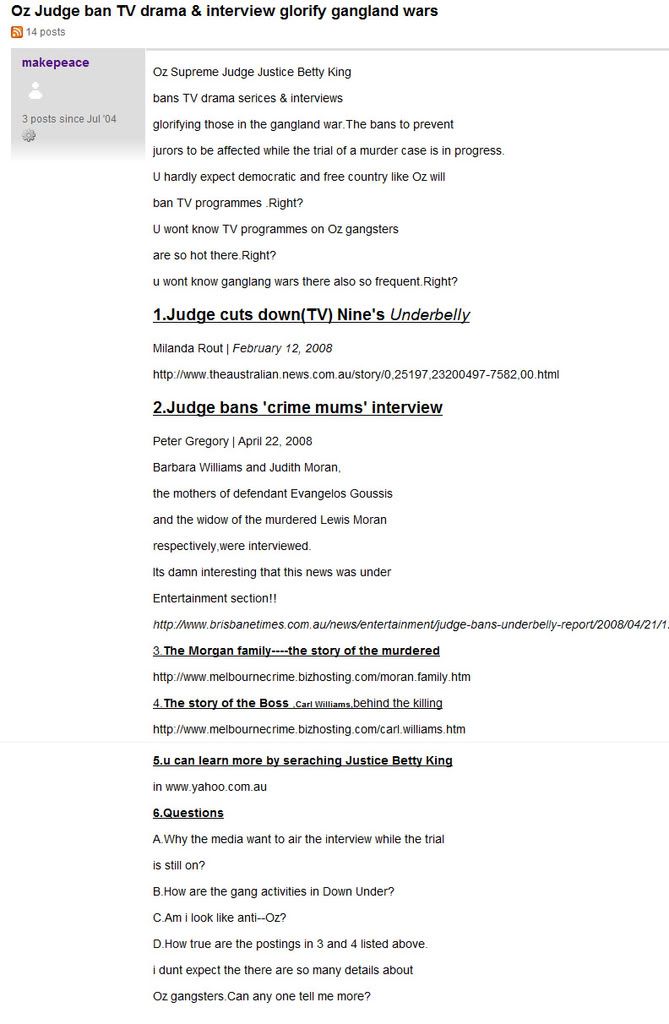
and of course his own excited and poorly acted "reply" to his own clone.
and his own desperate and feeble attempts to wriggle out of the situtation:

LOL, what a joker!
-
Australian Economic Revival Outstrips Asian Countries like Singapore, saves 15B in Costs while Singapore forced to spend:
The Australian economic revival has led to the revival of confidence and respect. And we can measure the economic revival against other developed nations. Through the ’80s and ’90s we fell below the average GDP per capita of the OECD countries. From the beginning of this decade we turned positive in the rankings.
Since 1996 we have had eight surplus budgets, and are on the verge of eliminating Commonwealth debt, inflation has been stable notwithstanding huge pressures from what in truth has amounted to the third oil shock.
A number of steps have been important in getting us to where we are.
The March 1996 election was fought on the basis that the Commonwealth Budget was in surplus. Kim Beazley, then Finance Minister, repeatedly affirmed in the campaign that the budget was in surplus, for example, saying on February 1, 1996: “… we’re operating in surplus, and our projections are for surpluses in the future.”
However, the day after the election on March 2, 1996 the Treasury estimated the deficit at $9.0 billion (1.9 per cent of GDP). The outcome was in fact a deficit of $10.1 billion (2.1 per cent of GDP).
Immediately after the election the Coalition Government announced that it would legislate to prevent such deception ever occurring again.
We introduced the Charter of Budget Honesty Act 1998 which provides mandatory reporting standards and the preparation of a pre-election statement by the Secretaries of Treasury and Finance. Now the public is told the actual state of the budget before the election campaign and is able to assess policy against agreed facts before they vote.
The new government also announced an immediate Commission of Audit to identify all assets and liabilities of the Commonwealth including all contingent liabilities and unfunded superannuation to get a true picture of Commonwealth finances.
On August 14, 1996, upon the appointment of a new Governor of the Reserve Bank, the governor and I entered an agreement to set inflation targets, to direct monetary policy at those targets, and to guarantee the independence of the Central Bank. This was the origin of a medium-term framework for monetary policy.
In our first budget the Government laid down a medium-term framework for fiscal policy. The objective was “maintaining an underlying balance on average over the course of the economic cycle. This approach will ensure that over time the Commonwealth Budget makes no overall call on private sector saving and therefore does not detract from national saving.”
In ten budgets since 1996-97 there have been eight surpluses cumulating to an estimated $59 billion over 10 years. Commonwealth net debt will this year be eliminated.
Net interest payments which were $8.4 billion (1.5 per cent of GDP in 1996-97) will fall to $0.3 billion in 2006-07 (0.0 per cent of GDP). And thereafter net interest payments will be negative. In 2006-07 1.5 per cent of GDP represents a saving of around $15 billion - this shows the value of our debt reduction strategy.
-
Originally posted by noisylion:
Singgie citizenship- roaring lion or paper lion?

one survey has placed Singapore’s outflow at 26.11 migrants per 1,000 citizens – the second highest in the world. Only Timor Leste (51.07) fares worse.
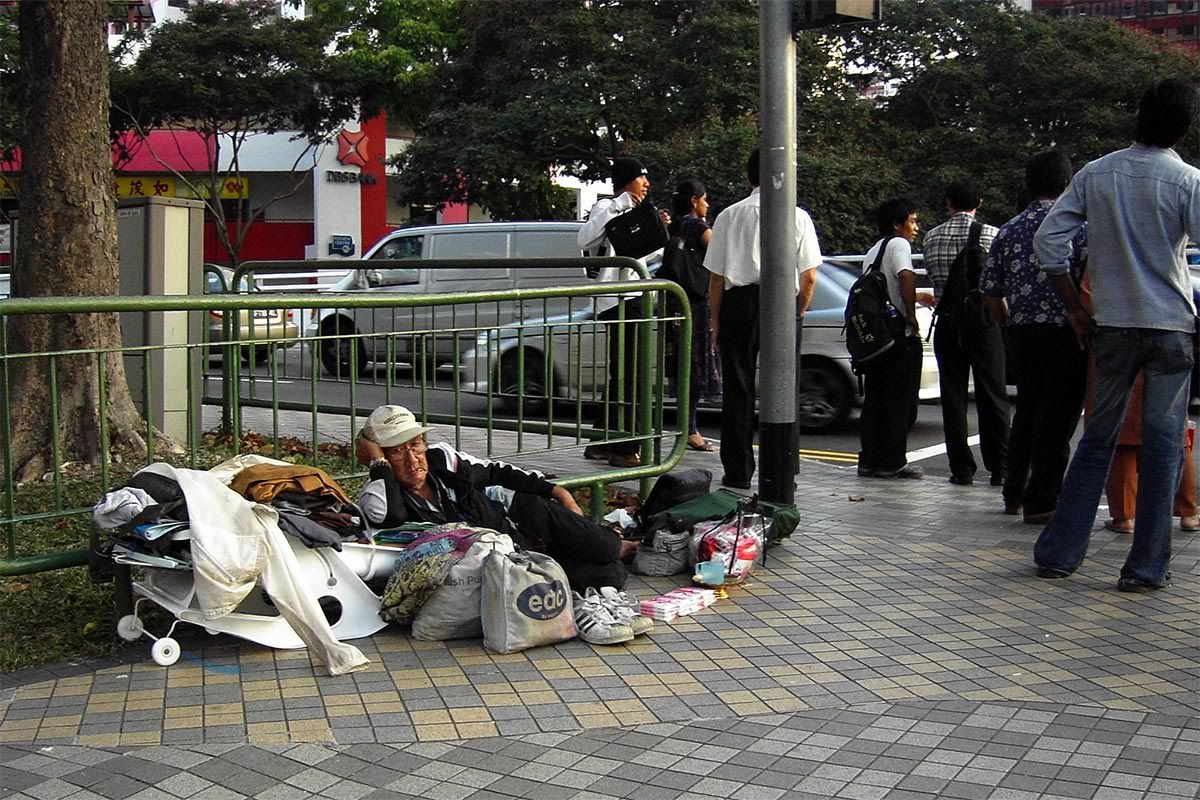


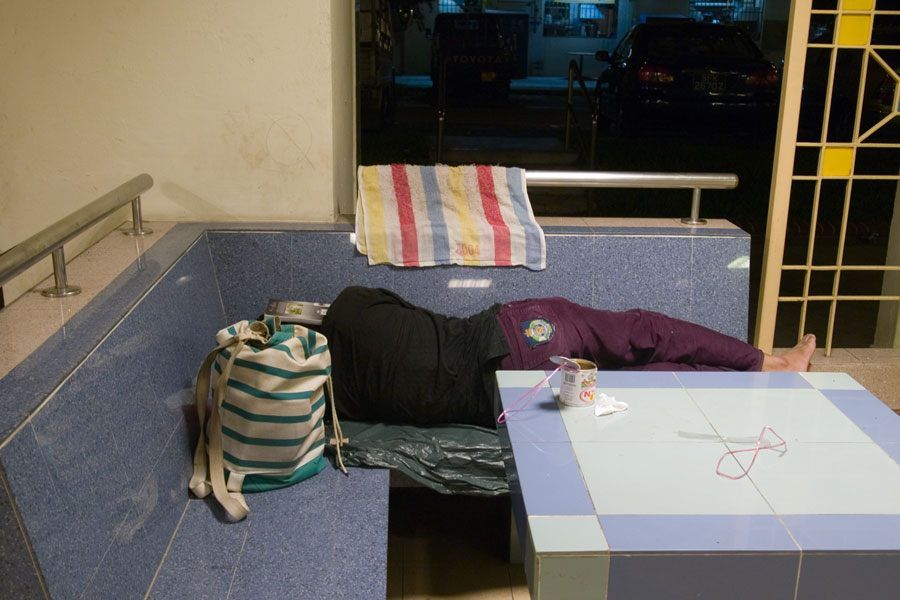
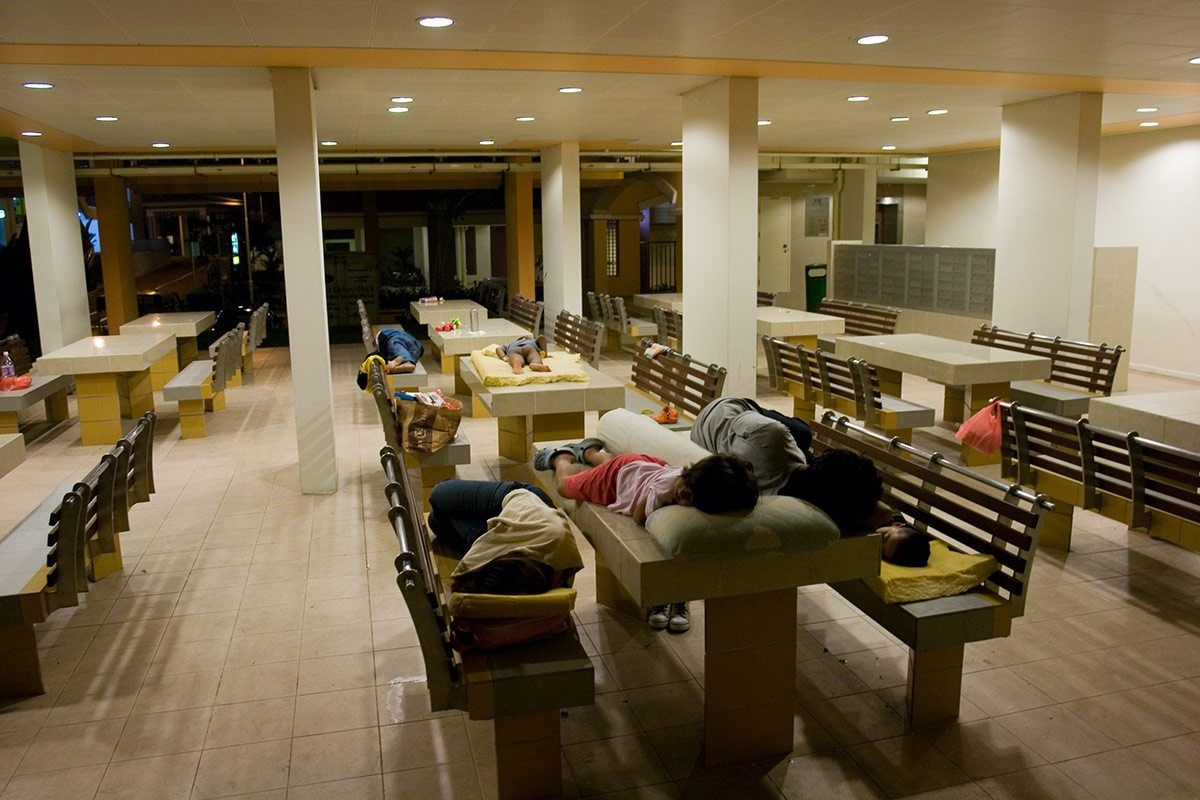
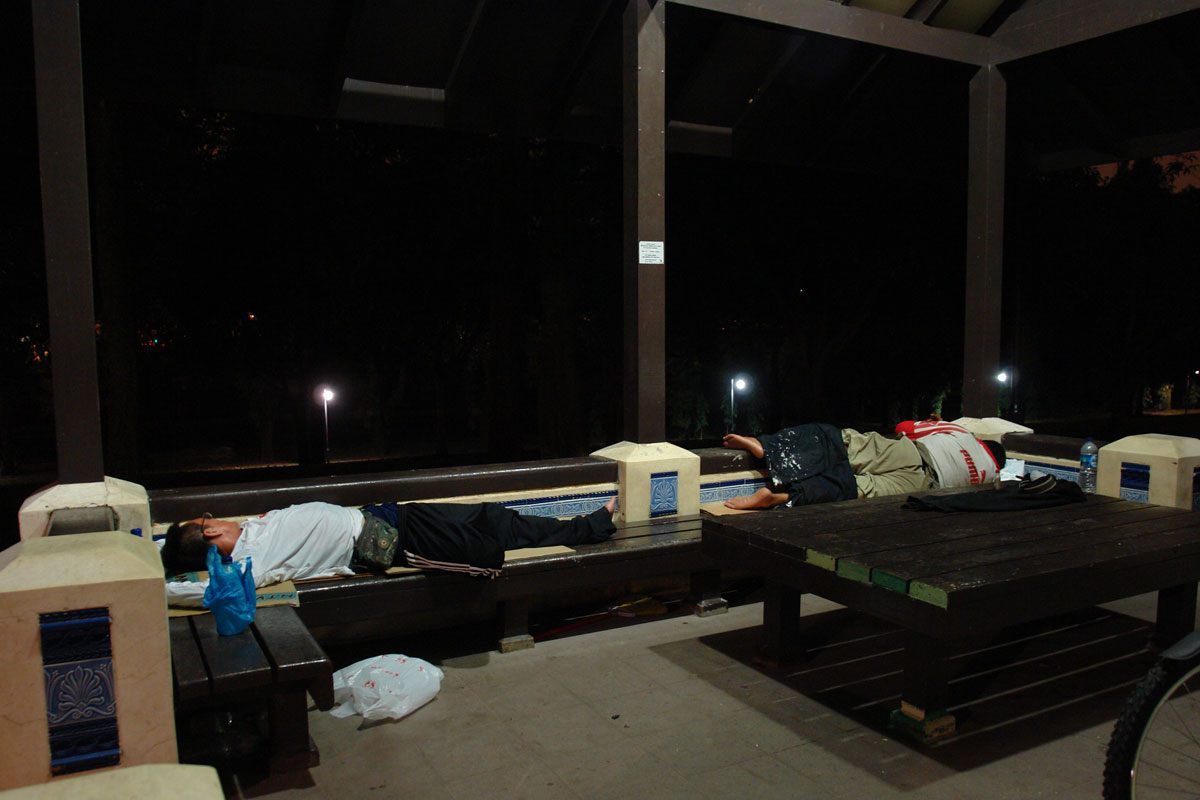

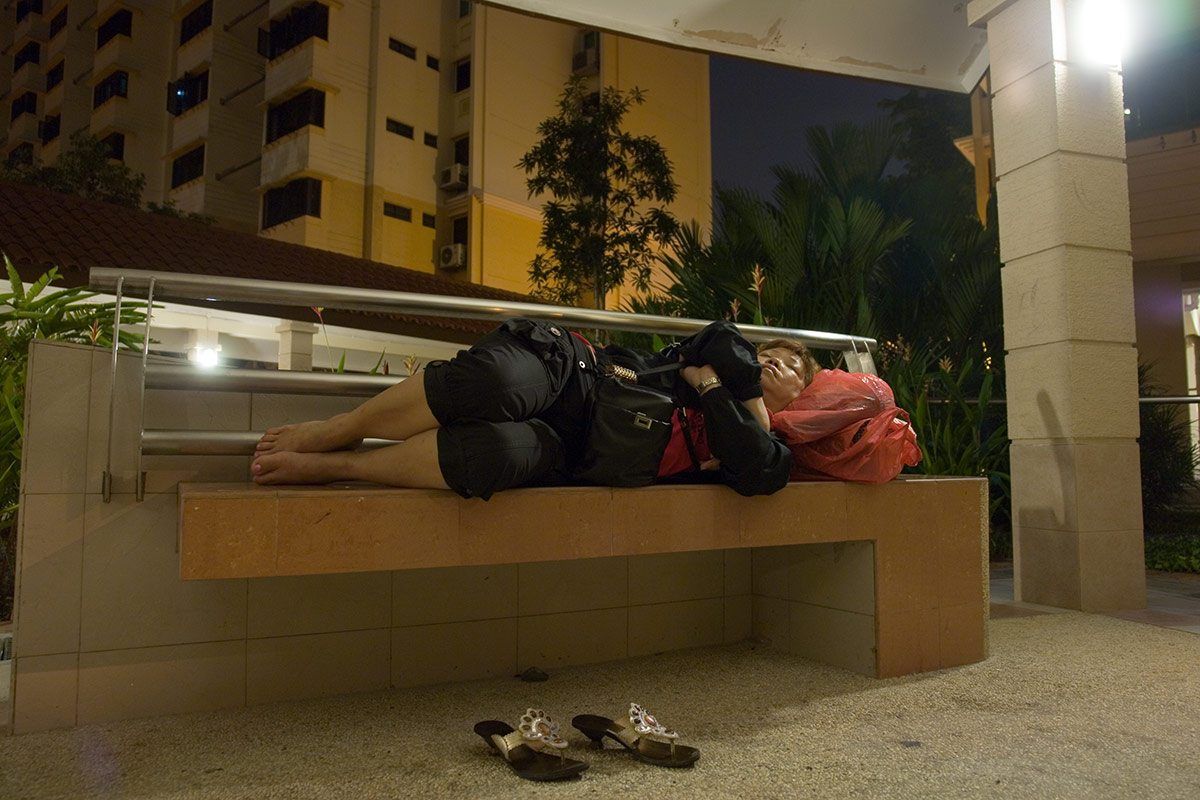


 Send Message
 Reply/Quote
 edit
edit