To Harris_JeyaRaj. Re:Loch ness monster
-
Hey this thing eats flesh right?
no.1 Ugly!! Matamata Turtle [/b]
[/b] -
All these discoveries of fish show that the Nessie is also a type of undiscovered sea animal.I am convinced that it exists.........
-
This pic below is supposed to be a dead carcass of a plesiosaur.
Some japanese fshermen found it in the seas
-
what happened to it? did they cut it up and eat it?Originally posted by Harris_JeyaRaj:This pic below is supposed to be a dead carcass of a plesiosaur.
Some japanese fshermen found it in the seas -
threw it back into the sea. hey cant brng it back for risk of contaminationOriginally posted by alexkusu:what happened to it? did they cut it up and eat it? -
what? did they caught in in the japanese waters? I do recalled Christopher Columbus saying he saw a huge underwater creature during his voyage to America. But I just remember the details vaguely..Originally posted by Harris_JeyaRaj:threw it back into the sea. hey cant brng it back for risk of contamination -
that's probably a basking sharkOriginally posted by Harris_JeyaRaj:This pic below is supposed to be a dead carcass of a plesiosaur.
Some japanese fshermen found it in the seas -
look at the right--->Originally posted by the Bear:that's probably a basking shark
does it look like a head? or a tail? -
If its a head then thats scary.. but looks like a tail anywayOriginally posted by alexkusu:look at the right--->
does it look like a head? or a tail?
-
I wonder who reported that..best read what the fisherman says..
-
thanks youOriginally posted by Unknown_X:
-
oh yeah..that Alex K. is not me..so dun misunderstand or wat ah..Originally posted by Unknown_X: -
well, a basking shark looks like this:
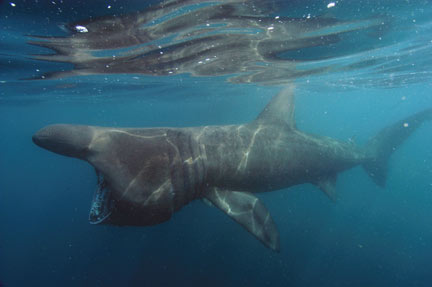
and this:
and a quick google search with "basking shark carcass" gives this site => www.angelfire.com/ mi/dinosaurs/zuiyomaru.html
since angelfire does not allow hotlinking of pics, i have to use another pic.. this one: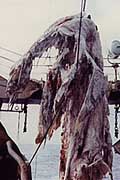
the "plesiosaur" carcass was actually conclusively tested to be a basking shark... the mouth of the shark decomposes away rather quickly and leaves the top part.. sort of like the plesiosaur neck...
besides, a basking shark is HUGE! it grows up to about 10 metres long.. so it's easy to mistake a decomposed carcass for a plesiosaur
convinced? -
I found a real good site.........it disagrees with what u claimOriginally posted by the Bear:well, a basking shark looks like this:
and this:
and a quick google search with "basking shark carcass" gives this site => www.angelfire.com/ mi/dinosaurs/zuiyomaru.html
since angelfire does not allow hotlinking of pics, i have to use another pic.. this one:
[img]http://www.mysteriousworld.com/Content/Images/Journal/2002/Spring/SeaSerpents/ZuiyoMaruPlesiosaur.jpgp/img]
the "plesiosaur" carcass was actually conclusively tested to be a basking shark... the mouth of the shark decomposes away rather quickly and leaves the top part.. sort of like the plesiosaur neck...
besides, a basking shark is HUGE! it grows up to about 10 metres long.. so it's easy to mistake a decomposed carcass for a plesiosaur
convinced?
http://www.creationresearch.org/crsq/articles/38/38_1/Cryptid.htm
Summary of New Reasons Against a Basking Shark Identification
1. Unanimous eyewitness testimony for a pair of upper fins and against a dorsal fin.
2. Matching pictorial confirmation for the pair of upper fins.
3. Archaeological and cryptozoological support for these upper fins
4. Pictorial confirmation for nares at front of skull, matching eyewitness testimony.
5. Only 1/7 the radiation in the horny fibers that sharks possess suggesting fewer crosslinks.
6. Cryptid’s trunk is longer than any known large fish species.
A Sauropterygia identification thus remains viable. Finding this cryptid again, whether alive or as a fossil specimen, would confirm or deny that possibility. At present, it is possible that the cryptid may be unknown from the fossil record, in part because the measurements do not match any known fossil, and in part because of the variant shape of the flippers, corroborated by the matching appearance on the Egyptian seal. The Sauropterygia are usually believed by to have become extinct at the close of the supposed Cretaceous geological era, 63 million years ago. Kuban (1997–199 criticized creation scientists for suggesting the cryptid may have been a marine reptile. It now appears he was wrong, and that the creation scientists are vindicated.
Perhaps a marine biologist and/or paleobiologist could investigate the function of the upper fins. Based on their placement, it is possible that the upper fins helped stabilize the creature during propulsion by its flippers. Indeed, the right side upper fin was still articulated at a right angle to the body when the creature was found, which would have been a proper position to accomplish such stabilization for the creature (Obata and Tomoda, 1978, p. 46) [see Figures 2 and 3].
Two decades after the discovery, the Zuiyo Maru creature still fascinates researchers. Perhaps continued study will reveal further information about this cryptid. If any of the horny fibers remain, a DNA profile would be of considerable value. Considering all the available evidence, it seems that pursuing identification of the creature as a marine tetrapod is the wisest course. -
The unusual is what I likeOriginally posted by alexkusu:omg...you have unique tastes. I thought it look like something of Pokemon . 
-
i think we share the same tastes that way
and raj, well, you can choose to believe your stuff, i choose to believe that it's a basking shark
i'll go look for other strange fishOriginally posted by Ferret:The unusual is what I like -
Do u like unusual guys?Originally posted by Ferret:The unusual is what I like -
hmm looks like prime candidate for fish head curry ingredientOriginally posted by the Bear:here's a strange fish.. the sunfish or mola-mola
looks like a giant fish head...
it's fricken huge

the baby mola-mola is very cute
-
a deep sea angler


ugly critter huh?
this is gross.. but it's the way they breed
note the little male behind the big female
At first, male deep sea anglers are free swimming, with large eyes, no rod or lure, and no digestive tube. Their skin is smooth.
When a female and male meet, the male grips her skin with his teeth as usual. From this moment he begins to degenerate. His eyes grow smaller and are eventually lost.
His skin becomes spiny and around his jaws it fuses with the female's skin leaving a small hole on each side of the mouth which water is drawn for breathing.
His blood vessels join with those of the female and he is fed from her blood circulating through his body.
Meanwhile, the male grows in size and he grows a large testes. The rest of his internal organs disappear.
He is now a part of the female deep sea angler! -
Bear,dont be superficial..beauty is only skindeep


-
ahhh.. more weird fish
i like this fish.. common enough tho'.. a garfish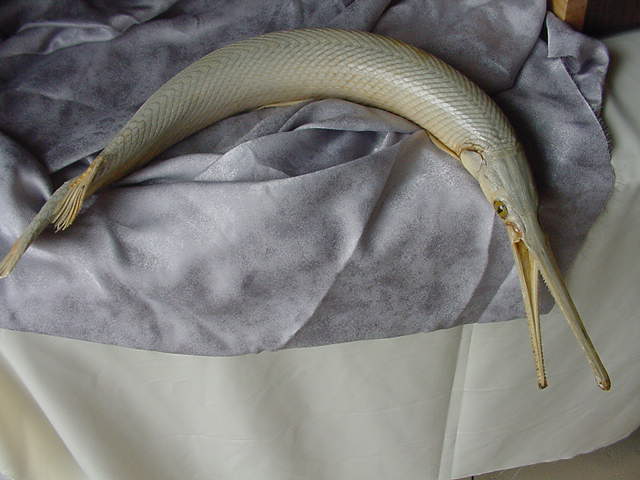
look at the teeth on that thing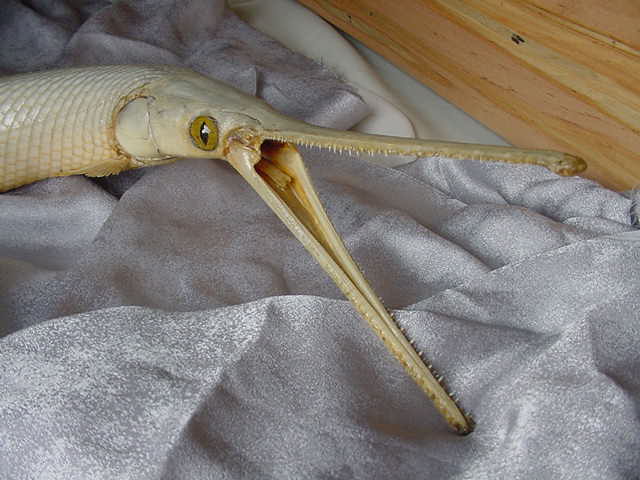
-
argh!! double post!
so.. post a Pirarucu or Arapaima.. largest freshwater fish
huge fish huh?
-
Yeah. More strange fish plsOriginally posted by the Bear:i think we share the same tastes that way
and raj, well, you can choose to believe your stuff, i choose to believe that it's a basking shark
i'll go look for other strange fish -
That's a very personal qnsOriginally posted by alexkusu:Do u like unusual guys?
And largely dependent on the meaning of unusual